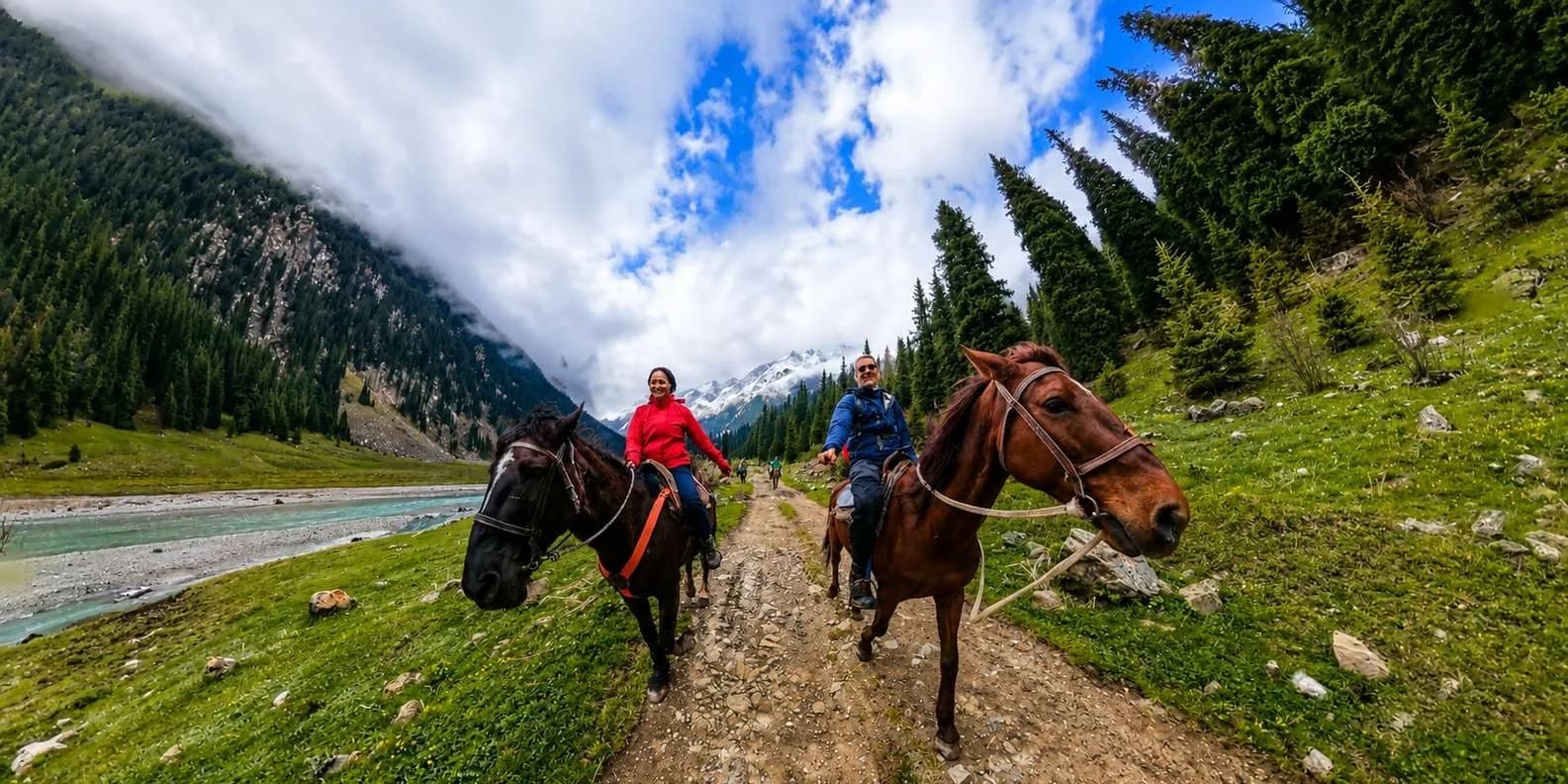
 Image via GetYourGuide
16 Best Places to Visit in Kyrgyzstan (2026)
The 16 best places to visit in Kyrgyzstan: Issyk-Köl, Song-Köl, Karakol and thirteen more, each with the best season and an honest caveat before you go.
Book it on This is Kyrgyzstan
Turn this guide into a trip
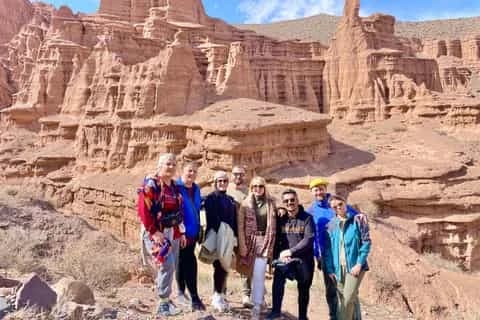
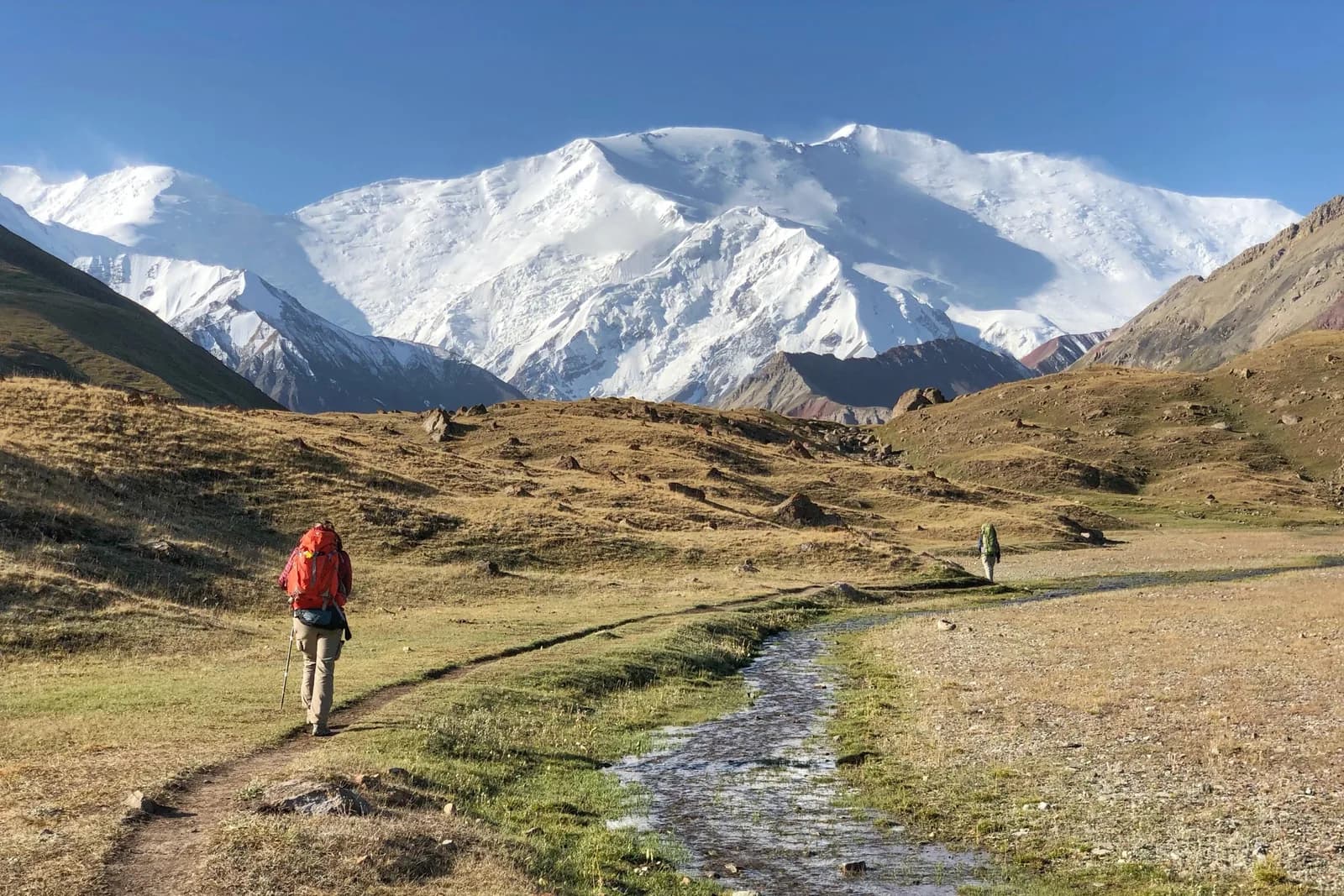
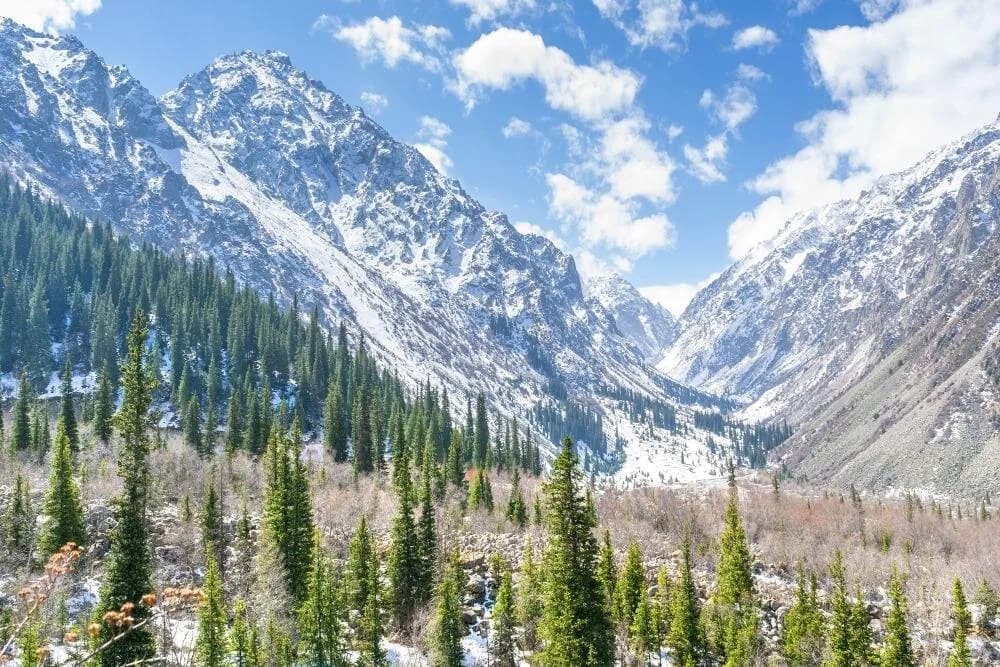
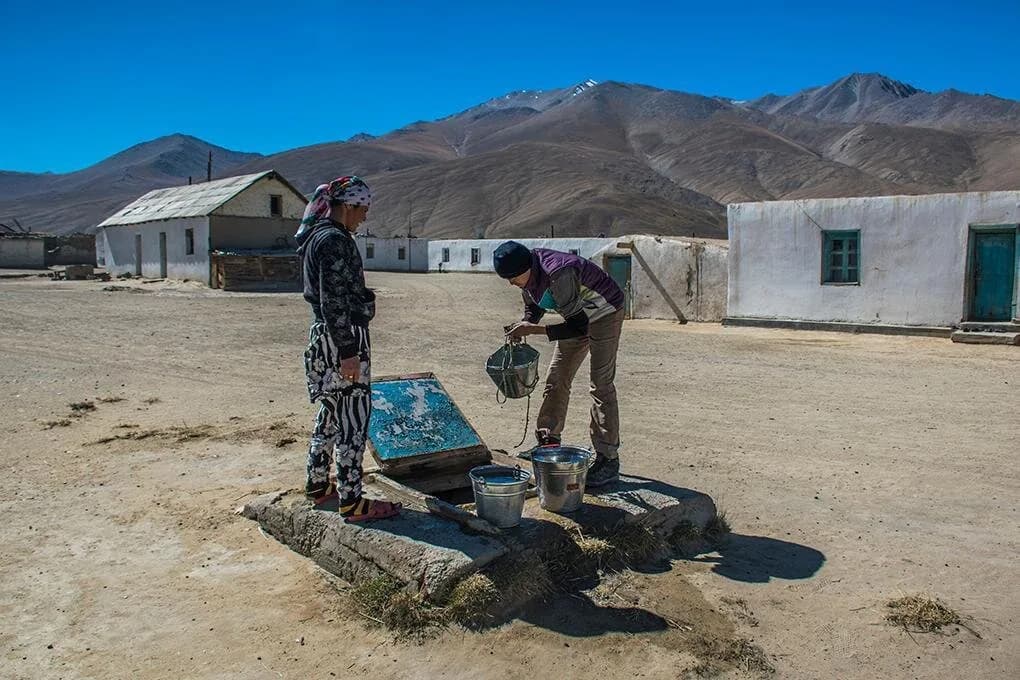
If you only have room for three names, make them Lake Issyk-Köl, Song-Köl and Karakol: a giant warm-water alpine lake, a summer yurt jailoo at 3,016 m, and the country's best mountain base town. Everything else on this list radiates out from those three. Below are the sixteen places worth building a Kyrgyzstan trip around, ordered roughly by how iconic and how easy to reach they are, not by a strict scorecard. Most of the mountain entries only work from about mid-June to mid-September, and several need a hired 4WD or a permit, so read the season and the caveat before you fall in love with a photo.
At a glance
| Place | Region | Best for | Season |
|---|---|---|---|
| Lake Issyk-Köl | Issyk-Köl | Swimming, base for the ring road | Jul–Aug for the beach; May–Oct for the shore |
| Song-Köl | Naryn | Yurt stay, horse riding, silence | Jul–Aug (ask ahead Jun/Sep) |
| Karakol | Issyk-Köl | Trekking base, town sights, skiing | Year-round; Jul–Aug and Jan–Mar best |
| Ala-Archa | Chuy | Day hike from Bishkek | May–Oct lower trails |
| Bishkek | Chuy | Arrival, food, launchpad | Year-round |
| Osh & Sulaiman-Too | Osh | Silk Road city, UNESCO | Apr–May, Sep–Oct |
| Tash Rabat | Naryn | Silk Road caravanserai, yurts | Jun–Sep |
| Skazka Canyon | Issyk-Köl | Short, easy, red rock | Any dry day |
| Jeti-Ögüz | Issyk-Köl | Half-day red cliffs | Jun–Sep |
| Altyn-Arashan | Issyk-Köl | Hot springs, trekking | Jun–Sep |
| Ala-Köl | Issyk-Köl | Hard alpine trek | Jul–Aug |
| Arslanbob | Jalal-Abad | Walnut forest, harvest | Late Sep–early Oct |
| Sary-Chelek | Jalal-Abad | Forested biosphere lake | Jul–Aug |
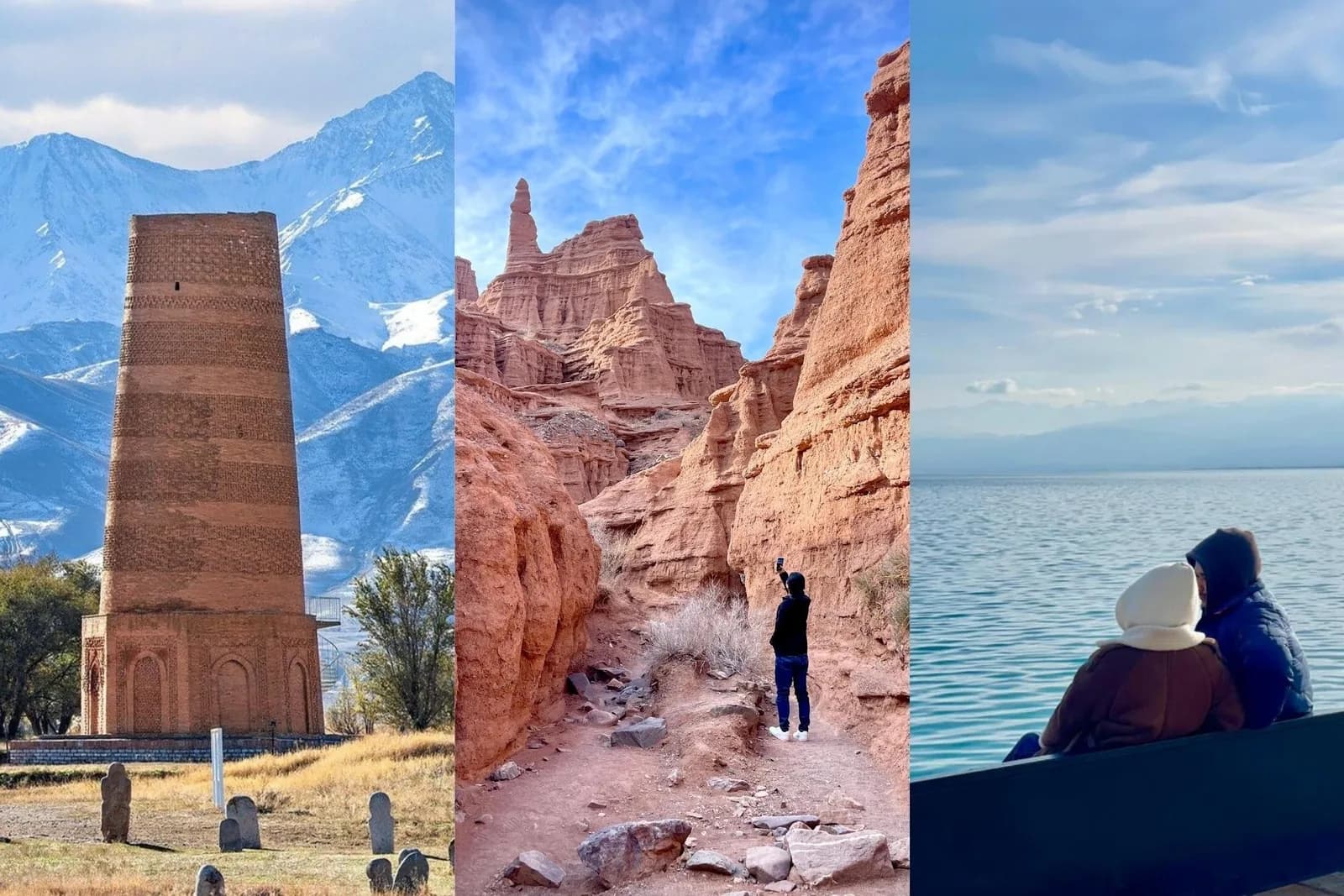
| Burana Tower | Chuy | Silk Road history, easy day trip | Apr–Oct |
| Jyrgalan | Issyk-Köl | Off-radar trekking, ski touring | Jul–Sep; Jan–Mar |
| Kel-Suu | Naryn | Remote canyon lake (permit) | Jul–early Sep |
1. Lake Issyk-Köl
The country's centrepiece and the reason many people come. Issyk-Köl (Issyk-Kul) is the world's second-largest mountain lake by area after Titicaca, though far deeper and larger by volume, sitting at 1,607 m with the snow wall of the Terskey Ala-Too rising straight off the southern shore. It is mildly saline at about 0.6%, which is why it never freezes over — the name means "warm lake." July and August give swimmable water at roughly 22–24°C; outside those weeks sell it to yourself as canyons, culture and empty shoreline, not a beach. Base on the developed north shore for resorts and the petroglyph field, or the wild south shore for red-rock canyons and eagle hunters. Start with our Lake Issyk-Köl guide.
2. Song-Köl
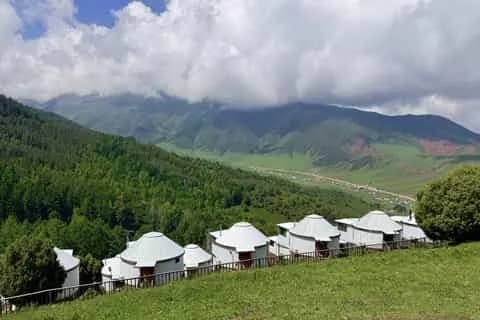
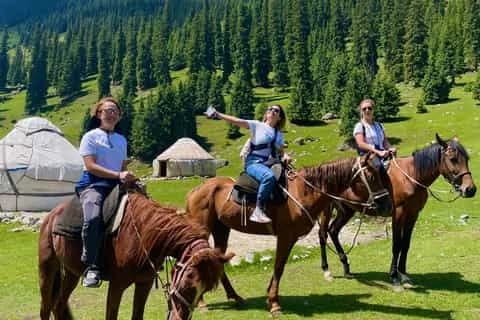
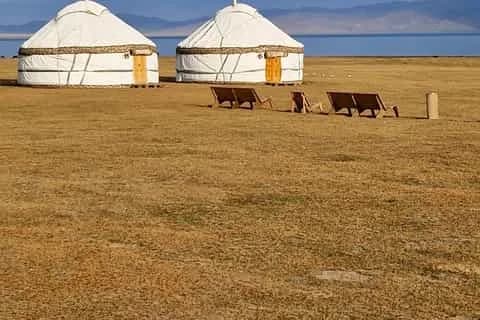
A huge, shallow lake ringed by summer pasture at 3,016 m, and the single best place in Kyrgyzstan to sleep in a yurt. Herding families bring their animals and their yurts up for roughly July and August; June and September depend entirely on the weather, so ask before you commit. Come for two nights, not one — arrive in the afternoon, and you have only seen a cold lake; stay a second day and you get the horse ride, the ridge walk and a real conversation with the family. Bring a hat and a waterproof: the dung stove roars then dies before dawn, and there is no phone signal or shop. Book your ride out before your driver leaves. See our Song-Köl yurt stay guide.
3. Karakol
Not a beach town — it sits 15 km back from the lake's eastern end — but the best outdoor base in the country. Ala-Köl, Altyn-Arashan, Jeti-Ögüz and Jyrgalan all radiate from here, and in winter it becomes a ski and freeride hub. In town, see the wooden Holy Trinity Cathedral (1869) and the Dungan Mosque, built in 1910 by a Beijing architect and Chinese carvers entirely without nails. Time your visit for a Sunday: the livestock market is the real spectacle. High summer and deep winter are the strong seasons; May and November are explicitly poor, with too much snow to hike and too little to ski. Full detail in our Karakol guide.
4. Ala-Archa National Park
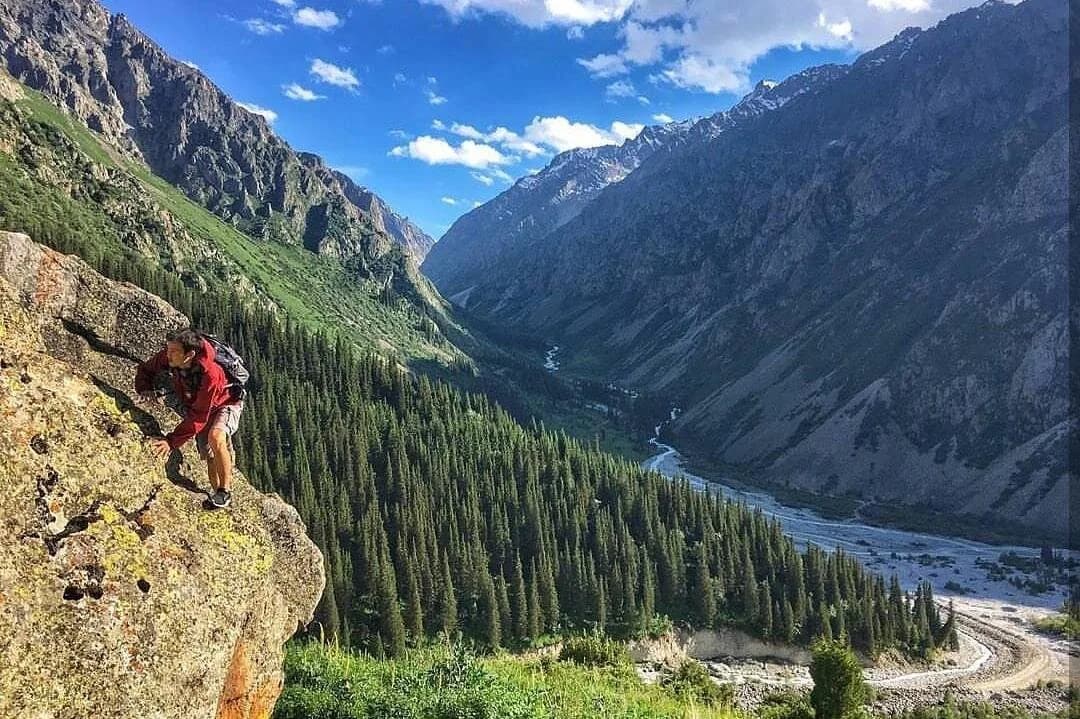
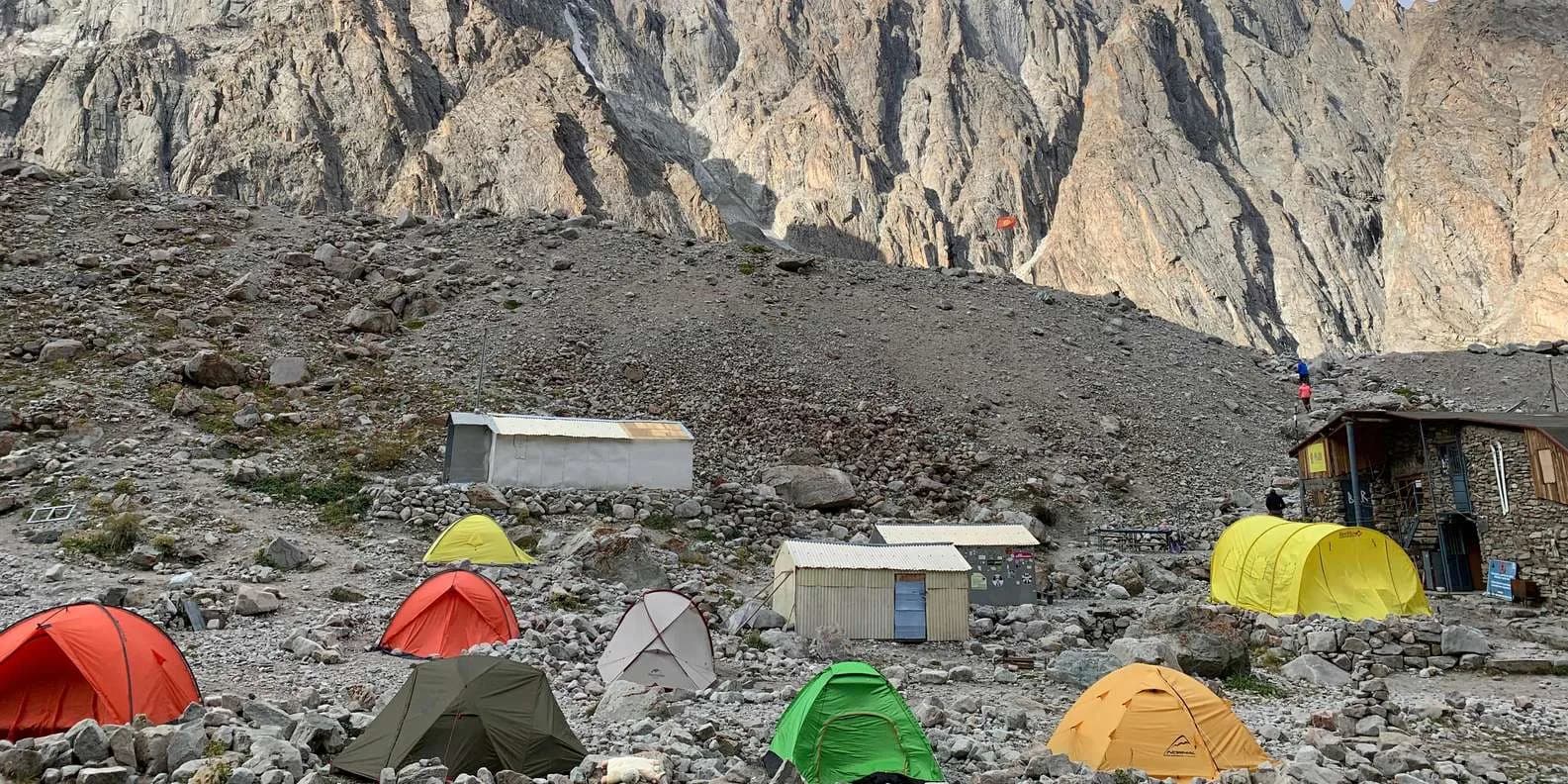
The easiest big-mountain hit in the country, an hour south of Bishkek, which makes it most people's first taste of the Tien Shan. From the gorge entrance at Kashka-Suu you can walk a gentle valley floor, push up to the Ak-Sai waterfall, or grind higher to a glacier and the Ratsek climbers' hut. It works as a half-day or a full day, and city buses run to near the entrance, so you do not need a car. Lower trails are open roughly May to October; the high routes need proper kit and stay snowbound longer. Keep in mind you are climbing fast from Bishkek's 800 m, so pace it. See the Ala-Archa National Park guide.
5. Bishkek
Most trips start here, and the capital is worth a day rather than a rush to the mountains. It is a low, green, Soviet-planned city at about 800 m, more relaxed than dramatic: leafy boulevards, Ala-Too Square, decent coffee, and the sprawling Osh Bazaar for spices, felt and kalpaks. Use it to sort a SIM, draw cash, hire a car and eat well before the guesthouses and yurts take over. It is also the launchpad for Ala-Archa, Burana and the whole Issyk-Köl ring road. Don't drive on your arrival day — the road to the lake is long. Our Bishkek city guide covers where to eat and what to skip.
6. Osh and Sulaiman-Too
The south's ancient counterweight to Bishkek, and the best single dose of Silk Road Central Asia in the country. Osh claims more than 3,000 years of settlement, and the five peaks of Sulaiman-Too — Kyrgyzstan's first UNESCO World Heritage Site, inscribed in 2009 — rise straight out of the city with shrines, petroglyphs and a cave museum on the flanks. Note two 2025 changes that most guidebooks miss: the giant Lenin statue was moved to Meerim Park, and the central markets were relocated to the city's edge, so the old riverside-Jayma description is out of date. Hot in July and August; spring and autumn are kinder. Read the Osh travel guide and the dedicated Sulaiman-Too guide.
7. Tash Rabat
A squat, thick-walled stone caravanserai set into a green side-valley at 3,200 m near At-Bashy, a couple of hours' drive from Naryn. It is the last intact building on a Silk Road branch still carrying freight to China over the Torugart pass. The dating is genuinely unresolved — usually put at the 15th century, though some argue for a 10th-century origin, and its 31 domed rooms have been read as a caravan stop, a Nestorian monastery and a Buddhist one. The building is modest; the setting and the silence are the point, and it is colder than Song-Köl. Sleep at a yurt camp beside it so you have the valley to yourself after the day-trippers go. See our Tash Rabat guide.
8. Skazka (Fairytale) Canyon
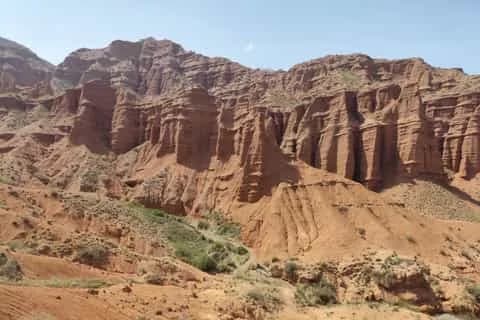
The easiest wow on Issyk-Köl's south shore: a compact maze of red and orange sandstone eroded into ridges and spires that people read as dragons and castles ("skazka" is Russian for fairytale). Entry is around 50 som, cash only, and a visit takes 1.5 to 3 hours wandering the gullies up to a viewpoint over the lake. It is about 30–40 minutes from Bokonbaevo and roughly two hours from Karakol, so it slots neatly into a south-shore drive. You do not need a 4WD, but the clay gets greasy after rain. Best in the low, raking light of early morning or late afternoon. More in our Skazka Canyon guide.
9. Jeti-Ögüz
The "Seven Bulls" — a row of vivid red sandstone fins about 25–28 km up a side valley from Karakol, with the split Broken Heart rock standing separately nearby and its legend of two men fighting over a woman. It is a classic half-day: the rocks themselves take under an hour, but the valley behind holds flower meadows, a walk to the Maiden's Braids waterfall and a faded Soviet sanatorium with mineral springs. A marshrutka runs from Karakol for a few hundred som. One planning trap: the Jeti-Ögüz village and the Jeti-Ögüz Kurort are different places, so check your driver is going up to the resort area. Good from roughly June to September. See the Jeti-Ögüz guide.
10. Altyn-Arashan
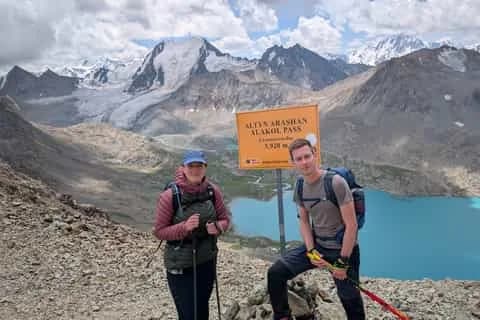
A broad alpine meadow with hot-spring soaking pools at roughly 2,400–2,600 m (sources differ), reached up a rough track from Karakol. You can walk in over a full day, take a bumpy 4WD, or ride, then reward yourself with a long soak looking up at the peaks. It doubles as an acclimatisation night before the harder Ala-Köl trek, and a handful of simple guesthouses and yurts stay open through the summer. The valley is genuinely lovely, but the springs are basic and get busy in August; go early or late in the day. Reliable footing roughly June to September. Full route in our Altyn-Arashan trek guide.
11. Ala-Köl
Kyrgyzstan's signature trek: a rock-dammed lake that turns an unreal turquoise, sitting at about 3,532 m below a pass of roughly 3,860–3,900 m (sources differ). The standard route links Karakol, Ala-Köl and Altyn-Arashan over two to three days, and it is hard — you climb a long way fast from Karakol's 1,700 m, so acclimatise first at Song-Köl or Altyn-Arashan and take the pass day slowly. Only July and August reliably clear the snow up here; a late winter can leave it impassable well into June. If a headache worsens or new symptoms appear, descend. This is the reason many trekkers come to Kyrgyzstan at all. See the Ala-Köl trek guide.
12. Arslanbob
An Uzbek village in the south wrapped in the world's largest natural walnut forest — around 11,000 hectares of old, spreading trees between roughly 1,500 and 2,000 m, with the limestone wall of the Babash-Ata behind. The Alexander-the-Great origin story is a myth; the stands are about a thousand years old and were almost certainly planted. Time it for the walnut harvest in late September and early October, when whole families camp under their allotted trees, beat the branches with poles and the valley smells of husk — the single strongest reason to travel Kyrgyzstan in autumn. It is a conservative, observant place, so dress modestly. Book community homestays through CBT Arslanbob. Read our Arslanbob guide.
13. Sary-Chelek
A long, deep, forested lake at around 1,800 m in a biosphere reserve — Kyrgyzstan's first, designated in 1978 — that looks nothing like the country's open high-altitude lakes. Think steep wooded slopes and a landslide-dammed valley closer to a Balkan lake, ringed by the same relict walnut-and-fruit forest as Arslanbob. The catch is access: it is a substantial detour, about six hours from Osh or nine from Bishkek, then rough track, and camping is the only way to sleep right by the water, with homestays back in Arkyt village. Snow-free from mid-May to end September, best in July and August, always cold at night. Only worth it if you are not in a hurry. See the Sary-Chelek guide.
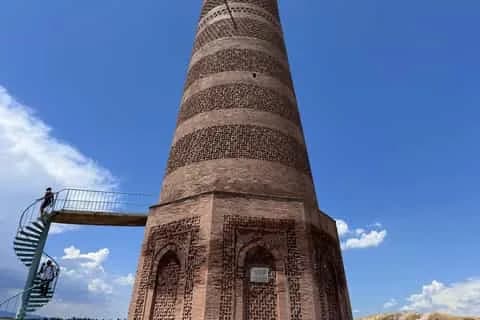
14. Burana Tower
The most rewarding easy day trip from Bishkek: a restored brick minaret standing alone on the Chuy plain, the surviving marker of Balasagun, a Karakhanid Silk Road capital. It is part of the UNESCO Silk Roads: Chang'an–Tianshan Corridor listing, and the site scatters a field of stone balbal grave markers and petroglyphs around the base; you can climb the tight internal stair for a view over the valley to the mountains. It pairs naturally with the nearby Ak-Beshim and Krasnaya Rechka ruins on a half-day loop from the capital, roughly 80 km east near Tokmok. Modest but genuinely historic, and open through the warmer half of the year. More in our Burana Tower guide.
15. Jyrgalan
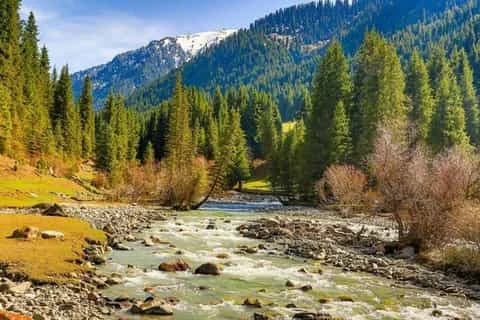
The easiest add-on in the country and still refreshingly off-radar: a former coal village 75 km from Karakol, reinvented by its own community tourism group as a trekking and ski-touring base. In summer it is a gateway to quiet alpine valleys, lake hikes and multi-day traverses with far fewer people than Ala-Köl; in winter it turns into one of Kyrgyzstan's best backcountry and freeride spots. Homestays and a couple of small guesthouses handle beds and guides, and a cheap taxi or local transport gets you in from Karakol. Come for walking July to September, or for snow January to March. See the Jyrgalan trekking guide.
16. Kel-Suu
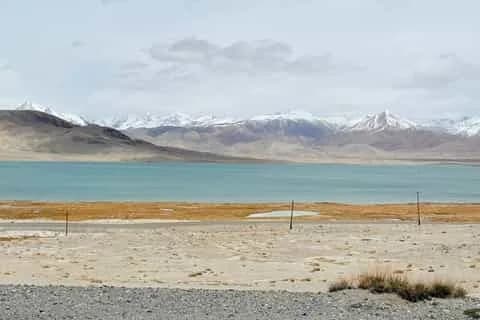
The hardest and least predictable place on this list, which is exactly its appeal. Kel-Suu is a long lake filling a slot canyon at about 3,500 m near the Chinese border in Naryn Region, and reaching it takes commitment: a mandatory paper border permit arranged through a Naryn agency at least a couple of weeks ahead (around 2,000–3,000 som), a 5–8 hour 4WD each way over river fords, then a further 2–3 hour walk or horse ride from the yurt camps to the water. And it may not look like the photograph — the lake drains through underground channels and can be far lower than you hope, or nearly empty. Go in July or August, expect nights near freezing, and treat the uncertainty as part of the trip. Read our Kel-Suu lake guide.
How to fit them together
Most of the north-shore and Naryn entries link into one classic loop — Bishkek, Issyk-Köl, Karakol, Song-Köl, Tash Rabat — that you can drive in eight to twelve days without repeating a road. The south (Osh, Arslanbob, Sary-Chelek) is a separate world; the honest advice is to fly the Bishkek–Osh leg rather than lose 10–12 hours each way to the road. For where to start planning and how many days you actually need, see our Kyrgyzstan travel guide and best time to visit. One more current draw: the 6th World Nomad Games are running in Kyrgyzstan right now, 31 August to 6 September 2026, with the opening in Bishkek and the main events at Issyk-Köl.
Ready to build the trip around these? Browse tours and stays by region on our destinations hub.
Chat with a real person — free
Seif and the team reply on WhatsApp 24/7 — trip questions, custom plans and booking help.
Ask Seif on WhatsAppCommon questions
What is the best place to visit in Kyrgyzstan for first-timers?
Lake Issyk-Köl paired with Karakol is the easiest and most rewarding first trip. Issyk-Köl gives you a warm alpine lake and an easy paved ring road, while Karakol is a comfortable base for day trips to Jeti-Ögüz, Altyn-Arashan and Skazka Canyon. Add two nights in a Song-Köl yurt if you have a week, and you have seen the country's headline scenery without needing hard treks or permits.
How many of these places can you see in a week?
Realistically five or six, and only in the north. A sensible seven-day run covers Bishkek, Burana, the Issyk-Köl shore, Karakol with a day trip, and one night at Song-Köl before driving back. Do not try to add Osh or the south by road in a week — the drive alone eats two days each way. Our [Kyrgyzstan 7-day itinerary](/guides/kyrgyzstan-7-day-itinerary) maps it out day by day.
What is the most beautiful place in Kyrgyzstan?
It is subjective, but the two strongest candidates are Ala-Köl, the turquoise trekking lake below its 3,860 m pass, and Song-Köl, the vast yurt jailoo at 3,016 m. Ala-Köl wins on drama but demands a hard, high trek; Song-Köl wins on atmosphere and is far easier to reach. For sheer strangeness, Kel-Suu's canyon lake and Skazka Canyon's red rock also make many people's shortlists.
When is the best time to visit Kyrgyzstan's top places?
July and August are the only two months when high-mountain travel is reliable — yurt camps are up, passes are clear and lake water is swimmable. Mid-June and early September often work too but are a gamble. May and October are the worst months for the mountains: no yurts and closed passes, though October is the best time for Arslanbob's walnut harvest. Winter suits skiing and town sights.
Which of these places need a permit?
Kel-Suu is the main one: it sits in the Chinese border zone and needs a physical paper permit arranged through a Naryn agency at least a couple of weeks ahead. The same regime covers Chatyr-Köl and the Torugart approach. Everywhere else on this list — Issyk-Köl, Song-Köl, Karakol, Tash Rabat, Arslanbob and the rest — is permit-free. Your standard visa-free entry is 30 days within a rolling 60-day window.
Do you need a 4WD or a guide to reach them?
For most, no. Issyk-Köl, Karakol, Osh, Ala-Archa, Burana and Jyrgalan are all reachable by marshrutka or shared taxi. Song-Köl and Tash Rabat have no public transport, so you arrange a private ride, but they do not need a 4WD — high clearance is enough. Kel-Suu genuinely requires a capable 4WD and an experienced local driver for the river fords. See our [getting around guide](/guides/getting-around-kyrgyzstan).
Is Song-Köl or Issyk-Köl the better lake?
They are opposites, not rivals. Issyk-Köl is huge, low (1,607 m), warm enough to swim and lined with resorts, canyons and towns — the accessible one. Song-Köl is high (3,016 m), cold, roadless and treeless, and it is about the yurt stay and the silence, not swimming. If you have to choose, do Issyk-Köl for ease and Song-Köl for the experience most people remember longest. With a week, do both.
What is the best place in Kyrgyzstan for Silk Road history?
Osh and its sacred mountain Sulaiman-Too are the richest single stop — a 3,000-year-old bazaar city and Kyrgyzstan's first UNESCO World Heritage Site. Tash Rabat, the intact stone caravanserai near the old Torugart route to China, is the most atmospheric, and Burana Tower marks the buried Karakhanid capital of Balasagun on the Chuy plain. All three sit on genuine Silk Road corridors rather than reconstructions.
Can you visit both northern and southern Kyrgyzstan in one trip?
Yes, but fly one leg. The north (Issyk-Köl, Song-Köl, Naryn) and the south (Osh, Arslanbob, Sary-Chelek) are separated by a 10–12 hour mountain drive. Doing that road both ways in under two weeks leaves your trip as mostly windscreen. The sweet spot is driving the northern loop, then taking the 45-minute Bishkek–Osh flight to see Sulaiman-Too and the walnut forest before flying home.
Book it on This is Kyrgyzstan
Turn this guide into a trip
Kyrgyzstan's bestsellers
The experiences travelers book most, across the country
Keep reading
Uchitel Peak: Your First 4,000m Climb (2026)
Pik Uchitel (~4,400-4,600 m) in Ala-Archa is the classic first summit for fit hikers new to mountaineering: route, gear, season and acclimatisation.
By TiK Editors8 min read
Boz-Uchuk Lakes Trek from Jyrgalan (2026)
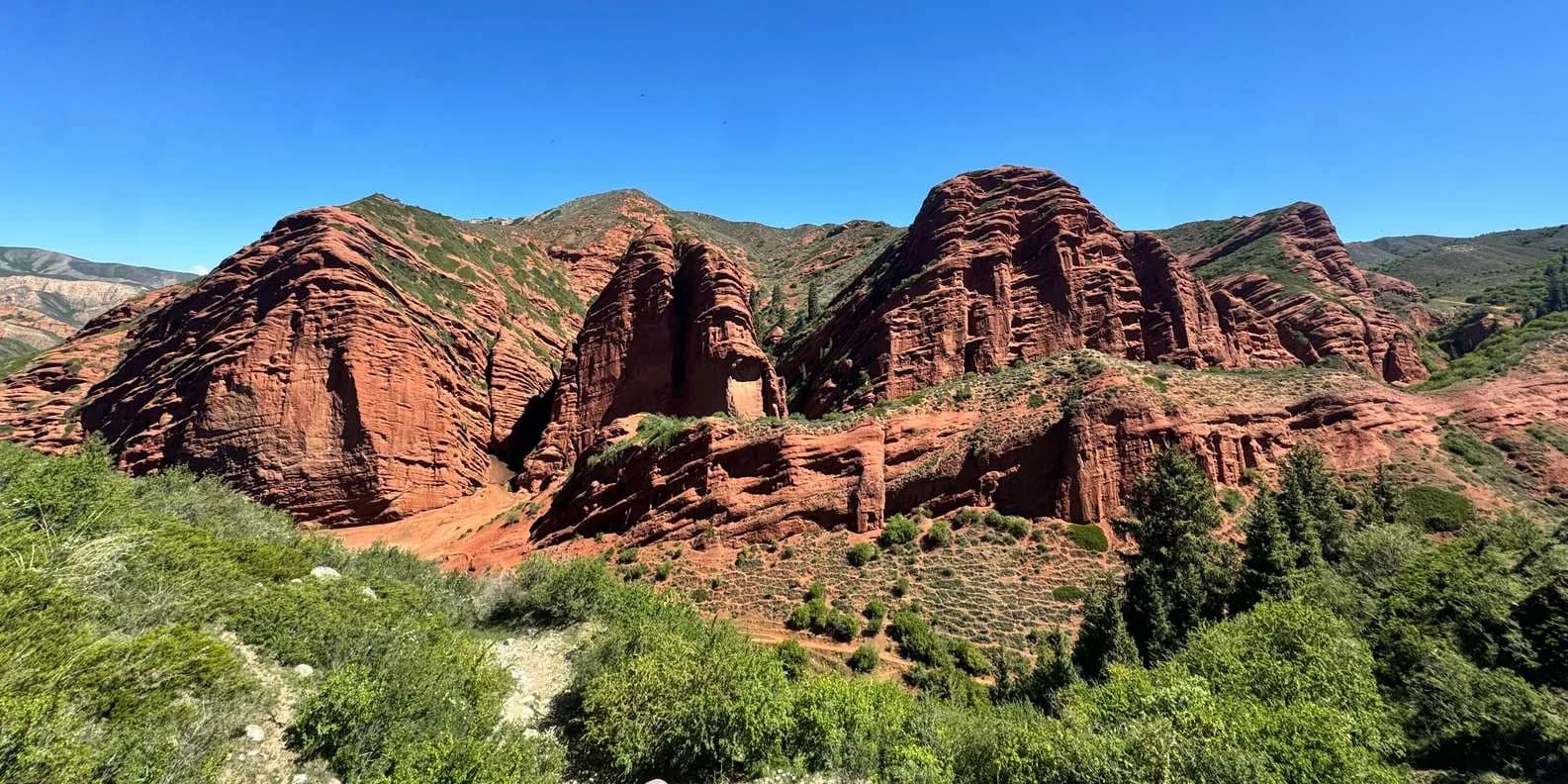
A moderate 2–3 day trek to a string of alpine lakes above Jyrgalan — quieter than Karakol's classics, with community yurts, horses and clear DMO rates.
By TiK Editors8 min read
Self-Guided Treks in Kyrgyzstan: Routes & How-To
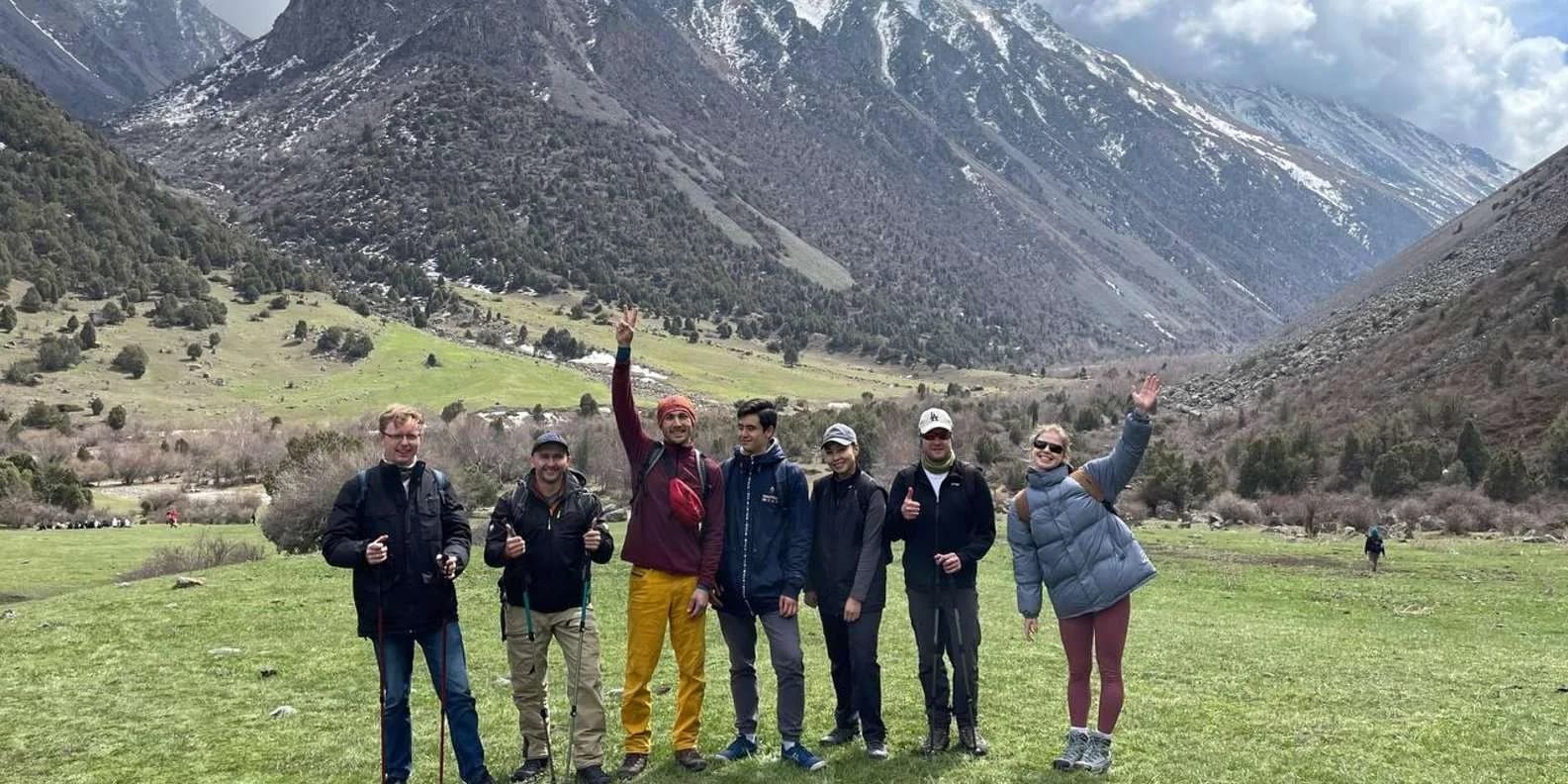
Yes, you can trek Kyrgyzstan without a guide. The best self-guided routes, the ones to skip, and the maps, water and safety logistics that make it work.
By TiK Editors12 min read