 Image via GetYourGuide
Sulaiman-Too, Osh: Solomon's Throne Guide
Osh's sacred five-peaked mountain and Kyrgyzstan's only UNESCO cultural site: what to see, the climb, the cave museum and how to visit respectfully.
Book it on This is Kyrgyzstan
Osh · Turn this guide into a trip


Sulaiman-Too (Solomon's Throne) is the craggy, five-peaked limestone ridge rising straight out of the middle of Osh, and it is Kyrgyzstan's only UNESCO World Heritage cultural site, inscribed in 2009. It has been a Muslim pilgrimage place for well over a thousand years and a Silk Road landmark for far longer. You can climb it in well under an hour, the summit is free, and the views over the whole Fergana Valley are the best reason to spend a morning in the city. This is the one thing everyone should do in Osh.
What Sulaiman-Too actually is
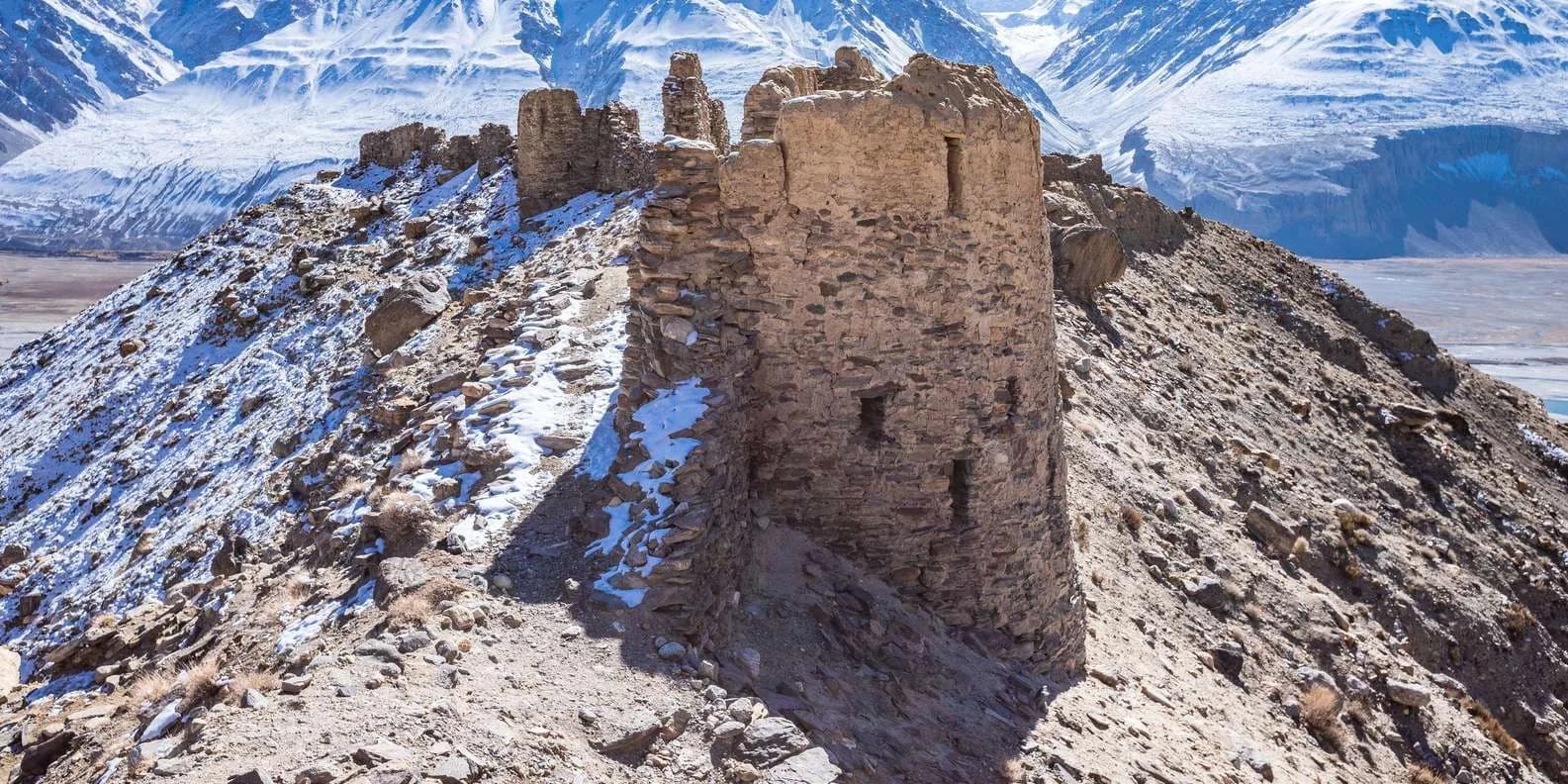
The mountain is a long rock spine of five summits dominating a flat, hazy valley. It reads as sacred landscape rather than a single monument: 101 indexed petroglyph sites, 17 places of worship still in active use and linked by footpaths, ritual caves in the flanks, and two 16th-century mosques (both heavily reconstructed). UNESCO calls it the most complete surviving picture of a sacred mountain anywhere in Central Asia, with worship traditions spanning more than 1,500 years and openly blending pre-Islamic and Islamic practice.
That blend is the point. Kyrgyz Islam carries a strong current of older nature reverence, and Sulaiman-Too is its greatest shrine. Trees along the paths are hung with strips of cloth, each tied with a wish. Smooth rocks are polished by generations of hands and bodies. It is a working pilgrimage site first and a tourist attraction second, and it feels that way when you are on it.
The name ties the peak to the prophet Sulaiman (Solomon), traditionally held to be buried or enshrined here. The mountain was also a caravan beacon: it stands where the routes coming west out of Kashgar over the Tien Shan and the Alay drop onto the Fergana floor and run on towards Samarkand. One theory even identifies it as Ptolemy's "Stone Tower", the classical midpoint of the Silk Road, though other candidates exist in Tajikistan, so treat that as a nice story rather than a settled fact.
What to see on the mountain
| Sight | What it is | Note |
|---|---|---|
| Summit mosque (Takht-i-Suleiman / Babur House) | Small white mosque at the highest point | Rebuilt 1990 on the spot where Babur is said to have prayed; free |
| Sulaiman-Too Museum Complex (the cave museum) | 13 rooms driven into a natural cave, 33,000+ exhibits | Small entry fee; the paid part of any visit |
| Petroglyphs | 101 indexed rock-art sites, Bronze Age onward | Human and animal figures, geometric forms |
| Sacred caves & the rock chute | Folk healing and fertility spots | Active pilgrimage; be discreet |
| Asaf ibn Burkhiya Mausoleum | Shrine attributed to the 9th-10th centuries | On the lower slopes |
| Prayer trees & ribbons | Cloth strips tied with wishes at springs and shrines | Do not remove them |
The summit and Babur's house
The small white mosque at the top is variously called Takht-i-Suleiman ("Throne of Solomon") or the Babur House. The Mughal connection is real: Babur, founder of the Mughal Empire, was the teenage ruler of Fergana before he ever reached India, and he wrote in his memoir, the Baburnama, about Osh and about a retreat he built on this ridge, first raised in 1497. The structure you see today is a 1990 reconstruction, so think of it as a shrine rebuilt on the spot where Babur prayed rather than his original walls. It is tiny, plain and unmissable on the skyline.
The cave museum
Halfway up the eastern flank, a startling late-Soviet concrete-and-glass arch is driven straight into the rock. This is the Sulaiman-Too National Historical and Archaeological Museum Complex, the base institution of which dates to 1949 and which remains one of Kyrgyzstan's largest museums. Inside are 13 rooms on two levels: the lower galleries are man-made, the upper level is the natural cavern itself, opening onto a panorama of Osh. More than 33,000 exhibits cover the archaeology, history and nature of the south, with a Silk Road section of manuscripts, coins, felt work and old photographs, and displays on shamanism and animism in the cave proper. The arch alone is worth a photo.
The pilgrimage spots
Domestic pilgrims, most of them women from around the Fergana rim, outnumber foreign tourists here, especially at weekends and around religious holidays. They come seeking cures for infertility, headaches and back pain, and blessings of long life. The best-known practice is sliding down a smooth, polished rock chute, said to help women conceive; other rocks are crawled through or rubbed. These are tolerated folk traditions, not doctrine, and they are quietly moving to watch. Keep your distance, and never photograph someone at prayer or on the chute without asking.
Climbing it, and the view
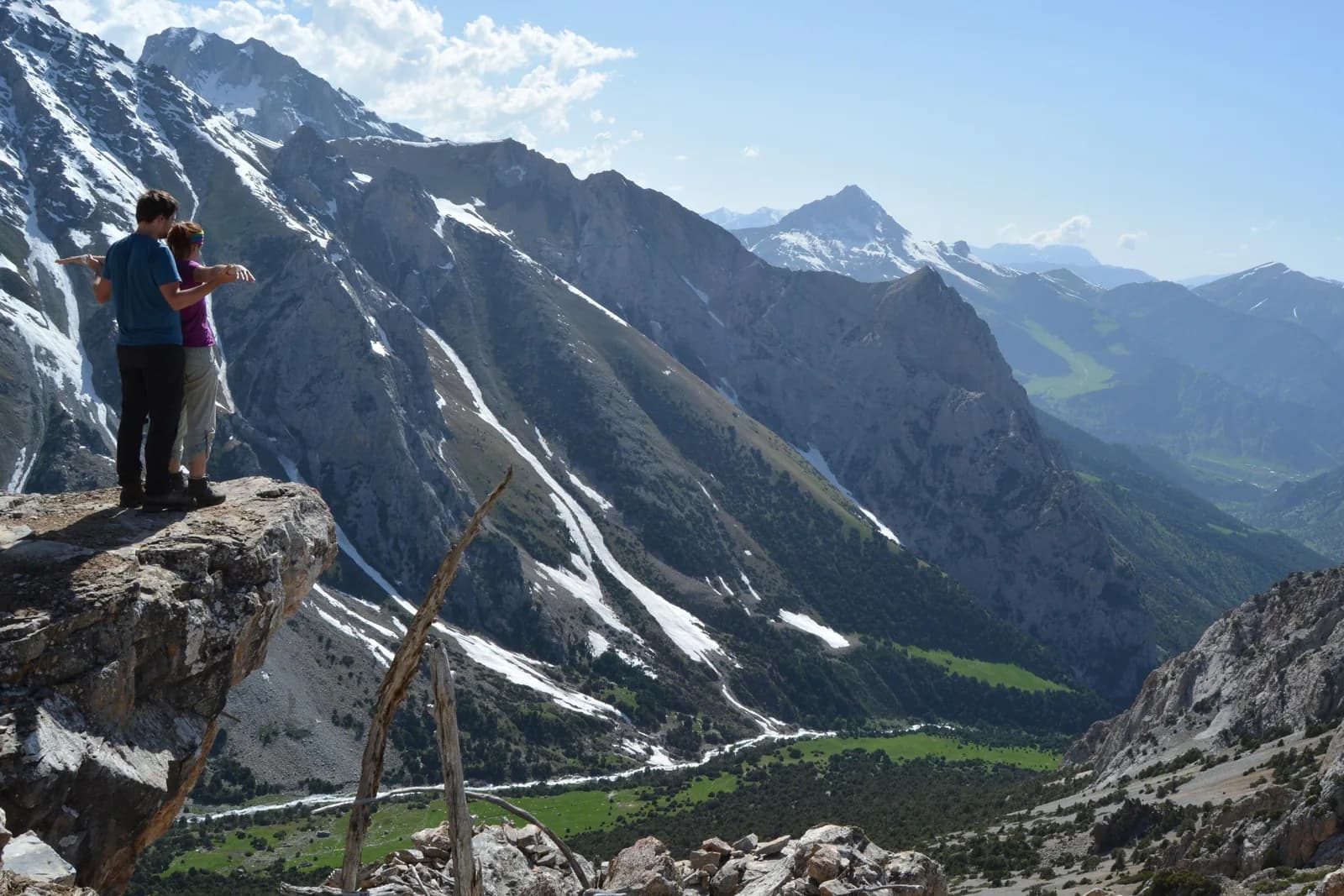
A stone-and-concrete staircase climbs from the eastern side. At an easy pace the summit mosque is 20 to 40 minutes up, longer if you stop at the shrines and the museum. It is a real climb but not a hard one, on steps most of the way; ordinary trainers are fine. From the top the whole Fergana Valley spreads out flat and hazy to the west, with the Alay foothills behind to the south, and Osh's grid and the green line of the Ak-Buura river laid out below.
The mountain is exposed and unshaded, and midday in a southern summer is genuinely punishing (afternoons in the mid-to-high 30s C, hotter than Bishkek because Osh sits lower, at roughly 950 to 1,010 m). Go at sunrise or in the last hour before sunset. Carry water and a hat. Budget one to two hours for the whole thing, more if the museum tempts you in.
How to visit, and combining it with the bazaar
Climbing the mountain and reaching the summit mosque is free. The only ticket is for the cave museum: guides variously quote around 100 to 250 KGS (roughly $1.20 to $3) and hours of about 09:00 to 17:00 or 18:00, often closed on Mondays, but no current official price or timetable could be confirmed, so check on the day. There is no booking; you turn up.
The obvious pairing is the bazaar, since Osh's market and its mountain have shared the same riverside for centuries. Be aware of a big 2025 change: the city relocated its major markets, including the famous Jayma Bazaar, out of the historic centre during that year, so a good deal of published copy describing a kilometre-long riverside market is now out of date. Ask your guesthouse what is trading centrally before you set off, and for knives, felt shyrdaks and the white ak-kalpak hats, ask where the sellers have moved to. Either way, a dawn climb followed by breakfast and a wander is the classic Osh half-day. For where everything sits and how to spend longer, see the Osh travel guide and the Osh destination hub.
Respectful behaviour on an active shrine
Treat Sulaiman-Too as you would a mosque, because in effect it is a whole hillside of them. Dress modestly: covered shoulders and long trousers or a long skirt, and a scarf for women who want to enter the summit mosque. Do not step on offerings, do not untie or take the prayer ribbons, and do not leave litter. Ask before photographing anyone worshipping. When you leave a shrine, you will see people cup both palms and draw them down over the face while murmuring "omin"; copying the gesture is welcome and never joining in is the only real misstep. None of this costs you anything, and it is the difference between visiting respectfully and gawping.
History, Babur and the name
Osh calls itself more than 3,000 years old, which makes it the oldest city in Kyrgyzstan; the claim rests on Bronze Age settlement layers on these very slopes rather than on continuous records, and the city celebrated its official 3,000th anniversary in 2000. For most of that time the mountain has been the reason the settlement mattered, both as a caravan marker and as a place of worship. Babur's fondness for it in the early 1500s is the best-documented moment in its long history, and the reconstructed summit mosque keeps his name attached to the peak. This deep, layered, Fergana-facing character is exactly what makes Osh feel more like an old Silk Road bazaar town than anywhere in the Kyrgyz north; if you are weighing a southern loop against a hop over the border, our take on Kyrgyzstan versus Uzbekistan puts Osh in that wider Central Asian context.
When to go
Spring (April to May) and September to October are the comfortable months, warm and clear without the valley's summer furnace. July and August are hot enough that the climb is only sensible at either end of the day. Winter is cold but the mountain stays open and the museum runs; the light in the low sun can be superb. Whenever you come, aim for sunrise or the golden hour before dusk, both for the temperature and for the way the valley haze softens under a low sun. Weekends and Muslim holidays bring the most pilgrims, which is atmospheric but busy.
If you want to fold Sulaiman-Too into a guided day that also takes in Osh's mosques, museums and Uzbek old quarters, browse our culture and history tours and pick a local guide who knows the shrine etiquette. It is the single best introduction to the Kyrgyz south.
Chat with a real person — free
Seif and the team reply on WhatsApp 24/7 — trip questions, custom plans and booking help.
Ask Seif on WhatsAppCommon questions
Is Sulaiman-Too worth visiting?
Yes. It is Kyrgyzstan's only UNESCO World Heritage cultural site and the defining sight of Osh, combining a genuine 1,500-year-old pilgrimage tradition with the best views over the Fergana Valley. The climb is short and free, the cave museum is unusual and good, and the mix of Islamic and older nature worship is unlike anything else in the country. For most travellers it is the single reason to spend a morning in Osh.
How much does it cost to visit Sulaiman-Too?
Climbing the mountain and reaching the summit mosque is free. The only charge is for the cave museum, the Sulaiman-Too National Historical and Archaeological Museum Complex, which guides quote at roughly 100 to 250 KGS (about $1.20 to $3). No current official price or opening times could be confirmed, and it is often closed on Mondays, so confirm both on the day. There is no advance booking.
How long does it take to climb Sulaiman-Too?
About 20 to 40 minutes up the stone staircase from the eastern side at an easy pace, and less coming down. Allow one to two hours in total if you stop at the shrines, and add more if you go into the cave museum. It is a genuine climb but not a hard one, mostly on steps, and ordinary trainers are fine.
Why is Sulaiman-Too a UNESCO World Heritage Site?
It was inscribed in 2009 as the most complete surviving example of a sacred mountain in Central Asia, worshipped for well over 1,500 years and openly blending pre-Islamic and Islamic practice. The property holds 101 petroglyph sites, 17 active places of worship, ritual caves and two 16th-century mosques. It was Kyrgyzstan's first World Heritage Site and remains the only one lying wholly within the country.
What is the Babur House on the summit?
It is the small white mosque at the top, also called Takht-i-Suleiman, the Throne of Solomon. Babur, founder of the Mughal Empire, was the teenage ruler of Fergana and wrote in the Baburnama about a retreat he built on this ridge, first raised in 1497. Today's structure is a 1990 reconstruction, so it marks the spot where Babur prayed rather than being his original building.
When is the best time to visit?
Spring (April to May) and September to October are the most comfortable, warm and clear without the summer heat. July and August in Osh are punishing, so climb only at sunrise or the last hour before sunset. The mountain is exposed and unshaded, and Osh sits lower and hotter than Bishkek. Whatever the season, early morning or late afternoon gives the best light and the coolest air.
What should I wear and how should I behave?
Treat it as an active shrine. Dress modestly, with covered shoulders and long trousers or a skirt, and carry a scarf if you want to enter the summit mosque. Do not step on offerings, remove prayer ribbons or leave litter, and always ask before photographing anyone worshipping. When people cup their palms and draw them down their faces saying omin as they leave a shrine, copying the gesture is welcome and appreciated.
Can I combine Sulaiman-Too with the Osh bazaar?
Yes, and a dawn climb followed by the market is the classic Osh half-day. Note that the city relocated its major markets, including Jayma Bazaar, out of the historic centre during 2025, so older descriptions of a long riverside market are now out of date. Ask your guesthouse what still trades centrally before setting off, especially if you want knives, felt shyrdaks or the white ak-kalpak hats.
What is inside the cave museum?
The Sulaiman-Too Museum Complex has 13 rooms on two levels driven into a natural cave, entered through a striking late-Soviet concrete-and-glass arch. The lower galleries are man-made; the upper level is the natural cavern, opening onto a panorama of Osh. More than 33,000 exhibits cover the archaeology, history and nature of southern Kyrgyzstan, with a Silk Road section of manuscripts, coins and felt work, plus displays on shamanism and animism.
Book it on This is Kyrgyzstan
Turn this guide into a trip



Kyrgyzstan's bestsellers
The experiences travelers book most, across the country
Keep reading
Self-Guided Treks in Kyrgyzstan: Routes & How-To
Yes, you can trek Kyrgyzstan without a guide. The best self-guided routes, the ones to skip, and the maps, water and safety logistics that make it work.
By TiK Editors12 min read
Uchitel Peak: Your First 4,000m Climb (2026)
Pik Uchitel (~4,400-4,600 m) in Ala-Archa is the classic first summit for fit hikers new to mountaineering: route, gear, season and acclimatisation.
By TiK Editors8 min read
Tian Shan Traverse: Bikepacking Kyrgyzstan
The Tian Shan Traverse is a self-supported, mostly off-road bikepacking route of about 1,000 km across the high Kyrgyz mountains. Here's how to plan it.
By TiK Editors9 min read