 Image via GetYourGuide
Osh Travel Guide: Kyrgyzstan's Silk Road South (2026)
Sulaiman-Too, the relocated bazaar, the best plov in Kyrgyzstan and the road to the Pamirs — a current, honest guide to Osh, updated for the 2025 changes.
Book it on This is Kyrgyzstan
Osh · Turn this guide into a trip

Osh is Kyrgyzstan's southern capital in everything but name: a hot, low, Ferghana Valley bazaar city that claims 3,000 years of history, sits beneath the country's first UNESCO World Heritage site, and works as the trailhead for the Pamir Highway. Give it one full day for Sulaiman-Too, the bazaar and the food, a second for museums and onward logistics. It is not a smaller Bishkek but a different country in feel — and two changes in 2025 made most published Osh guides wrong.
Best things to do in Osh
Osh rewards a focused day or two. Here are the things actually worth your time, roughly in the order most travellers reach them.
- Climb Sulaiman-Too Sacred Mountain. Kyrgyzstan's first UNESCO World Heritage site is a five-peaked limestone ridge rising straight out of the streets, and it is still a working pilgrimage mountain rather than a tourist viewpoint. The stone staircase from the east takes 20–40 minutes; go at first light or the hour before sunset, never at midday — see our Sulaiman-Too guide.
- Duck into the cave museum. A late-Soviet arch of concrete and glass driven into the rock face, with 13 rooms, a natural cavern opening over the city, and 33,000-plus objects including a Silk Road collection. It is listed at 150 som and closed Mondays, but confirm at the gate.
- Walk the bazaar as it stands now. Osh's central markets were relocated to a new municipal bazaar on the western edge of town through July 2025, so ignore older guides sending you to the riverside. Ask your guesthouse where trading has settled, go early, and hunt down the knife smiths and the hat row where the white ak-kalpak sits beside the Uzbek doppa.
- Eat the best plov in Kyrgyzstan. This is essentially Ferghana Valley Uzbek plov cooked on the Kyrgyz side of the border, out of vast kazans, and the good counters sell out by early afternoon. Add tandyr samsa and a bowl of boso lagman and you have arguably the finest eating in the country — more in our Kyrgyz food guide.
- See Babur's House and the old-town mosques. The white summit mosque, said to mark the retreat the teenage Babur built in 1497 (what stands is a 1990 rebuild), crowns the ridge; down in town the 16th-century Rabat Abdulkhan Mosque is among the oldest surviving buildings in Osh and still in use.
- Work through the museums. The National Historical and Archaeological Museum Complex — the Sulaiman-Too complex together with the Museum of the History of Osh — holds the archaeology and the Silk Road material, and the Kurmanjan Datka museum sits inside a three-storey yurt for around 80 som.
- Use Osh as the gateway south. This is the city's real strategic value: the M41 climbs to Sary-Tash and forks for Tajikistan, China or the Alay. Osh is the only sensible launch point for the Pamir Highway, over the Taldyk pass and up towards the roughly 4,200 m Kyzyl-Art.
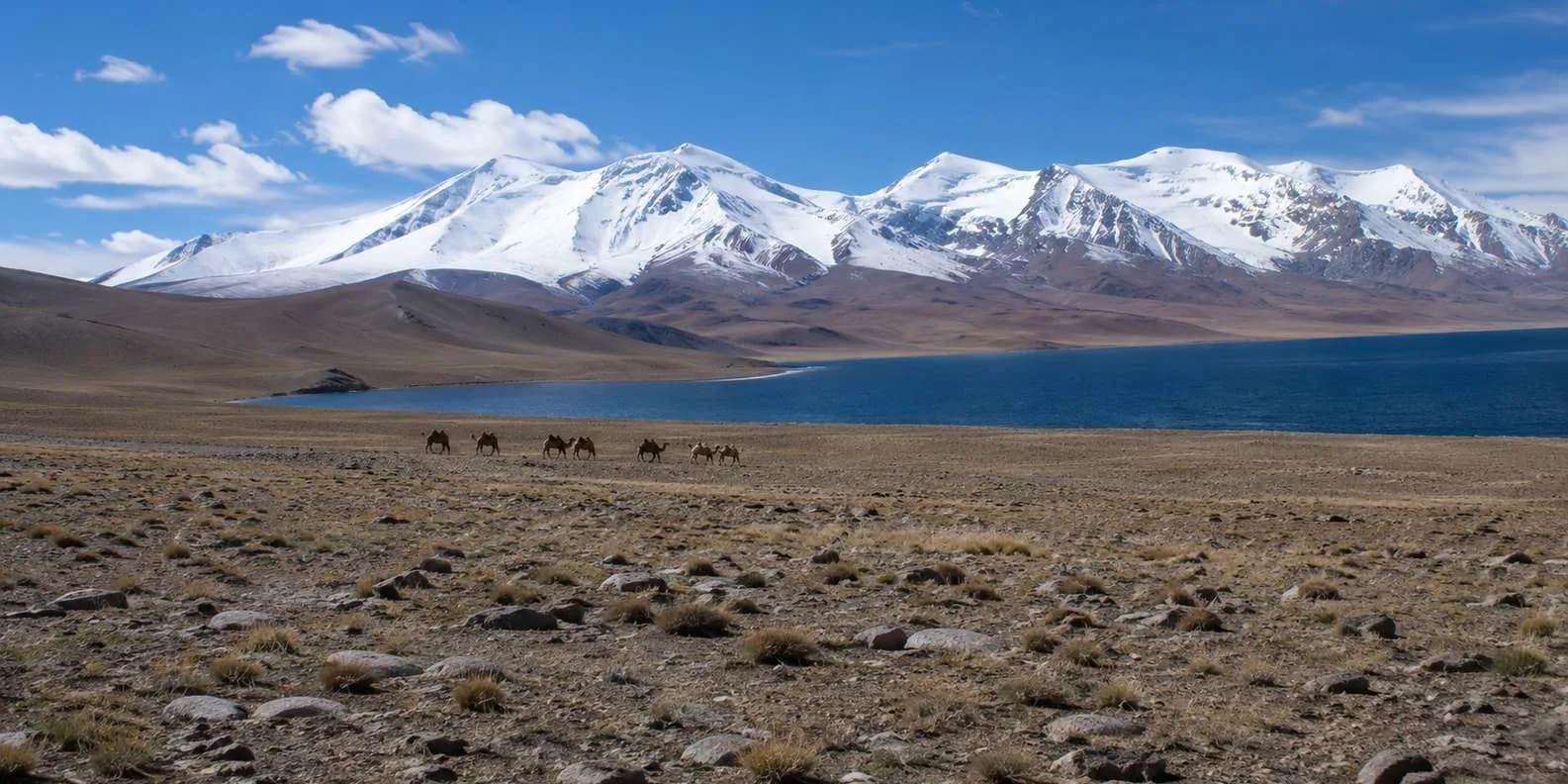
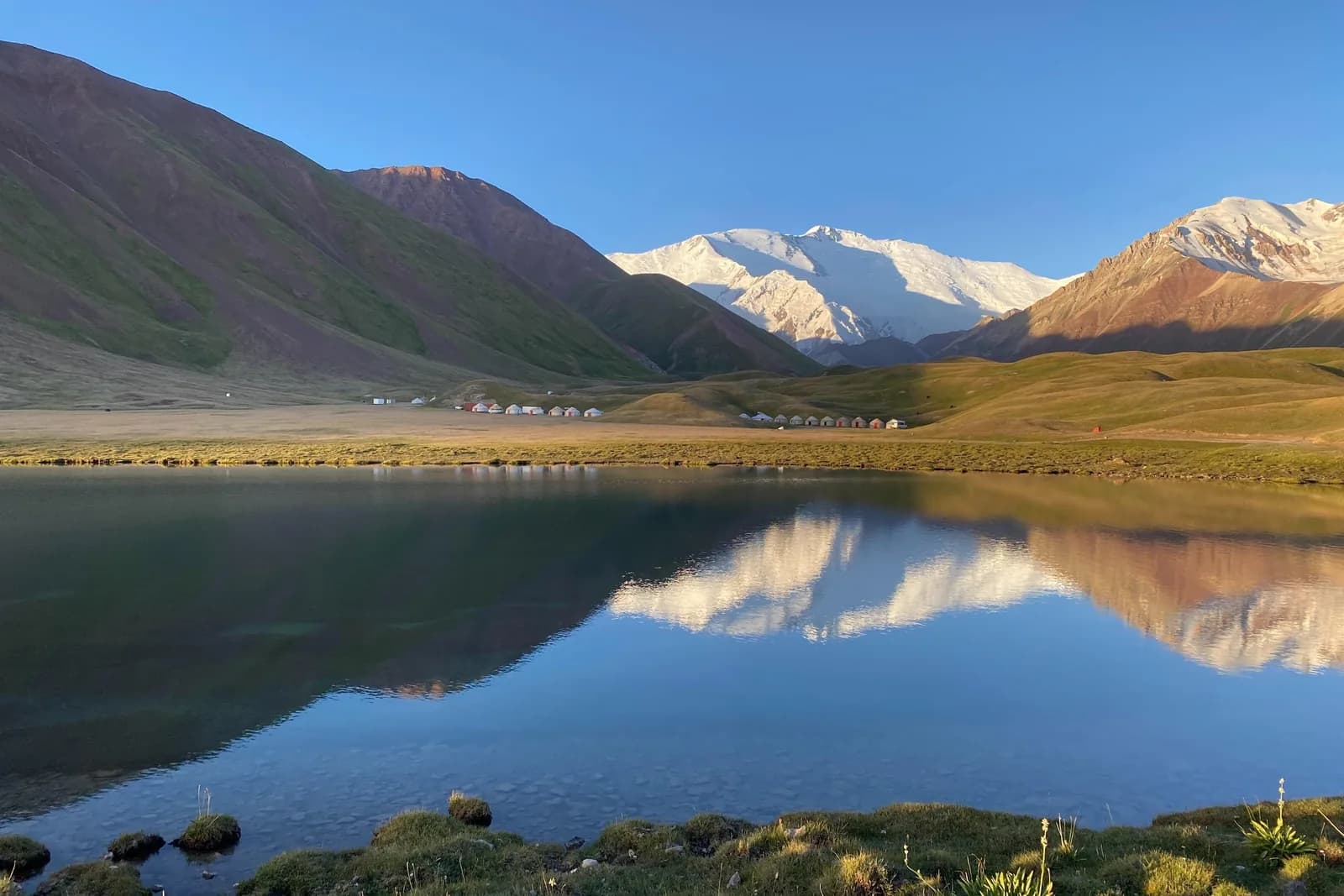
- Get under Lenin Peak in the Alay. The Alay valley is an underrated high-steppe corridor with the Trans-Alay wall filling the southern horizon; from Sary-Mogol it is a short 4WD hop to the Tulpar-Köl lakes at around 3,600 m, below the 7,134 m face — see our Peak Lenin base camp guide.
- Drive in on the Bishkek–Osh road. If you have the day, the 600-odd km over the Töö-Ashuu tunnel and the Ala-Bel pass is one of Central Asia's great drives — the slow, spectacular alternative to the 45-minute flight, laid out in our Bishkek to Osh road-trip guide.
- Trace the Silk Road. Osh has been a Ferghana market town for millennia, and the pichak smiths, the non ovens and the caravan-era approaches to Sulaiman-Too still read as one long trade story — background in our Silk Road in Kyrgyzstan guide.
Orientation: where you actually are
Osh sits at roughly 950–1,010 m (sources differ) at the eastern head of the Ferghana Valley, about 600 km from Bishkek by road (sources give 600–670 km depending on routing). Population figures are a mess: about 320,000 in the historic city, over 700,000 across the enlarged administrative boundaries. By census the city is roughly half Kyrgyz and half Uzbek, with Uzbek families dominant in the old mahalla quarters and the bazaar trades. That is what you feel: Uzbek food, courtyard houses behind blank walls, more mosques than Bishkek, Uzbek and Russian heard as often as Kyrgyz. Bishkek is a Soviet grid at 800 m under the Ala-Too; Osh is a Silk Road market town facing west into Uzbekistan, with Andijan an hour or two through the Dostuk crossing.
Climate is the planning point: July afternoons routinely reach the mid-to-high 30s, with no lake and no altitude to soften them. Skip mid-July and August; April–May and September–October are the good months.
The two 2025 changes that broke every older guide
Lenin moved. Osh's 23 m Lenin, erected 1975 and widely reported as Central Asia's tallest, was dismantled over 6–8 June 2025 and re-erected in Meerim Park, directly behind its old position; a flagpole went up on the square. Any guide sending you to the square for it is out of date.
The central markets moved. Through July 2025 the city relocated Osh's main markets — Beksultan and Shokolad on 27 July, Kelechek on 31 July — to a new municipal bazaar on the western edge of town along Bekmata Osmonov street, with Jayma Bazaar caught up in the same programme. The stated driver was flood damage from the Ak-Buura; locally, plenty assume the riverside land is wanted for development. Reports conflict on the geography, and the national tourism board's own page still describes Jayma as a working riverside market. Ask your guesthouse what is trading where.
Sulaiman-Too Sacred Mountain
Sulaiman-Too is why Osh is here at all: a five-peaked limestone ridge rising straight out of the streets, a beacon for millennia to caravans dropping onto the Ferghana plain. Inscribed in 2009, it was Kyrgyzstan's first cultural World Heritage site and remains the only one lying wholly inside the country. UNESCO calls it the most complete surviving example of a sacred mountain in Central Asia and counts 101 petroglyph sites and 17 working places of worship across it.
It is a working pilgrimage site first and a viewpoint second: domestic pilgrims, mostly women from the Ferghana rim, outnumber foreign visitors. UNESCO records the traditions plainly — cures sought for barrenness, headaches and back pain, blessings of longevity. The best known is sliding down a rock chute polished glassy by generations of bodies, said to help women conceive. Dress modestly; ask before photographing anyone at prayer.
The white mosque on the summit — Takht-i-Suleiman, known locally as Babur's House — marks the retreat Babur, then teenage ruler of Ferghana and later founder of the Mughal empire, is said to have built in 1497; what stands is a 1990 reconstruction. The cave museum below is a late-Soviet arch of concrete and glass driven into the rock face: 13 rooms on two levels, the upper one a natural cavern opening over the city, with 33,000-plus objects and a Silk Road collection.
Destination Osh, the local operator association with a visitor centre in town, lists 20 som (US$0.23) for the mountain and 150 som (US$1.70) for the museum, open 09:00–12:00 and 13:00–18:00 and listed as closed Mondays. No official national source publishes these, so confirm at the gate. The climb is a stone staircase from the east, 20–40 minutes; go in the hour before sunset or first thing, because the ridge is unshaded and brutal at midday.
The bazaar, as it stands now
Whatever address it now trades from, the bazaar is the second reason to come. It ran long and narrow along both banks of the Ak-Buura, footbridges linking the sides — the geometry the move destroyed. The 2,000-year trading claim locals repeat is tradition, not archaeology.
What is sold is the point: dried fruit, Arslanbob walnuts in autumn, spices, stacks of non, chapans, felt shyrdaks. Hunt down two trades — the knife smiths selling southern Kyrgyz and Uzbek pichak from their own row, and the hat sellers, where the white felt ak-kalpak sits beside embroidered Uzbek doppa on one table. That table tells you more about Osh than any museum caption. Go early: 07:00–09:00 is the classic window, Sunday the biggest day, and bring cash.
The rest of the city
Rabat Abdulkhan Mosque (16th century) is among the oldest surviving buildings in Osh and still active — low, brick, southern Ferghana rather than Samarkand. The Silk Road museum is not a separate building but the non-cave half of the Sulaiman-Too complex; the Museum of the History of Osh holds the archaeology, and the Kurmanjan Datka museum, in a three-storey yurt, costs around 80 som. Silk Road sculpture stands near the Sulaiman-Too complex, though Osh's civic monuments have been rearranged repeatedly — confirm locally. Evenings belong to the Ak-Buura embankment and the parks.
Food: the best eating in Kyrgyzstan
For the best plov in Kyrgyzstan, Osh is the answer, because this is essentially Ferghana Valley Uzbek plov cooked on the Kyrgyz side of the line. The word runs both ways — osh is the dish and Osh is the city, though the city is not named after the rice. It comes out of vast kazans, it is lunchtime food, and the best places sell out by early afternoon: 200–400 som (US$2.30–4.60) at a bazaar counter, 450–700 som in a restaurant.
Around it: tandyr samsa, slapped onto the wall of a clay oven so the base blisters and the top glazes (60–150 som); non flatbread with its stamped, dimpled centre; lagman soupy, guyru with sauce poured over, or boso, fried dry and the one most travellers want, 250–500 som at a chaikhana. Southern cooking runs more Uzbek and more vegetable-forward than the mutton-and-noodle north — see our Kyrgyz food guide.
Osh as a gateway
This is Osh's real strategic value. The road climbs south to Sary-Tash and forks: Tajikistan, China, or the Alay. Eugene Schuyler, looking across Ferghana in 1873, put it well — "on the east and south rises the magnificent snow-covered range of the Alai" (Turkistan, 1876).
| Route from Osh | Distance | Realistic time | How |
|---|---|---|---|
| Sary-Tash (Pamir Highway junction) | ~185 km | 3–4 h | Marshrutka ~350 som |
| Sary-Mogol (Alay / Lenin Peak) | ~220 km | 3–5 h | Daily marshrutka ~300 som |
| Kyzyl-Art pass → Tajikistan | ~260 km | Full day | Own vehicle; GBAO permit |
| Irkeshtam pass → China | ~250 km | Full day | No transport in the no-man's-land |
| Jalal-Abad | ~100 km | ~2 h | Shared taxi ~250 som |
| Arslanbob | ~130 km | 3–5 h | Marshrutka ~13:30, ~200 som |
The Pamir Highway (M41) runs Osh–Gulcha–Taldyk pass (3,615 m)–Sary-Tash–Bor-Dobo–Kyzyl-Art (about 4,200 m; sources give 4,180 m and 4,280 m)–Karakul–Murghab, with roughly 20 km of no-man's-land at the border. Tajik GBAO permit rules have fluctuated since 2021 — check before committing to a Khorog plan.
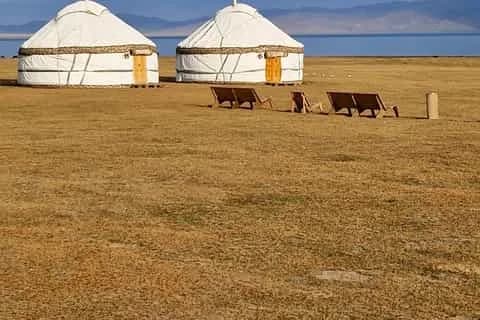
The Alay valley is underrated: a broad, treeless high steppe corridor with the Trans-Alay wall filling the southern horizon. Sary-Mogol is the community-tourism base, 45 minutes by 4WD from Tulpar-Köl, the lakes beside Lenin Peak base camp at around 3,600 m; yurt stays from about 1,000 som with meals, July and August only. Three hours on foot to Traveller's Pass (~4,100 m) buys the full 7,134 m face of Lenin Peak without touching a rope. North instead, Arslanbob holds the world's largest natural walnut forest — see our Arslanbob guide and two-week itinerary.
Getting there and getting around
Fly. Bishkek (BSZ, not the old FRU code) to Osh (OSS) is 40–45 minutes, roughly six departures daily, at roughly 2,800–6,000 som ($32–68) — economy fares are commonly quoted at 4,265–5,801 som. Winter fog cancels flights regularly, so never connect one tightly to an international departure. By road it is a shared taxi (roughly 1,500–2,500 som a seat) or an overnight sleeper bus at about 1,000 som — about 600 km over the Töö-Ashuu tunnel and the Ala-Bel pass, 10–12 hours' driving and 11–13 in practice with stops. The drive is spectacular if you have the day to spare.
The airport is 9–11 km out: taxi 250–400 som, Yandex Go around 170. In town, Yandex Go and Namba Taxi remove the haggling. Long-distance departures split between the New Bus Station (north) and the Old Bus Station (the Alay, Sary-Tash, Irkeshtam) — and because the bazaars moved, some stands shifted too. More in our guide to getting around Kyrgyzstan.
2010, and Osh today
People search for this, so here it is straight. Ethnic violence between Kyrgyz and Uzbek communities began in Jalal-Abad in May 2010 and escalated sharply in Osh from 10 June. A Kyrgyz national commission recorded 426 deaths — 276 Uzbeks, 105 Kyrgyz; official ranges reach 893 and unofficial estimates far higher, with over 2,000 buildings destroyed and hundreds of thousands displaced. An independent international commission found some acts would amount to crimes against humanity if proven.
That was sixteen years ago. Osh today is calm, ordinary and routinely visited, and as of 2026 the UK FCDO carries no advise-against-travel zone anywhere in Kyrgyzstan; the real risks are traffic, heat and pickpockets. But 2010 is within living memory here and the Uzbek community's position remains sensitive — do not raise it with strangers. Our Kyrgyzstan safety guide has the current picture.
Where to stay, what to do, what it costs
Stay central, within walking distance of Sulaiman-Too and the Ak-Buura. Hostel beds run roughly US$11–18, budget private rooms US$18–25, mid-range guesthouses and hotels US$28–55; rooms out by the new bazaar are cheaper and not worth the taxi fares back.
One day: Sulaiman-Too and the cave museum first thing while it is cool; plov at a bazaar counter; Rabat Abdulkhan Mosque after; the mountain again for sunset. Two days: add the bazaar at 07:00 wherever it now stands, Lenin in Meerim Park, and either Uzgen's Karakhanid minaret or an early start for the Alay.
The city itself is close to free — 20 som for the mountain, 150 for the museum, 300 for a plov. Money goes on the trips out: our marketplace median for Osh-based experiences is about US$960, high precisely because multi-day Pamir and Alay expeditions dominate it rather than city sightseeing, where culture trips run nearer US$113 and food experiences nearer US$40.
Browse what is running on our Osh destination page, or start with the culture and history and food and local life trips if you want a local to walk you through the mountain and the bazaar.
Chat with a real person — free
Seif and the team reply on WhatsApp 24/7 — trip questions, custom plans and booking help.
Ask Seif on WhatsAppCommon questions
Is Osh worth visiting?
Yes, for one to two days. Sulaiman-Too is Kyrgyzstan's first UNESCO World Heritage site and an active pilgrimage mountain, the food is the best in the country, and the city feels nothing like Bishkek — older, hotter and culturally Ferghana Valley. It is also the only sensible launch point for the Pamir Highway and the Alay.
How many days do you need in Osh?
One full day covers Sulaiman-Too, the cave museum, the bazaar and a proper plov lunch. Two days lets you add the smaller museums, Meerim Park, a half-day to Uzgen, and time to sort transport south. Anyone heading to the Alay or Tajikistan should allow a buffer day for logistics.
How much does it cost to visit Sulaiman-Too?
Destination Osh, the local operator association, lists 20 som (about US$0.23) for the mountain and 150 som (about US$1.70) for the cave museum, with guided tours at 500 som per person for groups of three or more. The museum runs roughly 09:00–12:00 and 13:00–18:00 and is listed as closed Mondays. No official national source publishes these figures, so confirm at the gate.
Does Jayma Bazaar still exist in Osh?
Not on its old riverside site in the way guidebooks describe. Osh's central markets were relocated to a new municipal bazaar on the western edge of the city through July 2025, and reports conflict on exactly what still trades in the centre. Ask your guesthouse where to go on the day — the situation is still moving.
Where is the Lenin statue in Osh now?
In Meerim Park, immediately behind its former position on the main square. The 23 m statue, erected in 1975 and reported as Central Asia's tallest, was dismantled over 6–8 June 2025 and re-erected there; a flagpole now stands on the square.
Is Osh safe for tourists?
Yes. Osh is calm, routinely visited and covered by no travel restriction: as of 2026 the UK FCDO has no advise-against-travel zone anywhere in Kyrgyzstan. Day to day the risks are traffic, summer heat and bazaar pickpocketing. The 2010 violence is sixteen years past and not a live conflict, but it remains a sensitive local subject — our Kyrgyzstan safety guide sets out the casualty figures and the findings in full.
How do you get from Bishkek to Osh?
Fly. Bishkek (BSZ) to Osh (OSS) takes 40–45 minutes with around six departures daily at roughly 2,800–6,000 som ($32–68), economy fares commonly quoted at 4,265–5,801 som. The alternative is about 600 km of road — 10–12 hours' driving, 11–13 in a shared taxi with stops — for roughly 1,500–2,500 som, or an overnight sleeper bus at about 1,000 som. Flights cancel in winter fog.
When is the best time to visit Osh?
April–May and September–October. Osh sits low in the Ferghana Valley and July–August afternoons regularly hit the mid-to-high 30s Celsius, hotter than anywhere else travellers go in Kyrgyzstan. Autumn also brings the Arslanbob walnut harvest and the best bazaar fruit.
Can you cross to Tajikistan or China from Osh?
Both, in principle. The Pamir Highway runs south to the Kyzyl-Art pass (about 4,200 m) into Tajikistan, which needs a GBAO permit and whose status has fluctuated since 2021. Irkeshtam (about 2,850–3,005 m; sources differ) is the crossing to Kashgar, easier than Torugart for independent travellers but with no transport across the no-man's-land. Verify current rules first.
Book it on This is Kyrgyzstan
Turn this guide into a trip

Kyrgyzstan's bestsellers
The experiences travelers book most, across the country
Keep reading
Self-Guided Treks in Kyrgyzstan: Routes & How-To
Yes, you can trek Kyrgyzstan without a guide. The best self-guided routes, the ones to skip, and the maps, water and safety logistics that make it work.
By TiK Editors12 min read
Uchitel Peak: Your First 4,000m Climb (2026)
Pik Uchitel (~4,400-4,600 m) in Ala-Archa is the classic first summit for fit hikers new to mountaineering: route, gear, season and acclimatisation.
By TiK Editors8 min read
Tian Shan Traverse: Bikepacking Kyrgyzstan
The Tian Shan Traverse is a self-supported, mostly off-road bikepacking route of about 1,000 km across the high Kyrgyz mountains. Here's how to plan it.
By TiK Editors9 min read