 Image via GetYourGuide
Kyrgyz Food Guide: What to Eat in Kyrgyzstan (2026)
Kyrgyzstan eats three cuisines at once — nomad, Ferghana and Dungan. What beshbarmak, lagman and ashlyamfu really are, what they cost, and how to order.
Book it on This is Kyrgyzstan
Turn this guide into a trip
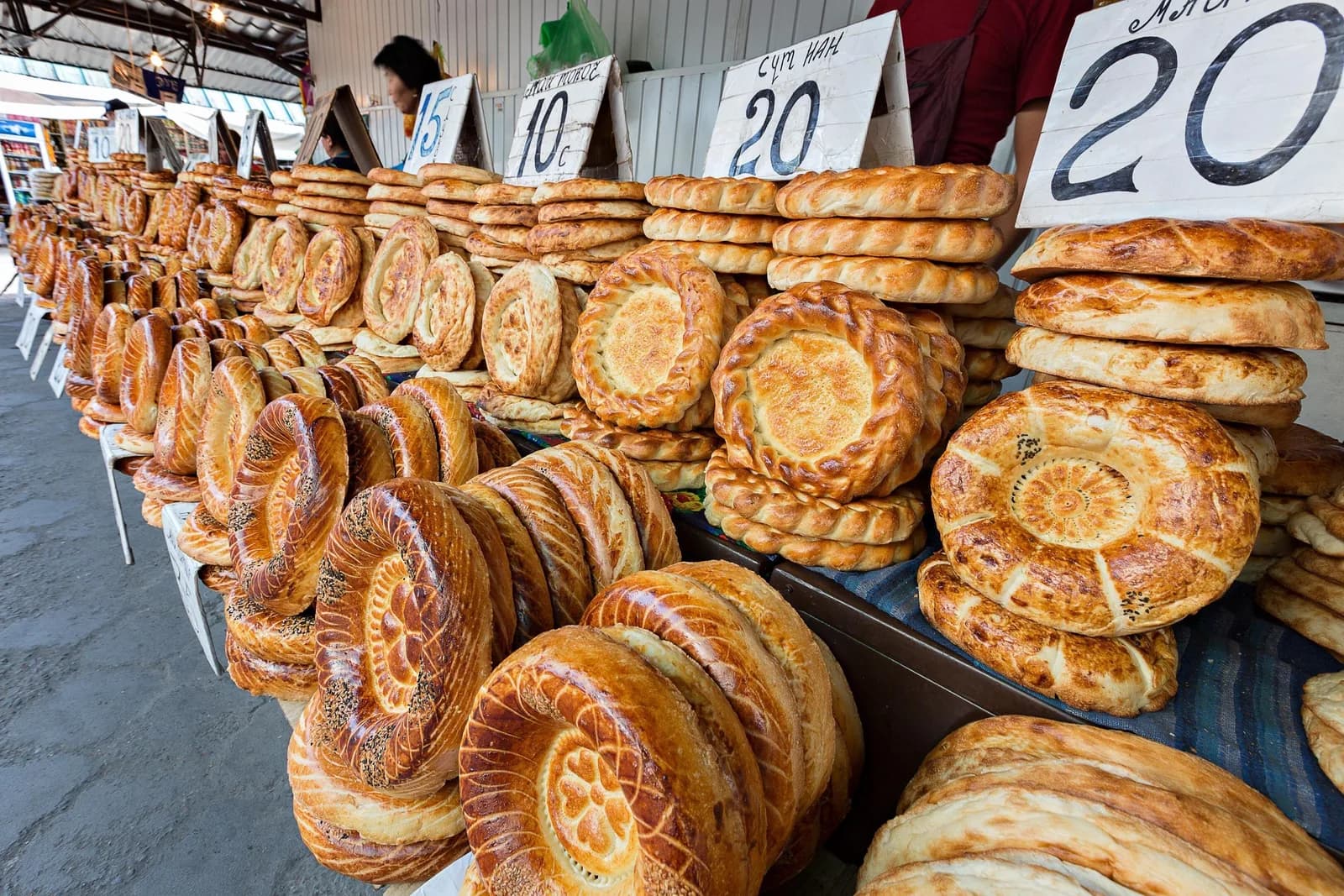


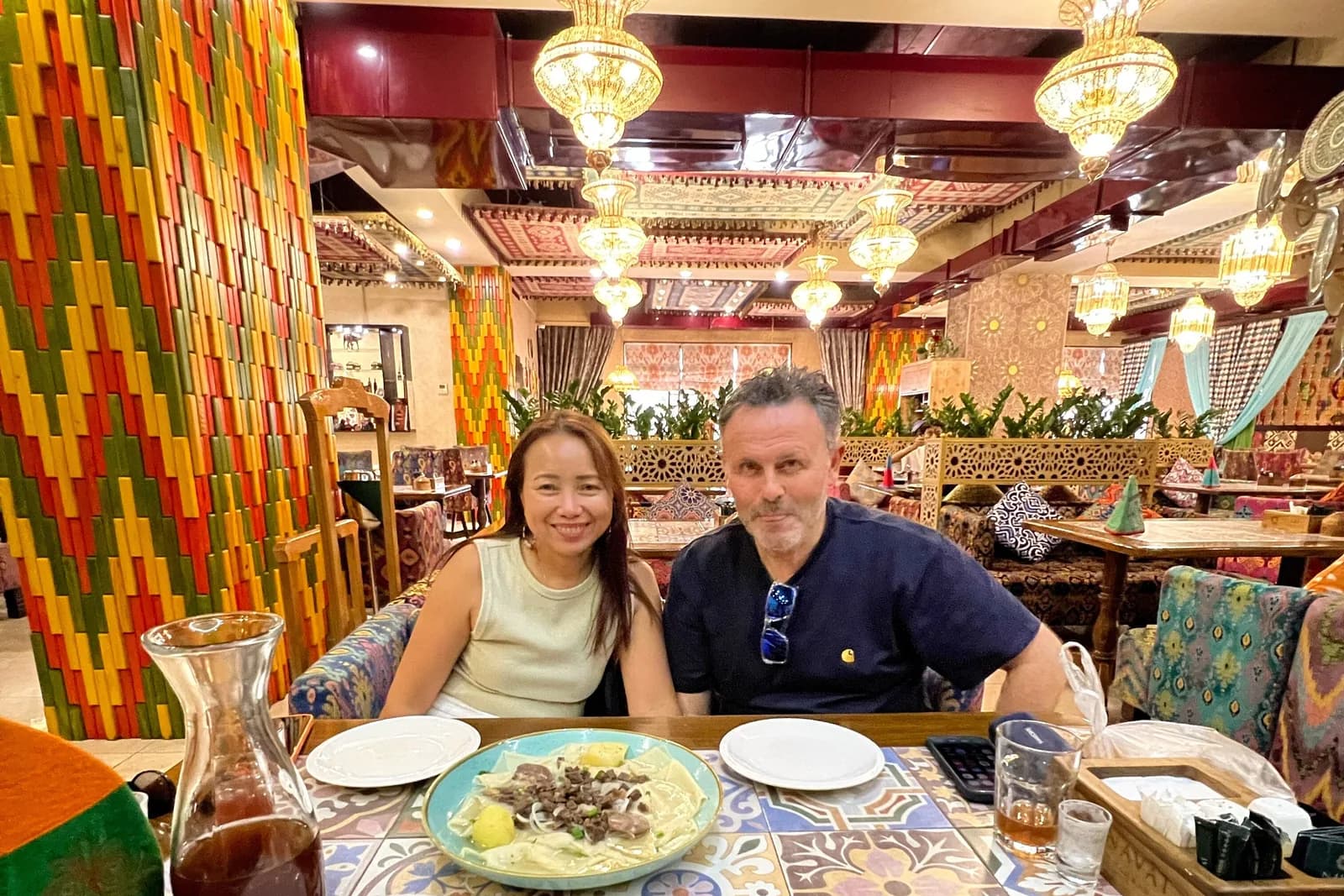
Kyrgyzstan eats three cuisines at once, and once you see that, the menus stop being a wall of strange words. There is the nomad-pastoral core — boiled meat, wide hand-cut noodles, fried offal, fermented mare's milk. There is the settled Ferghana south: plov, tandyr bread, samsa. And there are the Dungan and Uyghur kitchens that arrived with refugees in the late 1870s and gave Karakol its cold noodles and its lagman. Order along those three lines and you eat very well. Prices below are August 2026 at 87.45 som to the dollar (National Bank rate, 30 August 2026 — call it 87–88); carry cash, because bazaars and yurt camps take nothing else.
The nomad core
Beshbarmak is the national dish, and the name means "five fingers" because you eat it with your hand. Meat — classically horse, often mutton or beef — simmers for hours in its own broth, then goes torn over wide hand-cut noodles (kesme) with onion and an onion-broth sauce, on one communal platter. It is not everyday food: it is what a household cooks for a wedding, a funeral or a guest it wants to honour, and Kazakhs claim it too, with equal right. Stress the last syllable, besh-bar-MAK. Around it come sorpo (the cooking broth, drunk from a bowl), cold slices of chuchuk horse sausage, kurut and boorsok.
At a feast the sheep is butchered into named portions allotted by seniority, the head going to the most honoured guest; a botched distribution was historically a serious insult between families. You will read that the eye is given to the guest and the ear to a child — that lore is everywhere in travel writing and has no ethnographic source behind it. What matters is what you do: take the platter with both hands, cut a small piece (cheek and jowl are the good parts), eat it, then carve and pass pieces round. You needn't clear your plate, and one refusal reads as politeness, not a real no.
Beyond that: kuurdak, meat and often liver and kidney fried hard with onion and potato; shorpo, the bone-in soup that doubles as the standard yurt dinner; dymlama, a stew steamed in its own moisture; and shashlyk off the coals by the skewer, where two or three is a meal.
The Ferghana south
Kyrgyz call plov paloo or osh — the same word as the city, though the city is not named for the dish. Rice cooked in a kazan with fried mutton, carrot, onion, garlic and a Kyrgyz touch: jusai, garlic chives. Kyrgyz paloo runs simpler and fattier than the codified Uzbek schools with their chickpeas, raisins and barberries. The best plov in the country is in Osh, and the honest reason is that Osh is an Uzbek-majority Ferghana city cooking Ferghana plov. Eat it at lunchtime; the good kazans are scraped out by mid-afternoon (Osh travel guide).
Tandyr samsa is baked, never fried — slapped onto the wall of a clay oven, which blisters the base. Eat it within minutes; the cold ones in a glass case are a different food. Manty are big pleated steamed dumplings with butter or kaymak; bite a small hole first and drink the juice or you'll wear it. Oromo is thin dough rolled round a filling and steamed, and the cabbage-and-carrot version is one of the few dependable meat-free hot dishes here. Chuchvara and Russian pelmeni cover the small-dumpling end.
The Dungan and Uyghur kitchens
In the severe winter of 1877–78, Hui Muslim refugees fled Qing reprisals across the mountains. About 1,130 people from Gansu, under the ahong Ma Yusuf, were settled in spring 1878 at Yrdyk, 15 km from Karakol; another thousand from Turpan went to Osh. Sites dating these dishes to the mid-18th century are simply wrong. Dungans speak a Mandarin dialect written in Cyrillic and cook northwest-Chinese food made halal — Chinese flavours, no pork.
Ashlyamfu (ashlan-fu) is the best single reason to eat in Karakol. It is cold: two noodles in one bowl, thick jelly-like starch strips and thin wheat ones, in a sharp vinegar-and-chilli bouillon with herbs and often shredded egg, with a fried potato pattie to dunk. It is also the local hangover cure. The alley of competing family stalls in Karakol's Small Bazaar is the place (Karakol guide).
Lagman is where guides get muddled, because three dishes share the name. Soup lagman is noodles in spiced broth, eaten with a spoon. Boso lagman is fried — noodles stir-fried dry with meat and vegetables — and it is the one most travellers actually want. Guyru sits between: boiled noodles with the sauce ladled over rather than swimming. Some menus swap the last two, so ask; laza chilli oil is on the table for you to add. Also order ganfan, the same sauce over steamed rice, and goshnan, the crisp Uyghur meat pie, rarely on menus and best got at a home dinner. A Dungan family dinner — or hogo hot pot — is booked ahead, roughly 800–1,500 som ($9–17) a head.
What things cost
| Dish | What it is | Where it's best | Som / USD |
|---|---|---|---|
| Beshbarmak | Boiled meat over wide noodles | A home feast; Bishkek chaikhanas | 350–700 / $4–8 (a restaurant main; a home feast is not priced) |
| Boso lagman | Dry-fried pulled noodles | Karakol; any Uyghur kitchen | 250–500 / $3–5.70 |
| Ashlyamfu | Cold Dungan noodles, vinegar-chilli | Karakol Small Bazaar | 60–120 / $0.70–1.40 |
| Plov (osh) | Rice, mutton, carrot, garlic chives | Osh, at lunchtime | 200–400 / $2.30–4.60 |
| Tandyr samsa | Baked mutton or potato pastry | Any bazaar, oven-fresh | 60–150 / $0.70–1.70 |
| Manty | Steamed dumplings with kaymak | Bishkek, Karakol | 200–400 / $2.30–4.60 |
| Shashlyk | Mutton skewers over coals | Bazaars, roadside grills | 100–350 each / $1.15–4 |
| Kuurdak | Meat and offal fried with potato | Village cafes, winter | 300–500 / $3.50–5.70 |
| Kymyz | Fermented mare's milk | Jailoo yurts, pass-side stalls | 50–150 / $0.60–1.70 |
| Maksym | Fermented roasted-grain drink | Shoro street barrels | 25–40 / $0.30–0.45 |
A stolovaya canteen lunch is 200–350 som, a chaikhana meal with tea 400–700, a mid-range dinner for two in Bishkek about 2,500 som ($28.60). One widely cited site quotes 7,000–10,000 som a head for a chaikhana — out by ten times (cost and budget guide).
Bread, and the rules around it
Nan (lepyoshka in Russian) is the round tandyr flatbread with the stamped centre; the region's flatbread culture is UNESCO-listed. Boorsok — diamonds of dough deep-fried until puffed — sits at the centre of every guest table, dunked in honey or kaymak or crumbled into kymyz. The etiquette matters more than visitors expect: bread is never left upside down and never put on the ground or a chair, you tear it rather than cutting a round loaf at table, and leftovers go to animals, not the bin. The first thing a guest eats in a Kyrgyz house is bread. Mopping your plate with it is fine; using it as a coaster is not.
Kymyz, maksym and the street barrels
Kymyz is fermented mare's milk, churned with a wooden plunger called a bishkek — the same word as the capital — and traditionally kept in a smoke-cured goatskin, which is where the smoky note comes from. Mildly alcoholic, usually 1–3%, and seasonal: roughly May to September, peaking June to August when the mares are in milk and families are up on the jailoo. Outside that you get bottled industrial kymyz, which is not the same drink. It tastes sour, fizzy, salt-edged and smoky, and nobody's first sip is easy.
Drink it anyway. Take the bowl in your right hand with the left touching your forearm, swirl it because it separates, drink some and say daamduu. Handing back a full bowl is the rude move; pass it round instead. Take a small one first — it is unpasteurised and a reliable laxative for a gut that has never met it, so not on the morning you cross a pass with no toilets. At a yurt it is simply given to you; bring tea or sweets rather than money (yurt stays guide).
Maksym got its due in 2025, when "Traditional knowledge and cultural contexts of making Maksym" was inscribed on UNESCO's Representative List. UNESCO's own account of the method carries a detail almost no guidebook has: the flour — wheat, barley or corn — is roasted in sheep fat before being mixed with water and salt and fermented on wild cultures. So maksym is not vegetarian. It is thick, grainy and properly sour; stir before drinking. UNESCO also records the blessing said over the starter: "May you never run out of culture."
Buy it from the Shoro barrels, the red-capped vendors who appear on street corners in spring and vanish by winter. Shoro, founded in 1992, also sells jarma, a close cousin whose boundary with maksym shifts by household, and chalap, a salty fizzy fermented-milk drink that is genuinely divisive — order maksym first, chalap second. Also: ayran (salted drinking yoghurt), kaymak (clotted cream with nan and honey, the best thing on a jailoo breakfast table) and kurut, rock-hard salted milk balls in pyramids at every bazaar. Suck, don't bite.
Tea, and the half-cup custom
Chai is constant, green and black, usually in small handleless bowls (kese). Your host won't ask; they'll pour, and they'll fill the bowl only half. That is respect, not stinginess: a small pour stays hot and obliges the host to come back and attend to you again. A brim-full bowl, locals will tell you, quietly means "drink up and go". Take it with the right hand, and when you've had enough put a hand over the bowl and say rakmat.
Honey, walnuts and the Korean salad counter
Kyrgyz white honey from sainfoin crystallises to a pale, almost buttery paste instead of staying liquid amber — 400–900 som a kilo at a bazaar. Arslanbob holds what is routinely called the world's largest naturally occurring walnut forest — around 30,000 hectares of surviving forest, of which the Arslanbob grove itself is about 11,000 ha — and its harvest officially opens on 2 October. Sea buckthorn is the autumn crop, and sea-buckthorn tea is now a standard menu item; southern apricots peak in June and July. One correction: the wild-apple origin story belongs to Kazakhstan, not here.
Every bazaar also has a Korean salad counter, spicy pickled vegetables by weight at 200–500 som a kilo. Stalin deported the Soviet Far East's Korean population to Central Asia in 1937, and the Koryo-saram invented morkovcha — julienned carrot with garlic, chilli and coriander seed — because there was no napa cabbage for kimchi. It is now on feast tables of every ethnicity in the region. Ask which trays hold meat or fish; several do.
Vegetarian and vegan, honestly
Kyrgyzstan is one of the harder countries in the world to be vegetarian in, and vegan is harder. The kitchen runs on meat, animal fat and dairy, and "vegetarian" is not a widely understood category outside Bishkek and Karakol. It is entirely doable — but not by improvising at the table.
| Order this | Ask this | Odds |
|---|---|---|
| Ganfan, no meat | Sauce made separately? | Best bet nationwide |
| Oromo, cabbage and carrot | A standard variant, not a favour | Very good |
| Vegetable lagman | Is the sauce on meat stock? | Good, ask |
| Pumpkin manty (ashkabak) | Any added lamb fat? | Mixed |
| Potato or pumpkin samsa | Mutton fat in the pastry? | Good |
| Achichuk, Korean salads, vinegret | Which trays have meat or fish | Reliable |
| Georgian food in Bishkek | Lobio, pkhali, khachapuri | Most reliable non-meat cuisine here |
| Maksym | Skip it — flour roasted in sheep fat | Not vegetarian |
The trap is broth: rice, soups and things labelled "vegetable" are routinely built on meat stock or cooked in mutton fat, so ask na myasnom bulyone? ("is it made with meat broth?"). Use Russian, understood in restaurants more readily than Kyrgyz — ya ne yem myaso, rybu, kuritsu — and list meat, fish and chicken separately, because myaso is often heard as red meat only. That omission is the commonest failure. In Kyrgyz, men et jebeym; vegans add bez moloka i yaits. Bishkek has real vegetarian cafes and a strong coffee scene (Bishkek city guide), Karakol's tourism board tags several Dungan venues vegetarian-friendly, and Dungan and Uyghur kitchens cook far more vegetables than Kyrgyz ones. For a homestay or yurt camp, say it at booking and repeat it gently on arrival, never at the table; give a reason people accept — doctor's orders, a stomach, religion — rather than a philosophical one, and if a sheep is to be killed for the group, speak before it happens.
Eating in a home or a yurt
Shoes off at the door, always; there will be slippers. Don't seat yourself — wait to be placed. The tör, the seat of honour, is the spot furthest from the door: the back wall of a yurt, the far end of a room. If you're shown there, take it; the seat by the door is a job, not a rank. Food goes on a dastorkon, a cloth on a low table or the floor, so sit cross-legged and don't point your soles at it. At the end an elder gives a short blessing (bata) and everyone cups both palms and draws them down over the face, saying omin — copy it; everyone does, including children and non-Muslims. Ask before photographing the gesture, the food or anyone at all. Vodka toasts are normal in homes and refusing gets harder every round, so decline at the first, citing driving or health.
Where to eat, and staying well
The chaikhana — raised platform beds, cushions, teapots, shoes off — is where the food actually is; the stolovaya canteen is the cheapest full meal in the country, point and eat. Bishkek layers a modern restaurant and coffee scene on top, and its Osh Bazaar (nothing to do with the city of Osh, 600 km south) is worth a hungry morning. In Karakol, go in this order: ashlyamfu at the Small Bazaar, a booked Dungan family dinner, a Uyghur home dinner for goshnan, boso lagman anywhere.
Don't drink tap water untreated, Bishkek included; bottled is about 34 som. The safest bazaar food comes hot off the coals or out of the tandyr in front of you; the riskiest sits at ambient temperature — pre-made salads in high summer, sliced melon, plov held warm for hours. Ashlyamfu is cold and made in advance, so pick a busy stall. Unpasteurised dairy is where travellers most often come unstuck, along with the sheer volume of mutton fat: much of what gets called food poisoning here is an unaccustomed gut meeting four days of fat and no vegetables. Skip raw dairy altogether if you are pregnant or immunocompromised.
Alcohol is openly sold — Kyrgyzstan is secular and relaxed about it. Draught beer is around 120 som ($1.37) a half-litre and Bishkek has a genuine craft scene; local wine tends sweet. "Arak" here means vodka, not the aniseed spirit of the Levant; avoid samagonka, the home-distilled stuff. Pork appears only in Russian and Korean places and supermarkets — Kyrgyz, Uzbek, Uyghur and Dungan kitchens are halal by default. During Ramadan (Orozo) restaurants stay open and nothing is enforced, though observance is heavier in the south, and an iftar invitation is a genuine privilege.
Hungry? Browse food and local-life experiences — bazaar walks, Dungan family dinners and cooking sessions run near $40, the cheapest serious way to understand this country.
Chat with a real person — free
Seif and the team reply on WhatsApp 24/7 — trip questions, custom plans and booking help.
Ask Seif on WhatsAppCommon questions
What is the national dish of Kyrgyzstan?
Beshbarmak — "five fingers" — boiled meat, classically horse but often mutton or beef, simmered for hours and served over wide hand-cut noodles with onion and broth on one communal platter, eaten by hand. It is a ceremonial dish for weddings, funerals and honoured guests rather than everyday food, and costs roughly 350–700 som ($4–8) as a restaurant main; a home feast is not priced.
What is the difference between boso lagman and ordinary lagman?
Boso lagman is fried: hand-pulled noodles stir-fried dry with meat and vegetables, no broth. Plain or soup lagman is noodles sitting in spiced broth, eaten with a spoon. Guyru lagman is in between — boiled noodles with the sauce ladled over. Menus and spellings vary between Uyghur, Dungan and Uzbek cooks, so confirm at the table.
What is ashlyamfu and where should I eat it?
Karakol. Ashlyamfu is a cold Dungan dish of two noodles — thick starch strips and thin wheat ones — in a vinegar-and-chilli bouillon with herbs and often egg, served with a fried potato pattie to dunk. The alley of family stalls in Karakol's Small Bazaar is the classic spot, at 60–120 som ($0.70–1.40) a bowl.
Is maksym vegetarian?
No. UNESCO's description of maksym, inscribed on the Representative List in 2025, records that the flour — wheat, barley or corn — is roasted in sheep fat before being mixed with water and salt and fermented. Almost no guidebook mentions this. Vegetarians are safer with tea, ayran if dairy is fine, or bottled soft drinks.
Can you be vegetarian in Kyrgyzstan?
Yes, with planning. Ganfan without meat, cabbage-and-carrot oromo, potato or pumpkin samsa, bazaar salads and Georgian restaurants in Bishkek all work. The trap is broth: rice, soups and "vegetable" dishes are often built on meat stock. List meat, fish and chicken separately when ordering — myaso is frequently heard as red meat only.
What does kymyz taste like, and will it upset my stomach?
Sour, fizzy, salt-edged and faintly smoky from the cured skin it ferments in, at about 1–3% alcohol. It is unpasteurised and acts as a strong laxative for anyone who has never drunk it. Take a small bowl, take it early in your trip rather than before a long mountain drive, and skip it if you are pregnant or immunocompromised.
Why does Karakol have Chinese food with no pork?
Because of the Dungans — Chinese-speaking Hui Muslims who fled Qing reprisals in the severe winter of 1877–78. About 1,130 people from Gansu under the ahong Ma Yusuf were settled in spring 1878 at Yrdyk, 15 km from Karakol. Their northwest-Chinese cooking is halal, which is why the flavours are Chinese and the pork is absent.
Why is my tea cup only half full?
It is respect, not stinginess. A half-poured bowl stays hot, and it obliges your host to return and pour again — each refill is a renewed act of attention. Kyrgyz hosts will tell you that filling a guest's bowl to the brim quietly means "drink up and go". Accept with the right hand and don't comment on the pour.
How much does a meal cost in Kyrgyzstan?
A stolovaya canteen lunch runs 200–350 som ($2.30–4.00), a chaikhana meal with tea 400–700 som ($4.60–8.00), and a mid-range three-course dinner for two in Bishkek about 2,500 som ($28.60) as of August 2026. Bazaar snacks cost 25–120 som. Ignore any guide quoting thousands of som per head for a chaikhana.
Book it on This is Kyrgyzstan
Turn this guide into a trip


Kyrgyzstan's bestsellers
The experiences travelers book most, across the country
Keep reading
Kyrgyzstan Visa Requirements 2026: 30 Days, Not 60
Kyrgyzstan cut its visa-free stay to 30 days in a rolling 60-day window on 31 December 2025. E-visa, registration, overstay and border rules, verified for 2026.
By TiK Editors12 min read
Kyrgyzstan Travel Cost: Real 2026 Budgets in Som & USD
What Kyrgyzstan actually costs in 2026: three daily budgets in som and dollars, real marshrutka and yurt prices, and why transport — not beds — decides your total.
By TiK Editors11 min read
Is Kyrgyzstan Safe? An Honest Guide (2026)
Yes — and as of August 2026 there is no FCDO advise-against zone anywhere in Kyrgyzstan. The real risks are roads, altitude and weather, not crime. Here is the detail.
By TiK Editors12 min read