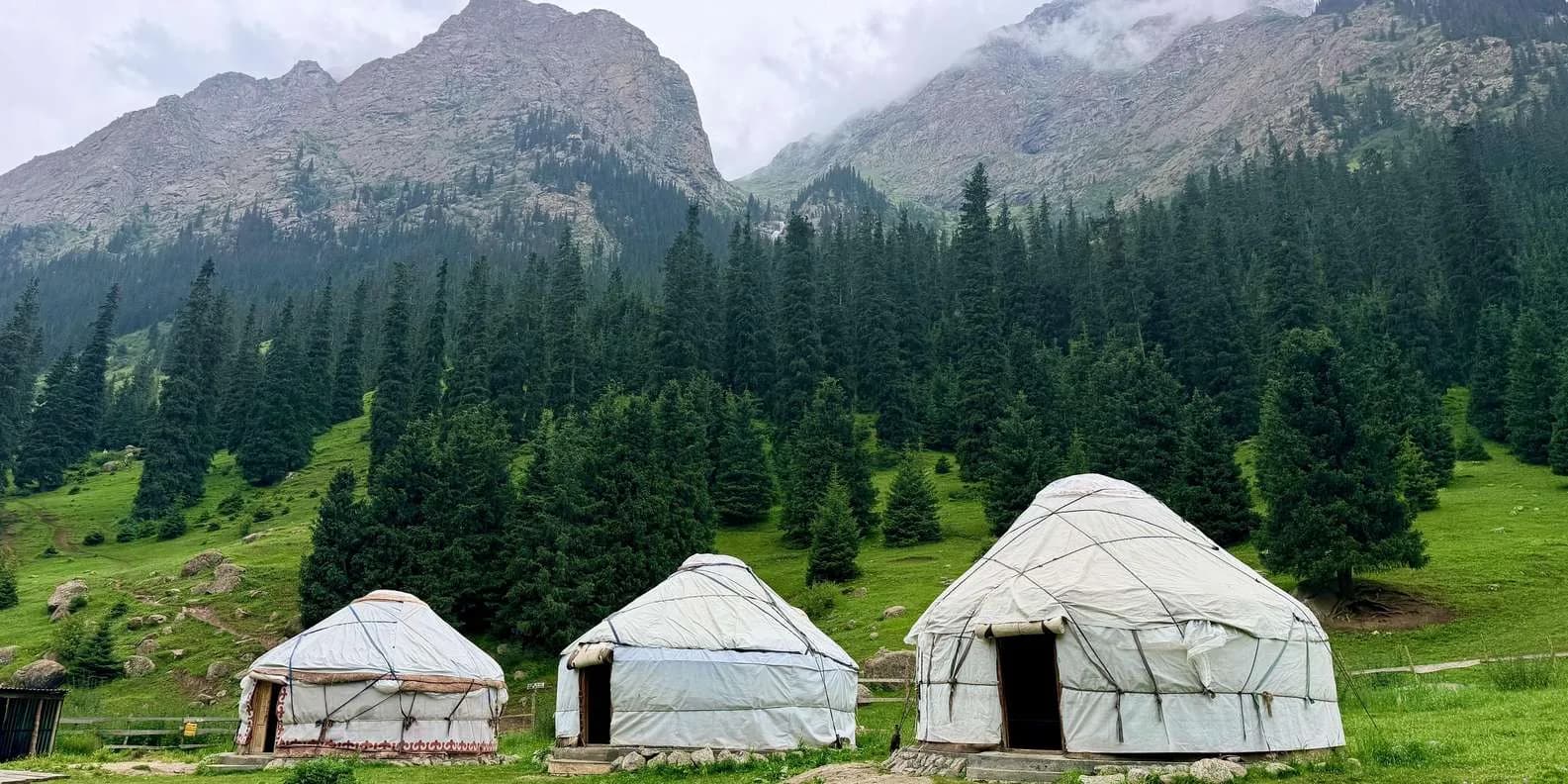
 Image via GetYourGuide
Yurt Stays in Kyrgyzstan: How to Choose Yours (2026)
Three kinds of yurt night: a family's working jailoo, a community camp, a tourist camp. What each costs, what the night is really like, how to tell them apart.
Book it on This is Kyrgyzstan
Turn this guide into a trip
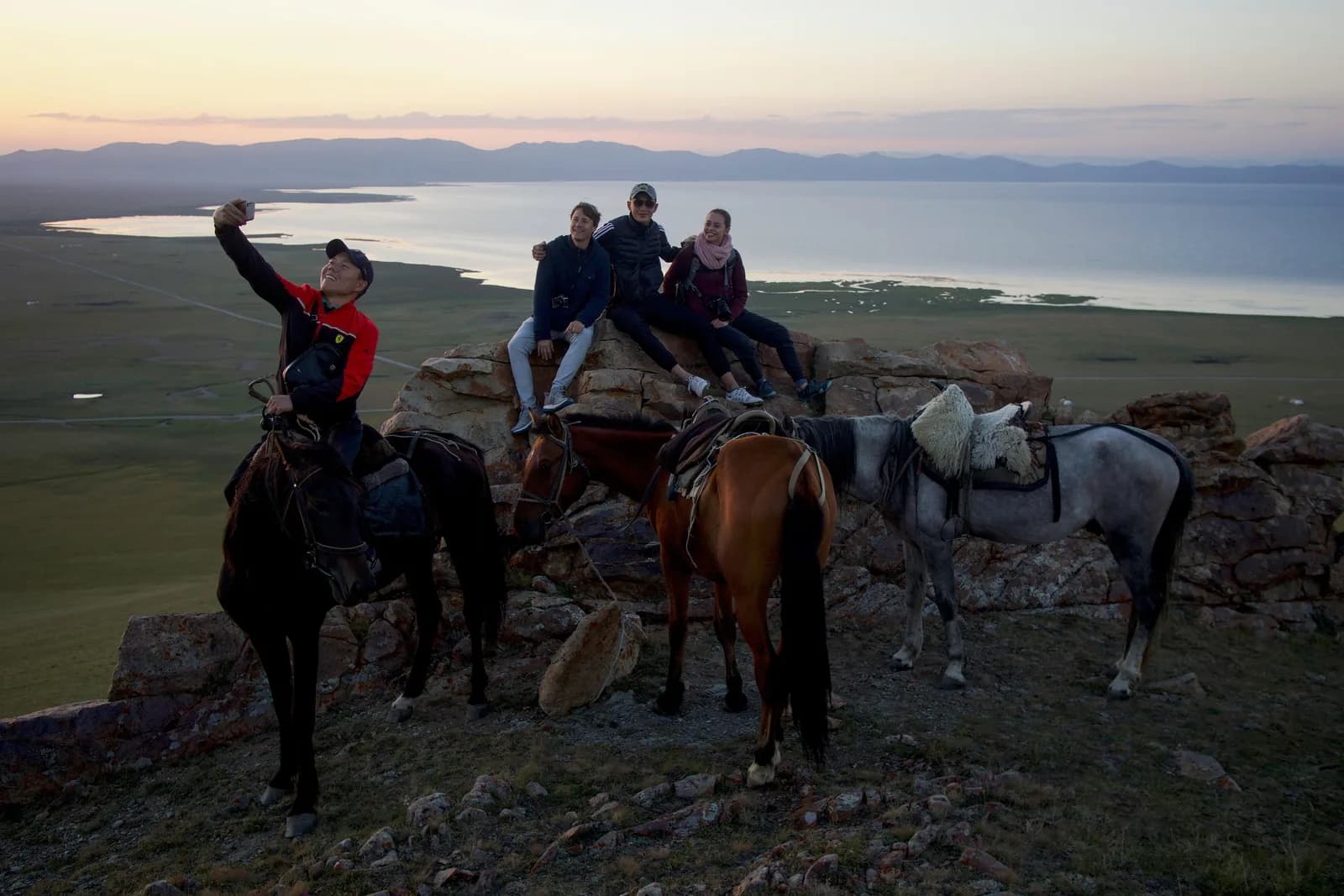
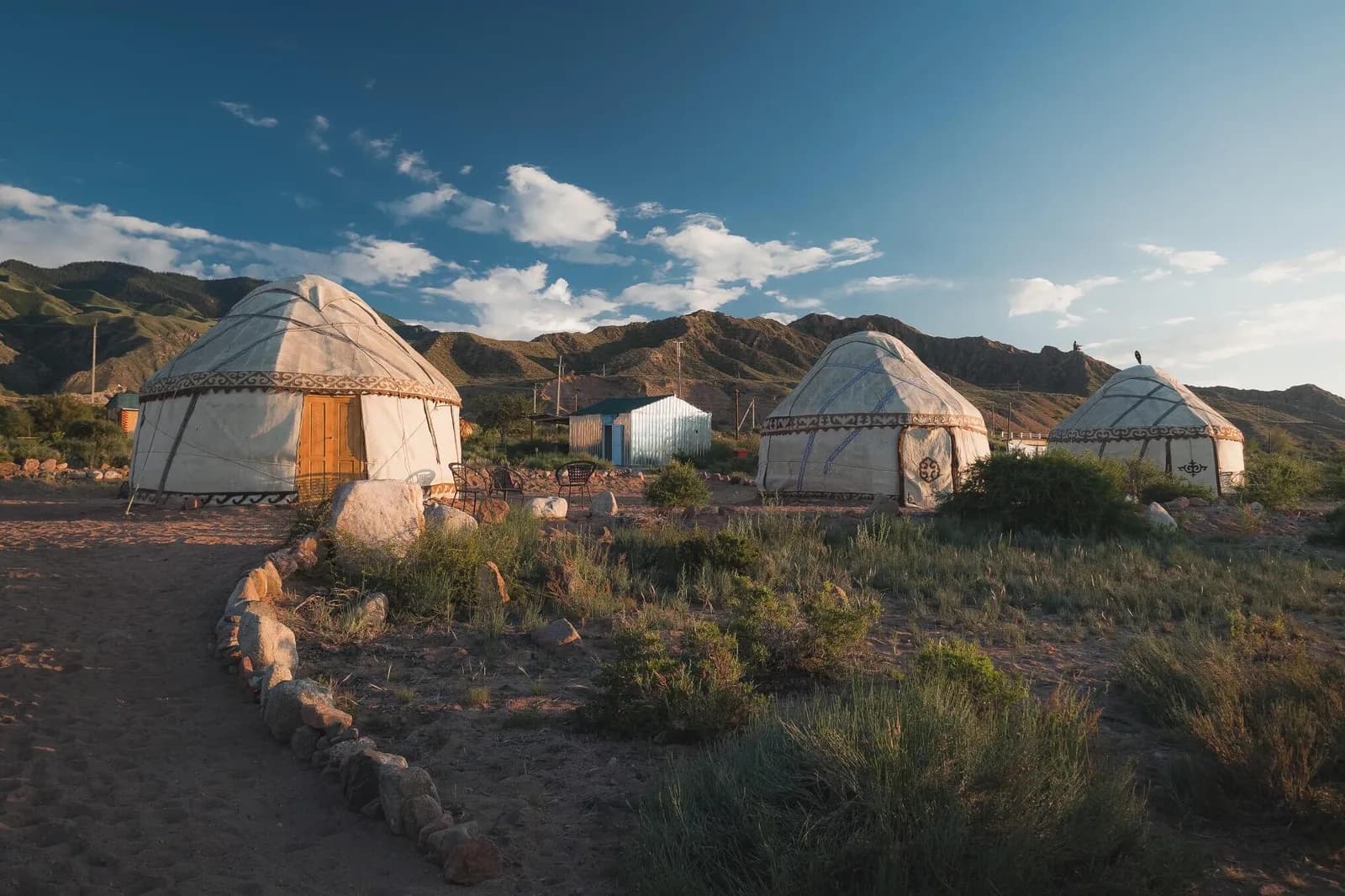
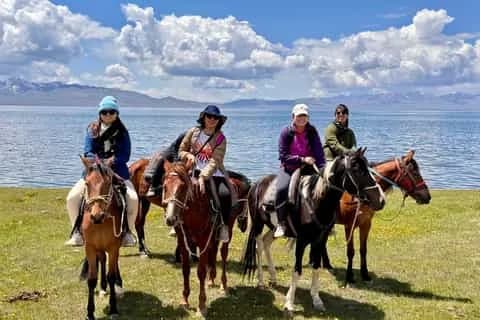
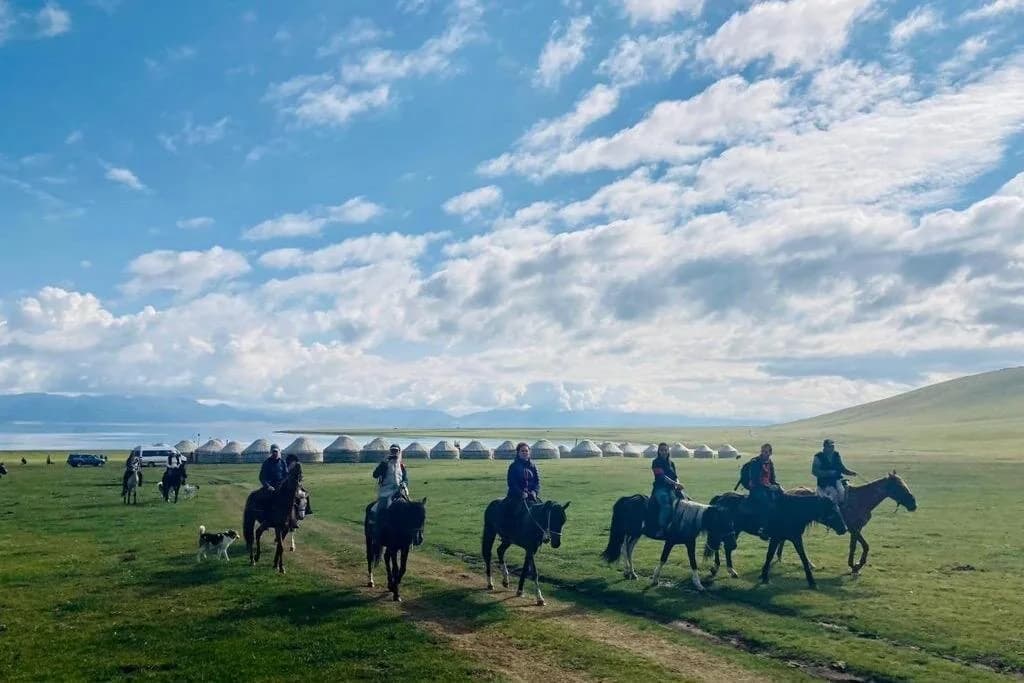
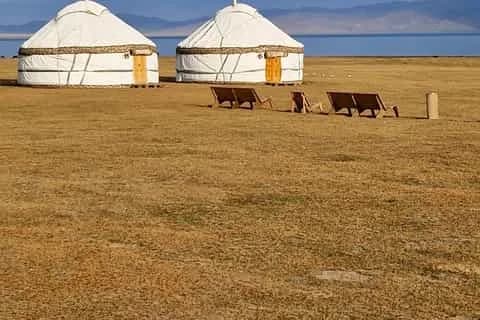
A yurt stay in Kyrgyzstan is one of three quite different things, and knowing which one you have booked decides whether the night feels genuine or staged. You can sleep in a herding family's own working boz-üy on their summer pasture, in a community-coordinated camp arranged through a local association, or in a commercial tourist camp — fifteen-plus yurts, seasonal staff, a generator until nine, which is most of the Song-Köl shoreline in July and August. Budget roughly 1,500–7,000 som ($17–80) per person per night including three meals, and expect a mattress on the floor, a pit latrine, no shower, and a night that drops close to freezing even in July.
None of that is a warning. It is simply what the thing is — and the version people remember for years is not the comfortable one.
What a yurt actually is
Boz-üy means "grey house", after the colour of the pressed sheep-wool felt. From the top down: the tündük, the wooden crown wheel that is smoke hole and skylight, inherited down the male line and the emblem at the centre of the national flag; the uuk, sixty to ninety steamed willow roof poles; the kerege, four to eight concertina lattice walls bound in a circle; and a door facing east, towards sunrise and away from the wind. Over it go layers of kiyiz felt on a reed screen. Underfoot are ala-kiyiz (pressed felt, pattern fused in, soft edges, about twenty years of life) and shyrdak (mosaic felt, two colours cut and stitched, seams you can feel, up to a century). A family puts the whole thing up in one to three hours and strikes it faster.
Get the UNESCO detail right, because most travel copy does not. Yurt-making was inscribed on the Representative List in 2014 as a joint Kyrgyz–Kazakh element and expanded in December 2025 (element 02284) to cover Kyrgyz, Kazakh and Karakalpak yurt-making. Separately, "Ala-kiyiz and Shyrdak, art of Kyrgyz traditional felt carpets" sits on the Urgent Safeguarding list — inscribed 2012, formally classed as endangered. The carpet under your mattress is the fragile part, not the tent.
The three kinds of yurt night
| A. Family jailoo yurt | B. CBT / DMO camp | C. Commercial tourist camp | |
|---|---|---|---|
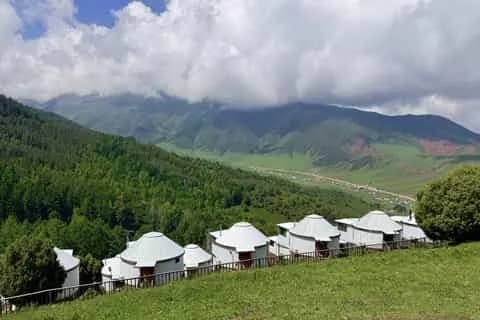
| What it is | A guest in a working household that is up there anyway | A vetted family camp, fixed prices, a booking trail | 15+ yurts, seasonal staff, dining yurt, often agency-owned |
| Per person/night, 3 meals | 1,500–2,500 som ($17–29) | ~2,250 som ($25); $60–80 for premium small operations | $35–50 ($3,000–4,400 som); upgraded camps $90–150 |
| Book via | A driver, guide or association, often on the day | CBT WhatsApp, Destination Jyrgalan's online cart, Visit Alay, Kochkor walk-in | Agency websites and operators, weeks ahead |
| Predictability | None. No menu, no schedule, rarely English | Good. Someone is accountable if it goes wrong | High. Also the least connected to the pasture |
| Suits | Flexible travellers who can absorb chaos | Almost everyone; the sensible default | Families, one-night stops, elderly parents |
Those are 2025–26 figures at about 87–88 som to the dollar, and they rise most years. For context, our Lakes & Nature trips have a median of about $220 and Naryn departures about $565 — multi-day packages including transport, guiding and several nights, not per-night yurt rates. Community rates undercut anything packaged, which is why booking direct in Kochkor beats booking from home; full figures are in the cost and budget guide.
Five questions reveal the tier before you pay: how many yurts, how many guests tonight, whose family runs it, is there a generator and a shower, and how far is the toilet. "Six yurts, our family, no generator, down the slope" is A or B. A brochure that answers with Wi-Fi is C.
What the night is honestly like
You sleep on the floor — thin cotton tushuk mattresses over felt, heavy jorgon quilts, a hard pillow. Yurts sleep four to eight; a private yurt costs more and is not always available. The stove burns dried dung, is lit in the evening and goes out around midnight, so the yurt is genuinely warm at bedtime and genuinely cold at 05:00. At Song-Köl (3,016 m) nights sit around 0–5°C and can drop below freezing in July — the single thing visitors get wrong most often. Sleep in a hat and socks.
Electricity is usually absent; better camps run a generator or solar for two or three hours in the evening, sometimes charging $2–5 for a phone. Toilets are pit latrines 30–50 m away — bring paper, sanitiser and a head torch for the 03:00 trip. Showers mostly do not exist, though some large camps have a truck or solar-bag hot shower for $3–5. A banya belongs to village guesthouses and to Altyn-Arashan, not to the jailoo. In exchange: no light pollution whatsoever, horses grazing against the felt all night, dogs, and somebody's alarm before dawn to milk the mares.
Meals, tea and kymyz
Food is served family-style on a cloth, everyone cross-legged. Breakfast is bread, jam, butter, kaymak and eggs; lunch laghman or plov; dinner beshbarmak or shorpo. Tea comes endlessly in small handleless bowls filled only a third full — courtesy, not meanness: it keeps the tea hot and gives your host a reason to keep coming back. A brim-full bowl means "you may go."
Kymyz — fermented mare's milk, mildly alcoholic at roughly 1–3%, sour and faintly smoky from the cured skin vessel — is made only from about May to September and is offered with real ceremony. Take the bowl in your right hand, swirl it, drink some; three sips are enough, and handing it back full is the rude move. It is unpasteurised, and an unaccustomed gut usually reacts within the hour, so start small and never on the morning of a long drive over a pass.
Vegetarians are catered for, but grudgingly and repetitively: say so at booking, repeat it gently on arrival, and expect a lot of potato, bread and dairy. Soups and even "vegetable" dishes are routinely built on meat stock — more in the Kyrgyz food guide.
Where to do it
| Place | Altitude | Season | Crowds | Getting there | Suits |
|---|---|---|---|---|---|
| Song-Köl | 3,016 m | Jun–Sep | Very busy Jul–Aug | 4x4 from Kochkor, ~2.5 h, 5,000–7,000 som/vehicle | First-timers; the classic |
| Tash Rabat | ~3,000–3,200 m | Jun–Sep | Moderate | ~2 h drive from Naryn | Silk Road history; empty at dusk |
| Jyrgalan | camps from ~2,200 m | Jun–Sep | Quiet | 75 km east of Karakol | Marked trails, best-organised valley |
| Kyzart / Kochkor jailoos | ~2,000–3,000 m | Jun–Sep | Low | Shared taxi Kochkor–Kyzart, 200 som | Riding in to Song-Köl |
| Suusamyr | ~2,200–2,500 m | Jun–Sep | Low | On the Bishkek–Osh road | Kymyz country; short detour |
| Chon-Kemin | low valley floor | May–Sep | Low | 110 km from Bishkek, ~1.6 h | Easiest jailoo from the capital |
| Alay / Tulpar-Köl | ~3,600 m | Jul–Aug | Low | Osh to Sary-Mogol, then 4WD | Lenin Peak (7,134 m) at the door |
| Kel-Suu | ~3,500 m | Late Jun–mid Sep | Very low | 5–8 h 4WD from Naryn; paper border permit | Experienced travellers only |
| Kyrchyn | jailoo above Cholpon-Ata | Jun–Sep | Games years only | 40–70 km inland from Cholpon-Ata | World Nomad Games ethno-village |
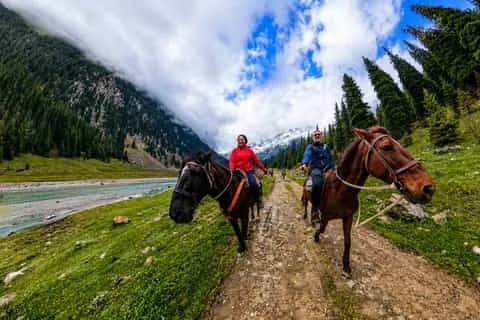
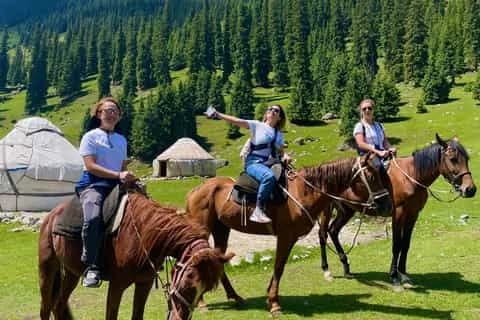
Song-Köl is the flagship and the busiest shoreline in the country; aim for the north or west side, and read the dedicated Song-Köl yurt stay guide and the page on the lake itself. To skip the crowd, Jyrgalan, Suusamyr or Chon-Kemin give you the same felt and stove with a tenth of the traffic. Riding in changes the trip entirely — see horse trekking in Kyrgyzstan and our horse-trekking departures. For the Silk Road version, start with the Tash Rabat guide and the Naryn travel guide.
The jailoo is a working economy, not a display
The Kyrgyz pastoral year runs through four named pastures: kyshtoo (winter, in sheltered low gorges), jazdoo (spring), jailoo (the high summer meadows) and kuzdoo (autumn). Families move up from late May into June as the snow clears the passes and back down from late August through September. The pastures are state land allocated through village pasture committees under the 2009 Pasture Law, with grazing tickets issued per animal. The family is on that mountain because their animals eat there; you are a paying extra, and that is exactly what makes the night real.
So the jailoo season is roughly 1 June to 15 September, most reliable in July and August. Late May and early June are green, muddy and half-open, with snow on some passes and many yurts not yet up. October is closing time — the Song-Köl road is vulnerable to early snow and you can arrive at an empty pasture. "Winter yurt stay" almost always means a permanently pitched, heated tourist yurt at low altitude: a pleasant night, but not the jailoo. Plan around it with the two-week itinerary.
How to book, and how to pay
Walk-in still works and is usually cheapest: Kochkor's centre is full of competing agencies selling much the same Song-Köl trips, and a stay can be fixed on the spot in summer. Your guesthouse in Naryn, Karakol or Kochkor will also arrange one by phone. For a booking with someone accountable, use the working DMOs — Destination Karakol, Destination Jyrgalan (the only Kyrgyz community operator with a genuine online basket) and Visit Alay. The national CBT association still books over WhatsApp, but every local cbt*.kg office domain is dead, so do not chase them online. Shepherd's Life, the Kochkor-based network founded by Helvetas, still trades with no working website at all: book in person or through an intermediary.
Cash, in som, always. No yurt camp, homestay, horse owner or park gate takes cards. There are no ATMs at Song-Köl, Tash Rabat, Jyrgalan, Kel-Suu or on any jailoo, and Kochkor's coverage is limited — draw your float in Bishkek, Karakol, Osh or Naryn, ask for 200s and 500s, and carry more than you think you need. Mobile signal at Song-Köl runs from patchy to none.
Etiquette that actually matters
Shoes off at the door; step over the threshold, never on it. The tör, directly opposite the door at the back, is the seat of honour — wait to be shown where to sit, and accept graciously if you are pointed there. Greet the oldest person first.
Bread is sacred: never upside down, never on the floor, torn by hand rather than cut, never binned. At the end of a meal the host says a short blessing and everyone brings cupped hands up and passes them down over the face — the omin. Join in.
Ask before photographing anyone, especially women, elders and children, and especially inside the yurt. Bring something small and practical — tea, sweets, fruit, pens for children — rather than expensive, and skip alcohol for a household you do not know. Showy cash tipping turns hospitality into a transaction; paying the agreed price promptly in cash is the real courtesy. Don't whistle indoors, don't point your feet at anyone, don't step over someone lying down.
What to bring
A warm sleeping bag or at least a thermal liner — camps do not supply one. A hat, thermals and socks to sleep in. Head torch, wet wipes, your own loo paper, power bank, earplugs, sun cream (UV at 3,000 m is fierce), rehydration salts, and small-denomination som. Layers, not one big coat.
Who should not book one
Be honest with yourself. If you cannot sleep without a bed and a door, if a pit latrine 40 m away in the dark is a real problem, if you have limited mobility, or if you need a daily hot shower, a jailoo yurt will be endured rather than enjoyed — a heated camp near the road, or a village guesthouse with a banya, serves you far better. Anyone with a heart or lung condition should treat 3,000 m as a medical question first, and travellers who are pregnant or immunocompromised should skip the unpasteurised dairy. If you are flying in and heading straight up, put a night at Issyk-Köl or Naryn in between: altitude on top of jet lag ruins more yurt nights than the cold does.
If you would rather have the pasture, the transport and the meals handled, browse our lakes and nature trips — most include at least one night under felt.
See every option laid out by region on our yurt stays page, and how to combine one with a horse trek.
Featured camps: Nomad Lodge (Song-Köl), Almaluu (Issyk-Köl) and the Tash Rabat ethno-complex.
Chat with a real person — free
Seif and the team reply on WhatsApp 24/7 — trip questions, custom plans and booking help.
Ask Seif on WhatsAppCommon questions
Is a yurt stay in Kyrgyzstan authentic or just a tourist thing?
Both exist, and you choose which. A family's own boz-üy on their summer pasture is a working household you are a guest in. A CBT or DMO-coordinated camp is a vetted family operation with fixed prices. A commercial camp of fifteen-plus yurts with staff and a generator — common on Song-Köl's south and east shores in July and August — is comfortable but barely connected to the pasture.
How much does a yurt stay cost per person per night?
Roughly 1,500–2,500 som ($17–29) at a family jailoo yurt, about 2,250 som ($25) at a standard community camp, and $35–50 (3,000–4,400 som) at a commercial tourist camp. Premium community operations run $60–80 and upgraded camps $90–150. Rates almost always include three meals and endless tea. Cash in som only — no camp takes cards.
How cold does it get in a yurt at night?
Colder than people expect. At Song-Köl, 3,016 m, night temperatures sit around 0–5°C and can drop below freezing even in July. The dung stove is lit in the evening and burns out around midnight, so the yurt is warm at bedtime and cold by 05:00. Bring a warm sleeping bag or thermal liner, and sleep in a hat and socks.
Do yurt camps have toilets, showers and electricity?
Toilets are pit latrines in a shed 30–50 m from the yurts; bring your own paper and hand sanitiser. Showers usually do not exist, though some large camps run a truck or solar-bag hot shower for $3–5. Electricity is generally absent — better camps run a generator or solar for two or three hours in the evening, sometimes charging $2–5 to charge a phone.
When is yurt season in Kyrgyzstan?
Roughly 1 June to 15 September at altitude, most reliable in July and August. Families move up as the snow clears the passes in late May and June, and come down from late August through September. Late May and early June are muddy and half-open; by October the camps are gone. A winter "yurt stay" means a heated tourist yurt at low altitude, not the jailoo.
Do I need to book a yurt stay in advance?
Not usually. Walk-in still works, and Kochkor's town centre is full of agencies selling Song-Köl trips that can be arranged on the spot in summer. Guesthouses in Naryn, Karakol and Kochkor will phone one through for you. Book ahead only if you want a specific camp, a private yurt, or a multi-day horse trek in peak July and August.
Can you do a yurt stay as a vegetarian?
Yes, but it is catered for grudgingly and repetitively. Say so when you book and repeat it gently on arrival rather than at the table. Expect a lot of potato, bread, dairy and eggs. Watch for meat stock — soups, rice and even dishes described as vegetable are routinely built on it. Vegans will find the jailoo very hard indeed.
Do I have to drink kymyz?
You should take at least a sip. Kymyz, fermented mare's milk at roughly 1–3% alcohol, is offered with real ceremony and handing back a full bowl reads as a rejection of the household. Take it in your right hand, swirl it, drink some and set it down. It is unpasteurised and a strong laxative first time, so keep the bowl small.
Where can you stay in a yurt apart from Song-Köl?
Tash Rabat, beside the undated caravanserai — usually called 15th-century, though sources differ — about two hours from Naryn; the Jyrgalan valley east of Karakol, the best-organised community destination in the country; the Kyzart and Kochkor jailoos; Suusamyr on the Bishkek–Osh road; Chon-Kemin, the easiest jailoo from Bishkek; Tulpar-Köl below Lenin Peak in the Alay; and permit-gated Kel-Suu for experienced travellers.
Book it on This is Kyrgyzstan
Turn this guide into a trip



Kyrgyzstan's bestsellers
The experiences travelers book most, across the country
Keep reading
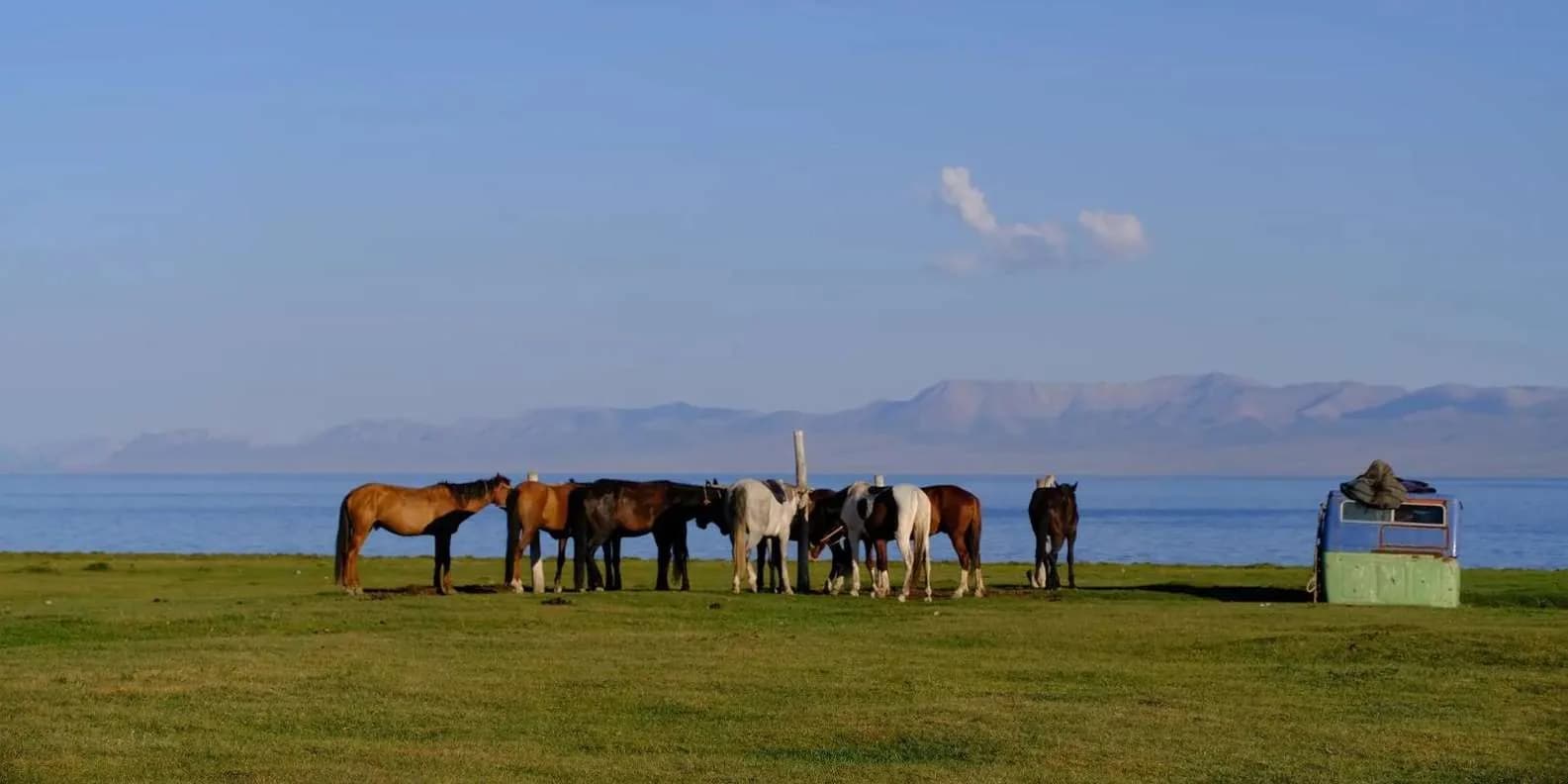
Kochkor to Song-Köl: How to Get There (2026)
The two real ways from Kochkor to Song-Köl — a 2–3 day horse trek over a pass, or a half-day 4WD transfer — with prices, passes and season.
By TiK Editors8 min read
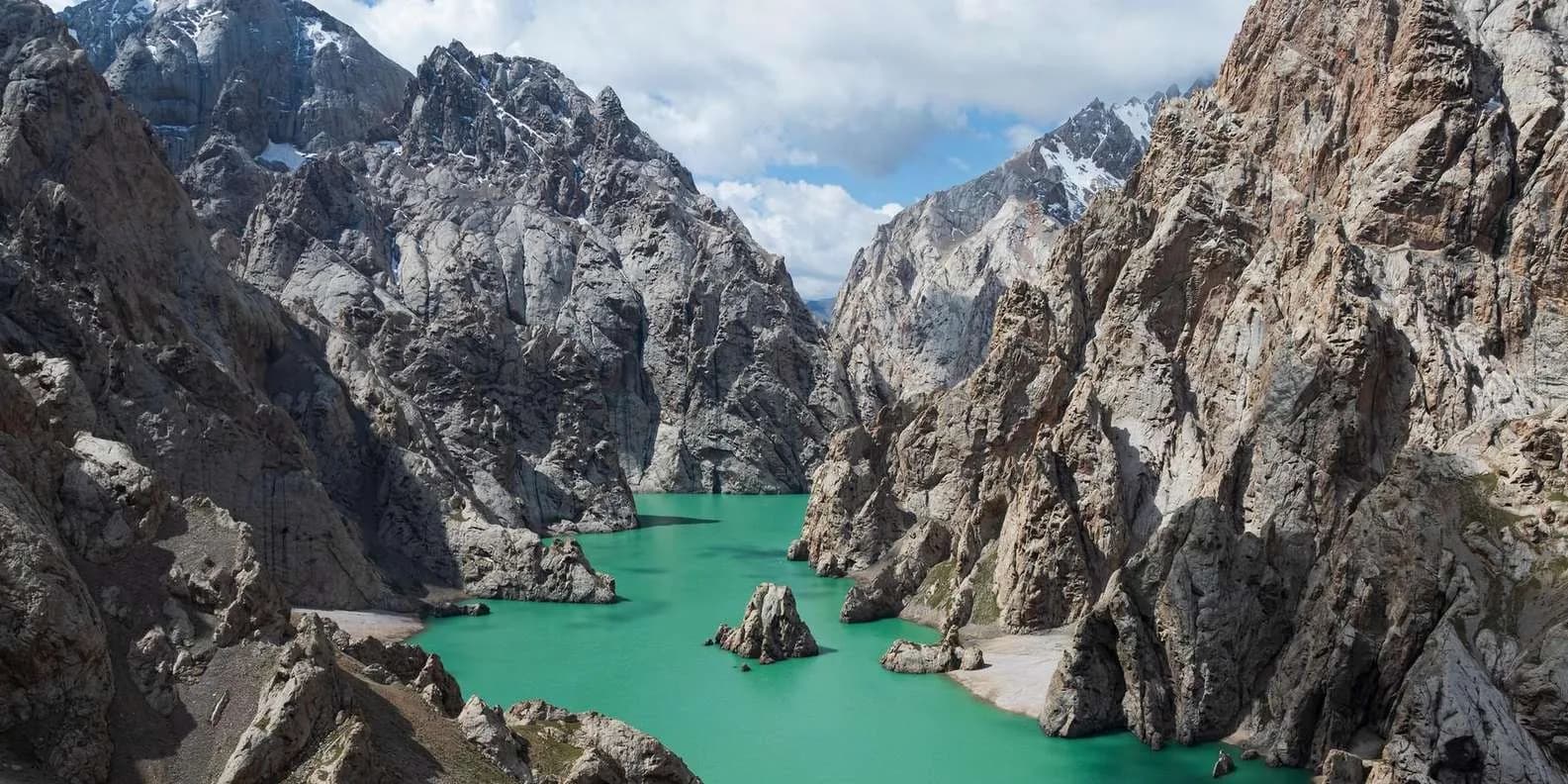
Kyzart to Song-Köl Trek: The Classic Route
The Kyzart to Song-Köl trek in 2–3 days on foot or horseback: day-by-day stages over the pass to the lake, yurt nights, costs and how to book it.
By TiK Editors8 min read
Song-Köl Horse Trek: The Classic 2-3 Day Ride
The classic beginner-friendly ride from Kochkor over a pass to Song-Köl (3,016 m) and back: day-by-day, costs, what to bring and how to book it.
By TiK Editors9 min read