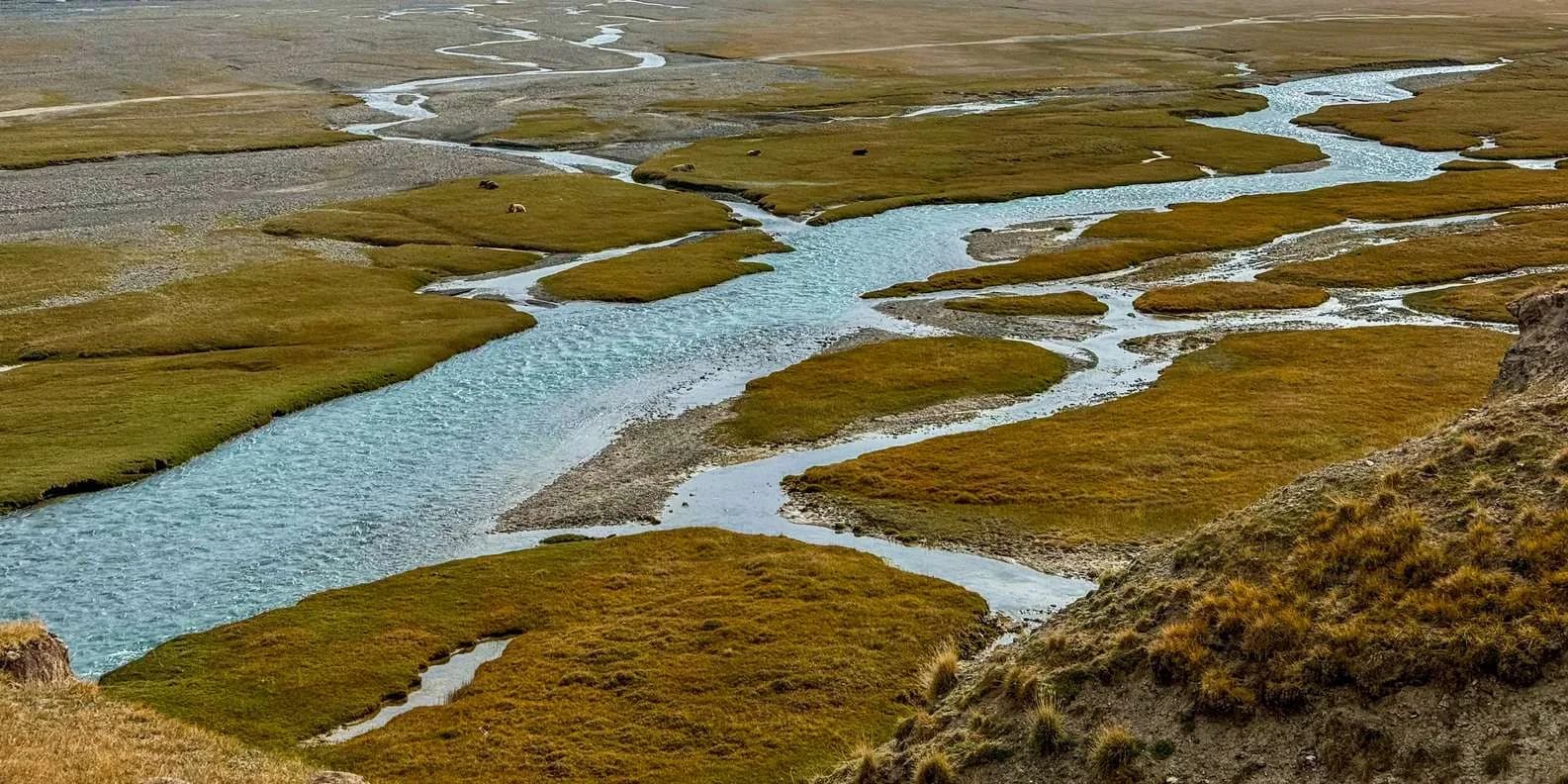
 Image via GetYourGuide
Song-Köl Horse Trek: The Classic 2-3 Day Ride
The classic beginner-friendly ride from Kochkor over a pass to Song-Köl (3,016 m) and back: day-by-day, costs, what to bring and how to book it.
Book it on This is Kyrgyzstan
Naryn · Turn this guide into a trip
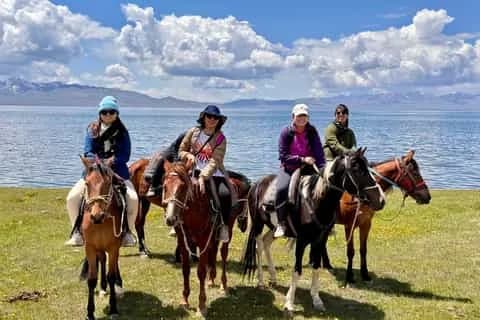
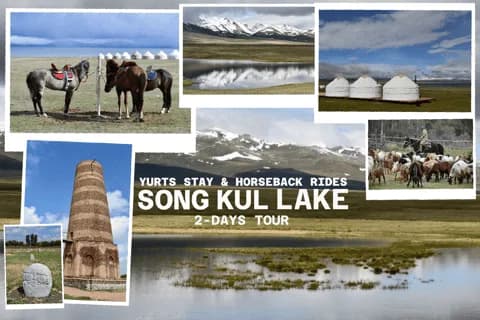
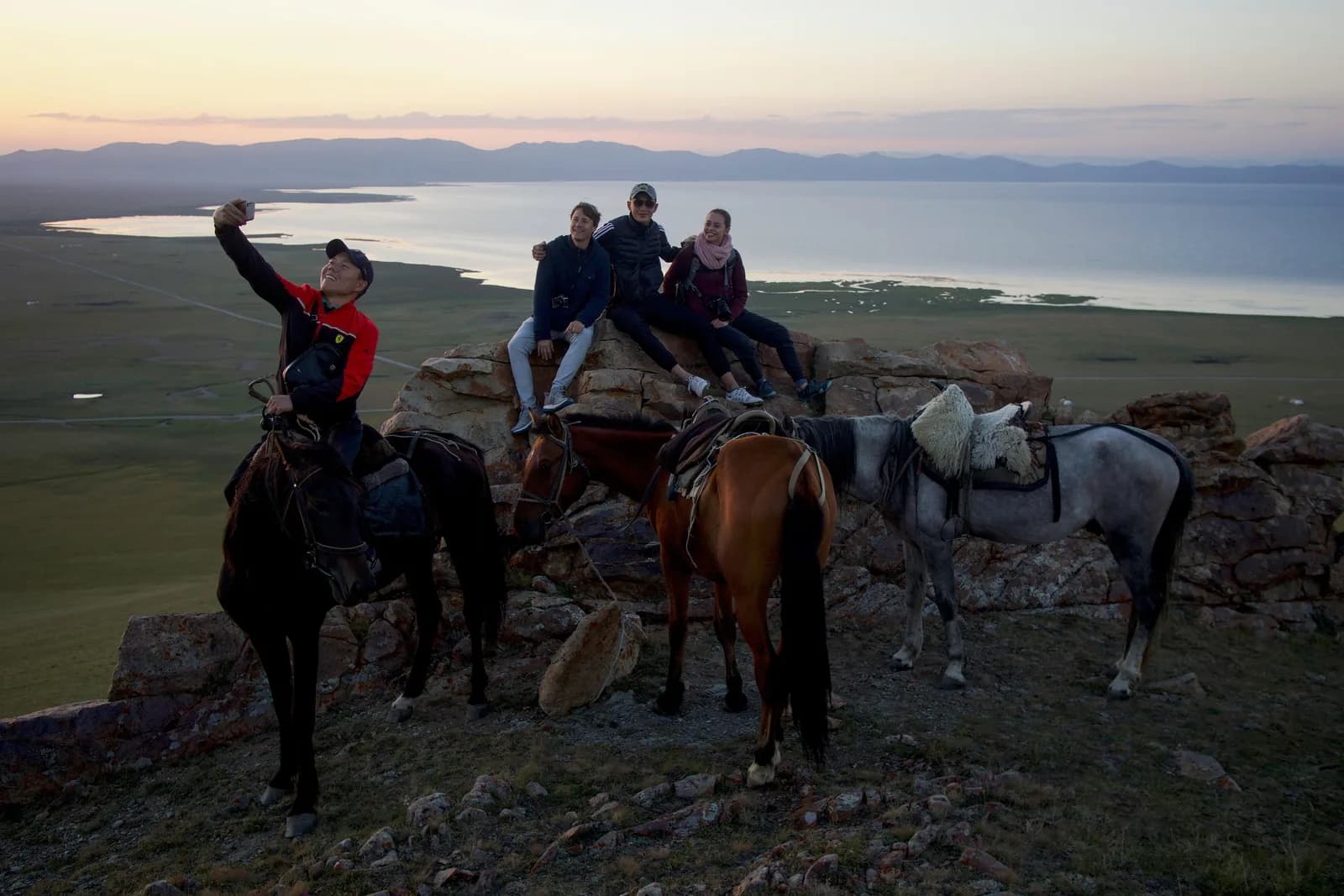
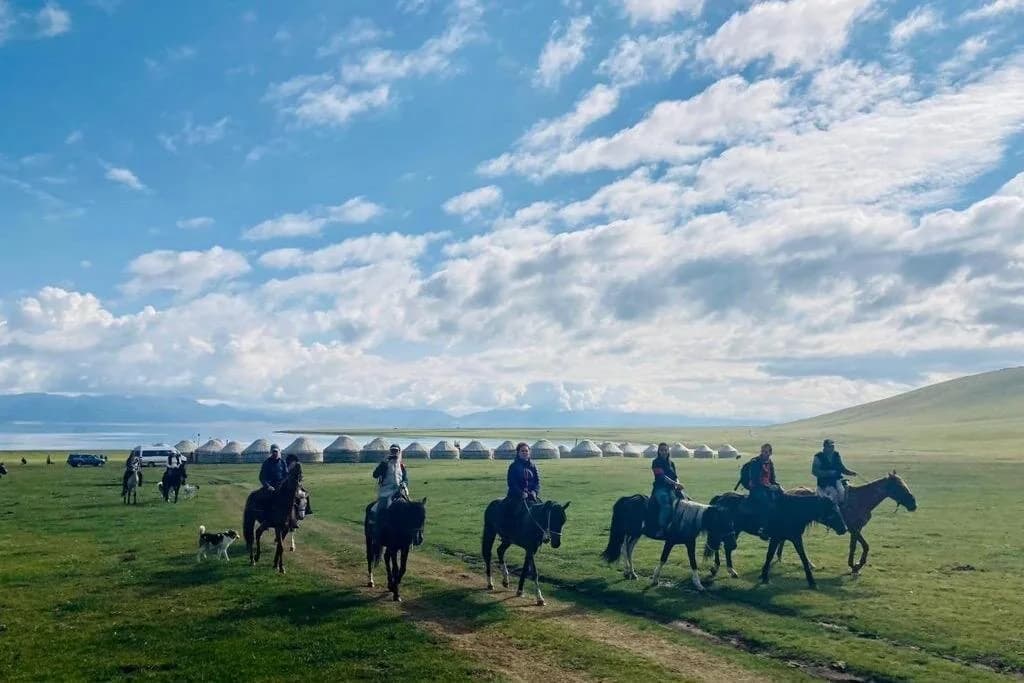
The Song-Köl horse trek is the classic 2–3 day ride from Kochkor up over a mountain pass to Song-Köl lake (about 3,016 m) and back, sleeping in jailoo yurt camps on the way. It is the single most popular horseback trip in Kyrgyzstan, and it is genuinely beginner-friendly: the horses are calm, sure-footed mountain animals that carry total newcomers over 3,000-metre ground every week of the summer. You do not need to have ridden before. You do need to be ready for long days in a hard saddle, cold nights, and no showers.
This guide covers the route itself. If you want the yurt-stay experience without days on horseback, read the Song-Köl yurt stay guide; for riding across the whole country, see the horse-trekking in Kyrgyzstan overview.
At a glance
| Duration | 2–3 days (2 riding days is standard) |
| Riding distance | roughly 25–30 km a day; ~50–60 km total |
| Time in the saddle | 5–8 hours on each riding day |
| Max altitude | Song-Köl ~3,016 m; the pass ~3,300–3,400 m (sources differ) |
| Difficulty | beginner-friendly; no riding experience required |
| Best months | mid-June to mid-September |
| Nights | 1–2 in yurt camps (Kilemche jailoo, then the Song-Köl shore) |
| Cost, all-in | ~$100–150 per person (roughly 8,700–13,000 som) |
| Book from | Kochkor, in Naryn province |
Altitude figures are given as a range where sources disagree; confirm exact numbers with your operator on the day.
The classic route, day by day
Almost everyone starts from Kochkor, the small market town that is the booking hub for the whole area (it is not a route in itself, just where you organise horses, guides and a bed). From Kochkor a vehicle takes you to the road head above Kyzart village — Kyzart is "the horse village", where several families run riding operations, and it is the standard jumping-off point.
Day 1 — Kyzart to the Kilemche jailoo. You meet your horse, your guide loads the pack animal, and you ride up and over the Kyzart pass into a side valley called Kilemche, a summer pasture dotted with herders' yurts. It is an easing-in day, a few hours in the saddle through wildflower meadows, with time to work out how the wooden Kyrgyz saddle sits before the big crossing. Some Kilemche camps have electricity and a hot shower; the Song-Köl camps beyond do not.
Day 2 — Kilemche over the pass to Song-Köl. This is the day people come for. You climb to the Chaar-Archa / Jalgyz-Karagai pass (operators use different names and altitudes for it, generally around 3,300–3,400 m) and then the whole lake appears below you at once — a huge sheet of water in a treeless bowl, ringed by pasture and snow peaks. It is a long day, five or more hours of riding, and you will get off and lead the horse down the steeper, boggier ground. You sleep in a yurt camp on the shore.
Day 3 — the lake, then out. A shorter morning: a lakeside walk or ride, one last look at the water, then a 4WD out over the Kalmak-Ashuu pass — the main vehicle route back toward Kochkor, and the one with the best views down over Song-Köl — or back the way you came. A tighter two-day version skips a night and rides in and out over one pass; the three-day trip is the more relaxed choice.
Pass names and spellings vary a lot between operators on this route, so do not be thrown if your itinerary calls the crossing something slightly different.
What the riding is actually like
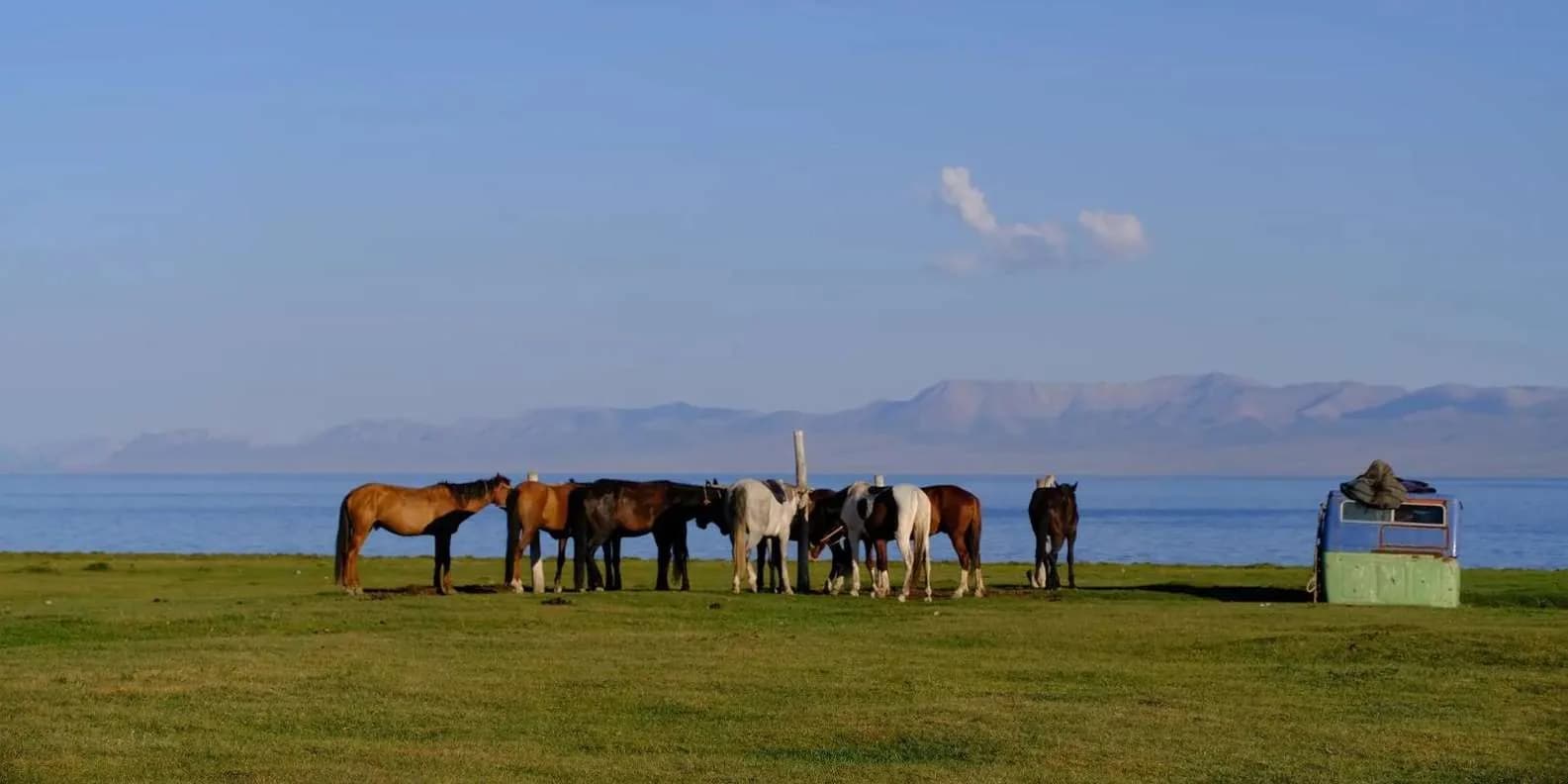
Mountain horses walk. You will trot and canter only on the open flats near the lake; the rest is a steady plod up and down passes. Days run to a simple shape: breakfast and saddling from around 08:00, two or three hours' ride, a long lunch stop with the horses unsaddled and grazing, then another few hours to camp by late afternoon. Expect five to eight hours in the saddle on a riding day, and rarely more than 25–30 km.
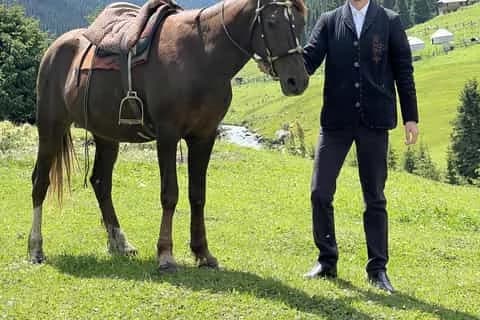
The horse is not "yours". It is a working animal from a family's herd, and your guide decides which one you ride, how it is loaded and when it rests. Don't feed or over-water it without asking. The saddle is the thing that catches people out: the traditional Kyrgyz eer is a hard wooden tree with a folded felt pad and no knee roll, and saddle soreness is far and away the most common complaint on these treks. Padded cycling undershorts, a folded fleece over the saddle, seamless long trousers and getting out of the saddle to walk regularly all help. One firm safety rule the guides repeat: never wrap the rein or a lead rope around your hand or wrist.
Beginners are the norm, not the exception, but you still need reasonable general fitness — core and inner-thigh strength is what actually aches — and a tolerance for discomfort. There is usually an unpublished weight ceiling around 90–100 kg for a Kyrgyz horse, so declare your weight when you book. Children of about eight to ten ride doubled or on a led horse routinely. Helmets are not standard and often simply aren't available; if you want one, bring your own. And check that your travel insurance explicitly covers horse riding — many policies exclude it as a hazardous activity. Our travel insurance guide explains what to look for.
The yurt camps and the food
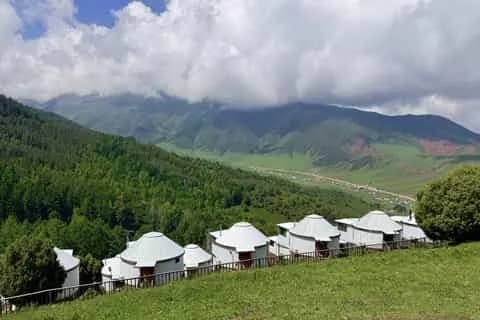
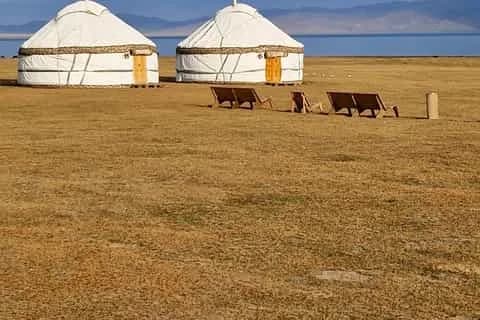
You sleep on the floor of a boz-üy (yurt), on a stack of thin cotton-wadded mattresses under heavy quilts. A metal stove burning dried dung is lit in the evening — the yurt is genuinely warm at bedtime and genuinely cold by dawn. This is the single thing most visitors underestimate: Song-Köl sits at 3,016 m and night temperatures fall to around freezing or below even in July. Bring a warm layer, a hat and socks to sleep in.
There is usually no electricity beyond a couple of hours of generator or solar in the evening, no shower at the Song-Köl camps, and a pit latrine 30–50 metres off. Meals are served family-style on a cloth on the floor: bread, jam, butter and clotted cream (kaymak) at breakfast; laghman noodles or plov at lunch; beshbarmak or a meat-and-potato shorpo in the evening, with endless tea. You will be offered kymyz, fermented mare's milk — sour, slightly fizzy, mildly alcoholic, and offered with real ceremony. Take at least a sip. Vegetarians are catered for, but repetitively; say so when you book, not at the table. What everyone remembers, though, is the sky. There is no light pollution at all, and the Milky Way over Song-Köl is the picture you take home. For more on the etiquette and the felt-and-lattice world you're stepping into, see our yurt stays guide.
What it costs
A complete guided 2–3 day Song-Köl trek, including meals and yurt nights, runs roughly $100–150 per person — with a private, all-inclusive trip from Kochkor for a small group closer to $250 a head. As a rule of thumb, budget $50–80 per person per day for a guided ride with all meals. If you book the pieces separately through a community office, the going component rates look like this (about 87–88 som to the US dollar in 2026):
| Component | Per day | ≈ USD |
|---|---|---|
| Horse (with owner/handler) | ~2,000 som | ~$23 |
| Pack horse | ~1,300 som | ~$15 |
| Trekking/horse guide | 2,000–2,500 som | ~$23–29 |
| Cook | ~1,500 som | ~$17 |
| Meal (per person) | ~350 som | ~$4 |
| Yurt night with 3 meals | 1,300–7,000 som | ~$15–80 |
These are 2024–2026 figures and drift upward each year, so treat them as a guide and confirm on the day. Community and CBT rates usually sit below marketplace-agency prices, and more of the money reaches the host family. For the wider picture, see our cost and budget guide.
How to arrange it: self-arranged vs operator
You cannot really do this trip "unguided", because you cannot rent a horse without its owner — the animal comes with a handler from the family's herd. So the real choice is how you book the guide.
Community offices in Kochkor are the standard route. CBT Kochkor and the Kochkor-based Shepherd's Life association both arrange horses, guides and yurt-camp nights around Song-Köl at fixed local prices, and they are used to walk-in and WhatsApp bookings. This keeps costs down and the money local; it is the best default for most independent travellers. Shepherd's Life is a real, functioning association but has drawn mixed traveller reviews over the years, so treat it as a working local operator rather than a guaranteed brand, and read recent reviews first. See the Kochkor travel guide for how to find these offices, and our community-based tourism guide for how the model works.
A full-service operator — booked from Bishkek or online — costs more but hands you transport from the capital, English-speaking guides, a fixed schedule and a single point of responsibility. It is the sensible choice if your time is tight, you are travelling with children or older parents, or you simply want the logistics taken off your plate.
Book one to two weeks ahead for the busy July–August weeks. And come at the right time: the yurt camps only go up from about June and come down in mid-to-late September, so mid-June to mid-September is the honest window. May and October are shoulder months when half the camps are shut. Our best-time-to-visit guide has the month-by-month detail.
What to bring
Pack for cold nights and a hard saddle, not for a pony trek at home. The essentials: a warm mid-layer plus a hat, gloves and sleep socks; boots with a heel that you can also walk several kilometres in; padded shorts or seamless base layers for the saddle; serious sun protection, because UV at 3,000 m is fierce; a headtorch; a power bank, since charging is unreliable; and cash in som, because there are no ATMs once you leave Kochkor. A silk sleeping-bag liner is a nice extra if you're fussy about shared bedding. Our full Kyrgyzstan packing list covers the rest.
One last honest note on the altitude: you go from Kochkor's valley to a 3,300-metre pass and a 3,016-metre lake in a day or two. Most people are fine, but take it slowly, drink plenty of water, and know the warning signs — see altitude sickness in Kyrgyzstan.
Ready to ride? Browse horse-trekking trips and pair this route with a night on the lake, or read the Naryn travel guide to build it into a wider loop through Kyrgyzstan's most traditional province.
Browse this and other rides on our horse treks by route page, plus the yurt stays at the lake.
Book it: the classic is the 3-day Kyzart–Song-Köl ride; to sleep at the lake, pick a camp like Nomad Lodge or Ak-Sai.
Chat with a real person — free
Seif and the team reply on WhatsApp 24/7 — trip questions, custom plans and booking help.
Ask Seif on WhatsAppCommon questions
How long is the Song-Köl horse trek?
The classic trip is 2–3 days, with two riding days the norm. Day one rides from the Kyzart road head up to a jailoo camp; day two crosses a pass down to Song-Köl; and on a three-day version day three is a lakeside morning before a 4WD out to Kochkor. A tighter two-day version rides in and out over a single pass. You cover roughly 25–30 km on each riding day.
Do I need riding experience?
No. Most people on this trek are complete beginners, and the horses are calm, sure-footed mountain animals used to carrying newcomers over high passes all summer. What you do need is reasonable general fitness — core and inner-thigh strength is what aches — and a tolerance for discomfort. Declare your weight when booking, as there is usually an unpublished ceiling around 90–100 kg per horse.
How much does the Song-Köl horse trek cost?
A complete guided 2–3 day trek with meals and yurt nights runs roughly $100–150 per person (about 8,700–13,000 som), or nearer $250 for a private small-group trip from Kochkor. As a rule of thumb, budget $50–80 per person per day for a guided ride with all meals included. Community and CBT bookings usually cost less than Bishkek agencies. Prices rise yearly, so confirm on the day.
When is the best time to go?
Mid-June to mid-September. The jailoo yurt camps only go up from about June and come down in mid-to-late September, and the passes close from October to May. July and August are the warmest and busiest weeks. May and October are shoulder months when many camps are shut and the ride may be half closed, so they are not reliable for this trip.
How high is it, and will I get altitude sickness?
Song-Köl sits at about 3,016 m and the pass on the way is roughly 3,300–3,400 m, reached from Kochkor's valley in a day or two. That's a fairly quick gain, so mild altitude effects are possible. Most people are fine. Go slowly, drink plenty of water, don't overexert on the first day, and know the warning signs of headache, nausea and breathlessness before you set off.
How many hours a day will I spend in the saddle?
Expect five to eight hours on each riding day, broken by a long lunch stop with the horses grazing. Mountain horses mostly walk, so you cover rarely more than 25–30 km. You'll also dismount and lead the horse on steep descents and boggy ground. Saddle soreness is the most common complaint, so padded shorts and getting out of the saddle to walk both help a lot.
What is a night in the yurt camp like?
You sleep on the floor on thick felt mattresses under heavy quilts, with a dung-burning stove lit in the evening. It's warm at bedtime and cold by dawn — Song-Köl drops to around freezing even in July, so bring a hat and sleep socks. Expect a pit latrine, usually no shower, and only a couple of hours of generator power. Meals are family-style: bread, noodles, beshbarmak and endless tea.
Should I book through CBT Kochkor or an operator?
You can't do this trek without a horse owner, so the choice is how you book the guide. Community offices in Kochkor — CBT Kochkor and Shepherd's Life — arrange horses, guides and camps at fixed local prices, keeping costs down and money local. A full-service operator costs more but includes transport from Bishkek, English-speaking guides and a fixed schedule, which suits tight timetables, families or anyone wanting the logistics handled.
What should I pack for the trek?
Pack for cold nights and a hard saddle: a warm mid-layer, hat, gloves and sleep socks; boots with a heel you can also walk in; padded shorts or seamless base layers; strong sun protection; a headtorch and a power bank, since charging is unreliable; and cash in som, as there are no ATMs past Kochkor. A silk liner is a nice extra. Bring your own helmet if you want one, as camps rarely have them.
Book it on This is Kyrgyzstan
Turn this guide into a trip



Kyrgyzstan's bestsellers
The experiences travelers book most, across the country
Keep reading
Kyzart to Song-Köl Trek: The Classic Route
The Kyzart to Song-Köl trek in 2–3 days on foot or horseback: day-by-day stages over the pass to the lake, yurt nights, costs and how to book it.
By TiK Editors8 min read
Kochkor to Song-Köl: How to Get There (2026)
The two real ways from Kochkor to Song-Köl — a 2–3 day horse trek over a pass, or a half-day 4WD transfer — with prices, passes and season.
By TiK Editors8 min read
Song-Köl vs Issyk-Köl: Which Lake to Visit?
Song-Köl is a remote summer yurt lake at 3,016 m; Issyk-Köl a huge year-round resort lake. How they compare — and why you should do both.
By TiK Editors7 min read