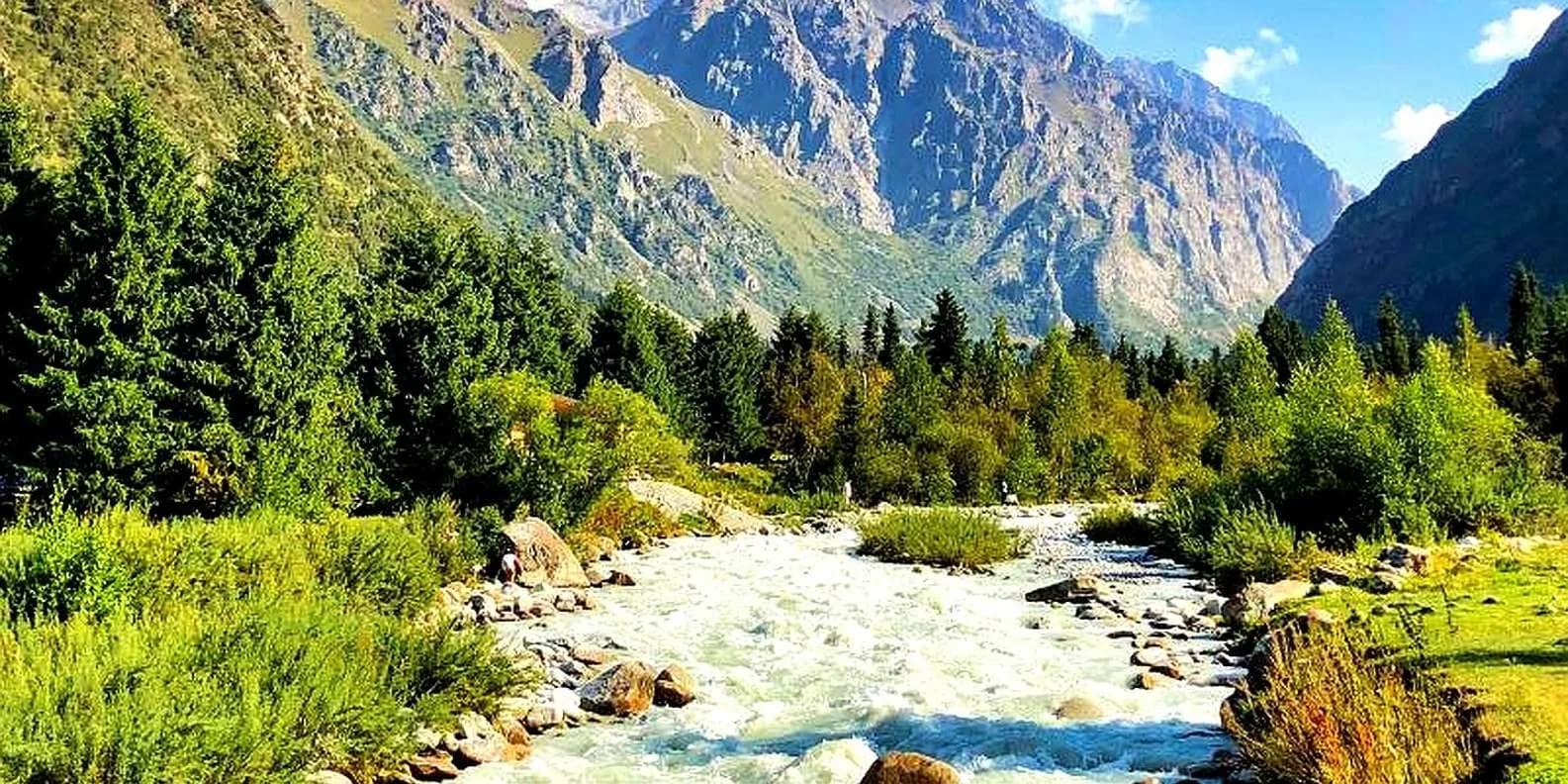
 Image via GetYourGuide
Kyrgyzstan Travel Insurance: The Altitude Trap (2026)
Most standard policies cap trekking cover below the passes you'll actually cross. Here's how to buy insurance for Kyrgyzstan that won't quietly fail you.
Book it on This is Kyrgyzstan
Turn this guide into a trip
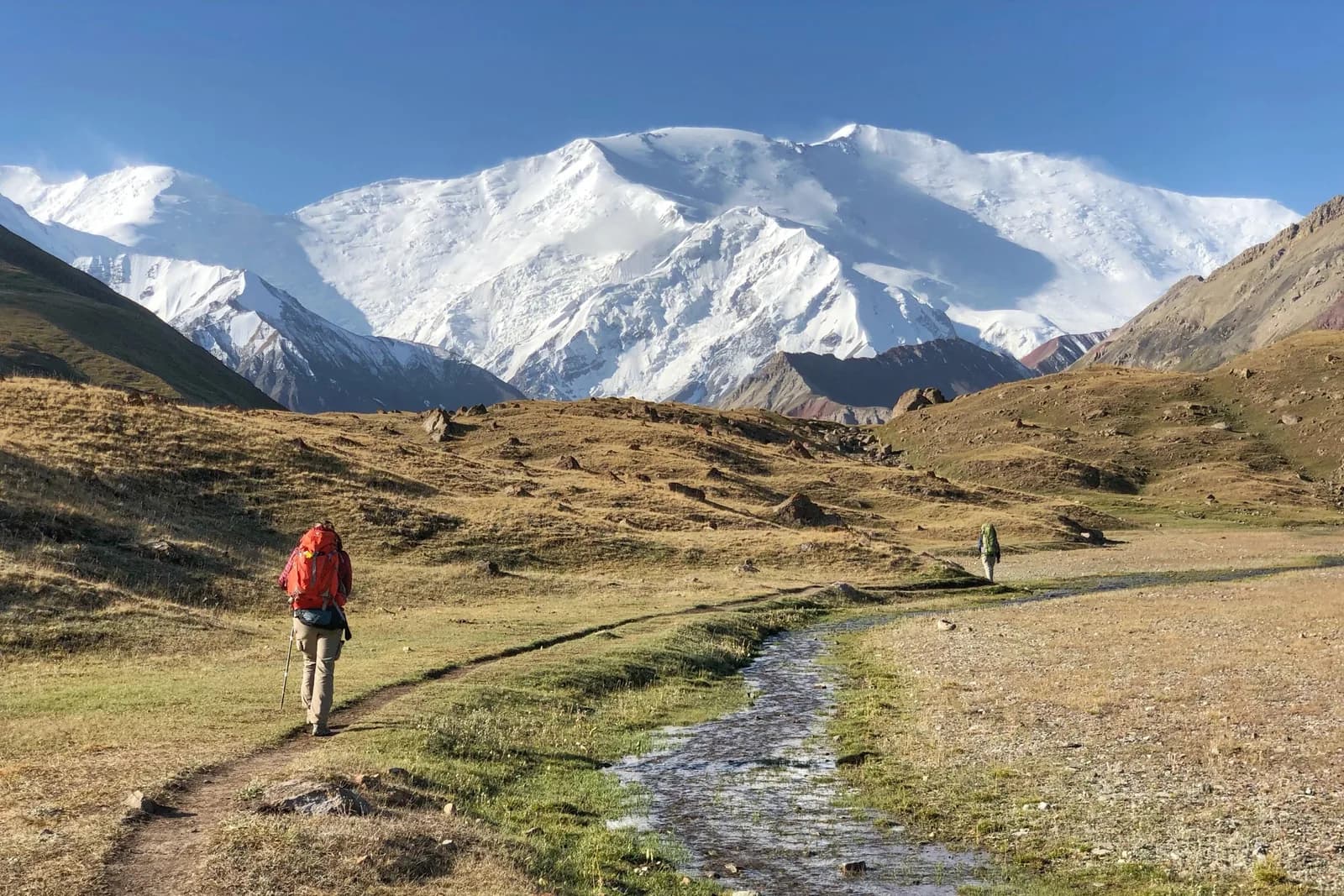
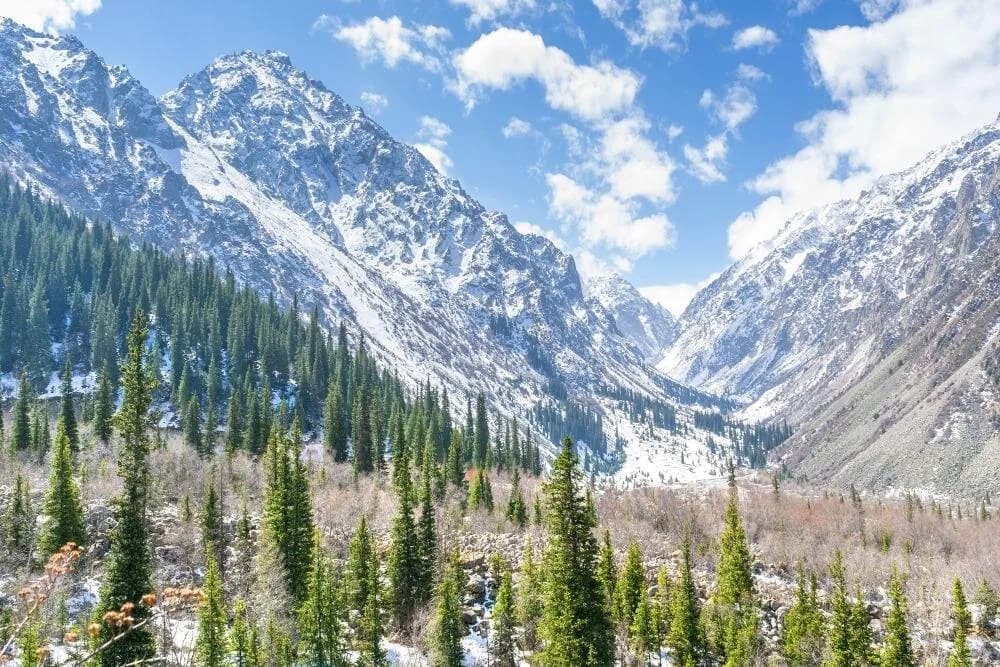
Yes, you need travel insurance for Kyrgyzstan, and the single thing that decides whether yours is worth anything is the altitude limit buried in the small print. This is a mountain country that puts ordinary tourists above 3,000 metres within a day or two of an 800-metre capital, yet most off-the-shelf policies cap their "hiking" or "trekking" cover at 2,500 to 3,000 metres. That is lower than nearly every headline trek here. Buy a policy, then read the one clause that matters and confirm it in writing.
This is a buyer's guide, not a sales pitch. It won't name a brand or quote a premium, because the right policy depends on your nationality, age, trip length and exactly what you plan to do. What it will do is tell you which clauses actually bite in Kyrgyzstan, and what to check before you pay.
Why insurance matters more here than in most places
Three things make Kyrgyzstan different from a beach holiday.
Rural medical care is thin. Bishkek has private clinics of a reasonable standard, used by expats and embassies, and it is realistically the only place in the country with anything approaching Western care. Osh is a distant second. Everywhere else, Naryn, Karakol, the Alay, the facilities are basic, payment is usually cash up front, and the correct response to anything serious is evacuation to Bishkek and then, often, abroad. There is no reciprocal healthcare agreement with the UK or most Western countries, so without insurance you pay for all of it yourself.
Evacuation is the real cost driver. Kyrgyzstan has a basic mountain rescue service staffed by volunteers with limited equipment. There is no routine, state-funded helicopter rescue on the Alpine or Nepali model. Where a helicopter lift happens at all, it is generally arranged commercially through mountaineering operators, it is weather-dependent, and it is expensive. Add repatriation home for a serious injury and the bill runs into five figures fast. This is exactly the scenario travel insurance exists for, and exactly the scenario a mis-bought policy fails to cover.
Mobile coverage vanishes. Most trekking valleys have no signal, so raising the alarm can mean sending someone hours down the trail. Many trekkers carry a satellite messenger for this reason. Insurance doesn't replace that, but a policy with a 24-hour assistance line and clear medical-evacuation cover is what turns a satellite SOS into an actual rescue rather than an argument about who pays.
Worth saying plainly: the biggest everyday risk in Kyrgyzstan is not the mountains at all, it's road traffic. Long transfers on bad roads with tired drivers are statistically far more dangerous than the Ala-Kul pass. Your policy's basic medical and repatriation cover matters as much for a road accident near Naryn as for altitude on a trek. See our guide on whether Kyrgyzstan is safe for the full risk picture.
The one thing that matters most: the altitude limit
Read this clause before anything else. Most travel policies define an altitude ceiling for "hiking" or "trekking" as a covered activity, commonly 2,500 to 3,000 metres. Above that line you are simply not insured for the activity, which usually voids the medical and evacuation cover for any incident on the mountain. Here is where that line falls against real Kyrgyz itineraries:
| Place / trek | Altitude | Against a typical cap |
|---|---|---|
| Bishkek | ~800 m | fine |
| Issyk-Köl shore | ~1,610 m | fine |
| Altyn-Arashan hot springs | ~2,400–2,600 m | at the limit |
| Song-Köl lake | ~3,016 m | over many caps |
| Tash Rabat | ~3,000–3,200 m | over many caps |
| Kel-Suu lake | ~3,514 m | over most caps |
| Ala-Köl lake | ~3,500 m | over most caps |
| Ala-Kul pass (trek high point) | ~3,900 m | over almost all caps |
| Peak Lenin base camp (Achik-Tash) | ~3,600 m | mountaineering, not trekking |
Where sources give slightly different figures, take the higher one when you buy: it costs nothing to be covered to 4,000 metres when the pass is 3,900. The Ala-Kul trek is the clearest example. People cross a 3,900-metre pass on day two, having slept far lower the night before, and it is where most of Kyrgyzstan's altitude-sickness cases concentrate. A policy capped at 3,000 metres covers you for the guesthouse and not for the mountain. If you are heading for Peak Lenin base camp or higher, you have crossed out of "trekking" entirely and need a mountaineering policy, since the peak itself is 7,134 metres and the route uses fixed camps above 4,000 metres.
Get the altitude confirmation in writing. "Trekking is covered" is not enough. Ask the insurer to state the exact metre limit, and keep the email.
Checklist: match your plans to your policy
| Your plan | Confirm the policy explicitly covers |
|---|---|
| Ala-Kul, or any high pass | Trekking to at least 4,000 m |
| Song-Köl, Kel-Suu, Tash Rabat | Trekking / travel to 3,000–3,600 m |
| Peak Lenin or higher | Mountaineering above 4,000–5,000 m, not just "trekking" |
| Horse riding or multi-day horse trek | Horse riding named as a covered activity |
| Skiing or ski touring at Karakol | On-piste, plus off-piste / backcountry if relevant |
| Any remote valley | Helicopter search, rescue and evacuation |
| The whole trip | Repatriation, medical cover level, cancellation, valuables |
What else to check
Altitude is the headline, but a few other clauses decide a claim.
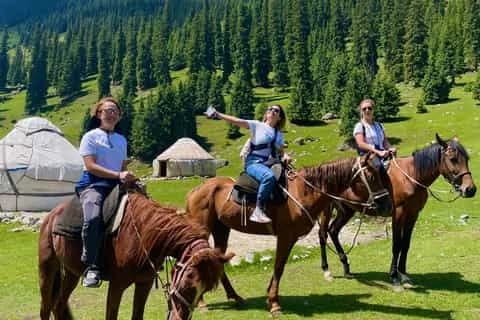
The adventure-activity list. Insurers group activities into tiers, and Kyrgyzstan's staples sit higher up the ladder than people expect. Trekking, horse riding, skiing and mountain biking are all classed as adventure activities and are frequently excluded from a basic policy or hidden behind a paid upgrade. Horse riding is the sneaky one: it is central to a Kyrgyz trip, from Song-Köl to the jailoos, and it is one of the most commonly excluded activities in standard cover. If it isn't named on your certificate, assume it isn't covered.
Emergency evacuation and repatriation amounts. Look for a specific, generous figure for medical evacuation and repatriation, not a vague promise. Given how expensive a commercial helicopter lift and an air ambulance home can be, this is the number that protects you from a catastrophic bill. The FCDO stresses medical-evacuation cover for exactly this reason.
Medical cover level. A high overall medical limit matters when treatment may mean stabilising in Bishkek and flying out. Check the excess too.
Cancellation and disruption. Kyrgyzstan trips involve non-refundable tours, domestic flights and yurt-camp bookings tied to a short mountain season. Cancellation cover pays if illness, weather or a closed pass wrecks the plan.
Valuables and gear. Trekking kit, cameras and phones add up. Check per-item limits if you're carrying anything expensive, and note that most policies won't cover kit left in an unattended vehicle.
Does the visa require proof of insurance?
For most visitors, no. Travellers from the roughly 55-country visa-free group, which includes the UK, US, EU, Canada, Australia and others, enter for up to 30 days per rolling 60-day period with no proof-of-insurance requirement, and the official e-visa application doesn't ask for an insurance certificate either. So insurance is not a border formality here. It is a financial and medical safety net you buy for your own protection, not a box to tick for entry. Confirm your own nationality's rules in our Kyrgyzstan visa and entry guide and on the official portal.
What it costs
Don't anchor to a single number, because premiums swing wildly with age, trip length, cover level and the activity tier. As a rough industry rule of thumb, standard travel insurance often lands somewhere around 4 to 8 per cent of your total trip cost, and adventure or high-altitude policies sit at the upper end of that or beyond. Two things push a Kyrgyzstan premium up: the altitude upgrade and any mountaineering or off-piste add-on. That extra is money well spent. It is the difference between the policy paying for a helicopter and the policy paying for nothing. Get two or three quotes on identical cover and compare the exclusions, not just the headline price.
Types of policy to compare
You don't need a specific brand, you need the right category. Compare across these and confirm the altitude limit for each.
Single-trip. Simplest for one holiday. Fine if you buy the adventure and altitude upgrades. Read the activity schedule, not the marketing.
Annual multi-trip. Cheaper if you travel more than twice a year, but the standard tier often has a low altitude cap and a short single-trip length limit. Check both before assuming your Kyrgyzstan trek is included.
Backpacker / adventure specialists. Insurers aimed at long overland and trekking trips tend to cover higher altitudes and more activities as standard, and to handle multi-country Central Asia routes better. Usually the closest fit for a serious Kyrgyzstan itinerary.
Long-stay cover. If you're combining Kyrgyzstan with Uzbekistan or a wider Silk Road run over several months, look at long-stay or gap-year policies rather than stretching a two-week product.
Whatever you choose, do the same three things: name every activity, confirm the altitude ceiling in writing, and check the evacuation and repatriation figures. Then pack the assistance number somewhere you can reach it without signal. Before you finalise anything, read up on altitude sickness in Kyrgyzstan so you know what you're insuring against, and browse our trekking tours if you'd rather have a reputable operator carry some of the risk for you.
Chat with a real person — free
Seif and the team reply on WhatsApp 24/7 — trip questions, custom plans and booking help.
Ask Seif on WhatsAppCommon questions
Do I legally need travel insurance to enter Kyrgyzstan?
No. Travellers from the roughly 55-country visa-free group, including the UK, US, EU, Canada and Australia, enter for up to 30 days per rolling 60-day period with no proof-of-insurance requirement, and the official e-visa application doesn't ask for an insurance certificate. Insurance here is a financial and medical safety net you buy for your own protection, not a condition of entry. Buy it anyway, because rural medical care is thin and evacuation is expensive.
What altitude should my policy cover for Kyrgyzstan?
Match the ceiling to your itinerary and round up. The Ala-Kul pass tops out near 3,900 metres, so buy cover to at least 4,000 metres for the classic Karakol treks. Song-Köl (~3,016 m), Tash Rabat (~3,000–3,200 m) and Kel-Suu (~3,514 m) all sit above the 2,500–3,000-metre cap on many standard policies. Peak Lenin needs a mountaineering policy, not a trekking one, since the route climbs well above 4,000 metres.
Why do standard travel policies fail in Kyrgyzstan?
Because they quietly cap trekking cover at an altitude lower than the passes people actually cross. Most policies insure hiking only to 2,500–3,000 metres, and above that line you aren't covered for the activity, which usually voids the medical and evacuation cover for any incident on the mountain. Kyrgyzstan sends ordinary tourists over 3,000 metres within a day or two, so the cap catches out travellers who assumed "trekking is included" was enough.
Is helicopter rescue covered, and how much does it cost?
Only if your policy explicitly includes helicopter search, rescue and evacuation. Kyrgyzstan has no routine state-funded helicopter rescue; mountain rescue is a volunteer service with limited equipment, and any helicopter lift is generally arranged commercially, weather-permitting, and is expensive. No reliable published price exists, which is the point: a proper evacuation clause with a high, specific limit is what stands between you and a catastrophic bill.
Does travel insurance cover horse riding in Kyrgyzstan?
Not automatically. Horse riding is central to a Kyrgyz trip, from Song-Köl to the jailoos, yet it's one of the most commonly excluded activities in standard policies. Check that horse riding is named on your certificate as a covered activity, and confirm it applies to multi-day horse treks at altitude, not just a gentle one-hour ride. If it isn't listed, assume you aren't covered and add it or switch policies.
What about skiing and ski touring at Karakol?
Winter sports are a separate tier again. If you plan to ski at Karakol or tour in the backcountry, confirm the policy covers on-piste skiing, and specifically off-piste or ski touring if that's your plan, since backcountry is often excluded from standard winter-sports add-ons. As with trekking, check the altitude ceiling too, because Kyrgyz ski terrain sits high. Read the activity schedule line by line before you pay.
How much should I budget for travel insurance?
As a rough rule of thumb, standard travel insurance often runs around 4 to 8 per cent of total trip cost, with adventure and high-altitude policies at the top of that range or beyond. The altitude upgrade and any mountaineering add-on are what push a Kyrgyzstan premium up, and they're worth every cent. Get two or three quotes on identical cover and compare the exclusions, not just the headline price.
Single-trip or annual multi-trip policy?
It depends how often you travel. A single-trip policy is simplest for one holiday, provided you add the adventure and altitude upgrades. Annual multi-trip cover is cheaper if you take more than two trips a year, but the standard tier frequently carries a low altitude cap and a per-trip length limit that can exclude your Kyrgyzstan trek. Whichever you pick, confirm the exact altitude ceiling and activity list in writing before you buy.
What's the single most important thing to confirm before buying?
Get the altitude limit stated in writing. "Trekking is covered" means nothing without a metre figure. Ask the insurer to confirm the exact ceiling for hiking and trekking, name every activity you'll do including horse riding, and check the medical-evacuation and repatriation amounts. Keep that email. If a claim is ever disputed, a written confirmation that you were covered to 4,000 metres is what settles it.
Book it on This is Kyrgyzstan
Turn this guide into a trip
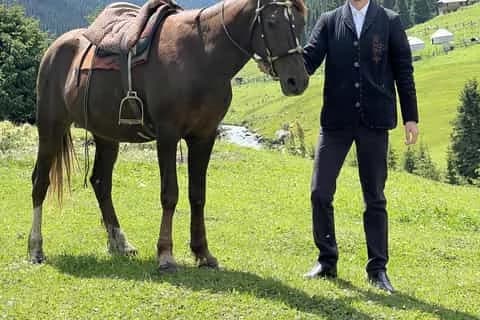
Kyrgyzstan's bestsellers
The experiences travelers book most, across the country
Keep reading
Self-Guided Treks in Kyrgyzstan: Routes & How-To
Yes, you can trek Kyrgyzstan without a guide. The best self-guided routes, the ones to skip, and the maps, water and safety logistics that make it work.
By TiK Editors12 min read
Uchitel Peak: Your First 4,000m Climb (2026)
Pik Uchitel (~4,400-4,600 m) in Ala-Archa is the classic first summit for fit hikers new to mountaineering: route, gear, season and acclimatisation.
By TiK Editors8 min read
Tian Shan Traverse: Bikepacking Kyrgyzstan
The Tian Shan Traverse is a self-supported, mostly off-road bikepacking route of about 1,000 km across the high Kyrgyz mountains. Here's how to plan it.
By TiK Editors9 min read