 Image via GetYourGuide
Peak Lenin Base Camp Trek: Guide (2026)
A non-technical trek to Lenin Peak base camp and the Tulpar-Köl lakes at ~3,600 m in the Trans-Alay, south of Osh. Route, altitude, season and costs.
Book it on This is Kyrgyzstan
Osh · Turn this guide into a trip
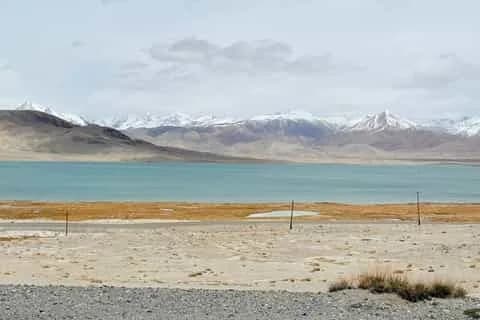
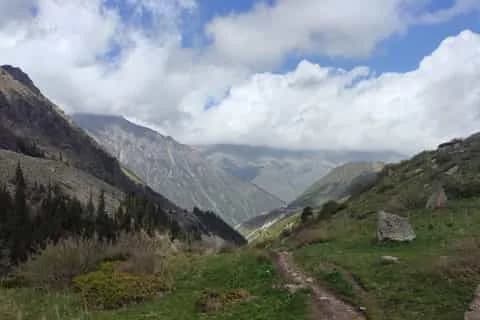
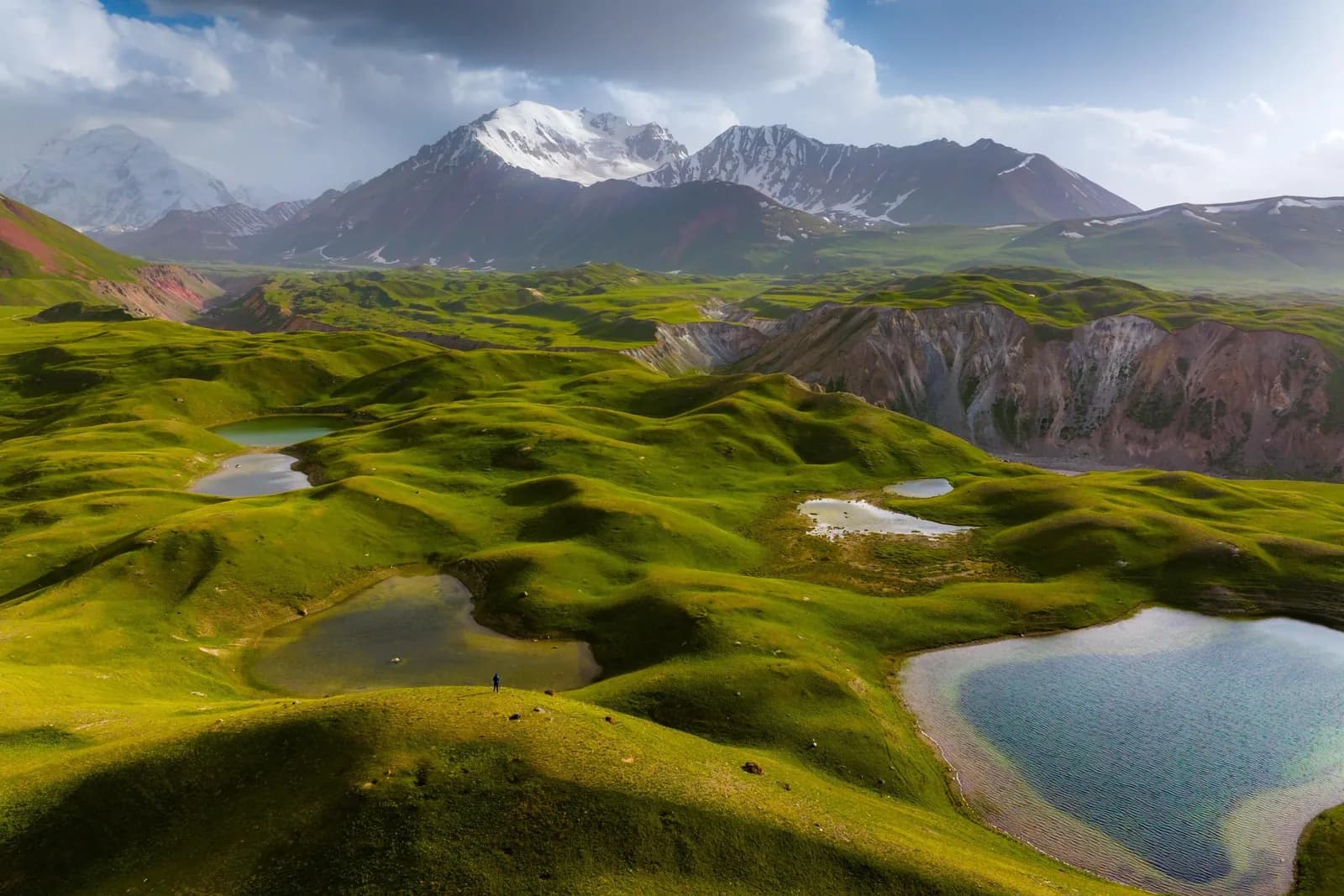

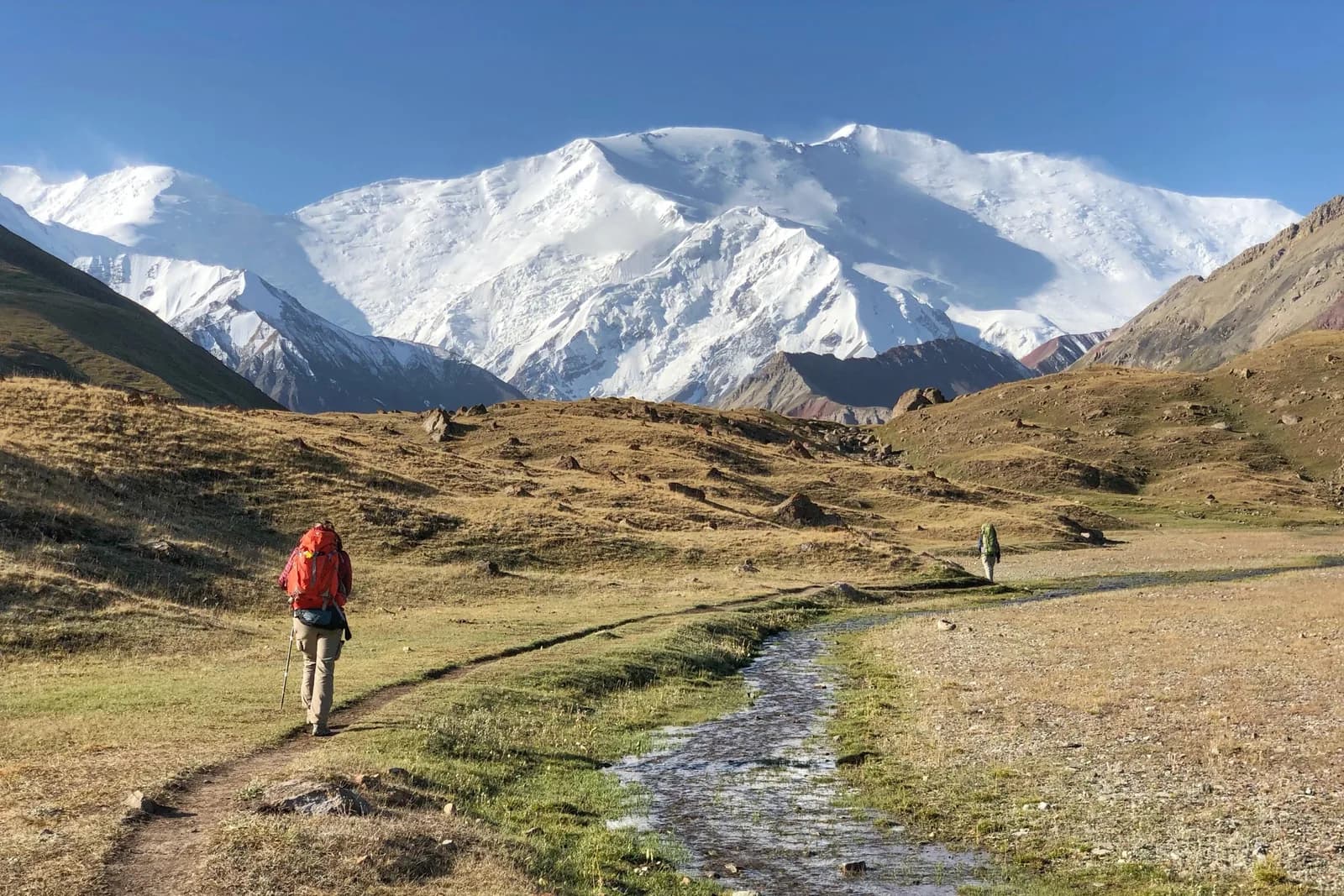
The Peak Lenin base camp trek is a non-technical walk into the Trans-Alay mountains south of Osh, ending at the Achik-Tash meadows and the little lakes of Tulpar-Köl (Tulpar-Kol) at around 3,600 m, with the 7,134 m white wall of Lenin Peak filling the sky above camp. You do not climb the mountain and you need no ropes, crampons or mountaineering skill — only the fitness to walk at altitude and the patience to acclimatise. Most people do it in three to five days out of Osh, in July or August, and it is the honest answer to "how do I see a Central Asian 7,000-metre peak up close without an expedition?"
At a glance
| What | Non-technical trek to Lenin Peak (Ibn Sina Peak) base camp |
| Base city | Osh (fly or drive from Bishkek first) |
| Days on the ground | 3–5 from Osh; longer for trekking-in variants |
| Altitude range | Osh ~950–1,010 m → base camp ~3,600 m → Traveller's Pass ~4,100 m |
| Difficulty | Moderate — the challenge is altitude, not terrain |
| Best season | July to August (snow closes it either side) |
| Sleep | Base-camp tents or Tulpar-Köl yurts, from ~1,000 som/night |
| Get there | Osh → Sary-Tash → Sary-Mogol → Achik-Tash by shared taxi and 4WD |
What this trek actually is (and is not)
Lenin Peak, renamed Ibn Sina Peak but still universally called Lenin, is 7,134 m and sits on the Kyrgyzstan–Tajikistan border in the Trans-Alay (Zaalay) range. It is widely described as the most accessible of Central Asia's 7,000ers, which is why serious mountaineers use it as a training summit. That is the expedition — three to four weeks, glacier travel, fixed camps at 4,400 m, 5,300 m and 6,100 m, real objective danger.
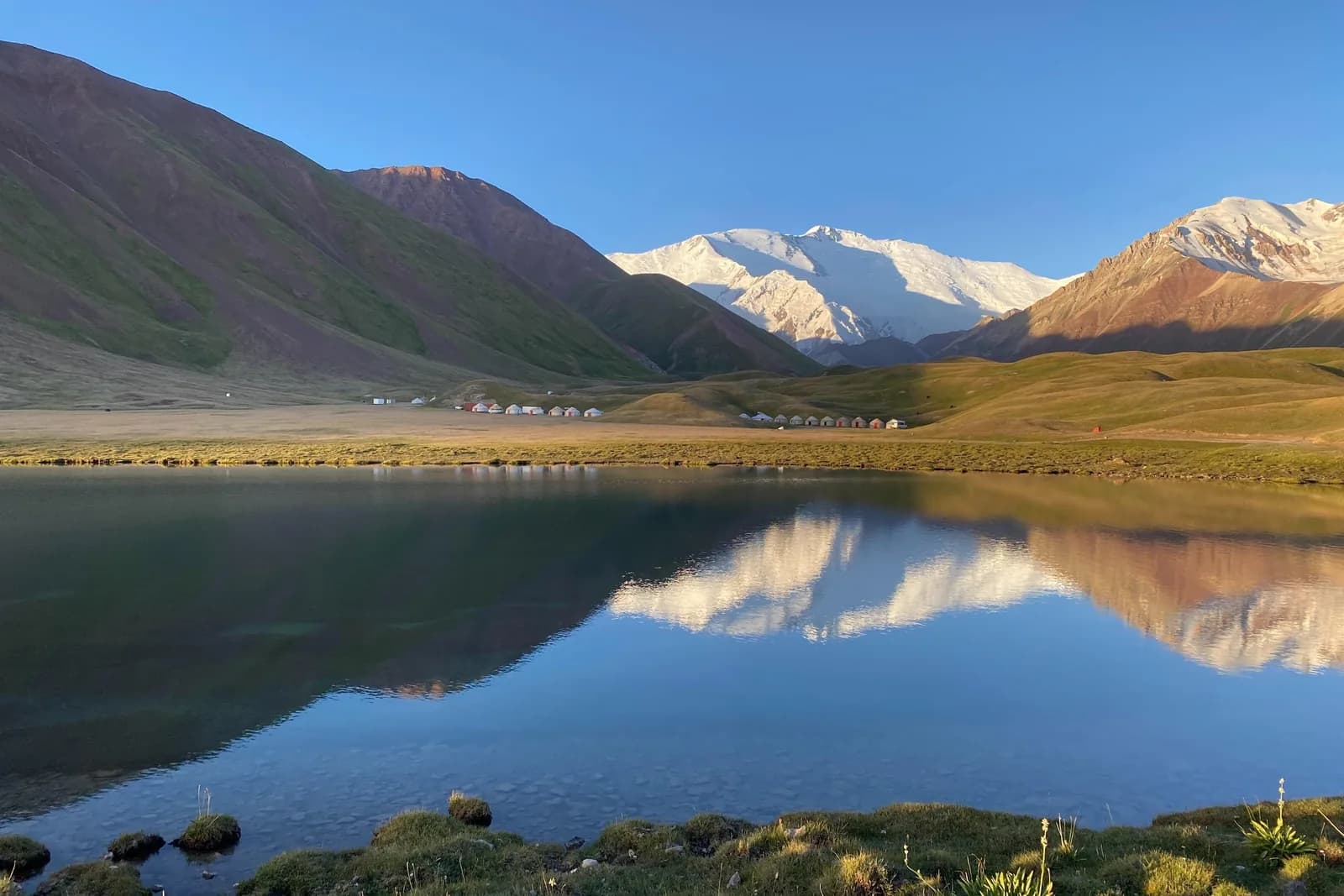
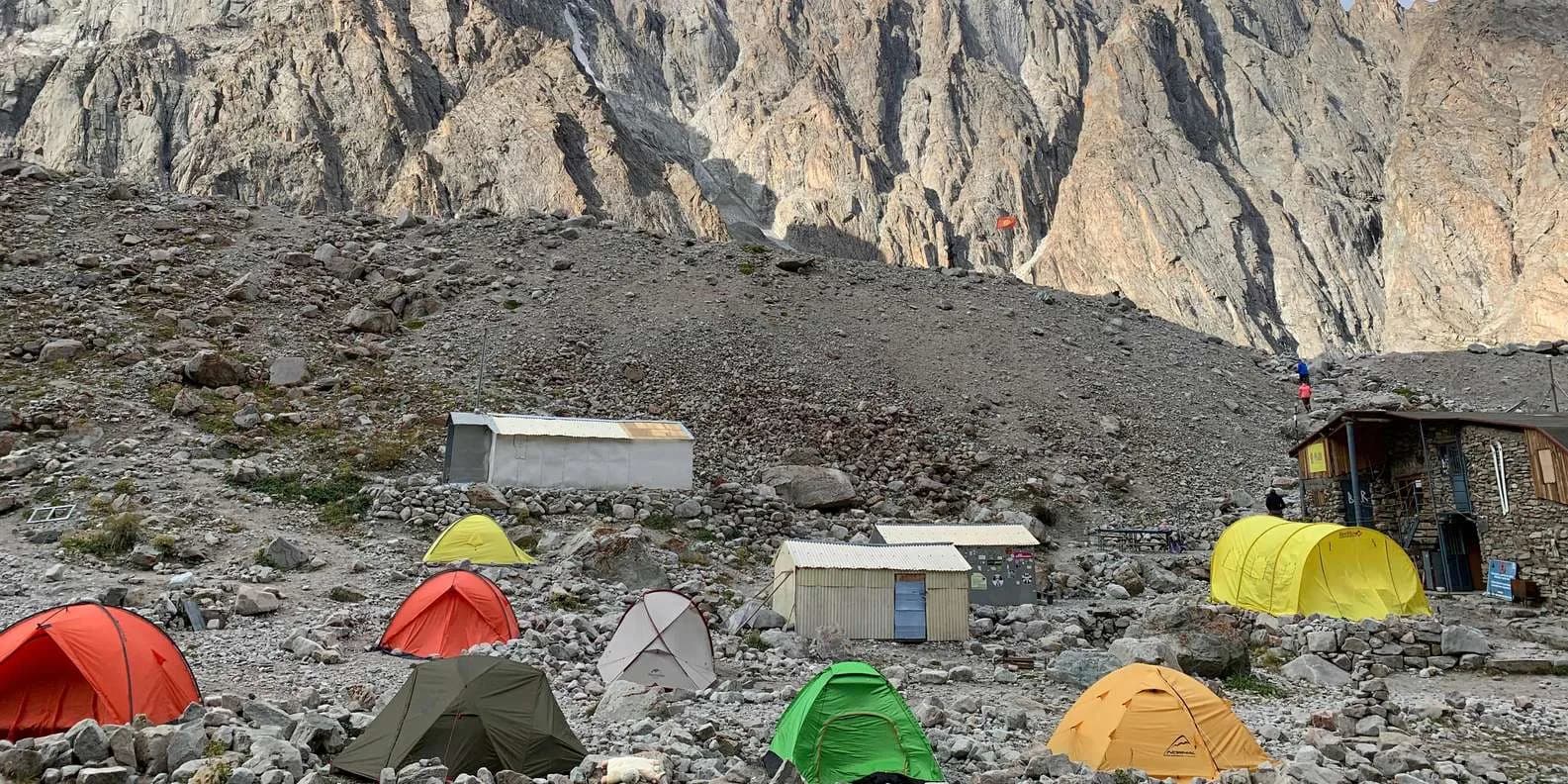
The base camp trek is a different animal. You walk, ride or drive up to the Achik-Tash base camp at roughly 3,600 m, sleep in the meadow by the Tulpar-Köl lakes, and spend a day or two acclimatising and day-hiking. The headline reward is the Traveller's Pass (Puteshestvennikov Pass), about 4,100 m and roughly three hours on foot from camp: from the top the entire north face of Lenin Peak and the Lenin Glacier open up in front of you. This is the "see Lenin Peak without climbing it" viewpoint, and it needs no technical kit — just legs and lungs that have adjusted to the height.
So the skill barrier is low, but the altitude barrier is real. Do not confuse "non-technical" with "easy". You will be sleeping higher than almost anywhere else a normal tourist reaches in Kyrgyzstan, and getting there fast.
How to get there
Everything starts in Osh, Kyrgyzstan's southern capital, at around 950–1,010 m. Most travellers fly Bishkek–Osh (roughly 40–60 minutes, several flights daily) rather than grind out the ~600 km, 10–12-hour road; if you have the time, the Bishkek to Osh road trip over the Töö-Ashuu and Ala-Bel passes is a spectacular journey in its own right. From Osh you head deep into the Alay.
The route runs Osh → Sary-Tash → Sary-Mogol → Achik-Tash:
| Leg | Distance / time | How |
|---|---|---|
| Osh → Sary-Tash | ~180 km, 3–4 h, over the Taldyk pass (3,615 m) | Shared taxi or private transfer |
| Sary-Tash → Sary-Mogol | ~32 km, under 1 h | Transfer; Sary-Mogol is the Alay trekking base |
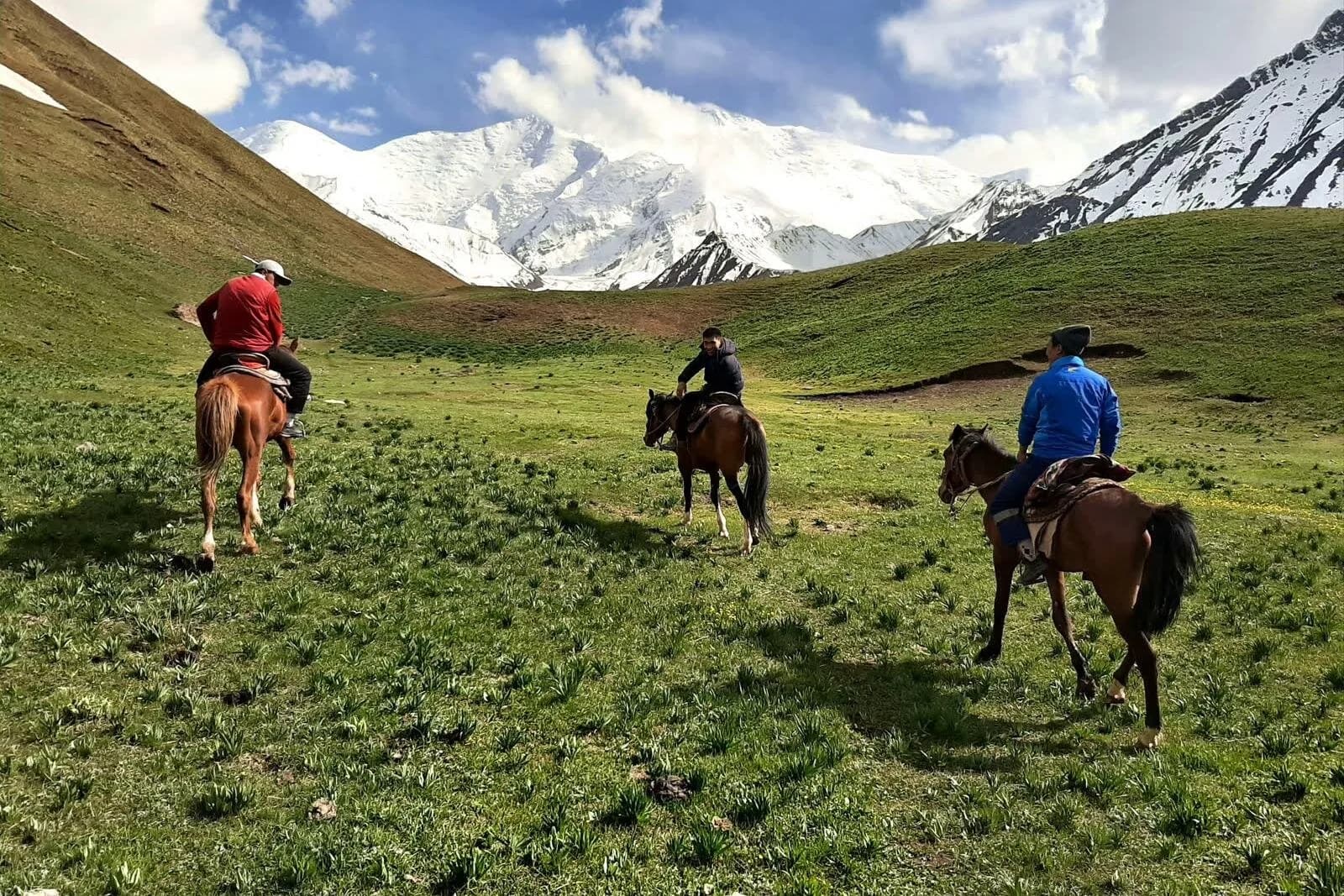
| Sary-Mogol → Tulpar-Köl / base camp | 45 min by 4WD, 4–5 h on horseback, 8–9 h on foot | Jeep, horse or trek |
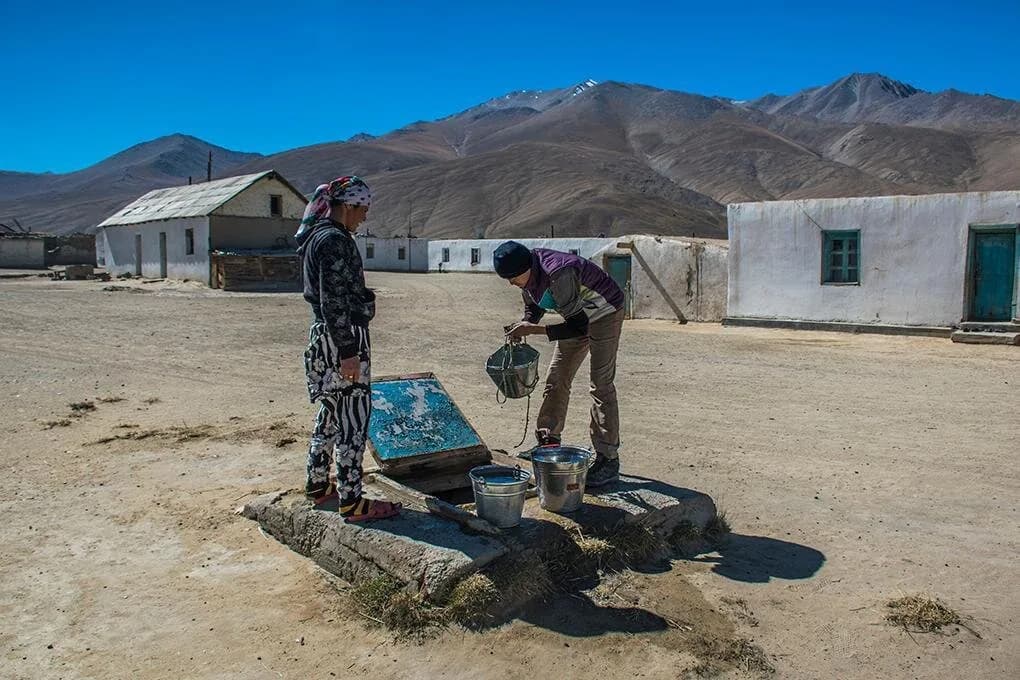
Sary-Tash is the great Alay crossroads — south to Tajikistan over the Pamir Highway, east to China at Irkeshtam, north back to Osh. Just before it, the Alay Valley opens: a broad, flat, treeless steppe corridor with the whole Trans-Alay wall, Lenin Peak included, filling the southern horizon. It is one of the finest road views in Central Asia and worth stopping for. Sary-Mogol is the working staging village, home to the Visit Alay community-tourism office, which arranges guides, horses, drivers and yurt beds.
The route, day by day
There is no single fixed itinerary — you can compress this into a long weekend or stretch it with acclimatisation days. A sensible, safe version looks like this:
- Day 1 — Osh to Sary-Mogol. Drive up through the Taldyk pass into the Alay. Sleep in a Sary-Mogol guesthouse or CBT homestay at roughly 3,000 m. This first night at altitude does a lot of quiet work on your acclimatisation.
- Day 2 — Up to Tulpar-Köl and base camp (~3,600 m). Jeep in over the Kyzyl-Suu river, or ride/walk if you want the approach. Settle into a yurt or tent by the lakes and take a gentle stroll — nothing strenuous on your first day this high.
- Day 3 — Acclimatisation and the big view. Day-hike toward the Traveller's Pass (~4,100 m) for the full Lenin Peak face and glacier, then drop back to sleep low at base camp. A shorter alternative is the ridge of Petrovsky Peak (~4,200 m) above camp, another grandstand over the Achik-Tash valley.
- Day 4 — Higher, or turn for home. Fit, well-acclimatised walkers can push on toward Camp 1 / advanced base camp at about 4,400 m over the moraine of the Lenin Glacier, crossing a glacial river early in the morning before the melt swells it. Otherwise, retrace to Sary-Mogol.
- Day 5 — Return to Osh. Long drive back down (~6 hours from the trailhead), and a well-earned shower.
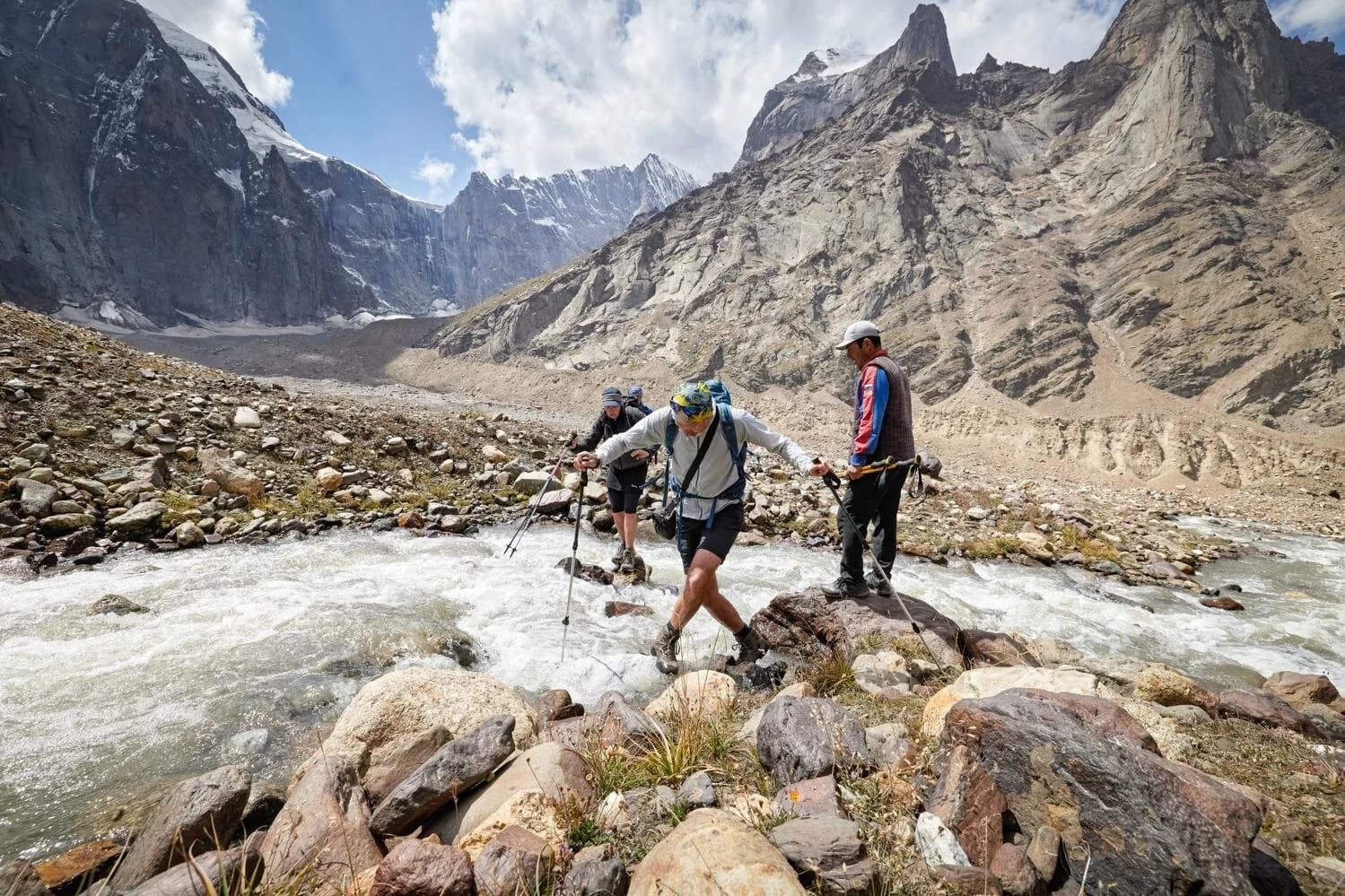
A harder, more rewarding variant trekking-in from the Kozho-Kelen gorge over the Dzhyptyk Pass through alpine meadows exists on some operator itineraries — it adds days and effort but replaces the jeep track with real walking. Either way, trekking in Kyrgyzstan rewards flexibility: weather and river levels change plans here routinely.
Altitude and acclimatisation — take this seriously
This is the part people underestimate, and the Lenin approach is exactly where Kyrgyzstan's serious altitude cases cluster. You can go from Osh at ~1,000 m to sleeping at 3,600 m in a day, which is precisely the profile that produces acute mountain sickness. Altitude illness rarely bites below 2,500 m, but above that AMS typically starts 6–10 hours after ascending — a headache plus nausea, dizziness, fatigue or a broken night's sleep.
The rules that matter:
- Above 3,000 m, raise your sleeping altitude by no more than about 500 m a day, with a rest day every 3–4 days. Day-hike high, sleep low.
- Build in that night at Sary-Mogol rather than blasting straight to base camp.
- Physical fitness offers no protection against AMS — strong trekkers get it too.
- Acetazolamide (Diamox), 125 mg twice daily started a day or two before you reach 3,500 m, helps moderate-risk ascents; trial it at home first. It is not a substitute for going slowly.
- If symptoms worsen, descend — that is the treatment, and everything else just buys time. Never go higher while symptomatic.
Our full altitude sickness in Kyrgyzstan guide covers HACE and HAPE and what to carry. Two practical points for the Alay specifically: mobile coverage is absent in most of these valleys, so a satellite messenger or PLB is the realistic way to raise an alarm; and the mountain-rescue service is a small, volunteer outfit with limited kit (24-hour line +996 312 651 404). Buy travel insurance that explicitly covers your maximum altitude, helicopter evacuation and repatriation — standard policies often cap altitude cover at 2,500–3,000 m, which excludes this trek entirely.
When to go
The meadows, the passes and the yurt camps are a July–August affair. Snow closes the high ground either side, and the base camp operation packs up for the winter. The Alay festival, a good reason to time a trip, is held on the third weekend of July at Sary-Mogol. Expect warm, bright days and genuinely cold nights at 3,600 m even in midsummer; UV at this height with snow around is fierce, so a brimmed hat, high-factor sunscreen and category 3–4 sunglasses are not optional. Snow is possible on the passes in any month.
Where you sleep
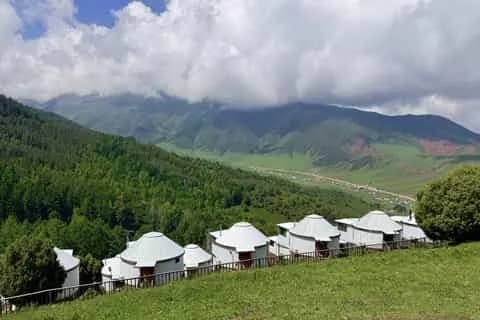
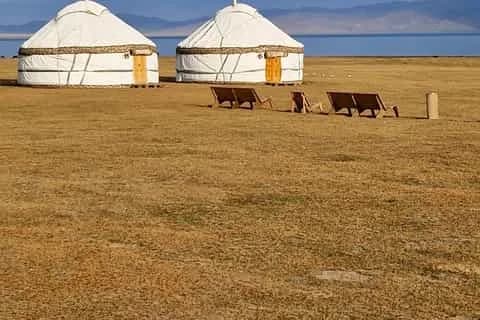
Two styles, often side by side in the Achik-Tash meadow. The commercial base camp is more comfortable than the setting suggests: a heated two-storey dining hall seating well over a hundred, a bar and lounge, and roomy tents with proper beds and electricity — a strange little island of warmth under a 7,000-metre wall. The Tulpar-Köl yurt camps, across the Kyzyl-Suu river, are the standard choice for non-climbers: felt yurts by the lakes, from around 1,000 som (roughly $11–12) a night including breakfast and dinner. Nights are cold; a good sleeping bag earns its place, and many operators do not supply one. If yurts are your thing, our yurt stays guide is worth a read before you go.
The summit expedition, as a step up
If the base camp trek lights a fire, the full climb is the obvious next rung — and Lenin is the 7,000er most people attempt first. It is still a three-to-four-week mountaineering expedition with glacier travel, fixed camps and a punishing summit push above 7,000 m, and it needs prior high-altitude experience, not just enthusiasm. Because the peak straddles the frontier, it also opens the door to the wider Pamir; if you are weighing the ranges, our Kyrgyzstan vs Tajikistan trekking comparison lays out how the two sides differ. For most travellers, though, the base camp trek is the sweet spot: the same jaw-dropping mountain, a fraction of the risk and cost.
Costs, briefly
Guided Osh-based trekking sits at the affordable end of the Kyrgyz market, with independent logistics cheaper still. Shared taxis, a Sary-Mogol homestay, a jeep transfer to the meadow and a couple of yurt nights can be assembled for well under a packaged tour. Community rates through Visit Alay in Sary-Mogol are often the best value and keep money local. Prices move — treat any figure here as indicative and confirm on the day. Pack for real cold and self-sufficiency using our Kyrgyzstan packing list.
Ready to build it into a wider southern loop? Start with our Osh travel guide for the gateway city, then browse trekking tours that run to the Alay and Lenin base camp.
Chat with a real person — free
Seif and the team reply on WhatsApp 24/7 — trip questions, custom plans and booking help.
Ask Seif on WhatsAppCommon questions
Do I need mountaineering experience for the Peak Lenin base camp trek?
No. The trek to the Achik-Tash base camp and the Tulpar-Köl lakes at around 3,600 m is non-technical — no ropes, crampons or glacier skills, just walking at altitude. The day-hike to the Traveller's Pass (~4,100 m) is the same. Technical skill and prior high-altitude experience are only needed for the separate summit expedition on the 7,134 m peak itself, which is a three-to-four-week climb.
How high do you actually get on the base camp trek?
Base camp sits at roughly 3,600 m, and you sleep there or at the nearby Tulpar-Köl yurt camps. The standard acclimatisation day-hike to the Traveller's Pass reaches about 4,100 m for the full view of Lenin Peak's face. Fit, well-acclimatised walkers can push on toward Camp 1 at around 4,400 m. The summit, by contrast, is 7,134 m and reached only by mountaineering expeditions.
How do I get from Osh to Lenin Peak base camp?
Drive from Osh to Sary-Tash (about 180 km, 3–4 hours over the 3,615 m Taldyk pass), then on to Sary-Mogol village (~32 km). From Sary-Mogol it is 45 minutes by 4WD to the Achik-Tash meadow, or 4–5 hours on horseback and 8–9 hours on foot. Shared taxis and the Visit Alay office in Sary-Mogol arrange transfers, horses and guides.
When is the best time to do the trek?
July and August. That is when the Alay meadows are open, the passes are clear and the base camp and yurt camps are operating. Snow closes the high ground on either side of that window, and the camps pack up for winter. Time your visit for the third weekend of July if you want to catch the Alay festival at Sary-Mogol. Expect cold nights even in midsummer.
How many days do I need?
Three to five days from Osh is typical: a day to drive up and sleep at Sary-Mogol, a day to reach base camp, one or two acclimatisation and viewpoint days, and a day to return. Longer trekking-in variants over the Dzhyptyk Pass add several days of real walking. Do not compress it too hard — a rushed ascent from Osh to 3,600 m in a day risks altitude sickness.
Is altitude sickness a real risk here?
Yes, this is one of the places in Kyrgyzstan where serious cases occur, because you climb from Osh (~1,000 m) to 3,600 m fast. Above 3,000 m, raise your sleeping altitude by no more than about 500 m a day and build in the Sary-Mogol night. Fitness offers no protection. If symptoms worsen, descend. Read our altitude-sickness guide and carry insurance covering high-altitude evacuation.
Where do you sleep on the trek?
Either in the commercial base camp — heated dining hall, bar and tents with beds and electricity — or in the Tulpar-Köl yurt camps across the Kyzyl-Suu river, which are the usual non-climber choice. Yurt nights run from around 1,000 som (about $11–12) including breakfast and dinner. Nights at 3,600 m are cold; bring a good sleeping bag, as many operators do not supply one.
Can I see Lenin Peak without climbing it?
Yes — that is the whole point of this trek. From the base camp meadow the peak already towers overhead, and the day-hike to the Traveller's Pass (Puteshestvennikov Pass, ~4,100 m) opens up the entire north face and the Lenin Glacier. It takes roughly three hours on foot from camp and needs no technical equipment, just acclimatisation and a fair-weather day.
Is the trek suitable for independent travellers?
Broadly yes, though it is more logistically involved than Kyrgyzstan's northern treks. You can arrange shared taxis to Sary-Mogol, a homestay, a jeep to the meadow and yurt nights yourself, often through the Visit Alay community office. A guide is sensible for route-finding, river crossings and altitude judgement higher up. There is no mobile signal in the valleys, so carry a satellite messenger for emergencies.
Book it on This is Kyrgyzstan
Turn this guide into a trip

Kyrgyzstan's bestsellers
The experiences travelers book most, across the country
Keep reading
Self-Guided Treks in Kyrgyzstan: Routes & How-To
Yes, you can trek Kyrgyzstan without a guide. The best self-guided routes, the ones to skip, and the maps, water and safety logistics that make it work.
By TiK Editors12 min read
Uchitel Peak: Your First 4,000m Climb (2026)
Pik Uchitel (~4,400-4,600 m) in Ala-Archa is the classic first summit for fit hikers new to mountaineering: route, gear, season and acclimatisation.
By TiK Editors8 min read
Tian Shan Traverse: Bikepacking Kyrgyzstan
The Tian Shan Traverse is a self-supported, mostly off-road bikepacking route of about 1,000 km across the high Kyrgyz mountains. Here's how to plan it.
By TiK Editors9 min read