 Image via GetYourGuide
Song-Köl vs Issyk-Köl: Which Lake to Visit?
Song-Köl is a remote summer yurt lake at 3,016 m; Issyk-Köl a huge year-round resort lake. How they compare — and why you should do both.
Book it on This is Kyrgyzstan
Turn this guide into a trip
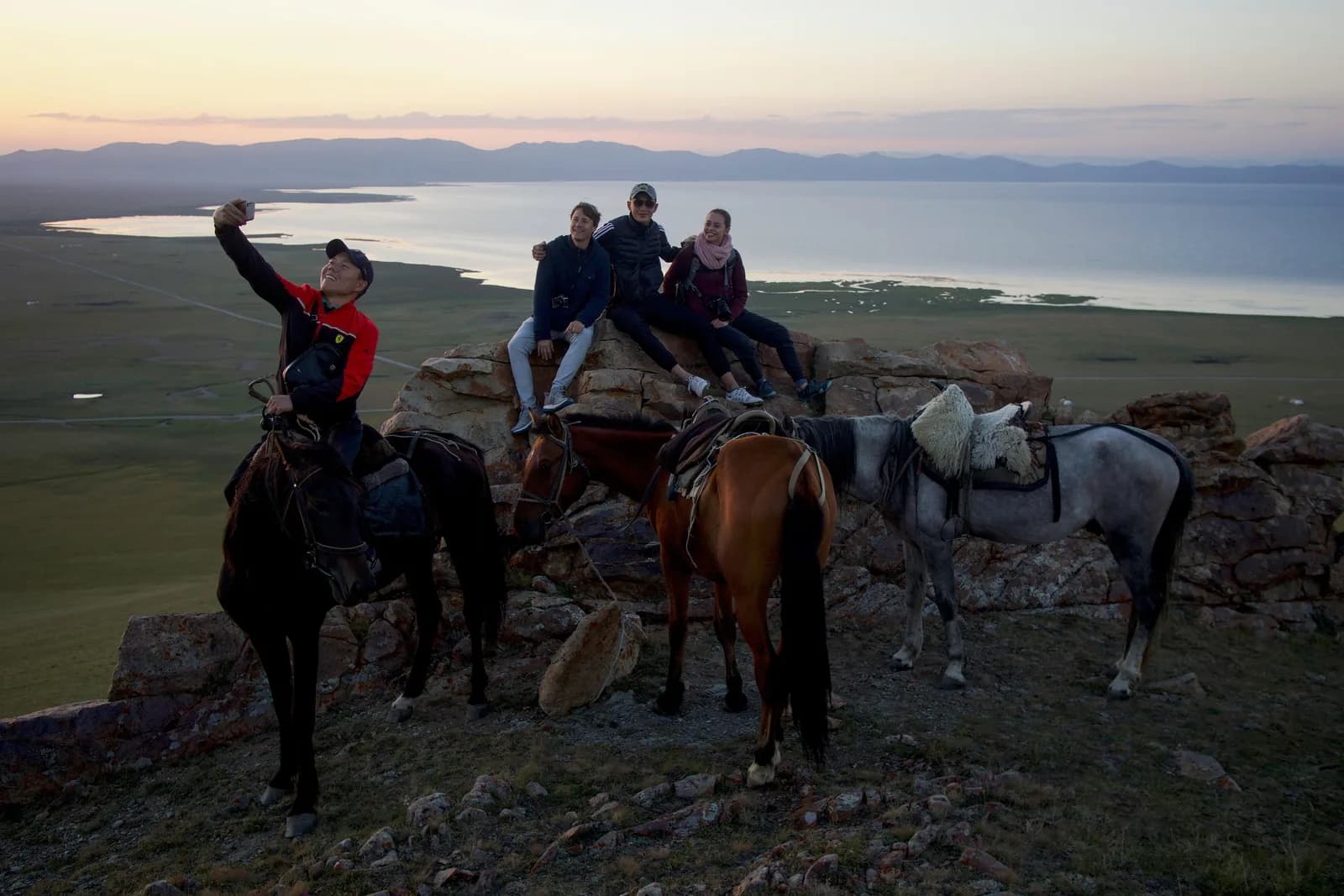
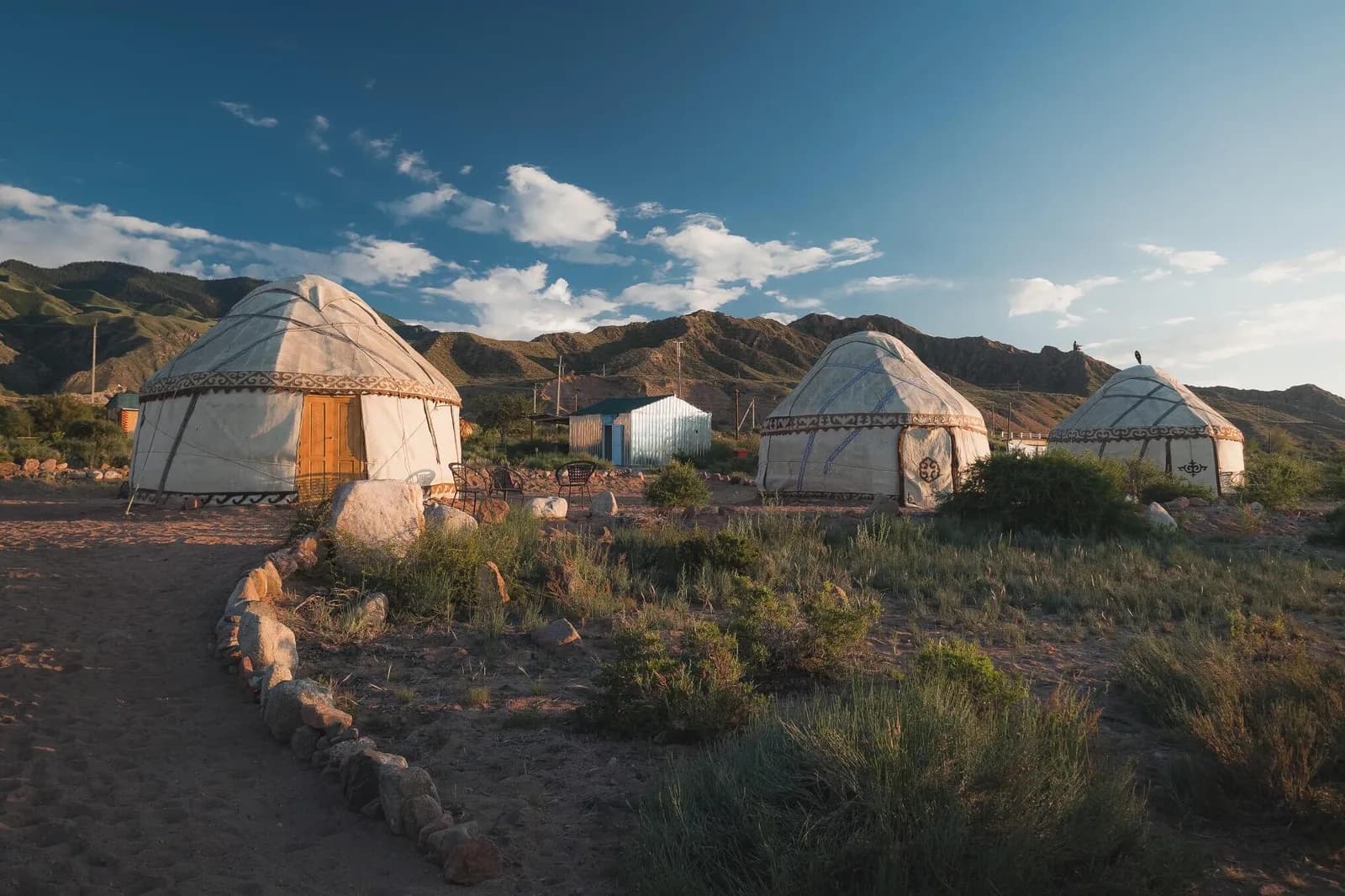
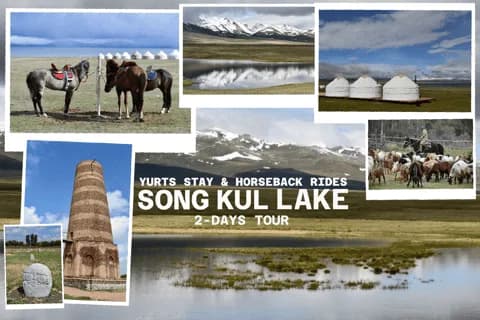
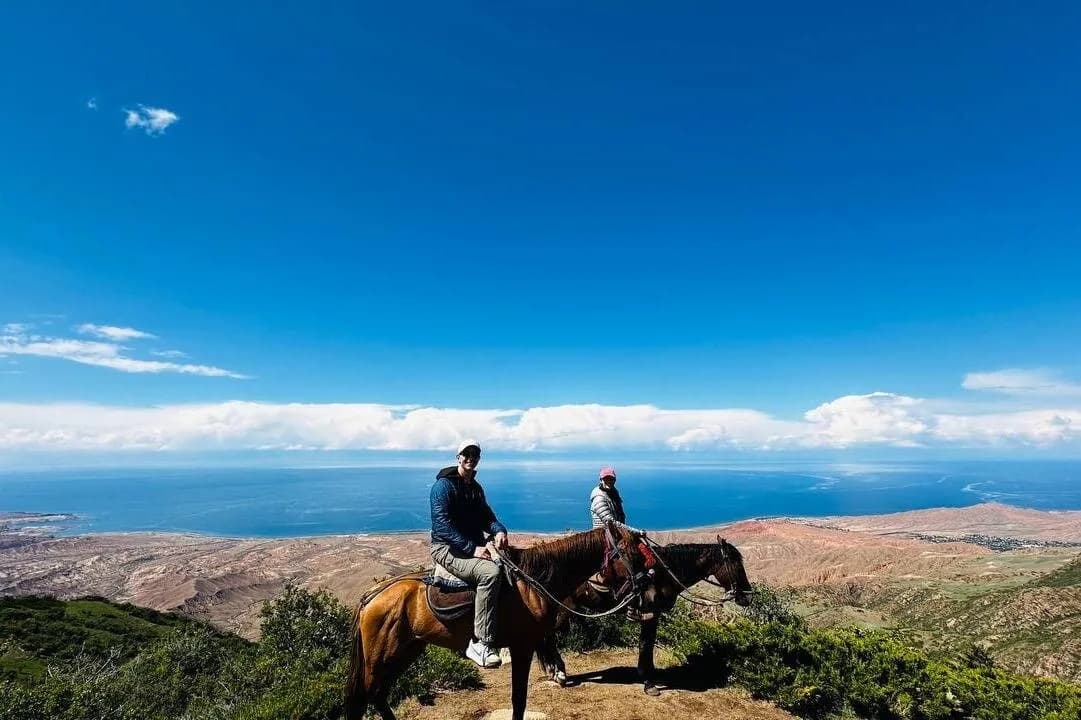
If you only have room for one lake, choose by what you actually want: a night of nomad silence at altitude, or a proper holiday you can build a week around. Song-Köl (Song-Kul) is a remote high-alpine lake at about 3,016 m — summer pasture, yurts, horses, no towns and no roads worth the name, open roughly mid-June to mid-September. Issyk-Köl (Issyk-Kul) sits far lower at around 1,607 m, is the world's second-largest mountain lake, never freezes, and runs on resort towns, beaches, canyons and a ring road you can drive year-round. They are not rivals so much as two different holidays. And the honest answer, if your dates allow, is to do both in one loop.
The short version
Go to Song-Köl for stillness, star fields and a night in a herder's yurt, and accept that it costs you a rough drive and a cold night. Go to Issyk-Köl for warm(ish) swimming, red-rock canyons, Karakol's trekking and the freedom to turn up any month of the year. First-time visitors with a week almost always want a taste of each, because the two sit close enough to link.
Song-Köl vs Issyk-Köl at a glance
| Song-Köl | Issyk-Köl | |
|---|---|---|
| Altitude | ~3,016 m | ~1,607 m |
| Size | 29 km long, max depth ~13 m (shallow) | 182 km long, up to 60 km wide, max depth 668 m |
| Freezes? | Yes — ice 1–1.2 m thick all winter | No — slightly saline and very deep, so it stays open |
| When to go | ~mid-June to mid-September only | Year-round; swimming mid-July to mid-August |
| Stay | Jailoo yurt camps, floor mattresses, no electricity | Sanatoriums, hotels, guesthouses, rented flats |
| Do | Horse trekking, yurt life, stargazing, stillness | Beaches, Skazka canyon, Jeti-Ögüz, Karakol treks, petroglyphs |
| Access | Rough passes, SUV or horse only | Paved highway around most of the lake |
| Development | None — no towns, no shops, no phone signal | Resort strip north shore; wilder south shore |
| Crowds | Quiet, but the popular shores fill in July–August | Packed in peak weeks; Kazakh and domestic holiday crowd |
| Best for | One unforgettable high-altitude night | A multi-day base with variety |
| Days needed | 1–2 (usually an overnight) | 2–5+ |
Figures are the mid-2026 consensus; altitudes and depths vary a little between sources. Confirm prices and transport on the day.
Song-Köl: the high pasture
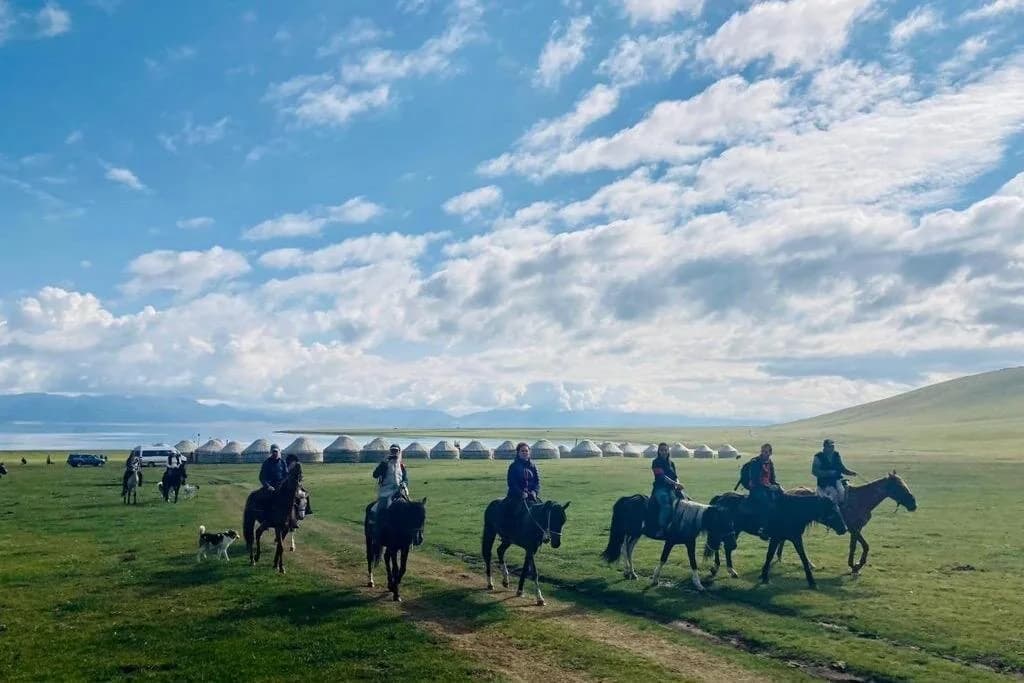
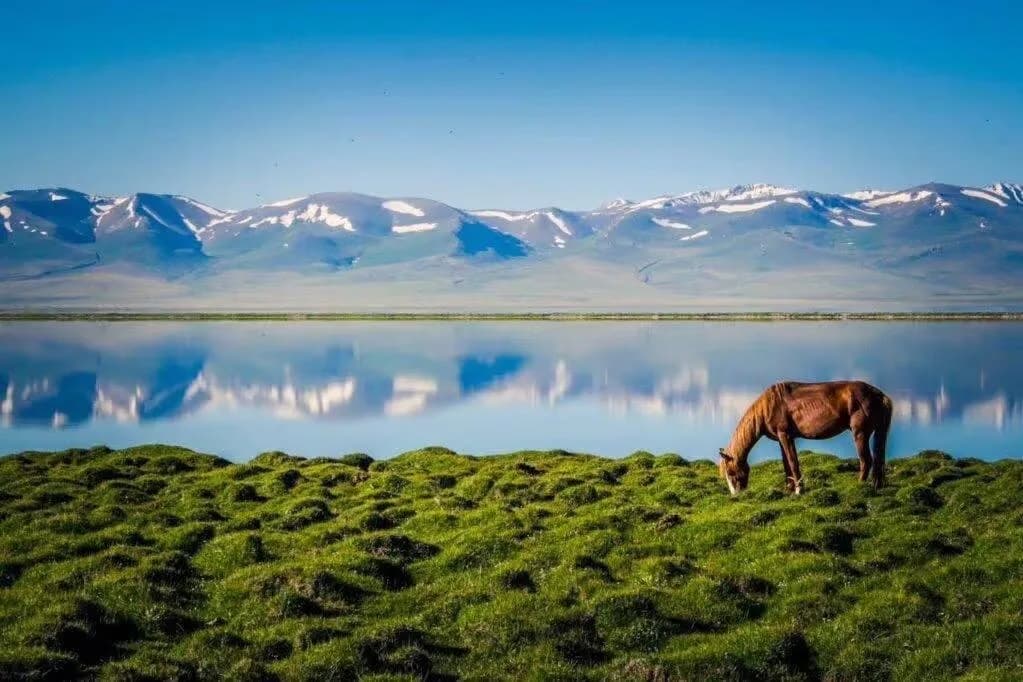
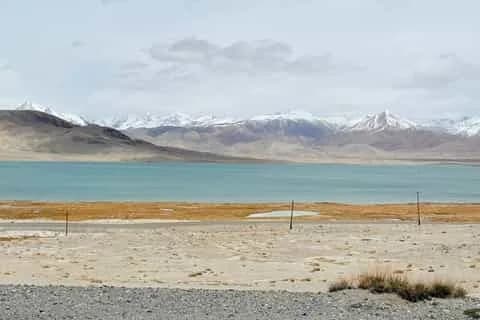
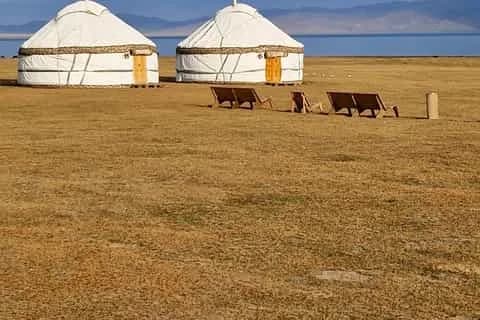
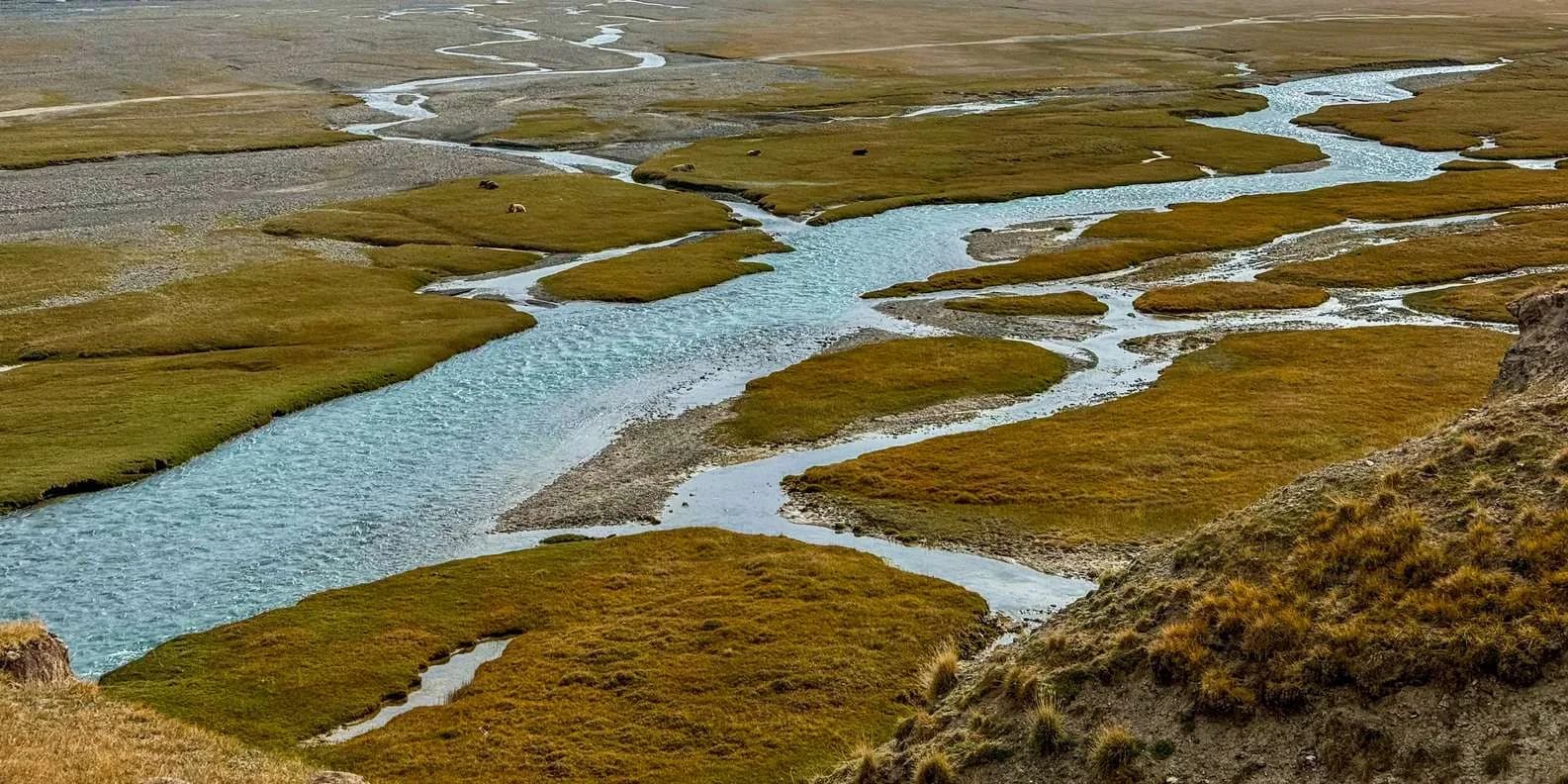
Song-Köl is a shallow bowl of water sitting on a vast treeless jailoo, ringed by yurt camps from roughly June to September and empty of people the rest of the year. Nobody lives up here permanently. Herding families bring their flocks, mares and boz-üy (yurts) up when the snow clears the passes, milk the mares for kymyz through high summer, and take everything back down again by early autumn. That is the whole appeal: you are not visiting a resort, you are visiting a working summer pasture at altitude.
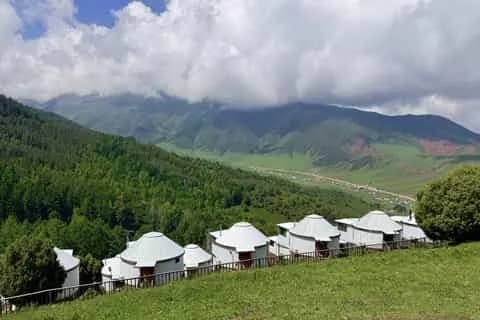
What a night here is really like: you sleep on a stack of thin tushuk mattresses on the floor, under heavy quilts, in a felt yurt warmed by a dung-burning stove that is lit at dusk and dead by 05:00. Even in July the night drops to around freezing — the single thing most visitors underestimate, so bring a warm layer, a hat and socks to sleep in. There is usually no electricity beyond a generator run for an hour or two in the evening; assume no charging and pack a power bank. Toilets are pit latrines a short walk from the camp. In exchange you get a Milky Way with zero light pollution, horses grazing outside the felt all night, and a genuine quiet that is hard to find anywhere else.
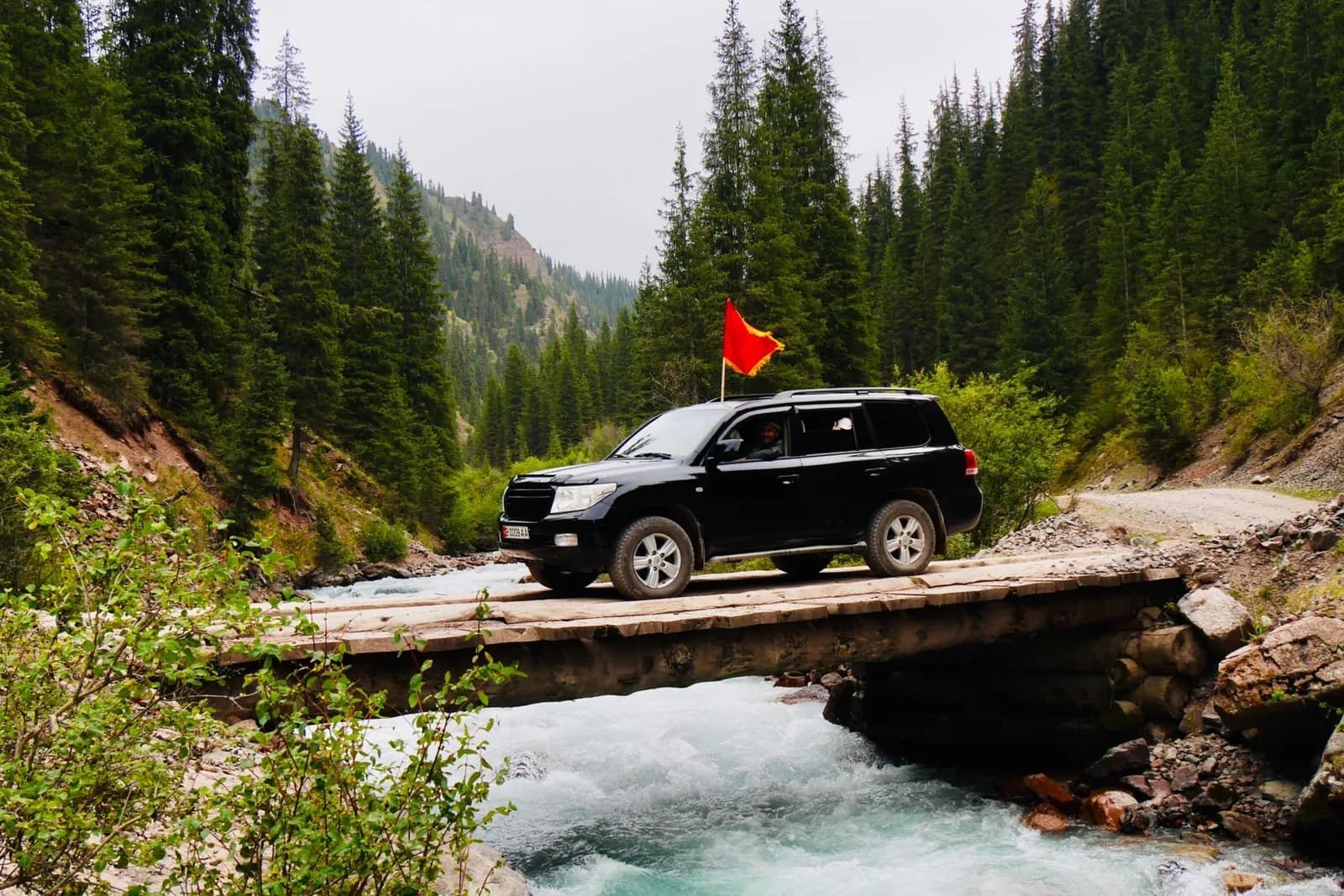
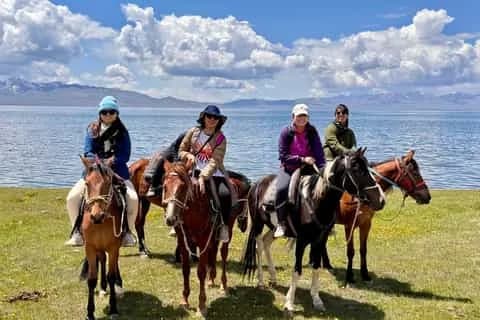
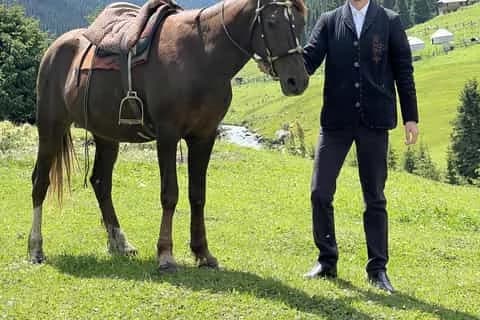
Most people arrive on a horse trek — the classic three-day Kyzart–Song-Köl route, booked out of Kochkor, is the flagship — or by 4WD over one of the access passes, of which the switchbacking "33 Parrots" (Teskey-Torpok) road is the most photographed. Roads are poor and an ordinary car will struggle; an SUV with a local driver is the norm. For the detail on choosing a camp and what to pack, see our Song-Köl yurt stay guide and the wider guide to yurt stays in Kyrgyzstan.
The limitation is blunt: Song-Köl is a summer-only, one-note destination. It is a superb note, but you would not build a week around it.
Issyk-Köl: the great lake
Issyk-Köl is on a different scale entirely — 182 km long, up to 60 km across, and 668 m deep, the world's second-largest mountain lake by surface area after Titicaca (and, being far deeper, larger by volume). Its Kyrgyz name means "warm lake": mild salinity of about 0.6% and an enormous thermal mass mean the open water never freezes, even through a Kyrgyz winter. It is a Ramsar site and a UNESCO Biosphere Reserve, and the basin is warm enough to grow apricots at the shoreline while snow peaks stand behind.
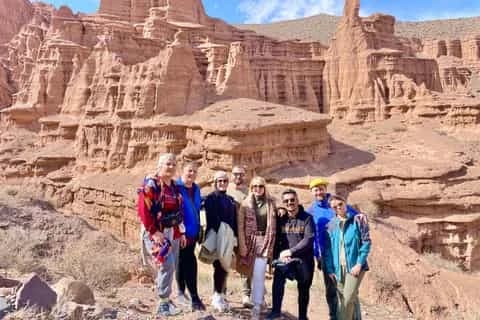
Crucially, you can visit any month. Summer is the obvious window — water reaches 22–24°C in July and August and the swimming season runs from late June to early September — but the shoulder months bring clearer mountain views and quieter shores, and Karakol at the eastern end is a winter ski destination. The two shores could not be more different. The north shore is the developed resort coast: a paved highway, the resort town of Cholpon-Ata and its noisy neighbour Bosteri, sanatoriums left over from the Soviet holiday era, beaches, water sports and the open-air petroglyph field above Cholpon-Ata. The south shore is the wild half — patchy roads, small villages, eagle hunters, and the red sandstone spires of Skazka (Fairytale) Canyon.
The east end is where trekkers head. Karakol is the launch pad for the Ala-Kul lake trek and the hot springs at Altyn-Arashan, and Jeti-Ögüz's red "Seven Bulls" cliffs sit just west of town. This is why Issyk-Köl suits a longer stay: you can swim, walk a canyon, ride to an eagle-hunter demonstration and start a multi-day trek all from the same lake. Our Lake Issyk-Köl guide covers the shore-by-shore detail, and the best Issyk-Köl tours rounds up what is worth booking.
The catch: in peak weeks the north shore is a busy domestic holiday, heavy with Kazakh and Kyrgyz families, and the "beach resort" framing collapses entirely outside the short warm window. Sell yourself Issyk-Köl out of season as mountains, canyons and empty shoreline, not as a beach.
Which should you choose?
Short on time (2–3 days) and want the iconic image? Song-Köl. A single overnight delivers the yurt, the horses and the stars, and you will remember it for years.
Want a base with variety, or you are travelling with children or older parents? Issyk-Köl. It is warmer, softer, better serviced and open all year, and there is enough around Karakol and the south shore to fill days without a punishing drive or a freezing night.
Travelling outside mid-June to mid-September? Issyk-Köl by default — Song-Köl's camps are down and its passes closed. In May or October, half of any Song-Köl plan is simply shut.
Serious about trekking? Issyk-Köl's eastern end (Ala-Kul, Altyn-Arashan) is the trekking heartland; Song-Köl is about gentle riding and stillness, not big trails.
The strong case for doing both
Here is what the "which one" framing misses: they pair almost perfectly, and most good itineraries take both. The two lakes are near-neighbours in central Kyrgyzstan, and the classic clockwise loop from Bishkek strings them together without backtracking — up to the high country first, then down to the water.
A typical shape: Bishkek to Kochkor, then a night at Song-Köl (by horse or 4WD), then drop down and east to Issyk-Köl for a few days of canyons, beach and Karakol trekking before looping back along the north-shore highway. Purists even link the two directly over the Tosor pass, a rough, high, 4WD-only track that climbs south off the Issyk-Köl shore and drops toward Song-Köl — spectacular, but summer-only and not for ordinary cars. For a ready-made route that includes both lakes, see our 10-day Kyrgyzstan itinerary.
Doing both also solves the altitude problem sensibly. Issyk-Köl at 1,600 m is a soft place to start and acclimatise before a night at 3,000 m, rather than the other way round.
The verdict
If someone forced a single choice, Issyk-Köl wins on flexibility — it is open all year, it carries a whole holiday, and it asks nothing punishing of you. But Song-Köl wins on the memory: one cold, star-drenched night on the jailoo outlasts a week of beach. So don't force the choice. If your calendar lands between mid-June and mid-September, take the loop, sleep one night high at Song-Köl, and give the rest of your days to the great warm lake below. Start planning around our lakes and nature tours and build the rest of the trip out from there.
Chat with a real person — free
Seif and the team reply on WhatsApp 24/7 — trip questions, custom plans and booking help.
Ask Seif on WhatsAppCommon questions
Which is better, Song-Köl or Issyk-Köl?
Neither is simply better — they suit different trips. Song-Köl is a remote, summer-only high-alpine lake for a night of yurt life, horses and stargazing at about 3,016 m. Issyk-Köl is a huge, year-round resort lake at 1,607 m with beaches, canyons, trekking and towns. If your dates allow, do both in one loop rather than choosing.
Can you visit Song-Köl and Issyk-Köl in the same trip?
Yes, and it is the recommended plan between mid-June and mid-September. The two lakes sit close together in central Kyrgyzstan, and the standard clockwise loop from Bishkek links them: Kochkor and a night at Song-Köl, then down to Issyk-Köl for canyons, beach and Karakol trekking. Starting low at Issyk-Köl also helps you acclimatise before the altitude at Song-Köl.
How high are Song-Köl and Issyk-Köl?
Song-Köl lies at about 3,016 m, high enough that nights drop to around freezing even in July and altitude precautions matter. Issyk-Köl sits far lower at roughly 1,607 m, which is why it is warmer, milder and never freezes. The 1,400 m difference between them explains almost everything else about how the two lakes feel.
Why does Issyk-Köl never freeze?
Two reasons. The water is slightly saline — about 0.6% salt — which lowers its freezing point, and the lake is enormous and deep (up to 668 m), so it holds too much heat to freeze through in a Kyrgyz winter. Its Kyrgyz name means "warm lake" for exactly this. Shallow bays and river mouths can still ice up, but the open lake stays clear.
When is Song-Köl open?
Roughly mid-June to mid-September. Song-Köl is a summer jailoo, not a settlement: herding families bring their yurts and flocks up when the passes clear and take them down again by early autumn, and the lake freezes solid all winter. In May or October you risk arriving to an empty pasture with camps already down and passes shut.
Do you need a 4WD to reach Song-Köl?
Effectively yes. The access roads over the passes are rough, and an ordinary car risks overheating and punctures, so an SUV with a local driver is the norm. Many visitors skip driving altogether and arrive on a two- or three-day horse trek from Kochkor or Kyzart, which is the classic way in. Issyk-Köl, by contrast, has a paved highway around most of its shore.
Is Issyk-Köl good for swimming?
In high summer, yes. Water reaches about 22–24°C in July and August and the swimming season runs from late June to early September. It never feels tropical — it is a deep lake at 1,600 m — and outside that short window it is cold. The best sand is on the south shore at Kaji-Say and Tosor; the north-shore resorts have the facilities and the crowds.
How many days do you need for each lake?
Song-Köl is usually a single overnight — one night in a yurt is the experience, and one or two days covers it. Issyk-Köl rewards longer: two to five days or more, because you can combine beaches, Skazka Canyon, Jeti-Ögüz and multi-day treks from Karakol. A week-long trip that takes in both lakes is the sweet spot for most first-time visitors.
Which lake is better for trekking?
Issyk-Köl, clearly. Its eastern end around Karakol is Kyrgyzstan's trekking heartland, with the Ala-Kul lake trek and the hot springs at Altyn-Arashan starting from there. Song-Köl is about gentle horse riding and open pasture rather than big mountain trails. If serious multi-day walking is your goal, base yourself at Karakol rather than at Song-Köl.
Book it on This is Kyrgyzstan
Turn this guide into a trip



Kyrgyzstan's bestsellers
The experiences travelers book most, across the country
Keep reading
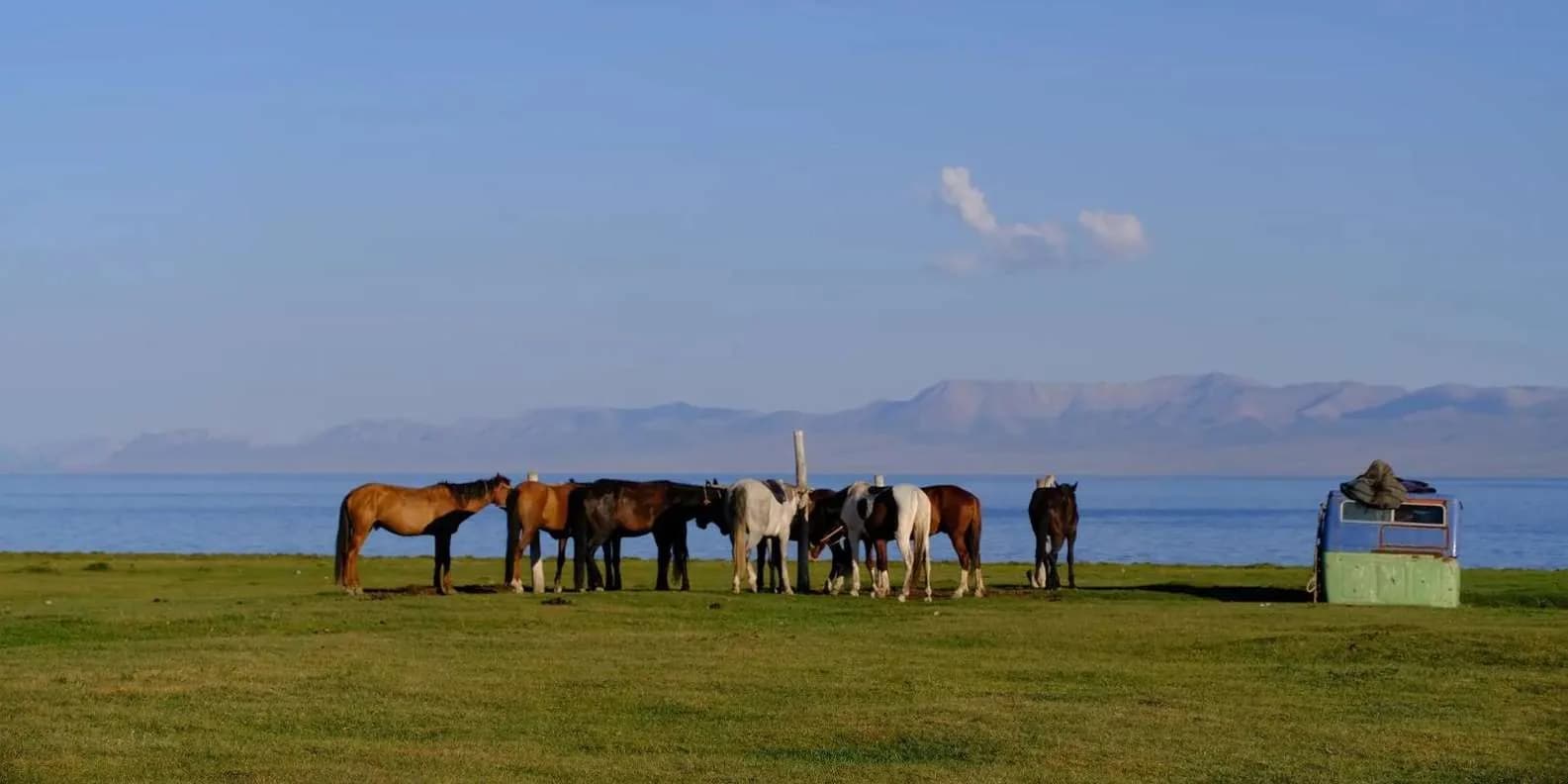
Kochkor to Song-Köl: How to Get There (2026)
The two real ways from Kochkor to Song-Köl — a 2–3 day horse trek over a pass, or a half-day 4WD transfer — with prices, passes and season.
By TiK Editors8 min read
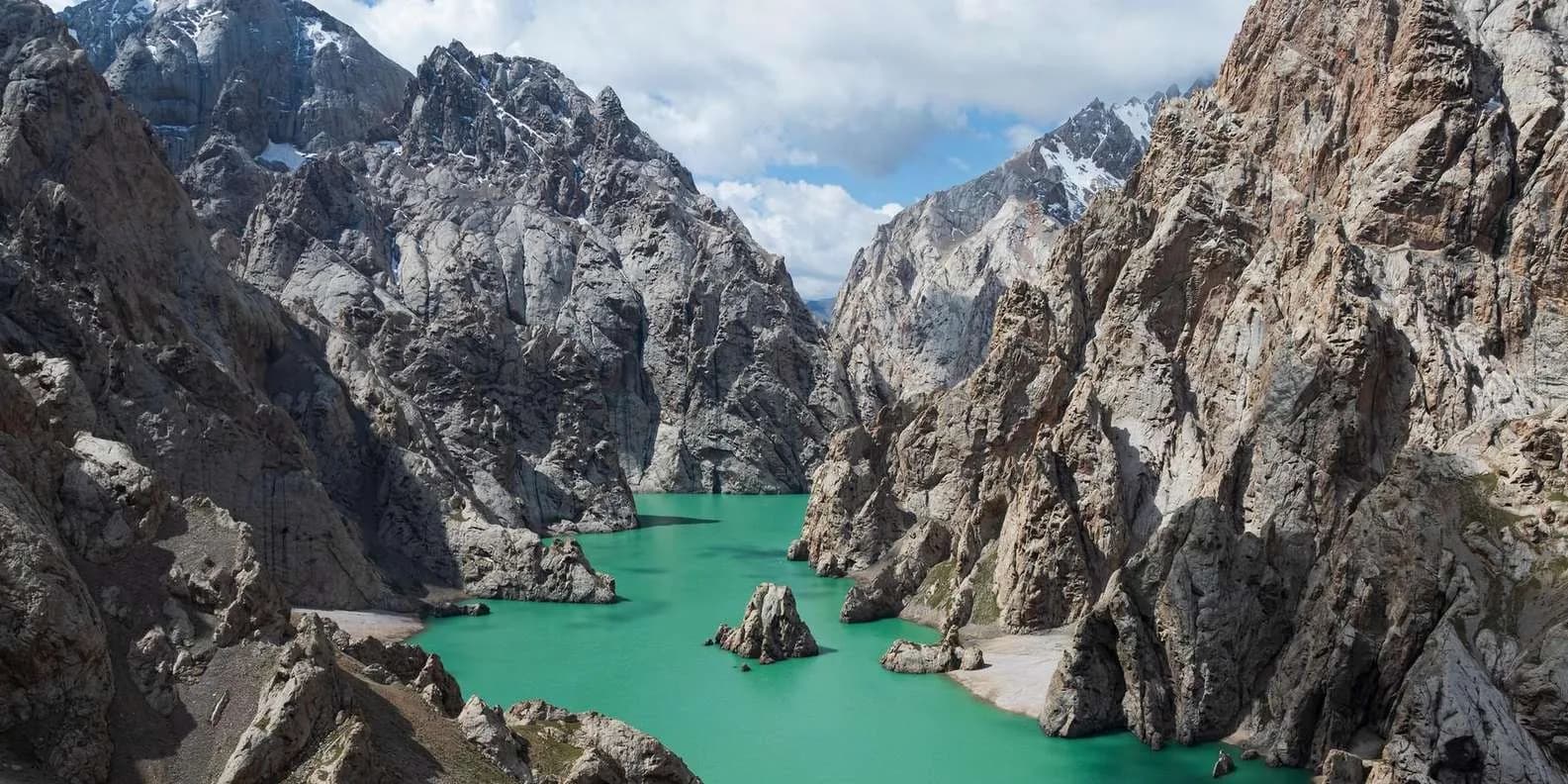
Kyzart to Song-Köl Trek: The Classic Route
The Kyzart to Song-Köl trek in 2–3 days on foot or horseback: day-by-day stages over the pass to the lake, yurt nights, costs and how to book it.
By TiK Editors8 min read
Song-Köl Horse Trek: The Classic 2-3 Day Ride
The classic beginner-friendly ride from Kochkor over a pass to Song-Köl (3,016 m) and back: day-by-day, costs, what to bring and how to book it.
By TiK Editors9 min read