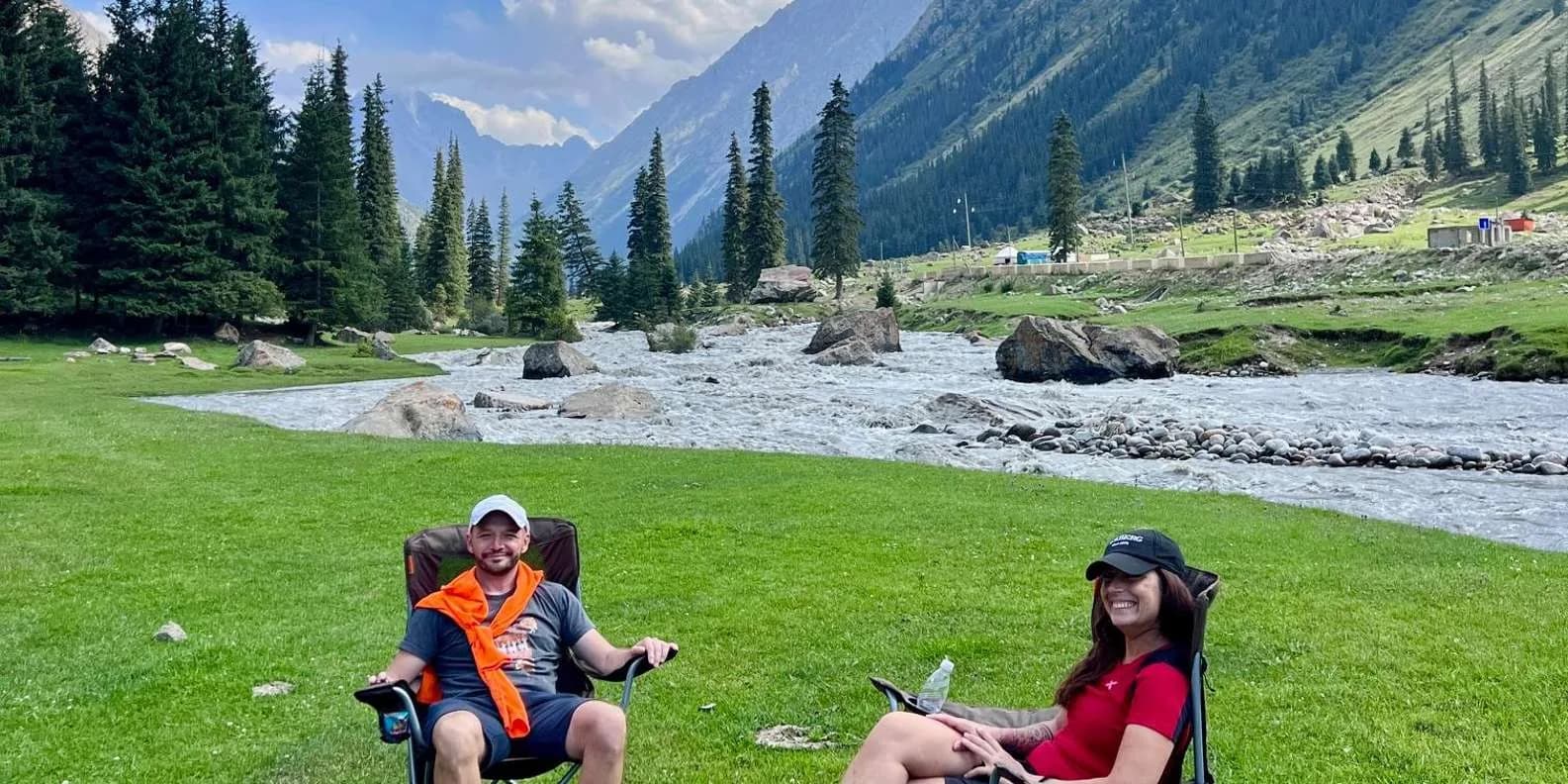
 Image via GetYourGuide
Song-Köl Yurt Stay: A Night on the Jailoo
How to sleep in a herder's yurt at Song-Köl (3,016 m): getting there, the Kyzart horse trek, costs, the season and what a night is really like.
Book it on This is Kyrgyzstan
Naryn · Turn this guide into a trip
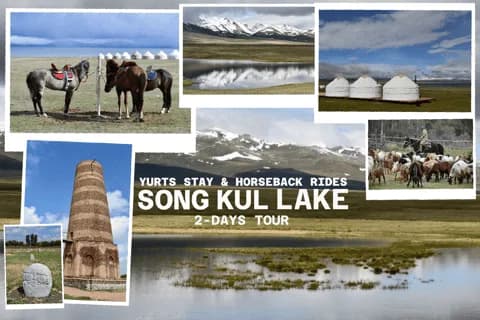
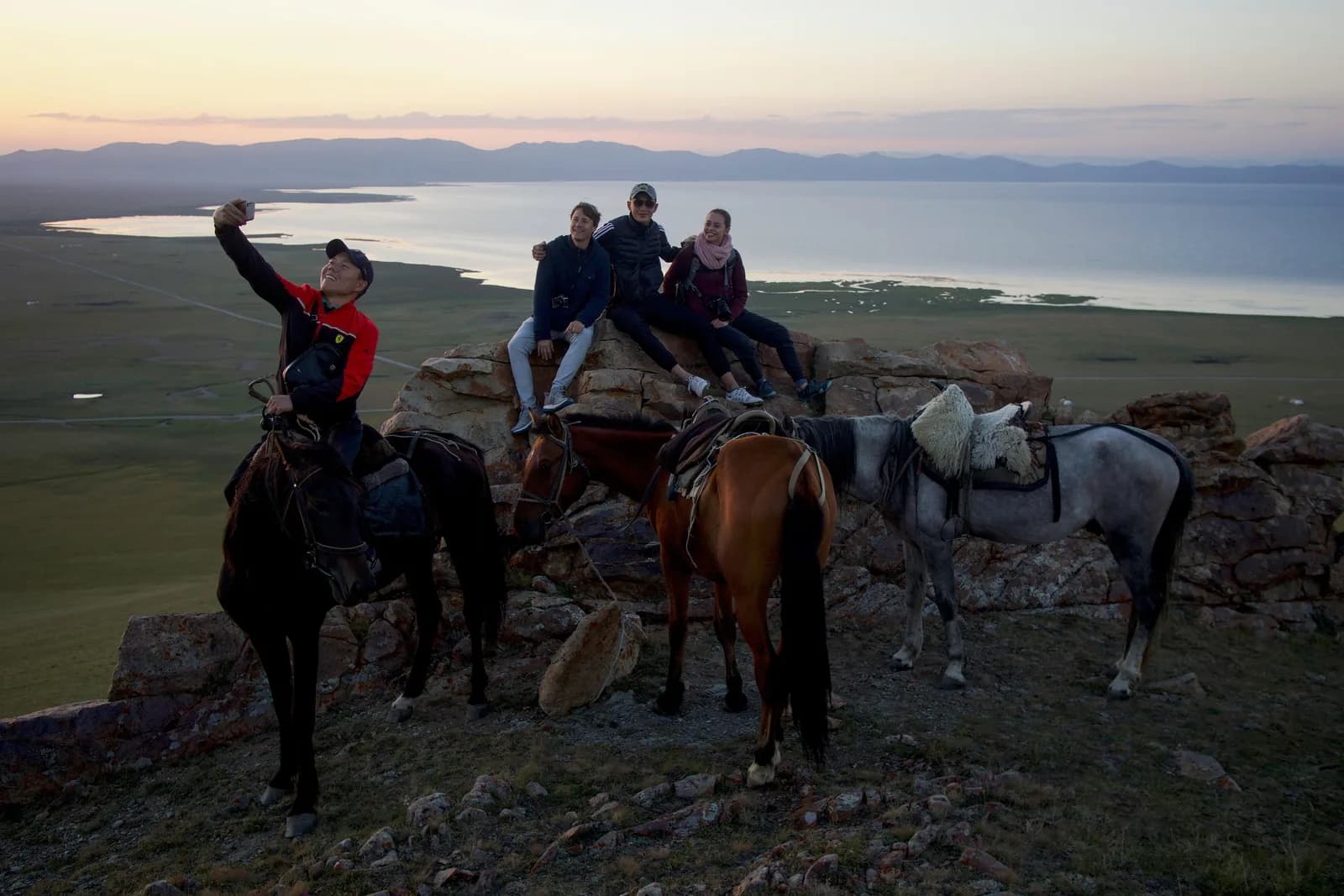

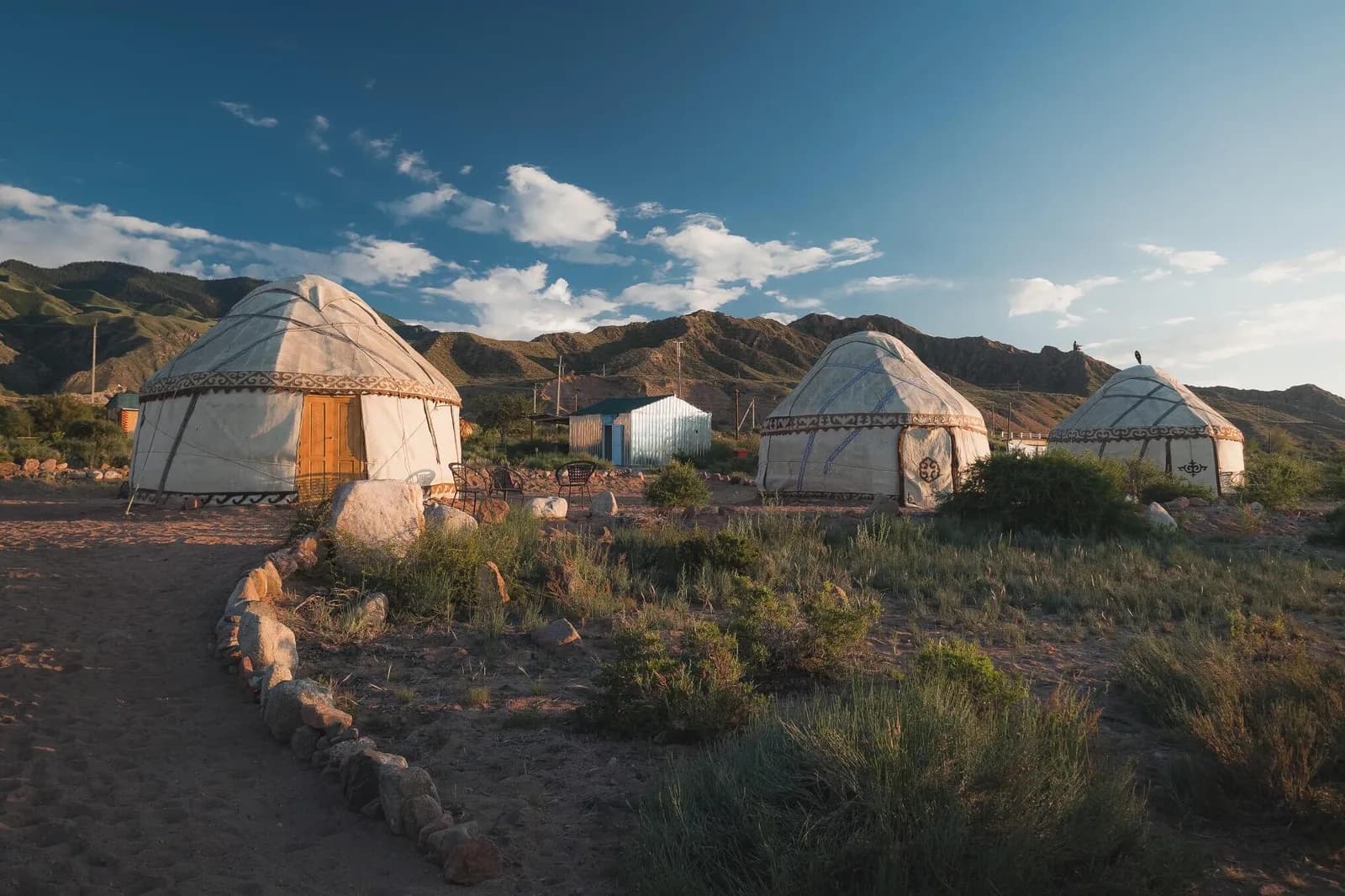
A night in a Song-Köl (Song-Kul) yurt means sleeping on felt mattresses inside a herder's boz-üy at just over 3,000 metres, sharing the family's food, being handed a bowl of kymyz, and waking to horses grazing a few feet from the door. Song-Köl is a jailoo (summer pasture), not a village. Nobody lives here in winter. The camps go up with the grass in June and come down by mid-September, so the whole experience exists for barely three months a year. This guide keeps the focus tight on Song-Köl itself; for the country-wide picture, start with our Kyrgyzstan yurt-stays guide.
What Song-Köl actually is
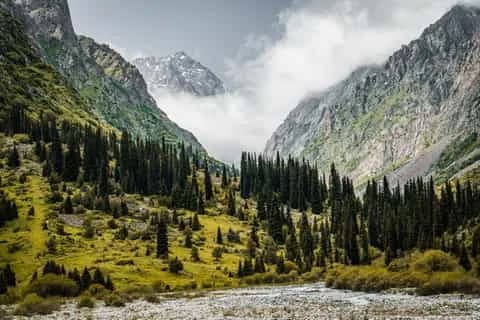
Song-Köl sits at 3,016 m on a treeless high plateau in Naryn province, central Kyrgyzstan. It is the country's second-largest lake after Issyk-Köl, roughly 29 km long and up to 18 km wide, yet nowhere more than about 13 metres deep. That shallowness matters: the lake warms in summer, freezes solid in winter under a metre of ice, and is ringed by wide marshy grassland that makes near-perfect grazing. That grass is the reason people come up here at all.
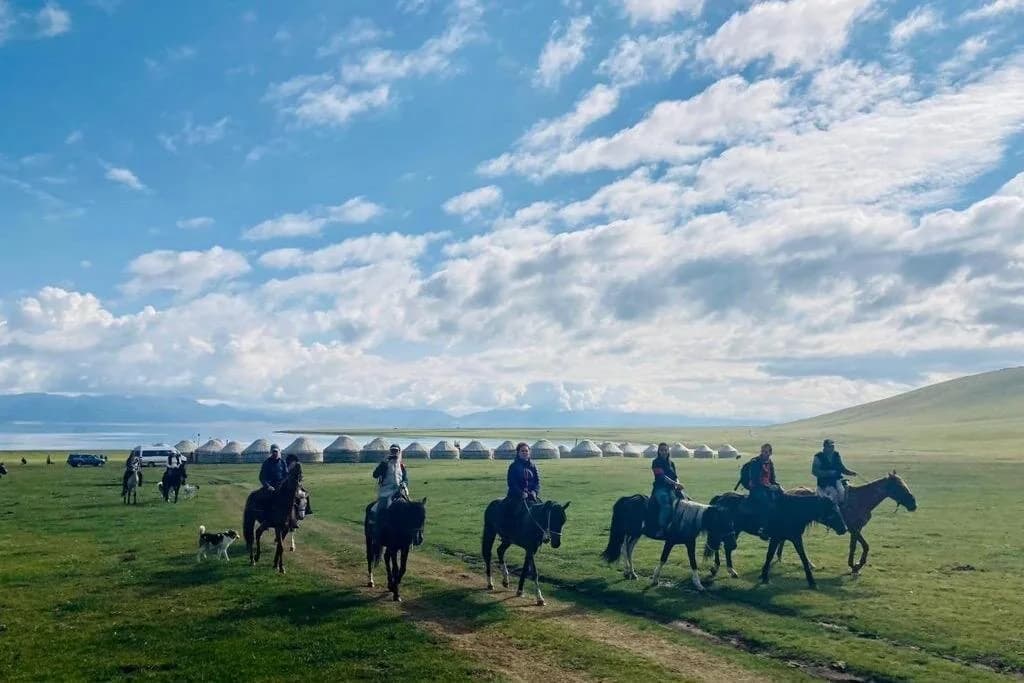
There is no permanent settlement anywhere on the shore. In winter the basin is snow-covered for six months and reachable only on horseback. From late May the ice is gone, and through June herding families haul their yurts up by truck, tractor and horse and pitch them in clusters around the water. They milk mares, make felt and cheese, graze sheep, cattle and horses, and move back down the valleys again from late August. What you are visiting is a working transhumance in progress, not a heritage display.
Because it is high, open and empty, Song-Köl delivers two things nowhere near a town can: total silence, and after dark one of the most complete night skies you will ever stand under. There is no light for a hundred kilometres, and the Milky Way runs the full width of it.
Getting there: passes, 4WD or horseback
Song-Köl has no single road in. It is a bowl reached by climbing over a mountain pass from whichever direction you come, and the pass you use depends on your base. Kochkor, a small town two to three hours south of the lake, is the usual booking hub; Naryn is the alternative base to the south-east.
| Pass / approach | From | Character |
|---|---|---|
| Kalmak-Ashuu | Kochkor / Bishkek side | Main vehicle route; the best first view down over the lake |
| Moldo-Ashuu | Naryn side (south) | The southern driving approach |
| Teskey-Torpok ("33 Parrots") | East | Serpentine road with 33 hairpins; the most photographed |
| Kyzart | North-west | The standard start for horse treks in |
| Karakeche | West | Quieter western approach past the coal area |
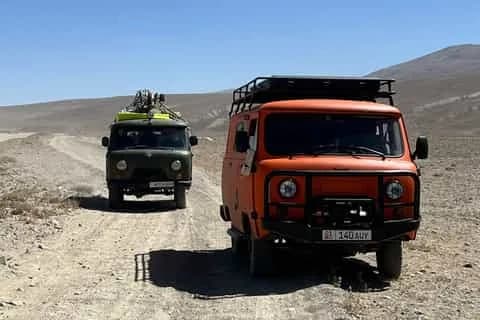
The roads are rough. An SUV is strongly recommended and ordinary cars risk overheating and punctures on the climbs. Two ways to arrive are worth your time:
- By 4WD, a day trip or overnight from Kochkor or Naryn. Simplest, and fine if you are short on days.
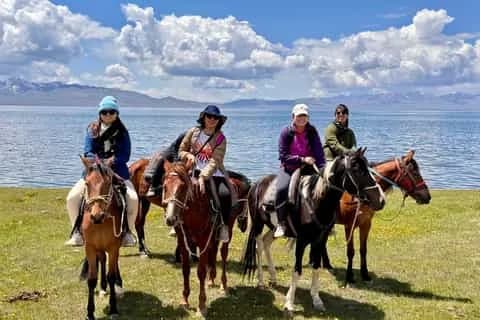
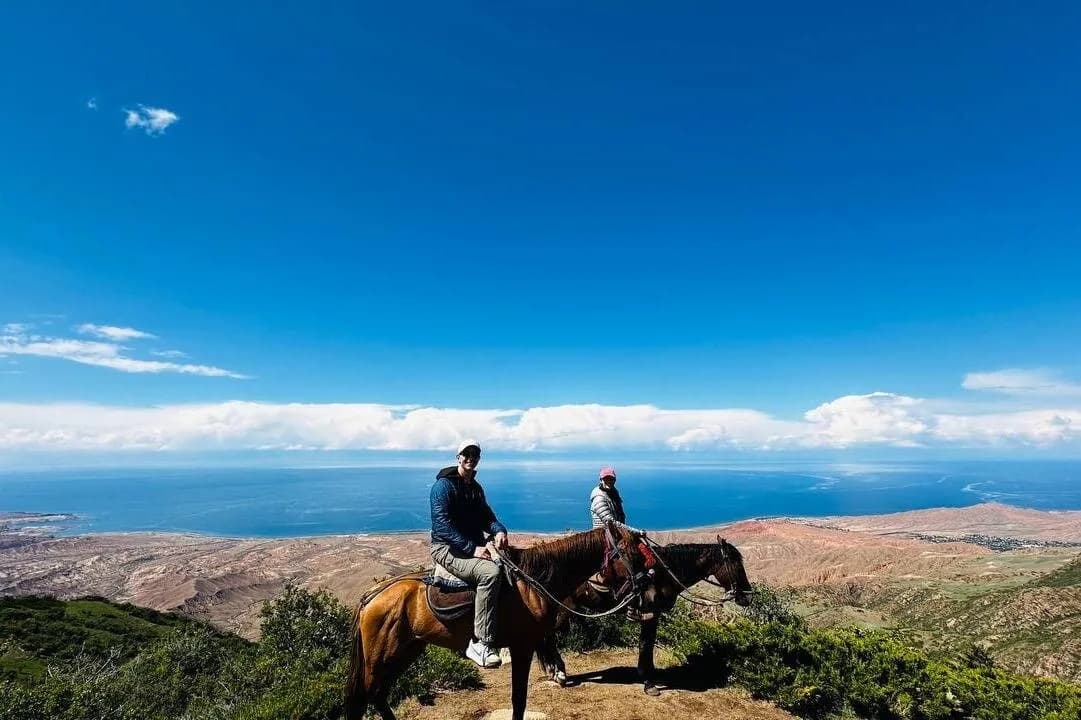
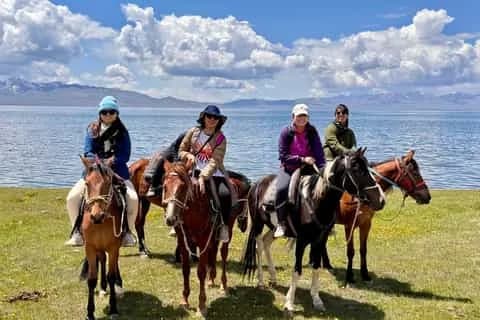
- On horseback, which is the classic approach and, honestly, the better one. Riding up onto the plateau and seeing the lake appear all at once is the moment people remember.
The classic horse trek from Kyzart
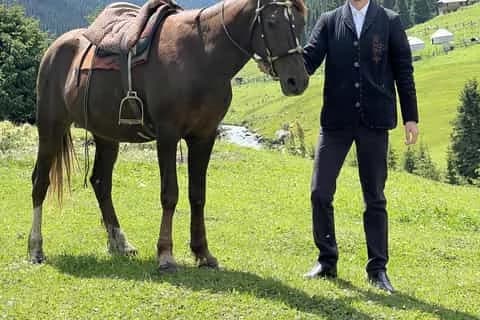
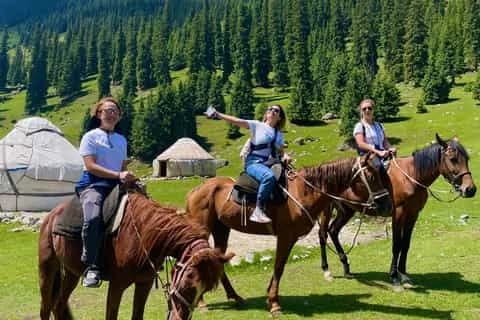
The standard beginner route is a three-day ride from Kyzart village, and it is genuinely doable with no riding experience. Kyrgyz horses are small, calm and sure-footed, and they carry total novices over 3,000-metre passes every week of the season.
- Day 1 — from the road head above Kyzart over the Kyzart pass to a yurt camp at Kilemche, a side-valley jailoo. Camps here often have electricity, a hot shower and proper toilets.
- Day 2 — the big day: over a high pass down to the Song-Köl shore, with the lake opening up beneath you. This is where you sleep in a lakeside yurt.
- Day 3 — a walk along the shore, then a vehicle out to Kochkor.
Expect five or more hours in the saddle on the two riding days, covering rarely more than 25–30 km. On steep or boggy descents the guide will have everyone dismount and lead the horses, so bring boots you can walk several kilometres in, not just riding boots. Saddle soreness is the single most common complaint — padded cycling undershorts and getting out of the saddle regularly are the real fixes. Never wrap the rein around your hand. Helmets are not standard; if you want one, bring your own. There is a full walk-through in our horse-trekking guide.
A night in a herder's yurt
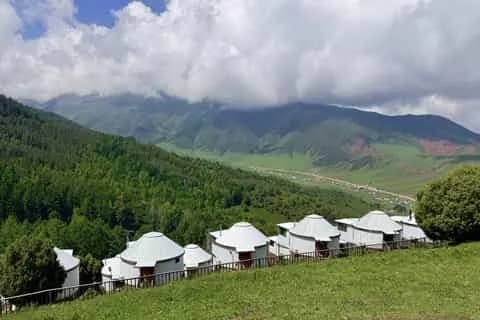
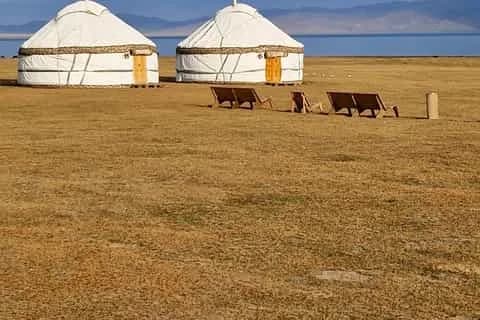
The yurt itself is a boz-üy ("grey house"), a lattice-walled felt tent crowned by a wooden tunduk — the same sunroof-wheel that sits at the centre of the national flag. Inside, the floor is layered with felt rugs and shyrdak, the mosaic-cut appliqué carpets that are the signature Kyrgyz craft. Yurt-making was inscribed by UNESCO in 2014 and the listing was expanded in December 2025 to include Karakalpak alongside Kyrgyz and Kazakh traditions; the felt-carpet craft itself sits on UNESCO's urgent-safeguarding list, which tells you something about how fragile the skill has become.
Set your expectations honestly. This is comfortable in its own way, but it is not a hotel:
- You sleep on the floor, on a stack of thin cotton mattresses (tushuk) over felt, under heavy quilts. A standard sleeping yurt holds five to nine people; a private yurt costs more and is not always available. Bring a silk liner if you are fussy.
- The cold is real. At 3,016 m the temperature drops to around freezing, or below, even in July. A stove burning dried dung is lit in the evening and the yurt is genuinely warm at bedtime — then it goes out, and it is genuinely cold by five in the morning. Sleep in a hat and socks. This is the thing most visitors get wrong.
- No electricity in most camps. Better ones run a generator or solar for two or three hours in the evening, sometimes for a small charge; assume nothing and bring a power bank and a head torch.
- No mobile signal and no reliable Wi-Fi. Song-Köl is off-grid, and that is the point.
- Toilets are pit latrines in a shed 30–50 m off. Bring your own paper and hand sanitiser.
- No showers at most family camps. A few commercial operations run a truck- or solar-bag hot shower for a couple of dollars. Do not expect a banya (steam bath) — that belongs to village guesthouses, not the jailoo.
Food, kymyz and eating with the family
Meals are served family-style on a cloth spread on the floor, everyone cross-legged, tea poured endlessly into small handleless bowls. The rhythm is bread, jam, butter, kaymak (clotted cream) and eggs for breakfast; laghman (hand-pulled noodles) or plov at lunch; and beshbarmak (boiled meat and wide noodles, the national dish) or shorpo, a meat-and-potato soup, for dinner. Vegetarians are catered for, but grudgingly and repetitively — a lot of potato, bread and dairy — so say so when you book, not at the table. Our Kyrgyz food guide covers the dishes in detail.
Then there is kymyz: fermented mare's milk, faintly fizzy, sour and mildly alcoholic. It is only made when the mares are in milk, roughly May to September, and it is offered with real ceremony. It is an acquired taste and can upset a stomach not used to it, so take a small bowl and at least a sip — refusing it outright reads as rejecting the household. Bread is treated as sacred: never put it on the ground or upside down, and break a piece if it is set out. A few words of Kyrgyz — rakhmat (thank you) — buy enormous goodwill.
What it costs
Prices are quoted in som (KGS) and US dollars at roughly 87–88 som to the dollar. Community and family rates sit well below tour-operator prices. Treat every figure as indicative and confirm on the day; there are no card machines anywhere near the lake.
| Item | Approx. cost | Notes |
|---|---|---|
| Basic shared yurt, 3 meals | $15–25 / night | Budget family camps |
| Mid-range, private-yurt option | $35–50 / night | Warmer, more private |
| CBT / small family operation | $60–80 / night | More reaches the host family |
| Guided horse trek, all-in | $50–80 / person / day | Horse, guide, meals, yurt nights |
| Complete 2–3 day Song-Köl trek | $100–150 / person | Meals and yurt nights included |
| Horse hire (component rate) | Plus ~2,000 som/day for a handler | |
| Meal, bought separately | If not bundled |
A guided horse trek with yurt nights and all meals lands around $50–80 per person per day; a fully private three-day Kyzart–Song-Köl trip with transport from Kochkor has been quoted near $250 per person for a small group, and cheaper options exist. Unguided riding is not really possible, because you cannot rent a horse without its owner. For a wider cost breakdown, see our Kyrgyzstan budget guide.
When to go
Song-Köl is a summer-only destination — there is no way to soften that. The yurt camps operate June to mid-September, and outside that window the plateau empties, the herders leave and the passes can be blocked by snow.
- July and August — the peak, warmest days, every camp running. Busiest, and the south and east shores can feel crowded.
- Mid-June and early September — beautiful and quieter, with gold grass in September, but colder nights and a real chance of snow on the passes.
- Late May / early June — green and full of wildflowers, but muddy, with some passes still snowy and many yurts not yet up.
- October to May — the lake freezes and the road access closes. Winter horse trips are advertised but are a serious cold-weather undertaking, not a casual yurt night.
If your dates are fixed to spring or autumn, read our best-time-to-visit guide before committing, because half a shoulder-season itinerary can be shut.
What to bring
Pack for a mountain, not a lake resort:
- A warm sleeping layer, hat and socks for the night, plus a sleeping-bag liner or a bag rated to around −5 to −10 °C
- A power bank and head torch — assume no charging
- Serious sun protection: the UV at 3,000 m is fierce, so a hat, sunglasses and high-factor cream
- Boots you can walk in, and layers for a day that swings from 15 °C sun to freezing dusk
- Cash in small som notes — there are no ATMs, shops or card machines, and change is scarce
- Your own loo paper, hand sanitiser and any personal medication
How to book
Booking is low-tech and works best on the ground. Three routes:
- CBT Kochkor or a Kochkor tour office. Kochkor's town centre is full of small competing operators all selling the same Song-Köl trips, and you can arrange a yurt stay, horses, a guide and transfers on the spot in summer. This is the best default for most travellers, and a bigger share of the money reaches the host family.
- Shepherd's Life, a Kochkor-based community association specialising in Song-Köl jailoo stays and horse treks. It is real and still trading, but has no working website — book it in person in Kochkor or through an intermediary, and read recent reviews first.
- A Bishkek tour operator, who will package the whole thing. Most convenient, least connected to the pasture; the "family" at a large commercial camp may be seasonal staff.
WhatsApp is the normal remote channel rather than any booking engine. You rarely need to reserve accommodation far ahead — there is almost always space — but a hire vehicle in peak season should be booked in advance. When you choose a camp, ask specifically: how many yurts, how many guests, whose family, is there a generator, and how far is the toilet.
Managing the altitude
At 3,016 m Song-Köl is high enough to matter but low enough that most people are fine, especially as you sleep no higher than the lake itself. The risk is arriving fast — you can climb from 2,000 m at Naryn to the plateau in a couple of hours. Take the first afternoon gently, drink far more water than feels necessary, go easy on alcohol and the kymyz on night one, and give a horse-trek day the respect a hard hike deserves. Anyone with heart or lung conditions should take advice before booking. Medical help is a long way off, and any travel insurance you carry must explicitly cover both high altitude and horse riding, which many standard policies exclude.
Where Song-Köl fits in a trip
Song-Köl pairs naturally with the rest of Naryn province. Many travellers combine it with Tash Rabat, the 15th-century Silk Road caravanserai a few hours south, where you can also sleep in a yurt beside the ruins — see our Tash Rabat guide and the wider Naryn travel guide. Two nights up here is the sweet spot: one is a taste, three risks running low on things to do beyond riding, walking and doing very little, which is arguably the whole idea. If you are still shaping the route, our 10-day Kyrgyzstan itinerary builds Song-Köl in.
Ready to plan the ride? Browse horse-trekking trips or the wider Naryn region to build your Song-Köl stay around a route that suits you.
Ready to book? Browse yurt stays by area, or pair this with a horse trek to ride in.
Stay here: browse Song-Köl camps like Nomad Lodge, Ak-Sai and Zalkar.
Chat with a real person — free
Seif and the team reply on WhatsApp 24/7 — trip questions, custom plans and booking help.
Ask Seif on WhatsAppCommon questions
How high is Song-Köl and will I get altitude sickness?
Song-Köl sits at about 3,016 m. That is high enough to notice but low enough that most healthy travellers are fine, especially since you sleep no higher than the lake. The usual problem is arriving quickly from lower ground. Take your first afternoon slowly, drink plenty of water, go easy on kymyz and alcohol on the first night, and treat a full horse-trek day as the exertion it is.
When are the Song-Köl yurt camps open?
Roughly June to mid-September. The camps go up when the herders bring their flocks to the summer pasture and come down again from late August as they move back to lower ground. July and August are warmest and busiest; June and early September are quieter but colder. Outside this window the lake freezes, the passes can close and there is no yurt stay to book.
Do I need horse-riding experience to reach Song-Köl?
No. The classic three-day trek from Kyzart is designed for beginners, and Kyrgyz horses are calm, small and sure-footed, carrying complete novices over high passes all summer. You do need reasonable fitness and a tolerance for five or more hours in the saddle. If you would rather not ride, you can reach the lake by 4WD over one of the passes and still arrange short rides once you are there.
How cold does it get in a Song-Köl yurt at night?
Cold enough to surprise people. Night temperatures at 3,016 m drop to around freezing or below even in July. The stove is lit in the evening and the yurt is warm at bedtime, but it burns out overnight and the yurt is genuinely cold before dawn. Bring a warm layer, a hat and socks to sleep in, and a sleeping-bag liner or a bag rated to about −5 to −10 °C.
What does a night in a Song-Köl yurt cost?
Budget shared yurts with three meals run about $15–25 per person per night, mid-range private-yurt options $35–50, and community or small family camps $60–80, where more of the money reaches the host family. A guided horse trek including yurt nights and all meals lands around $50–80 per person per day. Prices are indicative — carry cash in small som notes, as there are no card machines near the lake.
Is there electricity, Wi-Fi or a shower at Song-Köl?
Assume none of them. Most family camps have no mains power; better ones run a generator or solar for a couple of evening hours, sometimes for a small fee. There is effectively no mobile signal or Wi-Fi. Toilets are pit latrines a short walk from the yurts, and most camps have no shower, though a few commercial operations offer a truck- or solar-bag hot shower for a couple of dollars. Bring a power bank, head torch and your own toilet paper.
How do I get to Song-Köl from Bishkek or Kochkor?
Kochkor, two to three hours south of the lake, is the usual base; you drive up over a mountain pass such as Kalmak-Ashuu, or ride in on a horse trek from Kyzart. From Bishkek it is a long day by road via Kochkor, so most people overnight. From Naryn you approach from the south over Moldo-Ashuu. The roads are rough, so an SUV is strongly recommended over an ordinary car.
How do I book a Song-Köl yurt stay?
The simplest way is through CBT Kochkor or one of the tour offices clustered in Kochkor town, which can arrange the yurt, horses, a guide and transfers on the spot in summer. Shepherd's Life, a Kochkor community association, also specialises in Song-Köl but has no working website, so book it in person or via an intermediary. Bishkek operators will package the whole trip. WhatsApp is the normal way to arrange things remotely.
Should I stay one night or two at Song-Köl?
Two nights is the sweet spot for most people. One night is only a taste and often means arriving late and leaving early. A second full day lets you ride out across the plateau, walk the shore, watch the herding routine and actually feel the silence and the night sky, which are the real reasons to come. Three or more nights suits only travellers happy doing very little at altitude.
Book it on This is Kyrgyzstan
Turn this guide into a trip



Kyrgyzstan's bestsellers
The experiences travelers book most, across the country
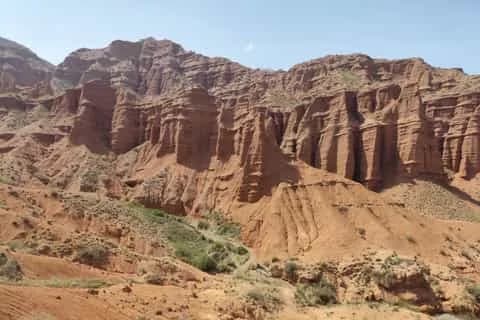
Attractions in this guide
Keep reading
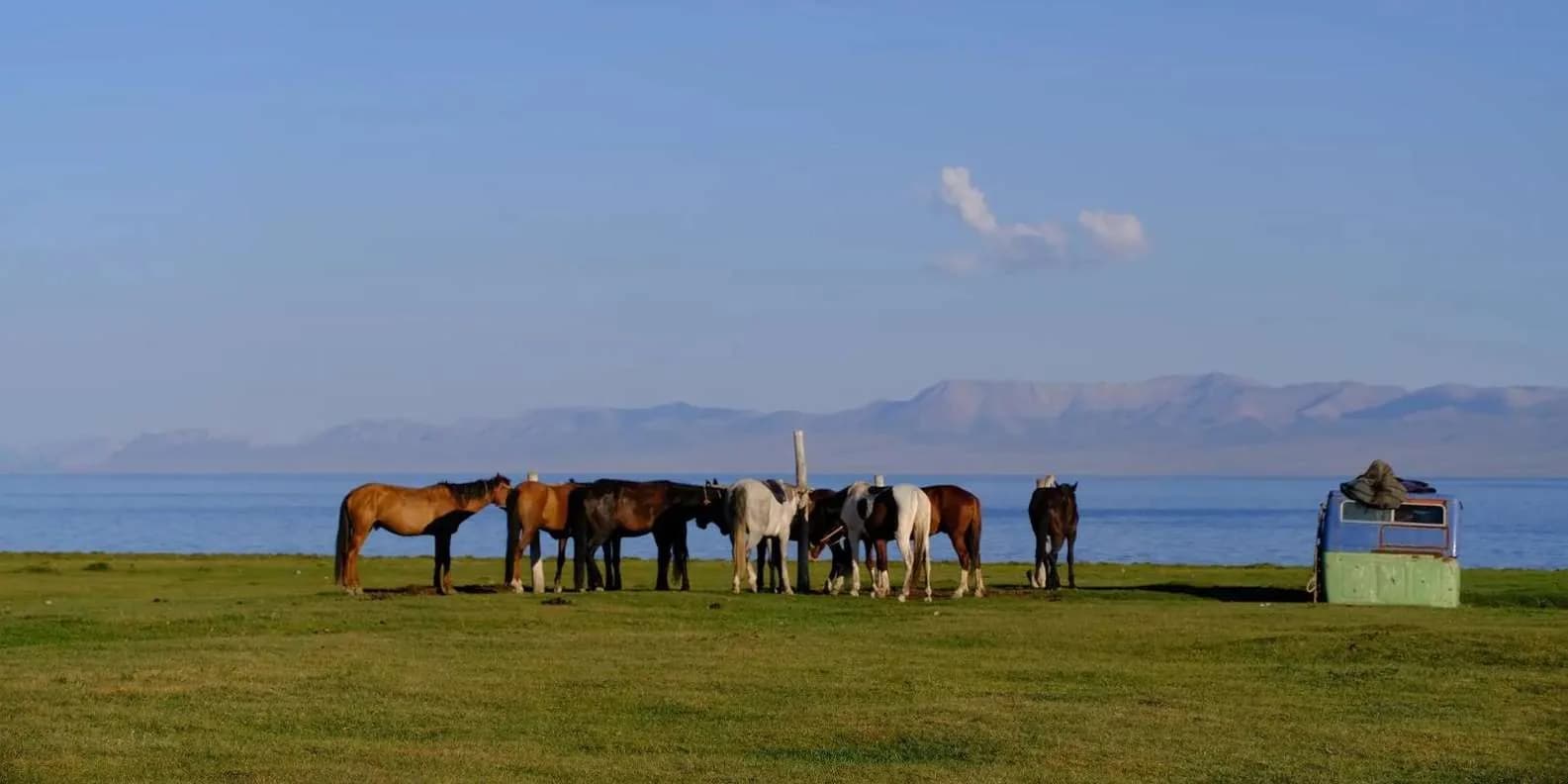
Kochkor to Song-Köl: How to Get There (2026)
The two real ways from Kochkor to Song-Köl — a 2–3 day horse trek over a pass, or a half-day 4WD transfer — with prices, passes and season.
By TiK Editors8 min read
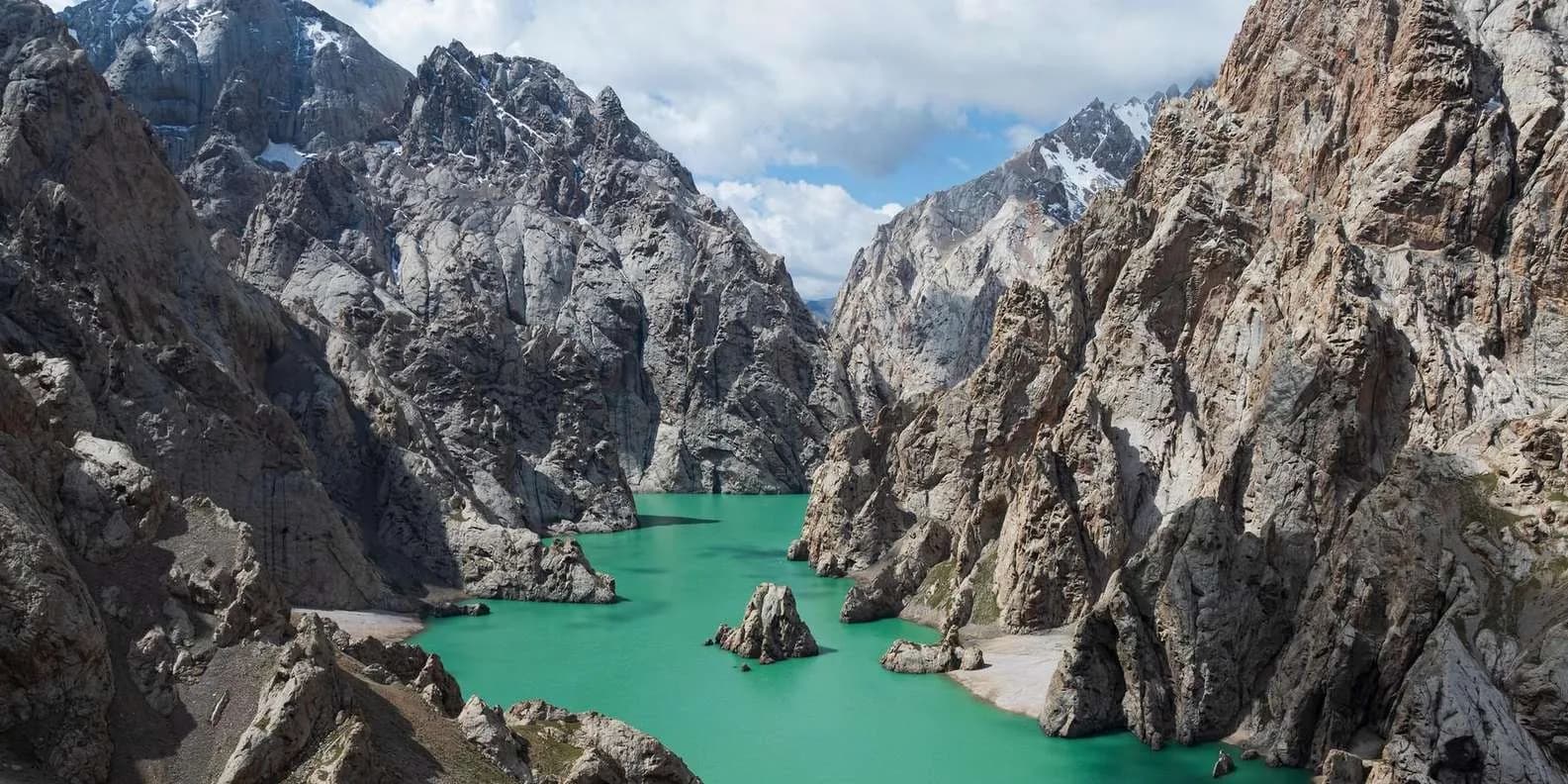
Kyzart to Song-Köl Trek: The Classic Route
The Kyzart to Song-Köl trek in 2–3 days on foot or horseback: day-by-day stages over the pass to the lake, yurt nights, costs and how to book it.
By TiK Editors8 min read
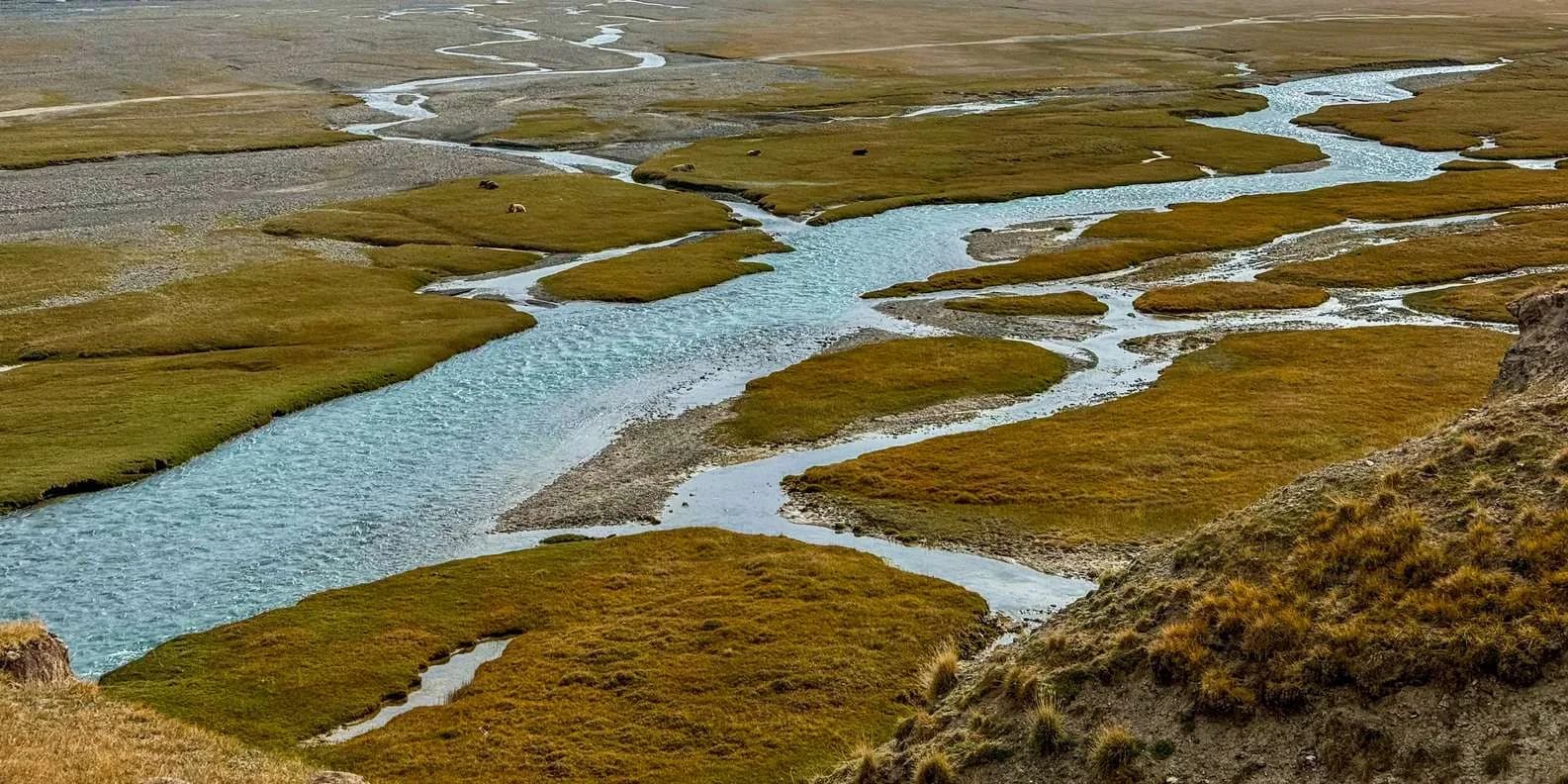
Song-Köl Horse Trek: The Classic 2-3 Day Ride
The classic beginner-friendly ride from Kochkor over a pass to Song-Köl (3,016 m) and back: day-by-day, costs, what to bring and how to book it.
By TiK Editors9 min read