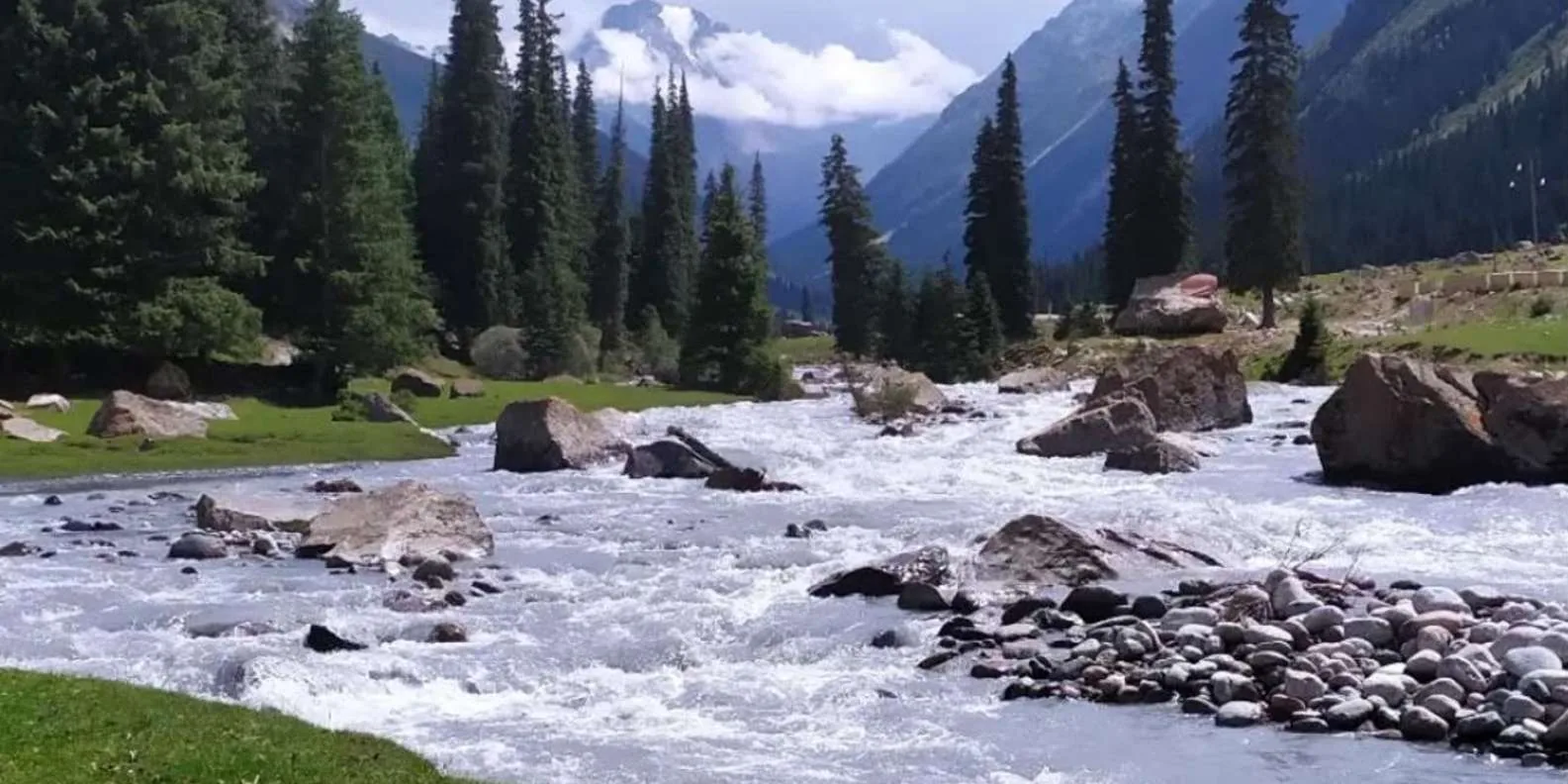
 Image via GetYourGuide
Kyrgyzstan Travel Cost: Real 2026 Budgets in Som & USD
What Kyrgyzstan actually costs in 2026: three daily budgets in som and dollars, real marshrutka and yurt prices, and why transport — not beds — decides your total.
Book it on This is Kyrgyzstan
Turn this guide into a trip
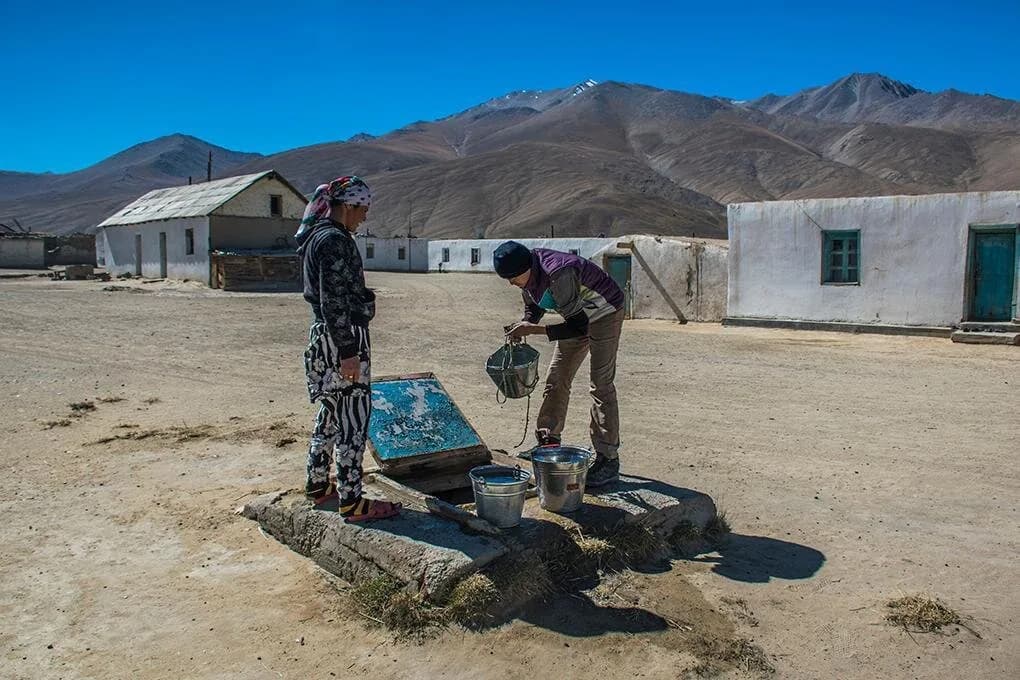
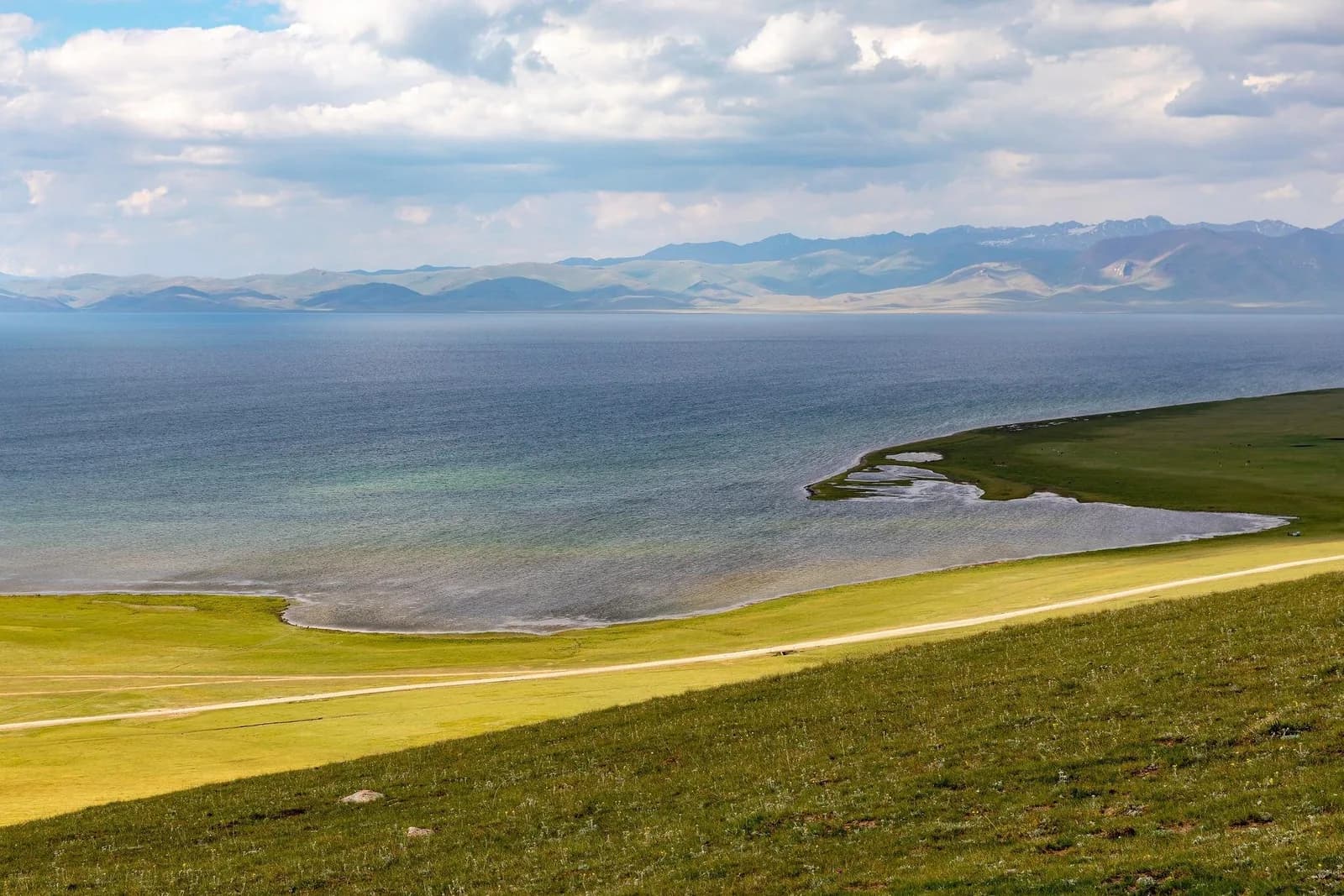
Quick answer: Kyrgyzstan is one of the cheapest countries in Central Asia. Backpackers manage on about $25–40 a day (homestays, marshrutkas, bazaar food); mid-range travel is roughly $60–100 a day; a private-driver comfort trip runs $150+ a day. The som (~87–88 to US$1) goes a long way once you're off the organised-tour premium.
Kyrgyzstan is one of the cheapest countries in Asia to exist in and a surprisingly expensive one to move around. A bowl of lagman is 250–500 som. A 4WD and driver up to Song-Köl (Song-Kul) and back is 5,000–7,000 som for the vehicle, before you have eaten anything. Budget for the beds and miss the wheels and you will be out by a factor of two.
Every figure below is in som with dollars at the National Bank of the Kyrgyz Republic rate of 87.45 som to USD 1, rate date 30 August 2026. Round to 87–88 in your head: 1,000 som is about $11.40. Several widely-read guides still print 95 som to the dollar — that is roughly 9% stale, and it will make everything look cheaper than it is.
What a day in Kyrgyzstan costs
| Tier | What it looks like | Per day (som) | Per day (USD) |
|---|---|---|---|
| Shoestring | Hostel dorm or village homestay, bazaar and canteen food, marshrutkas only, no hired vehicles | 1,700–2,800 | $20–32 |
| Mid-range | Guesthouse double or a yurt with meals, one restaurant meal a day, shared taxis plus occasional hired transfers | 5,000–8,000 | $57–91 |
| Comfortable | Good hotel or an upgraded yurt camp, restaurants, a car and driver split between two | 12,000–19,000 | $137–217 |
Per person, excluding international flights, insurance and any organised tour. Two people sharing a room and splitting a vehicle come in well under twice a solo traveller's cost. Travelling alone is the single biggest budget penalty in this country, and it is nothing to do with hotels.
Where the money actually goes
Here is the thing nobody says plainly. On a two-week trip at mid-range pace, your beds and your food together might come to $500. One week of a private 4WD and driver comes to $700 and up. Transport, not accommodation, is the line item that decides your budget.
The reason is structural. Kyrgyzstan has excellent, absurdly cheap public transport between towns — 500 som gets you six hours to Karakol — and effectively none at all to the places you came for. There is no bus to Song-Köl. None to Tash Rabat, none up the Altyn-Arashan valley, none to Kel-Suu. Central Kyrgyzstan in particular has almost no scheduled service; you arrive under your own steam or you hire a car. That gap between the sealed road network and the jailoo is where the money disappears.
So the practical question is not "is Kyrgyzstan cheap?" — it is cheap — but "how many hired-vehicle days does my itinerary contain, and who am I splitting them with?" Every seat you fill in a Kochkor jeep cuts your cost per head by a quarter. Kochkor and Karakol guesthouses are the places to find those people; the getting around guide covers how the shared-taxi stands and Telegram groups actually work.
Line-item prices, som and dollars
| Item | Som | USD |
|---|---|---|
| Bishkek city transport, one ride (bus 17 / marshrutka 20) | 17–20 | $0.19–0.23 |
| Taxi across central Bishkek (Yandex Go / Namba) | 150–300 | $1.70–3.50 |
| Bishkek–Karakol, GoBus night coach | from 450–500 | $5–6 |
| Bishkek–Karakol, marshrutka (6–7 h) | 500–900 | $6–10 |
| Bishkek–Cholpon-Ata (3.5–5 h) | 350–700 | $4–8 |
| Bishkek–Osh shared taxi (10–12 h driving, 11–13 h with stops) | 1,500–2,500 | $17–29 |
| Bishkek–Osh overnight sleeper bus | ~1,000 | ~$11 |
| Bishkek–Osh flight, 45 min (economy commonly 4,265–5,801) | 2,800–6,000 | $32–68 |
| Osh–Arslanbob marshrutka | 200 | $2.30 |
| Karakol–Jyrgalan marshrutka | from 100 | $1.15 |
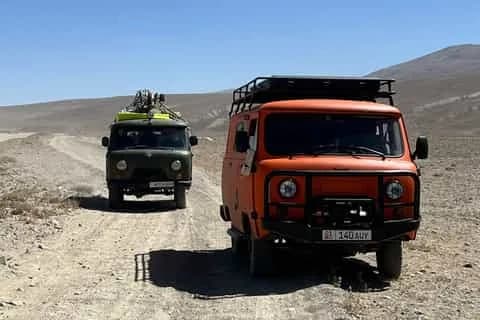
| Kochkor–Song-Köl, hired 4WD (whole vehicle, seats 4) | 5,000–7,000 | $57–80 |
| Naryn–Tash Rabat, taxi one way (whole car) | ~3,000 | ~$34 |
| Hostel dorm bed, Bishkek | 950–1,600 | $11–18 |
| Rural homestay, per person | 1,750–3,500 | $20–40 |
| Mid-range guesthouse, double | 3,050–4,800 | $35–55 |
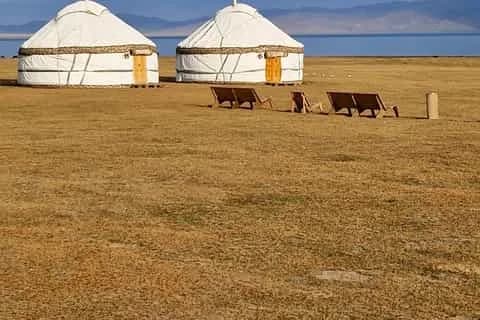
| CBT-style yurt night with all meals | ~2,250 | ~$25 |
| Budget yurt camp with all meals | 1,300–2,200 | $15–25 |
| Upgraded yurt camp with meals | 5,250–8,000 | $60–90 |
| Lagman | 250–500 | $3–5.70 |
| Plov | 200–400 | $2.30–4.60 |
| Samsa | 60–150 | $0.70–1.70 |
| Manty | 200–400 | $2.30–4.60 |
| Beshbarmak (a restaurant main; a home feast is not priced) | 350–700 | $4–8 |
| Ashlan-fu at a Karakol bazaar stall | 60–120 | $0.70–1.40 |
| Meal, inexpensive Bishkek restaurant | 400–1,000 | $4.50–11 |
| Three courses for two, mid-range Bishkek | ~2,500 | ~$29 |
| Ala-Archa National Park entry | 250 | $2.85 |
| Burana Tower (site + museum) | 220 | $2.50 |
| Skazka (Fairytale) Canyon | ~50 | ~$0.60 |
| Karakol National Park entry (Ala-Kul trailhead) | 250 + 100/tent | $2.85 + $1.15 |
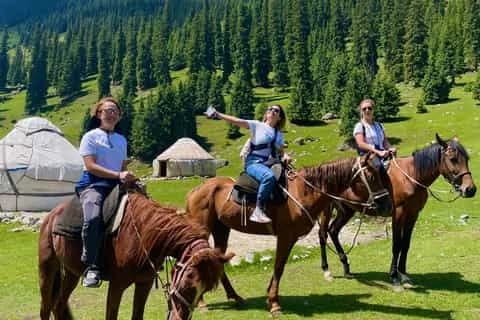
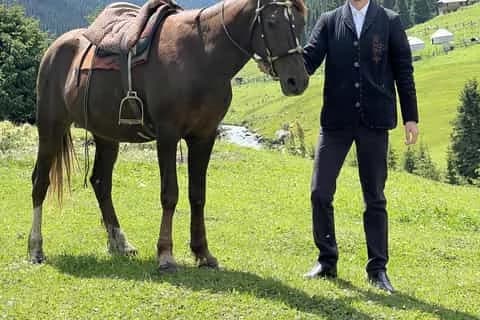
| Horse hire, per day (national consensus band) | 2,200–3,000 | $25–35 |
| Horseman with the animal, per day | 2,200–3,000 | $25–35 |
| Local guide, per day | ~4,400+ | $50+ |
| Certified mountain guide, per day | 6,100–9,600 | $70–110 |
| Private driver with vehicle, per day | ~8,750 | ~$100 |
| Self-drive 4x4 hire, per day | 4,400–10,500 | $50–120 |
| Local SIM, 20–30 GB monthly bundle | 200–300 | $2.30–3.50 |
| Petrol, per litre | 85–110 | $1.00–1.25 |
Sources differ on some of these — horse hire is quoted anywhere from $25 to $50 a day depending on who you ask and where, and guide rates split roughly two-to-one between a village horseman and a certified alpine guide. The Jyrgalan DMO's own published component rates sit lower again: about 1,300 som a day ($15) for a pack horse and 2,000 som ($23) for its handler. Treat the bands as bands. Sulaiman-Too in Osh and Jeti-Ögüz both charge, but no 2026 figure could be confirmed; both are small, and both want cash.
Laundry, incidentally, is one of the few things nobody publishes a price for. Guesthouses will do a load for a negotiated 300–600 som or throw it in; assume the former.
Cash, cards, and the apps you can't use
Kyrgyzstan looks cashless and is not — for you. Locals pay for everything by QR through MBank, O!Dengi, Balance.kg or Elsom, all of which are built around a Kyrgyz phone number, a Kyrgyz bank account and usually a Kyrgyz ID. A short-stay visitor realistically cannot open any of them. Expect a driver to say "just transfer me" and be genuinely surprised when you can't.
Cards work in Bishkek hotels, supermarkets, chain cafés and mid-to-upper restaurants, increasingly in Osh and Karakol. Cards do not work at bazaars, in homestays and guesthouses, on marshrutkas and shared taxis, at park gates, for horse hire, for any CBT booking, or anywhere at Song-Köl, Tash Rabat, Sary-Tash, Arslanbob, Jyrgalan or Altyn-Arashan. Visa is the most reliably accepted scheme; Mastercard is patchier; Amex, Maestro and JCB are effectively dead here.
ATM strategy: draw a big float in Bishkek, Osh or Karakol before any mountain leg — 50,000–70,000 som is not excessive for a multi-day rural excursion. Expect roughly 20,000–25,000 som per withdrawal and expect to make several. Some machines are free; others charge 150–800 som, most commonly 500 som (about $5.70), and your own bank adds its own. Always decline the machine's currency conversion. Carry two cards from different banks, and test a small withdrawal at a new bank's ATM before relying on it — sources genuinely disagree about which Kyrgyz banks are cheap for foreign cards.
Tipping is not a Kyrgyz expectation; it is a recent urban habit. Many Bishkek restaurants already add 10–15% service — check the bill first. Round up in cafés, roughly 10% for a multi-day guide or driver, 50–100 som for a day guide. Yurt and homestay hosts do not expect tips; paying for extra kymyz or bringing a small gift lands better. Bargain at bazaars and with street taxis only, gently, for maybe 10–25% off. Never bargain a marshrutka fare, a CBT rate or a park ticket — those are fixed, and trying reads as rude.
What a real trip costs, end to end
The classic ten-day northern loop — Chuy valley, Issyk-Köl, Karakol, the south shore, two nights at Song-Köl, Tash Rabat — priced three ways, per person:
| Ten days, northern loop | Independent, shoestring | Independent, mid-range | Two people sharing a driver |
|---|---|---|---|
| Beds (9 nights) | $130–170 | $290–360 | $290–360 |
| Food | $80–110 | $150–200 | $150–200 |
| Transport | $90–120 | $140–190 | $500 (half of ~$100/day) |
| Entries, horses, SIM | $50–70 | $90–130 | $90–130 |
| Total | $350–470 | $670–880 | $1,030–1,190 |
Split the same driver four ways and that last column drops to roughly $780–940 each. That is the whole arithmetic of Kyrgyzstan in one line.
Fourteen days works only if you fly one leg — north by road, then Bishkek–Osh by air for $32–68 and 45 minutes instead of a 10–12 hour drive. Budget roughly $500–650 shoestring, $900–1,150 mid-range independent, or $1,500–1,700 each with a private driver for two. The two-week itinerary sets out what actually fits.
What organised tours cost, honestly
Across our catalogue, medians run: Food & Local Life ~$40, City Tours ~$70, Culture & History ~$113, Trekking & Hiking ~$155, Lakes & Nature ~$220, Horse Trekking ~$410. Tours & Sightseeing at ~$1,180 and Day Trips at ~$999 look alarming until you notice both categories are stuffed with multi-day products — those medians are not the price of a day out. By base city: Bishkek ~$160, Karakol ~$167, Naryn ~$565, Issyk-Köl ~$668, Osh ~$960, again reflecting trip length more than local expense.
The cheap way in is a $40 food walk or a $70 city tour — one guided day to get oriented, then travel independently. And be clear-eyed: community rates undercut the marketplace almost everywhere. A CBT homestay at Arslanbob is quoted at about 600 som with breakfast plus 250 som for dinner in pre-2026 reporting, while guesthouses there in 2026 more commonly ask 1,000–2,200 som per person with both meals; a Tash Rabat yurt with meals about 1,500–2,000 som. Destination Karakol, Destination Jyrgalan and Visit Alay are the working local booking channels, and Jyrgalan is the only outfit in the country that publishes its cut — 10% on guesthouse bookings, 20% on kit rental, the rest to the family.
Seasonal swings
July and August are peak everywhere and roughly double on the Issyk-Köl north shore, where Cholpon-Ata, Bosteri and Tamchy fill with Kyrgyz and Kazakh holidaymakers. The south shore is cheaper, drier and more interesting. June and September give you the same mountains at shoulder rates — see when to go. May and October are not bargains so much as half-closed: the jailoo yurt camps run roughly mid-June to mid-September and the high passes only reliably open in July and August.
Event weeks distort everything. The 6th World Nomad Games are held in Kyrgyzstan from 31 August to 6 September 2026, opening in Bishkek with the main events at Cholpon-Ata and the Kyrchyn jailoo; in that week north-shore beds are the scarce commodity, not tickets. The Games run on a roughly two-year cycle, so if you are planning ahead, check whether dates and a host have been announced for the next edition — neither had been as of late August 2026. The smaller summer festivals are the better value anyway — 2,000–2,600 som including lunch for a village horse-games or eagle-hunting day.
Eight ways to actually spend less
- Fill the jeep. Post on your guesthouse noticeboard in Kochkor or Karakol the night before. Four in a Song-Köl vehicle costs $15–20 each; alone it costs $57–80.
- Take the GoBus night coach to Karakol at ~450 som. It is cheaper than the marshrutka, more comfortable, and saves a night's bed. Book in the app days ahead — it sells out.
- Eat where the queue is Kyrgyz. A stolovaya or bazaar chaikhana main is 200–400 som against 350–700 in a restaurant. Ashlan-fu in Karakol is one of the cheapest famous dishes in Central Asia.
- Fly one long leg, don't drive it twice. Bishkek–Osh by air often costs less than two extra nights and a wasted day.
- Book yurts through the village, not the platform. Direct CBT and community rates sit well below packaged prices — yurt stays explains the difference.
- Buy a local SIM, not an eSIM. 30 GB for 250–300 som beats about $5 per gigabyte from a travel eSIM. Bring your passport; registration is mandatory.
- Draw cash once, not five times. At 500 som a withdrawal plus your bank's fee, four small ATM trips is a restaurant meal.
- Skip the pre-arranged airport transfer. It runs two to three times a street or app taxi. Order a Yandex Go from the terminal, and never take a driver quoting in dollars.
Two more that people resist: sleep two nights at Song-Köl rather than one — you have already paid for the vehicle, and the second night is the cheap one — and give yourself a full day in Bishkek before moving. Arrival-day driving is how itineraries and budgets both break.
Ready to price a real trip? Compare guided options on our trekking tours, or start with a food walk and work out the rest on the ground.
Chat with a real person — free
Seif and the team reply on WhatsApp 24/7 — trip questions, custom plans and booking help.
Ask Seif on WhatsAppCommon questions
How much does a trip to Kyrgyzstan cost per day?
Budget about 1,700–2,800 som ($20–32) a day on a shoestring — dorms, bazaar food and marshrutkas. Mid-range with guesthouses, yurt nights and shared taxis runs 5,000–8,000 som ($57–91). Add a hotel and a private driver and it becomes 12,000–19,000 som ($137–217). Hired vehicles, not beds, drive the difference.
Is Kyrgyzstan cheap to travel in?
Yes for food and accommodation, no for mountain transport. Lagman is 250–500 som and a yurt night with three meals about 2,250 som, but a 4WD to Song-Köl is 5,000–7,000 som for the vehicle and a private driver about $100 a day. Splitting vehicles with other travellers is the single biggest saving available.
What is the exchange rate for the Kyrgyz som?
The National Bank of the Kyrgyz Republic put USD 1 at 87.45 som and EUR 1 at 101.83 som on 30 August 2026. Work on roughly 87–88 som to the dollar: 1,000 som is about $11.40. Ignore guides still quoting 95 som — that figure is stale by about 9%.
Can I use a card in Kyrgyzstan, or do I need cash?
Cards work in Bishkek hotels, supermarkets and better restaurants, and increasingly in Osh and Karakol. They fail at bazaars, guesthouses, marshrutkas, park gates and everywhere rural — Song-Köl, Tash Rabat, Arslanbob, Jyrgalan, Altyn-Arashan. Draw 50,000–70,000 som before any mountain leg. Visa is accepted most reliably; Amex and JCB are not.
How much is Bishkek to Osh?
A shared taxi costs 1,500–2,500 som ($17–29): about 600 km, 10–12 hours' driving and 11–13 in practice with stops, over the Töö-Ashuu tunnel and the Ala-Bel pass. An overnight sleeper bus is around 1,000 som and roughly 14 hours. Flying is roughly 2,800–6,000 som ($32–68) for 45 minutes — economy fares are commonly quoted at 4,265–5,801 som — with about six departures a day. Weather delays are common, so don't book a tight connection.
What does a yurt stay at Song-Köl cost?
A CBT-style yurt with all meals is about 2,250 som ($25) per person per night; budget camps run $15–25 and upgraded camps $60–90. That covers bed, three meals, endless tea and kymyz. It does not cover a sleeping bag — bring one, it freezes at 3,016 m — nor horse riding or eagle demonstrations.
How much do park entry fees cost in Kyrgyzstan?
They are trivially small. Ala-Archa is 250 som, Burana Tower 220 som including the museum, Skazka Canyon about 50 som, Karakol National Park is 250 som per person plus about 100 som per tent, and the Altyn-Arashan side collects its own fee of about 220 som. Valley eco-fees elsewhere run 50–250 som, collected in cash at a hut. Sulaiman-Too and Jeti-Ögüz charge small fees that could not be confirmed for 2026.
When are prices highest in Kyrgyzstan?
Mid-July to mid-August, and most sharply on the Issyk-Köl north shore, where Cholpon-Ata and Bosteri roughly double as domestic and Kazakh holidaymakers arrive. June and September cost less for the same mountains. Major event weeks squeeze north-shore beds hardest — the 6th World Nomad Games are dated 31 August to 6 September 2026, and editions come round roughly every two years — book those months ahead.
Do you tip in Kyrgyzstan?
Not by local custom. Many Bishkek restaurants already add 10–15% service, so check the bill. Where it isn't included, round up in cafés or leave about 10% in better restaurants, 50–100 som for a day guide and roughly 10% to a multi-day driver or guide. Yurt and homestay hosts expect nothing.
Book it on This is Kyrgyzstan
Turn this guide into a trip
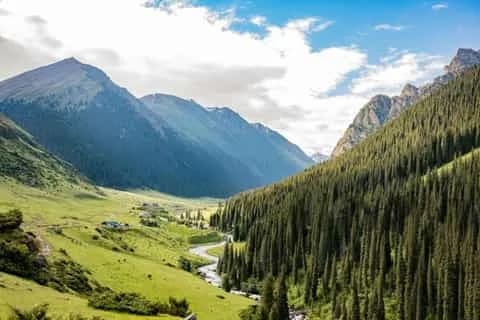
Kyrgyzstan's bestsellers
The experiences travelers book most, across the country
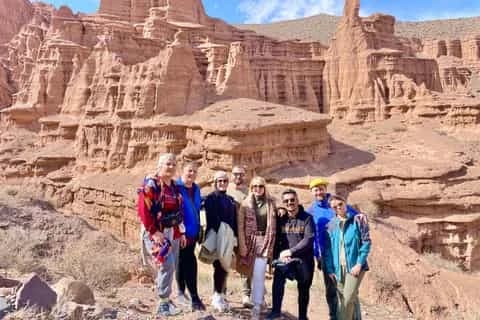
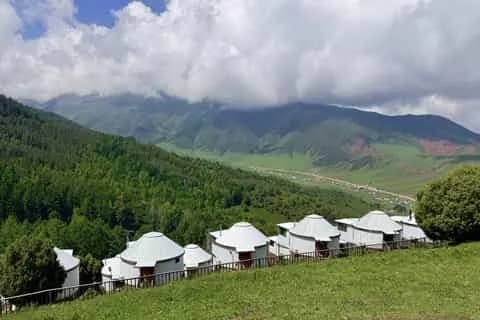
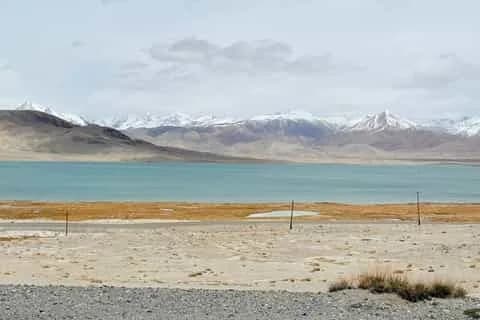
Keep reading
Kyrgyzstan Visa Requirements 2026: 30 Days, Not 60
Kyrgyzstan cut its visa-free stay to 30 days in a rolling 60-day window on 31 December 2025. E-visa, registration, overstay and border rules, verified for 2026.
By TiK Editors12 min read
Kyrgyz Food Guide: What to Eat in Kyrgyzstan (2026)
Kyrgyzstan eats three cuisines at once — nomad, Ferghana and Dungan. What beshbarmak, lagman and ashlyamfu really are, what they cost, and how to order.
By TiK Editors13 min read
Is Kyrgyzstan Safe? An Honest Guide (2026)
Yes — and as of August 2026 there is no FCDO advise-against zone anywhere in Kyrgyzstan. The real risks are roads, altitude and weather, not crime. Here is the detail.
By TiK Editors12 min read