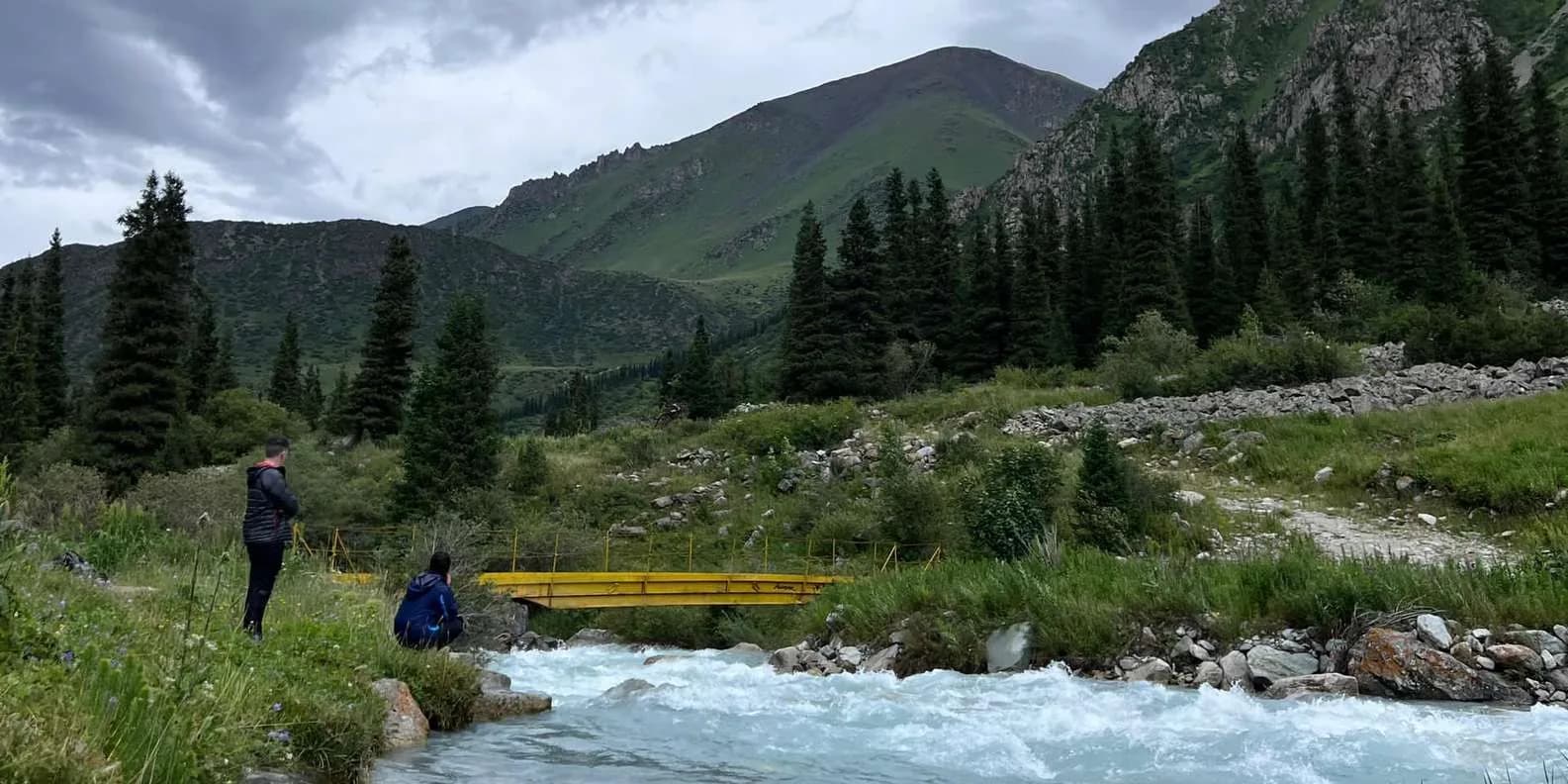
 Image via GetYourGuide
Kyrgyzstan 2-Week Itinerary: Two Routes That Work
Two realistic 14-day Kyrgyzstan itineraries — the northern loop done properly, or north plus Osh and Arslanbob — with honest driving times and what will not fit.
Book it on This is Kyrgyzstan
Turn this guide into a trip
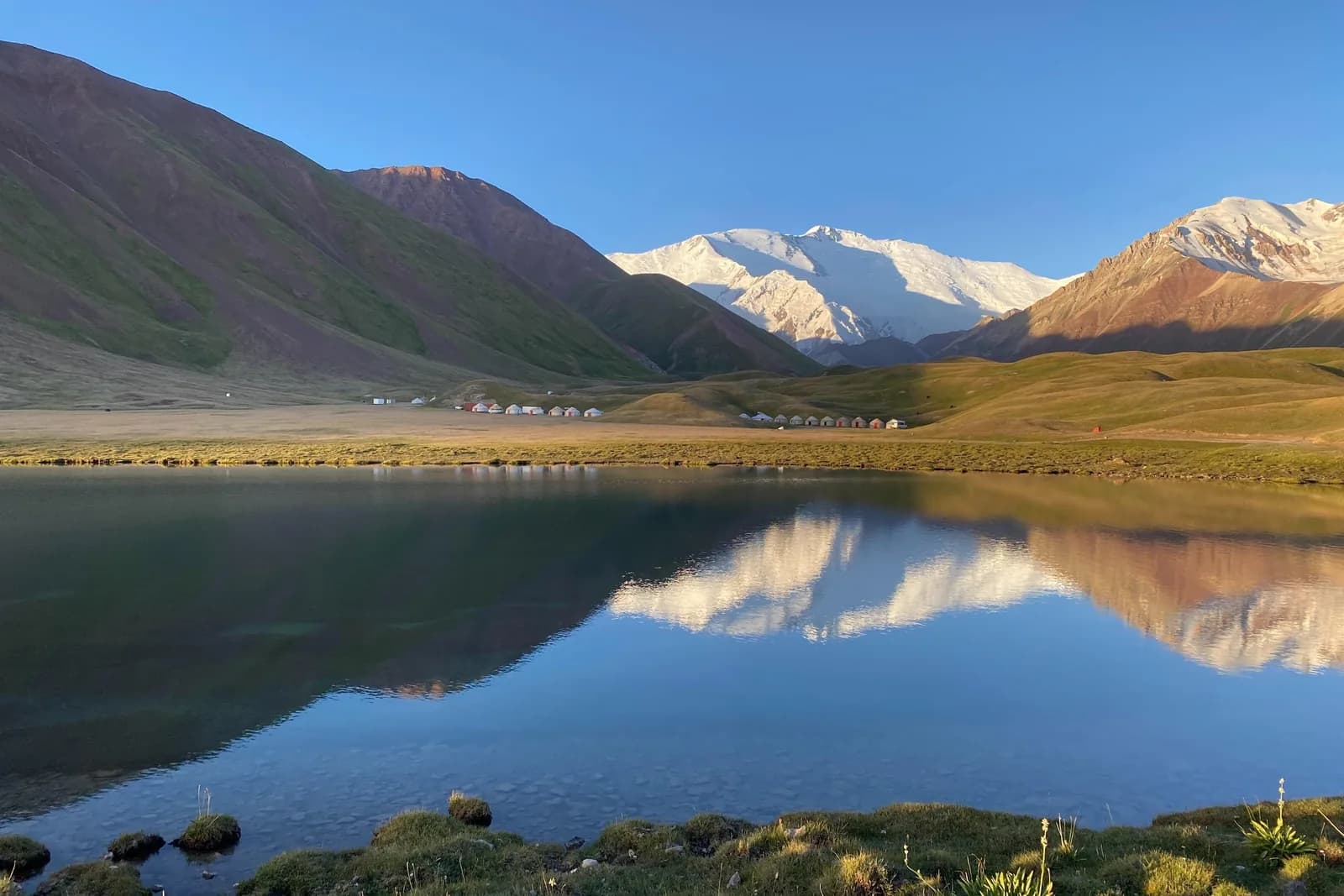
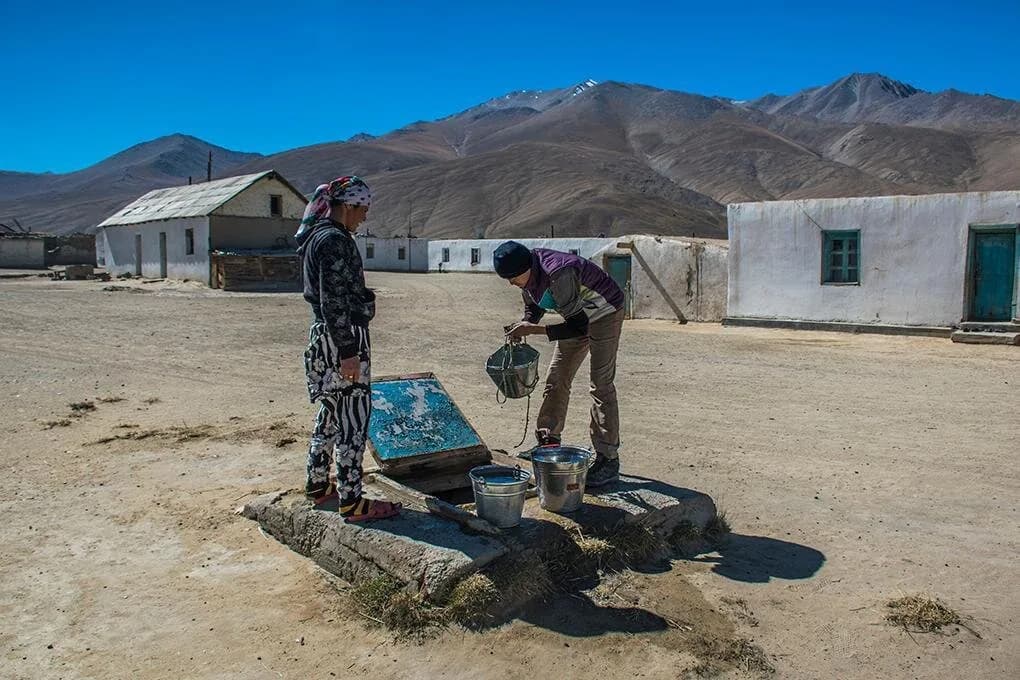
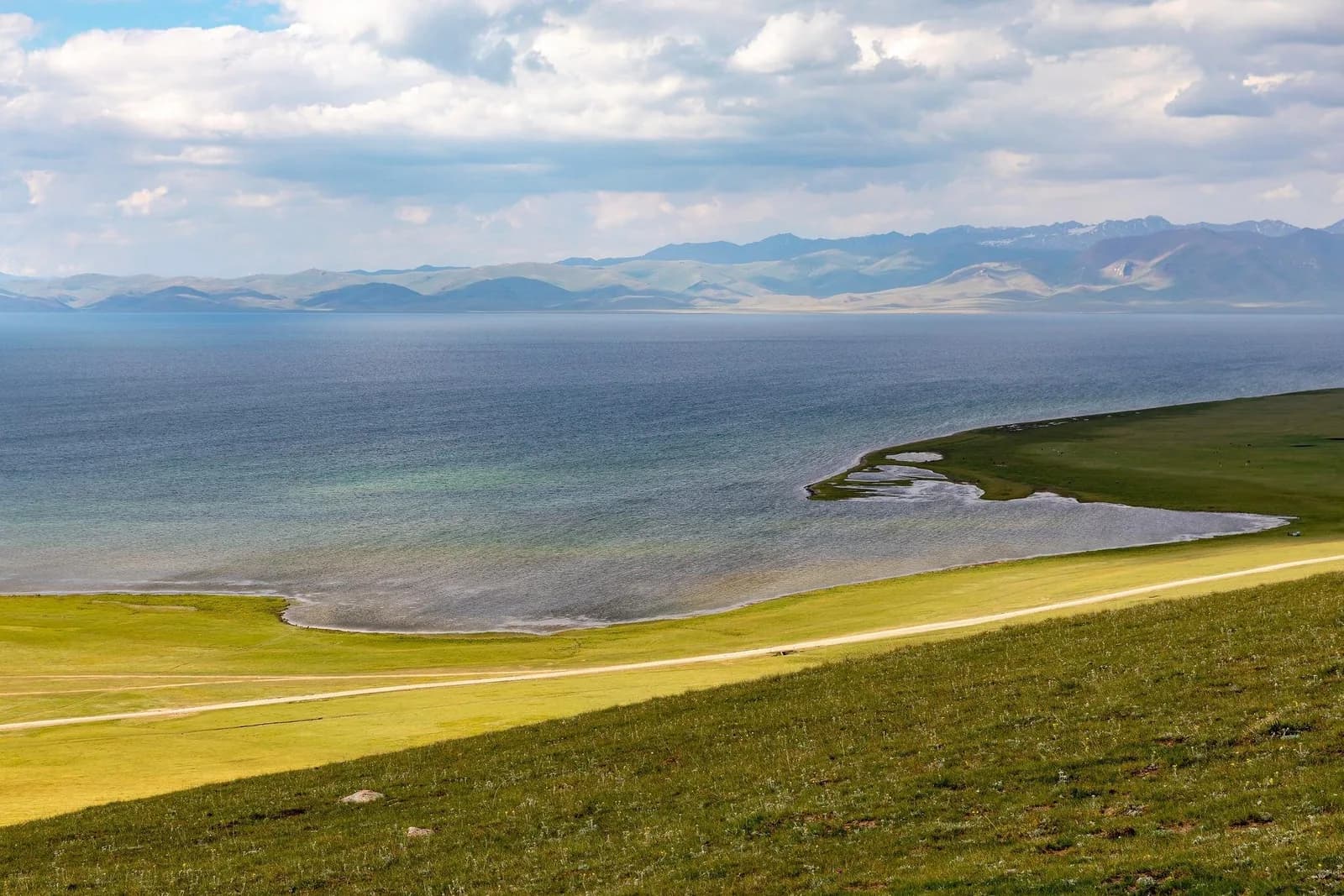

Fourteen days in Kyrgyzstan buys one of two things: the classic northern loop at a human pace — Issyk-Köl (Issyk-Kul), a proper three-day trek out of Karakol, two nights in a yurt at Song-Köl (Song-Kul), the caravanserai at Tash Rabat — or a compressed north plus the south, meaning Osh, Sulaiman-Too and the walnut forest at Arslanbob. It does not buy you both by road.
The one planning fact that decides your fortnight: Kyrgyzstan is small on a map and slow on the ground. Bishkek to Osh is about 600 km — sources give 600–670 km depending on routing — and takes 10–12 hours' driving, 11–13 in a shared taxi with stops, not the seven hours a routing app promises, and there is no public transport of any kind to Song-Köl or Tash Rabat. So the real choice is north-only depth versus a north-plus-south loop with two long transfers — and if you pick the second, fly one of them.
If you have ten days rather than fourteen, our 10-day Kyrgyzstan itinerary is the tighter version of Route A. This guide is what the extra four days should be spent on: either the trek, or the south.
Route A — the northern loop, done properly (14 days)
Most readers should do this one. It repeats no road except the run home, and it puts the altitude late, which helps.
Costs below are per person, two sharing, travelling independently on guesthouses, cafés and shared transport. The som ran at about 87–88 to the US dollar in late August 2026; check the current rate.
Day 1 · Bishkek. No driving on arrival day. Osh Bazaar, Ala-Too Square, a proper meal. Night Bishkek · $60–80.
Day 2 · Ala-Archa or Burana → Chon-Kemin. Ala-Archa National Park (250 som) for the alpine morning, or the Burana tower and the Chuy valley Silk Road sites (220 som) for the history. Then 1.5–2 h east. Night Chon-Kemin · $70–90.
Day 3 · Chon-Kemin → Cholpon-Ata. About 2.5 h. The petroglyph field — roughly 2,000 carvings on a boulder plain with the lake behind — is the reason to stop, not the beach (Cholpon-Ata guide). Night Cholpon-Ata · $70–95.
Day 4 · Cholpon-Ata → Karakol. 2.5–3 h. Holy Trinity Cathedral, the nail-free Dungan Mosque, and the animal market if it is a Sunday. Buy trek food and cash today; ATMs stop here. Night Karakol · $60–80.
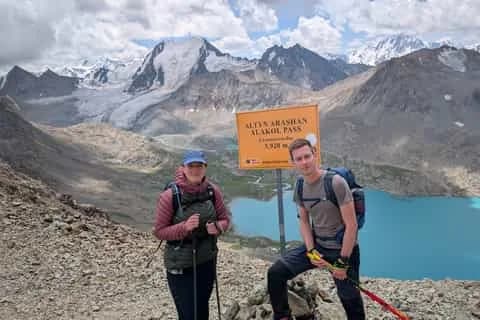
Days 5–7 · The Ala-Köl trek. Day 5: park gate to Sirota, 14 km, about 900 m of ascent. Day 6 is the hard one — 18 km over the Ala-Kul pass (roughly 3,860–3,900 m; sources differ) past Ala-Köl lake (about 3,530–3,560 m) down to the hot springs at Altyn-Arashan. Day 7: 19 km downhill to Ak-Suu. Park entry 250 som plus 100 som a tent; self-supported $50–80 total, guided group $150–250 (Ala-Kul trek guide). Nights Sirota, Altyn-Arashan, Karakol · $40–70/day.
Day 8 · Jeti-Ögüz. A recovery half-day among the red sandstone Seven Bulls, 30 km away but on a slow side road. Night Karakol · $55–75.
Day 9 · South shore. 3–4 h west with stops: the Barskoon waterfalls, then Skazka canyon (50 som). Night Tamga or Bokonbaevo · $60–85.
Day 10 · → Kochkor. 2–2.5 h, via the yurt-makers of Kyzyl-Tuu. Kochkor is where you fix your Song-Köl jeep and yurt on the spot in summer. Night Kochkor · $50–70.
Day 11 · Kochkor → Song-Köl. 2.5–3.5 h on gravel; a hired vehicle is 5,000–7,000 som split four ways. Arrange your ride back before the driver leaves — there is no phone signal at the lake. Night yurt camp · $65–100.
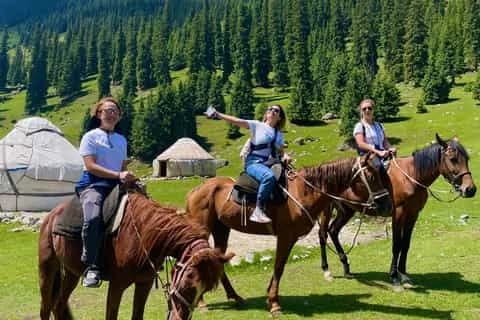
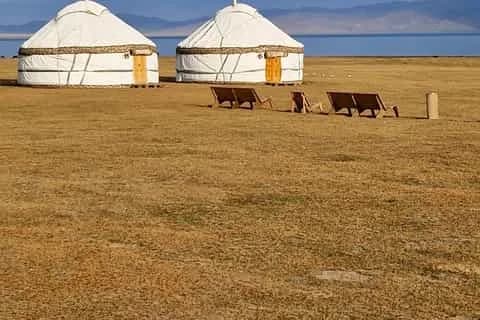
Day 12 · Song-Köl, second night. The day that makes the trip: ride out with the family, walk the ridge, drink the kymyz (Song-Köl yurt stay). Night yurt · $45–80.
Day 13 · Song-Köl → Naryn → Tash Rabat. 3–4 h down the hairpins, then 2–2.5 h south. The caravanserai (150 som) is modest; the valley at dusk, once the day-trippers go, is not. It is colder than Song-Köl. Night Tash Rabat yurt · $60–90.
Day 14 · Tash Rabat → Bishkek. 6–7 h. Fly out that night or sleep in the city. $50–80.
Swap in a Jyrgalan night for Jeti-Ögüz if you would rather ride than sightsee.
Route B — north and south (14 days)
Days 1–9 compress Route A: Bishkek (D1), Burana and Cholpon-Ata (D2), Karakol (D3), Altyn-Arashan or Jeti-Ögüz as a day trip (D4), south shore to Kochkor (D5), Song-Köl (D6–D7, still two nights), Naryn and Tash Rabat (D8), back to Bishkek (D9, 9–10 h — a long day).
Day 10 · Bishkek → Osh. Fly: 45 minutes, roughly 2,800–6,000 som ($32–68) — economy fares are commonly quoted at 4,265–5,801 som — six departures a day. Bishkek's airport is now BSZ, not FRU. Climb Sulaiman-Too — Kyrgyzstan's first UNESCO site, 101 petroglyph clusters and 17 working shrines — in the last hour of light. Night Osh · $55–80.
Day 11 · Osh → Arslanbob. 3–5 h. The village is Uzbek-speaking and observant; dress accordingly. Night homestay · $40–60.
Day 12 · Arslanbob. The walnut forest, about 11,000 hectares of it, plus the 80 m waterfall. Late September into early October is harvest, when families camp under their trees — the strongest single reason to travel in autumn (Arslanbob guide). Night homestay · $35–55.
Day 13 · → Osh. Back down, with time for the bazaar and a plate of Uzbek plov. Osh's central markets moved out of the centre in 2025 and the 23 m Lenin now stands in Meerim Park, so read the Osh travel guide first. Night Osh · $55–80.
Day 14 · Fly out of Osh (OSS).
Be blunt with yourself: Route B trades depth for breadth. You lose the Ala-Köl trek and every unhurried afternoon. Driving Bishkek–Osh one way instead of flying costs a day plus a night at Toktogul, and buys the Töö-Ashuu tunnel, the Suusamyr jailoo and the reservoir — worth it once, never both ways in a fortnight.
Real driving times
Routing engines are 25–60% optimistic in Kyrgyzstan. Use the right-hand column.
| Leg | Distance | Map app | Budget in reality |
|---|---|---|---|
| Bishkek – Cholpon-Ata | ~260 km | 4.1 h | 3.5–5 h |
| Bishkek – Karakol | 407 km | 6.3 h | 5 h fast taxi, 6–7 h marshrutka |
| Cholpon-Ata – Karakol | 140 km | 2.5 h | ~3 h with stops |
| Karakol – Bokonbaevo | 134 km | 2.2 h | 3–4 h with south-shore stops |
| Bokonbaevo – Kochkor | 119 km | 2.0 h | ~2.5 h |
| Kochkor – Song-Köl | 106 km | 2.2 h | 2.5–3.5 h, gravel |
| Song-Köl – Naryn | 143 km | 2.7 h | 3–4 h |
| Naryn – Tash Rabat | 113 km | 1.8 h | 2–2.5 h |
| Naryn – Bishkek | 317 km | 4.7 h | ~7 h |
| Bishkek – Osh | ~600 km (600–670) | 7.3 h (505 km routing-engine figure) | 10–12 h driving, 11–13 h shared taxi (or 45 min flight) |
| Osh – Arslanbob | 130 km | 2.3 h | 3–5 h |
When to go
Roughly mid-June to mid-September for the full loop, and July–August are the only two months everything is reliably open. The Song-Köl and Tash Rabat yurt camps go up and come down with the grass and the passes; nobody publishes a fixed date. Our best time to visit guide goes month by month.
A May fortnight can do Bishkek, the Chuy valley sites, the whole Issyk-Köl ring road, Karakol town, Jeti-Ögüz, Osh and Arslanbob. It cannot do Song-Köl or Tash Rabat yurts, Ala-Köl, or anything above 3,000 m. October is the mirror image: superb for the walnut harvest and the lake in autumn light, useless for jailoo yurts, with the passes closing. Build October as south-and-lake only.
A winter fortnight is a different trip entirely — skiing at Karakol, backcountry at Jyrgalan, horses in the snow, a winter yurt camp at Song-Köl, almost no other tourists — and it needs flexibility for blackouts and avalanche closures.
What does not fit in two weeks
Say no to these now rather than at 3,000 m:
- Kel-Suu. Chinese border zone, mandatory paper permit through a Naryn agency (5–7 working days, €20–30), then 5–8 hours each way on rough track.
- Sary-Chelek plus the north. Six hours from Osh, nine from Bishkek, and camping is the only way to sleep near the lake.
- Lenin Peak base camp and the Alay. A southern trip in its own right, out of Sary-Mogol.
- Inylchek, Khan Tengri, Merzbacher. Permit, expedition logistics and far more than a spare week.
- Route A's trek and Route B's south. Pick one; together they are a 21-day trip.
The mistakes that ruin a Kyrgyz fortnight
- Too much driving. Build in fewer nodes, not faster days.
- One night at Song-Köl. You arrive cold, the dung stove dies before dawn, and you leave after breakfast having seen a lake.
- Ala-Köl without acclimatising. You start near 1,700 m in Karakol and cross a pass near 3,900 m. Sleep at Song-Köl or Altyn-Arashan first, or take four days over it.
- Underestimating the cold at 3,000 m in July. Frost and snow are possible at Song-Köl on any summer night, and camps do not supply sleeping bags.
- Booking Kel-Suu without the border permit. No paper, no entry, two days of driving wasted.
- Expecting to hike at Song-Köl. You hike to it; the shore is for ambling.
Marshrutka, driver or tour?
Marshrutkas and guesthouses are cheapest and work fine on the main axes — Bishkek–Karakol is from 500 som (500–900), Bishkek–Osh about 1,800 som — but central Kyrgyzstan defeats them: nothing public reaches Song-Köl, Tash Rabat or Kel-Suu, and the only east–west link is back through Bishkek. Reckon $45–70 a day, plus a jeep seat wherever the buses stop.
A car with a driver runs about $100 a day plus his food and bed; self-drive 4x4 is $80–120. Split three or four ways that is $25–35 each, and it is what makes Route A flow. Book the vehicle early — beds are always available in Kyrgyzstan, hire cars are not.
An organised trip removes the friction: on our marketplace the medians sit near $155 for trekking, $410 for horse trekking and about $565 for a Naryn-based multi-day, and community rates undercut these. Compare on the tours page, and see getting around Kyrgyzstan and the cost and budget guide.
Festivals and the World Nomad Games
The 6th World Nomad Games are held in Kyrgyzstan from 31 August to 6 September 2026, opening in Bishkek on Independence Day — the 35th anniversary — with the competition at the Cholpon-Ata hippodrome and at Kyrchyn, where regional delegations build a temporary city of several hundred yurts. Kyrgyzstan hosted the first three editions, and the Games come round on a roughly two-year cycle: if your fortnight falls outside that week, watch for the next edition's dates and host rather than booking on rumour — neither had been announced as of late August 2026. The rest of the summer calendar recurs on roughly the same weeks each year: a Song-Köl shore festival in late July, a birds-of-prey day in the Ton district in early August, the yurt-makers at Kyzyl-Tuu mid-August, horse games at Tamchy late in the month. Tickets run about 2,000–2,600 som including lunch. Confirm with the organisers — none of these dates are fixed.
Altitude and packing
You sleep at 3,016 m at Song-Köl and about 3,000–3,200 m at Tash Rabat (sources differ), and cross close to 3,900 m on the Ala-Kul pass. That is enough for a headache. A night's sleep usually settles it; if it worsens, descend. Bring a proper sleeping bag, a hat, gloves and a waterproof shell even in July, high-factor sun cream, and a fat wad of small som notes — there are no ATMs and no card terminals at Song-Köl, Tash Rabat, Altyn-Arashan or anywhere on the jailoo.
Ready to build it? Browse the multi-day routes on our search page, or tell us your fortnight and we will shape it around you at custom trips.
Chat with a real person — free
Seif and the team reply on WhatsApp 24/7 — trip questions, custom plans and booking help.
Ask Seif on WhatsAppCommon questions
Is two weeks enough for Kyrgyzstan?
Two weeks is enough for the northern loop done properly, including a three-day trek and two nights at Song-Köl. It is also enough for the north plus Osh and Arslanbob, provided you fly one leg. It is not enough to drive north and south and still have unhurried days.
Can I do north and south Kyrgyzstan in 14 days?
Yes, but only if you fly Bishkek–Osh in one direction. The road is about 600 km (sources give 600–670 km depending on routing) and takes 10–12 hours' driving, 11–13 in a shared taxi with stops, plus a night en route. Doing it both ways in a fortnight leaves you with an itinerary that is mostly windscreen. The flight is 45 minutes and roughly 2,800–6,000 som ($32–68).
What is the best time of year for a two-week Kyrgyzstan itinerary?
Mid-June to mid-September, with July and August the only months when the yurt camps, the high passes and the Ala-Kul pass are all reliably open. May and October leave roughly half the route shut. Winter is a different trip: skiing, snowbound horses and a winter yurt camp.
How many nights should I spend at Song-Köl?
Two. With one night you arrive in the afternoon, sleep badly at 3,016 m and leave after breakfast. The second day is when you ride, walk the ridge and actually talk to your host family. It is the single best upgrade to any Kyrgyzstan itinerary.
Do I need a 4WD for a Kyrgyzstan road trip?
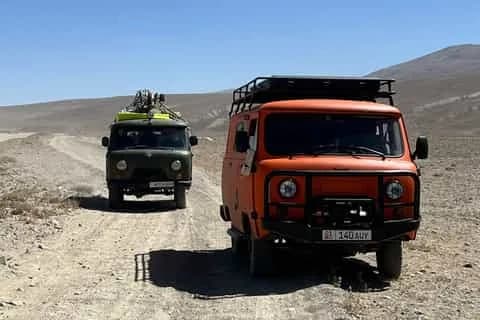
Not for the main roads: Bishkek–Osh, the Issyk-Köl ring and Bishkek–Naryn are all sealed. You do need high clearance for the Song-Köl approaches, Kel-Suu, the Tosor pass and the Altyn-Arashan and Jyrgalan valleys. Locals reach Song-Köl in old saloons, but clearance beats power there.
How much does two weeks in Kyrgyzstan cost?
Independently, on guesthouses and shared transport, budget roughly $45–70 per person per day, so $650–1,000 for the fortnight excluding flights. Adding a driver at about $100 a day, split three or four ways, pushes it to $70–100 a day. Organised multi-day trips start well above that.
Does Kel-Suu fit into a two-week trip?
Realistically no. Kel-Suu sits in the Chinese border zone and needs a physical paper permit arranged through a Naryn agency, taking five to seven working days and costing €20–30. Access from Naryn is 5–8 hours each way on rough track. Turning up without the permit wastes two days.
Can I travel Kyrgyzstan by public transport for two weeks?
On the main axes, yes: marshrutkas and shared taxis link Bishkek with Karakol, Kochkor, Naryn and Osh cheaply. Central Kyrgyzstan defeats them — nothing public reaches Song-Köl, Tash Rabat or Kel-Suu, and the only east–west link is back through Bishkek. Budget for shared jeeps.
Do I need a visa for Kyrgyzstan?
Around 55 nationalities, including the UK, US, EU, Canada, Australia and Japan, enter visa-free for 30 calendar days within any rolling 60-day period under the rules that took effect at the end of 2025. That is a change from the old 60-day allowance, and a border hop no longer resets it. Check your nationality at evisa.e-gov.kg.
Book it on This is Kyrgyzstan
Turn this guide into a trip
Kyrgyzstan's bestsellers
The experiences travelers book most, across the country
Keep reading
Kyrgyzstan 7-Day Itinerary: One Week in the North
A concrete, honest 7-day Kyrgyzstan route: Burana, Issyk-Köl, Karakol and a Song-Köl yurt night, with a day-by-day table and costs.
By TiK Editors8 min read
Kyrgyzstan 10-Day Itinerary: The Classic Loop
The exact 10-day northern loop we'd send a first-timer on, with honest drive times, where to sleep each night, and two nights at Song-Köl done right.
By TiK Editors11 min read
Self-Guided Treks in Kyrgyzstan: Routes & How-To
Yes, you can trek Kyrgyzstan without a guide. The best self-guided routes, the ones to skip, and the maps, water and safety logistics that make it work.
By TiK Editors12 min read