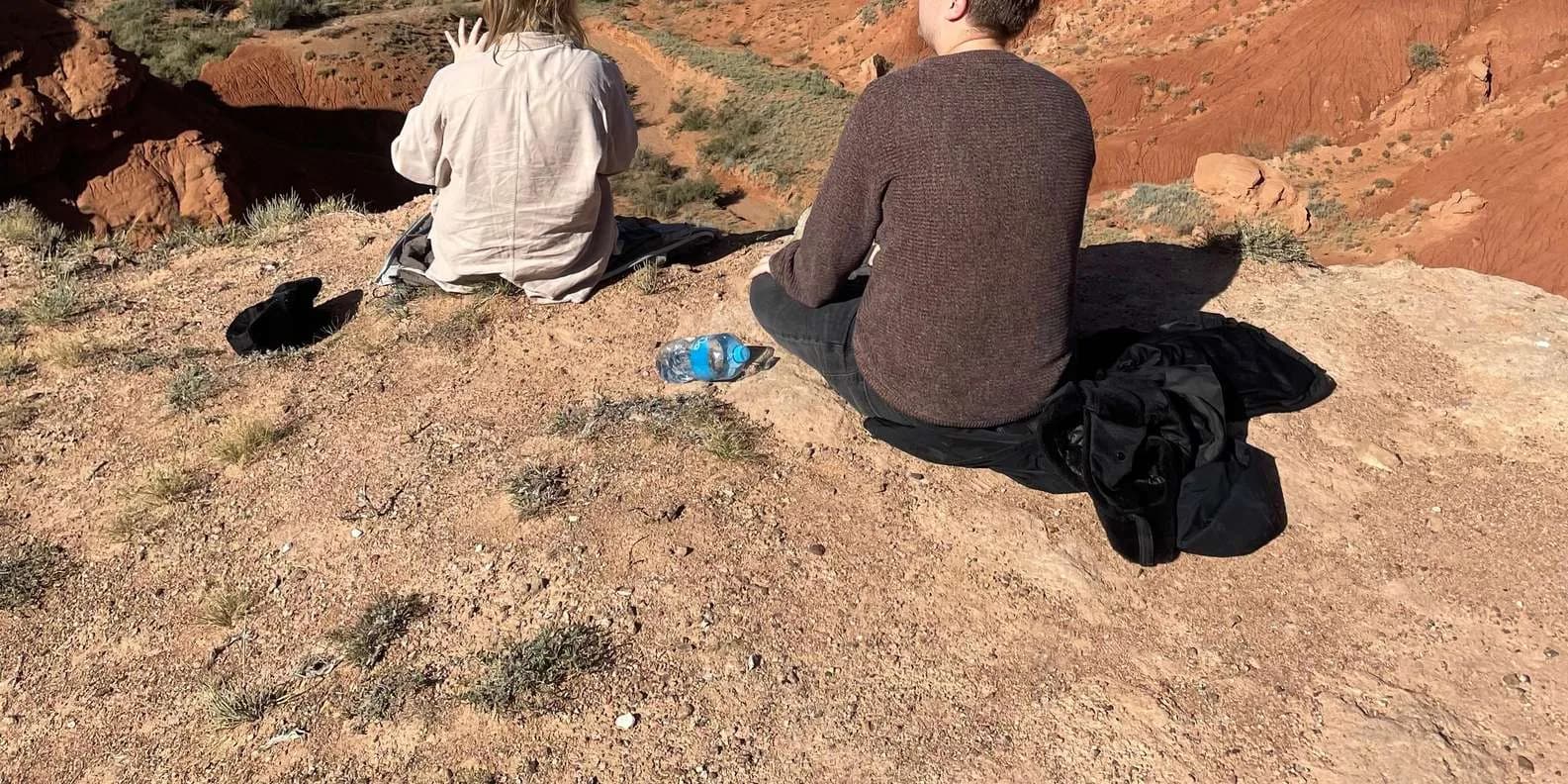
 Image via GetYourGuide
Kyrgyzstan 7-Day Itinerary: One Week in the North
A concrete, honest 7-day Kyrgyzstan route: Burana, Issyk-Köl, Karakol and a Song-Köl yurt night, with a day-by-day table and costs.
Book it on This is Kyrgyzstan
Turn this guide into a trip
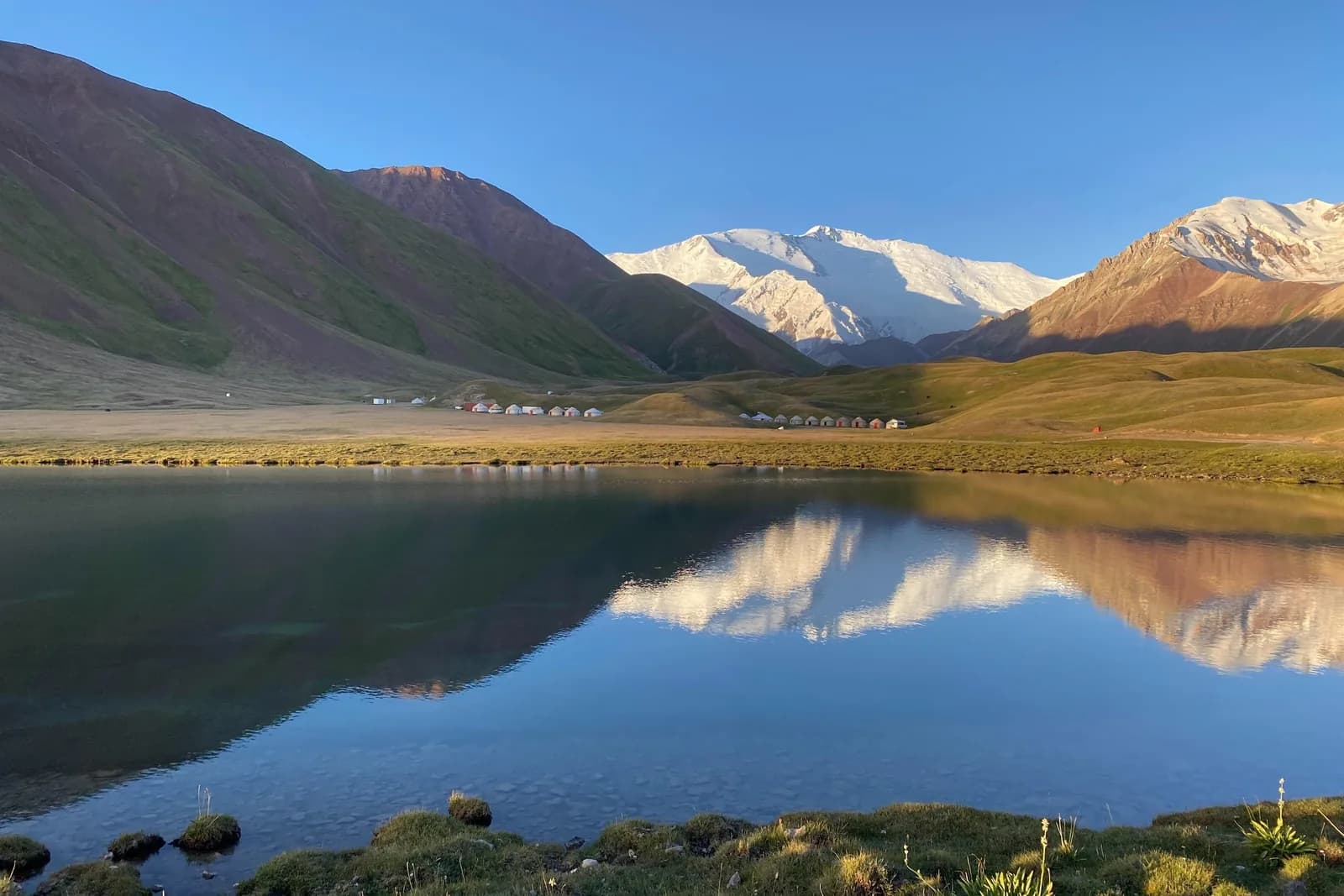
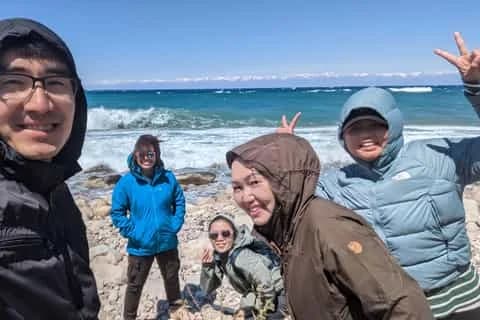
One week is enough to do Kyrgyzstan's north properly, but not to add the south. In seven days you can cover the Silk Road tower at Burana, the long blue sweep of Issyk-Köl (Issyk-Kul), the trekking town of Karakol, and one night in a yurt at Song-Köl (Song-Kul) — and that is a full, fast plate. Fly into Bishkek (Manas airport changed its code from FRU to BSZ in 2025), run the northern loop, and don't try to bolt Osh or Arslanbob onto the end. This works only from about mid-June to mid-September, when the passes are clear and the jailoo yurt camps are up.
The route below runs anticlockwise: the easy lakeside days come first and the 3,016 m yurt night lands near the end, which is the right order for acclimatising. It's the same sequence local operators use, and it means you never repeat a road until the final run home.
The one-week route at a glance
| Day | Route | Drive | Overnight | Highlight |
|---|---|---|---|---|
| 1 | Arrive Bishkek | – | Bishkek (~800 m) | Settle in; no driving on arrival day |
| 2 | Bishkek → Burana → Chon-Kemin | ~110 km / 2–3 h | Chon-Kemin (~1,700 m) | Burana Tower and its balbals |
| 3 | Chon-Kemin → north shore → Karakol | ~330 km / 5–6 h | Karakol | Cholpon-Ata petroglyphs |
| 4 | Karakol day trip | 30–70 km | Karakol | Altyn-Arashan or Jeti-Ögüz + town |
| 5 | Karakol → south shore → Kochkor | ~250 km / 5–6 h | Kochkor | Skazka (Fairy-Tale) Canyon |
| 6 | Kochkor → Song-Köl | ~110 km / 3–4 h | Song-Köl yurt (3,016 m) | Sunset over the jailoo |
| 7 | Song-Köl → Bishkek | ~300 km / 6–7 h | Depart | The Kalmak-Ashuu descent |
Total driving is roughly 1,250–1,400 km. Be honest with yourself about the times: mapping apps quote free-flow speeds, and on these roads the real journey runs 25–40% longer once you factor in trucks, livestock and police checks. Budget the higher figure and read our getting around Kyrgyzstan guide before you book anything.
Day 1 — Arrive in Bishkek
Don't drive on the day you land. Jet lag plus a mountain road is a poor combination, and you'll want a night to sort a SIM, some som and the vehicle. Bishkek is flat, Soviet and green; an afternoon covers Ala-Too Square, the Osh Bazaar and a first plate of laghman. If your flight lands at dawn, Ala-Archa National Park is a half-day escape 40 minutes south, but it isn't essential.
Day 2 — Burana Tower and the Chon-Kemin valley
Head east into the Chuy valley to the Burana Tower, the restored minaret of the 11th-century Karakhanid city of Balasagun and part of the Silk Roads UNESCO listing. The field of balbals — carved stone grave-markers — is the real draw, and you can climb the tower's dark internal stair. Our Burana Tower guide has the detail. From there it's a short run to the Chon-Kemin valley for your first night at real altitude, around 1,700 m. It's a genuine stop, not a filler: an Arcadian side-valley of orchards and pasture that eases you into the mountain climate.
Day 3 — The north shore to Karakol
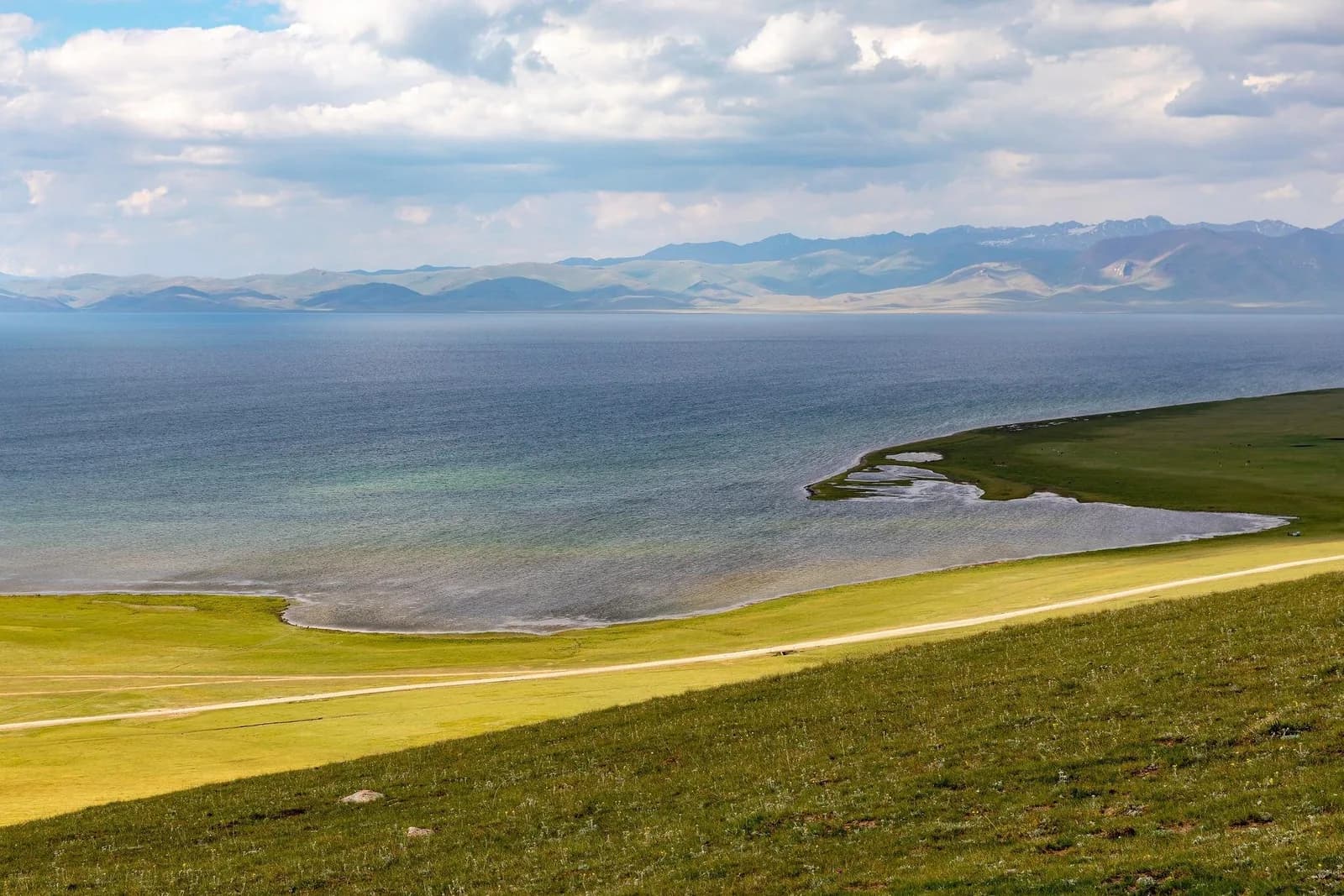
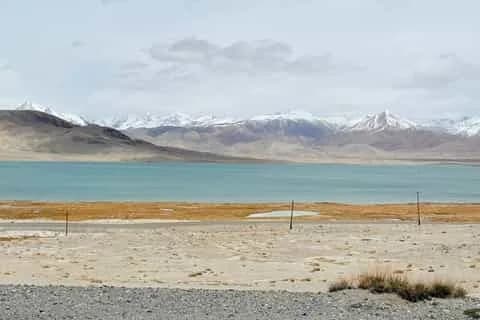
The longest transfer of the week. You'll skirt the northern shore of Issyk-Köl, the world's second-largest alpine lake at about 1,607 m, ringed by snow peaks even in July. The resort strip at Cholpon-Ata and Bosteri is loud and has a poor reputation for petty crime against foreigners; the reason to stop is the open-air petroglyph field, not the beach. Skip the sanatoriums and push on to Karakol, the country's best outdoor base. For more on the lake itself, see our Lake Issyk-Köl guide.
Day 4 — A full day around Karakol
Karakol sits 15 km back from the water and is not a beach town. It's the launch pad for the whole eastern massif, and one day forces a choice. The two strong options:
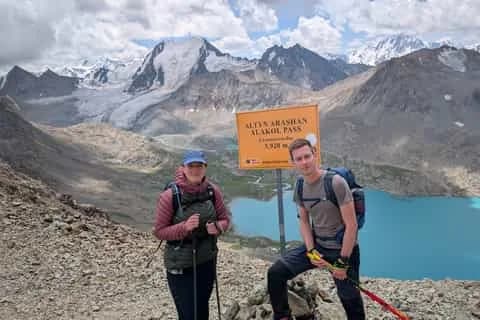
- Altyn-Arashan. A rough 4x4 track climbs to a hot-spring valley at roughly 2,400–2,600 m (sources differ). It's bumpy and slow but spectacular, and the springs are the payoff. The Altyn-Arashan trek guide covers the walking version if you had longer.
- Jeti-Ögüz plus the town. The red "Seven Bulls" and Broken Heart sandstone cliffs are a half-day; add Karakol's wooden Holy Trinity Cathedral and the nail-less Dungan Mosque, built in 1910 by Chinese carvers.
If your week includes a Sunday, time it for the Karakol animal market — it starts at dawn and it's the most authentic morning in the itinerary. Full detail in the Karakol guide.
Day 5 — The south shore to Kochkor
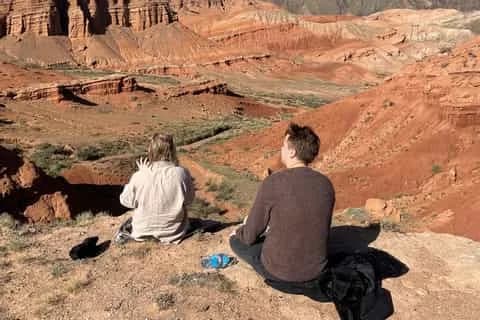
Cross to the quieter southern shore. The set-piece is Skazka (Fairy-Tale) Canyon, a small maze of wind-carved red and orange rock a short walk off the lake road — see the Skazka Canyon guide. Stop at Jeti-Ögüz if you didn't yesterday, and at the Barskoon waterfalls if time allows. Bokonbaevo, the biggest southern town, is the place for an eagle-hunting demonstration (honestly a summer showcase, not real hunting, which happens November to February). End the day in Kochkor, an unglamorous market town that exists, for you, as the gateway to Song-Köl.
Day 6 — Up to Song-Köl
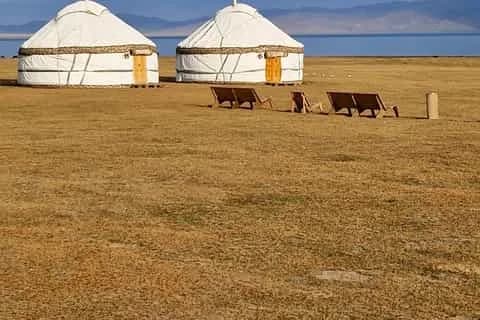
This is the day the trip is really about. There is no public transport of any kind to Song-Köl, so arrange a shared jeep in Kochkor — one of the town's agencies will fill a vehicle, or you can hire the car. You don't need a 4x4; you need high clearance for the loose gravel over the pass. The lake sits at 3,016 m on a treeless high plateau, and about 15 yurt camps rim the shore. Settle in, ride out to a ridge, and eat with the family. Two practical warnings: there is no phone signal at the lake, so book your ride back to Kochkor before your driver leaves, and it gets genuinely cold — the dung stove roars at night then dies before dawn. Bring a warm layer and something waterproof in any month. Our Song-Köl yurt-stay guide has the full brief.
Day 7 — The long descent home
Breakfast, then the drive back to Bishkek down the Kalmak-Ashuu switchbacks (the "33 Parrots" road) toward Kochkor and on across the Boom Gorge. It's a long day, six to seven hours with stops, but the descent is one of the most scenic stretches of the whole loop. Aim your flight for the evening or, better, keep the last night in Bishkek and fly the next morning.
The slower, saner variation
A week forces one compromise, and it's Song-Köl. Arriving mid-afternoon and leaving after breakfast gives you a yurt night, not a yurt experience — the second day at the lake is when you actually ride and walk. If you can add even two days, spend a second night at Song-Köl and slow the driving days; that's the heart of our 10-day itinerary. If your interest is the south — Osh, Sulaiman-Too, the walnut forest at Arslanbob — don't try to reach it by road in a week. Instead, fly Bishkek–Osh (45 minutes, about US$35–40) and build the whole week around the south. Trying to drive both halves in seven days leaves you looking at a windscreen.
A clockwise version (Bishkek → Kochkor → Song-Köl early, then the lake, then Karakol) also works and gets the yurt night out of the way first. It's slightly worse for acclimatisation but perfectly fine at Song-Köl's modest altitude — pick it if you'd rather end on the easy lakeside days.
Getting between the towns
If you're not taking a driver, the town-to-town legs are doable on shared transport but the pace punishes you. Shared taxis link Bishkek with Karakol in about five hours for 1,000–1,500 som per seat, and marshrutkas run the same road cheaper but slower, leaving only when full. The catch is the middle of the loop: there is effectively no scheduled service across the south shore or up to Song-Köl, so you'll be arranging jeeps in Kochkor either way. Taxi apps like Yandex Go work in Bishkek, Osh and Karakol but nowhere rural, so carry small som notes for everything else. Route numbers on marshrutka windscreens are usually in Cyrillic only — learn to read your destination.
What it costs
A private, driver-guided week is the simplest way to run this route. Real operator pricing scales sharply with group size:
| Group size | Per person (standard) | Per person (upgraded) |
|---|---|---|
| 1 (solo) | ~$2,300 | ~$2,700 |
| 2 | ~$1,380 | ~$1,750 |
| 4 | ~$1,000 | ~$1,400 |
| 5–7 | ~$980 | ~$1,250–1,300 |
Those are full-board, 4x4, English-guide prices; confirm current rates and what's excluded (usually international flights, insurance and tips). Done independently — marshrutkas and shared taxis between towns, a jeep seat up to Song-Köl, guesthouses and yurt beds — you can run the same week for far less, though central Kyrgyzstan's lack of public transport means you'll still pay to reach the lake. Note that Kyrgyzstan is visa-free for most Western nationalities for 30 days within any rolling 60-day period (not the old 60-day figure); check your own passport on the official portal.
What you give up versus 10 days
Seven days buys the north's greatest hits and nothing more. You sacrifice the second Song-Köl night, the caravanserai at Tash Rabat, the multi-day Ala-Kul trek out of Karakol, an overnight in the Jyrgalan valley, and the south in its entirety. You also drive harder: three of the seven days are long transfers. If that reads as too rushed, the 10-day loop fixes the pace and the two-week itinerary adds a flown southern leg. But if a week is what you have, this route is the most it can honestly hold.
Ready to piece it together? Browse driver-guides and yurt stays across the region on our Issyk-Köl destination hub.
Chat with a real person — free
Seif and the team reply on WhatsApp 24/7 — trip questions, custom plans and booking help.
Ask Seif on WhatsAppCommon questions
Is 7 days enough for Kyrgyzstan?
Seven days is enough for the northern highlights — Burana, Issyk-Köl, Karakol and one night at Song-Köl — but not for the south. Trying to add Osh and Arslanbob by road in a week leaves you mostly driving. Keep it to the north, or fly Bishkek–Osh (45 minutes) and spend the whole week in the south instead. Do not attempt both halves overland in seven days.
What is the best 7-day route in Kyrgyzstan?
Run an anticlockwise northern loop: Bishkek to Burana and Chon-Kemin, along Issyk-Köl's north shore to Karakol, a day around Karakol, across the south shore to Kochkor, up to a Song-Köl yurt for the night, then back to Bishkek. This puts the easy lakeside days first and the 3,016 m altitude near the end, which helps you acclimatise before the yurt night.
When can I do this itinerary?
Roughly mid-June to mid-September. The Song-Köl yurt camps go up with the summer grass and pack down by early October, and the access passes are only reliably clear in July and August. May and October are the worst months: the yurts aren't up, the high passes may be under snow, and there's no ski season either. Check current conditions before committing to the lake.
Do I need a 4x4 for Song-Köl?
No. Locals drive up in ordinary Soviet saloons. What you actually want is high clearance to clear loose rocks and cross small streams — all four access roads are decent gravel. There is no public transport to the lake, so arrange a shared jeep or a hired car in Kochkor, and critically, book your ride back before your driver leaves, as there is no phone signal at the lake.
How cold does Song-Köl get?
Cold, in any month. At 3,016 m the mornings and evenings are always chilly, and rain or snow is possible even in July. The dung stove in a yurt burns hard in the evening then dies before dawn, so nights are the cold part. Bring a hat, a warm jacket and something waterproof, and ask whether your camp has beds rather than floor mats — beds are markedly warmer.
Should I book a tour or travel independently?
A private driver-guide is simplest for a tight week and costs roughly $980–1,400 per person in a group of four to seven, more for solo or paired travellers. Independent travel is far cheaper but slower: central Kyrgyzstan has almost no public transport, so you'll still pay for a jeep to Song-Köl. If you value the time, a guided or self-drive vehicle beats stitching together marshrutkas on a seven-day clock.
How far is it from Song-Köl back to Bishkek?
About 300 km, six to seven hours with stops, descending the Kalmak-Ashuu switchbacks toward Kochkor and then across the Boom Gorge. It's a long final day, so aim for an evening flight or, better, keep a last night in Bishkek and fly the next morning. Don't book a same-day international connection off a long mountain transfer — delays are routine.
Can I fit Osh or Arslanbob into a week?
Not by road. Bishkek to Osh is a 10–12 hour drive each way, so doing it overland in a week wastes most of your days. If the south is your priority, fly Bishkek–Osh (about 45 minutes, US$35–40) and build the whole week around Osh, Sulaiman-Too and the walnut forest at Arslanbob. Combine north and south only if you have at least 12–14 days and fly one leg.
What do I give up compared with a 10-day trip?
Mostly depth and breathing room. Seven days means one night at Song-Köl instead of two, no Tash Rabat caravanserai, no multi-day Ala-Kul trek, no Jyrgalan, and no south. Three of the seven days are long transfers. Ten days fixes the pace and adds a second yurt night and Tash Rabat; two weeks adds a flown southern leg. A week gives you the north's greatest hits and little slack.
Book it on This is Kyrgyzstan
Turn this guide into a trip



Kyrgyzstan's bestsellers
The experiences travelers book most, across the country
Keep reading
Kyrgyzstan 2-Week Itinerary: Two Routes That Work
Two realistic 14-day Kyrgyzstan itineraries — the northern loop done properly, or north plus Osh and Arslanbob — with honest driving times and what will not fit.
By TiK Editors11 min read
Kyrgyzstan 10-Day Itinerary: The Classic Loop
The exact 10-day northern loop we'd send a first-timer on, with honest drive times, where to sleep each night, and two nights at Song-Köl done right.
By TiK Editors11 min read
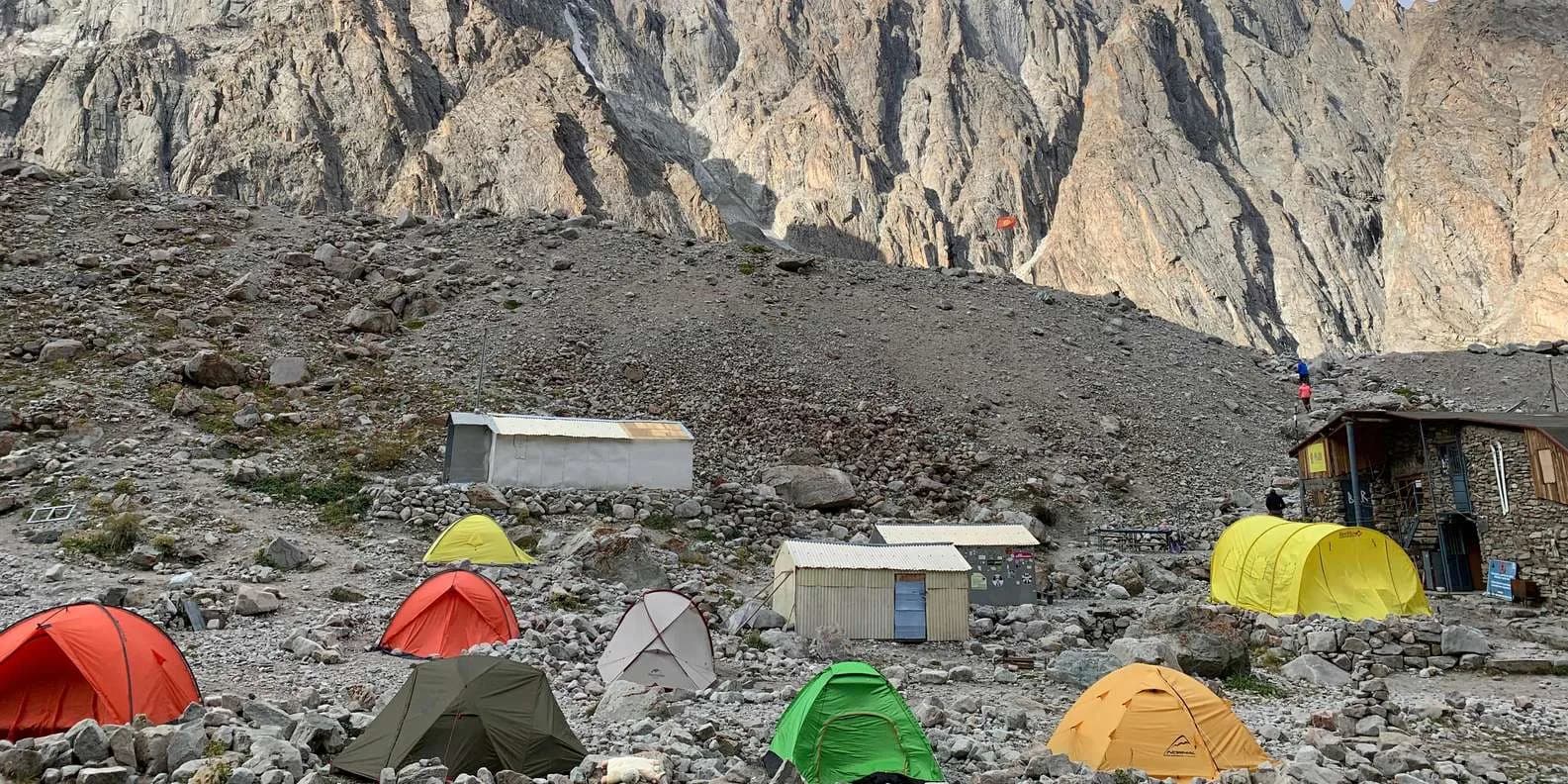
Uchitel Peak: Your First 4,000m Climb (2026)
Pik Uchitel (~4,400-4,600 m) in Ala-Archa is the classic first summit for fit hikers new to mountaineering: route, gear, season and acclimatisation.
By TiK Editors8 min read