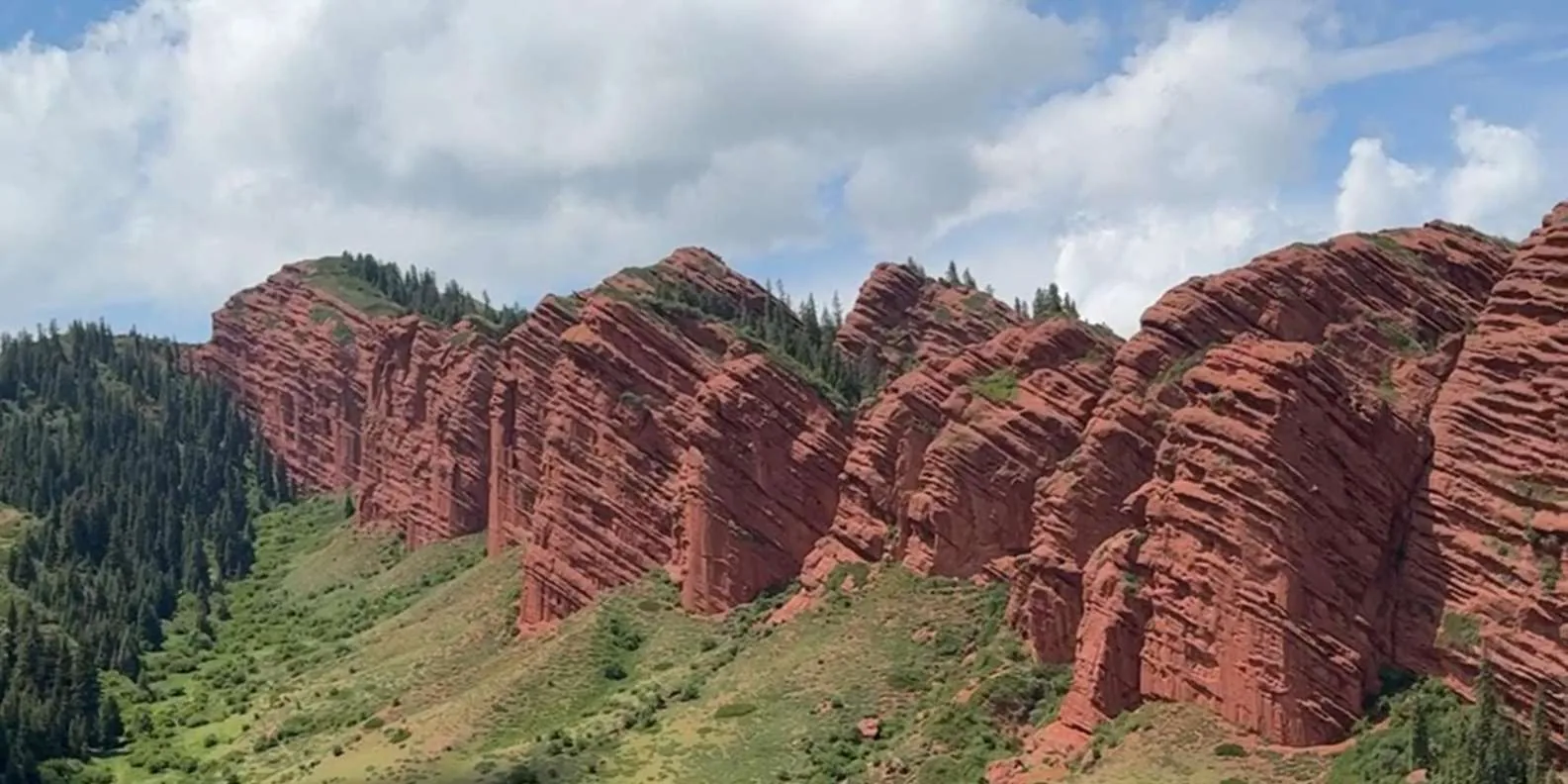
 Image via GetYourGuide
Skazka Canyon Guide: Fairytale Canyon, Issyk-Köl
Skazka (Fairytale) Canyon on Issyk-Köl's south shore: what to see, how to get there, entry fee, best light, and how to combine it with Barskoon and Jeti-Ögüz.
Book it on This is Kyrgyzstan
Issyk-Kul · Turn this guide into a trip
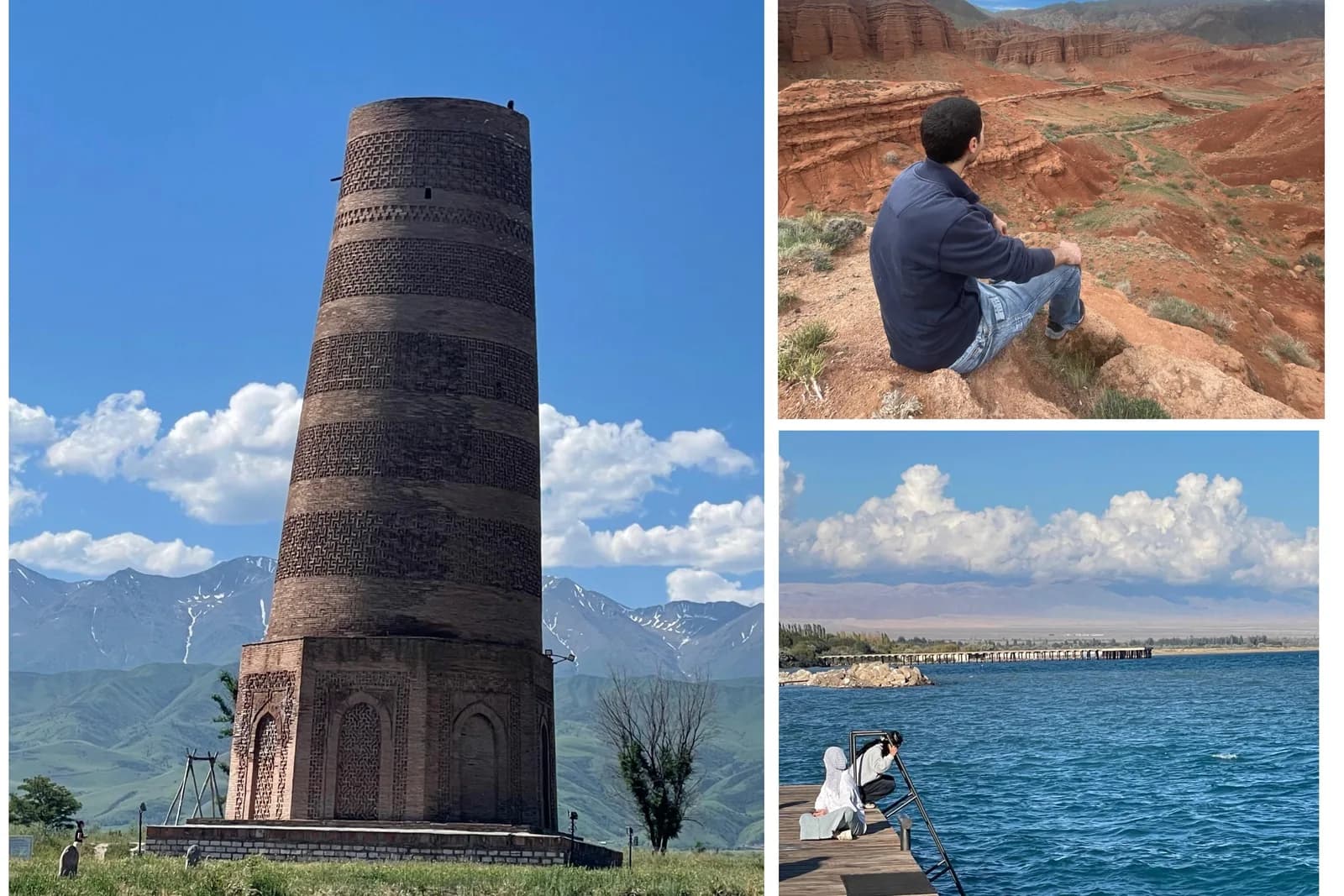
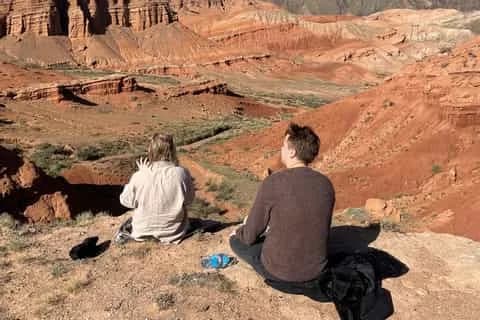
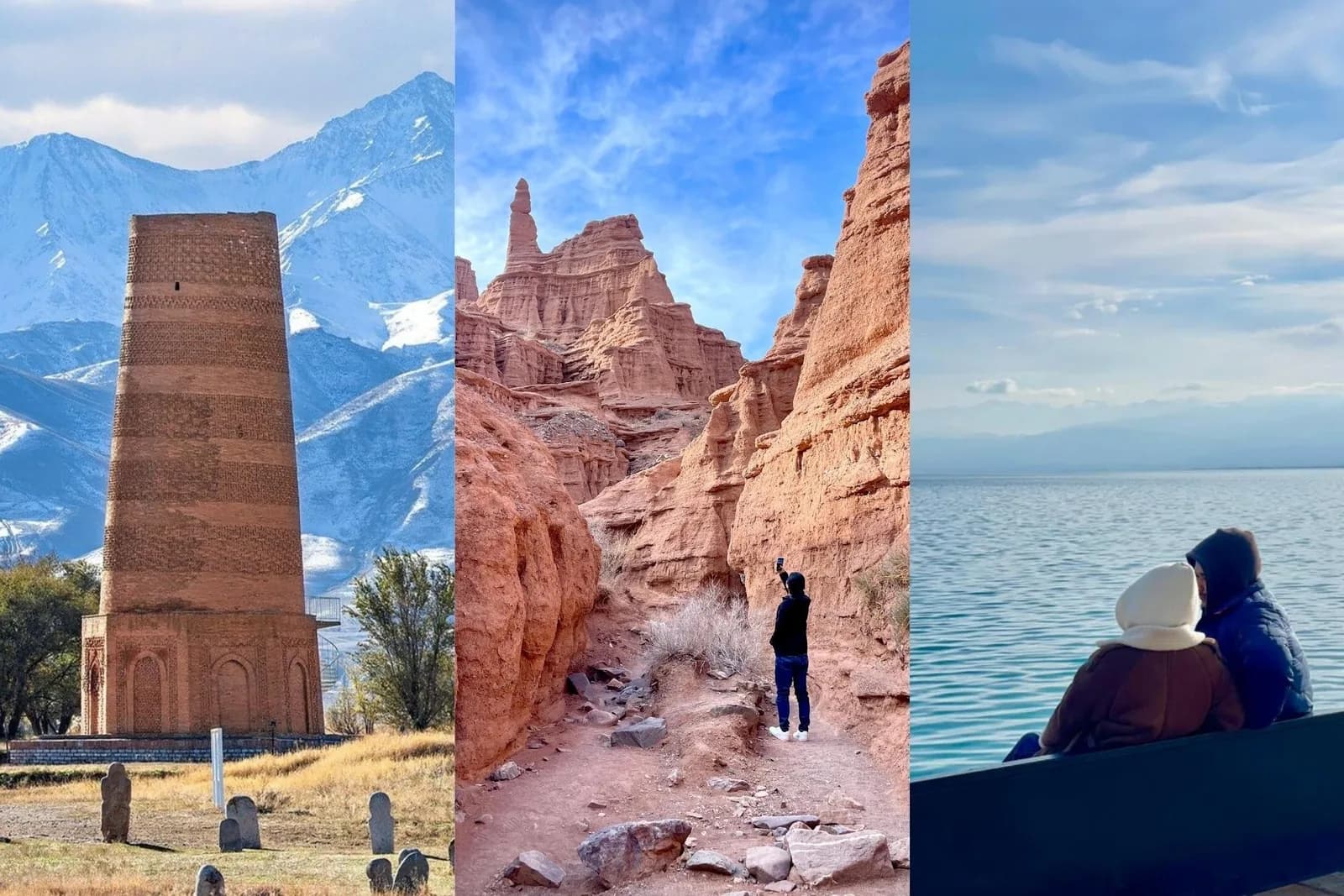
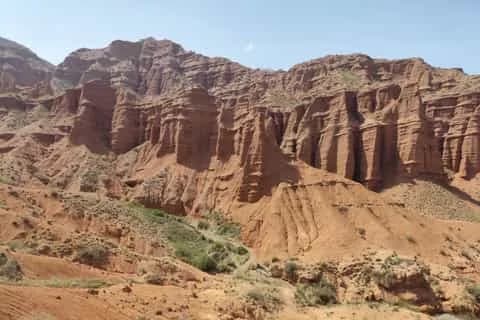
Skazka Canyon (Skazka means "fairytale" in Russian) is a compact maze of wind- and water-carved sandstone on the south shore of Lake Issyk-Köl (Issyk-Kul), a short walk off the main road near Tosor. The rock runs red, orange and ochre, eroded into ridges and spires that people read as castles, dragons and a miniature Great Wall. You need one to two hours, an entry fee of roughly 50 som (about US$0.60), and no special vehicle. Come in late afternoon and the whole place glows.
It is not a grand canyon in the American sense. It is small, playful and photogenic, and it sits perfectly on the slow, wild half of an Issyk-Köl loop. Treat it as a 90-minute stop woven into a south-shore day rather than a destination in its own right, and you will not be disappointed.
What you actually see
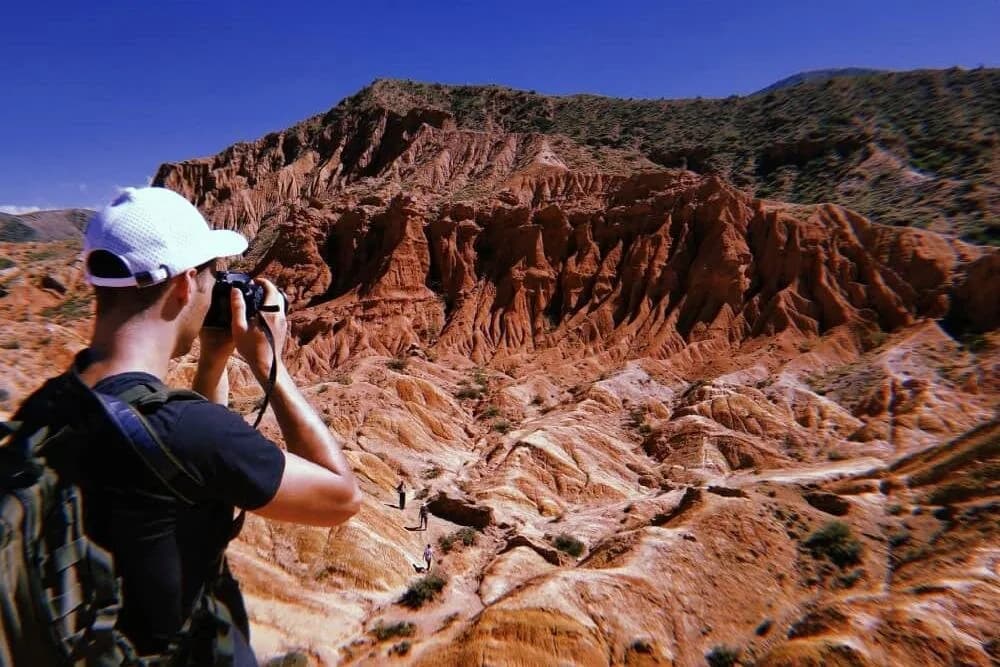
The canyon is a cluster of low sandstone ridges rising off the lakeshore plain, sculpted by centuries of wind and the occasional flash of water into fins, gullies and free-standing towers. The colour is the draw: deep rust reds, burnt orange and pale ochre banding, most intense when low sun rakes across the rock. Locals and guides have named the shapes over the years, so you will hear the same features pointed out again and again.
- The "Great Wall" — a long, crenellated ridge that genuinely does resemble a rampart, and the classic first view as you walk in.
- The "dragon" and "castle" formations — spires and blocky towers that reward a slow wander and a bit of imagination.
- The central gully and side ravines — sandy-floored channels you can walk straight up between the walls.
- The ridge-top viewpoint — a short scramble onto the spine gives you the whole field below and the blue of Issyk-Köl beyond.
There is little signage and no formal interpretation. This is a place to explore on foot and follow the informal paths, not to read plaques.
Skazka at a glance
| What to see | Walk time | Difficulty |
|---|---|---|
| "Great Wall" ridge (from car park) | 10–15 min return | Easy, flat sand |
| Central gully and towers | 30–45 min | Easy to moderate |
| Ridge-top viewpoint over the lake | 20–30 min return | Moderate, loose sandstone |
| Full unhurried wander | 1–2 hours | Easy overall |
None of it is technical. The one caution is the sandstone itself: it is soft and crumbly, so footholds break away on the steeper ridges, and it is slippery after rain. Wear shoes with grip and give the wet rock a wide berth.
How to get there
Skazka lies on the south shore between Tosor and Kaji-Say (Kadji-Say), roughly 120 km from Karakol at the eastern end of the lake and about 30 to 40 minutes' drive west of Bokonbayevo, the south shore's main town. From Bishkek it is a 4 to 5 hour drive. The turn-off is a short unsealed track leading a few hundred metres from the main road to a small car park and ticket kiosk; watch for it, because it is easy to sail past.
There is no public transport to the gate. Marshrutkas do run along the south shore, but they thin out sharply after mid-afternoon and will only drop you on the main road, leaving a walk in and, more awkwardly, an uncertain wait for a lift out. In practice you reach Skazka one of three ways:
- On a south-shore day tour or private taxi, usually out of Karakol or Bokonbayevo, often bundled with other stops. This is the simplest option and lets you time your visit for the good light.
- Self-drive from Bokonbayevo or Tosor. Contrary to older trip reports, you do not need a 4WD; ordinary cars manage the track fine in dry weather. Take it slowly after rain, when the surface turns greasy.
- By bike, if you are cycling the Issyk-Köl ring road — the south shore is the quieter, rougher, more scenic half and Skazka is a natural break.
If you are relying on shared transport, base yourself in Bokonbayevo for the night and arrange a taxi or tour from there rather than trying to do it as a through-trip.
Entry fee and hours
Entry is a token fee, most recently around 50 som per person (roughly US$0.60), cash only — there is no card machine at the kiosk, so carry small notes. Prices and staffing at these informal sites drift, so confirm the amount on the day and do not be surprised if it has crept up. The gate is open through daylight hours with no strict published opening times; it is essentially an open field with a ticket booth. Out of season, in the depths of winter, the kiosk is sometimes unstaffed and access is free — though the south-shore road and short daylight make a winter visit a different proposition.
Best light and how long to spend
Go in late afternoon. The rock is at its reddest and most three-dimensional when the sun is low and sidelong, and the shadows in the gullies give the formations their depth. Midday flattens the colour and, because there is no shade anywhere in the canyon, bakes you while it does. Early morning works too if your schedule demands it, but the afternoon light is the reason to plan your day around this stop.
Budget one to two hours. That is enough to walk the main gully, climb to the ridge for the lake view, and let the kids or the camera loose among the towers. Serious photographers linger longer for the last half hour before sunset; anyone treating it as a leg-stretch on a longer drive can be through in forty-five minutes.
Practical notes for the visit: bring water and sun protection. At around 1,600 m the ultraviolet is materially stronger than at sea level, and with no shade and pale reflective rock, burn times are short even when the air feels mild. A hat and high-factor sunscreen are not optional. Firm shoes beat sandals on the crumbly ridges.
Combining Skazka with the south shore
Skazka is at its best as one bead on a string. The south shore of Issyk-Köl is the wild counterpart to the resort-lined north, and a day threading its sights beats fixating on the canyon alone. Read our Lake Issyk-Köl guide for the full north-versus-south picture.
- Jeti-Ögüz (Seven Bulls) — a row of red sandstone fins and the separate Broken Heart Rock, in a green valley 25 to 30 km from Karakol at the eastern end. It pairs naturally with Skazka on a south-shore day out of Karakol; both are red-rock stops, but Jeti-Ögüz adds a valley walk, meadows and a Soviet-era spa. See the Jeti-Ögüz guide for the detail.
- Barskoon valley and waterfalls — about 90 km from Karakol, where four named cascades tumble out of the Terskey range and two roadside monuments mark Yuri Gagarin's 1965 visit to a nearby sanatorium (he came to recuperate, several years after the 1961 spaceflight, not straight after it as much travel copy implies). A longer detour than Skazka, and worth it if you have the day.
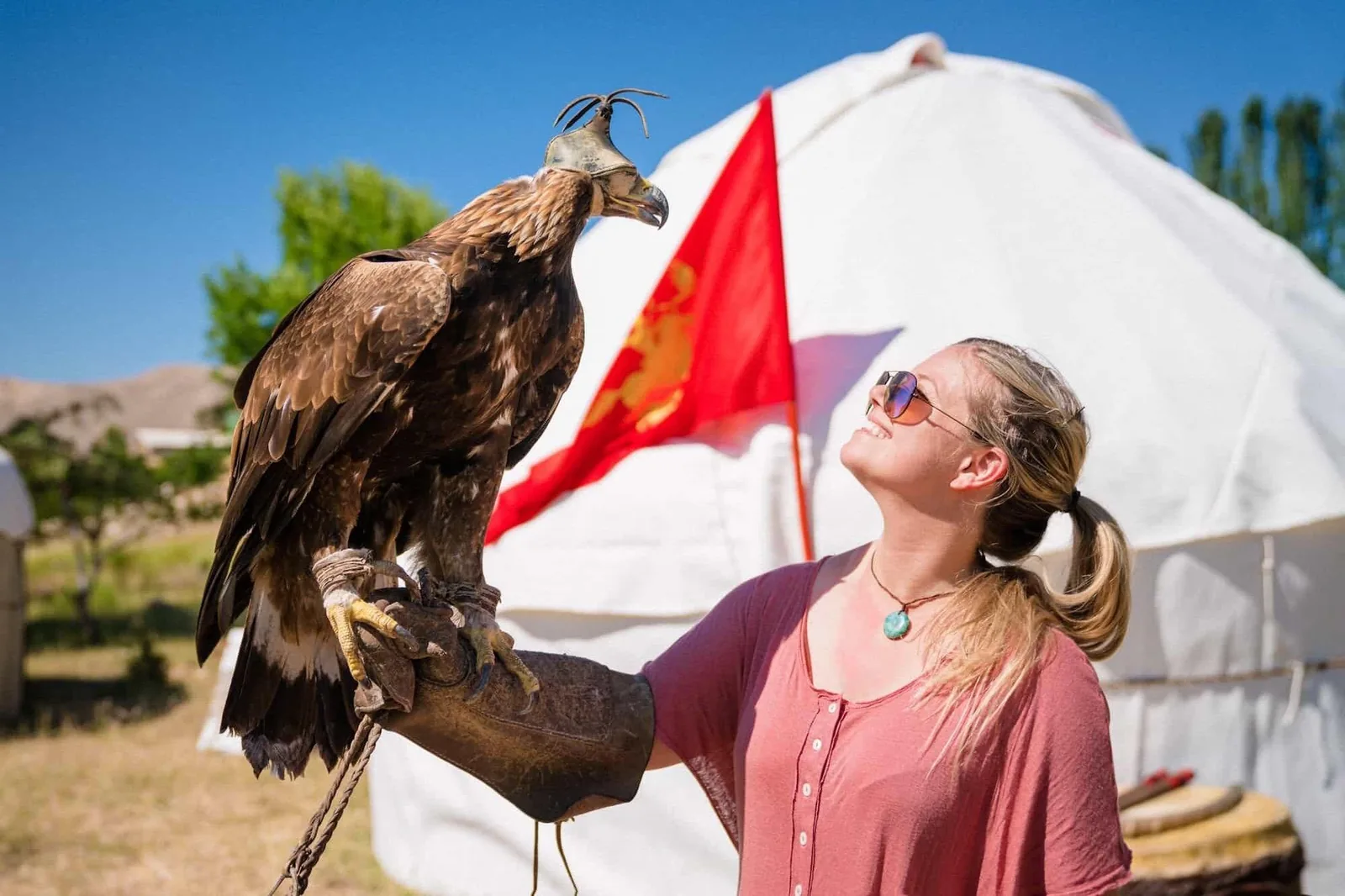
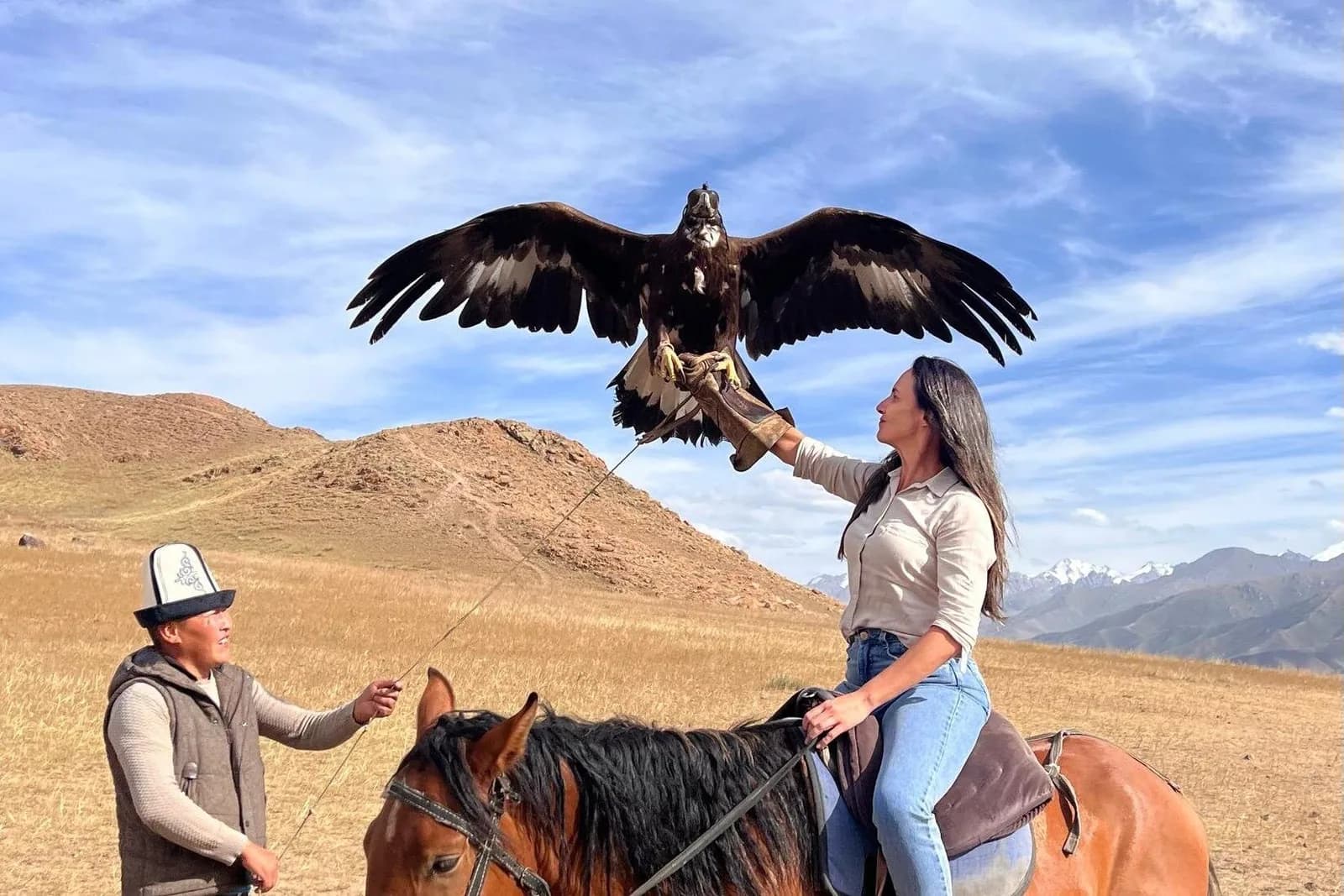
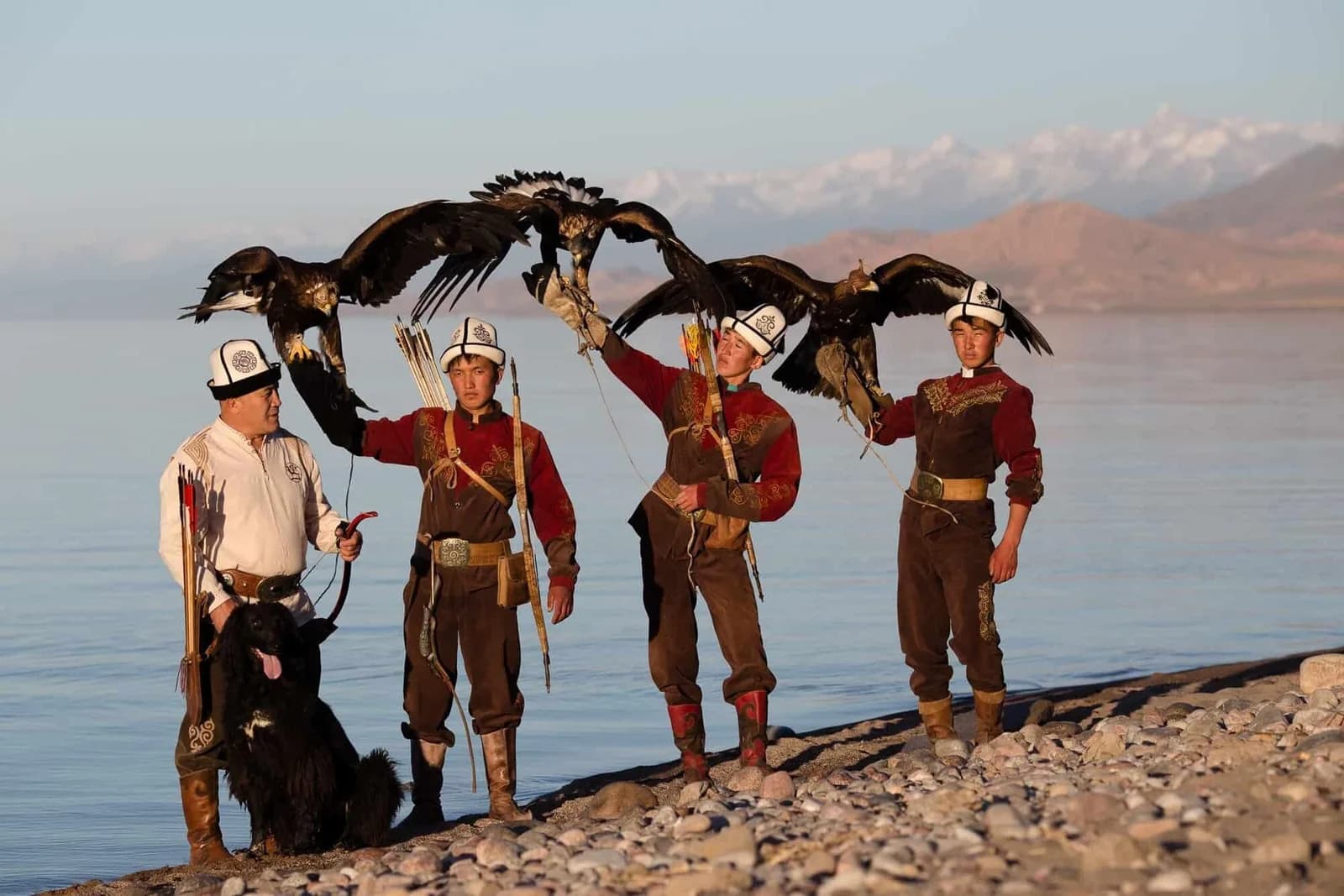
- Bokonbayevo and Kyzyl-Tuu — the south-shore hub is the place to see a berkutchi (golden-eagle hunter) give a demonstration, and the nearby village of Kyzyl-Tuu builds complete Kyrgyz yurts by hand. Book eagle displays through a guesthouse or community-tourism contact so the fee reaches the hunter.
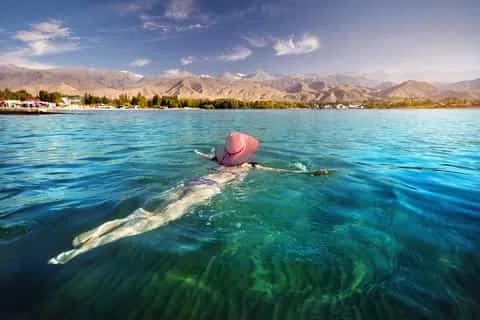
- The beaches — Tosor and Kaji-Say have the best sand on the lake, golden and far quieter than the north-shore strip. A swim after the canyon, from late June to early September, rounds off the day.
A sensible shape: base in Karakol, drive the south shore westward taking in Jeti-Ögüz, Barskoon and Skazka, and finish at a Tosor or Kaji-Say beach — or run it the other way from Bokonbayevo. If you would rather someone else handle the driving and timing, compare options in our roundup of the best Issyk-Köl tours, and use Karakol as your outdoor base at the lake's eastern end.
When to go
Unlike the high passes and jailoo yurt camps, Skazka is accessible for much of the year — it sits at lake level, not up a mountain. The comfortable window is roughly May to October, matching the wider Issyk-Köl season, with July and August busiest as domestic and Kazakh holidaymakers fill the shore. May and late September give you emptier rock and softer light but cooler swimming. Winter visits are possible and often free at the gate, but the road is patchier, daylight is short, and the beaches-and-canyon logic of the south shore collapses in the cold. For a full month-by-month view of the region, plan around the Issyk-Köl destination hub.
Skazka will not eat a whole day, and it should not. Slot it into a south-shore itinerary, arrive as the light turns, and it delivers exactly what its name promises.
Chat with a real person — free
Seif and the team reply on WhatsApp 24/7 — trip questions, custom plans and booking help.
Ask Seif on WhatsAppCommon questions
How much does it cost to enter Skazka Canyon?
Entry is a small fee, most recently around 50 som per person (roughly US$0.60), and it is cash only — there is no card machine at the kiosk, so bring small notes. Prices at informal sites like this drift over time, so confirm the amount on the day. In the depths of winter the booth is sometimes unstaffed and access is free.
How do you get to Skazka Canyon?
Skazka is on Issyk-Köl's south shore between Tosor and Kaji-Say, about 30 to 40 minutes west of Bokonbayevo, roughly 120 km from Karakol and 4 to 5 hours from Bishkek. There is no public transport to the gate. Most visitors come on a south-shore day tour or private taxi, or self-drive; marshrutkas only pass on the main road and leave you an uncertain wait for a lift out.
Do you need a 4WD to reach Skazka Canyon?
No. Despite older trip reports, an ordinary car handles the short unsealed access track fine in dry weather. The turn-off runs a few hundred metres from the main south-shore road to a small car park and ticket kiosk. Drive it slowly after rain, when the surface turns greasy, but a high-clearance vehicle is not required to visit.
How long should you spend at Skazka Canyon?
Budget one to two hours. That covers walking the central gully, scrambling onto the ridge for the view over Lake Issyk-Köl, and wandering among the towers. Photographers linger for the last half hour before sunset; anyone treating it as a leg-stretch on a longer drive can be through in about forty-five minutes. It is a compact site, not a full-day destination.
When is the best light at Skazka Canyon?
Late afternoon. The red, orange and ochre sandstone is at its most vivid and three-dimensional when the sun is low and sidelong, and the shadows in the gullies give the formations depth. Midday flattens the colour and, with no shade anywhere in the canyon, bakes you. Early morning works too, but plan your south-shore day around the afternoon light.
Why is it called Fairytale Canyon?
"Skazka" is the Russian word for fairytale, and the name comes from the shapes the eroded sandstone takes. Wind and water have carved the ridges into forms that people read as castles, dragons, spires and a miniature Great Wall. There is no single legend behind it; the name simply captures the storybook look of the rock in good light.
What should you bring to Skazka Canyon?
Water, sun protection and shoes with grip. At around 1,600 m the ultraviolet is much stronger than at sea level, and with no shade and pale reflective rock, burn times are short even when the air feels mild — a hat and high-factor sunscreen matter. The sandstone is soft and crumbly, so firm footwear beats sandals on the steeper ridges, especially after rain.
What can you combine with Skazka Canyon?
Skazka works best as one stop on a south-shore day. Pair it with Jeti-Ögüz's red-rock fins near Karakol, the Barskoon valley waterfalls and Gagarin monuments, an eagle-hunter demonstration at Bokonbayevo, and a swim at Tosor or Kaji-Say beach. A common shape is to drive the south shore between Karakol and Bokonbayevo, taking the canyon in the late-afternoon light.
Is Skazka Canyon worth visiting?
Yes, as part of a south-shore itinerary rather than a dedicated trip. It is small, playful and genuinely photogenic, and the one-to-two-hour walk is easy and family-friendly. Do not expect a grand canyon; expect a compact, colourful sandstone maze that rewards good light. If you are already exploring the quiet southern side of Issyk-Köl, it slots in perfectly.
Book it on This is Kyrgyzstan
Turn this guide into a trip
Kyrgyzstan's bestsellers
The experiences travelers book most, across the country
Keep reading
Boz-Uchuk Lakes Trek from Jyrgalan (2026)
A moderate 2–3 day trek to a string of alpine lakes above Jyrgalan — quieter than Karakol's classics, with community yurts, horses and clear DMO rates.
By TiK Editors8 min read
Tian Shan Traverse: Bikepacking Kyrgyzstan
The Tian Shan Traverse is a self-supported, mostly off-road bikepacking route of about 1,000 km across the high Kyrgyz mountains. Here's how to plan it.
By TiK Editors9 min read
Self-Guided Treks in Kyrgyzstan: Routes & How-To
Yes, you can trek Kyrgyzstan without a guide. The best self-guided routes, the ones to skip, and the maps, water and safety logistics that make it work.
By TiK Editors12 min read