 Image via GetYourGuide
Karakol Guide: Kyrgyzstan's Trekking Capital
Karakol travel guide: the wooden cathedral and Dungan mosque, the Sunday animal market, ashlan-fu, and the base for Ala-Köl and Altyn-Arashan.
Book it on This is Kyrgyzstan
Karakol · Turn this guide into a trip
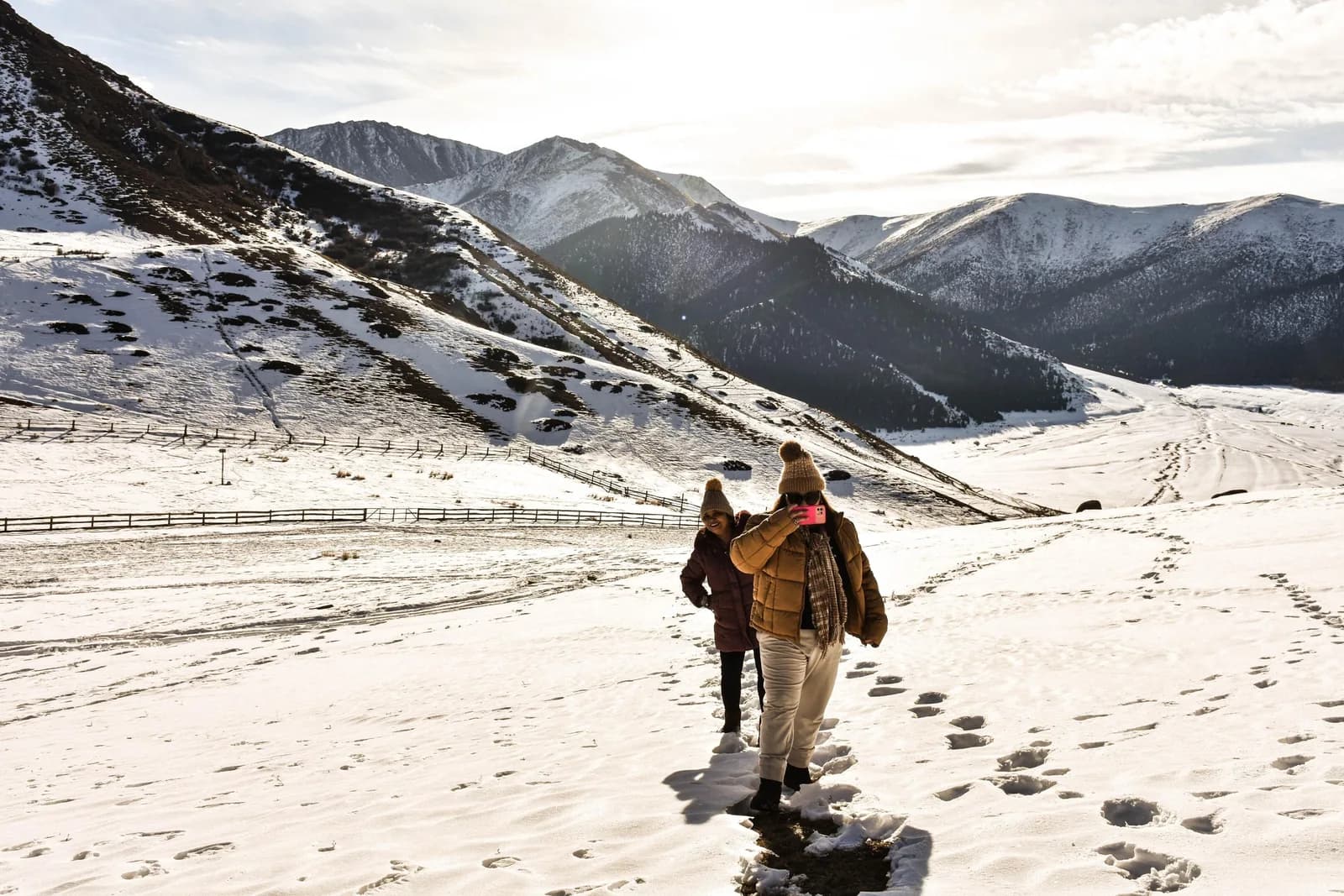
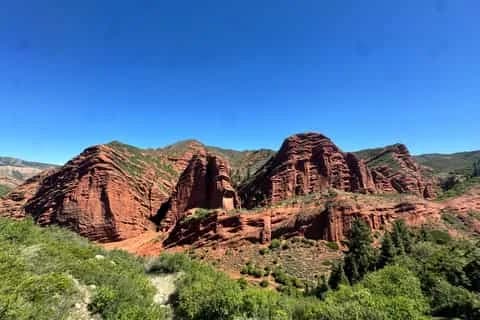
Karakol is the town every trekker in Kyrgyzstan ends up in. It sits at the far eastern tip of Issyk-Köl (Issyk-Kul), where the lake plain rises into the Terskey Ala-Too, and it is the launch pad for the country's best-known walks: Ala-Köl, Altyn-Arashan, Jeti-Ögüz. Give it two or three days for its own sights and food, then use it as a comfortable base for the mountains. Most people arrive from Bishkek (a 6–7 hour drive) or along the lake from Cholpon-Ata.
The town itself is a low grid of Russian gingerbread cottages, poplar-lined lanes and merchant houses, founded as a Tsarist garrison in 1869. It was renamed Przhevalsk after the explorer Nikolai Przhevalsky, switched names through the Soviet period, and reverted to Karakol in 1991. Four communities — Kyrgyz, Russian, Dungan and Uyghur — share the same few blocks, which is why the food here is the most interesting in the country.
Best things to do in Karakol
Here's the shortlist, roughly in the order most people rank them. The mountains are why you came; the town earns a day on either side.
- Trek to Ala-Köl lake. The turquoise glacial lake sits in a cirque at around 3,532–3,560 m, below a pass of roughly 3,860–3,900 m — a hard two- to three-day walk and the region's signature route. Go mid-July to mid-September, when the pass is reliably snow-free; see our Ala-Köl trek guide for the day-by-day.
- Soak at the Altyn-Arashan hot springs. A wide green valley of rustic pools at roughly 2,400–2,600 m under the pyramid of Peak Palatka, reached on foot (about 14 km, 5–6 hours), by 4x4 or on horseback. Guesthouses run May to October; many finish the Ala-Köl trek here. Details in the Altyn-Arashan trek guide.
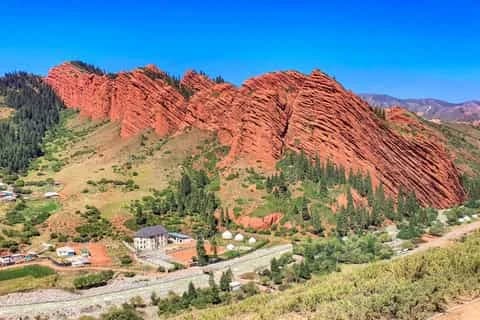
- Visit Jeti-Ögüz — the Seven Bulls. A wall of red sandstone cliffs about 25–30 km west, with the heart-shaped Broken Heart rock nearby and easy valley walks beyond. It's the gentlest of the three trips and a good scenic half-day; our Jeti-Ögüz guide covers getting to the Kurort.
- See the Dungan Mosque. A Chinese-Muslim timber mosque built between 1907 and 1910 in pagoda form, its joinery reputedly held together without a single nail. Central and free to admire; dress modestly and remove your shoes to go in.
- Step inside the Holy Trinity Cathedral. A five-domed Russian Orthodox church built entirely of wood, rebuilt after earthquakes and Soviet misuse, and still fragrant with beeswax and incense. It's a working church, so cover your shoulders.
- Get up early for the Sunday animal market. The Mal Bazaar on the edge of town is where herders haggle over sheep, horses and cattle in a churn of dust from first light. Go around 7am on a Sunday; it thins out by mid-morning.
- Eat ashlan-fu. Karakol's signature dish is a cold, sour, spicy Dungan noodle soup, eaten off a plastic stool in the bazaar for pocket change, usually with a fried dough patty on the side. You rarely find it done as well anywhere else in Kyrgyzstan.
- Ski the Karakol Ski Base in winter. Seven kilometres above town at around 3,040 m, billed as Central Asia's highest resort, with three chairlifts and over 20 km of runs through pine forest. The season runs roughly December to March; see our skiing in Kyrgyzstan guide.
- Pay respects at the Przhevalsky Memorial and Museum. The explorer's lakeshore grave, its 1893 bronze eagle and a museum of some 2,000 of his instruments, maps and specimens sit at Pristan-Przhevalsk, a few miles out of town. Worth an hour if you like history, skippable if you don't.
- Day-trip onto Issyk-Köl. Karakol anchors the far east of the great warm lake, so it's a natural base for a swim, the Cholpon-Ata petroglyphs or a loop along the quieter southern shore. The Lake Issyk-Köl guide has the wider itinerary.
Things to do in Karakol town
You can see the core of Karakol on foot in half a day. The local DMO, Destination Karakol, runs a donation-based walking tour (about 2.5 hours) that strings the main sites together and usually finishes in the bazaar with a bowl of ashlan-fu.
| Sight | What it is | Practical notes |
|---|---|---|
| Dungan Mosque | Chinese-Muslim timber mosque, built 1907–1910 in pagoda form, reputedly without a single nail | Central, free to look; dress modestly, remove shoes to enter |
| Holy Trinity Cathedral | Five-domed Russian Orthodox church, built of wood and rebuilt after earthquakes and Soviet misuse | Working church; incense, icons, cover shoulders |
| Przhevalsky Memorial & Museum | Explorer's grave, 1893 bronze eagle and a museum of ~2,000 of his instruments, maps and specimens | At Pristan-Przhevalsk on the lakeshore, a few miles outside town; entry roughly 50–100 som |
| Sunday Animal Market | Livestock bazaar (Mal Bazaar) where herders trade sheep, horses and cattle | Sunday only; go around 7am, winds down mid-morning |
| Bugu / central bazaar | Everyday market, and the place to eat ashlan-fu | Daily; the walking tour ends here |
The Dungan Mosque is the one people photograph. Chinese-Muslim (Dungan) craftsmen built it between 1907 and 1910 in the style of a Buddhist temple, with a swooping painted roof and joinery held together without nails, to a design credited to the master Zhou Xi. A short walk away, the Holy Trinity Cathedral is an all-timber Orthodox church with five green domes, still fragrant with beeswax and incense.
The Przhevalsky Memorial sits out at Pristan-Przhevalsk on the lake, not in the centre, so it needs a taxi. Przhevalsky died of typhoid near here in 1888 and was buried on the shore at his own request; the bronze eagle over the grave dates from 1893, and the museum (opened 1957) holds his expedition kit, maps, drawings and collected specimens. It is worth an hour if you like history, skippable if you don't.
If your visit spans a Sunday, set an alarm for the animal market on the edge of town. From first light, shepherds haggle over sheep, horses, cattle and the odd yak in a churn of dust and dealing. Go by about 7am; it thins out by mid-morning. It is one of the more memorable ordinary mornings you'll have in Kyrgyzstan.
Eating in Karakol: ashlan-fu and Dungan dinners
Karakol's signature dish is ashlan-fu, a cold, sour, spicy Dungan noodle soup that mixes wheat noodles with a jelly made from starch, doused in vinegar and chilli. You eat it from a plastic stool in the bazaar for pocket change, usually with a fried dough patty on the side. It is a Karakol thing; you rarely find it done well anywhere else.
Beyond the bazaar, the town's food scene runs on cultural dinners hosted by local families. Destination Karakol members put on Dungan family dinners in the nearby village of Yrdyk (founded by Dungan migrants in 1877), where you sit down to eight or more home-cooked dishes and can learn to make ashlan-fu or hand-pull noodles for Dungan lagman. There are Uyghur home-style dinners on a cushioned tapchan, Kyrgyz family meals in a yurt, and even Russian Cossack tables. Book a day ahead through the Visitor Center. For the wider picture on Central Asian food, see our Kyrgyz food guide.
Karakol as a trekking base
This is the real reason to come. The trailheads fan out just south of town, and Karakol has the guesthouses, gear shops, ATMs and trekking-info offices to sort you out before you walk. Note that the ATMs stop at Karakol — draw all your trail cash in town, because there are no card machines at the park gates or in the valleys.
| Trek / trip | Time | Highlight | Season |
|---|---|---|---|
| Ala-Köl Lake | 2–3 days | Turquoise glacial lake below a 3,860–3,900 m pass | Mid-July to mid-Sept (pass snow-free) |
| Altyn-Arashan | 1 day in, or overnight | Hot springs in a green valley under Peak Palatka | May–October |
| Jeti-Ögüz | Half to full day | "Seven Bulls" red cliffs and the Broken Heart rock | Year-round |
| Karakol Ski Base | Day trips | 20+ km of pisted and off-piste runs in pine forest | December–March |
| Jyrgalan | 2+ days | Backcountry/freeride powder village | December–March (ski); summer trekking |
Ala-Köl
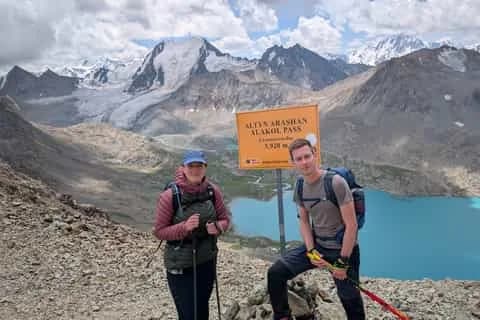
The Ala-Köl trek (spelled Ala-Kul, Ala Kol) is the region's signature walk and one of the finest in Central Asia. The standard three-day route runs from the Karakol valley up past the Sirota camp, over the Ala-Kul pass, and down to the Altyn-Arashan hot springs, so you finish sore and soak it off. The lake itself sits in a cirque at roughly 3,532–3,560 m; the pass above it is higher, around 3,860–3,900 m (sources differ, so treat both as a range). It is genuinely hard — over 1,100 m of ascent on pass day, almost all above 3,000 m, with a steep climb and a loose scree descent, and very little acclimatisation built in for people who arrived from Bishkek two days earlier. Altitude sickness is the commonest reason people turn back. Fit hikers used to Alpine hut-to-hut walking cope; day-hikers often struggle. There is no permit, but the Karakol National Park gate charges around 250 som per person plus roughly 100 som per tent, cash only. Our full Ala-Köl trek guide has the day-by-day.
Altyn-Arashan
Altyn-Arashan ("golden spa") is a wide green valley of rustic hot springs at roughly 2,400–2,600 m, framed by the pyramid of Peak Palatka. You can walk in — about 14 km, 5–6 hours up on a rough track — take a bone-shaking 4x4, or ride a horse. Many trekkers reach it as the last leg of the Ala-Köl route and soak away the pass. Simple guesthouses and yurt camps here run roughly May to October; expect a dorm bed from about 300–500 som, half board around 2,000 som, and hot-spring access for non-guests near 200 som (all confirm on the day). There are no restaurants, so you eat where you sleep. The Altyn-Arashan trek guide covers the routes in.
Jeti-Ögüz
Jeti-Ögüz — the "Seven Bulls" — is a wall of dramatic red sandstone cliffs about 25–30 km west of Karakol, with the heart-shaped Broken Heart rock nearby and gentle valley walks beyond at Kok-Jayik, roughly 6 km past the resort. It is the easiest of the three, a good scenic half-day, and doable on the public marshrutka; leave town by 8–9am and start back by mid-afternoon so you're in Karakol for dinner. Note that the Jeti-Ögüz village and the Jeti-Ögüz resort (Kurort) are different places 15 km apart, so tell your driver you want the Kurort. See the Jeti-Ögüz attraction page for what's there.
Karakol in winter: skiing
When the snow comes, Karakol swaps boots for skis. The Karakol Ski Base sits 7 km and about 30 minutes above town, topping out around 3,040 m — billed as the highest ski resort in Central Asia. It has three chairlifts, an altitude drop of roughly 740 m, and more than 20 km of runs from 400 m to 3.5 km long, most winding through pine forest, plus rentals and instructors. The lake, which never freezes, keeps the climate milder than the altitude suggests. Season runs roughly December to March.
For deeper, quieter snow, Jyrgalan village lies 60 km from Karakol at about 2,300 m and has become the country's top spot for freeride and backcountry, with guesthouses that arrange guides and gear. Neither is expensive by European standards.
Getting to Karakol
Karakol sits at the eastern end of Issyk-Köl, roughly a 6–7 hour drive from Bishkek along the lake.
| Route | Time | Rough fare |
|---|---|---|
| Bishkek → Karakol (shared minibus / GoBus) | 6–7 h | 750–800 som (~$9–10) |
| Bishkek → Karakol (private taxi) | 5–6 h | negotiate; far dearer |
| Cholpon-Ata → Karakol | 3+ h | south or north shore marshrutka |
- Shared minibus (marshrutka) or GoBus leaves Bishkek's Western Bus Station and takes 6–7 hours. The northern shore road is faster and busier; the southern shore is slower and prettier. Booking a private car lets you stop for Cholpon-Ata's petroglyphs or a swim.
- Coming around the lake, most travellers do a clockwise loop — north shore out to Karakol, south shore back — which is the standard Issyk-Köl itinerary. See the Lake Issyk-Köl guide and Cholpon-Ata guide.
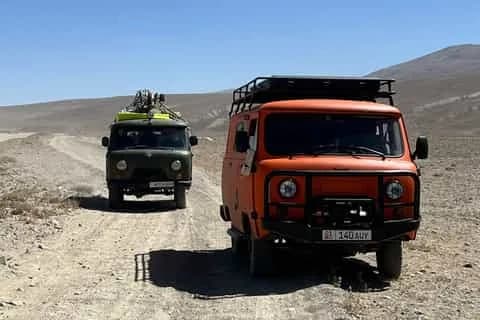
- To the trailheads: local marshrutkas do the work. Route 350 (about 30 som) runs toward Ak-Suu for Altyn-Arashan — make sure it's the one signed for the Ak-Suu resort, not just the village. Route 101 (about 10 som) serves the Karakol-gorge end for Ala-Köl. A marshrutka or shared taxi from the Ak-Tilek bazaar (around 100 som) reaches Jeti-Ögüz — insist on "Kurort" (resort), not the village. A 4x4 up to Altyn-Arashan or to the Sirota bridge shortcut is bookable in town.
Where to stay
Karakol's accommodation is dominated by warm, family-run guesthouses and homestays, and they are what we'd choose every time — they double as the best source of trail advice, transfers and hearty breakfasts. There's a good spread of trekker hostels, a handful of mid-range hotels, and simpler yurt-stays and guesthouses up in Altyn-Arashan and Jeti-Ögüz if you want to sleep closer to the mountains. Stay central for the mosque, cathedral and bazaar; stay in the valleys for silence and stars. Karakol is the cheapest of the lake bases for a night's sleep.
Book guides, horses and transfers through Destination Karakol (the local DMO) or a member operator rather than a Bishkek agency if you want your money to stay in the community; their office is on the town's main street. Browse organised options on our trekking tours and culture tours pages, or the Karakol destination hub.
Is it worth it?
Yes — but plan your days. Karakol is not a beautiful town in the postcard sense; its charm is the mix of peoples, the food, and above all the mountains at the end of every street. Give it three or four nights: one for the town and a Dungan dinner, the rest for a trek and a soak in Altyn-Arashan. Time a Sunday for the animal market if you can. Skip the Przhevalsky museum if history bores you, and don't underestimate the altitude on Ala-Köl.
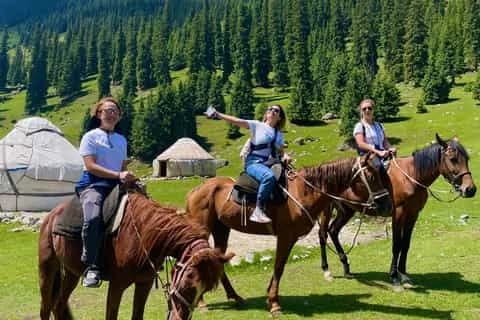
Ride from Karakol: the Karakol Gorge & Sary-Jaz route or Altyn-Arashan & Ala-Kul.
Chat with a real person — free
Seif and the team reply on WhatsApp 24/7 — trip questions, custom plans and booking help.
Ask Seif on WhatsAppCommon questions
How do you get from Bishkek to Karakol?
By shared minibus (marshrutka) or a scheduled bus like GoBus from Bishkek's Western Bus Station, taking 6–7 hours for around 750–800 som (about $9–10). A private taxi is faster at 5–6 hours but much dearer. The northern lake road is quicker; the southern shore is slower and more scenic. Booking a private car lets you stop at Cholpon-Ata or the lake on the way.
How many days should I spend in Karakol?
Three to four nights suits most people. One day covers the town — the Dungan Mosque, Holy Trinity Cathedral, the bazaar and a Dungan family dinner — and the rest go on the mountains: the Ala-Köl trek, a day or overnight at the Altyn-Arashan hot springs, or a half-day at Jeti-Ögüz. If you're only walking Ala-Köl, budget three days for the trek plus a night either side in town.
What is Karakol famous for?
Karakol is Kyrgyzstan's trekking capital and the base for Ala-Köl lake, the Altyn-Arashan hot springs and Jeti-Ögüz. In town it's known for the nail-free pagoda-style Dungan Mosque, the wooden five-domed Holy Trinity Cathedral, the Przhevalsky Memorial, the Sunday animal market, and its Dungan food — especially ashlan-fu, a cold, sour, spicy noodle dish. In winter it's the country's main ski town.
What is ashlan-fu?
Ashlan-fu is Karakol's signature dish: a cold, sour and spicy Dungan noodle soup that combines wheat noodles with a starch jelly, vinegar and chilli. You eat it cheaply from stalls in the bazaar, usually with a fried dough patty on the side. It's a Karakol speciality brought by the town's Dungan (Chinese-Muslim) community and hard to find done well elsewhere in Kyrgyzstan.
How hard is the Ala-Köl trek from Karakol?
It's hard, not a beginner's walk despite its popularity. The classic three-day route climbs over 1,100 m on pass day, mostly above 3,000 m, to a pass of around 3,860–3,900 m, with a steep ascent and a loose scree descent. The lake sits near 3,532–3,560 m. Little acclimatisation is built in, so altitude sickness is the commonest reason people turn back. Fit hikers used to Alpine walking cope well.
Do I need a permit or guide for Ala-Köl or Altyn-Arashan?
No trekking or border permit is needed for either. You do pay a Karakol National Park entry fee at the gorge gate — commonly around 250 som per person plus roughly 100 som per tent, cash only, so carry small notes and draw money in town. A guide isn't compulsory but is sensible for the Ala-Kul pass in poor weather; book through Destination Karakol or a local operator.
How do I get to the Altyn-Arashan hot springs?
Take marshrutka route 350 from Karakol (about 30 som) toward the Ak-Suu resort — check it's the resort service, not just Ak-Suu village. From the drop-off it's roughly 14 km and 5–6 hours on foot up a rough valley track. Alternatively hire a 4x4 or ride a horse, both bookable in town. The springs sit at around 2,400–2,600 m; simple guesthouses run May to October.
Can you ski in Karakol?
Yes. The Karakol Ski Base, 7 km and about 30 minutes above town, tops out near 3,040 m and is billed as Central Asia's highest resort. It has three chairlifts, over 20 km of runs through pine forest, and rentals and instructors, with a season running roughly December to March. For deeper backcountry powder, Jyrgalan village, 60 km away, is Kyrgyzstan's top freeride spot.
When is the best time to visit Karakol?
July to early September for trekking, when the Ala-Kul pass is reliably snow-free (roughly mid-July to mid-September) and the valleys are open. Altyn-Arashan guesthouses run May to October. For skiing, come December to March. May and October are shoulder months when high routes may still be shut, so plan around what you actually want to do.
Book it on This is Kyrgyzstan
Turn this guide into a trip
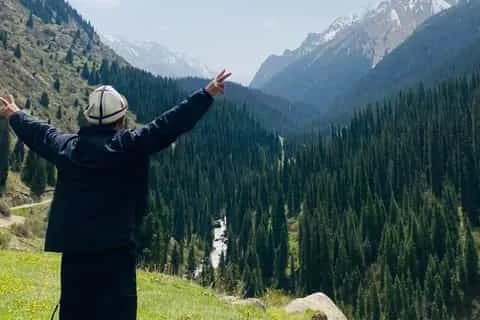
Kyrgyzstan's bestsellers
The experiences travelers book most, across the country
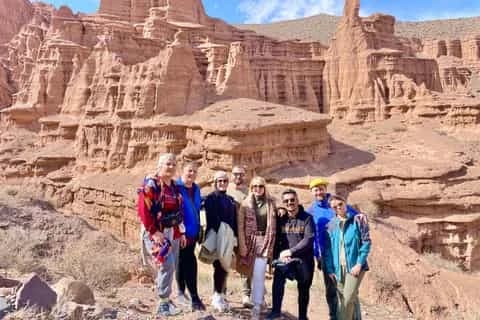
Keep reading
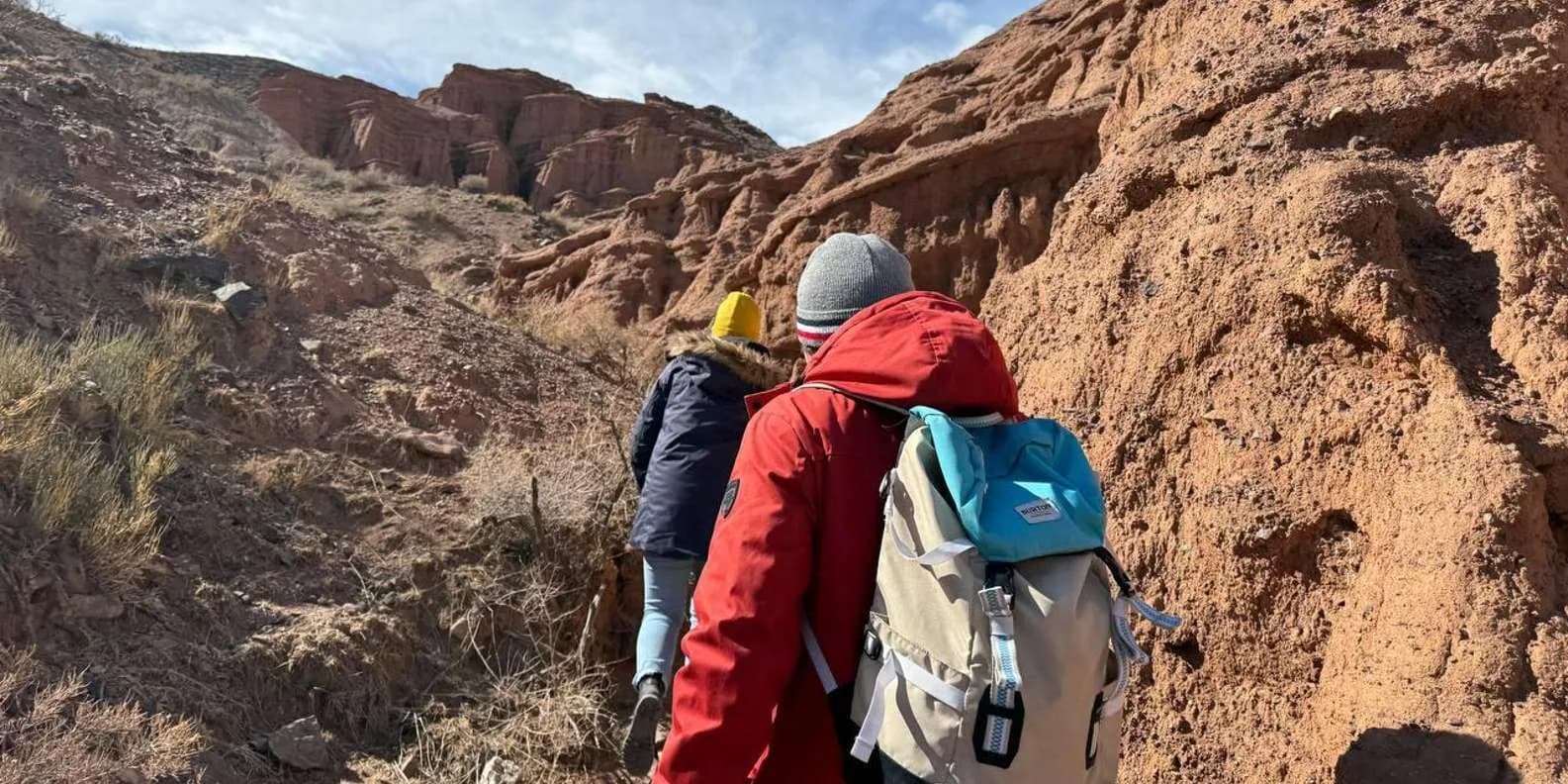
Issyk-Köl: North Shore vs South Shore
Which side of Lake Issyk-Köl to choose — the developed, beachy north shore around Cholpon-Ata, or the wild, scenic south with Skazka Canyon, Jeti-Ögüz and Barskoon.
By TiK Editors7 min read
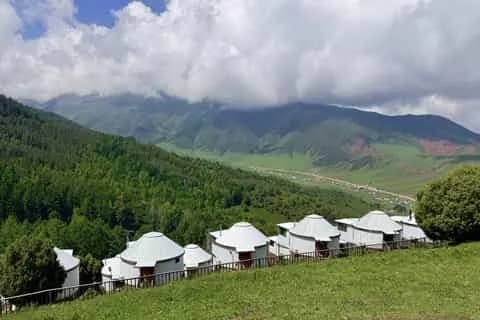
Karakol Animal Market: Sunday Mal Bazaar Guide
Karakol's Sunday livestock market runs from dawn to about 10am on the town's northeast edge. What you'll see, how to get there and market etiquette.
By TiK Editors7 min read
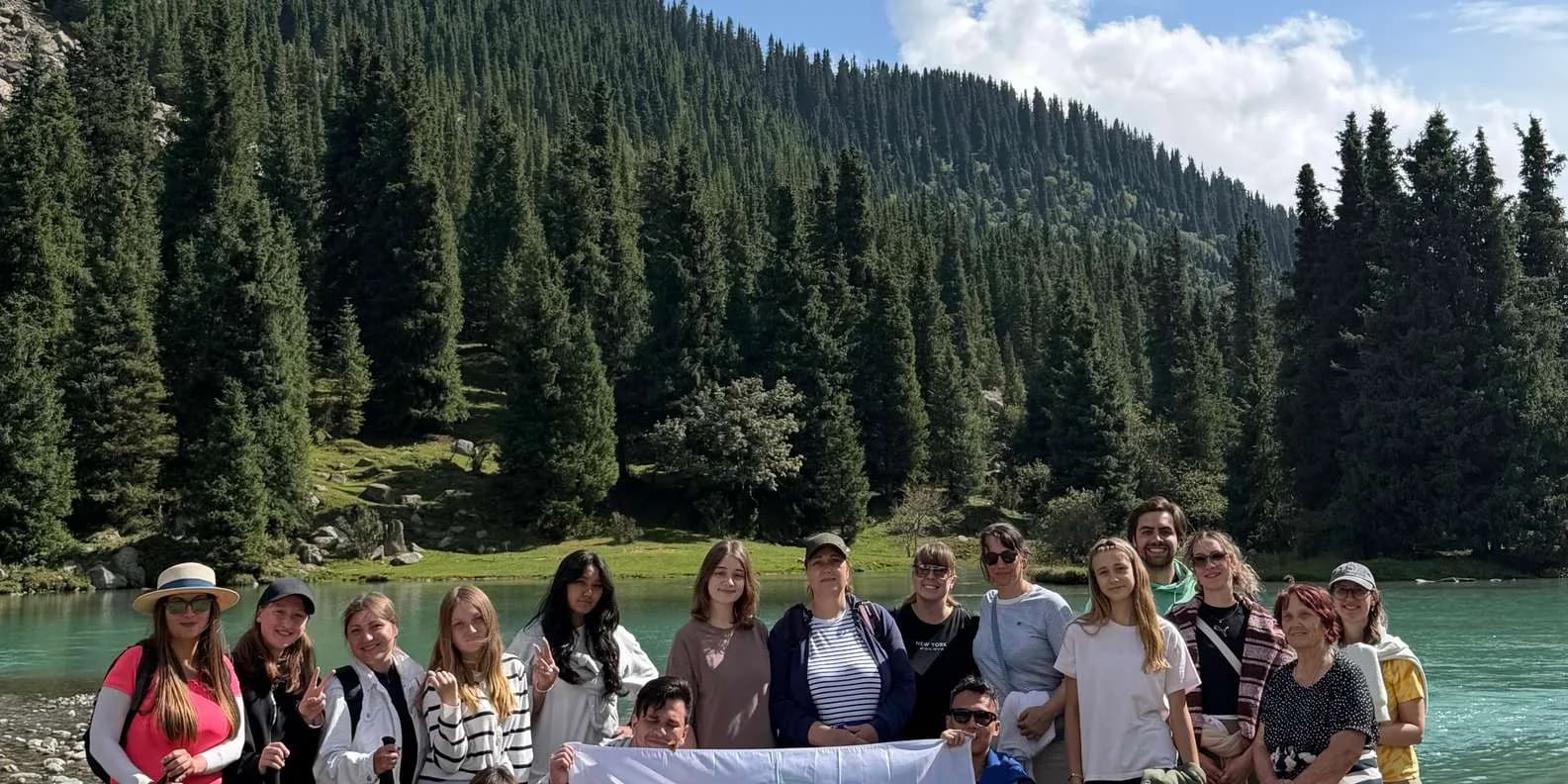
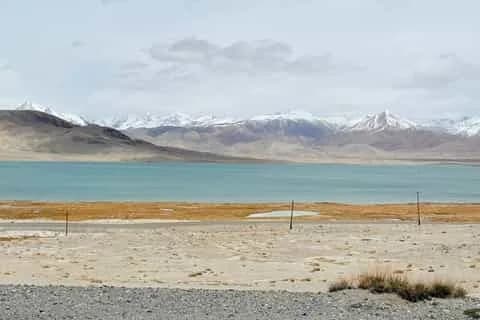
Song-Köl vs Issyk-Köl: Which Lake to Visit?
Song-Köl is a remote summer yurt lake at 3,016 m; Issyk-Köl a huge year-round resort lake. How they compare — and why you should do both.
By TiK Editors7 min read