 Image via GetYourGuide
Altyn-Arashan: Hot Springs Trek Above Karakol (2026)
Walk in or take the 4WD? A guide to the Altyn-Arashan valley above Karakol — the hot springs, guesthouses, costs, winter access and how long to stay.
Book it on This is Kyrgyzstan
Karakol · Turn this guide into a trip
 Original
Ala-Köl Lake 3-Day Trek from Karakol
14 Day Epic Kyrgyzstan Trek in Tian Shan and Pamir Alay Mountains
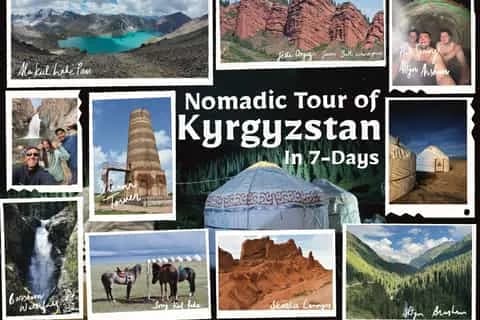
Kyrgyzstan 7-Days: Issyk Kul, Song Kul, Ala kul & Altyn Arashan

Day trip to Burana Tower plus hiking to waterfall and hot springs of Issyk-Ata
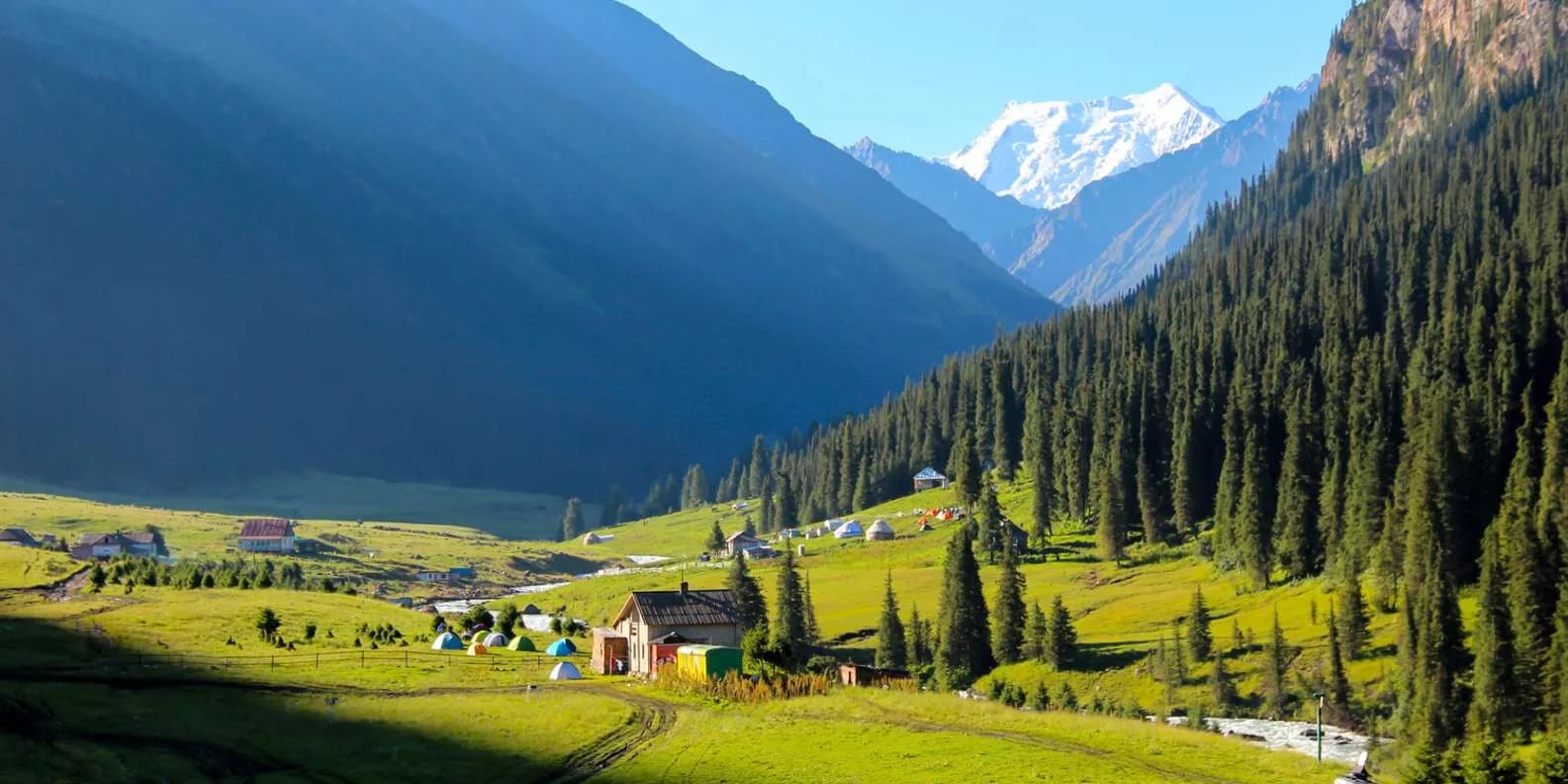
Altyn-Arashan ("golden spa" in Kyrgyz) is a meadow at the head of a spruce-walled valley about 20 km southeast of Karakol, where thermal water is piped into bath-sheds beside a few family guesthouses. You get there by walking 12–15 km up from the village of Ak-Suu — four to six hours, 800–900 m of climb — or by buying a seat in a Soviet-era 4WD that grinds up the same track in an hour and a half. Sources put the springs anywhere between about 2,400 and 2,600 m and genuinely disagree. Either way, it is the least demanding night deep in the high Tian Shan.
What the valley actually is
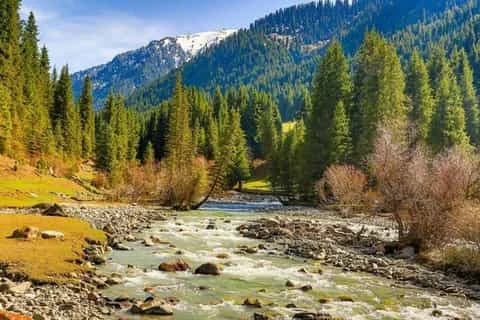
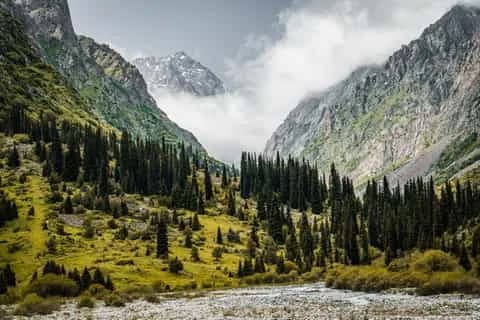
This is the upper Ak-Suu river — the Arashan — draining north out of the Terskey Ala-Too to the village of Ak-Suu, which almost everyone still calls Teploklyuchenka, "warm springs". Lower down the track runs through orchards, beehives and dark Tien Shan spruce; higher up it opens into a flat green meadow with the river braiding across it. Pik Palatka ("tent peak", for its shape) closes the southern end; Wikipedia gives it 5,020 m and Caravanistan 4,730 m, so sources differ there too. The whole valley lies inside the Arashan State Nature Reserve, home to bears and perhaps twenty snow leopards.
What Altyn-Arashan is not is a resort. No shop, no restaurant, no mains power, no useful signal — just a few simple houses and yurt clusters taking guests in summer, families who live here all year, and horses on the meadow. A wild setting in a working valley: that is the appeal.
Walk in, or take the 4WD?
Straight answer: walk up if you have the day and the legs; ride if you are short of time, carrying heavy bags, travelling with children or older parents, or arriving in shoulder season. Either way, almost everyone prefers walking down to walking up.
| On foot | Shared 4WD | On horseback | |
|---|---|---|---|
| Distance | ~12–15 km | ~14 km of jeep track | ~12–15 km |
| Time up | 4–6 hours (3–4 down) | 1.5–2 hours | 4–5 hours |
| Ascent | ~800–900 m | — | ~800–900 m |
| Cost | free | ~1,000–2,000 som per person shared (US$11–23); private jeep, several thousand | roughly 2,500–3,000 som/day (US$29–34) for horse and handler at local valley rates; hired elsewhere in the country the consensus band is $25–35 a day for the animal and a similar amount again for the horseman |
| Best for | fit walkers with a spare morning | short trips, heavy packs, bad weather | riders taking it slowly |
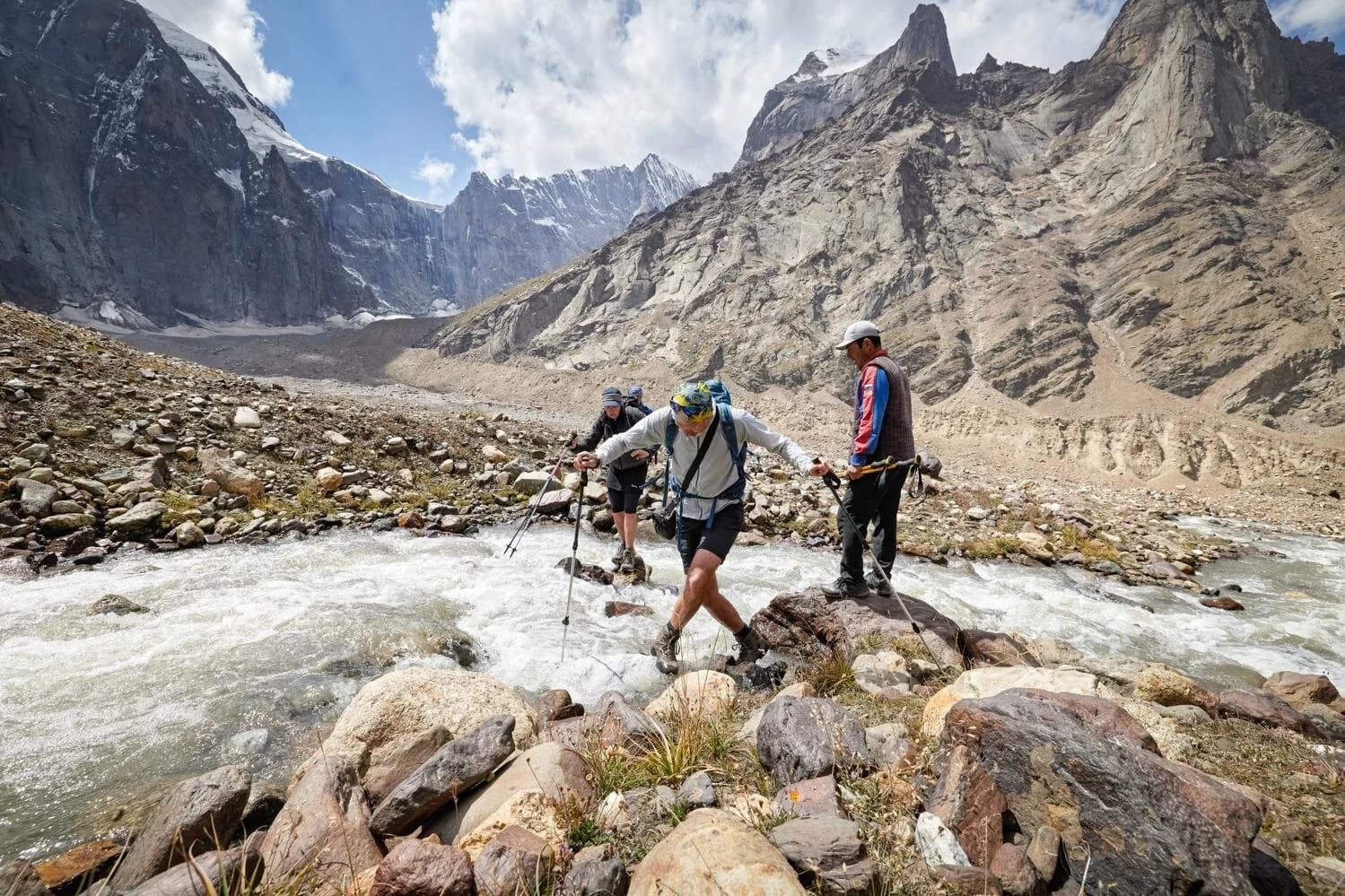
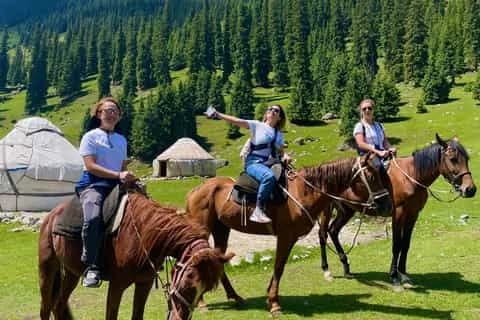
On horseback you cover the same track more slowly; arrange it in Karakol or in the valley. The walk follows the jeep track and the river the whole way. There is nothing to navigate — one valley floor, one river — and you cannot lose it in any weather. Steady, unspectacular, thoroughly pleasant, with a superb ending. Filter your water: the valley is grazed all summer and giardia is a real risk.
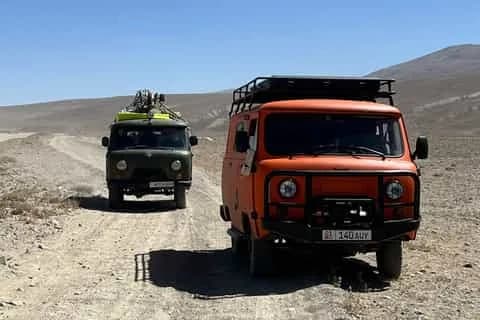
The 4WD is not a scenic drive. The vehicles are what the track demands — old UAZ vans and GAZ-66 trucks — and no ordinary car can do it, so don't try in a rental sedan. Ninety minutes of lurching over boulders at walking pace leaves plenty of people concluding they would rather have walked, and if you get carsick, you will. Seats fill fastest in the morning; your guesthouse can find you one for the way down.
Getting to Ak-Suu from Karakol
Marshrutka 350 runs from Karakol to Ak-Suu all day; Destination Karakol lists departures roughly every ten minutes from 07:20 at 50 som per person plus 30 som for a trekking pack. Older sources still quote 25–30 som; carry small notes and expect drift. A taxi over the same 12–15 km is 200–300 som per car. The valley entrance charges a cash reserve fee — about 220 som per foreign visitor plus 80 som per car at 2025 rates, though sources report anything from 50 to 250 som. More on fares in our guide to getting around Kyrgyzstan.
The hot springs: baths, not a spa
Three groups of nitric, sulphurous springs rise on the river's right bank, and each guesthouse pipes its own into a bathhouse — a concrete or wooden tub in a shed, with a cold tap or a bucket of river water to bring the heat down. Two or three places have open-air pools where you lie in hot water and look at the peaks; those are worth waiting for. Reported temperatures run from roughly 35°C to 50°C, so scalding is normal and cooling it is your job.
A soak is usually included if you are staying; non-guests are commonly charged around 200 som (a little over US$2). Tubs are used by one party at a time in 20- to 30-minute slots, so the mixed-or-segregated question rarely arises; at a shared pool, swimwear is the norm. Bring a swimsuit, keep soap out of the water, rinse the tub, and don't overstay while wet trekkers queue.
Where to stay, and what it costs
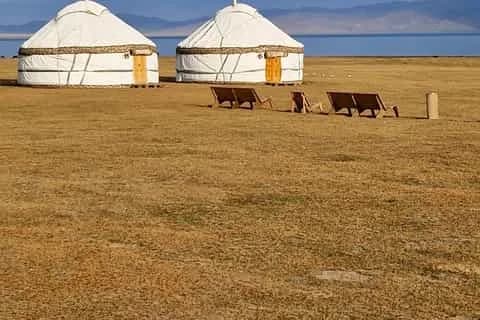
Everything is simple and family-run: a bed in a shared room or a yurt, foam mattresses and heavy quilts, a wood stove, an outside long-drop, no shower but the spring. Meals come with the room: bread, jam, kaimak and eggs in the morning, shorpo, laghman or plov at night.
Reported 2024–26 prices vary widely: dorm beds from about 300 som, 2,100 som (roughly US$24) for half board, and figures between US$10 and US$20 in between. Budget 1,000–2,500 som per person per night (US$12–29) with dinner and breakfast. Your own tent on the meadow is free or near enough.
We deliberately name no guesthouses: places here are bought, renamed and rebuilt, almost none has a booking page, and which business trades under which name in 2026 could not be verified. Book through Destination Karakol, the town's DMO, or simply turn up — beds are rarely all gone, though August weekends can be tight.
Cash only. No ATM past Karakol, no card machine in the valley, no phone payments. Draw everything in town in small notes; our cost and budget guide covers the rest of the trip.
Signal and power
Coverage ranges from nothing to a wavering bar on a hillside, so download offline maps in town. Power is solar and the odd generator, run for a couple of evening hours if at all — bring a power bank and expect no wifi.
What to do from the valley
Ideally, not much. Beyond soaking:
- Up-valley towards Palatka. The best half-day: follow the valley south towards the peak's base for the view into the snow. Gently rising, two to four hours return.
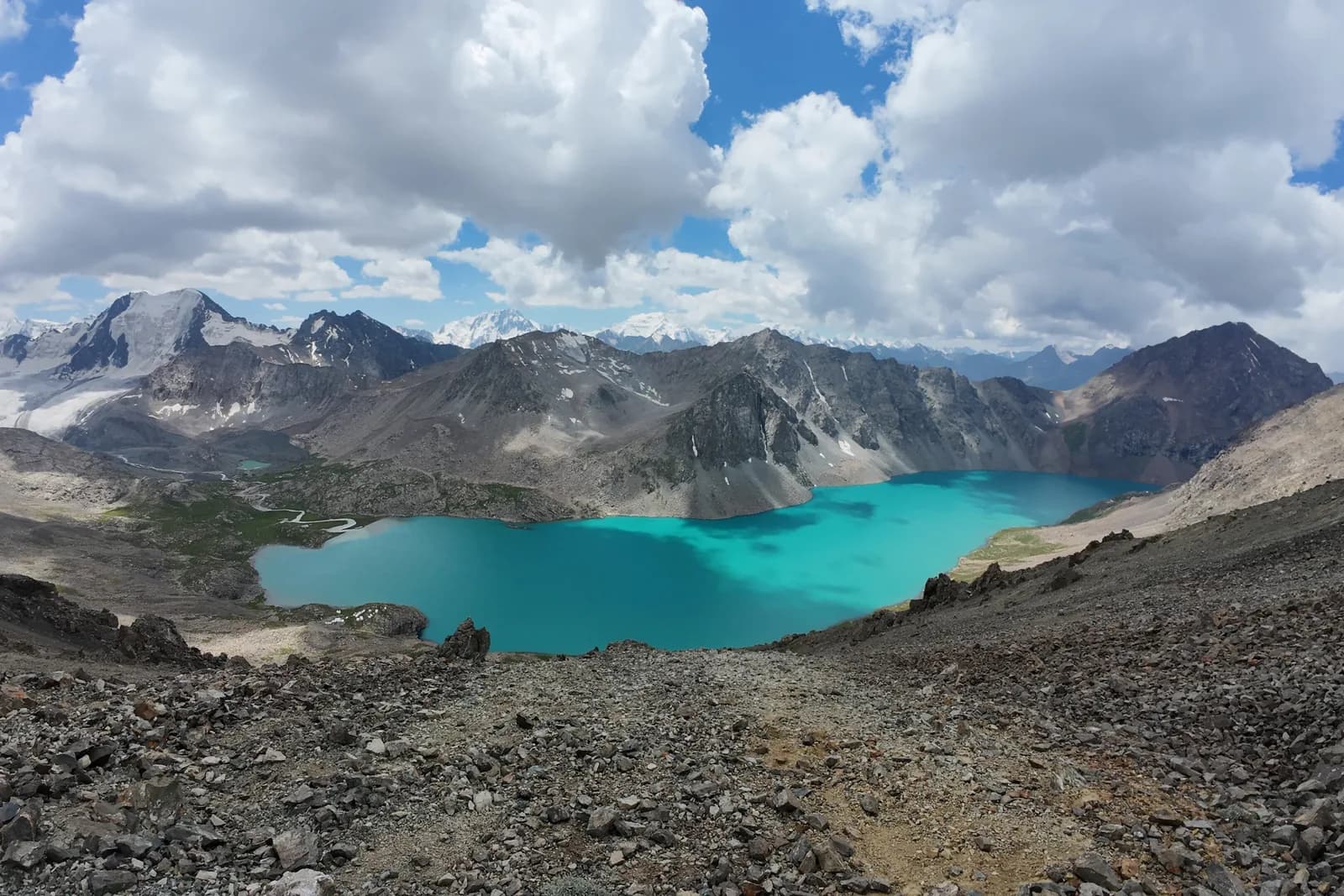
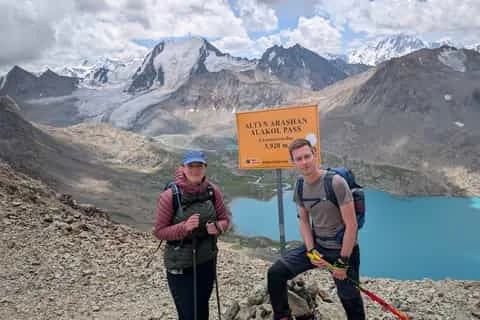
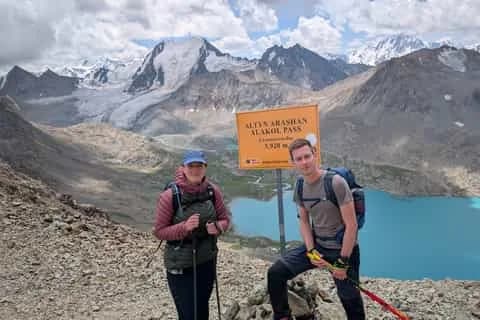
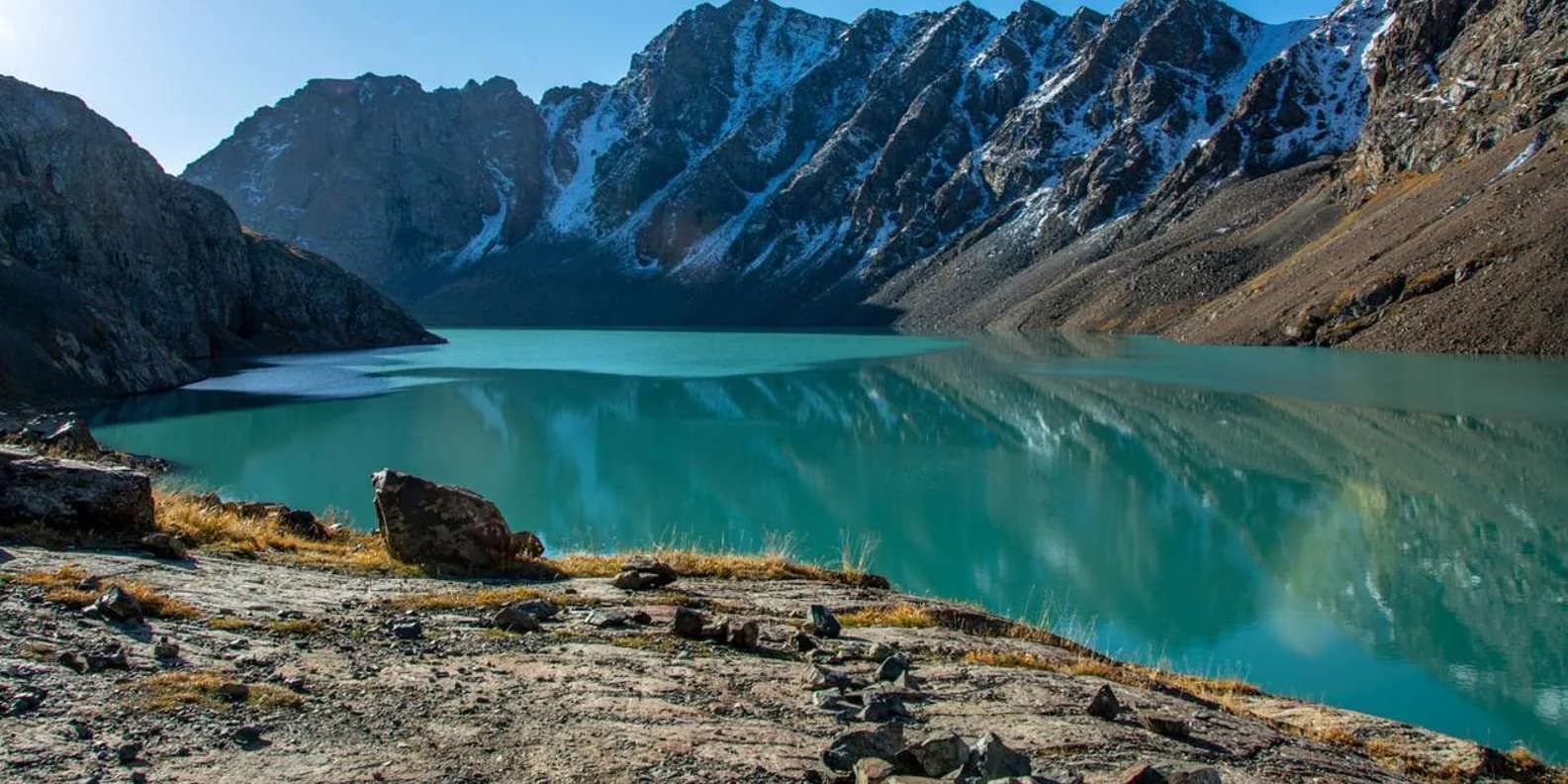
- The Ala-Kul pass. The trail turns west up the Keldike side valley to roughly 3,860–3,900 m, with Ala-Köl lake beyond — 7–8 punishing hours as a return day. Most people cross it on the through-trek, covered in the Ala-Kul trek guide.
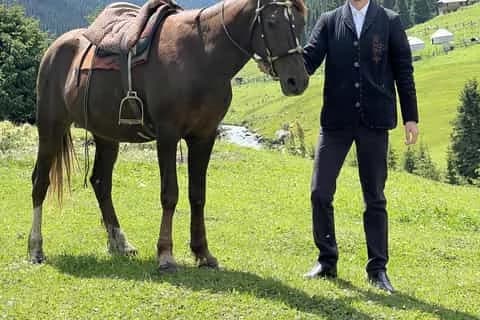
- Horses. Guesthouses will put you on one for a few hours, a day, or a multi-day link towards Jyrgalan and Jeti-Ögüz. The valley is also a base camp for Peak Karakol (5,281 m) — mountaineering, not trekking.
Altyn-Arashan in winter
The valley does not close, but most of its infrastructure does: a few families stay through the winter and the odd guesthouse with them, while the rest shut from roughly October to May. The track is sometimes driveable by a UAZ and sometimes not — snow depth and whether anyone has been up recently decide it, and nobody will promise access more than a day or two ahead. Don't build a tight itinerary around it.
Get up there, though, and it is the best version of the place: hot water, deep snow, silence, nobody else. Karakol's winter has grown fast — the ski base 7 km from town covers roughly 1,800–3,040 m from late November to late March, January is the dependable powder month, and ski touring and freeride out of Karakol and Jyrgalan increasingly use these valleys. Go with an operator who reads the avalanche picture; the Ala-Kul pass is a winter mountaineering objective, not a walk.
Season, and when the valley alone is the trip
- Mid-June to September — main season, guesthouses open, meadow green. The through-trek over the pass to Ala-Köl is reliable roughly mid-July to mid-September.
- Late May and October — quiet and cheap, some guesthouses open, the pass shut, nights cold. This is when Altyn-Arashan is the trip rather than a stage of one.
- November to April — winter conditions, access uncertain.
Karakol at about 1,775 m averages 11–26°C in July and -14 to -5°C in January; the valley is higher and can freeze on any summer night. Afternoon cloud and storms are the summer pattern — see our trekking in Kyrgyzstan overview.
One night or two?
One night: early marshrutka to Ak-Suu, walk up in about five hours, soak, eat, sleep, walk down after breakfast, back in Karakol by mid-afternoon. Doable, and slightly rushed.
Two nights: same arrival, then a free day — Palatka in the morning, a second soak in the afternoon — out on day three. This is the version people are glad they chose; one soak is never enough.
What to bring, and leaving it as you found it
Warm layers and a hat for any month, swimsuit and towel, sandals for the bathhouse, head torch, power bank, water filter, snacks (there is no shop) and small som notes. Bedding is supplied unless you camp. To fit the valley into a longer route, see our two-week itinerary.
Visitor numbers have climbed fast and the valley has no waste system — everything left behind goes out on a horse or in a truck. Carry your rubbish to Karakol, keep soap out of the springs, and spend locally: a bed, a meal and a horse hired here pay the families who live up here all winter.
The verdict
Go if you want serious mountains without a serious trek and are content with a long-drop, a wood stove and no phone. Few places let you leave town after breakfast and sit in a hot bath under a 5,000 m peak by evening. You will be underwhelmed if you expect a spa, or need something to do every hour.
Ready to go up? Browse guided trekking trips that use the valley as a base, and read the Karakol guide for where to eat and stock up before you leave town.
See the guesthouse yurt stays up here by area, and the horse treks that pass through.
Book it: ride the Altyn-Arashan & Ala-Kul route and stay at Altyn-Arashan yurt camp.
Chat with a real person — free
Seif and the team reply on WhatsApp 24/7 — trip questions, custom plans and booking help.
Ask Seif on WhatsAppCommon questions
How long does it take to walk to Altyn-Arashan?
Four to six hours from Ak-Suu village, covering roughly 12–15 km and 800–900 m of ascent on a rough jeep track beside the river. Coming back down takes three to four hours. There is no route-finding involved — the valley has one floor and one river, and the track is impossible to lose in any weather.
Can you drive to Altyn-Arashan in a normal car?
No. The 14 km track from Ak-Suu needs high clearance and short overhangs; the vehicles that run it are old UAZ vans and GAZ-66 trucks. A rental sedan or crossover will not make it, and attempting it risks damage you will pay for. Take a shared 4WD from Ak-Suu, or walk.
How much does the 4WD to Altyn-Arashan cost?
Roughly 1,000–2,000 som per person (about US$11–23) in a shared vehicle, depending on season and how full it is; a private jeep runs to several thousand som. The drive takes about an hour and a half. Arrange it in Ak-Suu on the day, or pre-book through Destination Karakol.
How high is Altyn-Arashan?
Sources disagree. Wikipedia puts the resort at 2,350–2,435 m; most tourism sources say around 2,600 m. Treat it as roughly 2,400–2,600 m. Either way it is low enough that altitude sickness is unlikely — the risk starts on the Ala-Kul pass above, at roughly 3,860–3,900 m.
Can non-guests use the hot springs?
Usually yes. Guesthouses commonly charge non-guests around 200 som (a little over US$2) for a slot in their bathhouse, though it is at the owner's discretion and busy evenings get booked out. If you are staying the night, a soak is normally included in the room rate.
Is Altyn-Arashan open in winter?
Partly. A few families live in the valley year-round and the odd guesthouse stays open, but most shut from about October to May. The track is driveable by UAZ or tracked vehicle when snow allows and impassable when it doesn't, so access cannot be guaranteed. Ask in Karakol a day or two ahead.
Do you need to book a guesthouse in advance?
Not usually. Beds in the valley are rarely all taken and walk-ins are normal, though August weekends can be tight. Almost no guesthouse has working online booking, so the practical route is Destination Karakol in town, or simply turning up. Bring cash — nowhere in the valley takes cards.
Is there a permit or entrance fee for Altyn-Arashan?
No trekking permit is needed, but a nature-reserve fee is collected in cash at the valley entrance: about 220 som per foreign visitor plus roughly 80 som per car at 2025 rates, with other sources reporting 50–250 som. Carry small som notes; there is no card payment and no ATM past Karakol.
Is there phone signal or wifi in Altyn-Arashan?
Barely. Coverage runs from nothing to an intermittent bar if you climb a hillside, and there is no reliable wifi. Power comes from solar panels and occasional generators run for a few hours in the evening. Download offline maps in Karakol, bring a power bank, and plan to be uncontactable.
Book it on This is Kyrgyzstan
Turn this guide into a trip



Kyrgyzstan's bestsellers
The experiences travelers book most, across the country
Attractions in this guide
Keep reading
Jyrgalan Valley Trekking Guide (2026)
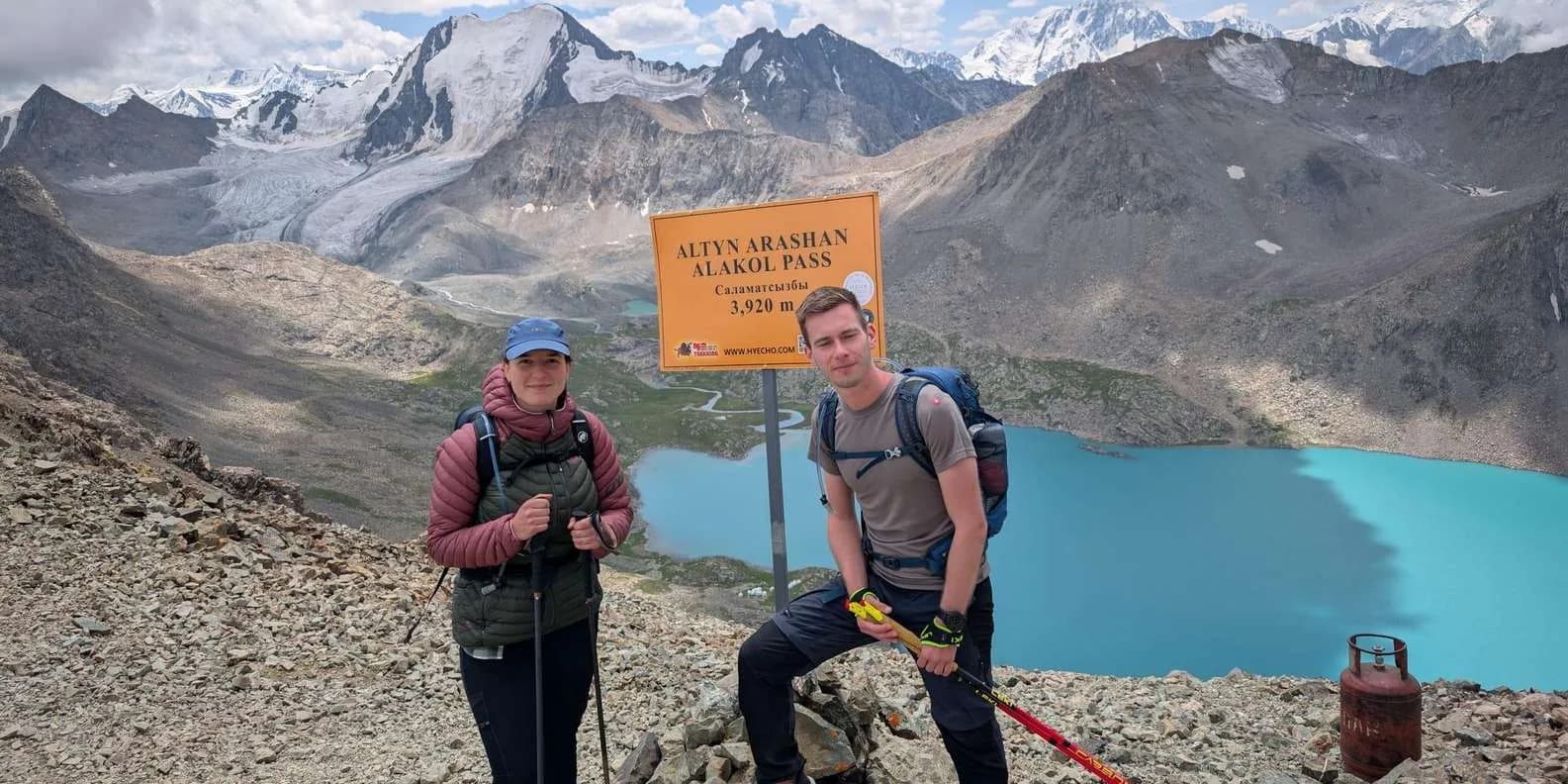
A former Soviet coal village 60 km east of Karakol, now Kyrgyzstan's quietest, best-marked community trekking and ski-touring hub. Routes, seasons, how to book.
By TiK Editors8 min read
Ala-Kul Trek Kyrgyzstan: The Complete 3-Day Guide
How hard the Ala-Kul trek really is, how many days it takes, whether you need a guide, and when the 3,860–3,900 m pass is actually clear of snow.
By TiK Editors9 min read
Trekking in Kyrgyzstan: Routes, Seasons & Costs
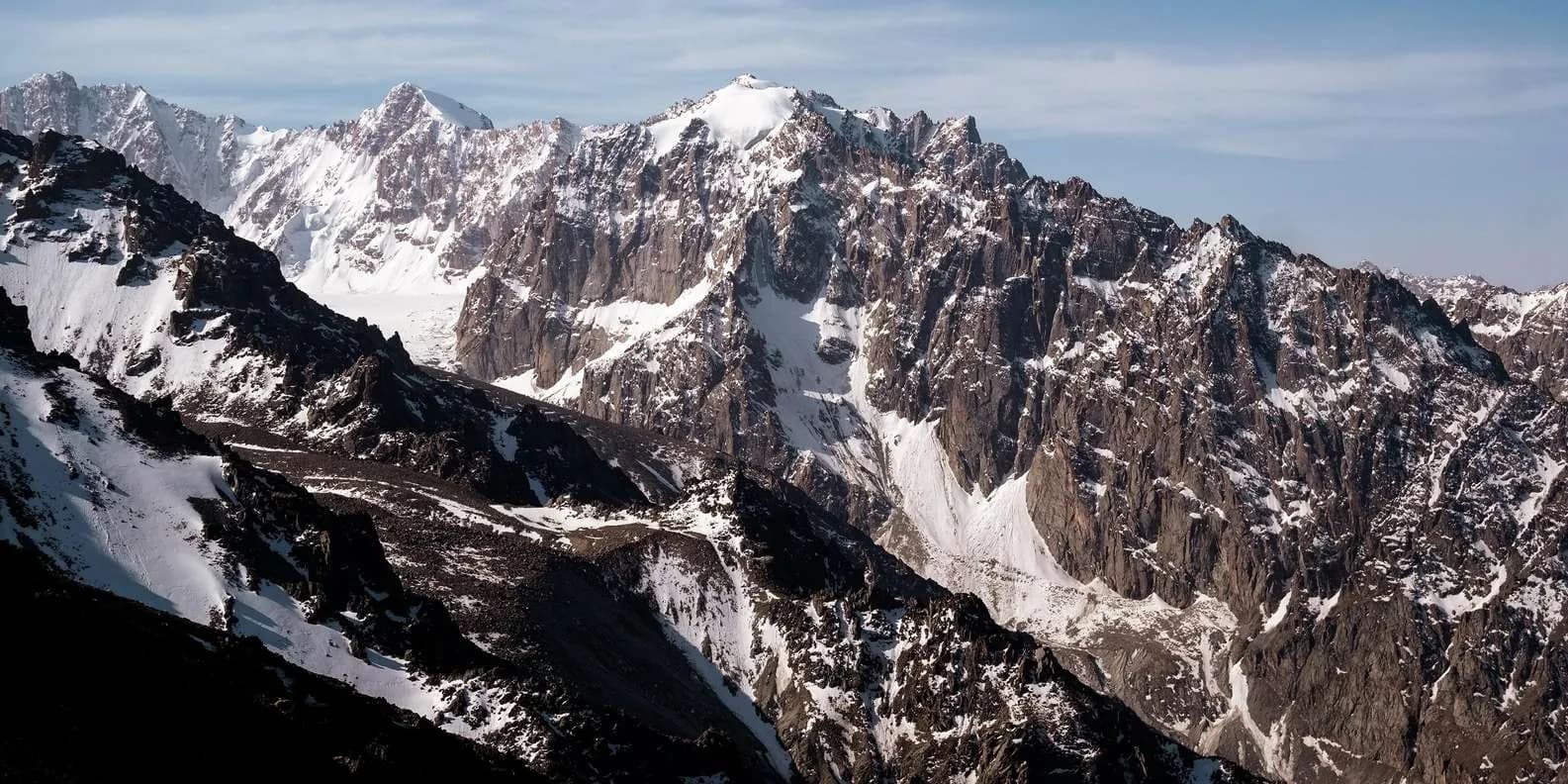
The complete trekking overview for Kyrgyzstan: the classic routes compared, when to go, altitude and AMS safety, permits, gear and real costs in som and USD.
By TiK Editors12 min read