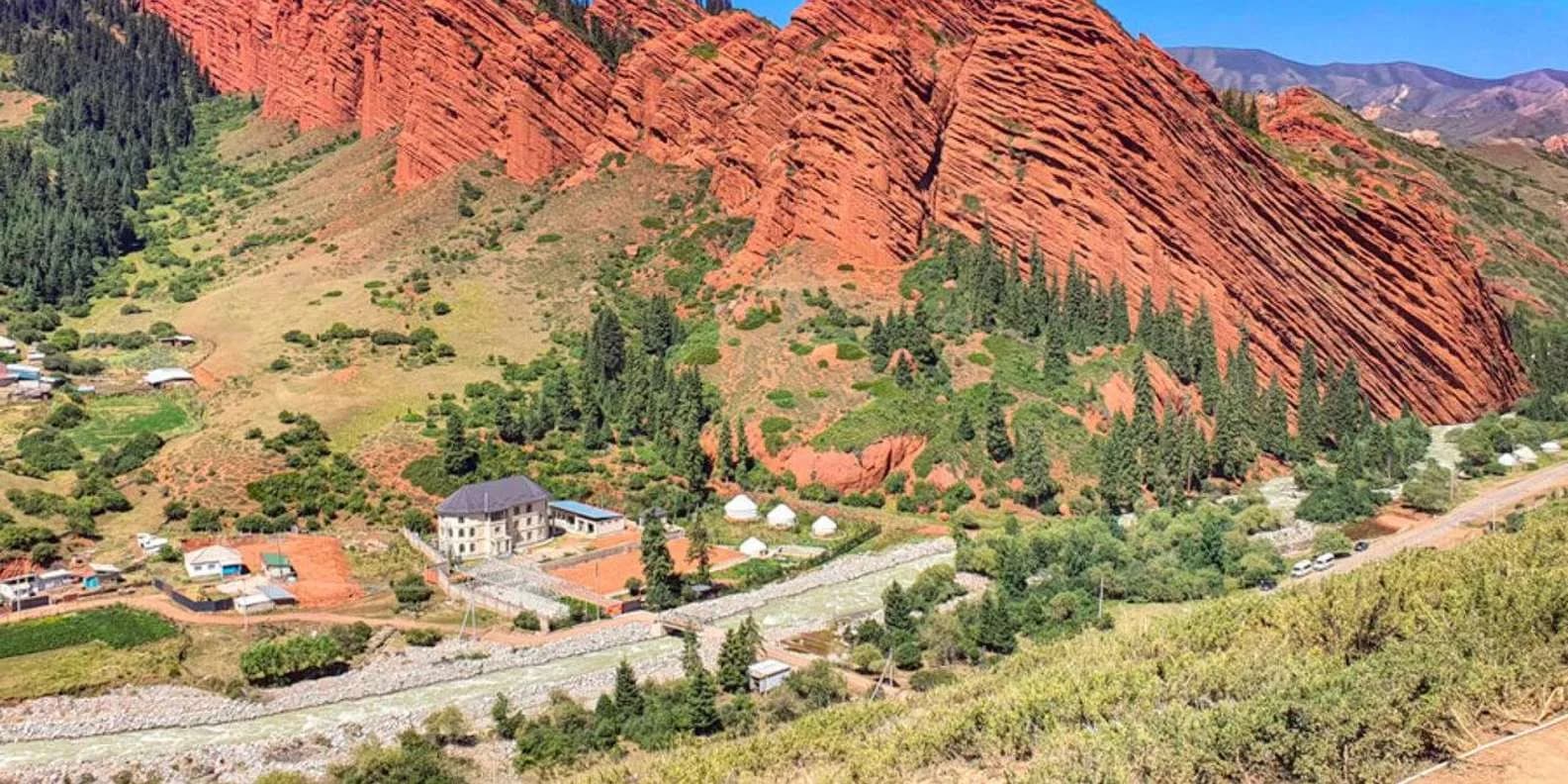
 Image via GetYourGuide
Jeti-Ögüz Guide: Seven Bulls & Broken Heart
How to visit Jeti-Ögüz near Karakol: the Seven Bulls red cliffs, Broken Heart rock, the Kok-Jayik flower valley, waterfall, hot springs and how to get there.
Book it on This is Kyrgyzstan
Karakol · Turn this guide into a trip
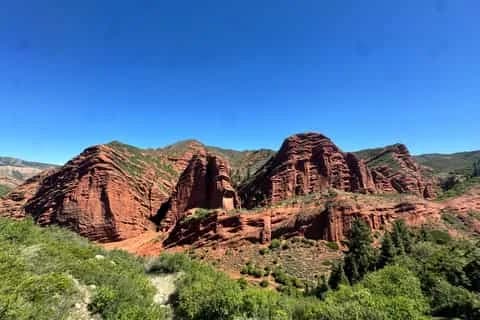
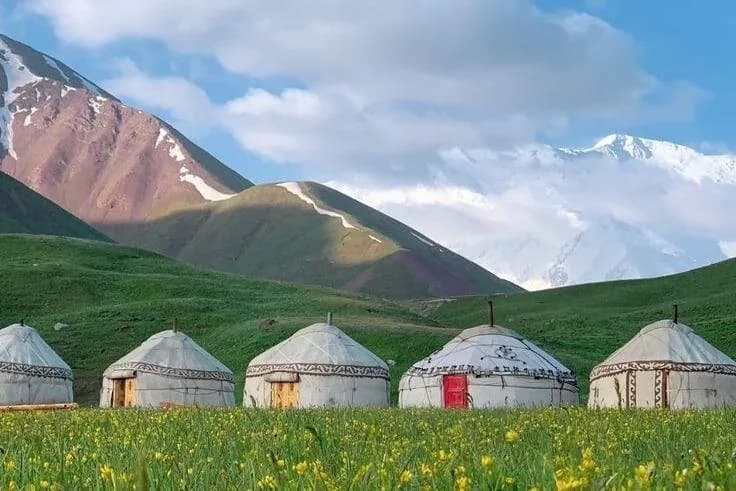
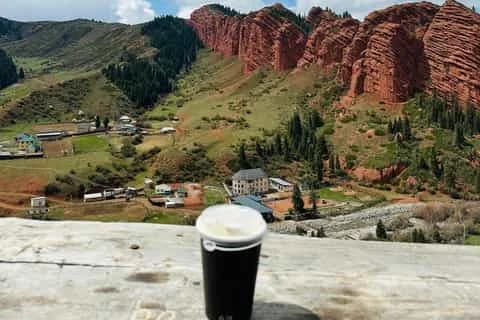
Jeti-Ögüz (Jety-Oguz) is a valley of striated red sandstone cliffs about 28 km southwest of Karakol, on the south shore of Issyk-Köl. Its landmark is the Seven Bulls (jeti ögüz means "seven bulls" in Kyrgyz) — a broad wall of rust-red rock fins that glow at the ends of the day. A short way down the road stands the Broken Heart rock, a single red outcrop split cleanly in two. Beyond the cliffs the valley opens into alpine meadow, a waterfall and a faded Soviet spa. You can see the two famous rocks in under an hour as a roadside stop, or give the valley a full day and walk up to the Kok-Jayik meadows.
Most people fold Jeti-Ögüz into a day out from Karakol, the small mountain town at the eastern tip of the lake. It pairs naturally with the other Karakol-side highlights, and if you are trekking it is one of the back-door entrances to the high country above Lake Issyk-Köl.
The Seven Bulls and the Broken Heart
The Seven Bulls are the reason the valley has a name. A line of red sandstone ridges rises straight out of the pasture, weathered into rounded flanks that locals long ago read as a herd of bulls standing shoulder to shoulder. The rock is the same iron-rich sandstone that colours much of Issyk-Köl's south shore, and it takes low light beautifully. Come at the start or the end of the day and the cliffs turn deep vermilion; under flat midday sun they can look muddy and far less dramatic, which catches out visitors who arrive on the noon marshrutka.
The Broken Heart rock (Razbitoe Serdtse in Russian) sits nearer the valley entrance, a separate red bluff cleft into two leaning halves. The story attached to it is a familiar one: two men who fought and killed each other over the same woman, leaving the mountain split with grief. It is a two-minute look from the roadside rather than a destination in itself, but it makes a natural first stop on the way up.
Both are visible from the road, so you do not need to walk far or pay for a guide to see them. Budget 45 to 60 minutes if the rocks are all you want. The photograph everyone takes of the Seven Bulls is from the meadow just below them; a short scramble onto the lower slopes gives a cleaner angle, but the cliffs themselves are fenced off and eroding, so keep to the paths.
Beyond the rocks: Kok-Jayik, the waterfall and the valley
The cliffs are only the doorway. Drive on past the Jeti-Ögüz Kurort — the Soviet-era sanatorium with its radon mineral springs — and the tarmac gives out where the walking begins.
Kok-Jayik, the "Valley of Flowers" (sometimes Kok-Jaiyk), is the classic short hike: an open bowl of alpine meadow ringed by spruce-dark ridges, roughly 6 km up-valley from the resort. In June and early July it genuinely earns the name, thick with wildflowers; by late summer it is greener and calmer but still a lovely walk. Allow two to three hours there and back on foot, or take a shared 4x4 part of the way in high season.
A shorter option from near the resort is the Maiden's Braids waterfall, a thin fall named for the way the water splits into strands down the rock. It is 30 to 45 minutes' walk each way and manageable for most people in trainers.
The Jeti-Ögüz Kurort itself is worth understanding before you build expectations. It is a working-but-weathered late-Soviet health resort, not a polished spa: concrete blocks in pine grounds, mineral and radon baths taken as a prescribed "course" rather than a spa day. Some travellers find it atmospheric, others find it bleak. You do not need to stay there to walk the valley, but it is the road head and the point where vehicles usually turn around.
For walkers with more time, the valley keeps climbing. Trails run up towards summer pastures (jailoo) where shepherds graze horses and sell kymyz, and experienced trekkers use Jeti-Ögüz as a starting point for multi-day traverses over the Terskey Ala-Too — including a route over the Archa-Tor pass that links across to Ala-Köl. That is proper mountain terrain, not a stroll; see the trekking notes below.
Getting there from Karakol
Jeti-Ögüz is an easy half-day trip from Karakol. The single most important thing to get right: Jeti-Ögüz village and Jeti-Ögüz Kurort (Resort) are two different places, about 15 km apart. The village sits lower down; the Kurort, the rocks and the trailheads are further up towards the mountains. Plenty of visitors have ended up stranded in the village because their driver stopped there. When you board, say clearly that you want "Jeti-Ögüz Kurort" (Russian: Жети-Огуз Курорт) and confirm the driver is going all the way up.
Shared marshrutkas and taxis leave from the Ak-Tilek bazaar in Karakol (the Aldashev / Torgoeva street corner). Route numbers are variously reported as #371, #372 and #355 — ask for the destination rather than the number. In summer some services run only as far as the village, so a shared taxi that will commit to the Kurort is often the safer choice.
| From Karakol | Distance | Time | Cost (KGS / USD) |
|---|---|---|---|
| Marshrutka / shared taxi to the valley | ~28 km | 40–60 min | 80–120 som (~$1) |
| Private taxi one way | ~28–32 km | 40–60 min | |
| Full-day 4x4 return with driver | – | – | from ~US$85 |
A sensible rhythm, and the one the local tourist office suggests, is to leave Karakol around 8–9 am and catch the last transport back from the Jeti-Ögüz Kurort stop by about 4 pm, which leaves you the whole middle of the day for the valley and gets you back for dinner. Services thin out sharply in the late afternoon, so do not gamble on a van at 6 pm.
Fees, season and what to bring
There is no ticket booth for the Seven Bulls or the Broken Heart — they are roadside. A small ecological or valley fee is sometimes collected on the way up, and the Kurort's baths are paid separately; carry a little cash in small som notes and confirm any charge on the day, because these creep up and are not published.
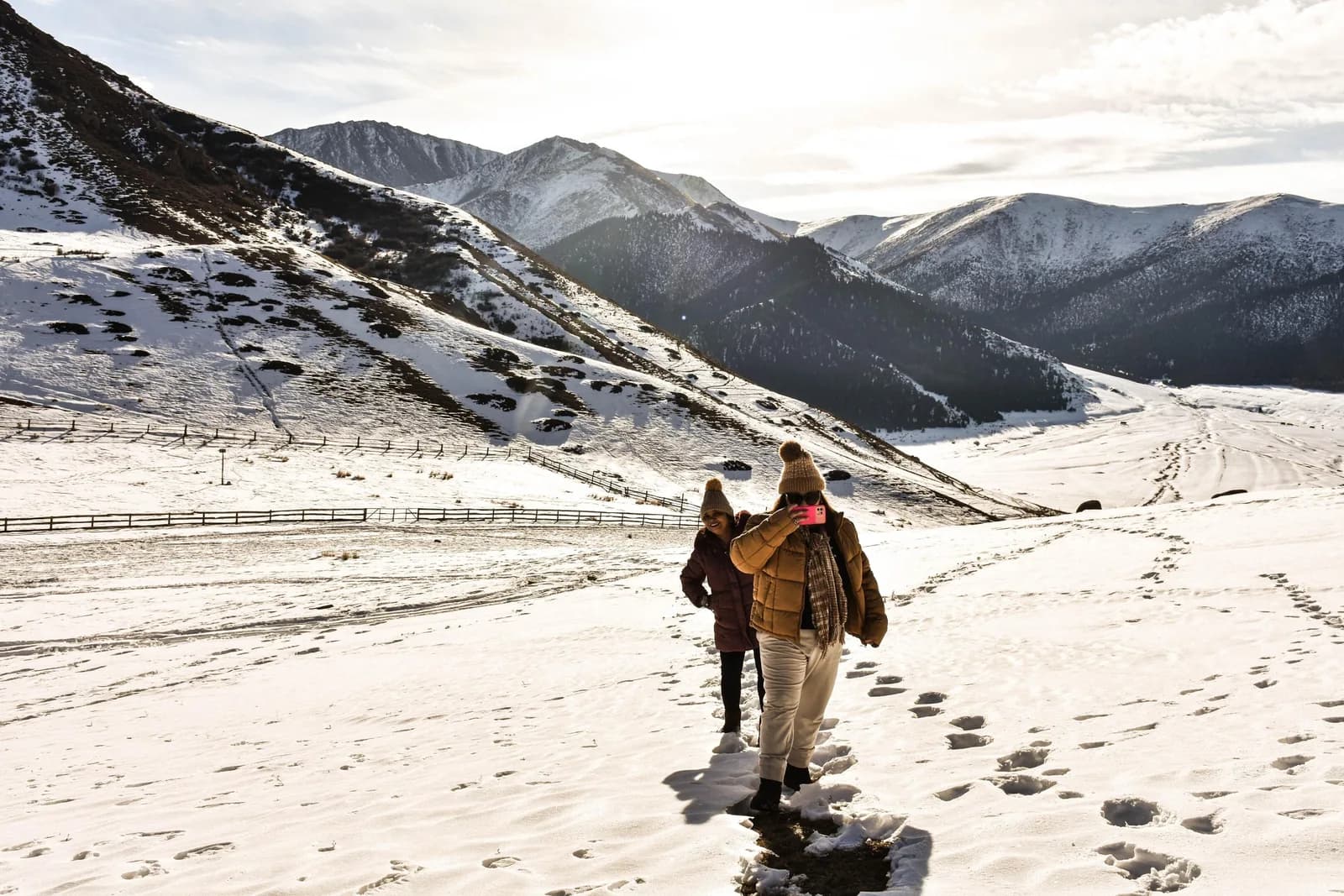
Season shapes what you get. The rocks and the lower valley are accessible from roughly May to October, and the red cliffs are arguably at their best in autumn when the surrounding slopes turn gold. Kok-Jayik is greenest and most flower-filled in June and early July. The high traverses out of the valley follow the same window as the rest of the Terskey range — reliably open only from about mid-June to mid-September, with snow lingering on the passes into July. In winter the valley is quiet, snow-dusted and photogenic, but most facilities shut and onward walking stops.
Bring layers and sun protection whatever the forecast. This is high country: the sun is fierce, afternoon cloud and thunderstorms build fast from late morning, and temperatures swing hard between valley floor and ridge. Walking shoes with grip, water, and a windproof shell cover the short walks; anything up-valley needs proper hiking kit.
Short walks vs the longer trek up-valley
Jeti-Ögüz works at two speeds. You can treat it as a scenic roadside stop, or as a trailhead into the Terskey Ala-Too. This table sets out the common options.
| Sight / walk | Distance | Time | Difficulty |
|---|---|---|---|
| Broken Heart rock (roadside) | at the road | 5–10 min | Easy |
| Seven Bulls viewpoint | short walk from road | 45–60 min | Easy |
| Maiden's Braids waterfall | near the Kurort | 30–45 min each way | Easy–moderate |
| Kok-Jayik "Valley of Flowers" | ~6 km from resort | 2–3 hrs return | Moderate |
| Up-valley jailoo day walk | beyond Kok-Jayik | full day | Moderate |
| Multi-day traverse to Ala-Köl (Archa-Tor pass) | 2+ days | 2–4 days | Hard |
For a day-tripper, the sweet spot is the rocks plus Kok-Jayik: half a day, no special gear, and a real taste of the valley rather than just a photo of the cliffs from the car.
Combining Jeti-Ögüz with Karakol, Altyn-Arashan and Ala-Köl
Jeti-Ögüz is best treated as one piece of a Karakol stay rather than a trip in its own right. Two nights in Karakol lets you give it a full morning and still see the town's Dungan mosque, the wooden Holy Trinity cathedral and the Sunday animal market.
If you are here to trek, the geography links up. The famous route over the Ala-Köl pass and down to the Altyn-Arashan hot springs starts from the Karakol valley next door, and strong walkers can join the two areas on longer traverses that cross between the Jeti-Ögüz and Karakol drainages. For a gentler pairing, spend a day at Jeti-Ögüz and a day soaking in the Altyn-Arashan valley, both out of the same Karakol base.
And because Jeti-Ögüz is on the quieter, wilder south shore of the lake, it slots neatly into a clockwise Issyk-Köl loop: the paved resort coast out to Karakol on the north side, then the gravel-and-canyon south shore — Skazka Canyon, Barskoon's waterfalls, Bokonbaevo's eagle hunters — on the way back. Jeti-Ögüz is the south shore's headline red-rock stop.
Ready to plan the wider trip? Browse tours and things to do around Karakol and the south shore and build the valley into a two- or three-day base.
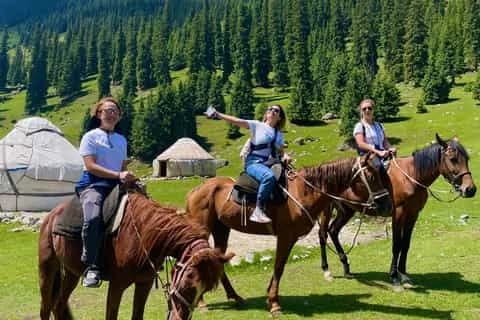
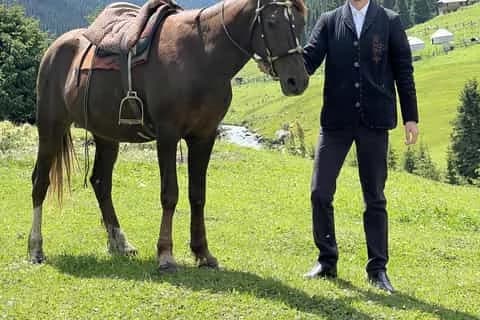
Ride it: the Jeti-Ögüz & Kök-Jaiyk jailoo horseback route.
Chat with a real person — free
Seif and the team reply on WhatsApp 24/7 — trip questions, custom plans and booking help.
Ask Seif on WhatsAppCommon questions
What is Jeti-Ögüz famous for?
Jeti-Ögüz is famous for the Seven Bulls, a wall of striated red sandstone cliffs about 28 km southwest of Karakol whose name means "seven bulls" in Kyrgyz. Nearby is the Broken Heart rock, a red outcrop split in two. Beyond the cliffs the valley holds the Kok-Jayik flower meadows, a waterfall, hot springs and a Soviet-era sanatorium, making it both a scenic stop and a trekking gateway.
How do you get to Jeti-Ögüz from Karakol?
Take a shared marshrutka or taxi from the Ak-Tilek bazaar in Karakol (Aldashev/Torgoeva corner); the fare is roughly 80–120 som (about $1) and the drive is 40–60 minutes over around 28 km. Crucially, tell the driver you want "Jeti-Ögüz Kurort" (Resort), not just the village, which sits about 15 km lower. A private taxi one way is around 700 som (~$8).
What's the difference between Jeti-Ögüz village and Jeti-Ögüz Kurort?
They are two separate places about 15 km apart. Jeti-Ögüz village sits lower down the valley; Jeti-Ögüz Kurort (Resort) is further up towards the mountains and is where the Seven Bulls, the sanatorium and the trailheads for Kok-Jayik are. Some summer buses stop only at the village, so confirm your driver is going all the way to the Kurort before you set off.
Is there an entrance fee for Jeti-Ögüz?
There is no ticket booth for the Seven Bulls or the Broken Heart rock, which are roadside sights. A small ecological or valley fee is sometimes collected on the way up, and the Jeti-Ögüz Kurort's mineral baths are paid separately. Carry a little cash in small som notes and confirm any charge on the day, as these fees change and are not officially published.
How long do you need at Jeti-Ögüz?
Allow 45–60 minutes if you only want the Seven Bulls and the Broken Heart rock as a roadside stop. To add the Kok-Jayik "Valley of Flowers", which is about 6 km up-valley from the resort, plan a half to full day; the walk there and back takes two to three hours. Trekkers heading up-valley towards the high passes need one or more full days.
What is Kok-Jayik and is it worth the walk?
Kok-Jayik is the "Valley of Flowers", an open alpine meadow roughly 6 km up-valley from the Jeti-Ögüz resort. It is worth the walk if you have the time: in June and early July it fills with wildflowers, and even in late summer it is a peaceful green bowl framed by spruce ridges. It takes two to three hours on foot return, or you can take a shared 4x4 part of the way in high season.
When is the best time to visit Jeti-Ögüz?
The rocks and lower valley are accessible from about May to October. Kok-Jayik is greenest and most flower-filled in June and early July, while the red cliffs look their best in autumn against golden slopes. High traverses out of the valley only open reliably from mid-June to mid-September. Winter is quiet and photogenic but most facilities close and onward walking stops.
Can you trek from Jeti-Ögüz to Ala-Köl?
Yes, but it is a serious multi-day trek, not a day walk. Experienced trekkers use Jeti-Ögüz as a starting point for traverses over the Terskey Ala-Too, including a route over the Archa-Tor pass that links across to the Ala-Köl area above Karakol. It is proper high-mountain terrain needing good fitness, gear and acclimatisation; the standard Ala-Köl trek itself usually starts from the Karakol valley.
Is Jeti-Ögüz good for families and casual visitors?
Yes. The Seven Bulls and the Broken Heart rock are visible from the road with no hiking required, and the Maiden's Braids waterfall is an easy 30–45 minute walk. That makes Jeti-Ögüz an easy half-day out from Karakol for families or anyone not trekking. Just bring sun protection and layers, as the sun is strong and afternoon weather can change fast at altitude.
Book it on This is Kyrgyzstan
Turn this guide into a trip
Kyrgyzstan's bestsellers
The experiences travelers book most, across the country
Keep reading
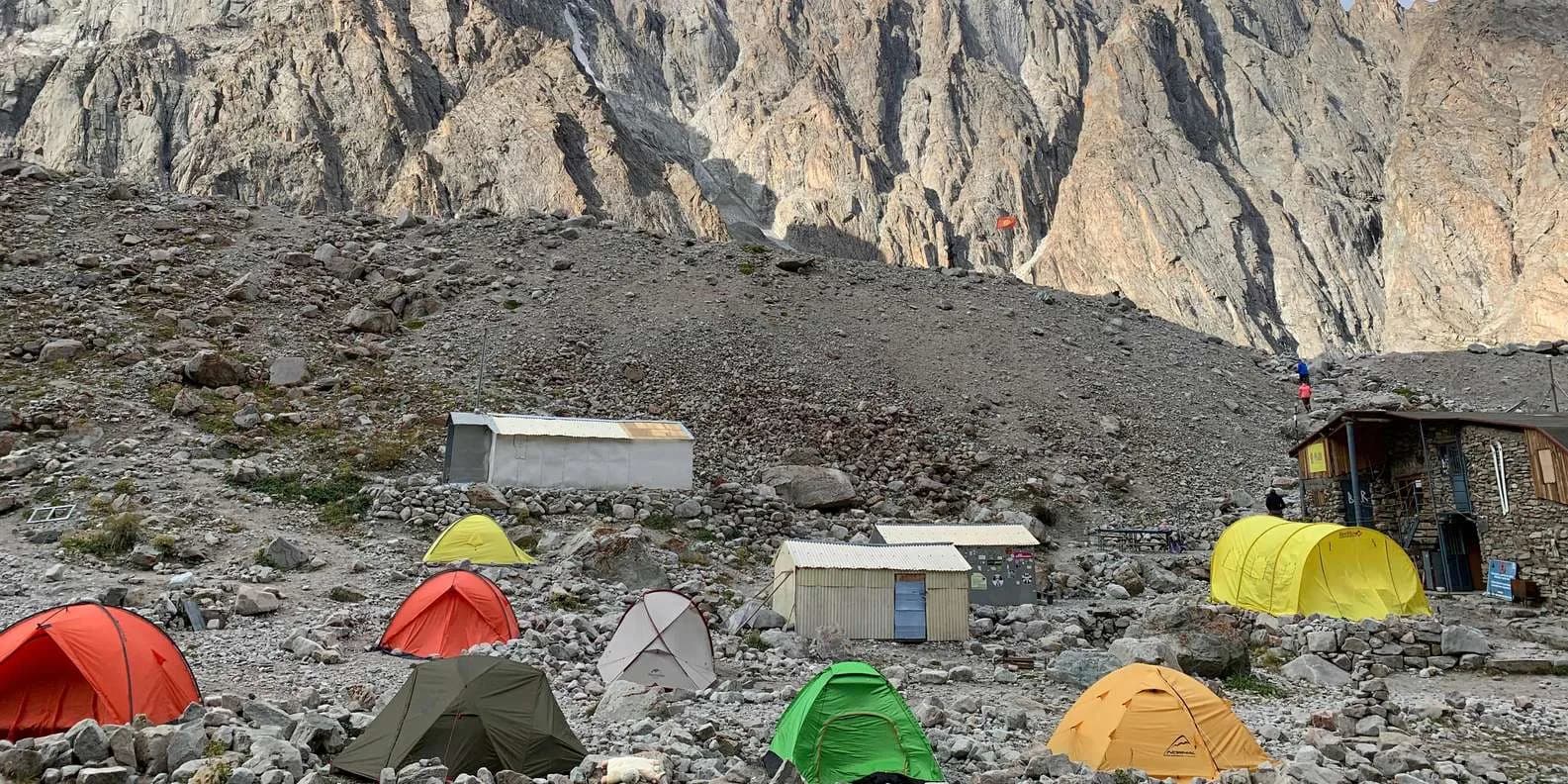
Uchitel Peak: Your First 4,000m Climb (2026)
Pik Uchitel (~4,400-4,600 m) in Ala-Archa is the classic first summit for fit hikers new to mountaineering: route, gear, season and acclimatisation.
By TiK Editors8 min read
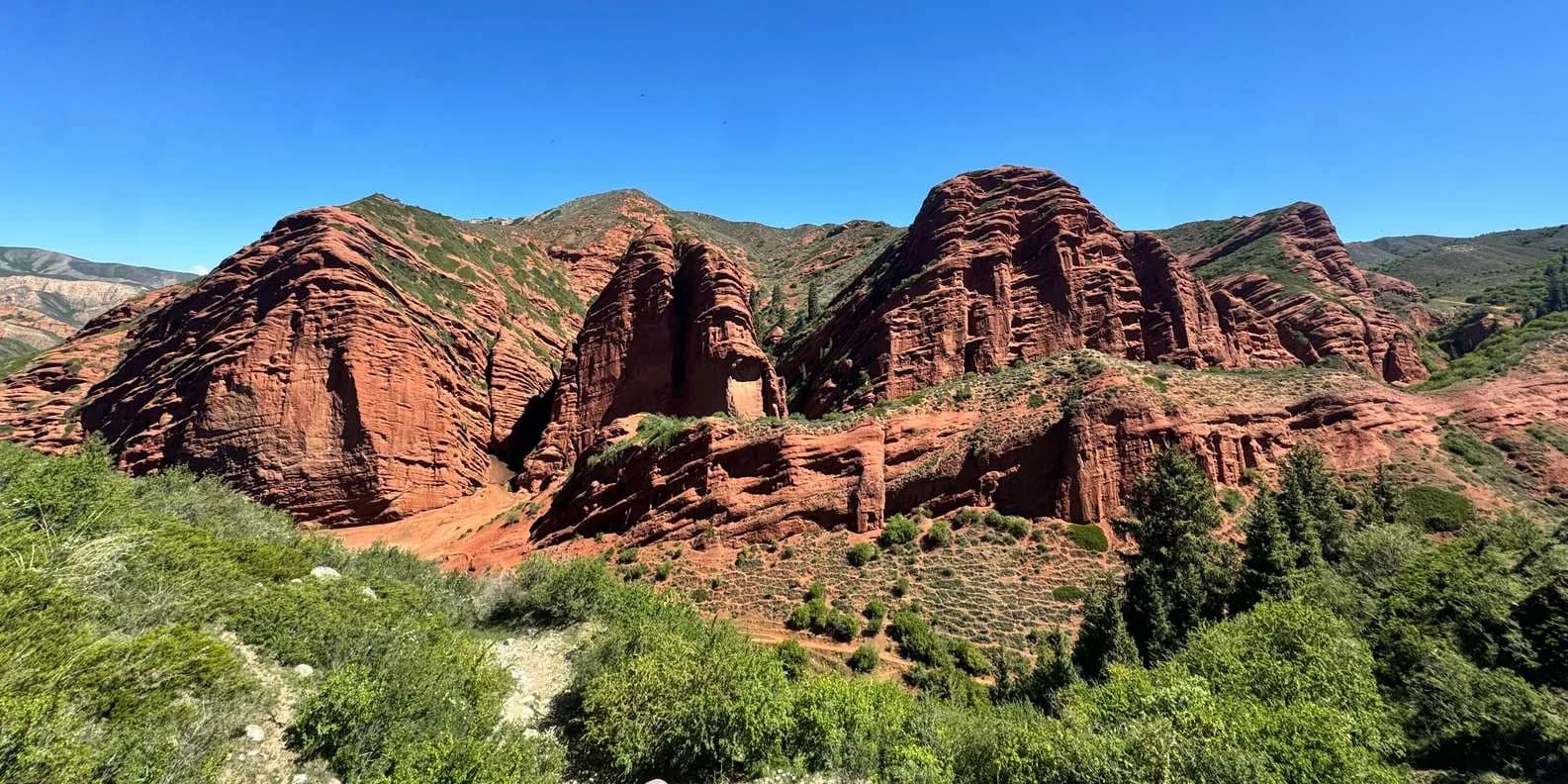
Boz-Uchuk Lakes Trek from Jyrgalan (2026)
A moderate 2–3 day trek to a string of alpine lakes above Jyrgalan — quieter than Karakol's classics, with community yurts, horses and clear DMO rates.
By TiK Editors8 min read
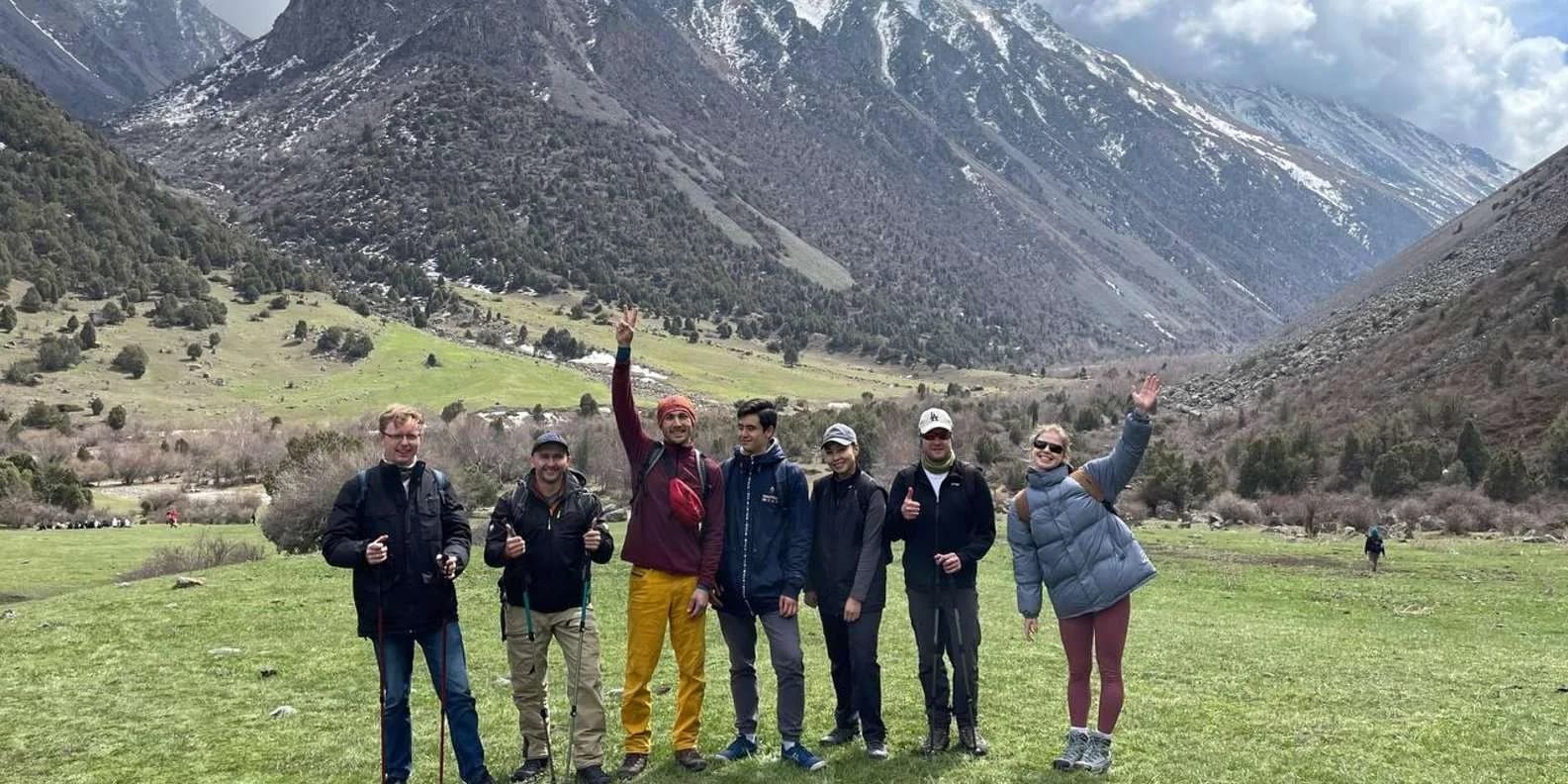
Self-Guided Treks in Kyrgyzstan: Routes & How-To
Yes, you can trek Kyrgyzstan without a guide. The best self-guided routes, the ones to skip, and the maps, water and safety logistics that make it work.
By TiK Editors12 min read