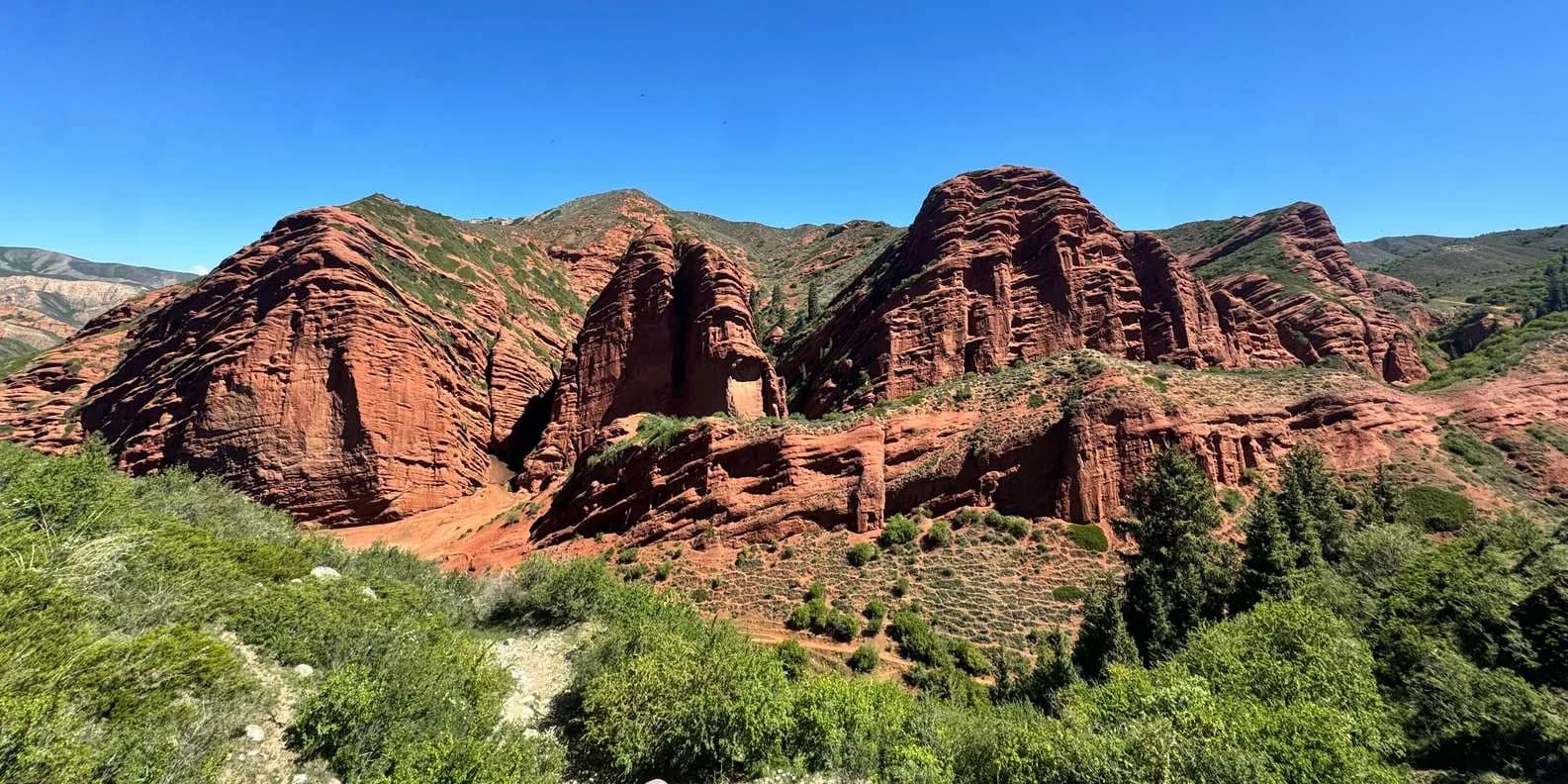
 Image via GetYourGuide
Boz-Uchuk Lakes Trek from Jyrgalan (2026)
A moderate 2–3 day trek to a string of alpine lakes above Jyrgalan — quieter than Karakol's classics, with community yurts, horses and clear DMO rates.
Book it on This is Kyrgyzstan
Karakol · Turn this guide into a trip
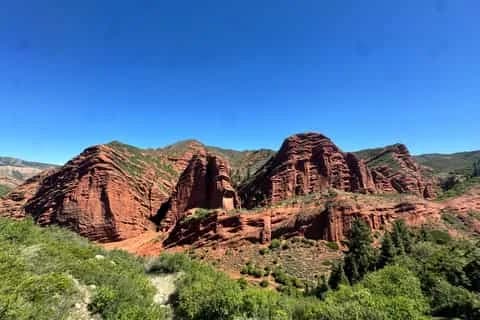
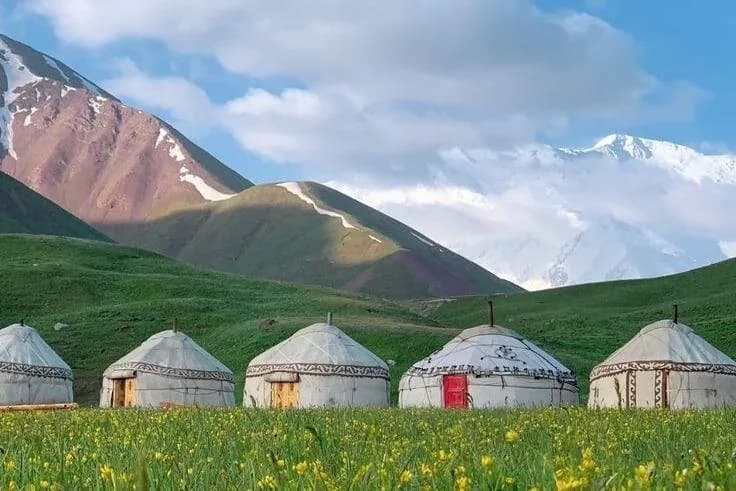
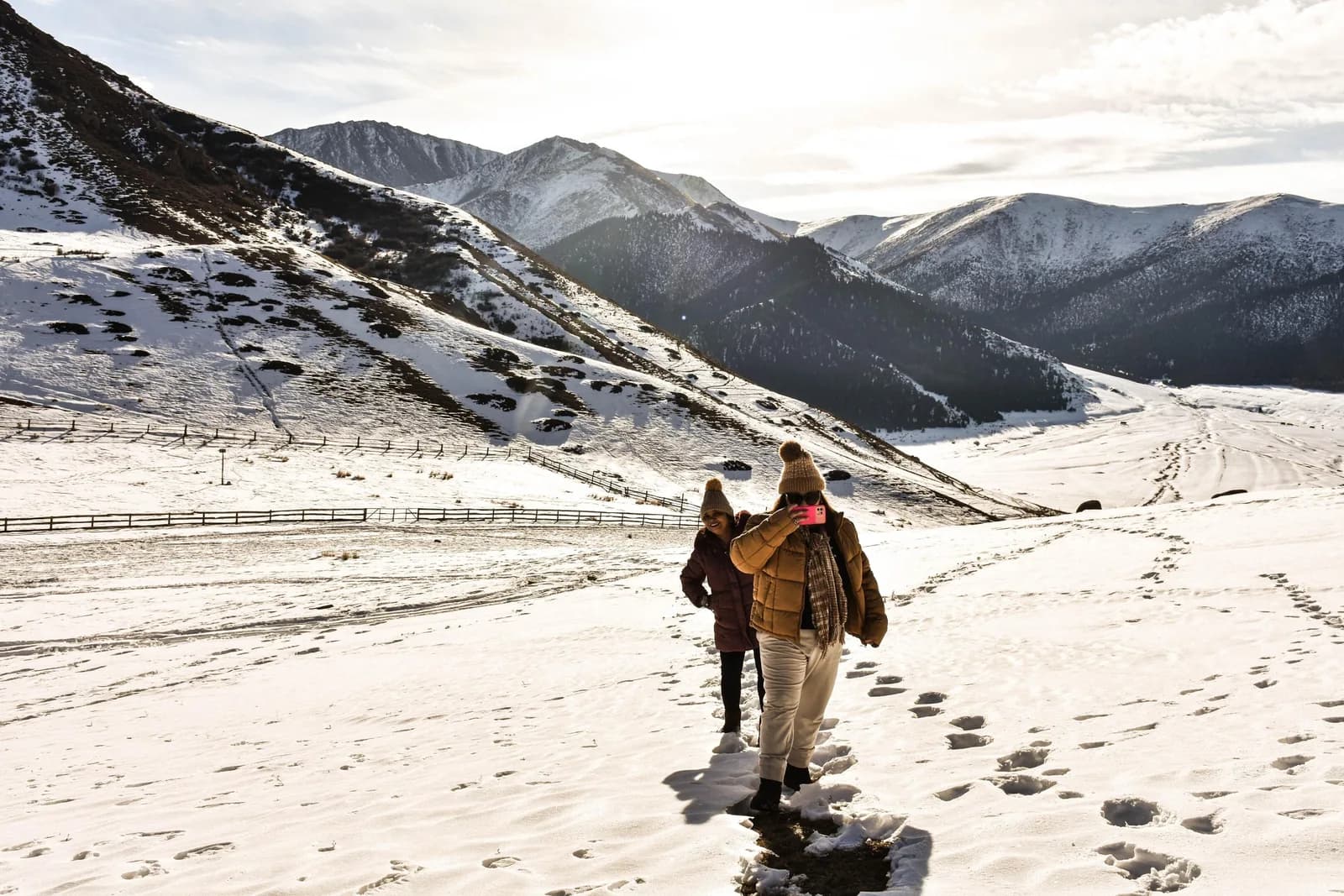
The Boz-Uchuk Lakes Trek is a moderate two- to three-day walk from Jyrgalan village to a string of alpine lakes on the eastern edge of Issyk-Köl, run through the village's own community-tourism organisation. The Jyrgalan DMO grades it medium, measures it at about 46 km over 3 days and 2 nights, and puts the route between roughly 2,100 m at the village and about 3,470 m at its high point. Its season is mid-June to September. You can walk it or ride it, sleep in yurts and homestays rather than carry a tent, and — because Jyrgalan sees a fraction of the crowds on the famous Karakol treks — have the meadows and lake basins largely to yourself.
This is the route guide. For the valley itself — its history as a coal-mining settlement, the wider trail network and how the community set-up works — see the Jyrgalan trekking guide.
At a glance
| Duration | 3 days / 2 nights (a fit 2-day version is possible) |
| Distance | ~46 km |
| Altitude range | ~2,100 m (village) to ~3,470 m (high point) |
| Difficulty | Moderate — long days, one sustained climb, no technical ground |
| Best months | Mid-June to September; July–August most reliable |
| Start / access | Jyrgalan village, ~60 km east of Karakol |
| Sleep | Yurt camp and village homestays via the Jyrgalan DMO |
| Booking | destination.jyrgalan@gmail.com; walk-in also works in season |
Altitudes are the DMO's own figures; treat them as approximate and confirm on the day.
Getting to Jyrgalan
Everything starts in Jyrgalan, and Jyrgalan starts in Karakol. Get to Karakol first — it's the eastern hub of Issyk-Köl, six to seven hours from Bishkek by shared taxi or the GoBus (around 750–800 som, roughly $9–10). From Karakol it's about 60 km east to Jyrgalan.
A public marshrutka runs the Karakol–Jyrgalan road, usually once or twice a day and taking around an hour and a half; departure times are limited and change with the season, so check locally the day before rather than trusting a timetable online. A shared or private taxi is the flexible alternative if you miss the van or are travelling as a group. If you're building this into a wider loop, our notes on getting around Kyrgyzstan cover marshrutkas and shared cars in more detail.
Book your first Jyrgalan night before you arrive if you can — the DMO can line up a homestay and confirm a guide and horses — but you won't be stuck: the village has beds and can usually arrange a trek on the spot in summer.
The route, day by day
The Boz-Uchuk (sometimes written Boz Uchuk, loosely "three lakes") climbs out of the Jyrgalan valley to a chain of lakes set below the ridgeline, crosses a pass, and returns. It is a there-and-back-with-a-loop rather than a big linear traverse, which is part of why it works as a short trip.
| Day | Roughly | Terrain |
|---|---|---|
| 1 | Village → up the Boz-Uchuk valley to a lake camp | Steady climb through spruce and open meadow; the biggest height gain of the trip |
| 2 | Lakes basin → high point / pass → back down | The alpine day: the string of lakes, the top of the route near 3,470 m, then a descent |
| 3 | Camp → Jyrgalan village | Long, mostly downhill valley walk out |
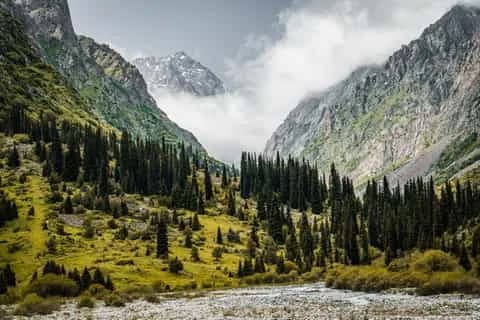
Day one leaves the last houses and gains height fairly relentlessly, first through Tien Shan spruce forest and then into open jailoo grazing where shepherds keep summer flocks. You camp or stay near the lakes. Day two is the reason you came: the lakes sit in a high basin that holds snow late, the water shifting from grey under cloud to hard blue in sun, with the route topping out near 3,470 m before you drop back. Day three is the walk-out — easy underfoot but genuinely long, so don't treat it as a formality.
A two-day compression exists for fit, acclimatised walkers who combine the climb and the high day, but you lose the slow morning at the lakes, which is the best of it. The Jyrgalan DMO has physically waymarked and GPX'd its routes — the best-marked trails in the country — but download the track anyway, because cloud on the high ground erases the path quickly. General trail, gear and water notes are in the trekking in Kyrgyzstan guide; treat every stream as needing a filter, since the whole valley is grazed all summer.
Where you sleep
Jyrgalan is set up so you don't need to be self-sufficient. The village runs on community-based tourism: the DMO was founded in late 2016 by six local families, and it books homestays and guides and takes a transparent cut — 10% of guesthouse bookings and 20% of equipment hire — that funds village projects, with the rest going straight to the provider. That published revenue share is unusually clear for Kyrgyz community tourism, and it's a good reason to book through them rather than a Bishkek agency.
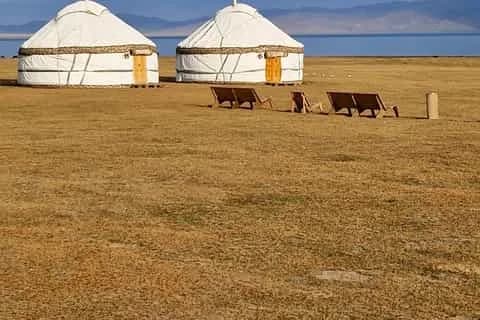
In the village you'll stay in family guesthouses — Alakol-Jyrgalan Guest House and Salamat Guest House are among the named ones — with home-cooked meals and a real welcome. On the trek itself the community operates a yurt camp up at the Eki-Chat junction (shared with the neighbouring Keskenkija circuit), and seasonal yurts or your own tent cover the lake nights. A yurt is warm at bedtime and cold before dawn once the dung stove dies down, so bring a hat and a proper layer whichever option you take. If yurt life is new to you, the yurt stays guide explains what to expect.
Walk or ride
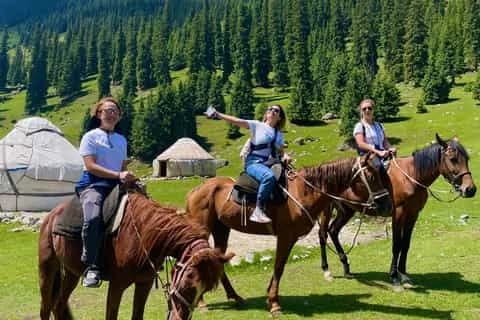
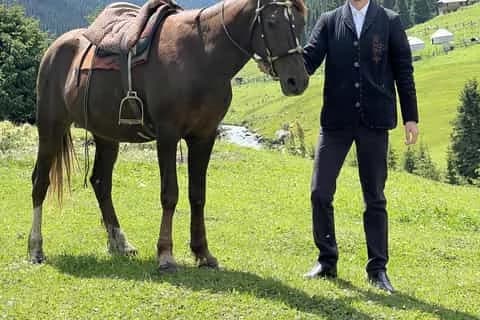
The Boz-Uchuk is a natural horse route as much as a walking one, and hiring a horse is common — either to ride the whole way or to put your pack on a pack animal and walk unladen. The Jyrgalan DMO publishes its rates, which are the clearest in the region and worth using as a benchmark:
| Service | Per day (som) | ≈ USD |
|---|---|---|
| Pack horse | ~1,300 | ~$15 |
| Horse handler | ~2,000 | ~$23 |
| Trekking guide | 2,000–2,500 | ~$23–29 |
| Cook | ~1,500 | ~$17 |
| Meals | ~350 each | ~$4 |
At roughly 87 som to the dollar, a guided, horse-supported trip for two comes together at a sensible price, and every som stays in the valley. Riding suits people who want the high country without the full physical load; walking gives you more control on the steep and the loose. If you'd rather make the horses the whole point, see horse trekking in Kyrgyzstan. Confirm all rates with the DMO when you book — these move year to year.
Season, snow and difficulty
The window is mid-June to September, and July and August are the safe middle of it. Early season, snow lingers in the high basin and on the top of the route into June; from late September nights turn hard and the yurts start packing down. September is quieter and the light is better, but come prepared for frost. The best time to visit guide sets this in the context of the wider country.
It earns its "moderate" grade rather than an "easy" one. The days are long, day one climbs steadily, and you spend the middle of the trip above 3,000 m — high enough that altitude is a real factor if you've come straight from Bishkek. Headache and poor sleep at the lake camp are common; confusion or breathlessness at rest are not, and mean you go down. Read the altitude sickness notes before you go, build in a night in Karakol or Jyrgalan first, and don't rush the climb. There's no technical ground, no glacier and no scramble — this is a walk, not a mountaineering objective.
Combining it with other Jyrgalan trails
The best thing about basing yourself in Jyrgalan is that the Boz-Uchuk is one thread in a marked network, so you can stack trips without moving base. Popular pairings:
- Keskenkija Loop — 4 days, around 53 km (some measure it longer), 2,239–3,375 m, a bigger circuit over three passes with the Eki-Chat yurt camp on night one.
- Keskenkija Super Loop — the 7-day, ~92 km extension for people with a week and strong legs.
- Ailampa Glacier Loop and Bulak-Ashuu Lakes — two more 3-day options in the 41–44 km range if you want lakes and a glacier without repeating ground.
- Day hikes — the Kok-Bel Waterfall (~12 km) or the Turnaluu-Köl / Chaar-Jon route make gentle warm-ups while you acclimatise.
A common plan is the Boz-Uchuk first as the shorter, lower trip, then the Keskenkija Loop once you're acclimatised. The full menu and how the village strings them together is in the Jyrgalan trekking guide.
Winter: ski-touring instead
Come in winter and the lakes are frozen and the passes shut, but Jyrgalan has quietly become one of Kyrgyzstan's best freeride and ski-touring bases — the same DMO, the same guesthouses, powder-filled valleys and skinning terrain instead of trails. If you're travelling December to March, swap the trek for skis and see ski touring in Kyrgyzstan.
Ready to lace it into a longer trip? Browse trekking tours or contact the Jyrgalan DMO direct — booking local keeps the money where you're walking.
See more rides on our horse treks page, and where to sleep on our yurt stays page.
Book it: the Boz-Uchuk Lakes horseback route, staying at Boz-Uchuk yurt camp.
Chat with a real person — free
Seif and the team reply on WhatsApp 24/7 — trip questions, custom plans and booking help.
Ask Seif on WhatsAppCommon questions
How long is the Boz-Uchuk Lakes Trek?
The Jyrgalan DMO runs it as 3 days and 2 nights over about 46 km, graded medium. Fit, acclimatised walkers can compress it into two long days by combining the climb and the high day, but you lose the slow morning at the lakes, which is the best part. Distances shift a little depending on where you camp, so confirm the plan with the DMO when you book.
How high does the trek go?
The route runs between roughly 2,100 m at Jyrgalan village and about 3,470 m at its high point near the pass above the lakes, using the DMO's own figures. You spend the middle of the trip above 3,000 m. That's high enough for altitude to matter if you've come straight from Bishkek, so build in an acclimatisation night and read up on altitude sickness first.
How do I get to Jyrgalan from Karakol?
Jyrgalan is about 60 km east of Karakol. A public marshrutka runs the road once or twice a day and takes around an hour and a half, but departures are limited and seasonal, so check locally the day before. A shared or private taxi is the flexible alternative. Get to Karakol first from Bishkek — six to seven hours by shared taxi or GoBus.
What months can I do the Boz-Uchuk trek?
Mid-June to September, with July and August the most reliable. Early in the season snow lingers in the high lake basin and on the top of the route; from late September nights turn hard and the yurt camps begin closing. September is quiet with better light but real frost. Outside that window the lakes freeze and the high ground becomes a winter, not a walking, proposition.
Can I ride a horse instead of walking?
Yes. The Boz-Uchuk is a natural horse route, and you can ride the whole way or put your pack on a pack horse and walk unladen. The Jyrgalan DMO publishes clear day rates — around 1,300 som (~$15) for a pack horse, 2,000 som (~$23) for a handler, and 2,000–2,500 som for a guide. Confirm current rates when you book; they change year to year.
Where do you sleep on the trek?
In village homestays and yurts, not necessarily a tent. The Jyrgalan community runs family guesthouses in the village and a yurt camp at the Eki-Chat junction, with seasonal yurts or your own tent for the lake nights. Yurts are warm at bedtime and cold before dawn once the stove dies, so pack a hat and a proper insulating layer whatever you choose.
Is the Boz-Uchuk harder or easier than the Ala-Kul trek?
Easier and quieter. Boz-Uchuk tops out near 3,470 m with no scree pass or technical ground, while the Ala-Kul trek crosses a roughly 3,860–3,900 m pass on loose rock and draws far bigger crowds. Boz-Uchuk is a good moderate objective for reasonably fit walkers and a sensible acclimatiser before something bigger in the Karakol range.
Do I need a permit or a guide?
No border or trekking permit is required for the Boz-Uchuk. A guide isn't mandatory — the DMO has waymarked and GPX'd the route, the best-marked trails in Kyrgyzstan — but hiring one supports the village, adds local knowledge and is invaluable if cloud closes in on the high ground. Download the GPX track regardless, and always carry an offline map.
How do I book, and does the money stay local?
Book through Destination Jyrgalan at destination.jyrgalan@gmail.com or via its online cart; walk-in also works in summer. The DMO, founded by six village families in 2016, takes a published 10% of guesthouse bookings and 20% of equipment hire to fund community projects, with the rest to the provider. Booking here rather than through a Bishkek agency keeps your spending in the valley.
Book it on This is Kyrgyzstan
Turn this guide into a trip
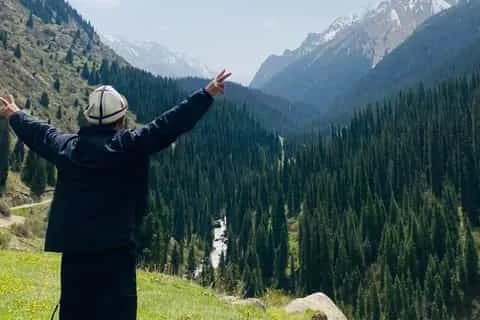
Kyrgyzstan's bestsellers
The experiences travelers book most, across the country
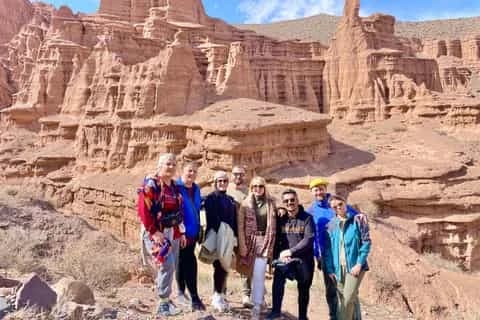
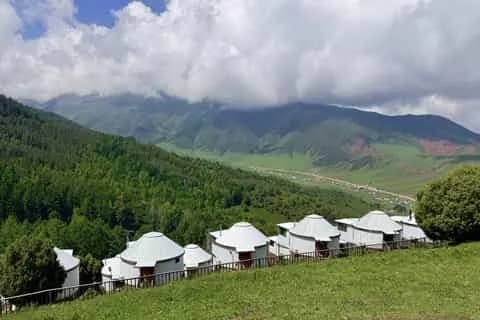
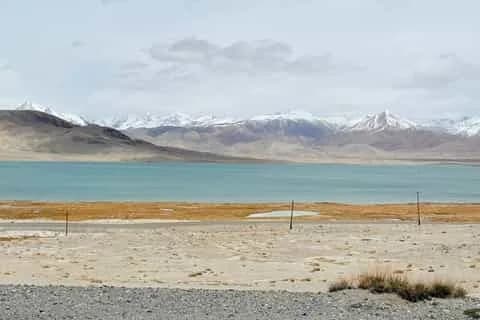
Keep reading
Tian Shan Traverse: Bikepacking Kyrgyzstan
The Tian Shan Traverse is a self-supported, mostly off-road bikepacking route of about 1,000 km across the high Kyrgyz mountains. Here's how to plan it.
By TiK Editors9 min read
Self-Guided Treks in Kyrgyzstan: Routes & How-To
Yes, you can trek Kyrgyzstan without a guide. The best self-guided routes, the ones to skip, and the maps, water and safety logistics that make it work.
By TiK Editors12 min read
Uchitel Peak: Your First 4,000m Climb (2026)
Pik Uchitel (~4,400-4,600 m) in Ala-Archa is the classic first summit for fit hikers new to mountaineering: route, gear, season and acclimatisation.
By TiK Editors8 min read