 Image via GetYourGuide
Ski Touring in Kyrgyzstan: Backcountry & Heli (2026)
Backcountry ski touring, splitboarding and cat/heli-skiing in Kyrgyzstan's Tian Shan — Jyrgalan, Karakol and Suusamyr, the season, safety and what it costs.
Book it on This is Kyrgyzstan
Turn this guide into a trip
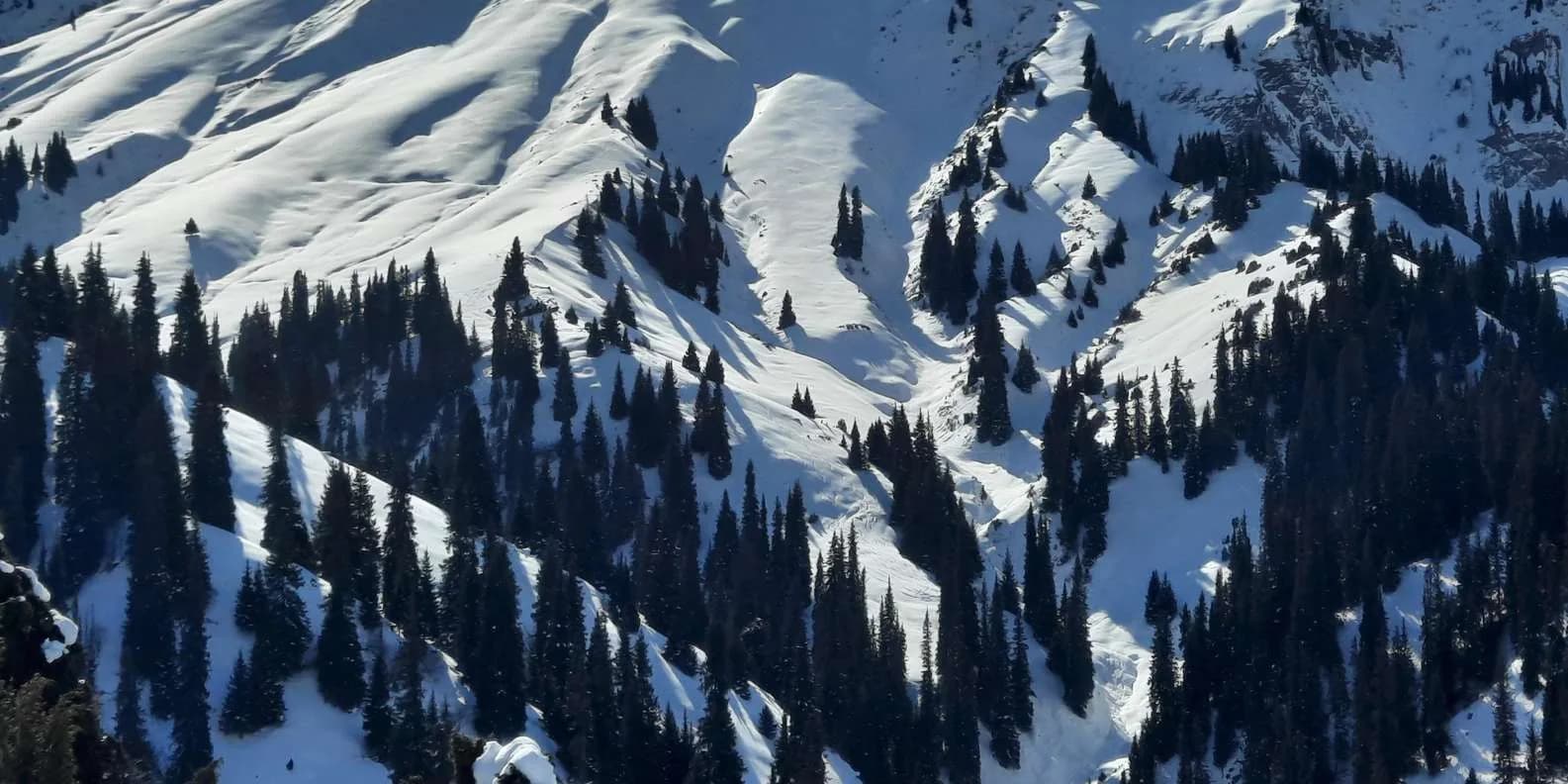
Kyrgyzstan is one of the cheapest and emptiest places on earth to earn deep, dry powder turns. Backcountry ski touring, splitboarding and mechanised (cat and heli) skiing run roughly from December to March, sometimes into April, across the Tian Shan, and the terrain is almost entirely un-tracked. Jyrgalan is the emerging touring hub, while Suusamyr and the slopes above Karakol are where the cat and heli operations run. This is serious, largely uncontrolled mountain terrain: you need a guide, a full avalanche kit and the skills to use both.
If you want lifts, groomed pistes and a ticket window, that is a different trip — read our guide to skiing in Kyrgyzstan for the resorts. This page is about leaving the lift line behind: skinning up, or being flown or driven up, into snow that nobody else has touched.
Why Kyrgyzstan is a rising backcountry destination
The appeal is straightforward. The Tian Shan gets cold, light, continental powder because the air is dry and the winters are properly cold, and the ranges are vast and almost unvisited in winter — roughly nine in ten of the country's tourists come in summer. You can skin a whole day and cross one other set of tracks, or none. And it is astonishingly cheap: a guided backcountry day, or a night in a village guesthouse, costs a fraction of the Alps or Hokkaido, and the flights are shorter from Europe than a trip to North America.
Be honest with yourself about the trade-off. There is no Alpine-standard avalanche control, no piste patrol sweeping the hill at dusk, no dense hut network and no reliable phone signal in the valleys. Rescue is limited and slow (more on that below). You are buying space and snow in exchange for infrastructure. For adventurous intermediate-to-strong skiers and splitboarders who already move confidently in the backcountry, that is a good deal. For anyone still learning to read a slope, it is not the place to learn.
The season
The reliable window is December to March. January and February hold the coldest, driest snow and the deepest cover; March brings longer, warmer days and, later in the month, a firming spring snowpack that can be superb or unstable depending on the week. High, north-facing lines can hold into April, but by then the valley approaches are melting out and many village operations are winding down. Come in the shoulder weeks either side and you gamble: too little early snow, or a rotting spring pack.
Acclimatisation matters more than people expect. You start most tours between about 2,000 and 2,600 m and climb toward 3,500 m and above, and a fast arrival from a low city can bring on a headache and a bad night's sleep. Give yourself a day or two before the biggest days out, and read our altitude sickness guide before you go.
Where to go
| Zone | Access | Type | Season | Best for |
|---|---|---|---|---|
| Jyrgalan | ~75 km / 1.5 h from Karakol | Ski touring, splitboard | Dec–Mar | The touring hub; yurt- and guesthouse-based tours |
| Karakol area | 7 km above Karakol town | Lift-access backcountry + cat/heli | Dec–Mar | Sidecountry off the resort, guided cat and heli days |
| Suusamyr | 158 km / ~2.5 h from Bishkek | Cat and heli terrain | Dec–Mar | Powder days, mechanised freeride |
| Boz-Uchuk | Near Jyrgalan | Ski touring | Dec–Mar | Quiet valley touring lines |
| Chon-Kemin | ~110 km from Bishkek | Ski touring | Dec–Mar | Backcountry near the capital |
Jyrgalan — the ski-touring hub
Jyrgalan is the story of Kyrgyz backcountry skiing. A former coal-mining village about 75 km east of Karakol, at roughly 2,100 m, it reinvented itself around trekking and, increasingly, winter touring, coordinated by its own destination management organisation. The same rolling, forested valleys and 3,000–3,500 m ridgelines that carry summer treks like the Boz-Uchuk lakes make excellent, moderate-angle touring terrain when the snow arrives. You base yourself in a village guesthouse or a yurt, skin from the door or a short shuttle, and ski meadow bowls and tree lines with a local guide.
What sets Jyrgalan apart is that the routes are known and increasingly mapped, the guiding is genuinely local, and the village is quiet even by Kyrgyz standards. It is the best place in the country to string together several days of self-powered touring without a big logistics operation. Our Jyrgalan guide covers the village and how to reach it.
Karakol — lift-access backcountry, cat and heli
Karakol town, at around 1,700 m on the eastern side of Lake Issyk-Köl, is the one place here that works as a proper winter base — guesthouses, cafés, gear shops and a walkable centre. The ski base 7 km above town (top station near 3,040 m) is worth a day in its own right, but for backcountry skiers its real value is the lift-served access: you ride up, then hike or skin from the top of the lifts into open bowls and steeper tree-lined pitches on the Terskey Ala-Too. Cat-skiing and, in a good season, helicopter days are run out of the Karakol area by mountain operators, and the town is also the launch point for winter ski-touring and snowshoe trips up toward Altyn-Arashan. See the Karakol guide for the base itself.
Suusamyr — cat and heli terrain
The Suusamyr valley, reached from Bishkek over the Töö-Ashuu pass (the road tunnel beneath it sits at about 3,120 m), is Kyrgyzstan's freeride and mechanised-skiing heartland. It is a huge high pasture ringed by long, open faces with very few lifts, so the way you ski it is by snowcat or helicopter, dropped at the top of a run and skiing back down to a pick-up. The snow here is reliably cold and deep, the pitches are long, and the emptiness is total. It is a committing place: the approach road crosses avalanche-prone passes and can close after heavy snow, so build slack into your plans.
Boz-Uchuk, Chon-Kemin and beyond
Beyond the three main zones, the touring map keeps opening up. Boz-Uchuk, near Jyrgalan, gives quiet valley lines away from any lift. Chon-Kemin, a long valley only about 110 km from Bishkek, turns into backcountry ski terrain in winter and is the easiest touring to reach from the capital. Even Song-Köl, at 3,016 m, runs a dedicated winter yurt camp with backcountry and cross-country skiing on the frozen plateau — an experience more than a serious ski objective, but an unforgettable one. None of these is a resort; all of them need a guide and self-sufficiency.
Touring, cat or heli — which is which
Ski touring (or splitboarding) means climbing under your own power on skins, then skiing down: the cheapest option, the fittest, and the one that opens the most terrain. Cat-skiing uses a snowcat to haul you uphill for repeated powder runs without the climb — more laps, higher cost, less effort. Heli-skiing swaps the cat for a helicopter, reaching bigger, steeper and more remote faces; it is the priciest and the most weather-dependent, and days get grounded or shortened when the cloud comes in. Most visitors tour, with a cat or heli day added as a treat. All three demand the same avalanche competence — the machine gets you up the hill, not down it safely.
Avalanche safety and guiding — read this twice
This is uncontrolled terrain and the avalanche hazard is real: Kyrgyzstan's own official advice flags a high risk of avalanches, landslides and rockfall, and heavy snow can change conditions overnight. Nobody is blasting the slopes for you. Every member of the party needs a transceiver, probe and shovel and the practised ability to use them, and you should be travelling with a qualified guide who knows the local snowpack. This is not a place to freelance off a lift on a hunch.
Rescue is the sharpest edge. There is no routine, state-funded helicopter mountain rescue on the Alpine model; the working provider is a Bishkek-based non-profit that requires a payment guarantee — a valid insurance policy or a signed contract — before an operation can even begin. Phone coverage vanishes in most valleys, so a satellite messenger is genuinely useful for raising the alarm. Buy travel insurance that explicitly covers off-piste and, if relevant, helicopter skiing and evacuation to your maximum altitude — standard policies routinely exclude exactly this. Our is Kyrgyzstan safe and travel insurance guides go into the detail.
Getting there
Most trips start in Bishkek. Note the airport's code changed from FRU to BSZ in August 2025, so double-check your booking. For Jyrgalan and Karakol, it is roughly 5 to 7 hours by road from Bishkek to Karakol along the Issyk-Köl shore, then about 1.5 hours on to Jyrgalan; a shared taxi or the GoBus coach both work, and many operators bundle transfers. Suusamyr is closer — about 2.5 hours from Bishkek over Töö-Ashuu — but the pass is genuinely avalanche-prone in winter and can close, so never plan a tight connection around it. For the wider transport picture see getting around Kyrgyzstan, and for the broader winter case, Kyrgyzstan in winter.
What it costs
Against the Alps, everything here is cheap. A resort lift pass at Karakol runs around 1,300 som (about US$15) a day, and local guiding and guesthouse rates are a fraction of European figures — day-guide rates in the region sit in the low tens of dollars rather than the low hundreds. Cat-skiing and heli days cost far more, of course, but still undercut comparable operations in Europe or North America, and the powder is emptier. Because prices move year to year and depend heavily on group size and how much flying you do, we won't print a single heli or cat figure — get a current quote from your operator and confirm what is included (guide, transfers, safety kit, lunch). Carry cash: som notes, not cards, are what work in the villages, and there are no ATMs past the towns.
Ready to plan a trip? Browse our trekking and mountain tours for operators who run winter touring and freeride, and message them directly to build a backcountry week around Jyrgalan, Karakol or Suusamyr.
Chat with a real person — free
Seif and the team reply on WhatsApp 24/7 — trip questions, custom plans and booking help.
Ask Seif on WhatsAppCommon questions
Is Kyrgyzstan good for ski touring and splitboarding?
Yes, and it is quietly becoming one of the best value backcountry destinations anywhere. The Tian Shan delivers cold, dry continental powder, vast un-tracked terrain and very few other skiers, at a fraction of Alpine or Japanese prices. Jyrgalan is the main touring hub, with Karakol and Suusamyr adding lift-access, cat and heli options. The catch is minimal infrastructure and serious avalanche terrain, so you need a guide and your own skills.
When is the ski touring season in Kyrgyzstan?
Roughly December to March, occasionally into April on high north-facing lines. January and February hold the coldest, deepest and driest snow; March brings longer days and a spring snowpack that can be excellent or unstable week to week. The shoulder weeks either side are a gamble — too little early cover, or a rotting late pack — and by April valley approaches start melting out and village operations wind down.
Do I need a guide to ski tour in Kyrgyzstan?
Yes. This is uncontrolled terrain with a real, unmanaged avalanche hazard, no piste patrol and no slope-clearing. A qualified local guide who knows the current snowpack is essential, and every person needs a transceiver, probe and shovel plus the practised ability to use them. Rescue is limited and slow, and phone signal disappears in the valleys, so freelancing here is genuinely dangerous even for strong skiers.
Where is the best backcountry skiing in Kyrgyzstan?
Jyrgalan, a former mining village about 75 km east of Karakol, is the touring hub, with guesthouse- and yurt-based tours on moderate-angle bowls and tree lines. Karakol offers lift-access backcountry plus cat and heli days, and Suusamyr is the mechanised freeride heartland reached from Bishkek. Boz-Uchuk near Jyrgalan and Chon-Kemin near the capital add quieter touring lines. All need a guide and self-sufficiency.
What's the difference between touring, cat-skiing and heli-skiing here?
Ski touring means climbing on skins under your own power, then skiing down — cheapest, fittest, most terrain. Cat-skiing uses a snowcat to haul you uphill for repeated powder laps without the climb. Heli-skiing swaps the cat for a helicopter, reaching bigger and more remote faces, but it is the priciest and most weather-dependent, with days often grounded by cloud. All three demand the same avalanche competence on the way down.
How much does backcountry skiing in Kyrgyzstan cost?
Far less than the Alps. A Karakol lift pass is around 1,300 som (about US$15) a day, and local guiding and guesthouse rates are a fraction of European figures. Cat and heli days cost considerably more but still undercut comparable Western operations. Prices swing with group size and flying time, so get a current quote and confirm what's included. Carry som in cash — cards don't work in the villages, and ATMs stop at the towns.
How do I get to Jyrgalan and Suusamyr for skiing?
Most trips start in Bishkek (note the airport code changed from FRU to BSZ in August 2025). For Jyrgalan, it is 5–7 hours by road to Karakol along Lake Issyk-Köl, then about 1.5 hours further; many operators include transfers. Suusamyr is around 2.5 hours from Bishkek over the Töö-Ashuu pass, which is avalanche-prone in winter and can close, so leave slack in your schedule rather than planning tight connections.
Is heli-skiing available in Kyrgyzstan?
Yes, in the Suusamyr valley and, in a good season, the Karakol area, run by mountain operators rather than large heli-ski resorts. It reaches long, empty, un-tracked faces and undercuts prices in Europe or North America, but it is weather-dependent — cloud grounds or shortens days. Book through a reputable operator, confirm the guide-to-guest ratio and safety provision, and make sure your insurance explicitly covers helicopter skiing and evacuation.
Do I need special insurance for off-piste skiing in Kyrgyzstan?
Yes, and it is not optional. Standard travel policies routinely exclude off-piste and backcountry skiing, and any cover often caps altitude below where you will be. Buy a policy that explicitly covers off-piste touring, cat and heli skiing where relevant, helicopter evacuation and repatriation to your maximum altitude. Kyrgyzstan's non-profit mountain rescue requires a payment guarantee before it will launch, so carry your policy number where a companion can find it.
Book it on This is Kyrgyzstan
Turn this guide into a trip
Kyrgyzstan's bestsellers
The experiences travelers book most, across the country
Keep reading
Self-Guided Treks in Kyrgyzstan: Routes & How-To
Yes, you can trek Kyrgyzstan without a guide. The best self-guided routes, the ones to skip, and the maps, water and safety logistics that make it work.
By TiK Editors12 min read
Uchitel Peak: Your First 4,000m Climb (2026)
Pik Uchitel (~4,400-4,600 m) in Ala-Archa is the classic first summit for fit hikers new to mountaineering: route, gear, season and acclimatisation.
By TiK Editors8 min read
Tian Shan Traverse: Bikepacking Kyrgyzstan
The Tian Shan Traverse is a self-supported, mostly off-road bikepacking route of about 1,000 km across the high Kyrgyz mountains. Here's how to plan it.
By TiK Editors9 min read