 Image via GetYourGuide
Karakol Animal Market: Sunday Mal Bazaar Guide
Karakol's Sunday livestock market runs from dawn to about 10am on the town's northeast edge. What you'll see, how to get there and market etiquette.
Book it on This is Kyrgyzstan
Karakol · Turn this guide into a trip
Karakol's animal market runs on Sunday mornings only, and you need to go early — from roughly first light to around 10am, with the real crush between about 7 and 9am. This is Mal Bazaar (the Kyrgyz words simply mean "livestock market"), a working trade fair on the northeast edge of town where herders from across the Issyk-Köl basin come to buy and sell sheep, horses, cattle and goats. It is not a tourist show. Nobody performs, nothing is staged, and by late morning the pens are empty and the herders have gone home. Come at dawn or don't come at all.
Most travellers pair it with the rest of Karakol, so it slots neatly into a Sunday before you tackle Jeti-Ögüz or the Altyn-Arashan trek in the afternoon. If you're building a wider trip, see the full Karakol guide for where to sleep, eat and what else fills a weekend here.
At a glance
| Day | Sunday only |
| Hours | Roughly dawn to ~10am; busiest ~7–9am. Confirm locally — it winds down fast |
| Location | Northeast edge of Karakol, off the ring road (locally "Mal Bazaar") |
| Cost | Free to walk around; bring small som for tea and snacks |
| Getting there | Short taxi (~100–200 som / $1–2) or marshrutka from the centre |
| Time needed | 45 minutes to 1.5 hours |
What you'll actually see
Arrive at the right hour and the market hits you as noise and movement before you've parked. Sheep by the hundred are penned or tied in rows, bleating over one another. Herders in kalpaks work the crowd, running hands along a ewe's back, prising open a mouth to check the teeth and guess the age, arguing the price down and then up again. Money changes hands in thick folded wads of som, and animals are led off to be loaded — often manhandled, three at a time, into the boots of ordinary sedans and the beds of little trucks.
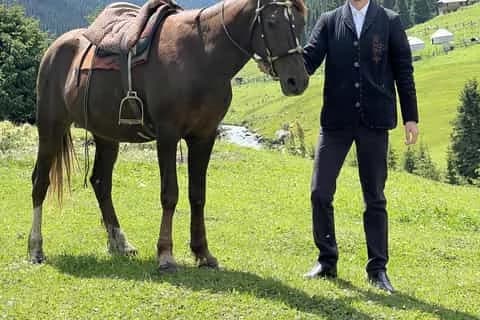
The horse section is the part worth walking to. Horses are the prestige animals here and the trade is more deliberate: a buyer will watch an animal trotted up and down, check its legs, look it in the eye. This is a horse culture doing ordinary business, not a spectacle laid on for anyone. You'll also find cattle and shaggy goats, and around the edges the human economy that follows livestock everywhere — rope and halter sellers, men with sacks of feed, and tea stalls doing a brisk trade in chai, samsa and fried bread for herders who've been up since 4am. Buy a cup. It's the warmest spot in the place and nobody minds a foreigner standing quietly with tea.
The haggling is the real show. There is a rhythm to it — an offer, a theatrical refusal, a walk-away, a hand caught before it leaves. Buyers and sellers sometimes clasp hands to seal a deal. You won't follow the Kyrgyz, but the choreography reads clearly enough, and it is the most honest window into rural Kyrgyz life you'll get without a homestay.
Where it is and how to get there
The market sits on the northeast edge of Karakol, out past the built-up centre near the ring road. It's too far to walk comfortably in the pre-dawn dark, so take a taxi. A ride from anywhere central should run roughly 100–200 som (about $1–2) — agree the fare before you get in, and if your guesthouse host is up, ask them to name the going rate or call a driver they trust. Marshrutkas and shared taxis also run out that way on market mornings, but at 6am a taxi is worth the dollar.
Just say "Mal Bazaar" — every Karakol driver knows it. Ask your driver to wait or arrange a pickup time, because taxis thin out at the market itself once the selling slows. If you're staying at a guesthouse, the simplest plan is to have them organise the car the night before; Karakol's guesthouse network is used to the request. For getting to Karakol in the first place, the getting around Kyrgyzstan guide covers the marshrutka and shared-taxi routes from Bishkek and around Lake Issyk-Köl.
Etiquette: this is a workplace
Treat the market as somewhere people are working, because they are. A few things matter:
- Ask before photographing people or animals. A gesture at your camera and a smile is usually enough, and herders are often happy to oblige — but ask first, especially with older men. Some will wave you off, and that's their right. Don't shove a lens into a negotiation.
- Don't get underfoot. Animals are being led, dragged and loaded in tight spaces, and a spooked horse or a bolting sheep doesn't care that you're framing a shot. Stand at the edges of the action, not in the middle of it.
- Watch where you step. It's a livestock yard. It will be muddy, churned and full of dung, and after rain it's genuinely slippery. Wear boots or shoes you don't care about.
- Dress warm and plain. Pre-dawn Karakol at ~1,750m is cold even in summer, and the market is no place for anything you'd mind ruining.
- Be a quiet guest. Buy tea, nod hello, keep out of the way. The two-handed greeting and a "salam" go a long way; the wider Kyrgyz etiquette guide is worth a skim before you travel.
What not to expect
There are no souvenirs. No craft stalls aimed at visitors, no English signage, no interpretation, no viewing platform. You are not the point of the morning and the market will not adjust itself for you. It is muddy, it smells of animals, and the treatment of livestock is matter-of-fact in a way squeamish visitors find hard — this is where meat comes from, handled by people for whom it's a living, not a photo opportunity. If that troubles you, skip it.
Don't expect a fixed closing time either. "Until about 10" is a guide, not a guarantee; on a slow week it's over by 9, and the whole thing can feel wound down before you've finished your tea. Early is the only safe strategy.
Is it worth it?
Yes — if you can get up. For anyone interested in how rural Kyrgyzstan actually works, the Sunday market is one of the most rewarding hours in Karakol, and it costs nothing. You'll see a nomadic-descended livestock economy trading in the open exactly as it has for generations, with none of the polish that gets applied for tourists elsewhere. Photographers love the early light and the movement; travellers who like markets will remember this one.
Skip it if you can't be there by 8am, if churned mud and blunt animal handling put you off, or if you'd rather have the lie-in before a big afternoon in the mountains. There's no shame in trading a cold dawn for the Ala-Kul trek staging day instead. But if your Sunday in Karakol lines up, set the alarm.
Building it into a Karakol Sunday
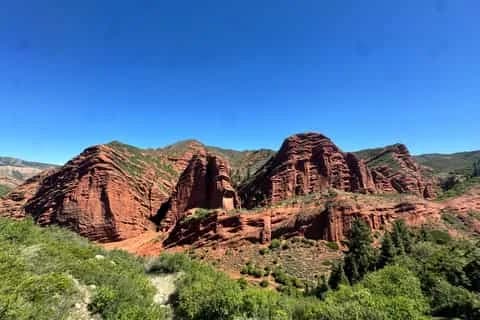
The market's great advantage is that it's done by mid-morning, which frees the rest of the day. A classic Karakol Sunday: hit Mal Bazaar at dawn, come back for the breakfast the guesthouses lay on, then spend the afternoon on the red rock formations of Jeti-Ögüz, the hot springs and valley walk at Altyn-Arashan, or the town's Dungan Mosque and wooden Orthodox cathedral. If you're moving on around the lake afterwards, the Karakol destination hub rounds up tours and transfers.
Ready to plan the wider trip? Browse Karakol tours and day trips or start with the full Karakol guide.
Chat with a real person — free
Seif and the team reply on WhatsApp 24/7 — trip questions, custom plans and booking help.
Ask Seif on WhatsAppCommon questions
What day and time is the Karakol animal market?
The Karakol animal market runs on Sunday mornings only. Go early: it gets going around first light and is busiest between roughly 7 and 9am, then winds down and is largely over by about 10am. There is no market on any other day, and arriving late means empty pens. Confirm the exact timing with your guesthouse, as the wind-down hour shifts week to week.
Where is the Mal Bazaar in Karakol?
The market, known locally as Mal Bazaar, sits on the northeast edge of Karakol, out past the centre near the ring road. It's too far to walk before dawn, so take a taxi and just say "Mal Bazaar" — every driver knows it. A ride from central Karakol costs roughly 100–200 som (about $1–2). Ask your driver to wait or arrange a pickup, as taxis thin out once selling slows.
How do I get to the animal market?
Take a taxi from the centre, roughly 100–200 som ($1–2), agreed before you set off. At 6am a private car beats waiting for a marshrutka, though shared vans do run out that way on market mornings. The easiest plan is to have your guesthouse book a car the night before and name a fair fare; Karakol hosts are used to the request and can call a driver they trust.
Is the Karakol animal market a tourist attraction or a real market?
It's a genuine working livestock market, not a show. Herders from around the Issyk-Köl basin come to buy and sell sheep, horses, cattle and goats, and nothing is staged for visitors. That's exactly what makes it worth seeing. As a traveller you're a quiet guest at someone's workplace, so keep out of the way, ask before photographing, and buy a cup of tea rather than expecting a performance.
Can I take photos at the market?
Yes, but ask first — especially before photographing people. A gesture at your camera and a smile is usually enough, and many herders are happy to oblige, though some will wave you off and that's their right. Never point a lens into the middle of a negotiation or crowd a nervous animal. It's a busy, moving livestock yard, so stand at the edges and keep your camera out of the trade itself.
What will I see at the market?
Hundreds of sheep penned in rows, horses traded in a more deliberate section worth walking to, cattle and goats, and herders in kalpaks checking teeth, running hands over backs and haggling hard. Animals get loaded into car boots and small trucks, cash changes hands in folded wads of som, and tea stalls sell chai, samsa and fried bread. The haggling itself is the real spectacle.
What should I wear and watch out for?
Wear warm layers — pre-dawn Karakol is cold even in summer — and boots or shoes you don't mind ruining. It's a livestock yard: muddy, churned, full of dung and slippery after rain. Watch where you step, and stay clear of animals being led or loaded, because a spooked horse won't mind your photo. Keep valuables secure in the crowd, as with any busy market anywhere.
Is the Karakol animal market worth visiting?
Yes, if you can be there by around 8am. It's one of the most rewarding free hours in Karakol — an open, unpolished window into rural Kyrgyz livestock trade. Photographers love the early light and movement. Skip it if you can't face a cold dawn, if churned mud and blunt animal handling put you off, or if you'd rather sleep before a big afternoon trek in the mountains.
What can I combine with the animal market on a Sunday?
Because the market is done by mid-morning, the rest of the day is free. A classic Karakol Sunday pairs a dawn visit to Mal Bazaar with an afternoon at the red Jeti-Ögüz rock formations, the hot springs and valley at Altyn-Arashan, or the town's Dungan Mosque and wooden Orthodox cathedral. It also fits neatly as the acclimatisation day before starting the Ala-Kul trek.
Book it on This is Kyrgyzstan
Turn this guide into a trip
Kyrgyzstan's bestsellers
The experiences travelers book most, across the country
Keep reading
Issyk-Köl: North Shore vs South Shore
Which side of Lake Issyk-Köl to choose — the developed, beachy north shore around Cholpon-Ata, or the wild, scenic south with Skazka Canyon, Jeti-Ögüz and Barskoon.
By TiK Editors7 min read
Song-Köl vs Issyk-Köl: Which Lake to Visit?
Song-Köl is a remote summer yurt lake at 3,016 m; Issyk-Köl a huge year-round resort lake. How they compare — and why you should do both.
By TiK Editors7 min read
Cholpon-Ata Petroglyphs: A Visitor's Guide (2026)
A 42-hectare field of carved glacial boulders above Lake Issyk-Köl, with around 2,000 Bronze Age and Saka-Scythian rock carvings. What to see, fees and timing.
By TiK Editors8 min read