 Image via GetYourGuide
Cholpon-Ata Petroglyphs: A Visitor's Guide (2026)
A 42-hectare field of carved glacial boulders above Lake Issyk-Köl, with around 2,000 Bronze Age and Saka-Scythian rock carvings. What to see, fees and timing.
Book it on This is Kyrgyzstan
Issyk-Kul · Turn this guide into a trip

The Cholpon-Ata petroglyphs are an open-air field of glacial boulders on the moraine terrace just above the town, carved with around 2,000 images and left where they lie. Locals call it the "stone garden." You walk marked paths between scattered rocks with Lake Issyk-Köl below and the Kungey Ala-Too behind, picking out ibex, snow leopards, hunters and sun symbols pecked into the stone across roughly three thousand years. Entry is about 2 US dollars, it sits within walking distance of the town centre, and an hour is plenty. Go at sunrise or before 10:00, when low light throws the shallow carvings into relief and there is still some cool air on an open site with no shade at all.
This is not a spectacle in the way a temple or a citadel is. The carvings are shallow, weathered and often genuinely hard to find, and the field has taken a lot of visitor wear over the years. Come with the right expectation and it rewards you; come expecting Petra and you will be underwhelmed. What makes it worth the stop is the setting, the sheer age of the marks, and the chance to trace a way of seeing animals that runs straight through to the felt carpets sold in the bazaar today.
What the site actually is
Spread across about 42 hectares, the site is more archaeological landscape than museum. Alongside the petroglyphs you will pass stone circles, kurgan burial mounds and balbals, the upright stone grave markers left by Turkic peoples. The boulders themselves were dumped here by a retreating glacier; centuries later, people found the smooth, dark, sun-varnished surfaces and used them as a canvas, pecking through the dark patina to the paler rock underneath.
Dating the carvings is where honest sources part ways. The most commonly cited span runs from around 800 BC to AD 1200, but others push the earliest work back to the second millennium BC and cap the main phase in the early centuries AD. The safest way to hold it: carving here spans the Bronze Age through to the medieval period, and the best-known, most characteristic images, the curled animals in the so-called Scythian "animal style," were made by Saka-Scythian and Usun nomads from roughly the 8th century BC. If a guide gives you one confident, tidy date range, treat it as a simplification rather than settled fact.
Some of the stone circles are read by local guides as ritual or astronomical arrangements, aligned to sunrise or the solstices. It is a plausible and often-repeated idea, but it is interpretation rather than proven archaeology, so enjoy the theory without treating it as gospel.
What to look for
The animal-style carvings are the heart of it. Look for ibex and deer with exaggerated curled horns and bodies coiled into near-circles, snow leopards, and hunting scenes, including the striking motif of hunters using tamed leopards to run down game. There are chariots, human figures, and solar and geometric symbols. Much of it is about motion, animals mid-leap or mid-flight, captured in a few economical lines.
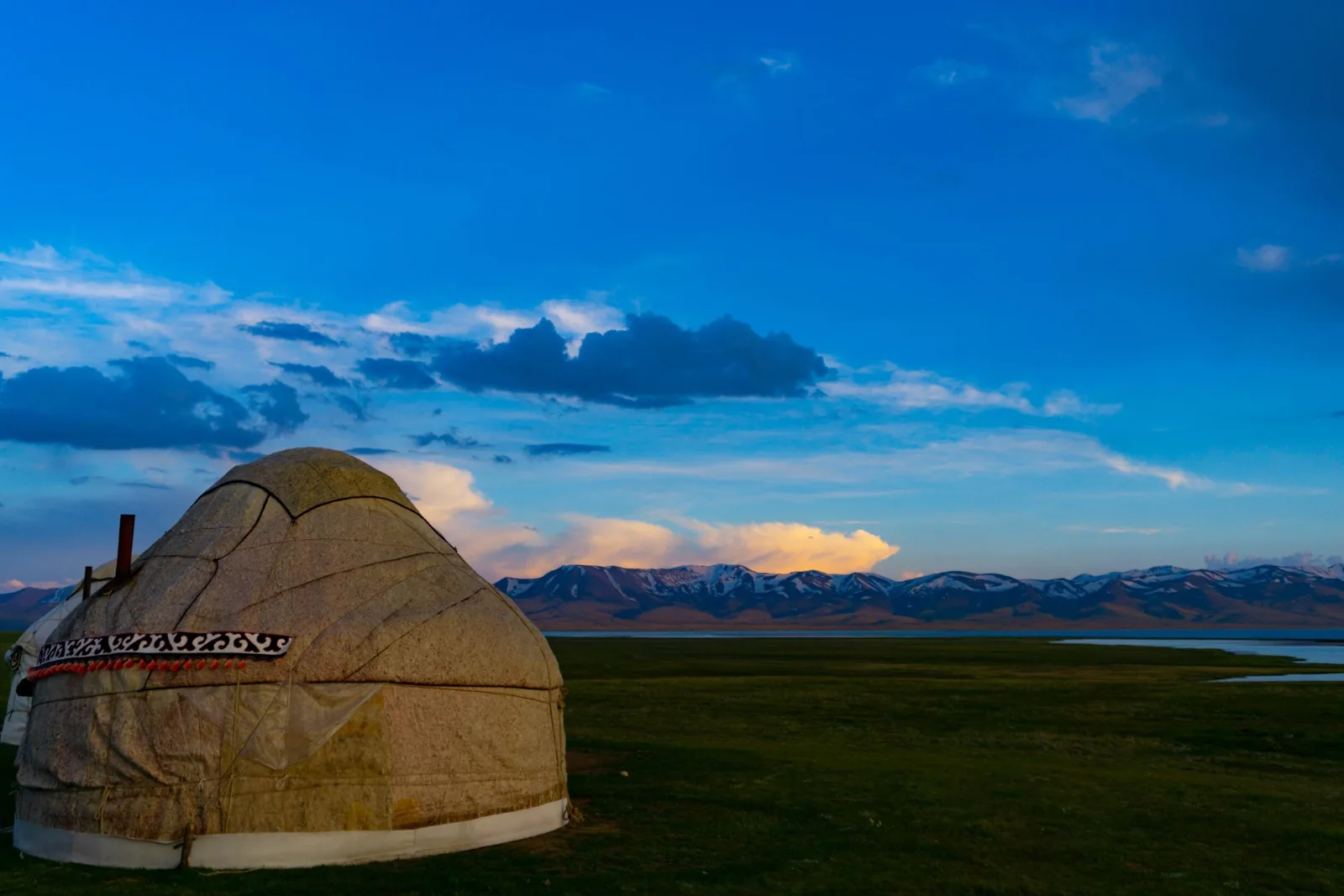
The connective detail worth carrying with you: these same coiled-animal motifs are the direct ancestors of the patterns still stitched into Kyrgyz shyrdak felt carpets. What looks like abstract decoration on a yurt floor is a design language three thousand years deep.
| What to look for | Where it fits | Spotting tip |
|---|---|---|
| Ibex & deer, curled horns | Saka-Scythian "animal style," from ~8th c. BC | The most numerous and clearest images; start here |
| Snow leopards | Same era, apex-predator motif | Bodies coiled tight, often stalking prey |
| Hunting scenes with leopards | Saka-Scythian | Small human figures beside big cats running down game |
| Chariots & carts | Bronze Age / early nomadic | Simple wheeled outlines, easy to miss |
| Sun discs & geometric marks | Across all periods | Ritual symbols; look on flatter upper faces |
| Balbals & stone circles | Turkic era & earlier | Standing stones, not carvings; scattered across the field |
There is very little interpretation on site, few labelled panels, and no shade, so a good local guide earns their fee here more than at most Kyrgyz sights. A guide will walk you straight to the best boulders you would otherwise miss and put dates and meaning to what you are seeing. If you would rather go alone, that is fine too; just slow down, use the raking early or late light, and accept that you will find fewer carvings than the total suggests.
Fees, hours and how long to spend
Entry is roughly 150 to 200 som, about 2 US dollars, paid at a ticket kiosk on the edge of the field. There are no reliably published opening hours; it is essentially an open field with a gate, and prices and arrangements shift, so confirm the fee on the day. Budget 45 minutes to an hour and a half depending on how deep you want to go. The one timing rule that matters: come early. By mid-morning in July the sun is fierce, there is nowhere to hide from it, and the flat overhead light flattens the carvings until they nearly vanish. First light or the last hour before sunset is when the stone garden comes alive.
Getting there
The field sits immediately outside the town centre, uphill from the main road, so from central Cholpon-Ata it is a walkable 20 to 30 minutes or a very short taxi ride. If you are staying in the resort strip at Bosteri just to the east, a taxi is quick and cheap; agree the fare first.
Coming from Bishkek, Cholpon-Ata is the obvious base. A marshrutka from the Western Bus Station runs about 500 to 650 som (6 to 8 US dollars) and takes four to five hours; a shared taxi costs a little more but is faster, at three and a half to five hours. From Karakol at the eastern end of the lake it is a three-hour-plus drive along the north shore. For the wider picture of transport, seasons and where to stay around the lake, see our Lake Issyk-Köl guide and the dedicated Cholpon-Ata guide.
Making a half-day of it
The petroglyphs pair naturally with the rest of Cholpon-Ata, and together they make an easy half-day. Do the stone garden first thing, then drop back into town.
Ruh Ordo is the town's most visited and most divisive attraction: a lakeside cultural park founded in 2002, with five small white chapels representing Orthodoxy, Islam, Judaism, Buddhism and Catholicism, plus a separate pyramid for Tengrism, the pre-Islamic sky religion. It is dedicated to the writer Chingiz Aitmatov, Kyrgyzstan's most famous literary figure, and the statuary elsewhere runs from Aphrodite to Aristotle to optical-illusion paintings. Read it as earnest interfaith monument or as theme-park kitsch; either way the white chapels against the water photograph beautifully. Entry is around 500 som (roughly 3 to 8 US dollars), open about 09:00 to 19:00 in summer and shorter hours in winter; allow two to three hours if you take a free walking tour.
The beaches are the other half of Cholpon-Ata's identity. The town's own sand is a darker grey; the loudest, most developed strip is Bosteri next door, with the big waterpark, marinas and water-sport rentals running anywhere from 15 to 100-plus US dollars. Beach entry itself is often free. The water sits at 22 to 24°C in July and August, swimmable but never tropical, and the alpine sun at 1,600 metres burns fast, so a hat and high-factor sunscreen are not optional.
The town also has a working hippodrome, which hosted the first three editions of the World Nomad Games (2014, 2016 and 2018) before the event travelled to Turkey and Kazakhstan. The sixth edition returns to Kyrgyzstan from 31 August to 6 September 2026, opening in Bishkek with main events around Lake Issyk-Köl; if your trip lands in that window, read our World Nomad Games guide and book beds early. For everything the shore offers beyond the town, browse the best Issyk-Köl tours.
If you have longer, the north shore runs east to Karakol, the natural next stop, with its Chinese-built Dungan Mosque, wooden Orthodox cathedral and the red rock fins of nearby Jeti-Ögüz. See the Karakol guide for that end of the lake.
Is it worth it?
Yes, with a clear head about what it is. For anyone interested in archaeology, nomadic history or the roots of Kyrgyz design, the stone garden is a genuine highlight and cheap to boot. For a family after beach time, it is a pleasant, low-effort hour rather than an unmissable sight. Go early, take a guide if you can, look hard, and let the setting do the rest.
Ready to build the lake into a trip? Start with the wider Issyk-Köl destination hub and the best time to visit Kyrgyzstan to line your dates up with the short, intense north-shore season.
Chat with a real person — free
Seif and the team reply on WhatsApp 24/7 — trip questions, custom plans and booking help.
Ask Seif on WhatsAppCommon questions
How much does it cost to visit the Cholpon-Ata petroglyphs?
Entry is roughly 150 to 200 som, about 2 US dollars, paid at a ticket kiosk on the edge of the field. It is one of the cheapest sights on the lake. Prices and arrangements do shift, so confirm the fee on the day. There are no reliably published opening hours, as it is essentially an open field with a gate rather than a formal museum with fixed times.
How long should I spend at the petroglyph site?
Budget 45 minutes to about 90 minutes. The site covers 42 hectares of scattered boulders, but the carvings are shallow and weathered, so most visitors have seen the best of it within an hour. Take longer if you have a guide walking you between the strongest boulders, or if you want to combine the petroglyphs with the stone circles and burial mounds spread across the same field.
What will I actually see carved on the stones?
Mostly ibex and deer with exaggerated curled horns, snow leopards, hunting scenes, chariots, and solar and geometric symbols. The best-known images are in the Saka-Scythian "animal style," with bodies coiled into near-circles. The same motifs survive today in Kyrgyz shyrdak felt carpets. Be realistic: the carvings are shallow and hard to spot, with little signage, so low early or late light and patience make a big difference.
How old are the Cholpon-Ata petroglyphs?
Sources genuinely disagree. Carving here spans the Bronze Age through to the medieval period, commonly cited as around 800 BC to AD 1200, though some date the earliest work to the second millennium BC. The most characteristic animal-style images were made by Saka-Scythian and Usun nomads from roughly the 8th century BC. Treat any single tidy date range as a simplification rather than settled archaeology.
When is the best time of day to visit?
Go at sunrise or before 10:00. The carvings are shallow, so low, raking light throws them into relief, while flat midday sun flattens them until they nearly disappear. There is also no shade anywhere on the site, and summer midday heat at the lake is intense. The last hour before sunset works almost as well as dawn if a morning start is not realistic.
How do I get to the petroglyphs from Cholpon-Ata town?
The field sits immediately outside the town centre, uphill from the main road, so it is a walkable 20 to 30 minutes or a very short taxi ride from central Cholpon-Ata. From the Bosteri resort strip just east, a taxi is quick and cheap; agree the fare before you set off. From Bishkek, reach Cholpon-Ata by marshrutka (about 500 to 650 som, four to five hours) or a faster shared taxi.
Do I need a guide, or can I visit on my own?
You can visit alone, but a guide adds more here than at most Kyrgyz sights because there is almost no interpretation on site and few labelled panels. A good guide walks you straight to the best boulders you would otherwise miss and explains the dates and animal-style symbolism. If you go solo, slow down, use early or late light, and accept that you will find fewer carvings than the total suggests.
What else can I combine with the petroglyphs?
The site pairs naturally into a half-day with the rest of Cholpon-Ata. Add Ruh Ordo, the lakeside cultural park with five interfaith chapels and a Tengrism pyramid, dedicated to writer Chingiz Aitmatov, plus the town beaches and the hippodrome that hosted the first three World Nomad Games. Do the petroglyphs at first light, then move on to the town and shore as the day warms up.
Are the astronomical alignments real?
Some local guides describe the stone circles as ritual or astronomical arrangements aligned to sunrise or the solstices. It is a plausible and widely repeated idea, but it remains interpretation rather than proven archaeology. Enjoy the theory as part of the site's atmosphere without treating it as established fact, and be a little wary of anyone presenting a precise astronomical claim as certain.
Book it on This is Kyrgyzstan
Turn this guide into a trip
Kyrgyzstan's bestsellers
The experiences travelers book most, across the country
Keep reading
Issyk-Köl: North Shore vs South Shore
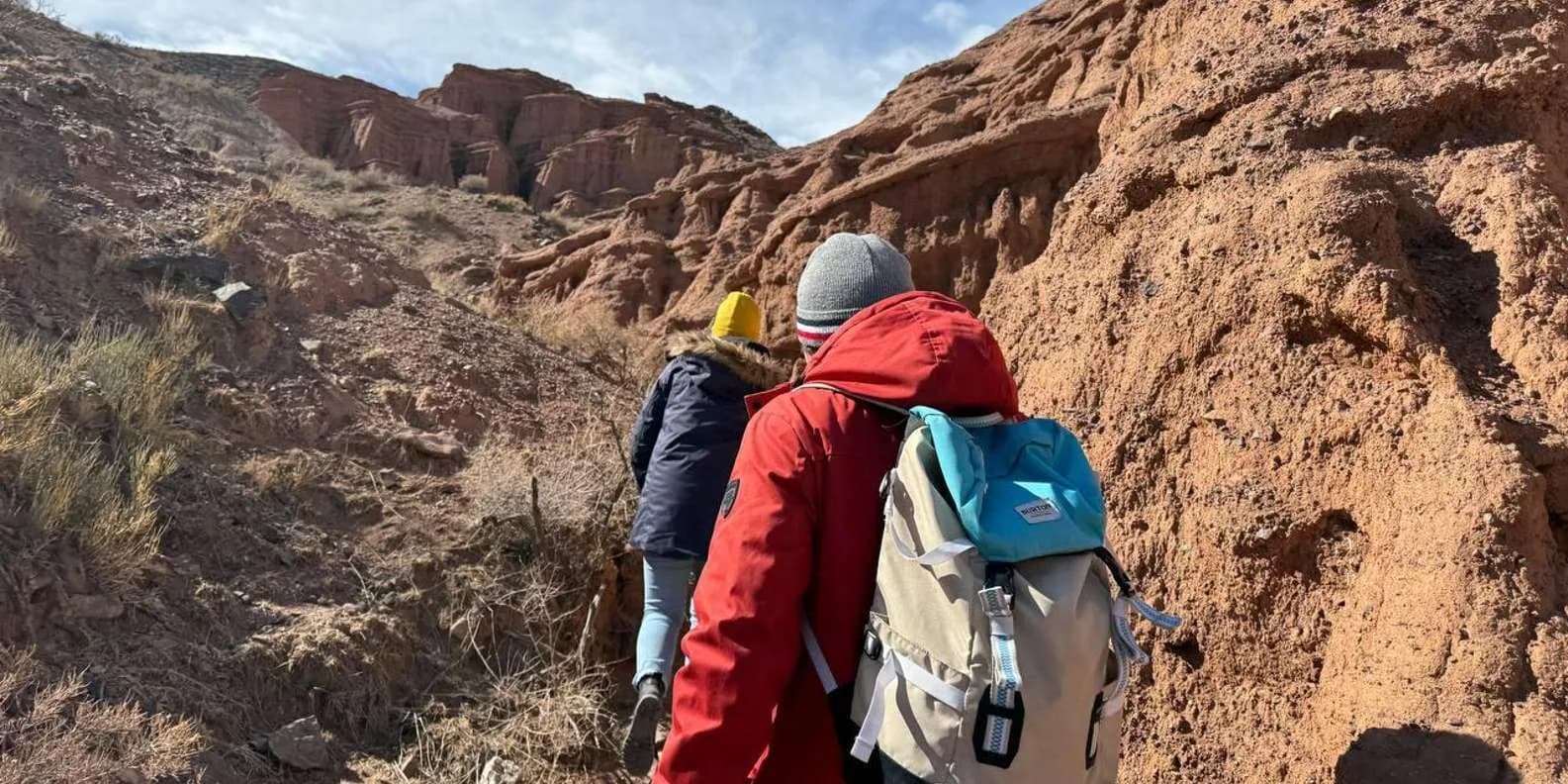
Which side of Lake Issyk-Köl to choose — the developed, beachy north shore around Cholpon-Ata, or the wild, scenic south with Skazka Canyon, Jeti-Ögüz and Barskoon.
By TiK Editors7 min read
Karakol Animal Market: Sunday Mal Bazaar Guide
Karakol's Sunday livestock market runs from dawn to about 10am on the town's northeast edge. What you'll see, how to get there and market etiquette.
By TiK Editors7 min read
Song-Köl vs Issyk-Köl: Which Lake to Visit?
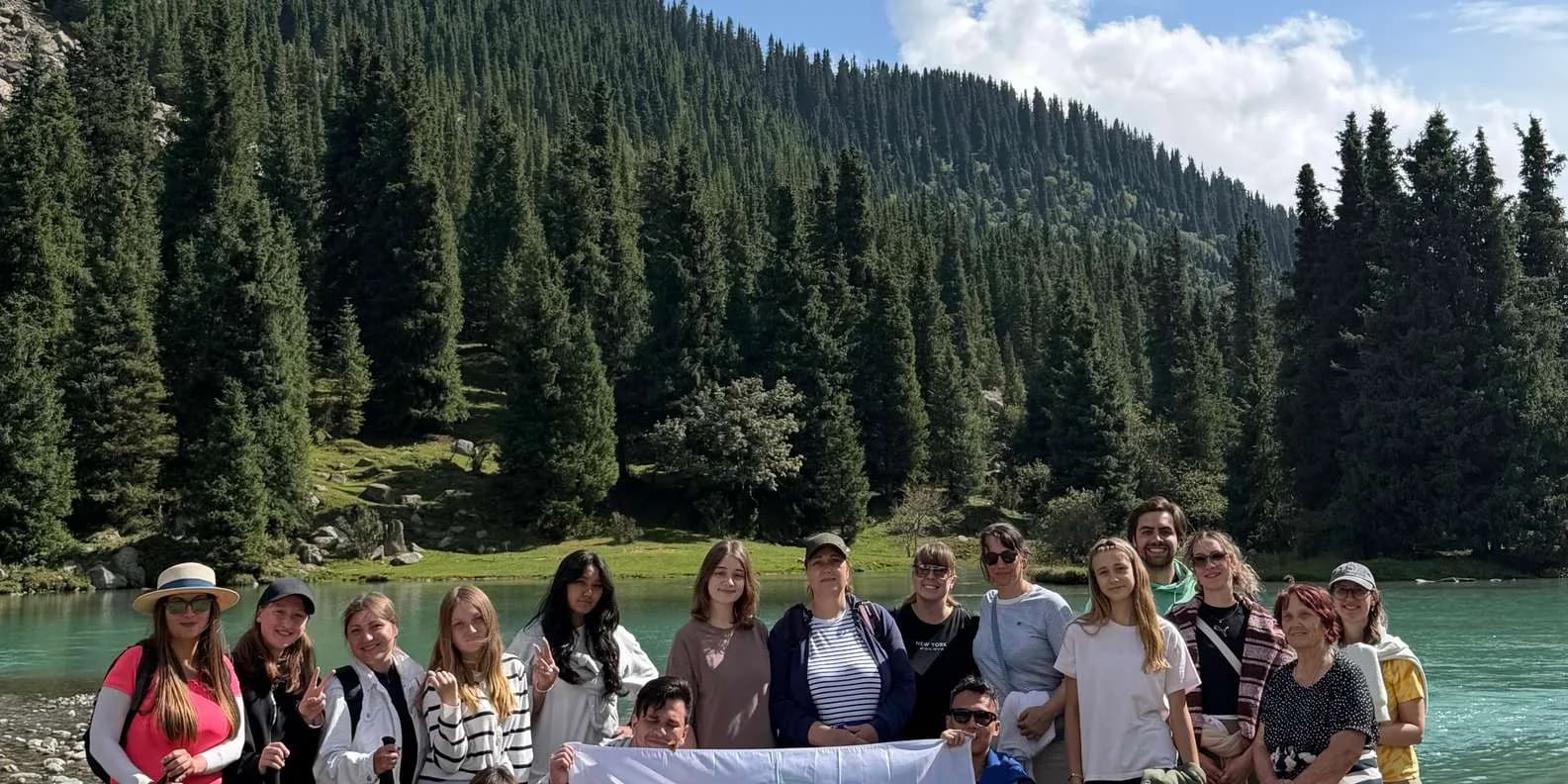
Song-Köl is a remote summer yurt lake at 3,016 m; Issyk-Köl a huge year-round resort lake. How they compare — and why you should do both.
By TiK Editors7 min read