 Image via GetYourGuide
World Nomad Games Guide: Kyrgyzstan 2026
The 6th World Nomad Games run 31 Aug–6 Sep 2026 in Kyrgyzstan. What to watch, where to sit, and how to see the same traditions year-round.
Book it on This is Kyrgyzstan
Turn this guide into a trip

The 6th World Nomad Games are happening right now in Kyrgyzstan, from 31 August to 6 September 2026 — the event returning to the country that invented it. The opening ceremony is in Bishkek on 31 August, Kyrgyzstan's Independence Day and the 35th anniversary of independence; the competition itself runs from 1 to 6 September around the north shore of Issyk-Köl, split between the Cholpon-Ata hippodrome and sports complexes and the Kyrchyn jailoo up in the hills. If you are on the ground this week, this is where to point yourself. If you have missed it, the last section tells you how to see the same skills any month of the year.
What the World Nomad Games actually are
The World Nomad Games are a competitive festival of ethnosport — the traditional games of the nomadic world, staged with the seriousness of a real championship rather than as a folklore show. Wrestlers, horsemen, archers, hunters and board-game players from dozens of countries compete for medals in disciplines that until recently survived only at weddings, funerals and village holidays. Kyrgyzstan conceived the Games as a cultural-diplomacy project, first proposing them in 2012 and staging the founding edition in 2014.
Why it matters: for a small mountain country whose national identity is built on a nomadic past that the Soviet century tried hard to erase, the Games are a deliberate act of revival. They have given a competition structure — federations, rulebooks, weight classes, televised finals — to practices that were fading, and they have pulled them onto a world stage. UNESCO recognised the project itself in 2021 as a model of good safeguarding practice, which is unusual: the register normally lists traditions, not the events built to protect them.
Expect two very different atmospheres. Down at Cholpon-Ata you get stadium sport — horse racing, wrestling bouts, packed stands. Up at Kyrchyn you get the cultural heart: a temporary city of yurts, eagle hunters on the hillsides, felt-makers, blacksmiths and Manas reciters. Most people who travel for the Games come for Kyrchyn.
The editions, and where they have been held
Kyrgyzstan hosted the first three Games, all at Cholpon-Ata, before the event went on tour. It has now brought it home.
| Edition | Year | Host | Note |
|---|---|---|---|
| I | 2014 | Cholpon-Ata, Kyrgyzstan | The founding edition, small and improvised (~19 countries) |
| II | 2016 | Cholpon-Ata, Kyrgyzstan | 40 nations; the edition that made the Games internationally famous |
| III | 2018 | Cholpon-Ata, Kyrgyzstan | 37 sports; presidents of six countries at the opening |
| IV | 2022 | Iznik, Turkey | First edition outside Kyrgyzstan; ~102 countries reported |
| V | 2024 | Astana, Kazakhstan | ~89 countries |
| VI | 2026 | Bishkek + Issyk-Köl, Kyrgyzstan | The Games return home; opening on Independence Day |
There was no edition in 2020 because of the pandemic. For the 2026 Games, Kyrgyzstan reclaimed exclusive trademark rights to the World Nomad Games name in December 2025, and the mascot is the snow leopard. Note that reported participation figures bounce around — 102 countries in 2022, 89 in 2024, with roughly 89-plus expected in 2026 — so treat the series as popular rather than as a straight line of growth. The host for the edition after 2026 has not been announced.
The signature sports
The programme is large, and counts of "how many sports" range from around 21 to more than 40 depending on whether sub-disciplines are tallied separately. These are the ones worth understanding before you sit down to watch.
| Sport | Kyrgyz name | What happens |
|---|---|---|
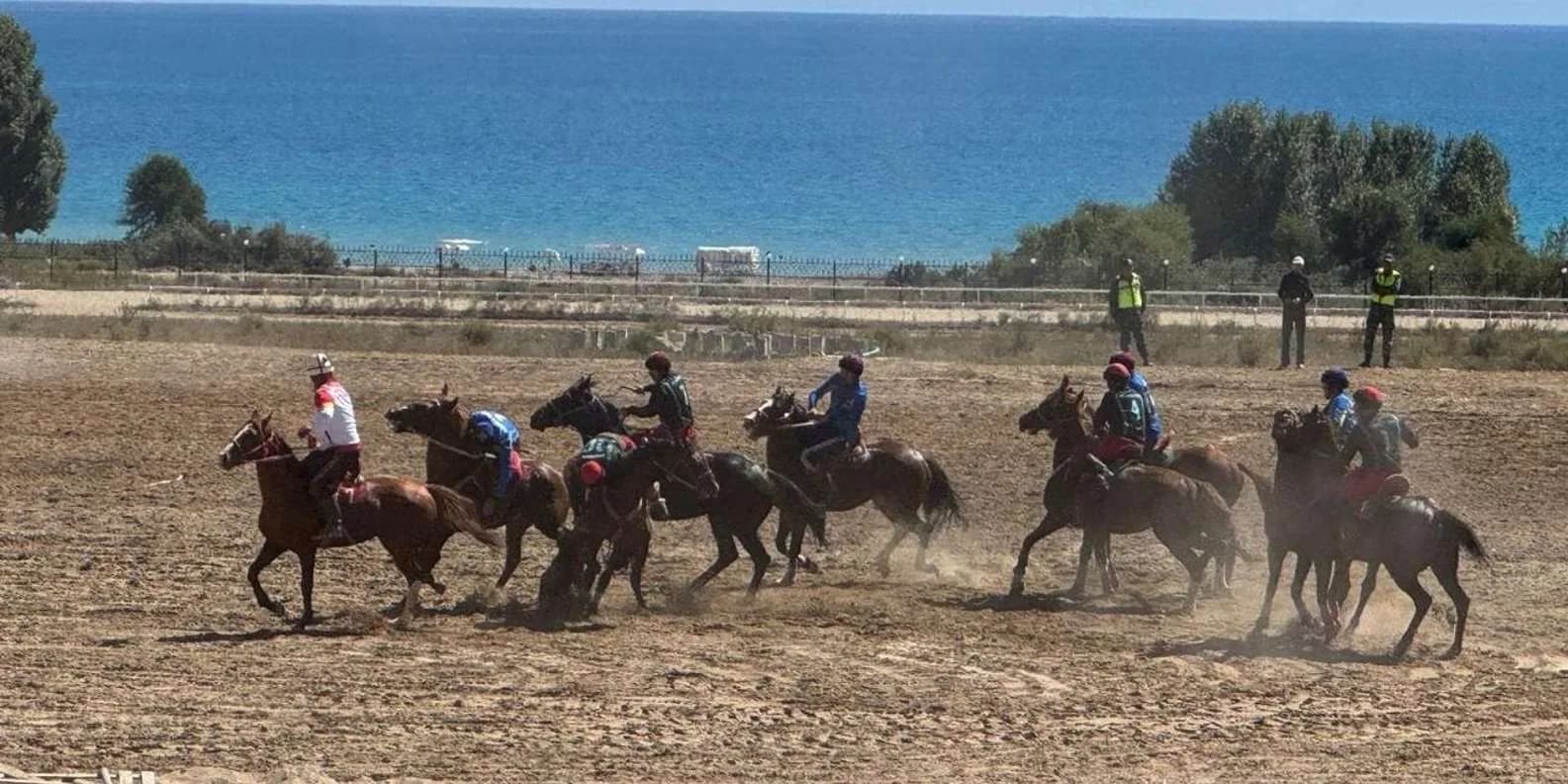
| Kok-boru | kök-börü / ulak-tartysh | Two mounted teams fight over a headless goat carcass (~30–35 kg) and try to drop it into the opponents' raised goal, the tai kazan. The headline event. |
| Long-distance racing | at-chabysh, baige, kunan chabysh | Cross-country horse races, traditionally 20–30 km; separate races for younger horses. Jorgo salysh judges a horse's smooth ambling gait rather than speed. |
| Horseback wrestling | er-enish (oodarysh) | Two riders grapple bare-handed and try to drag each other out of the saddle to the ground. Bouts are short. |
| Eagle hunting | salbuurun / berkutchi | Trained golden eagles and taigan sighthounds worked to a lure or dragged skin; archery from horseback rounds out the hunting programme. |
| Belt wrestling | alysh | Upright wrestling in jackets and belts, both hands gripping the opponent's belt at all times; scored by how the opponent lands. |
| Kyrgyz kurosh | kurosh | Jacket wrestling by weight class, one of several grappling styles on the mat. |
| Toguz korgool | toguz korgool | A mancala-family board game on two rows of nine pits; taken as seriously as chess and taught in schools. UNESCO-listed since 2020. |
| Ordo | ordo | A ring game with sheep knucklebones representing a khan's camp; players flick a heavy shooting bone to knock pieces out. A tactical team game. |
A few things to know before you watch. Kok-boru is a real, physical contact sport played with an actual carcass — do not expect a sanitised "horseback polo". It is bloody, it is loud, and it is the most exciting thing on the schedule. It was inscribed on UNESCO's list of intangible cultural heritage in 2017. You may also see tyiyn enmei, where a rider snatches coins from the ground at a gallop, and kyz kuumai ("chase the girl"), a courtship race that is often wrongly described abroad as bride kidnapping — it is not that, and the two should never be confused.
The Kyrchyn ethno-village
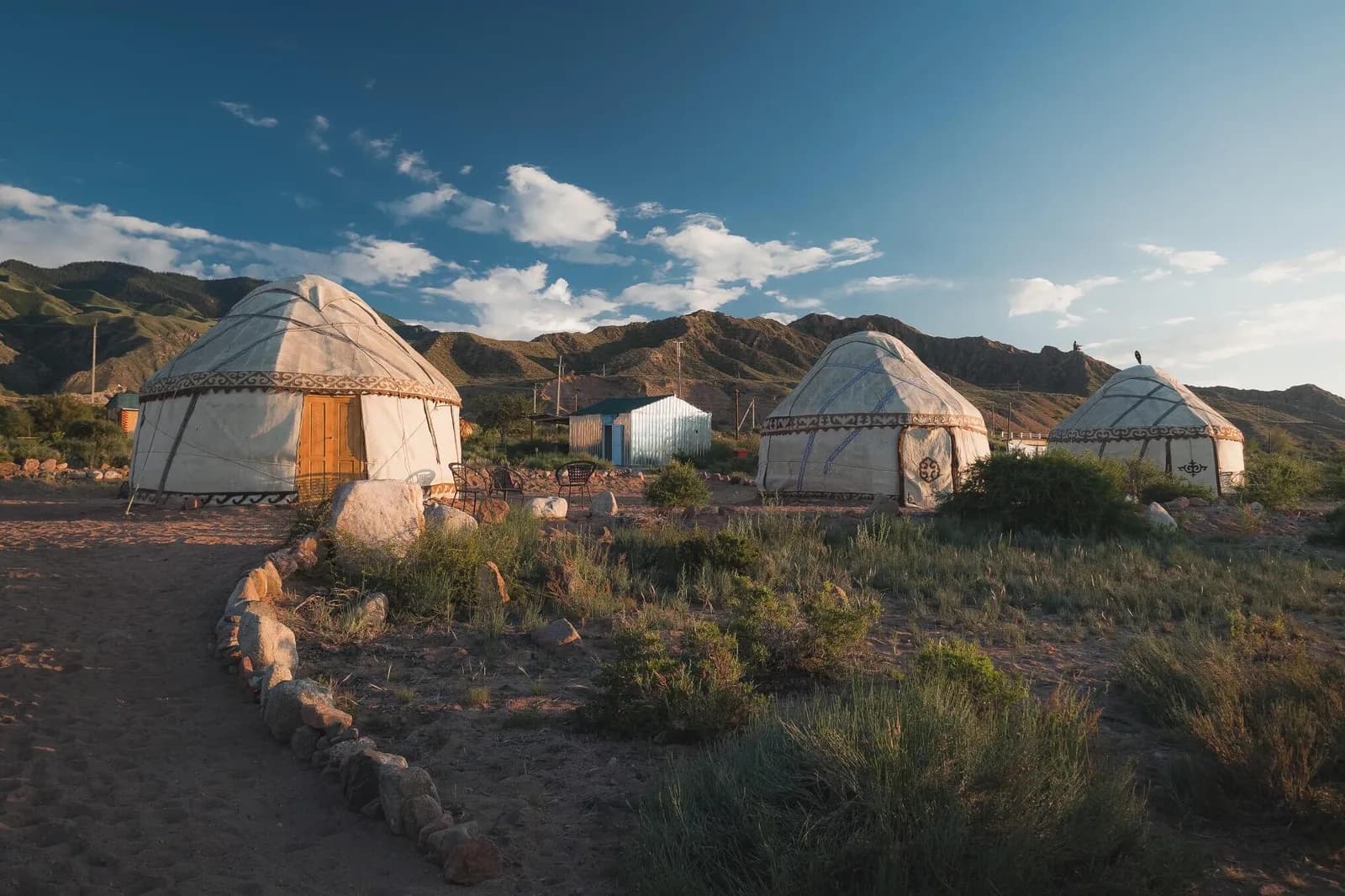
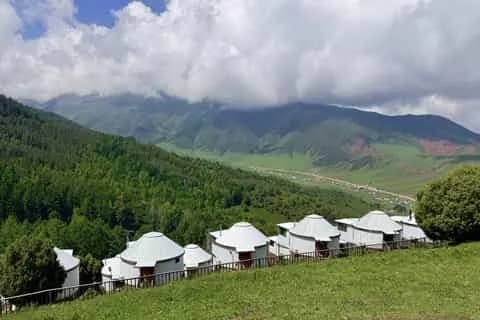
Kyrchyn (also written Kyrchyn Gorge or Kyrchyn Jailoo) is a real summer pasture in the hills inland from Cholpon-Ata, roughly 40–70 km from the lake shore by road. For each Kyrgyzstan-hosted edition it becomes a temporary city of several hundred yurts, and it is the photographic and cultural centre of the Games.
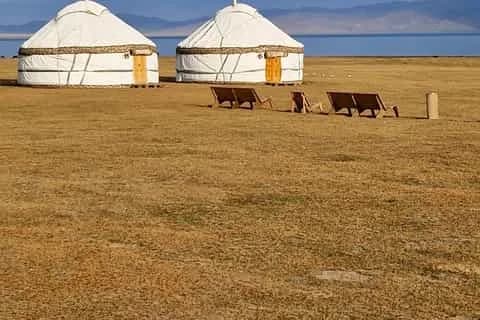
This is not a stage set. Regional delegations each raise a camp, cook their own food, and demonstrate the crafts that fill a real nomad summer: felt-making and shyrdak stitching, yurt-raising, blacksmithing, bone and leather work. There is live music on the komuz and the kyl kyyak, jaw-harp playing, and recitation from the Manas epic by manaschi bards who chant it from memory. The archery, the falconry and eagle-hunting demonstrations, and the hunting-with-dogs displays all happen here; the horse and wrestling events are down at Cholpon-Ata.
Go to Kyrchyn early in the day. It is crowded during Games week, the road up is slow, and the light and the crowds are both better in the morning. Outside Games years it reverts to an ordinary jailoo with grazing families and a few day-trip yurt camps.
How to attend and spectate
The competition is spread across four main venues, and you will want private transport to move between them.
- Cholpon-Ata hippodrome — horse racing and kok-boru.
- Cholpon-Ata sports complex — wrestling and martial arts.
- Rukh Ordo cultural centre — strength contests and board games.
- Kyrchyn ethno-village — archery, falconry and the whole cultural programme.
Tickets for the opening ceremony are handled through the state portal ticket.gov.kg and a passport is required to buy. Many of the Cholpon-Ata and Kyrchyn events have been reported as free to watch, with a few — kok-boru finals in particular — ticketed separately. Ticketing arrangements were still being finalised close to the event, so check the official channel on the day rather than trusting older write-ups.
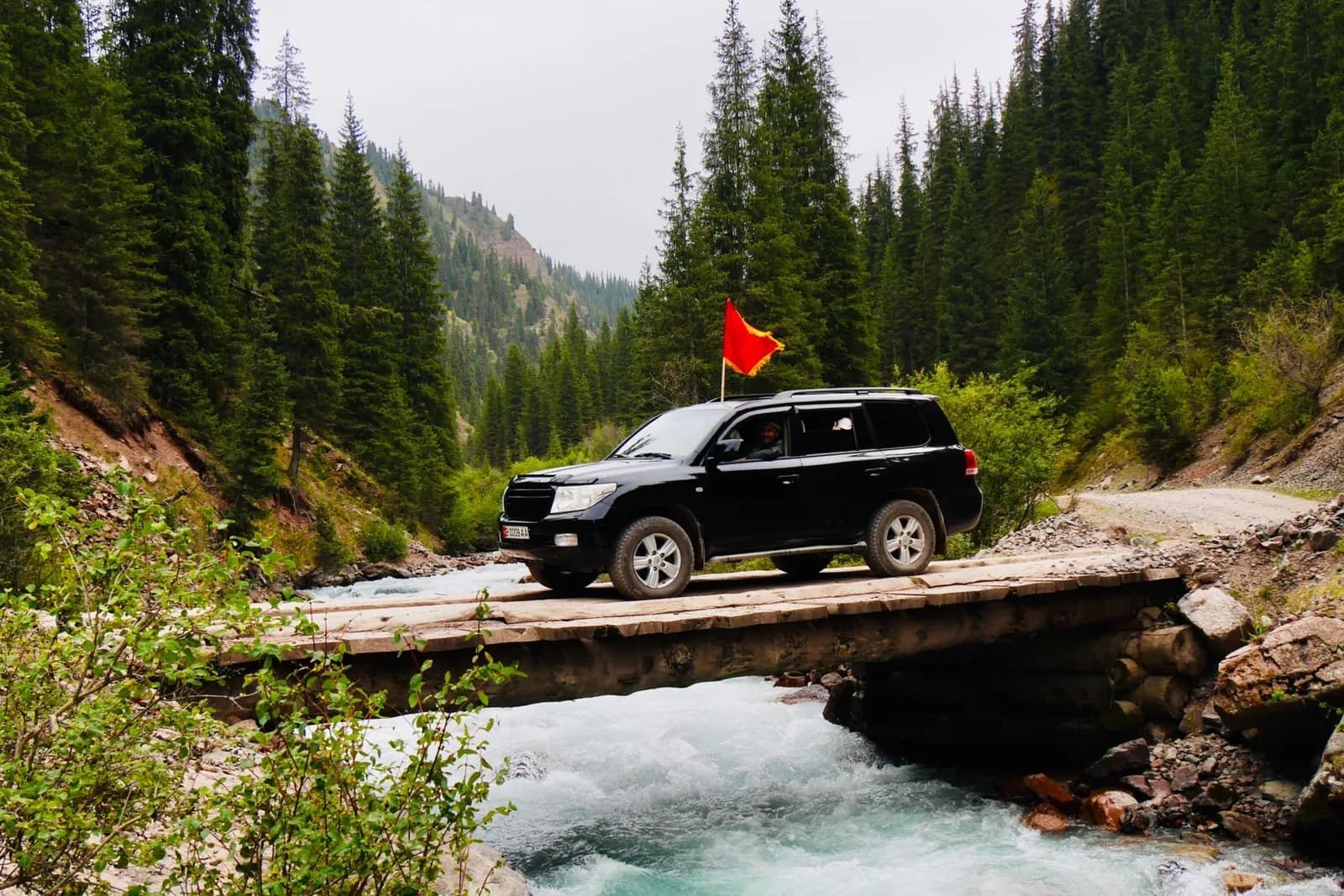
On logistics: Bishkek to Cholpon-Ata is about 3–4 hours by road, and Kyrchyn is a further slow drive inland from there. Base yourself in Cholpon-Ata or along the Issyk-Köl north shore for the competition days and in Bishkek for the ceremonies. Two warnings for 2026 specifically: the Games coincide with a regional summit in the same window, which means heavy security, road closures and full hotels; and this is the peak of the Issyk-Köl summer season anyway, so book accommodation as far ahead as you can. If you have not locked in a bed and a driver, do that before anything else.
Eagle hunting, up close
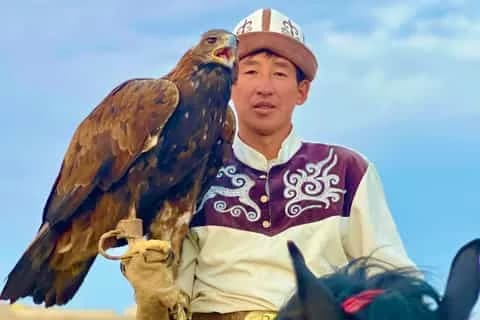
The eagle hunters — berkutchi in Kyrgyz — are the image most people carry away from the Games, and they are worth understanding properly. The bird is the golden eagle (berkut); females are used because they are larger, and a working bird weighs roughly 5–7 kg. A hunter and a bird form a partnership that lasts years, and traditionally the eagle is released back to the wild in its prime so it can breed.
The key fact for anyone booking an "eagle hunting" trip: real hunting is a winter activity, roughly November to February, when there is snow to track on. What you see at the Games, or on a summer day trip, is a demonstration — the hunter releases the bird from a hillside and it flies down to a swung lure or a dragged fox skin. That is not fake. The bird, the skill and the family tradition are all real, and the fee keeps the practice alive. But no animal is killed and it is not a hunt. Be wary of a tethered bird posed for photos all day at a roadside; ask whether the bird actually hunts in winter and whether the family will release it. Falconry has been UNESCO-listed since 2010, and Kyrgyzstan joined the multinational listing in 2021.
Seeing the same traditions year-round
Miss the Games and you have not missed the culture. The single best base for eagle hunting is Bokonbaevo, on the quieter south shore of Issyk-Köl, where several berkutchi families give demonstrations — usually a half-day session, roughly $20–40 (about 1,750–3,500 som) per person, bookable a day or two ahead through the local community-tourism office. Nearby Kyzyl-Tuu is the yurt-makers' village, where families build boz-üy commercially and often bundle an eagle demonstration with a yurt-raising. Joining a genuine working hunt is possible but must be arranged in advance, happens only in winter, costs more like $50–80 a day, and frequently ends with no kill at all.
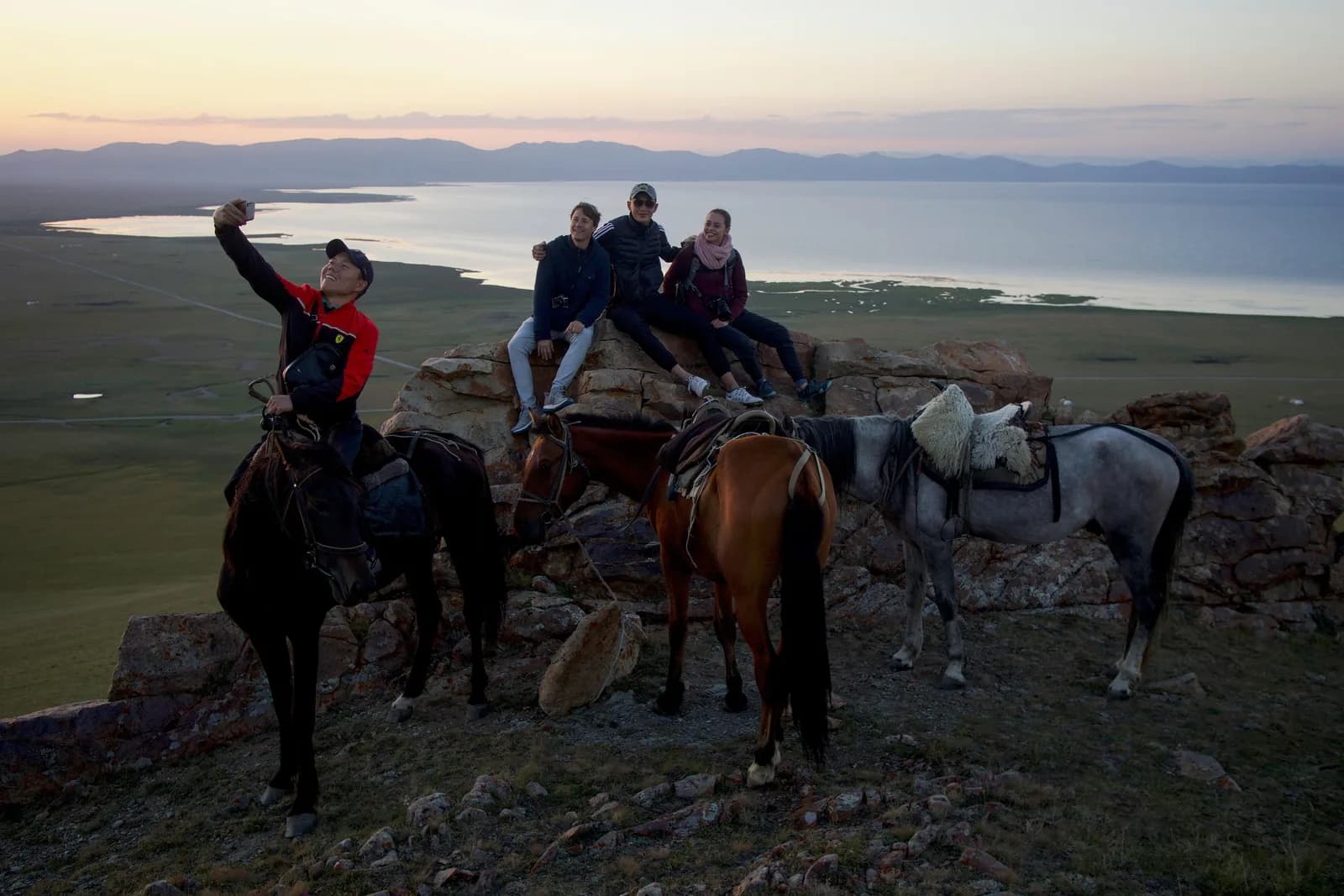
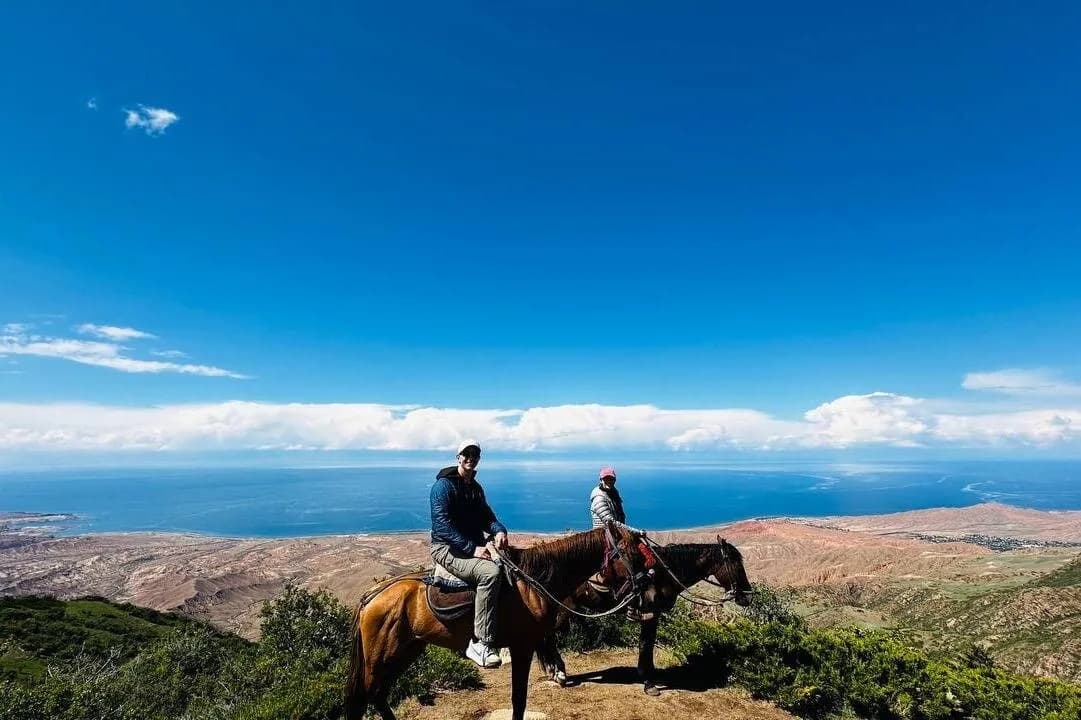
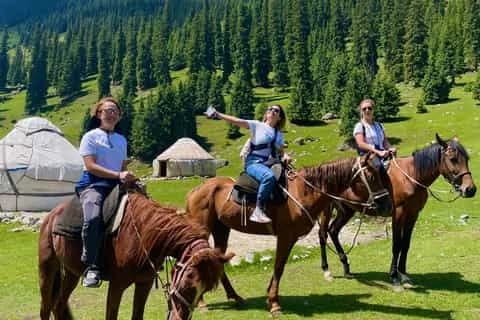
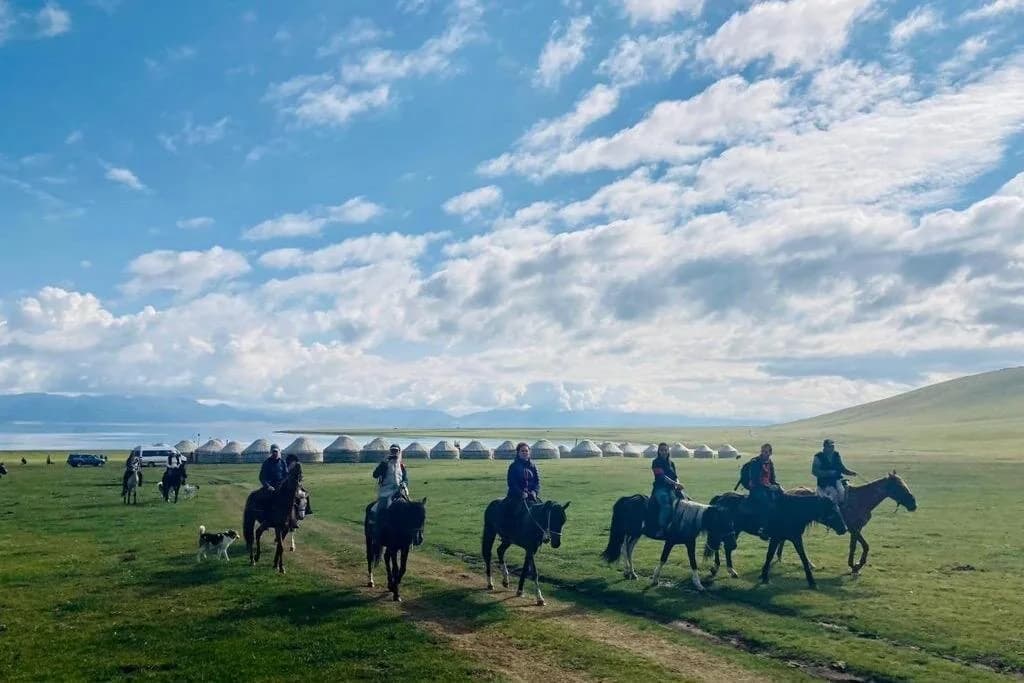
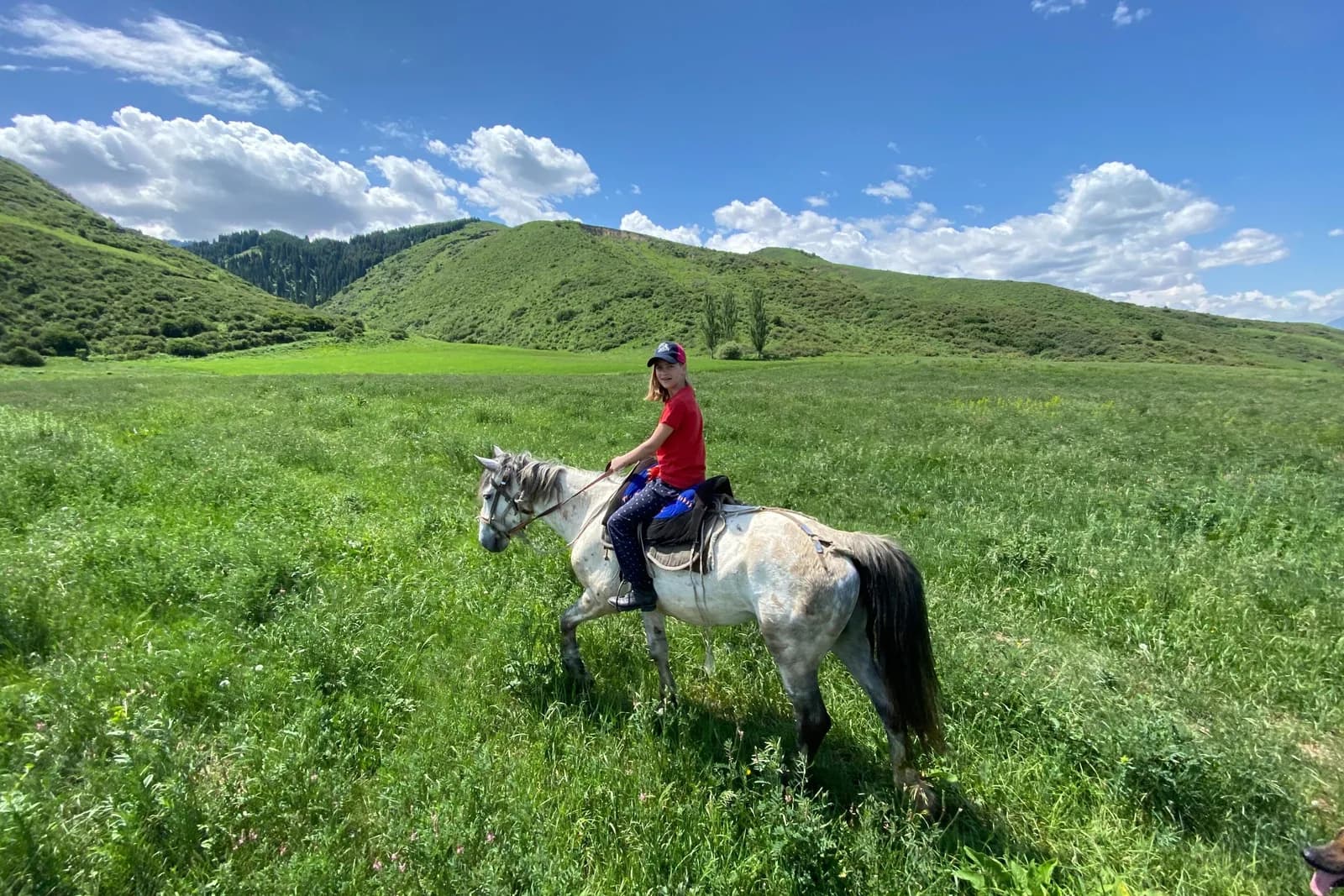
Kok-boru is played across the country in the cooler months, clustering around autumn, Nowruz and family memorial feasts — ask locally rather than expecting a fixed schedule. The Issyk-Köl south shore also runs a summer calendar of ticketed festivals — a birds-of-prey festival near Bokonbaevo in August, horse-game days at lakeside villages — that recur on roughly the same weeks each year; treat published dates as a seasonal pattern and confirm before you travel. And a multi-day horse trek out of Kyzart or Jyrgalan, with nights in a jailoo yurt, gets you closer to the living version of all this than any grandstand can. The wooden churches and Chinese-form mosque of Karakol make a natural cultural pairing at the east end of the lake.
Want to build the culture into a wider trip? Browse our culture tours and lake-and-nature itineraries around Issyk-Köl, and pin the next Kyrgyzstan-hosted edition of the Games in your calendar.
Chat with a real person — free
Seif and the team reply on WhatsApp 24/7 — trip questions, custom plans and booking help.
Ask Seif on WhatsAppCommon questions
When and where are the 2026 World Nomad Games?
The 6th World Nomad Games run from 31 August to 6 September 2026 in Kyrgyzstan. The opening ceremony is in Bishkek on 31 August, Independence Day, and the competition takes place from 1 to 6 September around the north shore of Issyk-Köl — at the Cholpon-Ata hippodrome and sports complexes, and at the Kyrchyn ethno-village up in the hills inland.
What is kok-boru?
Kok-boru (also called ulak-tartysh) is the headline sport of the Games: two teams of mounted riders fight over a headless goat carcass weighing around 30–35 kg and try to drop it into the opponents' raised goal, the tai kazan. It is fast, physical and genuinely bloody — a real contact sport, not a gentle spectacle — and has been UNESCO-listed as intangible cultural heritage since 2017.
How do I get tickets for the World Nomad Games?
Opening-ceremony tickets are sold through the state portal ticket.gov.kg, and you need a passport to buy. Many events at Cholpon-Ata and Kyrchyn have been reported as free to watch, with some, such as kok-boru finals, ticketed separately. Ticketing was still being finalised close to the event, so check the official channel on the day rather than relying on older guides.
Where should I stay for the Games?
Base yourself along the Issyk-Köl north shore, ideally in or near Cholpon-Ata, for the competition days, and in Bishkek for the ceremonies. Bishkek to Cholpon-Ata is about 3–4 hours by road. Book far ahead: the 2026 Games fall in peak summer season and coincide with a regional summit, so expect road closures, heavy security and full hotels.
What is the Kyrchyn ethno-village?
Kyrchyn is a summer pasture in the hills roughly 40–70 km inland from Cholpon-Ata that becomes a temporary city of several hundred yurts during the Games. Regional delegations build camps, cook regional food, and demonstrate felt-making, yurt-raising, blacksmithing and Manas recitation. Archery and the eagle-hunting displays happen here. It is the cultural and photographic heart of the event, and very crowded — go early.
Can I see eagle hunting outside the Games?
Yes. Several berkutchi families near Bokonbaevo, on the south shore of Issyk-Köl, give demonstrations year-round — usually a half-day session for roughly $20–40 (about 1,750–3,500 som), booked a day or two ahead. These are demonstrations to a lure, not live hunts. Real hunting only happens in winter, roughly November to February, and must be arranged in advance.
How many sports are in the World Nomad Games?
It depends on how you count. Published figures for 2026 range from about 21 competitive sports to more than 40 distinct events, the difference being whether sub-disciplines are tallied separately. The programme spans horse racing and mounted games, several wrestling and martial-arts styles, traditional archery, hunting disciplines, strength contests, and board games such as toguz korgool and ordo.
Has Kyrgyzstan always hosted the World Nomad Games?
No. Kyrgyzstan founded the Games and hosted the first three editions at Cholpon-Ata in 2014, 2016 and 2018. The event then went abroad — to Iznik in Turkey in 2022 and Astana in Kazakhstan in 2024 — before returning home for the 6th edition in 2026. There was no edition in 2020 because of the pandemic, and the host after 2026 has not yet been announced.
Is kok-boru played only at the Games?
No. Kok-boru is a living national sport with federations, leagues and televised finals, played across Kyrgyzstan in the cooler months. Village matches cluster around autumn, the spring Nowruz holiday, weddings and memorial feasts, because horses cannot work in high summer heat. There is no fixed public timetable, so ask locally — a driver, guesthouse or community-tourism office will know where a match is on.
Book it on This is Kyrgyzstan
Turn this guide into a trip

Kyrgyzstan's bestsellers
The experiences travelers book most, across the country
Keep reading
Kochkor to Song-Köl: How to Get There (2026)
The two real ways from Kochkor to Song-Köl — a 2–3 day horse trek over a pass, or a half-day 4WD transfer — with prices, passes and season.
By TiK Editors8 min read
Kyzart to Song-Köl Trek: The Classic Route
The Kyzart to Song-Köl trek in 2–3 days on foot or horseback: day-by-day stages over the pass to the lake, yurt nights, costs and how to book it.
By TiK Editors8 min read
Song-Köl Horse Trek: The Classic 2-3 Day Ride
The classic beginner-friendly ride from Kochkor over a pass to Song-Köl (3,016 m) and back: day-by-day, costs, what to bring and how to book it.
By TiK Editors9 min read