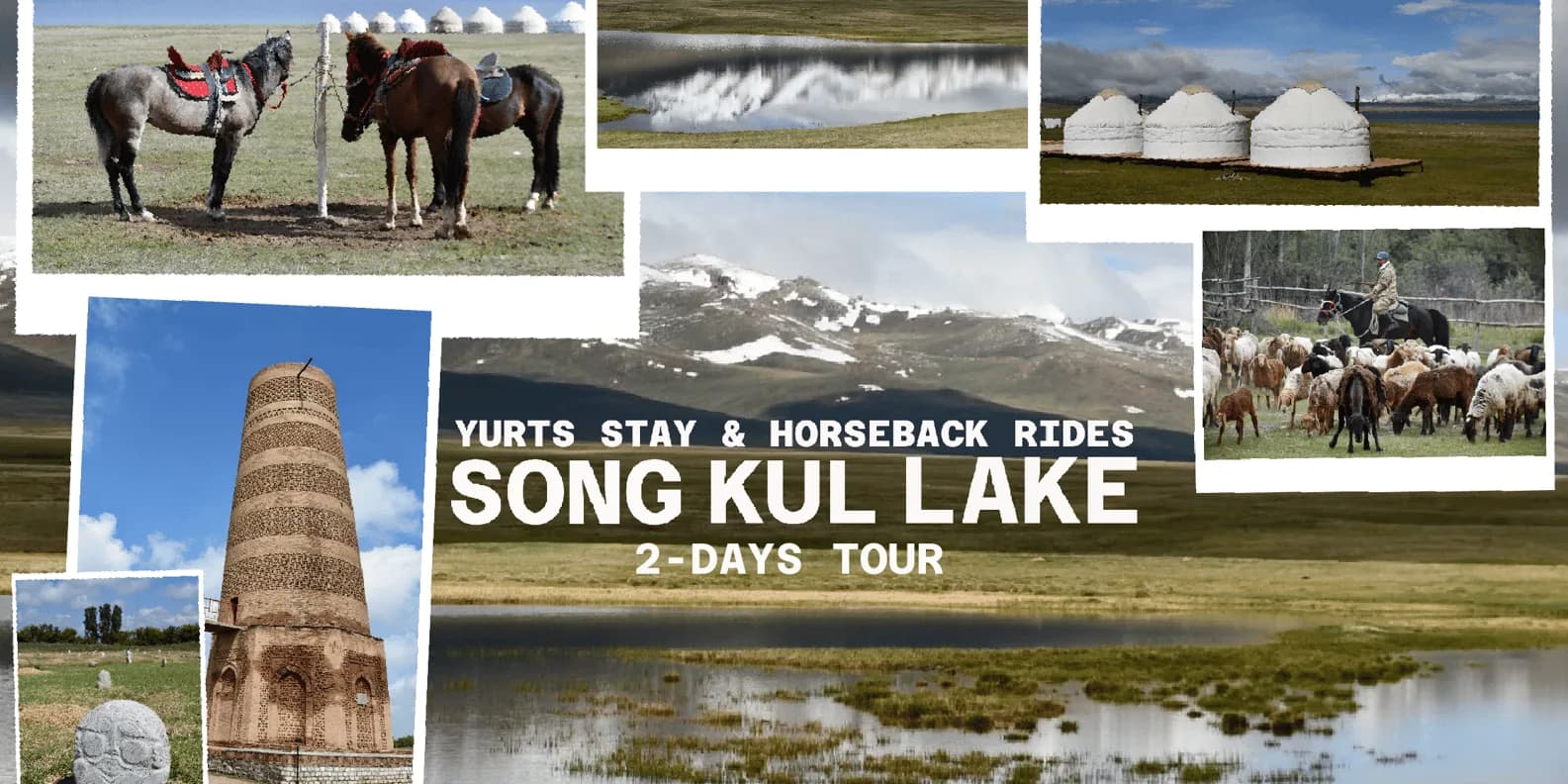
 Image via GetYourGuide
Burana Tower: The Silk Road Minaret Near Bishkek
The 11th-century Burana Tower is all that stands upright of Balasagun, a Karakhanid Silk Road capital 80 km east of Bishkek. Here's how to visit.
Book it on This is Kyrgyzstan
Bishkek · Turn this guide into a trip
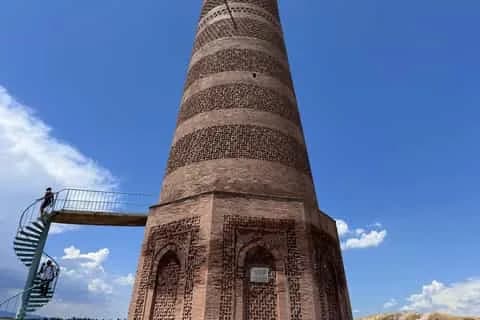
Burana Tower is an 11th-century minaret on the Chuy plain, about 80 km east of Bishkek near the town of Tokmok. It is the one upright survivor of Balasagun, a Karakhanid capital on the northern Silk Road, and today it stands roughly 24–25 m tall after centuries of earthquakes cut it down from an original height of around 45 m. You come for three things: the tower itself, the open-air field of stone warriors (balbals) that surrounds it, and a short, awkward spiral climb to the top for a long view over the steppe to the Kyrgyz Ala-Too. Most people see it in half a day from Bishkek, usually bolted onto a bigger trip east.
It is a modest site, not a blockbuster, and it rewards a little context more than most. Turn up knowing nothing and you see a stubby brick stump in a field. Turn up knowing what Balasagun was, and you are standing in the middle of a vanished medieval city.
What Burana actually is
The brick you can see is a minaret. It belonged to Balasagun, a city founded by the Karakhanids at the end of the 9th century in the Chuy valley. The Karakhanids were the first major Turkic dynasty in this region to adopt Islam, and Balasagun was one of their capitals, a real Silk Road town on the trade corridor running between China and the west. The city is long gone. What remains, spread across a low grassy site, is the tower, the footings of a fortress and walls, three ruined mausoleums, scattered grave markers, some petroglyphs and the balbals.
Balasagun also gave the Turkic world one of its foundational books. Yusuf Balasaguni, born here, wrote the Kutadgu Bilig ("Wisdom of Royal Glory") in the 1070s, an 11th-century mirror-for-princes and one of the earliest surviving works of Turkic literature. That is the kind of thing that makes the empty field worth the drive: this was a place of consequence.
The site is part of the Silk Roads: Chang'an–Tianshan Corridor, inscribed on the UNESCO World Heritage list in 2014 as a serial property. Burana/Balasagun is one of three Chuy-valley components in that listing, alongside the ruins of Ak-Beshim (ancient Suyab) and Krasnaya Rechka (Navekat), both a short drive away and both far less visited.
The tower, and why it is shorter than it was
The minaret was built in the 11th century. Sources put its original height at about 45 m; a series of earthquakes brought it down over the centuries, the most destructive in the 15th century, leaving the roughly 24–25 m you climb today. A 1970s Soviet-era restoration stabilised the foundation and rebuilt the damaged west face, which is why the base looks noticeably tidier than the weathered upper drum. The brickwork bands and geometric patterns near the top are the original decorative courses.
You reach the entrance by an external metal staircase bolted to the side, then transfer to a genuinely tight internal spiral stair to reach the top. More on that below, because it catches people out.
The balbals and petroglyphs
The best part of Burana for many visitors is not the tower but the field of balbals beside it. These are carved stone figures, Turkic grave markers, some holding a cup to the chest, their faces worn but unmistakably human. They were gathered here from across the Chuy valley and arranged in rows, so what you are looking at is a collection rather than an original burial line, but it is still a striking open-air gallery of early Turkic funerary sculpture. There is no rope and no glass; you walk among them.
Scattered nearby are petroglyphs and old grave markers moved to the site. Give the balbal field as much time as the tower. It photographs far better in low, raking light, so early morning or late afternoon beats the flat midday glare of the open steppe.
The small museum
By the entrance is a small museum with finds from Balasagun and the surrounding Chuy valley digs: coins, ceramics, ornaments, fragments of carved stone and grave goods. It is modest and won't hold you long, perhaps 15 to 20 minutes, but it does the job of explaining what the grass is hiding. Read the panels here first, then walk the site; it changes what you see.
Climbing the tower
Climbing to the top is included and it is the small adventure of the visit, but go in clear-eyed. After the external staircase, the internal stair is a steep, dark, narrow spiral with a low headroom and worn treads. It is genuinely tight, single-file, and there is no real passing place, so groups sort out an up-and-down rhythm at the bottom. It is not suitable if you have real trouble with claustrophobia, dodgy knees or vertigo, and it is not something to attempt in the dark without a phone torch.
The reward at the top is a 360-degree sweep over the Chuy plain, the outline of the old city walls picked out in the grass, the balbals in miniature below, and the wall of the Kyrgyz Ala-Too rising to the south. On a clear day it is one of the better cheap views in the country.
What you'll see
| Feature | What it is | Time to allow |
|---|---|---|
| The minaret | 11th-century Karakhanid tower, ~24–25 m, climbable | 20–30 min incl. the climb |
| Balbal field | Rows of Turkic stone-warrior grave markers | 20–30 min |
| Petroglyphs & grave markers | Carved stones gathered on site | 10 min |
| Small museum | Coins, ceramics and finds from Balasagun | 15–20 min |
| Mausoleum & fortress footings | Low ruins of the medieval city | 10–15 min |
Getting there from Bishkek
Burana sits near Tokmok, roughly 80 km and about 1.5 hours east of Bishkek by road, depending on traffic out of the city. You have three sensible options.
On a tour. The easiest route, and the one most people take. Burana is a standard stop on organised day trips east and on longer loops heading to Issyk-Köl, so a driver-guide handles the whole thing and gives you the history you would otherwise Google in the car park. See our roundup of the best day trips from Bishkek for how it fits with other options.
By taxi or hired car. A private taxi or a Yandex Go car out and back, with an hour or so at the site, is quick and flexible. Agree the fare and the waiting time before you set off, and expect to pay for the driver to wait rather than trying to flag a return ride from an empty field. Yandex Go and Namba Taxi are the apps in use around Bishkek.
By marshrutka (the cheap way). It is doable on public transport if you have time and patience. Take marshrutka 353 from Bishkek's Eastern Bus Station to Tokmok (around 100 som, about USD 1.15), then marshrutka 212 from Tokmok towards Burana (around 50 som), which drops you a walk short of the entrance. Prices were gathered in 2025, so treat them as a guide and confirm on the day. It is a half-day commitment each way and only worth it if you enjoy the process.
| Getting there | Rough cost (confirm locally) | Notes |
|---|---|---|
| Organised tour | Bundled into the tour price | Easiest; usually combined with other sites |
| Taxi / Yandex Go round trip | Negotiated; agree waiting time | Fast and flexible; ~1.5 h each way |
| Marshrutka 353 + 212 | ~150 som (~USD 1.70) each way | Cheapest, slowest; via Tokmok |
Entry fee, and how long to spend
There is a small entrance fee for the site and museum, and it is genuinely low, well under a couple of dollars for foreigners in recent years. Fees change and are collected in cash som at the gate, so carry small notes and confirm the current price on the day rather than trusting an old figure online (som is roughly 87–88 to the US dollar as of mid-2026). Some visitors report a separate small charge to climb the tower or for the museum; again, confirm on arrival.
Allow 1 to 1.5 hours on site, which is enough for the museum, a full wander round the balbals and a climb up the tower. It is not a place that fills a whole day on its own, which is exactly why it is almost always combined with something else.
Combining Burana with the rest of your day
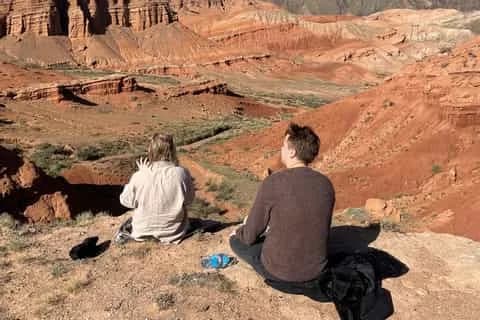
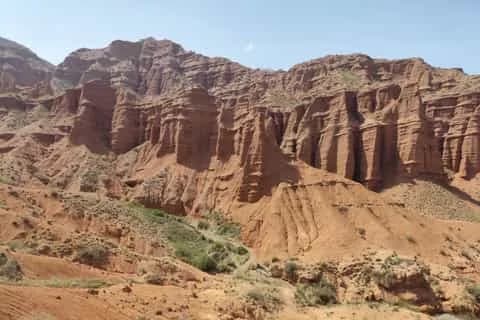
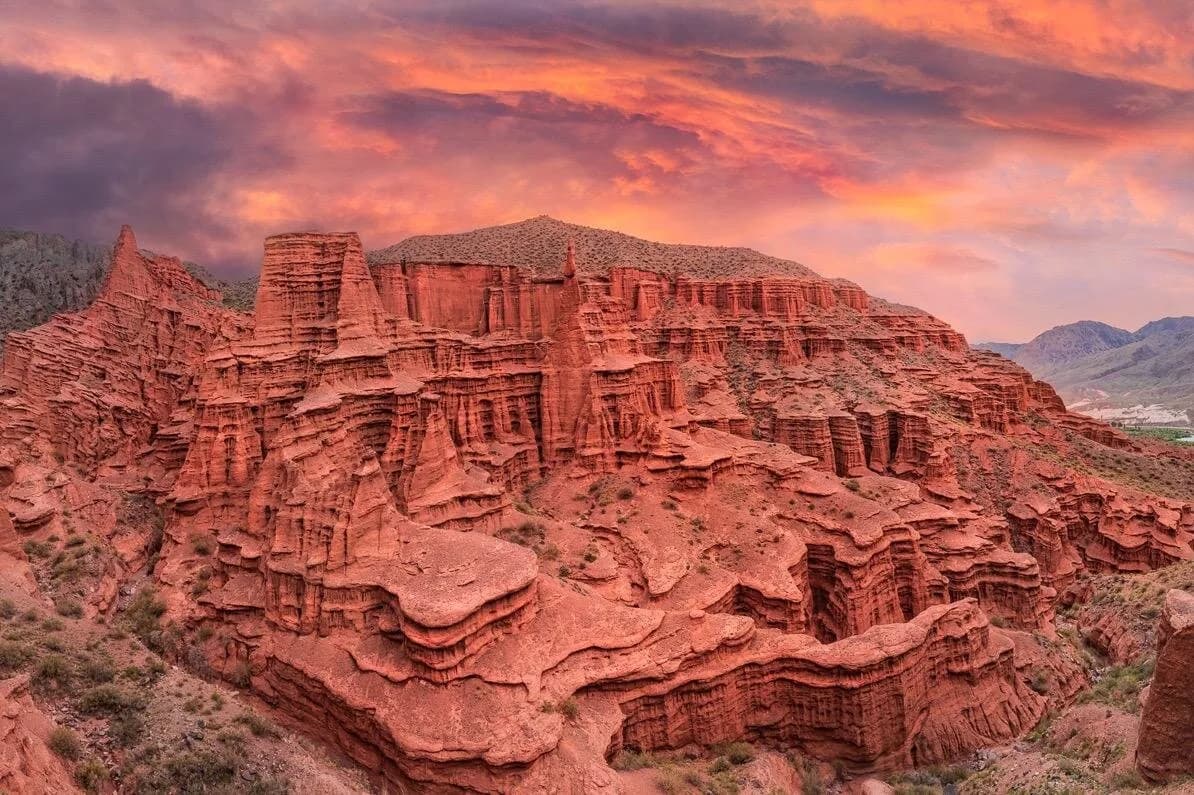
Burana's real value is as an opener. Heading east you can pair it with the Chong-Kemin valley for an overnight in guesthouse country, or push on to the north shore of Lake Issyk-Köl and Cholpon-Ata. It is also a natural first stop on the way to the Konorchek Canyons, the red rock badlands in the Boom Gorge. History-minded travellers can add Ak-Beshim (Suyab) and Krasnaya Rechka, the two other UNESCO Silk Road components in the Chuy valley, both within a short drive and both almost empty. If you are building a wider route, our Kyrgyzstan travel guide sets out how the northern loop hangs together.
Best time to visit
Burana is a low-altitude, year-round site, unlike the high passes and jailoo yurt camps that close with the snow. Late spring through autumn is the most comfortable window, and the shoulder months of April, May, September and October work well here even when the mountains are shut. Summer on the open steppe is hot and exposed, so bring a hat, sunscreen and water; there is no shade in the balbal field. Aim for early morning or the last couple of hours of daylight for the softest light and the best photographs. Winter visits are perfectly possible on a clear day, just cold and windy.
Planning to base yourself in the capital first? Our guide to Bishkek covers where to stay and how to line up a driver for the day.
Is it worth it?
Honestly: yes, but manage expectations. If you arrive expecting a grand monument you will be underwhelmed by a 24-metre brick stub. If you arrive curious about the Karakhanids, the Silk Road and early Turkic culture, and you give the balbals and the museum their due, Burana is a quietly rewarding couple of hours and one of the most accessible pieces of deep history in the country. As a standalone trip it is thin; as part of a day heading east, it earns its place.
Ready to fold it into a bigger route? Browse culture and history tours that start in Bishkek and take in the Chuy valley on the way to the lake.
Chat with a real person — free
Seif and the team reply on WhatsApp 24/7 — trip questions, custom plans and booking help.
Ask Seif on WhatsAppCommon questions
How far is Burana Tower from Bishkek?
Burana Tower is about 80 km east of Bishkek, near Tokmok, and takes roughly 1.5 hours by road depending on traffic leaving the city. You can reach it by organised tour, private taxi or hired car, or on public marshrutkas via Tokmok. It is one of the closest genuine historical sites to the capital, which is why it is such a common half-day trip.
How tall is Burana Tower?
The tower stands roughly 24–25 m today. It was built in the 11th century at an original height of around 45 m, but a series of earthquakes, the worst in the 15th century, brought it down to its current stump. A 1970s restoration stabilised the foundation and rebuilt the damaged west face, which is why the lower section looks tidier than the weathered upper drum.
Can you climb Burana Tower?
Yes, and it is included in the visit. You go up an external metal staircase and then a very steep, narrow, dark internal spiral stair to reach the top, where a 360-degree view opens over the Chuy plain and the Kyrgyz Ala-Too. The internal stair is tight and single-file, so it is not ideal if you struggle with claustrophobia, knees or heights. Bring a phone torch.
What are the balbals at Burana?
Balbals are carved stone figures, Turkic grave markers, many holding a cup to the chest. Burana has a whole field of them gathered from across the Chuy valley and arranged in rows beside the tower. You can walk freely among them. For many visitors the balbal field is the highlight of the site, and it photographs best in the low light of early morning or late afternoon.
How much does it cost to visit Burana Tower?
There is a small entrance fee for the site and museum, genuinely low, and in recent years well under a couple of US dollars for foreigners. It is collected in cash som at the gate, so carry small notes. Some visitors report a separate small charge to climb the tower. Fees change, so confirm the current price on the day rather than trusting old figures online.
How long do you need at Burana Tower?
Allow one to 1.5 hours. That covers the small museum, a walk around the balbals and grave markers, and a climb up the tower. It is not a place that fills a whole day, which is why it is almost always combined with somewhere else, such as the Chong-Kemin valley, the north shore of Issyk-Köl, or the nearby UNESCO Silk Road ruins of Ak-Beshim and Krasnaya Rechka.
What was Balasagun?
Balasagun was a Karakhanid city founded at the end of the 9th century in the Chuy valley, a real Silk Road town and one of the dynasty's capitals. Burana Tower is its surviving minaret; the rest of the city is now low ruins and grass. Balasagun was also home to Yusuf Balasaguni, who wrote the Kutadgu Bilig in the 1070s, one of the earliest surviving works of Turkic literature.
When is the best time to visit Burana Tower?
Burana is a low-altitude site that works year-round, unlike the high mountain passes. Late spring to autumn is most comfortable, and the shoulder months of April, May, September and October are fine here even when the mountains are closed. Summer on the open steppe is hot and shadeless, so bring water and a hat. Early morning or late afternoon gives the best light for photos.
Is Burana Tower worth visiting?
Yes, if you set expectations right. It is a modest 24-metre brick minaret in a field, not a grand monument, so arrive curious about the Karakhanids, the Silk Road and early Turkic culture rather than expecting spectacle. Give the balbals and museum their due and it is a rewarding couple of hours. As a standalone trip it is thin; as part of a day heading east from Bishkek it earns its place.
Book it on This is Kyrgyzstan
Turn this guide into a trip
Kyrgyzstan's bestsellers
The experiences travelers book most, across the country
Attractions in this guide
Keep reading
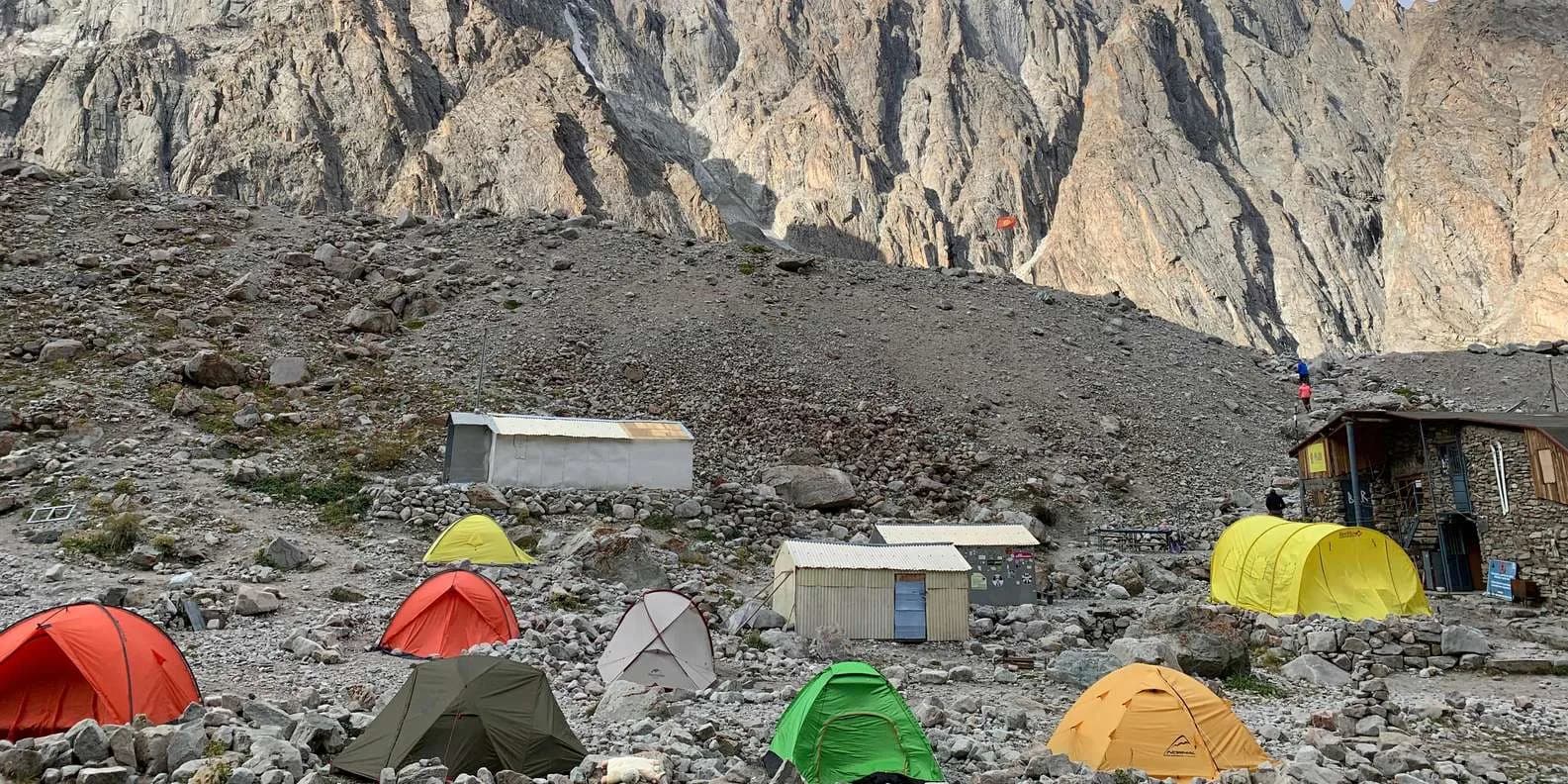
Uchitel Peak: Your First 4,000m Climb (2026)
Pik Uchitel (~4,400-4,600 m) in Ala-Archa is the classic first summit for fit hikers new to mountaineering: route, gear, season and acclimatisation.
By TiK Editors8 min read
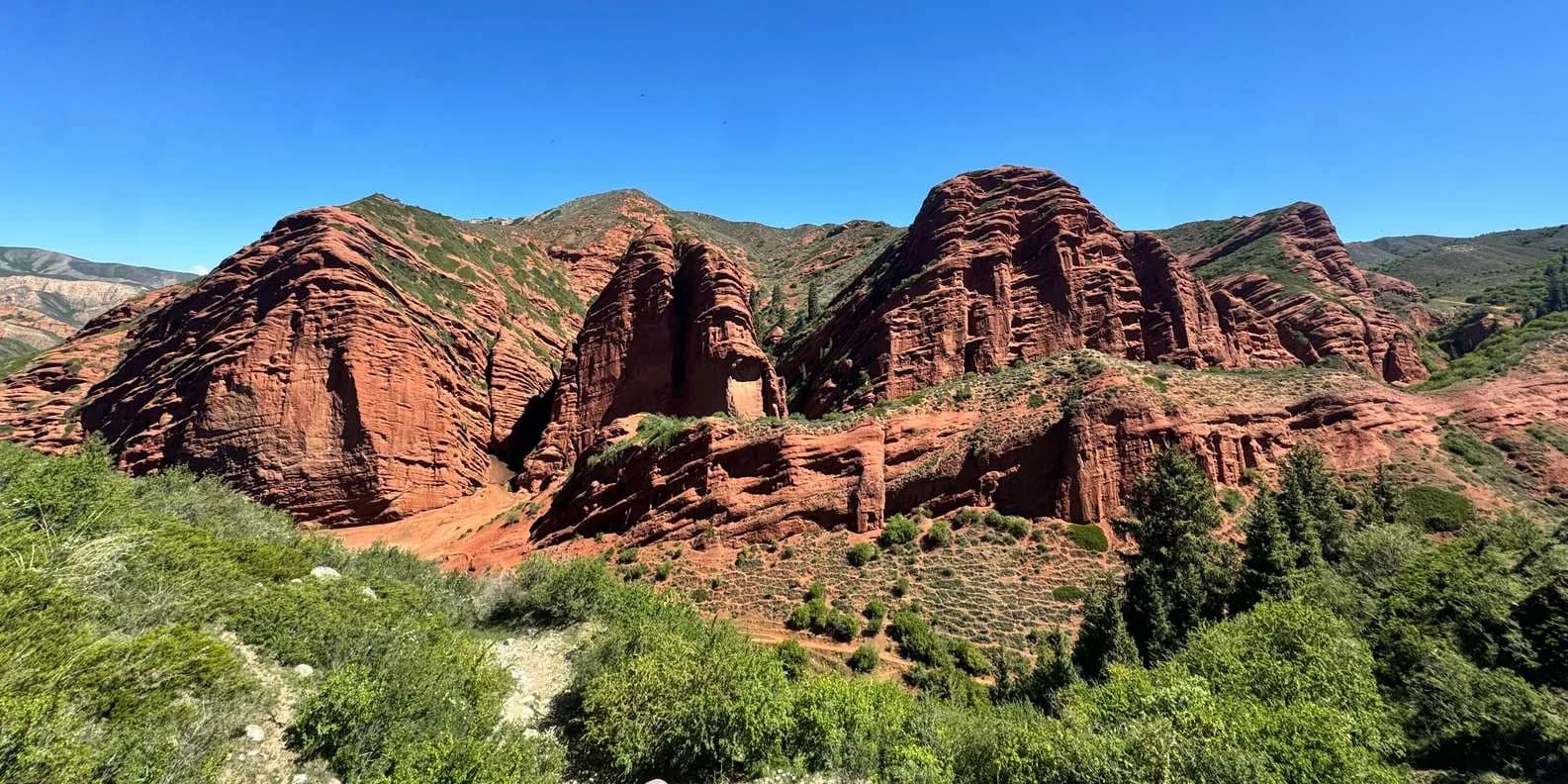
Boz-Uchuk Lakes Trek from Jyrgalan (2026)
A moderate 2–3 day trek to a string of alpine lakes above Jyrgalan — quieter than Karakol's classics, with community yurts, horses and clear DMO rates.
By TiK Editors8 min read
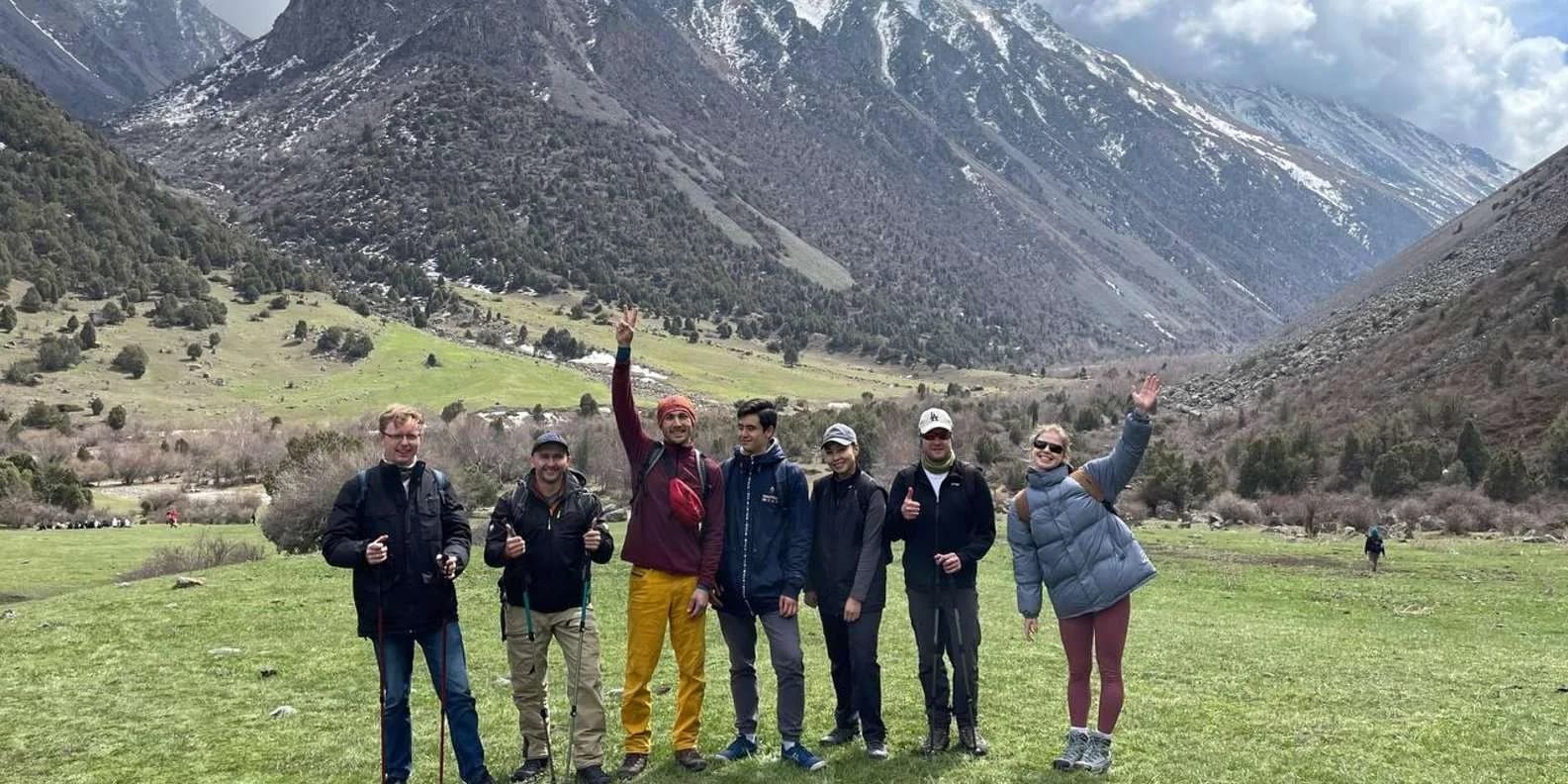
Self-Guided Treks in Kyrgyzstan: Routes & How-To
Yes, you can trek Kyrgyzstan without a guide. The best self-guided routes, the ones to skip, and the maps, water and safety logistics that make it work.
By TiK Editors12 min read