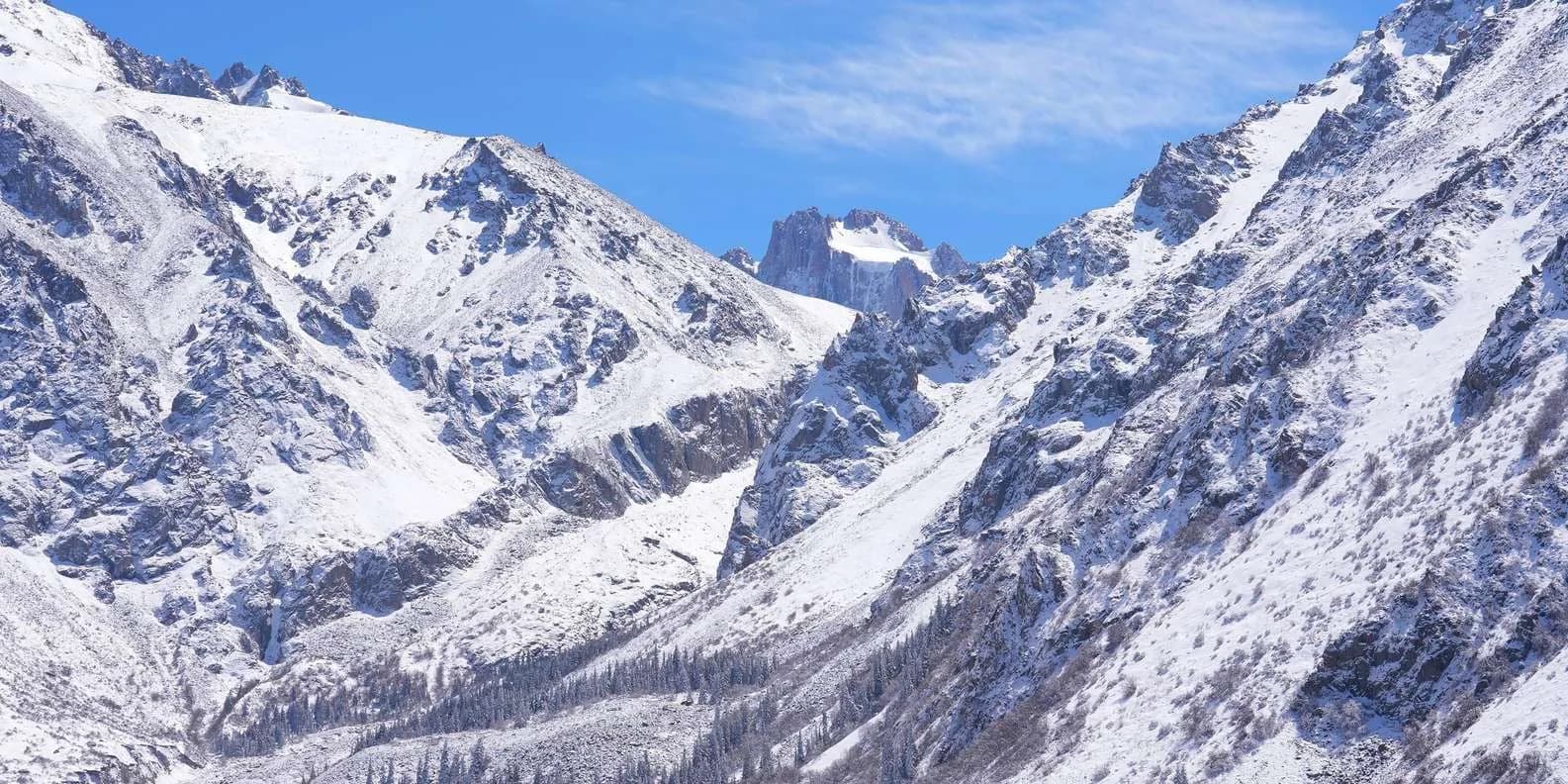
 Image via GetYourGuide
Arslanbob: Kyrgyzstan's Walnut Forest Village
An Uzbek village of 15,000 at about 1,500–1,600 m inside the world's largest natural walnut grove — getting there from Osh, homestays, and why the autumn harvest is the trip.
Book it on This is Kyrgyzstan
Osh · Turn this guide into a trip

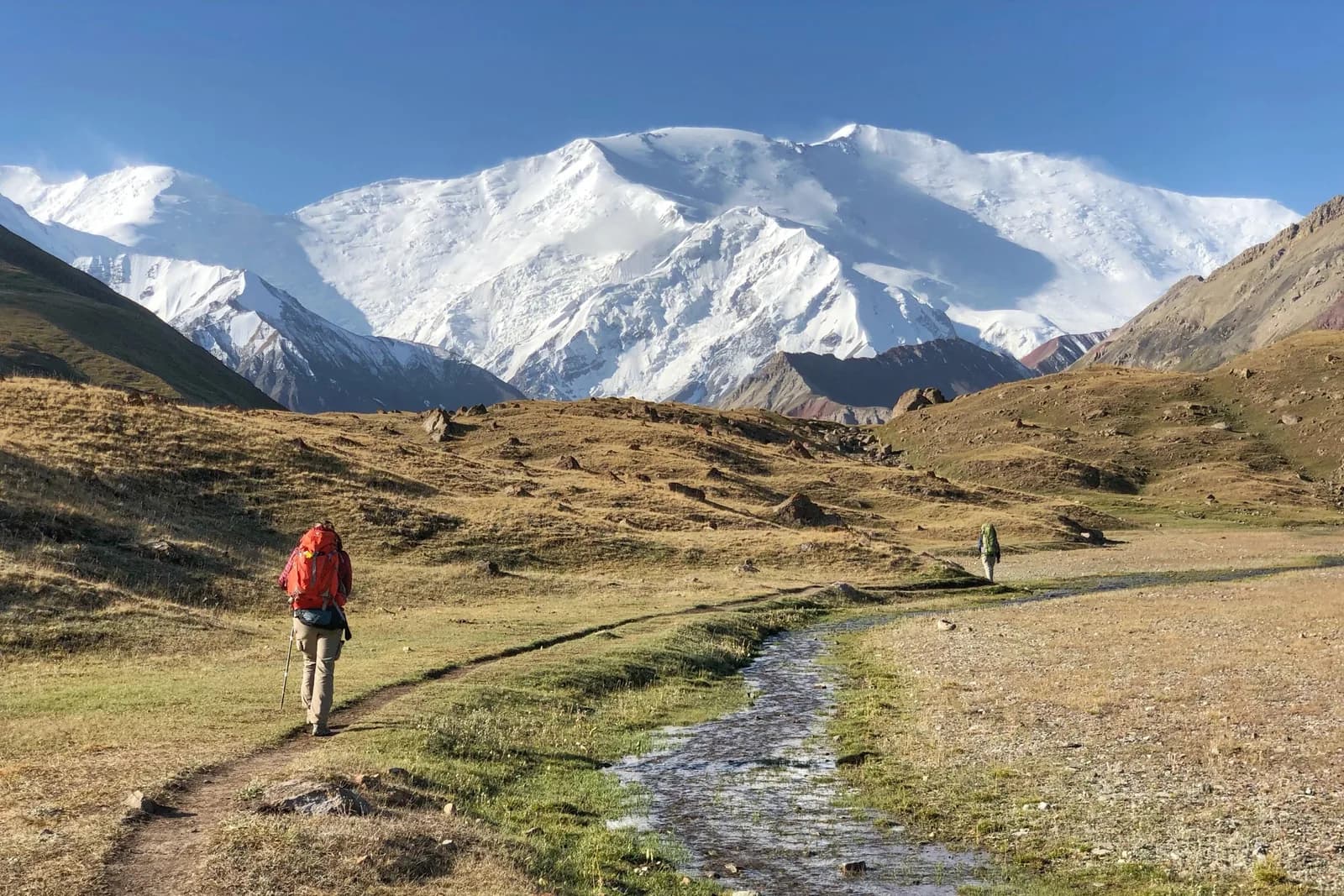
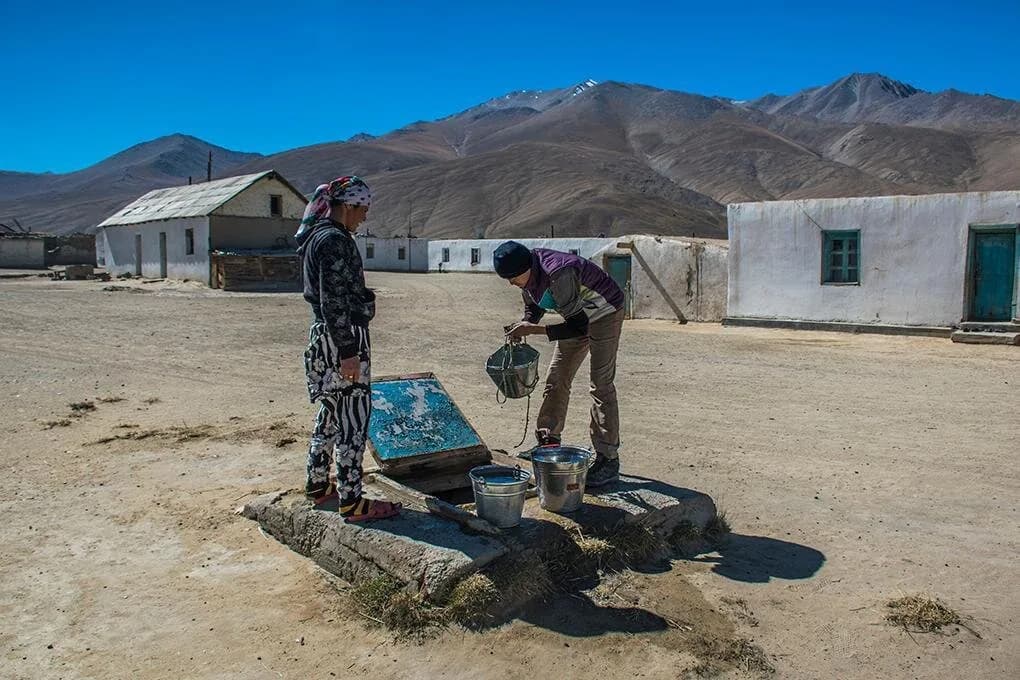

Arslanbob is an Uzbek village of about 15,000 people at roughly 1,500–1,600 m (sources differ), living inside the largest natural walnut grove on earth. It is three to five hours from Osh, needs two nights minimum, and has a season no other place in Kyrgyzstan can offer: the walnut harvest of late September and October, when whole families move up into the forest for weeks to beat the branches and gather the crop. Most pages sell Arslanbob as a waterfall day trip. That is the least interesting thing about it.
Getting to Arslanbob from Osh and Jalal-Abad
Be honest first: this is a detour, not a stop-off. Nothing is on the way to Arslanbob and nothing lies beyond it. The road runs up a dead-end valley from Bazar-Korgon, the pivot for every approach.
| Route | Vehicle | Time | Fare (indicative) |
|---|---|---|---|
| Osh → Arslanbob | One daily marshrutka, ~13:30, new bus station | 3–5 h, via Bazar-Korgon | |
| Jalal-Abad → Bazar-Korgon | Minibus | 45 min | ~60 som |
| Bazar-Korgon → Arslanbob | Minibus | 1 h | ~60 som |
| Jalal-Abad → Arslanbob | Shared taxi, direct | 1.5–2.5 h | 200–400 som |
| Bishkek → Bazar-Korgon | Shared taxi | ~8 h | ~800 som |
Miss the one Osh marshrutka and the fix is simple: reach Bazar-Korgon by any means and pick up a minibus there. Fares pre-date 2026, so confirm at the stand; no permits are needed. More on the system in our guide to getting around Kyrgyzstan. The asphalt from Bazar-Korgon is fine in normal conditions, and rain or snow makes the last climb slow rather than impassable. Transport out leaves early, so plan accordingly.
The village: Uzbek, observant, built on a slope
Arslanbob neither looks nor sounds like the rest of the country. The valley holds around 16,000 people across five villages, almost all ethnic Uzbek; only Bel-Terek, about a thousand strong, is Kyrgyz. You will hear Uzbek on the street more than Kyrgyz, some Russian, very little English. Houses are mud brick and poplar beam, stacked up the hillside behind walled courtyards, the canopy starting where the gardens end. It is conservative and observant, more so than Osh: cover shoulders and knees, keep alcohol out of sight.
In the centre stands the mazar of Arslanbob-Ata, the 11th-century holy man credited with founding the village and said to have died around 1120; the shrine is 16th-century, with a walnut-wood door frame and ram's-horn decoration, and a newer mosque alongside. The bazaar is a working village market: nuts, dried fruit, tandyr bread, plastic buckets.
The walnut forest — and the number everyone gets wrong
The grove covers about 11,000 hectares (27,000 acres) between roughly 1,500 m and 2,000 m. One widely cited account puts the surviving walnut forest at around 30,000 ha, down from a far larger historic extent. You will also see "600,000 hectares" on one widely republished commercial tourism site, and copied everywhere since. That figure is the whole walnut-fruit forest belt of southern Kyrgyzstan — several provinces, many species — not the Arslanbob grove.
Walking in it is the surprise. This is not dense wildwood: the trees are old, huge and widely spaced, the canopy high, the ground open and grazed. It reads as parkland, or an orchard that escaped, and you can wander for hours without a map. The same forest yields wild apples, plums, pistachios and almonds — a relict ecosystem of global importance.
The Alexander story. Local tradition says Alexander the Great's army carried walnuts from here back west, seeding the orchards of Europe — hence gretskiy orekh, the "Greek nut", in Russian. Everyone tells a version, and it is legend: the present stands are assessed at around a thousand years old and were almost certainly planted, which fits Arslanbob-Ata's dates better than Alexander's.
The two waterfalls
The small waterfall, about 23–25 m (sources differ), sits east of the village, an easy 30–45 minute walk past tea stalls and swings. Two prayer caves stand beside it, one called the Cave of the Forty Angels. This is where families picnic at weekends — more social occasion than scenery.
The big waterfall, a verified 80 m, is north of the village up a steep, loose scree slope: 1.5–2 hours up, three to four hours round trip. It is the better sight, and loud in spring flood. Wear proper shoes; the scree is nasty wet.
Holy lakes, the panorama and Babash-Ata
Above the valley lie the Kol-Mazar or "holy lakes", objective of Arslanbob's standard trek, sold locally as three to four days, with horses if you want them. The Babash-Ata range is the limestone wall behind every photograph of the village; its high point is usually given as around 4,427 m, though no authoritative source confirms that. Shorter, an hour's climb above the houses gives you canopy, roofs and wall at once. For guided multi-day walking, see our trekking tours.
The walnut harvest: September and October
This is the reason to build a trip around Arslanbob rather than slot it in. Households rent plots from the forest ranger in return for a share of the crop, and from September they move up to camp under their allocated trees. Collection near the village starts in September; the season proper opens at the beginning of October. Men climb and beat the branches with long poles; women and children gather, husk and sort; donkeys carry the sacks down. Schools empty, the valley smells of green husk, and every hand is stained brown with tannin.
Visitors are welcome to walk out and watch, and families will usually put you to work if you show willing and stay for the tea. Ask first, through your host — these are working plots, not an attraction. The oil press runs in season and does short tours for a token fee. Book ahead in October: this is the one time the village fills.
Homestays: how booking actually works now
Arslanbob's community-tourism office is among the best known in the country and has coordinated homestays, guides, horses and skis since at least 2001. What has changed is the internet: arslanbob.com is a parked domain and cbt-arslanbob.com is dead, along with essentially every local CBT site. Any page sending you there is out of date.
What works instead: WhatsApp the national CBT number (+996 770 443331) a few days ahead, or arrive and ask. The village runs on a network of family guesthouses that all know each other — a driver or your first host will find you a bed within twenty minutes, and many take WhatsApp bookings direct. CBT rates are quoted at about 600 som with breakfast plus 250 som for dinner in pre-2026 reporting; guesthouses in 2026 more commonly ask 1,000–2,200 som per person (about $11–25) with both meals.
Bring cash. Arslanbob is cash-only and its ATMs are unreliable, so draw som in Osh or Jalal-Abad. Our cost and budget guide has the wider picture.
Eating in a walnut village
Food here is Fergana Valley Uzbek and better for it: proper plov from the kazan, finished by early afternoon; samsa slapped onto the tandyr wall; thick round non bread; forest honey and walnuts on every table. Homestay dinner is a dastorkon, a cloth of small dishes before the main course, with endless tea in half-filled bowls. Shoes off at the door; do not seat yourself, but take the seat of honour if shown it. Break bread first, do not point your feet at the food, and do not worry about clearing your plate. More in our Kyrgyz food guide.
When to come — including winter
| Season | What you get | What is shut |
|---|---|---|
| May–August | Green forest, full waterfalls, walking and horse treks, cool relief from Fergana heat | Little; spring is wettest |
| Late Sept–Oct | The harvest, autumn colour, the best atmosphere of the year | Nothing; beds are tight |
| Nov–March | Ski touring and snowshoeing in the forest, deep quiet | Holy lakes, high treks, horse work |
| April | Blossom and mud | Upper trails unreliable |
Winter is the under-written angle. Arslanbob has one of the few established ski-touring scenes outside Karakol, using the spaced walnut trees and the slopes below Babash-Ata, plus one elderly drag lift. Guides, skis and snowshoes come through the same village network — roughly 500–600 som a day for kit. Season: late November to late March.
Jalal-Abad and Sary-Chelek
You will change transport in Jalal-Abad, Kyrgyzstan's third city (around 123,000 people, about 100 km and two hours from Osh). It is a transit town, but the mineral springs are real: Soviet-era sanatoriums still run treatment programmes and bottle the water. An hour there is enough.
Sary-Chelek is routinely bracketed with Arslanbob and should not be. The reserve — protected since 1959, a UNESCO biosphere reserve since 1978, seven lakes across 23,868 ha — belongs to the same forest system, and its landslide-dammed lake is spectacular. But it is six hours from Osh down a long dirt approach to Arkyt, snow-free only from about mid-May to late September, and sleeping near the lake means camping. A separate three-day trip.
Two days, three days, or skip it
Two days (the minimum). Arrive from Osh in the afternoon, settle into a homestay, walk to the small waterfall for sunset. Next morning the big waterfall; afternoon in the forest and the bazaar; early transport out on day three.
Three days. Add the panorama climb and a day walking or riding towards Babash-Ata — or, in October, a day on a family's harvest plot, worth more than any of the walking.
Who should skip it. On ten days or fewer around Issyk-Köl and the Tien Shan, leave Arslanbob out: the detour costs two travel days for a village that is not about mountains and yurts, and for alpine drama Ala-Köl and Song-Köl do it better. Arslanbob rewards people with a fortnight or more — see our two-week itinerary — who want the settled, agricultural, Uzbek Kyrgyzstan the northern circuit never shows them, and above all anyone who can time it to the harvest.
Osh is the natural gateway; our Osh travel guide covers the approach. Browse trips and transfers from Osh, or the culture and history tours if you want the south with a guide who can translate.
Ride it: the Toktogul to Arslanbob horseback route.
Chat with a real person — free
Seif and the team reply on WhatsApp 24/7 — trip questions, custom plans and booking help.
Ask Seif on WhatsAppCommon questions
How do you get to Arslanbob from Osh?
One direct marshrutka a day leaves Osh's new bus station around 13:30 and takes three to five hours for about 200 som, including a break at Bazar-Korgon. If you miss it, travel to Bazar-Korgon by any shared taxi or minibus and pick up the local service there. Bazar-Korgon is the pivot for all Arslanbob transport.
How big is the Arslanbob walnut forest, really?
The Arslanbob grove is about 11,000 hectares, lying between roughly 1,500 m and 2,000 m; one widely cited account puts the surviving walnut forest around it at some 30,000 hectares. The 600,000-hectare figure widely republished online refers to the entire walnut-fruit forest belt of southern Kyrgyzstan across several provinces, not to Arslanbob itself.
When is the walnut harvest in Arslanbob?
September and October, peaking from the start of October. Families camp on their allocated forest plots for weeks, beating branches with poles while children gather and husk. Late September to mid-October is the best time to visit for atmosphere and autumn colour, and the only period when homestays genuinely fill up.
Did Alexander the Great really bring walnuts from Arslanbob to Europe?
Almost certainly not. It is the local legend, and it explains why Russian calls the walnut gretskiy orekh, the "Greek nut". Scientific assessment puts the present stands at roughly a thousand years old and finds they were planted, which matches Arslanbob-Ata, the 11th-century holy man credited with founding the village.
How do you book an Arslanbob homestay in 2026?
Not through arslanbob.com, which is a parked domain, or cbt-arslanbob.com, which is dead. Message the national CBT number on WhatsApp (+996 770 443331) a few days ahead, or arrive and ask — the village runs on a guesthouse network and any driver or host will place you. Book ahead in October.
How much does a homestay in Arslanbob cost?
Budget roughly 1,000–2,200 som per person per night, about $11–25, including breakfast and dinner. CBT rates are quoted at about 600 som with breakfast plus 250 som for dinner in pre-2026 reporting to $15–25 with meals on one commercial tourism site. It is cash only and village ATMs are unreliable — draw money in Osh or Jalal-Abad.
How many days do you need in Arslanbob?
Two nights minimum, three if you want a full day walking towards Babash-Ata or out on a harvest plot. It is a dead-end valley detour rather than somewhere you pass through, so allow a travel day at each end. Anyone on a ten-day Kyrgyzstan trip should probably leave it out.
Are the Arslanbob waterfalls worth the walk?
The big waterfall is, at a verified 80 m, reached up a steep scree slope north of the village in about 1.5–2 hours each way. The small waterfall, roughly 23–25 m, is an easy 30–45 minutes east of the village with prayer caves beside it, but it is more picnic spot than spectacle.
Can you visit Arslanbob in winter?
Yes, and it is underrated. Arslanbob has one of the few established ski-touring and snowshoeing scenes outside Karakol, using the open walnut forest and the slopes below Babash-Ata, plus one old drag lift. Kit runs around 500–600 som a day. The season is roughly late November to late March; high treks are shut.
Book it on This is Kyrgyzstan
Turn this guide into a trip




Kyrgyzstan's bestsellers
The experiences travelers book most, across the country
Keep reading
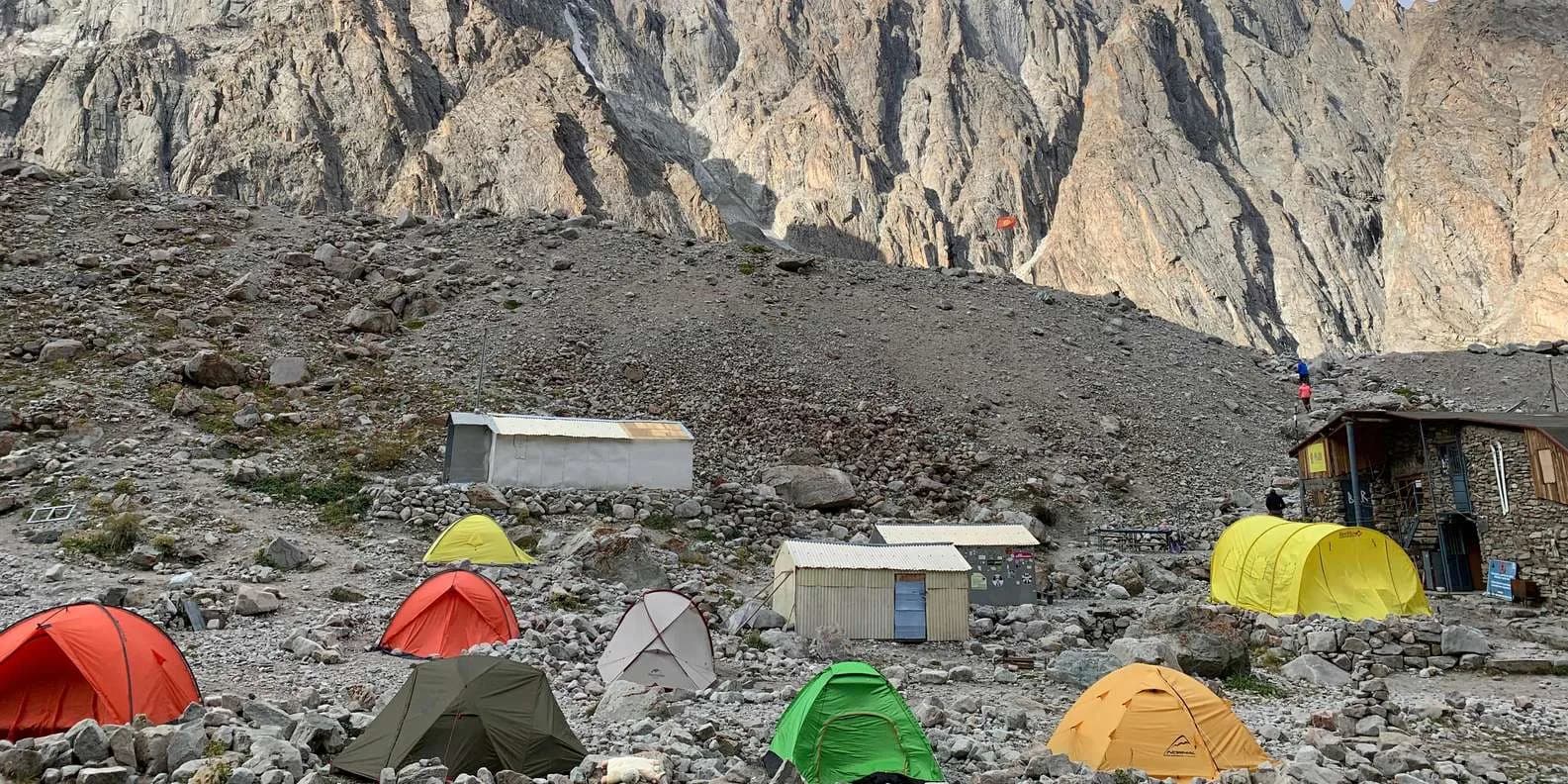
Uchitel Peak: Your First 4,000m Climb (2026)
Pik Uchitel (~4,400-4,600 m) in Ala-Archa is the classic first summit for fit hikers new to mountaineering: route, gear, season and acclimatisation.
By TiK Editors8 min read
Boz-Uchuk Lakes Trek from Jyrgalan (2026)
A moderate 2–3 day trek to a string of alpine lakes above Jyrgalan — quieter than Karakol's classics, with community yurts, horses and clear DMO rates.
By TiK Editors8 min read
Self-Guided Treks in Kyrgyzstan: Routes & How-To
Yes, you can trek Kyrgyzstan without a guide. The best self-guided routes, the ones to skip, and the maps, water and safety logistics that make it work.
By TiK Editors12 min read