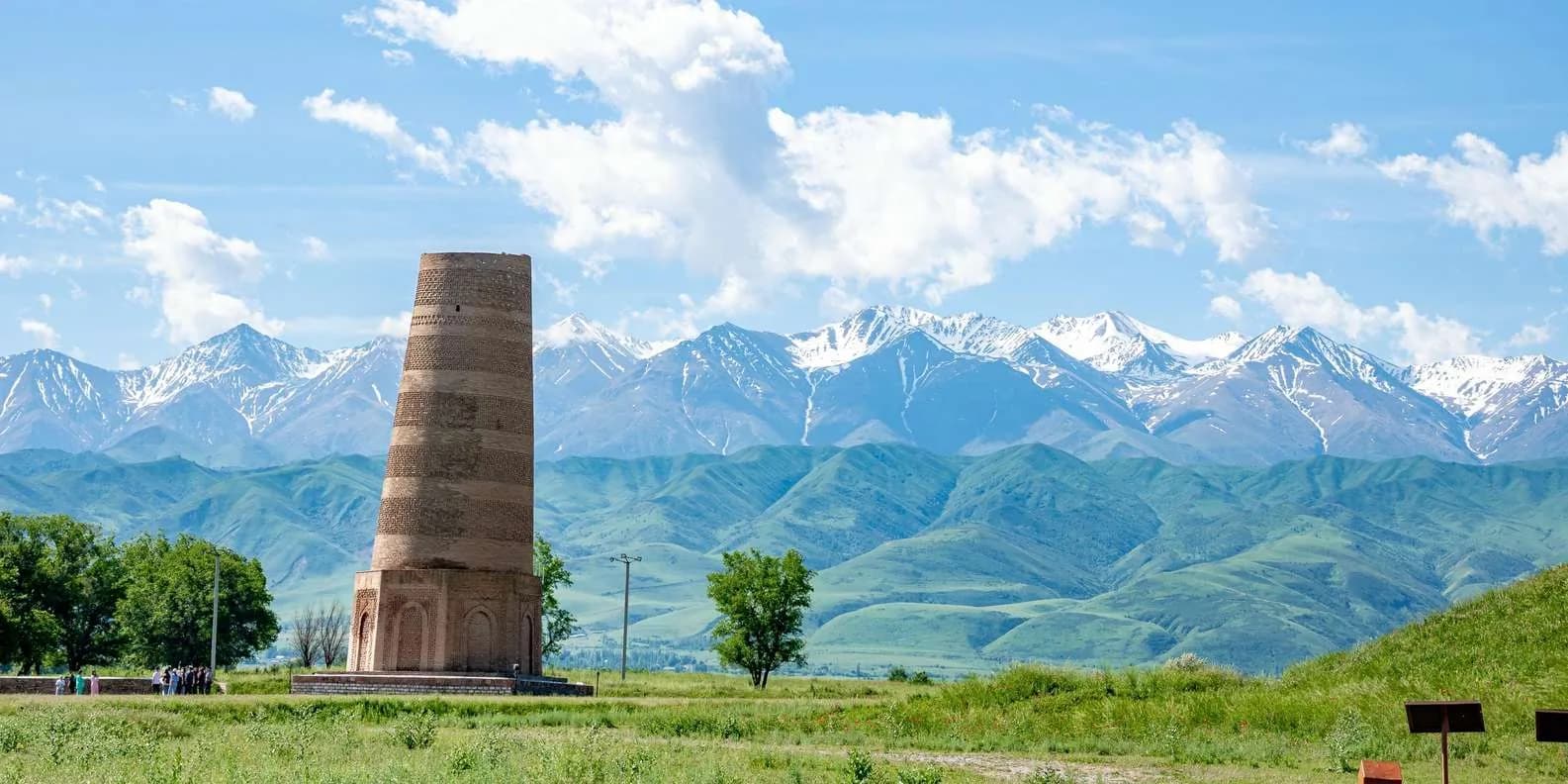
 Image via GetYourGuide
Tash Rabat Caravanserai: The Honest Visitor's Guide
A 3,000–3,200 m Silk Road caravanserai nobody can date, alone in an empty valley two hours from Naryn. What it is really like, and why you should stay the night.
Book it on This is Kyrgyzstan
Naryn · Turn this guide into a trip
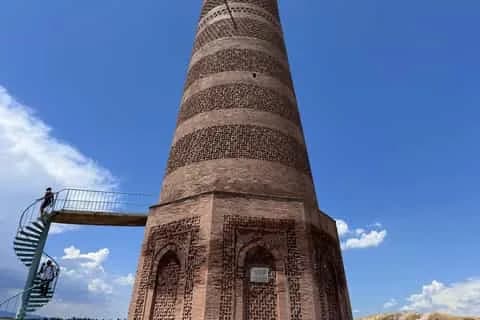
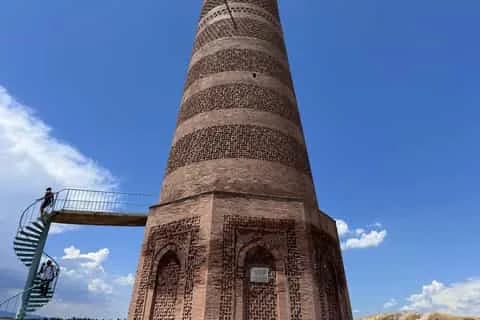


Tash Rabat is a stone caravanserai standing alone at about 3,000–3,200 m — sources differ — in a side valley of the At-Bashy range, roughly 113 km and two hours' drive south-west of Naryn. It is small — 31 domed rooms around a central hall — and you will be inside it for twenty minutes to an hour. Nobody has ever securely dated it, and specialists cannot agree whether it began as a caravan inn, a Nestorian Christian monastery or a Buddhist one. Make the detour anyway, but for the valley, the altitude and a night in a yurt rather than for the building.
Worth saying up front, because the photographs oversell it. People arrive expecting a monument and find something squat, dark and cold.
What Tash Rabat actually is
A low grey block half-set into a grassy slope, fortress-thick walls, one arched entrance. Inside are 31 rooms — a counted figure, not an estimate — square in plan, each capped by a small dome with a light hole at its crown, the corners carried round on squinches. Rubble stone in clay mortar, joints sealed with gypsum, and essentially undecorated.
The central domed hall is the one genuinely good space: vaulted niches, a shaft of daylight from above, an echo that makes people lower their voices without meaning to. It is cellar-cold in July, and the far chambers are dark enough that you will want a phone torch.
One of the furthest rooms has a deep hole in the floor resembling a well. That the shaft exists is the verified part. Dungeon, burial shaft, escape tunnel to the river — everything else you are told is folklore, delivered with total confidence.
Two things other guides skip: it was heavily restored in the 1970s, so much of what you touch is reconstruction, and it now has a corrugated roof, a fence and a car park in front.
The dating problem — the best thing about the place
Most sources say 15th century. Some say 10th. Both are published as fact; neither is settled.
| Theory | The case for it | The problem |
|---|---|---|
| 15th-c. caravanserai | Commonest attribution; the position fits — a day's ride below the Torugart pass, last shelter before the crossing | No secure dating evidence; the plan is oddly monastic for an inn |
| 10th-c. Nestorian monastery | Kyrgyz Academy of Sciences research around 1980; Church of the East communities are documented along the Tien Shan | No Christian artefacts were ever found here |
| Buddhist monastery | Later analysis of inscriptions and artefacts found on site pointed to Buddhist origins | A small finds assemblage; ignores the caravanserai function |
The usual reconciliation — a 15th-century structure on a much older foundation — is plausible and unproven. A ring of cells around a domed hall reads more monastery than hostel, which is why the argument will not die. Standing in the dark knowing nobody can tell you who built it beats being handed a tidy century.
The setting, the altitude and the cold
The valley is the reason to come: a treeless green bowl on the Tash-Rabat river under bare ridges, horses grazing around the walls. Minibuses come in the afternoon; by six they have gone and it is yours.
Plan around 3,000–3,200 m: sources differ, 3,200 m is the commonest figure, and claims above 3,500 m refer to the ridges or the pass rather than the building. You climb from Naryn at 2,000 m in two hours, so take arrival slowly and do not book a long ride for the same afternoon.
It is colder than Song-Köl, which sits nearly 200 m below it. Nights at or below freezing are normal in July and August. The stars, with no electric light for many kilometres, are what people remember.
Where it sits on the Silk Road — accurately
Tash Rabat stands on the branch running from the Fergana valley and the Chuy oases south-east over the Tien Shan into the Tarim basin at Kashgar. The Torugart pass still carries that corridor: the A365 below the site is a live freight road to China.
One correction, because travel copy gets it wrong. Kyrgyzstan does hold UNESCO-inscribed Silk Road heritage — the Silk Roads: Routes Network of Chang'an–Tianshan Corridor listing of 2014, shared with China and Kazakhstan — but its three Kyrgyz components all sit in the Chuy valley near Bishkek: Suyab (Ak-Beshim), Balasagun (Burana) and Nevaket (Krasnaya Rechka). Tash Rabat is not part of it — it is a nationally protected monument, not a World Heritage site.
Staying the night — the real recommendation
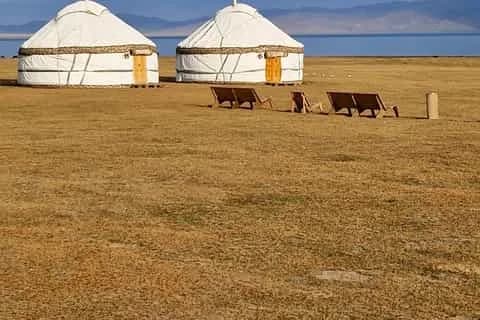
Several yurt camps run in the valley just below the caravanserai, summer only. Staying is the point: the site empties by late afternoon, and dusk, dinner in a warm yurt and a walk out under the stars is a wholly different trip from a photo stop.
| Reality at Tash Rabat | |
|---|---|
| Price | About 1,500–2,000 som (US$17–23) per person per night with breakfast and dinner. Cash, som only |
| Bedding | Floor-sleeping: tushuk mattresses over felt, heavy quilts, a hard pillow. Four to eight per yurt. No sleeping bags supplied |
| Heating | A dung-and-coal stove lit in the evening; it dies around midnight and the yurt is cold by 05:00 |
| Toilets | Pit latrine some way from camp. Bring paper and sanitiser. Assume no shower |
| Power / signal | None, or evening solar only. No mobile coverage — bring a power bank |
| Season | Roughly June to September, reliable in July and August. No camp publishes fixed dates — confirm before committing |
Pack a hat, thick socks, gloves, a down or fleece layer, a base layer to sleep in and high-factor sun cream: the UV is fierce by day and it freezes at night. Eugene Schuyler, crossing the Kazakh steppe in 1873, caught the felt tent in winter: lodgings "the felt walls of which were incapable of keeping out the cold" (Turkistan, 1876). The Kyrgyz boz-üy is the same technology at higher altitude. Our guide to yurt stays covers the etiquette and the food.
Horses: the pass above the valley, and Chatyr-Köl
The best half-day here, and the reason to stay two nights.
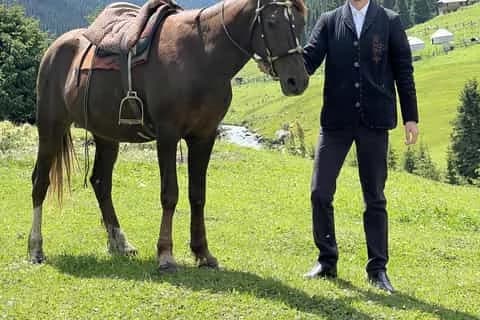
- Up to the pass above the caravanserai (the Panda pass, in guide shorthand): 6–8 hours return, around 24 km, about 1,000 m of climb. Not technical, but a long day in a hard Kyrgyz saddle at altitude. Reckon on the national consensus band — about $25–35 a day for the animal and a similar amount again for the horseman — shared across the group; village rates here can come in lower, so ask at the camp. No border permit needed.
- Over to Chatyr-Köl: normally two days. A vast, shallow, treeless salt lake at 3,530 m, a Ramsar wetland since 2005 and Kyrgyzstan's third-largest, with no settlement and snow peaks all round. It sits in the restricted border zone and a permit is mandatory — the tiered rate runs roughly US$45 for one person down to US$25 each in a group of five, via CBT Naryn or a licensed operator, with two weeks' lead time. Carry the original paper; a phone photo gets refused.
Short valley rides are easy to arrange on the spot. See our horse trekking guide or browse horse-riding trips.
Torugart: the pass to China
About 3,750 m by the common figure, though Wikipedia gives 3,504 m — sources differ by some 250 m. One of only two Kyrgyzstan–China road crossings, and an awkward one: no public transport, no walking across, and you change vehicles at the line, so you need Kyrgyz transport up and a Chinese vehicle booked to meet you.
Sources conflict on whether that is still compulsory. Reporting since 2024 says the Chinese-agency requirement was relaxed; Caravanistan's current page still says you must show proof of transport arranged with a legitimate Chinese agency. It runs weekdays only, in a short window, and closes for Chinese holidays and snow. Confirm before planning around it — and if you simply want to reach China overland, Irkeshtam from Osh is far easier independently. Tash Rabat itself needs no permit, whatever you read.
Getting there
| From | Distance / time | Notes |
|---|---|---|
| Naryn | ~113 km, ~2 h | Paved to the turn-off, then rough track. Negotiated taxi from Naryn bus station around 3,000 som (~US$35) for the car, one way |
| At-Bashy | 35 km from Naryn, then a short hop | Cheap shared taxi to the village; negotiate onward |
| Bishkek | 5–6 h | Too long there-and-back; do it inside a loop |
| Kochkor / Song-Köl | Via Naryn | Standard sequence: Song-Köl, Naryn, Tash Rabat |
No public transport reaches the site. The turn-off is on the Naryn–Torugart road, and hitching from the junction is realistic in summer given the truck traffic to the border. High clearance helps on the valley track; a full 4WD is not essential in dry conditions. A car and driver runs roughly US$80–100 a day plus the driver's food and bed.
Naryn is where you fix everything — driver, permits, cash, fuel. See our Naryn guide and getting around Kyrgyzstan; Tash Rabat slots into the standard two-week loop after Song-Köl.
Day trip from Naryn? It works — leave at eight, back by four. But that is four hours in a car for forty minutes at a building, and it misses the part that makes it memorable.
Fees and cash
Admission is small — about 150 som, cash, and it creeps up — so expect a modest fee at the gate rather than a fixed figure. There are no set opening hours; if the door is locked, walk to the nearest yurt camp and ask for the keyholder.
There are no ATMs beyond Naryn — not at At-Bashy, not in the valley, not until Kashgar if you are crossing. Draw enough som in Naryn for beds, horses, permits and the driver, and fill the tank while you are there.
The verdict
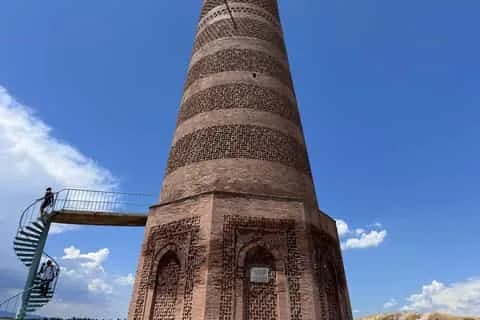
Come if you want the valley, the altitude and a night with no signal under a full sky, and if a building nobody can date interests you more than one with a plaque. Skip it if your itinerary is tight, you have a week in the country, or you want Samarkand-scale Silk Road architecture — Burana in the Chuy valley is an easier ruin.
If you do come, stay the night. Everything good about Tash Rabat happens after the last car leaves.
Base yourself in Naryn, or browse our culture and history tours for guided Silk Road routes through the central highlands.
Browse the Tash Rabat yurt stays by area, and the horse treks toward Chatyr-Köl nearby.
Book it: the Tash Rabat to Chatyr-Köl ride, or a yurt at the Tash Rabat ethno-complex.
Chat with a real person — free
Seif and the team reply on WhatsApp 24/7 — trip questions, custom plans and booking help.
Ask Seif on WhatsAppCommon questions
Is Tash Rabat worth visiting?
Yes, but not for the building. Tash Rabat is small, dark and takes under an hour to see, and the photographs oversell it. The valley at about 3,000–3,200 m — sources differ — the silence after the day-trippers leave, the horse riding and a night in a yurt are what make the detour worth it. Treat it as an overnight, not a photo stop.
How old is Tash Rabat?
Nobody knows. It is most commonly dated to the 15th century, but serious arguments place its origins in the 10th, and the building has never been securely dated. Kyrgyz and Western sources genuinely differ. The usual reconciliation is a 15th-century structure standing on a much older foundation, which is plausible but unproven.
Was Tash Rabat a caravanserai or a monastery?
Both theories are live. Kyrgyz Academy of Sciences research around 1980 concluded it began as a 10th-century Nestorian Christian monastery, though no Christian artefacts were ever found there. Later analysis of inscriptions and finds pointed to Buddhist origins instead. Its plan — cells around a domed hall — reads more monastic than commercial, and the evidence does not settle it.
How do you get to Tash Rabat from Naryn?
About 113 km, roughly two hours. There is no public transport to the site. Negotiate a taxi at Naryn bus station for around 3,000 som (about US$35) for the car one way, or take a shared taxi to At-Bashy and arrange onward transport there. The turn-off is on the Naryn–Torugart road; hitching from the junction works in summer.
Can you stay overnight at Tash Rabat, and what does it cost?
Several yurt camps run in the valley below the caravanserai in summer, at roughly 1,500–2,000 som (US$17–23) per person per night including breakfast and dinner, cash only. Expect floor mattresses, heavy quilts, a stove that goes out at midnight, a pit latrine, no shower, no mobile signal and little or no electricity.
Do you need a permit for Tash Rabat?
No. Tash Rabat and the pass directly above the valley need no border permit, despite what you may read. Chatyr-Köl and the Torugart post are different: both sit inside the restricted border zone and a permit is mandatory, obtained through CBT Naryn or a licensed operator with about two weeks' lead time, and carried as an original paper document.
When is the best time to visit Tash Rabat?
July and August are the only reliably open months. The working window is roughly June to September, but no yurt camp publishes fixed opening dates, so confirm before you commit in June or after mid-September. Outside that the track can be snowbound and the camps are down. Nights are at or below freezing even in midsummer.
Is Tash Rabat a UNESCO World Heritage site?
No. Kyrgyzstan's Silk Road inscriptions under the Chang'an–Tianshan Corridor listing of 2014 are Suyab (Ak-Beshim), Balasagun (Burana) and Nevaket (Krasnaya Rechka), all in the Chuy valley near Bishkek. Tash Rabat is a nationally protected monument, not part of that serial property.
Can you cross into China at Torugart from Tash Rabat?
Only with arrangements made well in advance. There is no public transport and no walking across, and you must change vehicles at the border line. Sources conflict on whether pre-booked Chinese-side transport is still compulsory — some reporting since 2024 says it was relaxed, other current sources say proof is still required. Confirm before planning. Irkeshtam, from Osh, is much easier independently.
Book it on This is Kyrgyzstan
Turn this guide into a trip

Kyrgyzstan's bestsellers
The experiences travelers book most, across the country
Keep reading
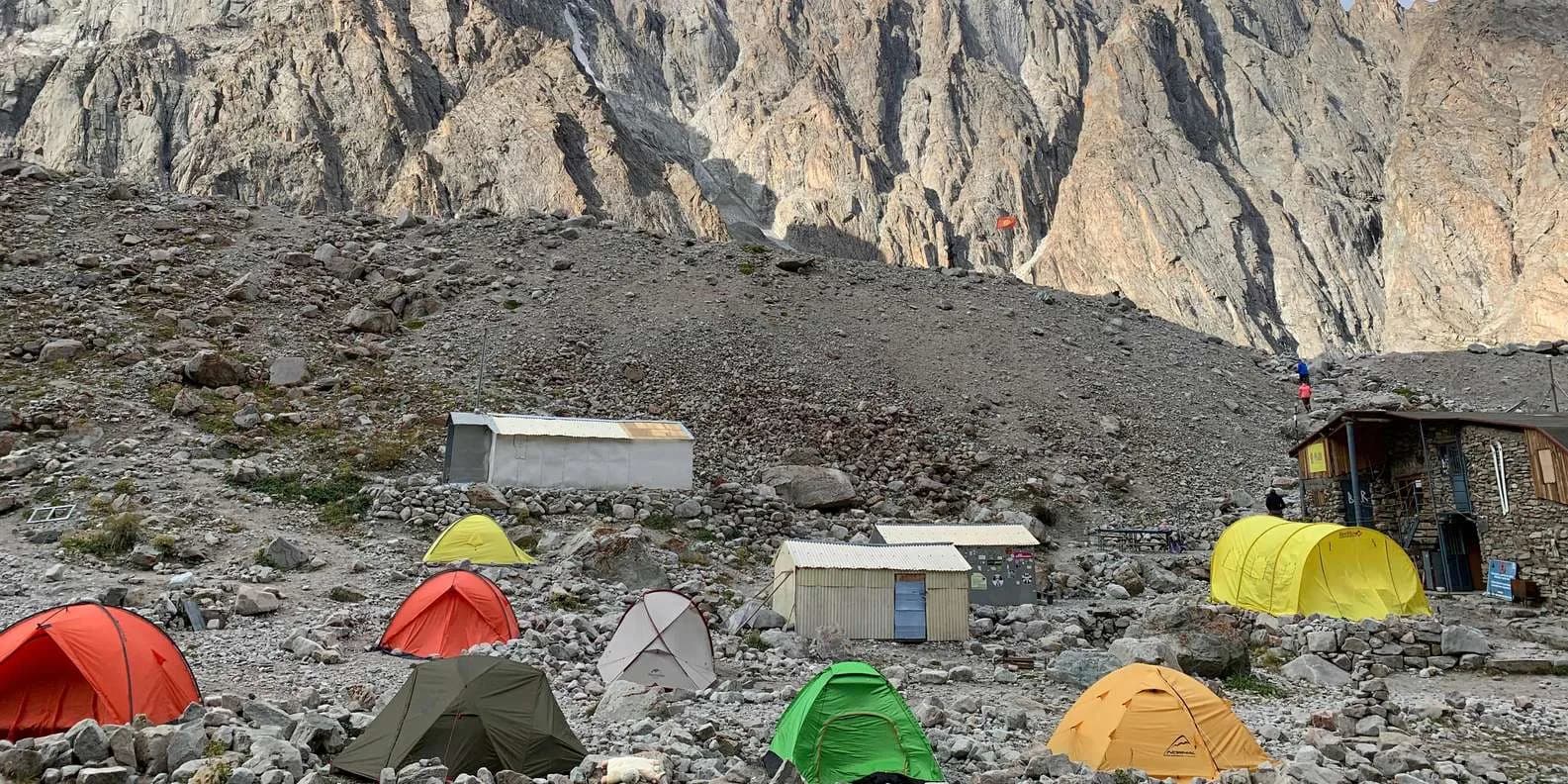
Uchitel Peak: Your First 4,000m Climb (2026)
Pik Uchitel (~4,400-4,600 m) in Ala-Archa is the classic first summit for fit hikers new to mountaineering: route, gear, season and acclimatisation.
By TiK Editors8 min read
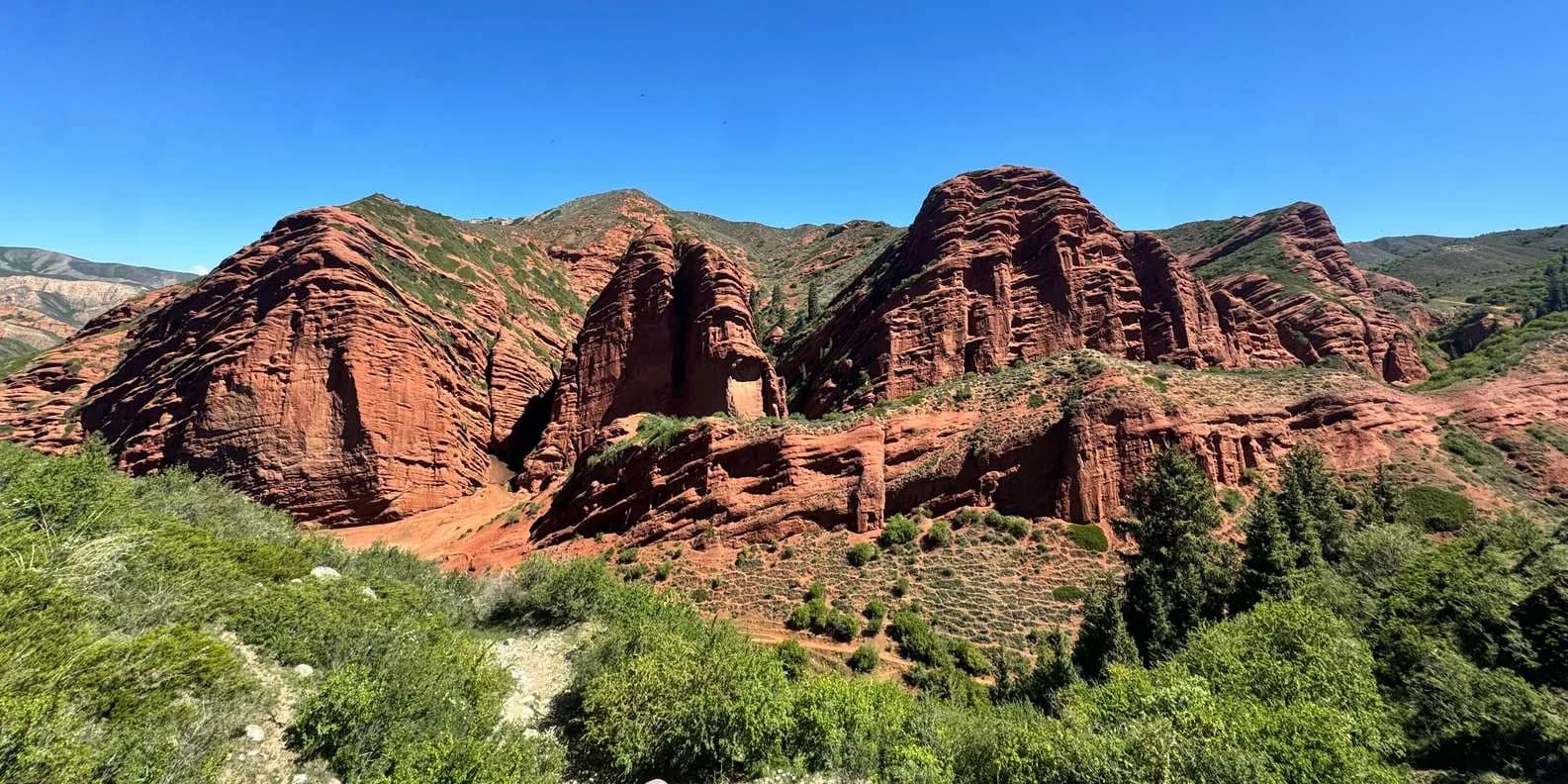
Boz-Uchuk Lakes Trek from Jyrgalan (2026)
A moderate 2–3 day trek to a string of alpine lakes above Jyrgalan — quieter than Karakol's classics, with community yurts, horses and clear DMO rates.
By TiK Editors8 min read
Self-Guided Treks in Kyrgyzstan: Routes & How-To
Yes, you can trek Kyrgyzstan without a guide. The best self-guided routes, the ones to skip, and the maps, water and safety logistics that make it work.
By TiK Editors12 min read