 Image via GetYourGuide
Bishkek City Guide: What to Do & See (2026)
How to spend one or two days in Bishkek: the squares, Osh Bazaar, the best day trips, where to stay by area, and getting in from BSZ airport.
Book it on This is Kyrgyzstan
Bishkek · Turn this guide into a trip
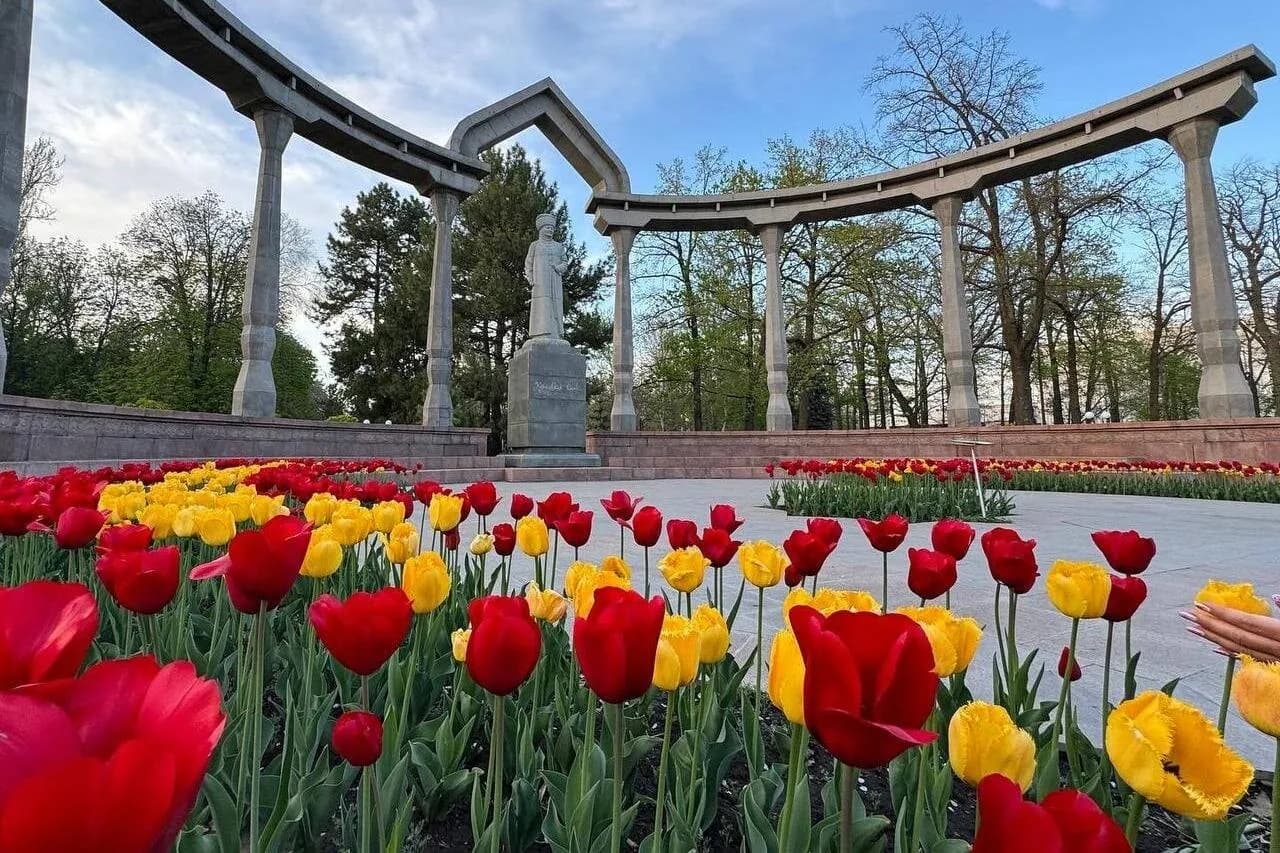
Bishkek is a low-rise Soviet grid softened by trees, sitting at around 800 m with the Kyrgyz Ala-Too rising like a wall to the south. Give it one or two days, not more. This is where you land, sort a SIM and som, eat well, walk a couple of grand squares and a chaotic bazaar, then use the city as a base for mountains that start less than an hour away. It rarely tops anyone's must-see list, and that is fine. Bishkek's job is to ease you into Kyrgyzstan, and it does that better than any other Central Asian capital.
Best things to do in Bishkek
Short on time? Here is the quick-scan version of the best things to do in Bishkek, in the order most visitors tackle them. Fuller detail on each sight sits in the sections below.
- Stand in Ala-Too Square for the changing of the guard. The ceremonial main square, with its Manas statue and soaring flagpole, is where the honour guard changes on the hour. Time your visit for the top of the hour and you get the whole ritual.
- Tour the State History Museum. Reopened after a long renovation, its felt-craft, ethnography and Manas-epic halls are worth a good hour and make sense of everything else you will see.
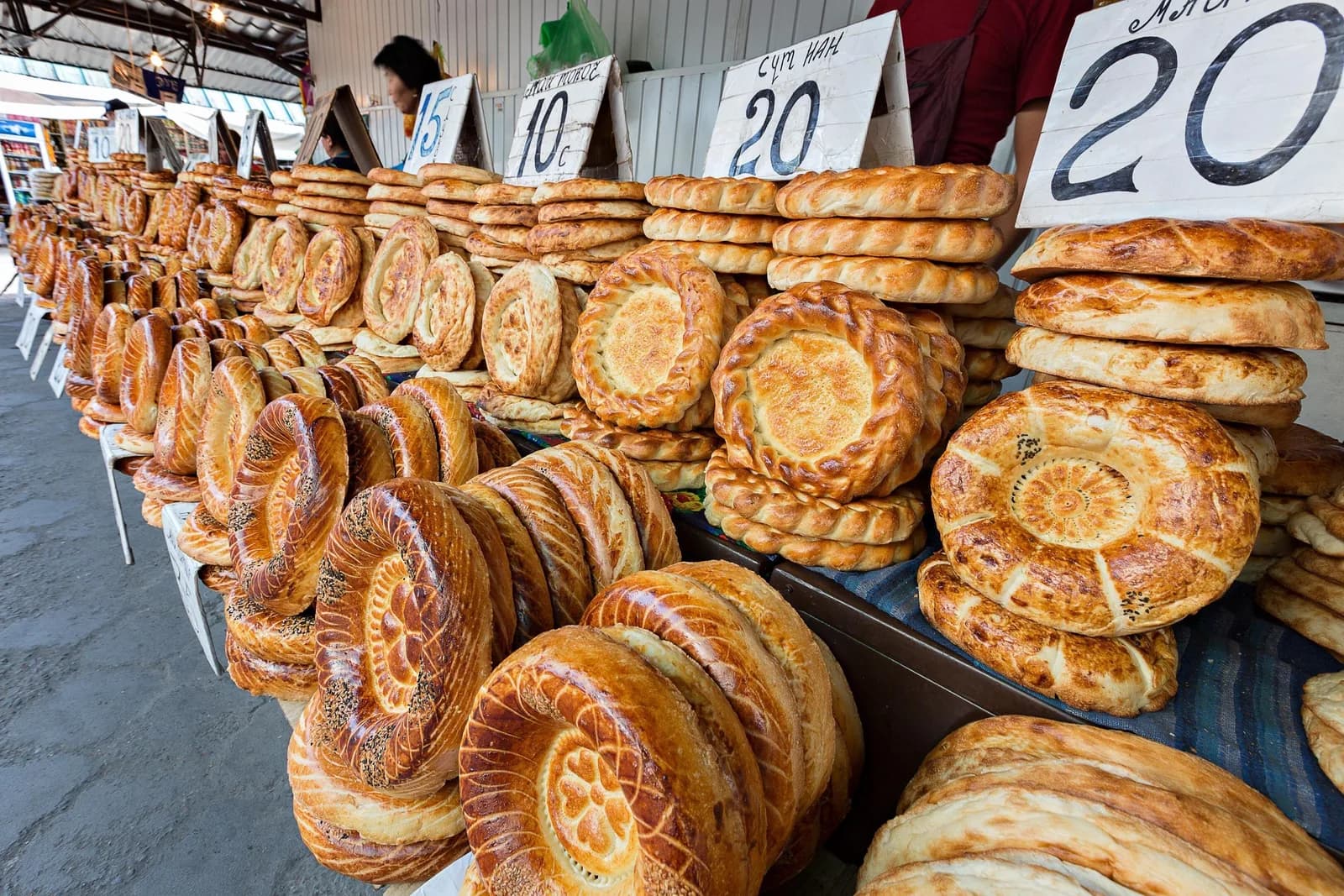
- Graze and haggle at Osh Bazaar. The sprawling market on the western edge is the city at its most everyday: dried apricots and walnuts, felt shyrdak rugs, kalpak hats, and a fresh samsa straight off the tandyr wall.
- Eat your way round Osh Bazaar's food stalls. Beyond the crafts, this is the place to try tart, grainy maksym from a Shoro barrel and cheap street food for a few dollars. Keep your valuables zipped in the crush.
- Wander the sculptures of Oak Park. The open-air sculpture park beside the old squares is dotted with statues and shaded benches, an easy, free half-hour in the greenest capital in Central Asia.
- Photograph the yurt-frame arch at Victory Square. Three curved concrete arches evoke the wooden frame of a boz-üy over an eternal flame, the most photogenic monument in the city.
- Ride the rickety funfair in Panfilov Park. A gloriously creaky Soviet-era amusement park that comes alive at dusk, best paired with an evening stroll along Erkindik Boulevard.
- Drink your way through the café and craft-beer scene. Independent roasteries cluster around Chuy and Erkindik, and a genuine craft-beer and cocktail scene has grown up alongside the specialty coffee. See our Kyrgyz food guide for what to order.
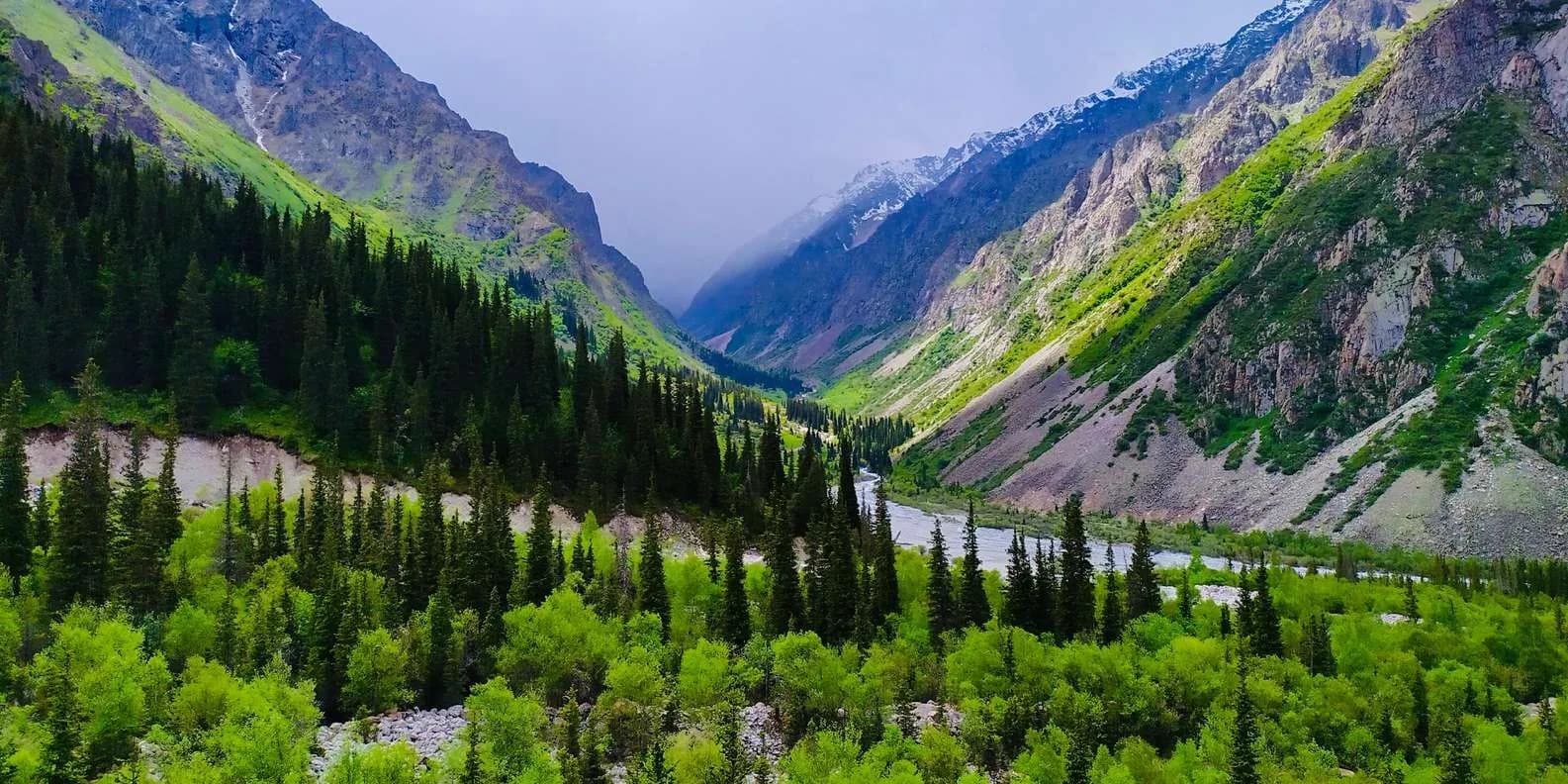
- Take a day trip to Ala-Archa National Park. A glacial gorge only about 40 minutes' drive south, with easy riverside walks and harder routes up towards the Ak-Sai glacier. For most visitors this is the highlight of a Bishkek stay; see our Ala-Archa National Park guide.
- See Burana Tower or a mountain lake on a longer day out. The 11th-century Silk Road minaret of Burana Tower sits about 80 km east, while alpine Kol-Tor lake and the Chunkurchak and Kegety valleys make greener escapes. Weigh them all up in our best day trips from Bishkek.
Getting your bearings
The centre is flat, walkable and laid out on a strict grid, so you will rarely get properly lost. Chuy Avenue is the main east–west artery; the mountains are always due south, which makes for a reliable natural compass. Most of what you will want to see sits within a 20-minute walk of Ala-Too Square, and the leafy pedestrian spine of Erkindik Boulevard runs north–south through the middle of it.
The city is young by regional standards. It began as the Kokand fortress of Pishpek in 1825, was taken by Russian forces in the early 1860s and rebuilt as a colonial settlement, then renamed Frunze in 1926 after the Bolshevik commander born here. It reverted to Bishkek on 5 February 1991, months before independence on 31 August that year. That layered history explains the look of the place: wide Tsarist-era streets, monumental Soviet planning, and a scatter of glassy new towers. Today about 1.12 million people live here, and Russian is still the main language of the street, spoken at home by more than half the city.
Top things to do in Bishkek
Here is how the central sights stack up for a short stay. Everything below is walkable or a cheap taxi hop from the centre.
| Sight | What it is | Time needed |
|---|---|---|
| Ala-Too Square | Ceremonial main square, Manas statue, hourly guard change | 30–45 min |
| State History Museum | Ethnography and epic-poetry halls, reopened after renovation | 1–1.5 h |
| Osh Bazaar | Sprawling food-and-crafts market on the western edge | 1–2 h |
| Oak Park (Dubovy) | Open-air sculpture park beside the old squares | 30 min |
| Panfilov Park | Creaky Soviet funfair, good for an evening stroll | 30–45 min |
| Victory Square | Yurt-frame arch monument to the 1945 victory | 20 min |
| Erkindik Boulevard | Pedestrian tree-lined promenade, café stops | as long as you like |
Squares, statues and Soviet architecture
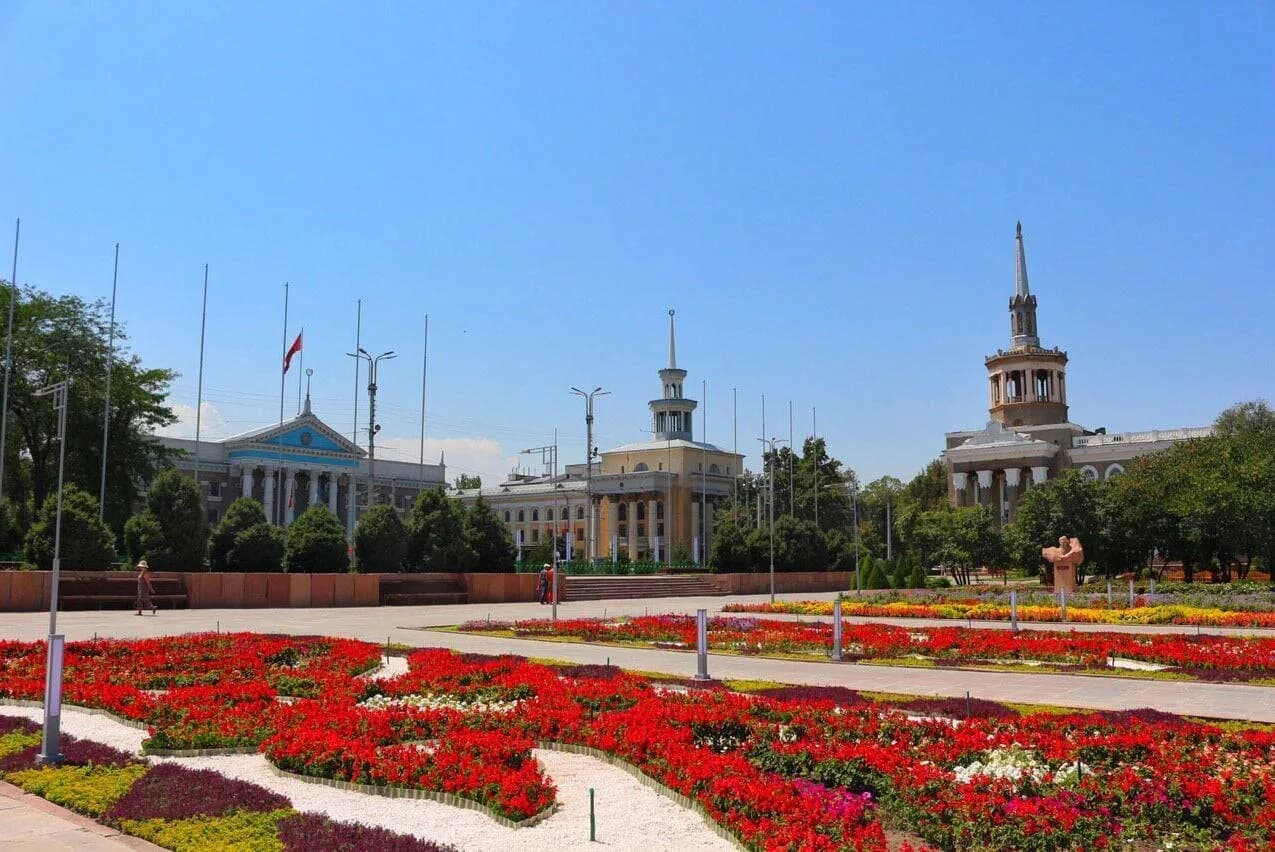
Ala-Too Square is the ceremonial heart of the city: a vast granite expanse where an honour guard changes beneath a soaring flagpole and a mounted statue of Manas, the hero of the Kyrgyz national epic. Time your visit for the top of the hour to catch the guard change. Behind the square, the State History Museum has reopened after a long renovation and earns an hour for its ethnography, felt-craft and Manas-epic displays. Nearby is the frieze-clad former Lenin Museum; Lenin's own statue still stands, quietly moved to the square behind it rather than torn down.
Walk a few blocks and the Soviet planning reveals itself in the government buildings, the White House and the parade-scale avenues. Victory Square, with its three curved concrete arches evoking the wooden frame of a yurt (boz-üy), is the most photogenic monument in the city and holds an eternal flame. None of this is world-class architecture, but as a legible, walkable record of the 20th century it is genuinely interesting.
Osh Bazaar
No short trip to Bishkek is complete without a morning at Osh Bazaar, the big covered-and-open market on the western edge of the centre (named after the southern city, confusingly, not the dish). Come to graze on dried apricots, walnuts and heaps of sunflower seeds, buy a felt shyrdak rug or a white kalpak hat, and watch the city do its everyday shopping. Try a fresh samsa straight off the tandyr wall for 60–120 som (about $0.70–1.40), or a cup of tart, grainy maksym from a Shoro barrel for 25–40 som. Keep your valuables zipped and your wits about you in the crush; it is safe but busy, and petty pickpocketing is the one real risk.
Parks and green space
Bishkek is one of the greenest cities in Central Asia, a deliberate Soviet policy of planting to cool the summer heat. Oak Park (Dubovy Park) is dotted with open-air sculptures and shaded benches; Panfilov Park hides a small, gloriously rickety Soviet funfair that is worth a wander at dusk. On a hot afternoon the parks are where the whole city goes, and they cost nothing.
The food and café scene
Bishkek has quietly become a very good place to eat and drink. Specialty coffee is everywhere in the centre, with independent roasteries clustered around Chuy and Erkindik, and a real craft-beer and cocktail scene has grown up alongside it. Come hungry for lagman (hand-pulled noodles, ask for the dry fried boso style), manty (steamed dumplings, 40–70 som each), plov and shashlik. A mid-range three-course dinner for two runs around 2,500 som (about $29); a bazaar or canteen lunch is 200–400 som. For the full menu of what to order, see our Kyrgyz food guide.
Best day trips from Bishkek
The real reason to base yourself here is how fast you can escape into the mountains. Three trips stand out, and all work as a comfortable day out with a hired driver or a small-group tour.
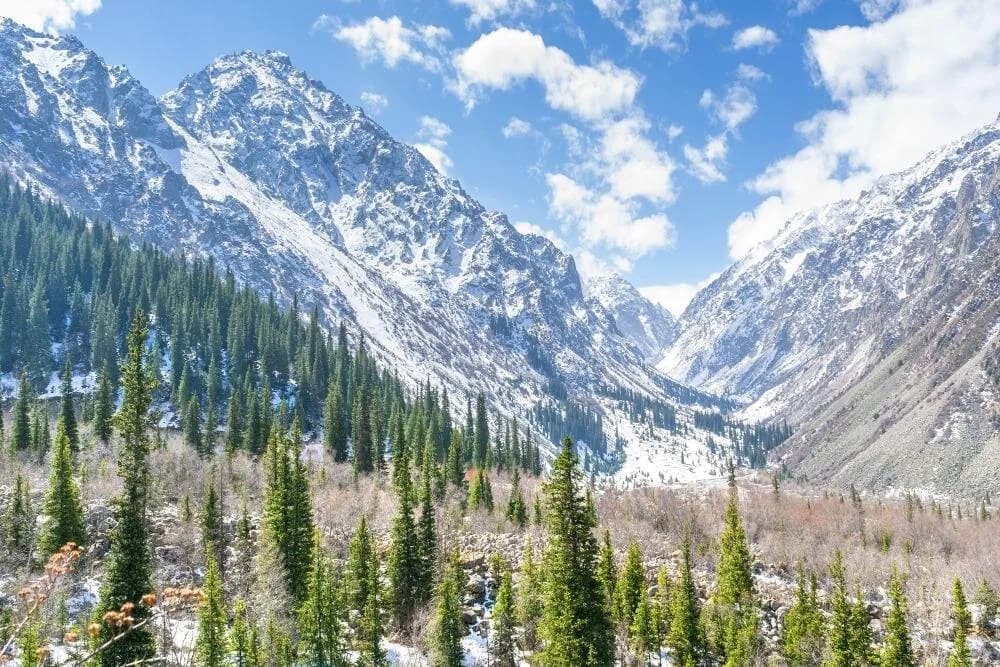
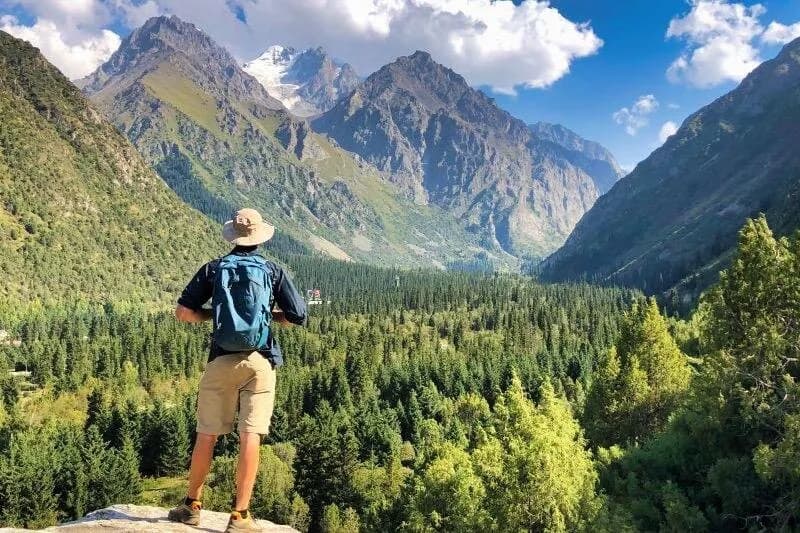
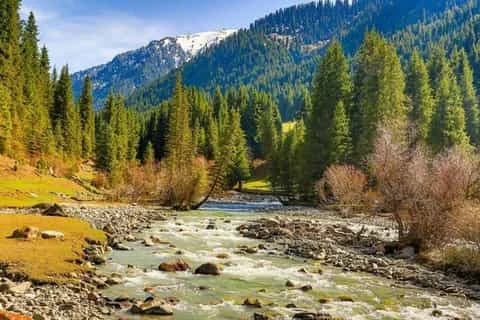
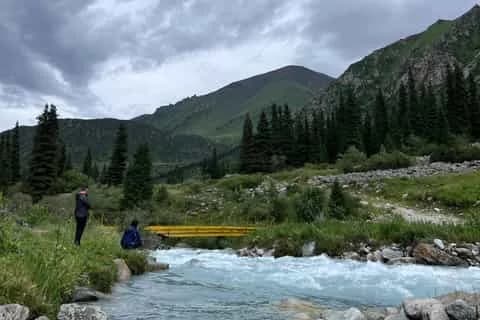
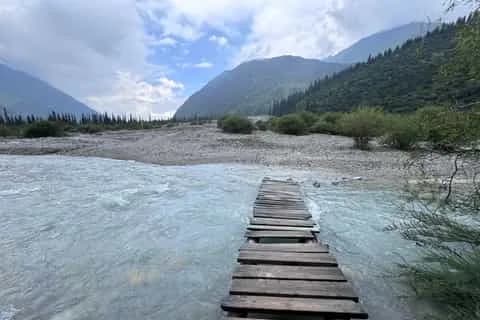
Ala-Archa National Park is the classic half-day escape: a glacial gorge only about 40 minutes' drive south of the city. From the alpine centre you can walk an easy riverside trail, push up towards the Ak-Sai waterfall and glacier for a harder day, or simply picnic among the Tien Shan spruce. On a clear morning it is the single best thing you can do near Bishkek.
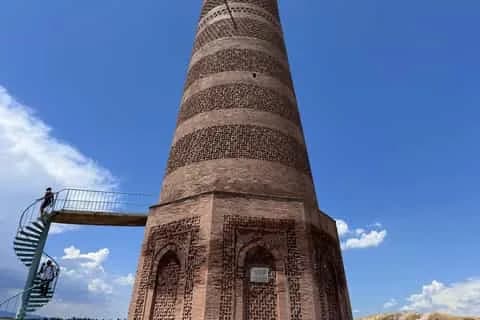
Burana Tower stands about 80 km east near Tokmok, in the Chuy valley. It is a stout brick minaret, all that survives above ground of Balasagun, a Karakhanid Silk Road capital founded in the late 9th century. Climb the dark internal staircase for valley views, then wander the field of carved balbal stone figures beside it. Pair it with the Chong-Kemin valley (around 1,700 m), a green side-valley that is a common overnight stop on the road east.
For the full rundown of options, distances and how to book, read our best day trips from Bishkek. Many travellers use the city as the launch point for a longer loop east to Karakol and Lake Issyk-Köl.
Getting in from the airport, and getting around
Bishkek's Manas International Airport changed its IATA code from FRU to BSZ in August 2025, so both codes still appear on tickets and booking sites; the airport itself is unchanged, about 25 km north-northwest of the centre. A new western section of the terminal opened in May 2026, so follow current signage rather than an old blog when you land.
| Airport to city | Rough cost | Time |
|---|---|---|
| Yandex Go / app taxi | 700–1,200 som ($8–14) | 30–45 min |
| Pre-booked private transfer | $20–40 per car | 30–45 min |
| Express bus 153 | ~122 som cashless | 45–75 min |
| Marshrutka 380 | ~60 som (daylight only) | 45–70 min |
| Terminal taxi touts | 800–1,500+ som | 30–45 min |
Book through the Yandex Go app rather than negotiating with the touts at arrivals, which is the single most-reported minor rip-off in the country. To do that you need data, so buy a local SIM (Beeline, O! or MegaCom) or activate an eSIM before you leave the terminal.
In the city itself, walking covers the centre and Yandex Go handles everything else cheaply. A few practical changes have caught out older guidebooks: the trolleybuses were abolished in November 2024, and from 1 July 2026 municipal buses went fully cashless. Pay with a tap of a foreign contactless bank card, a QR code, or a Tulpar transport card bought from the driver for 60 som (that includes one ride), and you get up to four free transfers within 60 minutes. Locals navigate with the 2GIS app, which is more reliable here than Google Maps. For the wider picture on marshrutkas, shared taxis and intercity travel, see getting around Kyrgyzstan.
For longer hauls, the Western Bus Station on the city's west side is the main long-distance terminal, with marshrutkas and shared taxis to Karakol, Naryn, Osh and beyond. Osh is a 40-minute flight or a hard 10–12 hour, roughly 600 km road journey over two high passes.
Where to stay in Bishkek by area
Stay central. The distances are small and the difference in atmosphere between neighbourhoods matters more than the distance to any one sight.
| Area | Best for | Trade-off |
|---|---|---|
| City centre (Ala-Too / Chuy) | First-timers, walkable sights and cafés | Priciest, some traffic noise |
| Erkindik / south of centre | A calmer, leafy base still in walking range | Fewer late-night options |
| Near Osh Bazaar / west | Cheaper rooms, handy for onward buses | Less atmospheric after dark |
The centre around Ala-Too Square and Chuy Avenue is the obvious choice for a short stay, with the best spread of hostels, guesthouses and hotels. If you want somewhere quieter, the streets around Erkindik south of the centre are leafy and calm but still an easy walk from the action. The area near Osh Bazaar is cheaper and convenient for an early bus out, though it is workaday rather than charming in the evenings.
How long to stay, safety and money
One or two days is right. Bishkek is a place to arrange permits, change money, stock up for a trek and adjust before the mountains take over, not a destination you linger in. Spend a day on the squares, the bazaar and the food, and use a second day for Ala-Archa or Burana.
The city is genuinely safe, including for solo travellers. The real risks are road traffic and, at Osh Bazaar, opportunistic pickpockets, not violent crime. At night, stick to well-lit central streets, avoid unlit park corners, and take a Yandex ride rather than walking long distances or flagging an unmarked car. Most nationalities get 30 days visa-free within any rolling 60-day period (not the 60 days you will still read in older sources); check your own passport and any registration rules in our Kyrgyzstan visa and entry guide.
For money, ATMs are plentiful in the centre and licensed exchange offices give fair rates on US dollars and euros; carry small som notes for taxis, marshrutkas and the bazaar, because drivers rarely change large bills. Cards work in mid-range restaurants and hotels but not at market stalls.
Ready to plan the rest of your trip from the capital? Browse tours and day trips on our Bishkek destination page and build your route out from there.
Chat with a real person — free
Seif and the team reply on WhatsApp 24/7 — trip questions, custom plans and booking help.
Ask Seif on WhatsAppCommon questions
How many days do you need in Bishkek?
One to two days is plenty. Bishkek is a low-key capital best used as a base rather than a destination in itself. One day covers Ala-Too Square, the State History Museum, Osh Bazaar and the café scene; a second day is ideal for a day trip to Ala-Archa National Park or Burana Tower. Any longer and you are better off heading to the mountains or Lake Issyk-Köl.
Is Bishkek airport still called FRU?
The airport's IATA code changed from FRU to BSZ in August 2025, so both still appear on tickets and booking sites. The airport itself, Manas International, is unchanged and sits about 25 km north-northwest of the city centre. If your booking shows FRU it is simply using the old code; you are flying to the same place. The ICAO code UAFM did not change.
How do you get from Manas airport to the city centre?
The easiest option is a Yandex Go app taxi, roughly 700–1,200 som ($8–14) for the 25 km, 30–45 minute run. Book it in the app to avoid the terminal touts, who charge a clear premium. Cheaper alternatives are the express bus 153 (about 122 som) or marshrutka 380 (about 60 som, daylight only). Buy a SIM or eSIM before leaving the terminal so the taxi app works.
Is Bishkek safe for tourists?
Yes. Bishkek is a genuinely safe city, including for solo and women travellers, with violent crime against tourists rare. The real risks are chaotic road traffic and opportunistic pickpocketing in crowds at Osh Bazaar, so keep valuables zipped away. At night, stick to well-lit central streets, avoid unlit park corners, and use a Yandex taxi rather than flagging an unmarked car or walking long distances.
What are the best things to do in Bishkek?
Start at Ala-Too Square for the Manas statue and the hourly guard change, then visit the reopened State History Museum. Spend a morning grazing and shopping at Osh Bazaar, wander the sculptures of Oak Park, and see the yurt-frame arch at Victory Square. Round it off with the specialty-coffee and craft-beer scene along Chuy and Erkindik. For most visitors the highlight is actually a day trip to Ala-Archa National Park.
What is the best day trip from Bishkek?
Ala-Archa National Park is the standout: a glacial gorge only about 40 minutes' drive south, with easy riverside walks and harder routes up towards the Ak-Sai glacier. Burana Tower, an 11th-century Silk Road minaret about 80 km east, is the other classic, often combined with the Chong-Kemin valley. Both work as a comfortable day out with a hired driver or a small-group tour.
Do you need cash for buses in Bishkek?
Not on municipal buses. Since 1 July 2026 Bishkek's municipal and electric buses are cashless: pay by tapping a contactless bank card or QR code, or buy a Tulpar transport card from the driver for 60 som (one ride included). You get up to four free transfers within 60 minutes. Private marshrutkas may still take cash, and you always need small som notes for taxis and the bazaar.
How do you get from Bishkek to Osh?
Fastest is a domestic flight, around 40 minutes and roughly $40–50 one way, with about six flights a day. The road is a serious undertaking: about 600 km over two 3,100 m-plus passes and the unlit Töö-Ashuu tunnel, taking 10–12 hours by shared taxi. In winter the road closes at short notice for avalanche control, so never book a same-day connection off a road journey between October and May.
How long is the visa-free stay in Kyrgyzstan?
Most nationalities, including UK, EU, US, Canada, Australia and others, get 30 days visa-free within any rolling 60-day period. This is tighter than the 60 days many older guidebooks still quote, and a quick border hop no longer resets the clock. Stays beyond 30 days require online registration; hotels can often help. Check your own passport's rules on the official portal before you travel.
Book it on This is Kyrgyzstan
Turn this guide into a trip
Kyrgyzstan's bestsellers
The experiences travelers book most, across the country

Keep reading
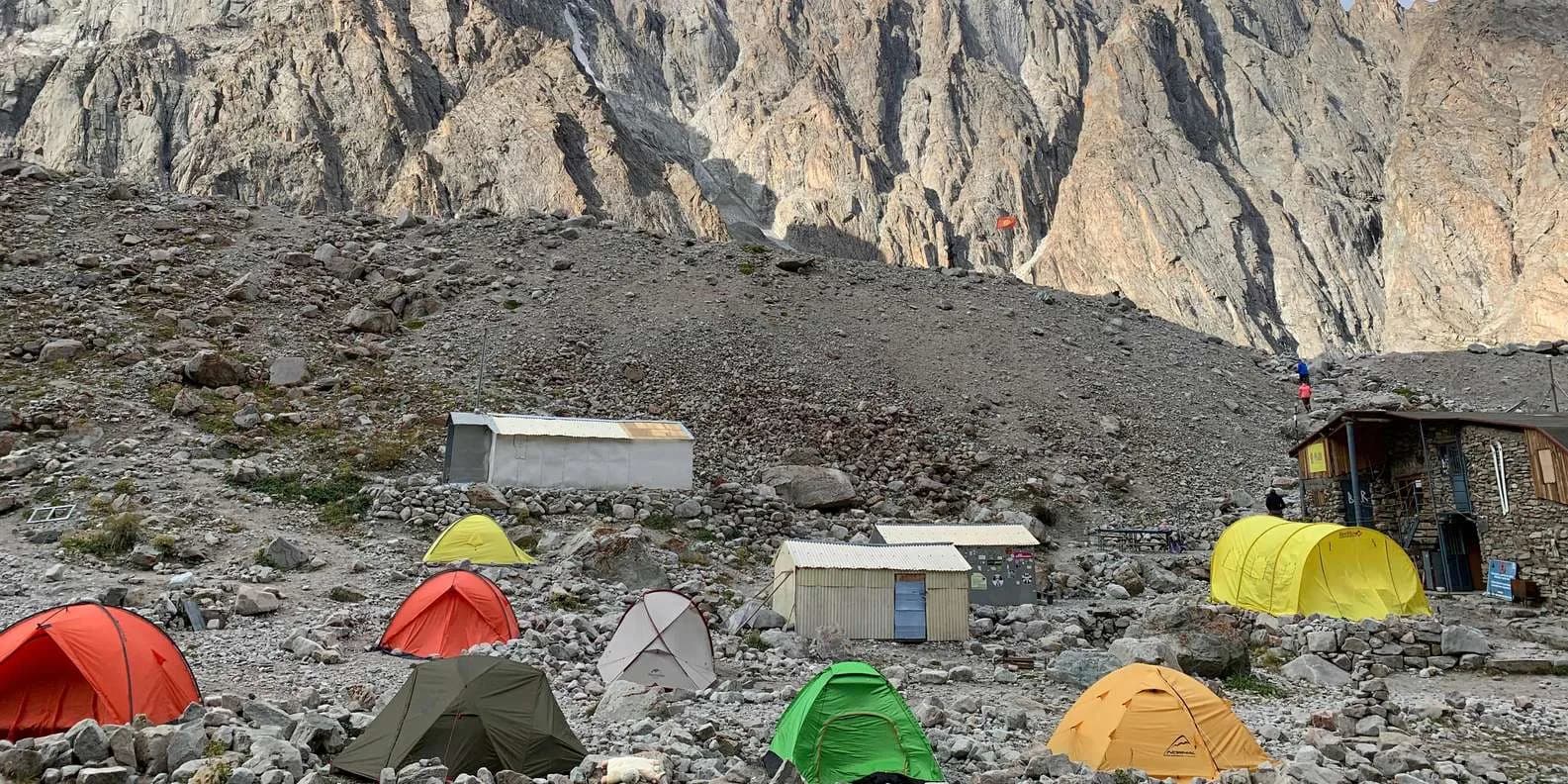
Uchitel Peak: Your First 4,000m Climb (2026)
Pik Uchitel (~4,400-4,600 m) in Ala-Archa is the classic first summit for fit hikers new to mountaineering: route, gear, season and acclimatisation.
By TiK Editors8 min read
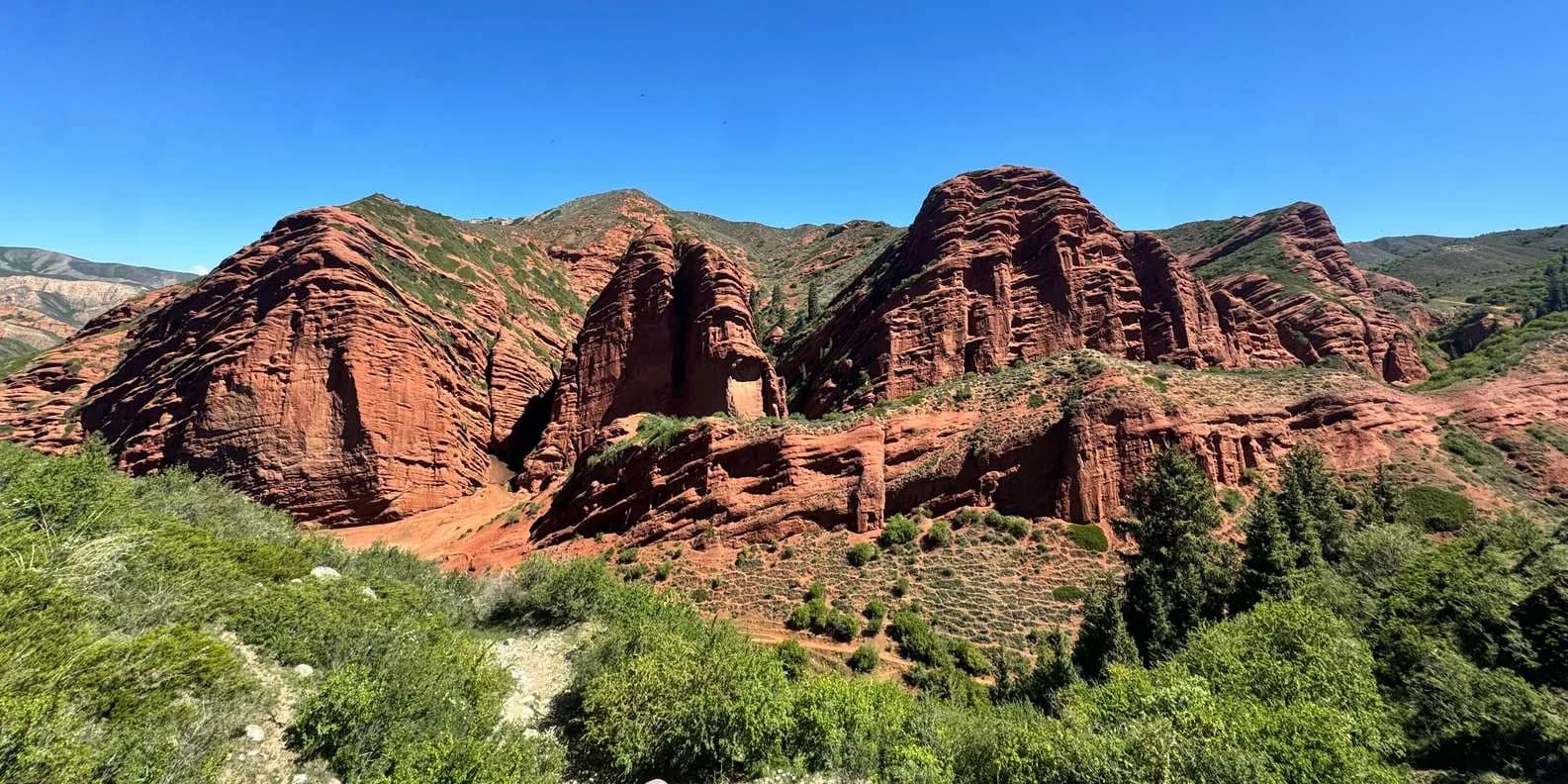
Boz-Uchuk Lakes Trek from Jyrgalan (2026)
A moderate 2–3 day trek to a string of alpine lakes above Jyrgalan — quieter than Karakol's classics, with community yurts, horses and clear DMO rates.
By TiK Editors8 min read
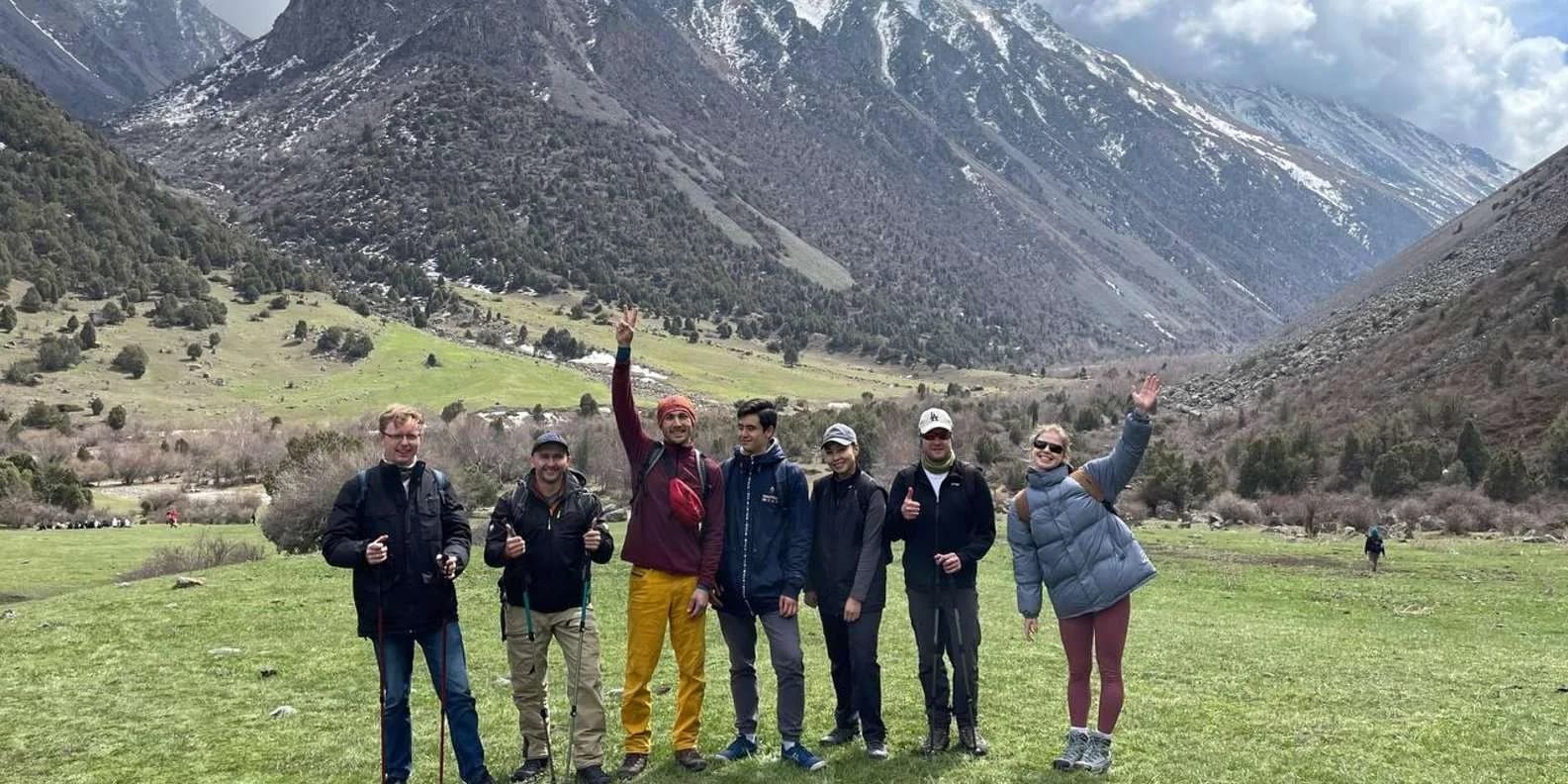
Self-Guided Treks in Kyrgyzstan: Routes & How-To
Yes, you can trek Kyrgyzstan without a guide. The best self-guided routes, the ones to skip, and the maps, water and safety logistics that make it work.
By TiK Editors12 min read