 Image via GetYourGuide
Ala-Archa National Park: The Bishkek Day-Hike Guide
Everything for Ala-Archa, the alpine gorge 40 km south of Bishkek: getting there, entry fees, the trails, altitude, seasons and how to do it in a day.
Book it on This is Kyrgyzstan
Bishkek · Turn this guide into a trip
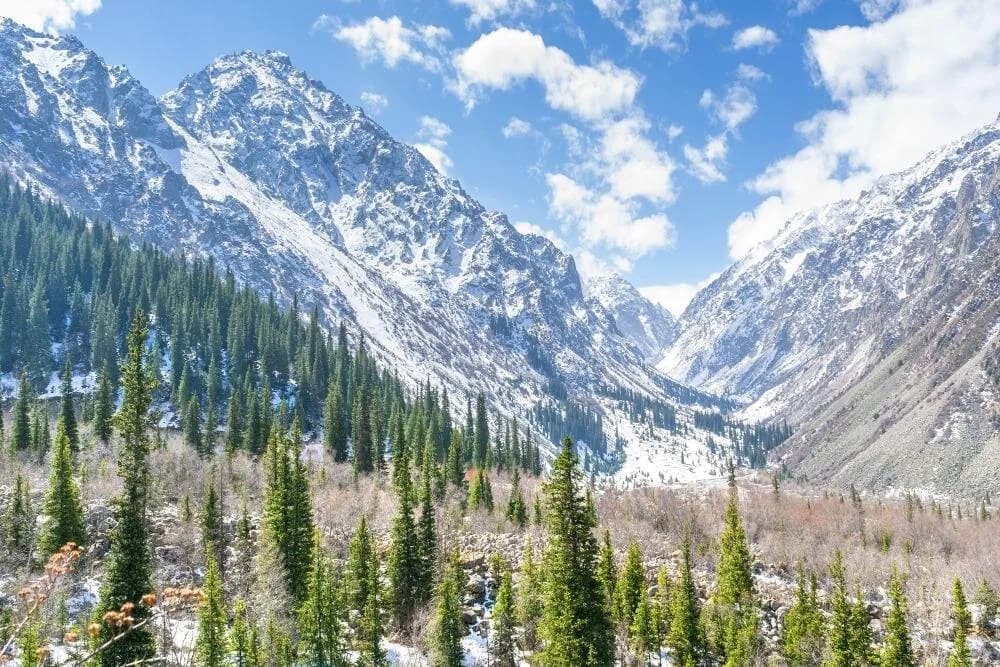
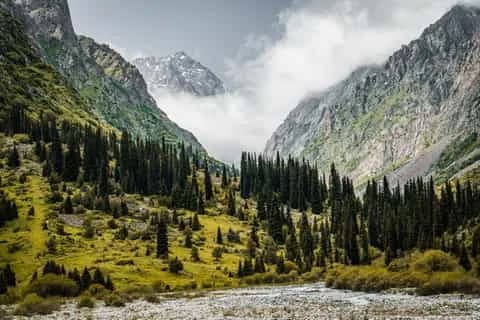
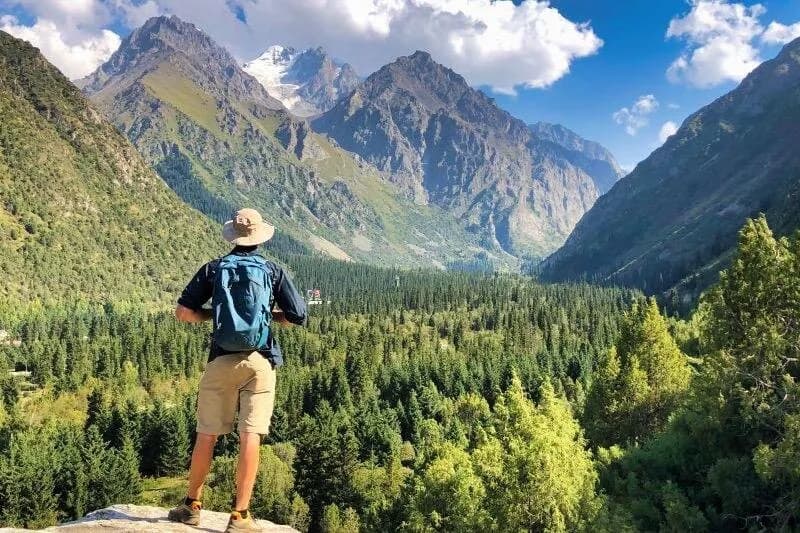
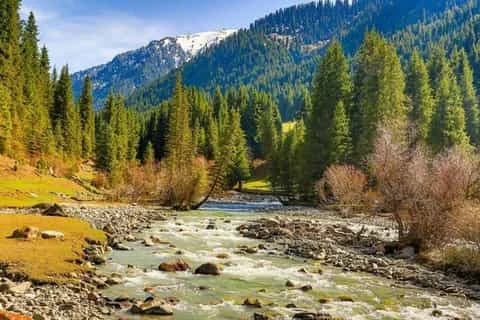
Ala-Archa National Park is an alpine gorge in the Kyrgyz Ala-Too, about 40 km south of Bishkek and roughly 40 minutes' drive from the city. It is the easiest serious mountain scenery you can reach from the capital: glaciers, 4,000-metre peaks, and juniper-scented trails, all inside a half-day round trip. You can amble the valley floor in trainers or grind up to a working climbers' hut above 3,300 m. There is no public transport to the gate, so plan on a taxi or a tour, and you pay a small park fee in cash on arrival.
If you only have one free day around Bishkek and you want mountains rather than monuments, this is the trip. It is also the one most people underestimate: the drive is short, but the higher trails climb hard and fast from a low start.
What Ala-Archa actually is
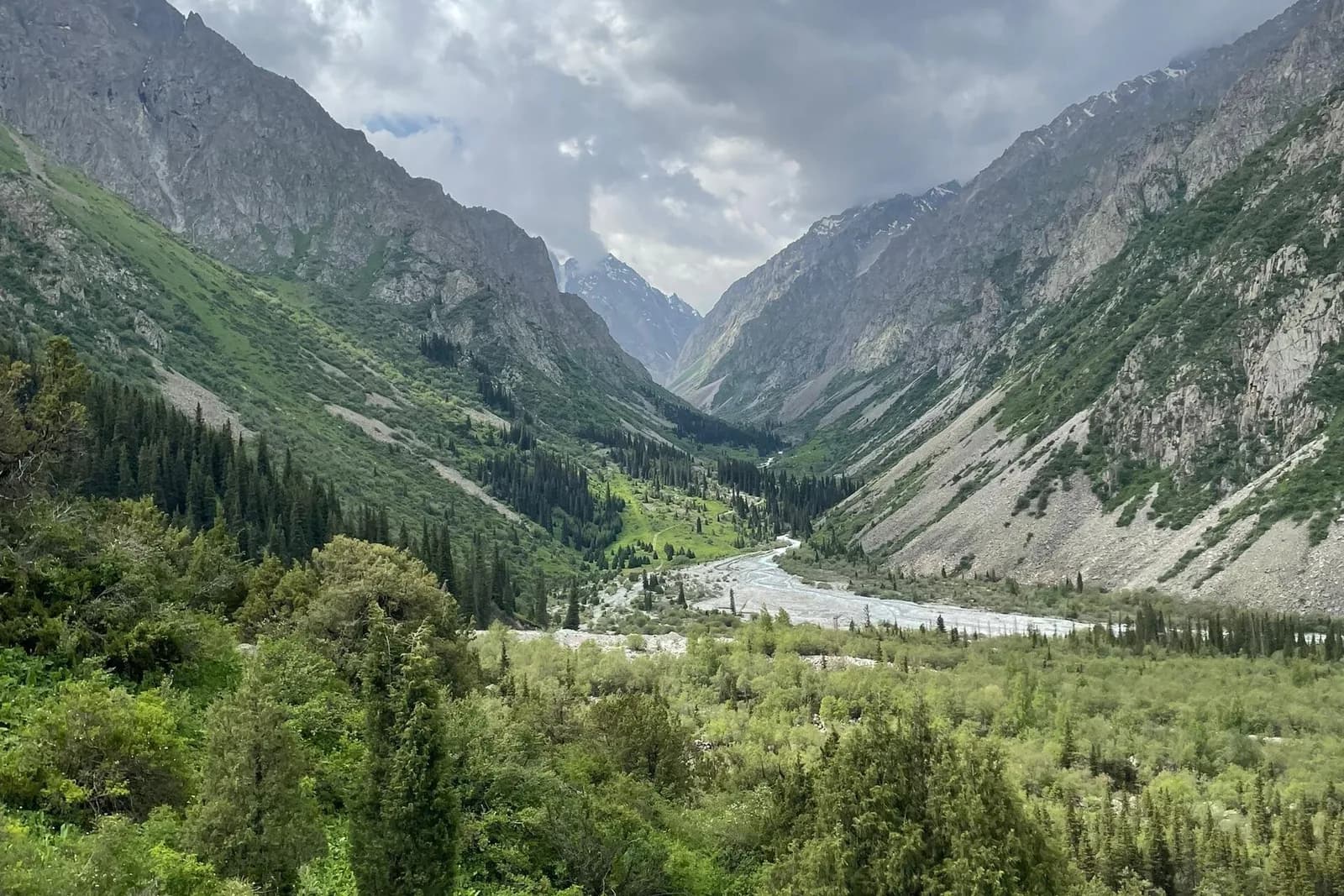
Ala-Archa sits in the Kyrgyz range (the Kyrgyz Ala-Too), the northern wall of the Tien Shan that rises straight off the Chuy plain behind Bishkek. The name comes from the juniper that scents the lower slopes. The park protects the Ala-Archa river gorge and its side valleys, a compact block of alpine terrain that packs glaciers, moraine lakes and snow peaks into a space you can reach before lunch.
The mountaineering heart of the park is the Ak-Sai gorge, which branches south-east off the main valley. Above it hang the Ak-Sai and Uchitel glaciers and a ring of technical peaks: Korona, Free Korea, Teke-Tor, and Semenov Peak, the highest point of the Kyrgyz range. Uchitel Peak (about 4,540 m) is the standard training summit and gives a huge panorama over Bishkek and the Chuy valley. Ibex work the high crags and golden eagles quarter the ridges.
The paved road ends at the Alplager (the alpine base and upper car park) at roughly 2,100 m. This is where the walking starts. Anything above it is on foot.
How to get there from Bishkek
There is no bus, marshrutka or shared taxi that runs to the park gate or up to the Alplager. City buses toward Kashka-Suu village get you to the park's doorstep at best, and you would still face around 12 km of uphill gorge road to the trailhead. In practice, nobody sensible does that.
The simple options:
- Yandex Go or a booked driver. A car from central Bishkek to the Alplager takes about 40 to 50 minutes. Agree a return arrangement with waiting time before you set off, because you will not flag a ride back from the car park. This is the cheapest flexible way for two or more people.
- A guided day trip. Marketplace and agency day tours bundle the transport, the driver's waiting time, the park fee and, where you want one, a guide. This is the least-hassle option and the right call for the higher routes.
Either way, leave early. The Tien Shan clouds up from late morning and builds afternoon storms, so a dawn start buys you the views and gets you off the high ground before the weather turns.
Entry fee, and paying at the gate
Ala-Archa charges a national-park entry fee per person and a separate charge per vehicle, collected at the gate. It is a modest sum in Kyrgyz som, on the order of a few hundred som a head (very roughly a couple of US dollars) plus the car charge, but the exact figures change and are not published reliably, so confirm the current amount on the day. Bring cash in som; do not count on a card machine at the barrier. A guided tour will normally have this built into the price already.
The trails: which walk to choose
Ala-Archa suits every level, from a flat riverside stroll to a lung-busting glacier day. The four routes below cover the range. Treat the numbers as planning estimates and check locally, especially for the higher routes where snow moves the goalposts.
| Route | Distance (return) | Time | Ascent | Grade |
|---|---|---|---|---|
| Ala-Archa valley river walk | ~5-8 km | 2-3 h | minimal | Easy |
| Ak-Sai waterfall | ~8-9 km | 4-6 h | ~650-800 m | Moderate, steep |
| Ratsek hut & Ak-Sai glacier | ~14 km | 5-8 h return, or overnight | ~1,200-1,500 m | Hard |
| Adygene valley & lakes | ~14-16 km | 6-8 h | ~800-1,000 m | Moderate-hard |
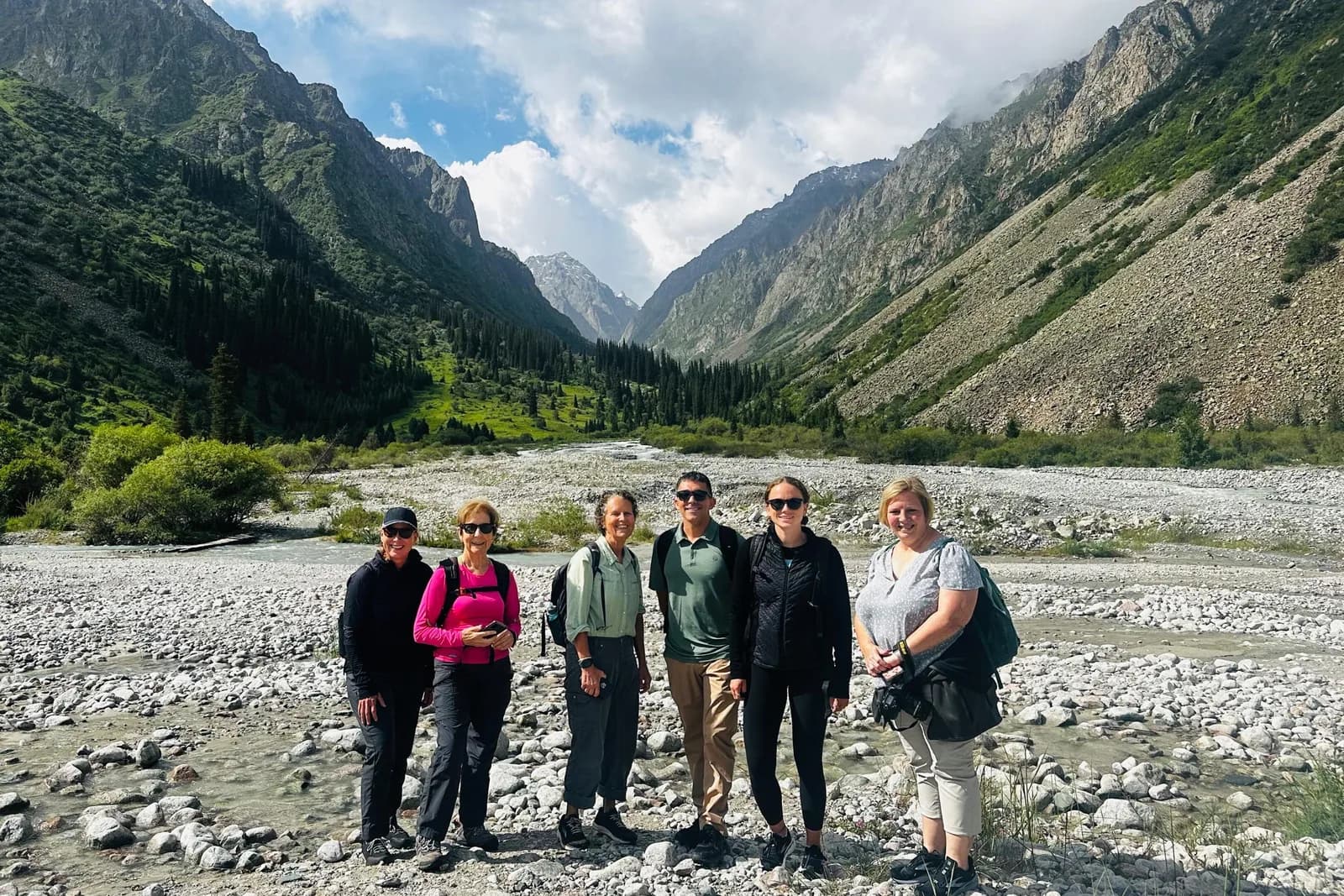
The valley river walk heads up the main gorge from the Alplager along the Ala-Archa river. It is nearly flat, easy underfoot, and gives you meadows, junipers and mountain walls without any real climbing. This is the one for families, a lazy morning, or anyone not acclimatised.
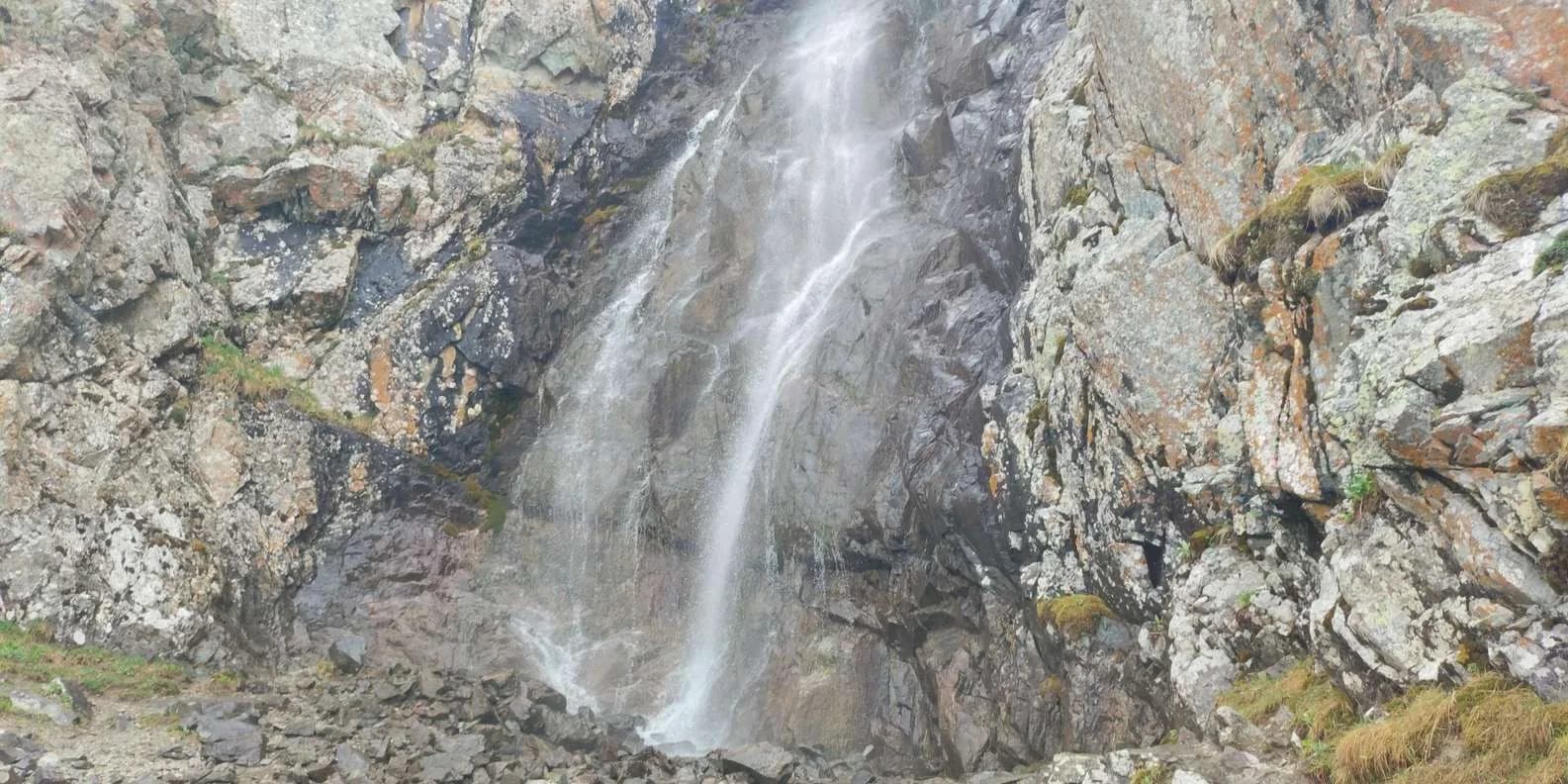
The Ak-Sai waterfall is the classic half-day objective. You break away from the valley floor and climb steeply up the Ak-Sai gorge to a broad cascade at roughly 2,750 m. It is short on distance but relentless on gradient, and it is the sensible turnaround for most fit day-trippers who want a summit-shaped reward without committing to the glacier.
Adygene valley is the quieter alternative that branches west, leading up towards the Adygene glacier, a scatter of moraine lakes and an alpinists' memorial. It sees a fraction of the Ak-Sai traffic and rewards a slower, longer day.
Ratsek hut and the Ak-Sai glacier: the big one
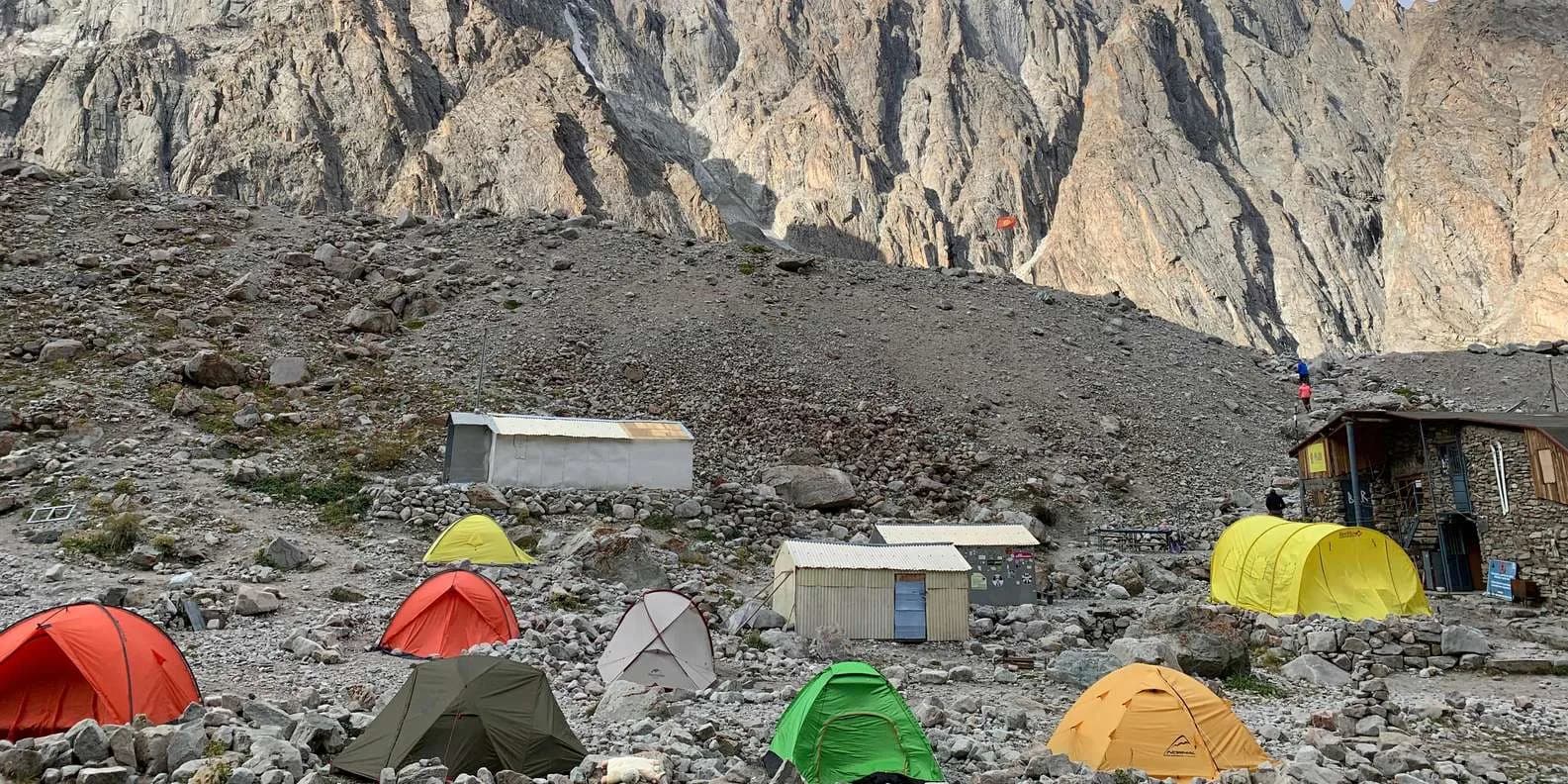
The headline hike, and the one to respect, climbs the Ak-Sai gorge past the waterfall to the Ratsek hut (Khizhina Ratseka) at about 3,300 to 3,350 m, tucked beneath Korona and Free Korea. It is roughly 14 km there and back with 1,200 to 1,500 m of ascent, so budget 5 to 8 hours if you go and return in a day, or stay the night and go higher.
The hut is a genuine working alpine base with bunk space and a kitchen, busy with climbers and ski-tourers, and it runs year-round. If you plan to sleep there, check availability first rather than turning up and hoping. Above the hut sits the Ak-Sai glacier; crossing onto glacier ice is mountaineering, not hiking, and needs a guide, a rope and the right gear.
The warning worth repeating: close to Bishkek does not mean casual. You start at 2,100 m and gain well over a kilometre of height in a single push. That fast climb from a low base is exactly the profile that produces headaches and worse. This is proper mountain terrain, and it belongs in the same bracket as the country's named treks rather than a stroll. If you want the full picture of Kyrgyz mountain routes, our trekking in Kyrgyzstan guide sets the wider scene.
Chunkurchak: the cable-car and skybridge alternative
A short way east of Ala-Archa, the Chunkurchak gorge offers a gentler, more built-up day out that is often sold alongside the park. It is a ski area in winter and runs a chairlift or gondola and a suspension "skybridge" slung across the valley, giving you high views for the price of a lift ticket rather than a 1,000-metre climb. It suits families, less mobile visitors and anyone who wants the scenery without the sweat.
Do not confuse the two: Chunkurchak is a separate valley with its own access and its own tickets, not part of the national park. Lift operations and prices vary by season, so confirm what is running before you commit a day to it.
Altitude and safety
Ala-Archa takes you from an 800 m capital to a 3,300 m hut in a morning, and altitude is the thing people underestimate. Acute mountain sickness rarely bites below 2,500 m, but the Ratsek and glacier routes push well past that with a big same-day gain. If you get a headache with nausea, dizziness or a rough night's sleep, stop climbing; if symptoms worsen, descend. Descent is the treatment.
The other hazards are ordinary mountain ones that the short drive lulls people into ignoring. Weather changes fast, and snow is possible on the high ground even in summer. Glacier-fed streams run low at dawn and swell through a hot afternoon. UV is fierce at altitude, so bring sun protection. Kyrgyzstan's mountain rescue is a limited volunteer service with a 24-hour line (+996 312 651 404), phone coverage vanishes up the gorge, and there is no routine helicopter lift, so travel insurance that explicitly covers your maximum altitude and evacuation is not optional. Our is Kyrgyzstan safe guide covers the wider risk picture.
Best time to go
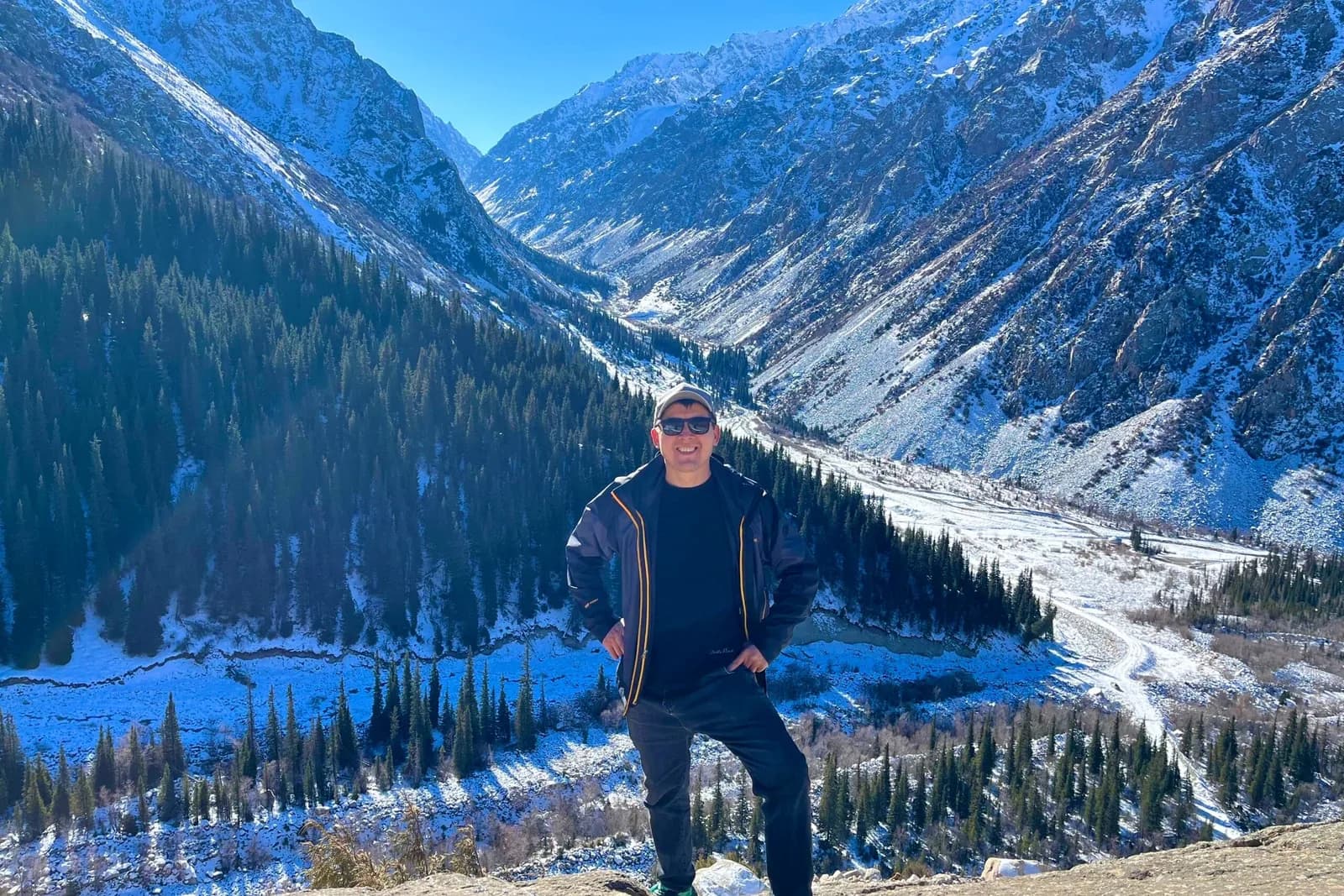
The lower valley works year-round. In winter it is a popular snow-walk and cross-country escape from Bishkek, and spring brings meadow flowers to the gorge floor. The high routes are a summer proposition: the walkers' season for the Ak-Sai waterfall, Ratsek and the glaciers runs roughly June to October, with July and August the most reliable. Snow lingers on the upper trails into June and returns from late September, so shoulder-season visitors should expect the waterfall and glacier to be icy or blocked even when the valley below is clear. For the country-wide view, see best time to visit Kyrgyzstan.
What to bring
- Sturdy footwear. Trainers are fine for the river walk; the waterfall and Ratsek need boots with grip.
- Layers and waterproofs. It is markedly colder and windier up the gorge than in the city, in any season.
- Sun protection. High-factor sunscreen, a brimmed hat and proper sunglasses; UV at altitude is severe, worse over snow.
- Water and snacks. Carry your own; treat any stream water rather than drinking it straight, as livestock graze the slopes.
- Cash in som for the gate, plus a small first-aid kit and, in shoulder season, microspikes for icy sections.
Guided versus independent
The valley river walk and the Ak-Sai waterfall are perfectly doable on your own once you have sorted the drive; the trails are clear and well used. The Ratsek hut, the glacier and any peak want a guide, both for the altitude and because glacier travel needs equipment and judgement you should not improvise. If you are short on time, nervous about the driving, or aiming high, a guided day trip solves the transport, the fee and the route in one booking.
Fitting it into a Bishkek day
Most visitors treat Ala-Archa as a half-day or full-day escape rather than an overnight. A common plan: leave the city early, drive up, walk the valley or push to the waterfall, and be back in Bishkek by mid-afternoon for lunch and the city sights. Pair it with a relaxed evening in town using our Bishkek city guide, or slot it into a wider run of outings from the capital in our best day trips from Bishkek roundup. If you are basing yourself in the capital for a few days, the Bishkek destination hub gathers tours and stays in one place.
Ala-Archa is the rare big-mountain day that asks almost nothing of your schedule and a fair bit of your legs. Come early, respect the altitude, and you will see why it is the first place Bishkek locals head when the weather clears. Ready to book a guided walk or a glacier day? Browse trekking tours and pick the level that suits you.
Chat with a real person — free
Seif and the team reply on WhatsApp 24/7 — trip questions, custom plans and booking help.
Ask Seif on WhatsAppCommon questions
How far is Ala-Archa National Park from Bishkek?
Ala-Archa is about 40 km south of Bishkek, roughly a 40 to 50 minute drive to the Alplager car park where the trails begin. It is the closest alpine mountain terrain to the capital, which is why it works so well as a half-day or full-day trip. The last stretch is a paved gorge road that climbs steadily to around 2,100 m.
How do you get to Ala-Archa without a car?
There is no public transport to the park gate or the trailhead. City buses only reach Kashka-Suu village nearby, leaving around 12 km of uphill road to the Alplager. The realistic options are a Yandex Go taxi or a booked driver from Bishkek with agreed waiting time, or a guided day tour that includes transport, the park fee and a guide.
How much is the Ala-Archa entry fee?
Ala-Archa charges a national-park fee per person plus a separate charge per vehicle, paid in cash at the gate. It is a modest amount in Kyrgyz som, on the order of a few hundred som a head, but the exact figures change and are not reliably published, so confirm the current amount on the day. Bring som; do not rely on card payment at the barrier.
Can you visit Ala-Archa as a day trip from Bishkek?
Yes, and most people do. The short drive means you can leave the city in the morning, walk the valley floor or climb to the Ak-Sai waterfall, and be back in Bishkek by mid-afternoon. Only the Ratsek hut, the Ak-Sai glacier and the peaks really justify an overnight; everything else fits comfortably into a single day.
Do you need a guide for Ala-Archa?
Not for the easy routes. The flat valley river walk and the steep Ak-Sai waterfall trail are clear and well used, and confident walkers manage them independently once they have arranged transport. A guide is strongly advised for the Ratsek hut climb because of the fast altitude gain, and essential for the glacier or any summit, which need mountaineering gear and skills.
How hard is the hike to the Ak-Sai waterfall?
It is short but steep. From the Alplager at about 2,100 m you climb roughly 650 to 800 m up the Ak-Sai gorge to a cascade near 2,750 m, around 8 to 9 km there and back over 4 to 6 hours. The distance is modest but the gradient is relentless, so it suits reasonably fit walkers rather than absolute beginners. It is the classic half-day turnaround point.
Is Ala-Archa open in winter?
Yes. The lower valley is open year-round and is a popular winter snow-walk and cross-country escape from Bishkek, and the Ratsek hut is used through winter by climbers and ski-tourers. However, the higher walking routes such as the waterfall and glacier are snowbound; the reliable walkers' season for those runs roughly June to October, with July and August most stable.
Is Ala-Archa suitable for families and children?
The valley river walk is ideal for families: nearly flat, easy underfoot, and short, with meadows and mountain views but no serious climbing. For a gentler high-view option without hiking, the nearby Chunkurchak gorge runs a chairlift or gondola and a suspension skybridge. Keep young children off the steep Ak-Sai waterfall and Ratsek routes, which gain altitude quickly and are exposed.
What altitude do you reach in Ala-Archa?
The gate sits around 1,600 m and the Alplager trailhead about 2,100 m. The Ak-Sai waterfall is near 2,750 m, the Ratsek hut about 3,300 to 3,350 m, and Uchitel Peak roughly 4,540 m. Because you start low and climb fast, altitude sickness is a genuine risk on the higher routes: if a headache worsens with nausea or dizziness, stop ascending and descend.
Book it on This is Kyrgyzstan
Turn this guide into a trip
Kyrgyzstan's bestsellers
The experiences travelers book most, across the country

Attractions in this guide
Keep reading
Uchitel Peak: Your First 4,000m Climb (2026)
Pik Uchitel (~4,400-4,600 m) in Ala-Archa is the classic first summit for fit hikers new to mountaineering: route, gear, season and acclimatisation.
By TiK Editors8 min read
Boz-Uchuk Lakes Trek from Jyrgalan (2026)
A moderate 2–3 day trek to a string of alpine lakes above Jyrgalan — quieter than Karakol's classics, with community yurts, horses and clear DMO rates.
By TiK Editors8 min read
Self-Guided Treks in Kyrgyzstan: Routes & How-To
Yes, you can trek Kyrgyzstan without a guide. The best self-guided routes, the ones to skip, and the maps, water and safety logistics that make it work.
By TiK Editors12 min read