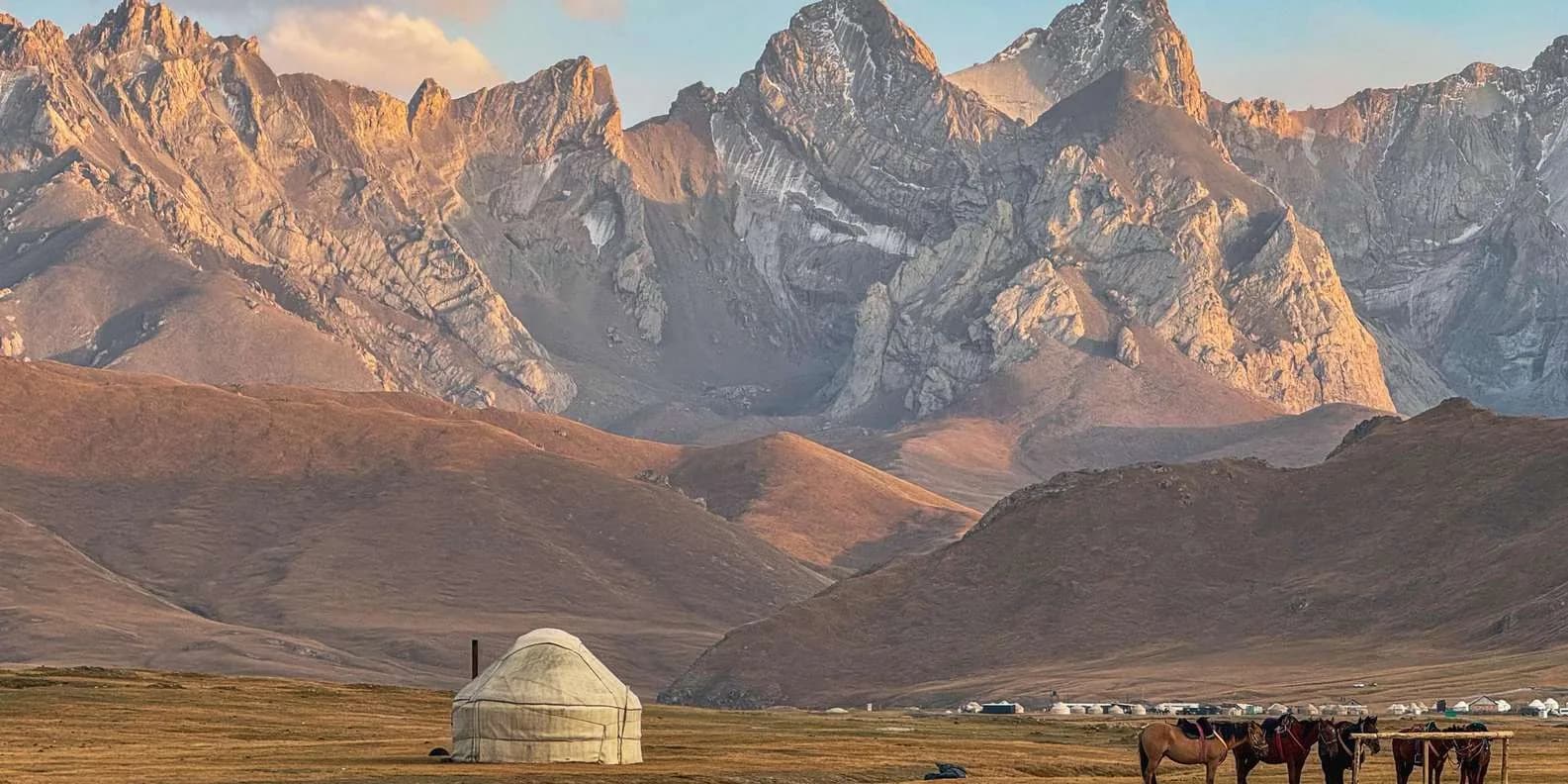
 Image via GetYourGuide
Kel-Suu Lake: How to Visit Kyrgyzstan's Border Lake
How to reach Kel-Suu, the fjord-like border lake near China: the permit you need, the 4WD-and-hike route from Naryn, when to go and where to stay.
Book it on This is Kyrgyzstan
Naryn · Turn this guide into a trip
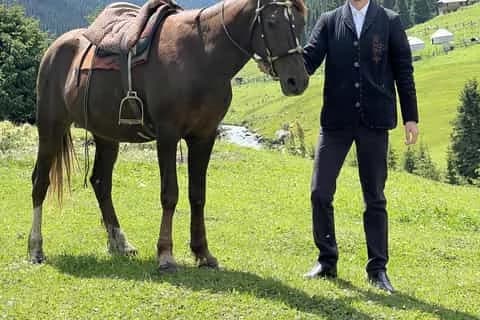

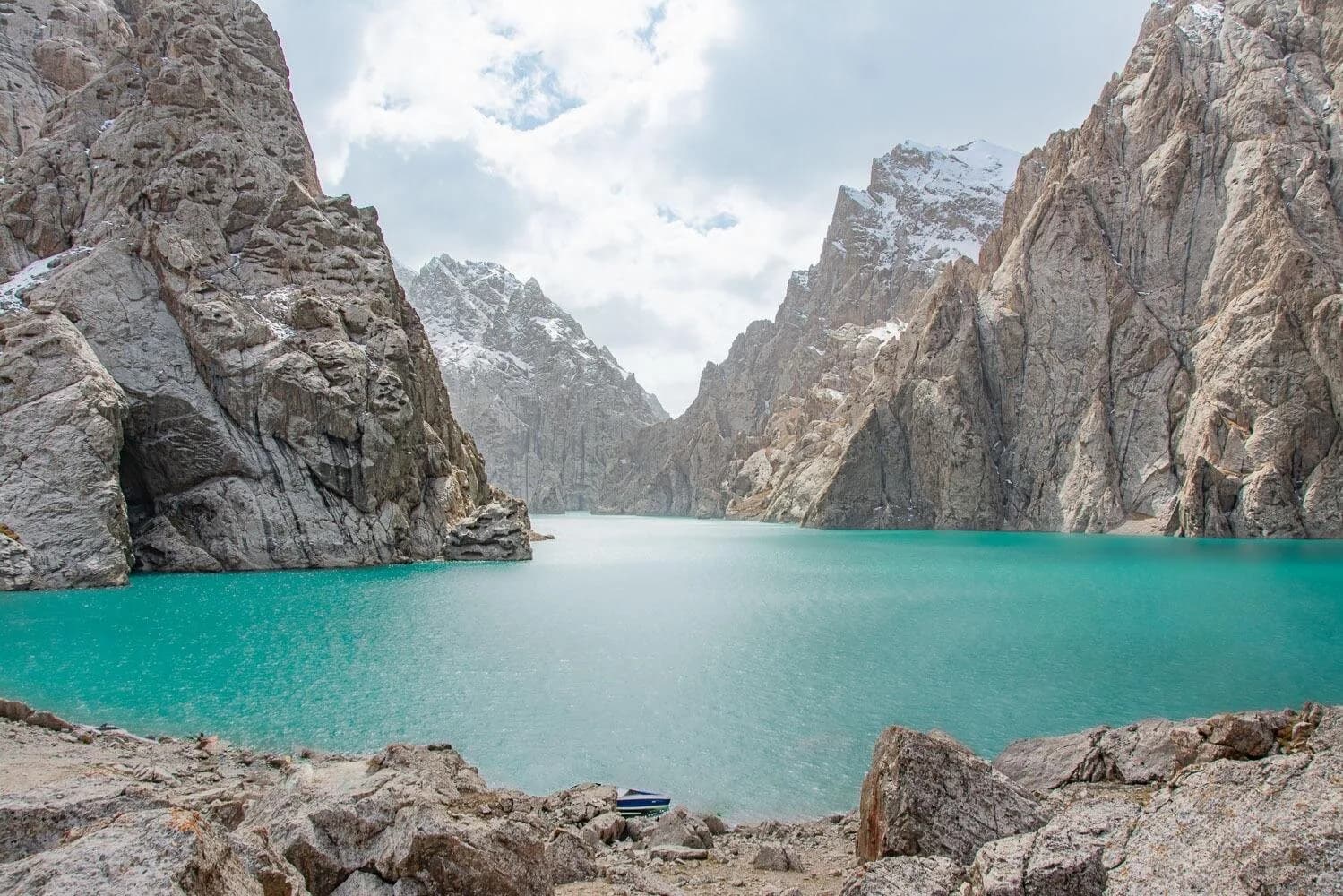

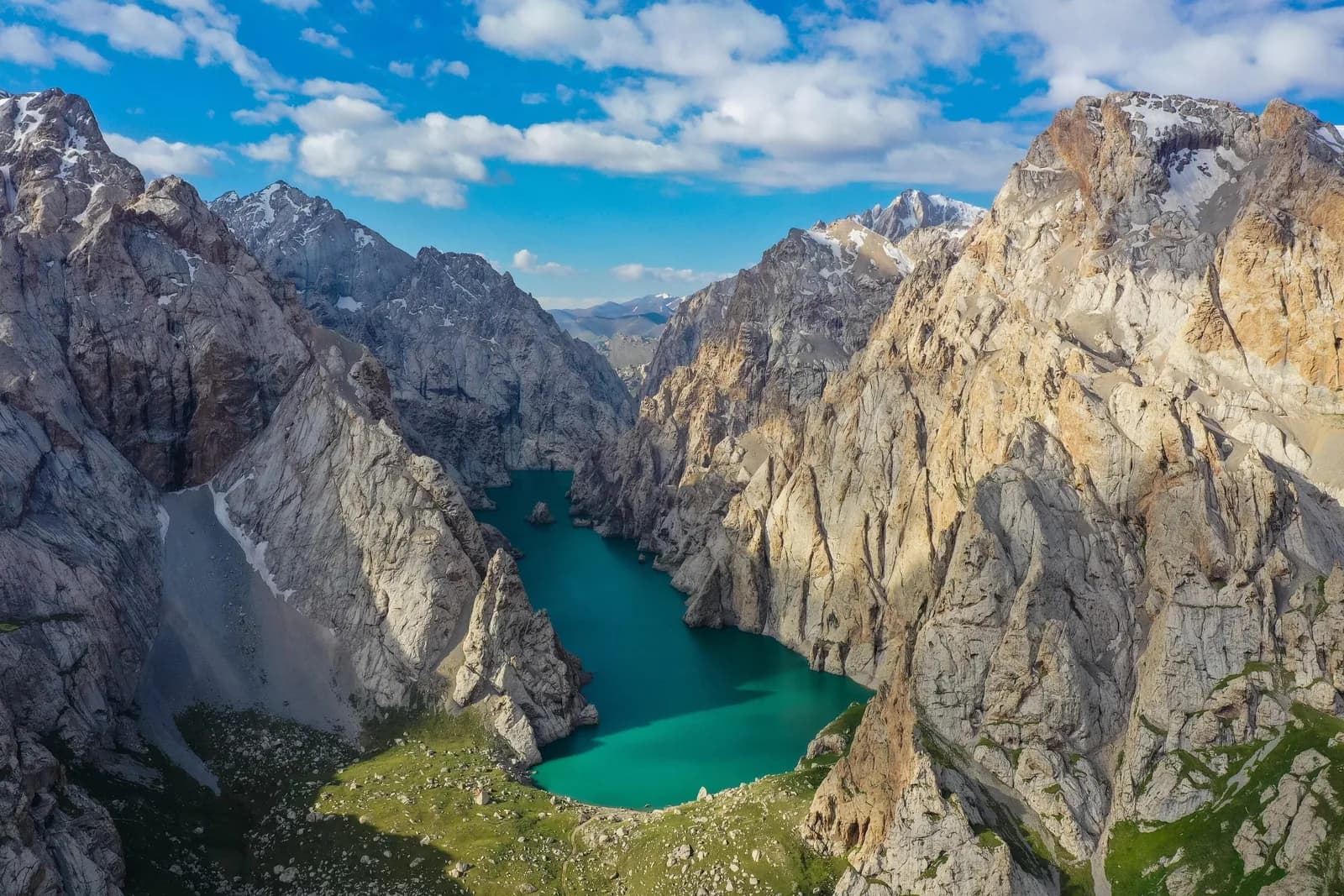
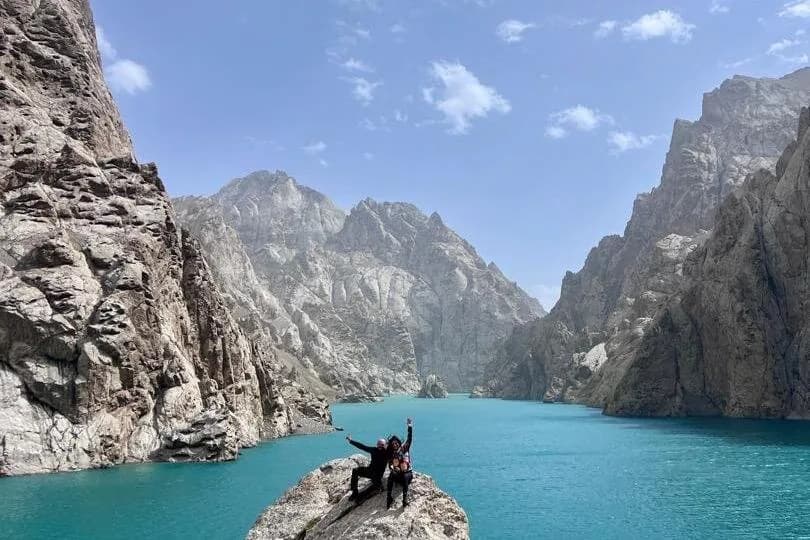
Kel-Suu is a long, cliff-walled lake at about 3,500 metres in the far south-east corner of Naryn province, pressed hard against the Chinese border. It is one of Kyrgyzstan's genuine bucket-list gaps — a place most travel sites only blog about, because reaching it takes a border permit arranged days in advance, a jolting 4WD day from Naryn or At-Bashy, and a final trek or horse ride to the water. Go in July or August, plan for at least two days, and treat it as a small expedition rather than a detour.
At a glance
| Where | Kok-Kiya valley, At-Bashy district, far south-east Naryn Region, on the Chinese border |
| Altitude | About 3,500 m (some sources give 3,514 m; others nearer 3,400 m) |
| Best season | Mid-July to August; realistic window late June to mid-September |
| Permit | Mandatory border-zone permit, arranged 1–2 weeks ahead (some agencies want a month in peak season) |
| Getting there | 4WD from Naryn or At-Bashy to the valley yurt camps (5–8 hours), then 2–3 hours on foot or horse to the lake |
| Days needed | Two minimum, with a night in the valley; three is comfortable |
| Where to stay | Summer yurt camps in the Kok-Kiya valley, or wild camping |
| Rough costs | Permit about $20–35pp; 4WD around $150–230 return; yurt roughly $18–30pp with meals |
What Kel-Suu is, and why it's special
Kel-Suu fills a narrow slot canyon in the Kok-Kiya valley, walled by bare rock that drops straight into the water — the reason people reach for the word "fjord". It sits inside the Kakshaal-Too range of the central Tien Shan, well beyond the last village, in country that is empty even by Kyrgyz standards.
The strange thing about Kel-Suu is that it is not always there. The lake is fed by snowmelt and is said to drain through underground channels in the limestone at its lower end, so the canyon can fill in early summer and empty later in the year — sometimes within days. In 2019 it drained almost completely. That means the mirror-calm, cliff-framed water you have seen in photographs is a mood the lake is in, not a guarantee. Some travellers arrive to find it much lower than the pictures, and a few have found it nearly empty. Build that uncertainty into your expectations; the canyon and the valley are worth the trip regardless of the water level.
If Song-Köl is Kyrgyzstan's accessible, well-serviced high-altitude yurt experience, Kel-Suu is the hard, permit-gated, uncertain one. Naryn is the hinge between them, and plenty of trips string the two together.
The border permit — the real hurdle
This is the part that catches people out. Kel-Suu sits inside a restricted border zone, and you need a permit to enter it. The permit must be carried as a physical paper document — photocopies and phone screenshots are typically refused at the checkpoint, and turning back means a five-to-eight-hour round trip for nothing.
You arrange it through CBT Naryn (WhatsApp +996 559 567 685) or by email, sending passport scans and your travel dates. Processing takes roughly five to seven working days, so leave a comfortable margin: one to two weeks ahead is sensible, and in high summer some Naryn agencies advise applying as much as a month before you travel. The cost is modest — around 2,000–3,000 som per person (roughly €20–30, or about $20–35). The same border regime covers nearby Chatyr-Köl and the Ak-Sai valley, so if you are combining destinations, sort every permit at once.
The permit lead time, more than the driving, is why most people visit Kel-Suu with an operator. A Naryn or At-Bashy agency — or CBT — files the paperwork, supplies the 4WD and driver, and books the yurt camp, which removes the single biggest way independent trips fail here. If you are pulling your own trip together, start with the Naryn travel guide and contact an agency early.
How to get there
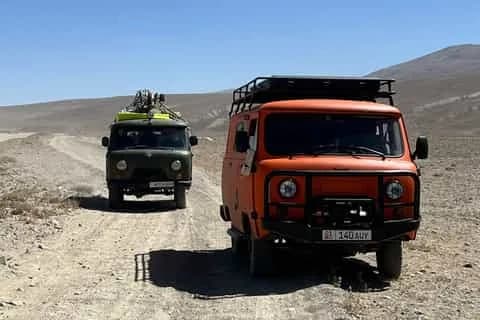
Naryn town, at about 2,000 metres, is the staging post. Draw cash and fill the tank here — there are no ATMs and no fuel once you head south-east toward the border, and mobile coverage disappears long before the lake. From Naryn the lake is under 100 kilometres as the crow flies, but that translates to five to eight hours one way on rough track, with multiple river fords that rise through the day as the snow melts. A capable 4x4 and an experienced local driver are not optional. At-Bashy village, a little further along the road toward Tash Rabat, makes a slightly closer springboard and is where many combined trips begin.
Round-trip vehicle hire runs about 13,000–20,000 som or more (roughly $150–230) for a jeep seating up to four, so splitting the cost across a group is the standard budget move.
The point most trip plans get wrong: you do not drive to the lake. Vehicles stop at the yurt camps in the valley, and the lake itself is a further two to three hours on foot each way — around 8 to 12 kilometres — or on a hired horse from about 2,500 som. Factor that walk into your day; it is why a single-day dash from Naryn does not really work.
The journey in stages
| Stage | Rough distance / time | Notes |
|---|---|---|
| Naryn → At-Bashy | ~1 hour, paved | Last shops; some trips base here |
| At-Bashy → Kok-Kiya valley camps | 5–8 h total from Naryn, rough 4WD | River fords, no fuel, no signal |
| Yurt camps → the lake | 2–3 h each way on foot or horse | ~8–12 km; you cannot drive it |
The short trek to the lake
From the yurt camps, the walk up to the canyon crosses open, treeless valley floor beneath bare ridges — easy underfoot but tiring at altitude. At the lake, local families sometimes run small boats a short way into the canyon between the cliffs, which is the best way to feel the scale of the place; ask at your camp and confirm the price on the day, as it depends on who is around and how much water there is. Give yourself a full day for the out-and-back so you are not rushing the return before dark.
When to go
Summer only. The realistic window is late June or early July to early or mid-September, with July and August the peak when the yurt camps are actually running. Even in midsummer, night temperatures in the valley drop to around 0 to −5°C, so this is not a place to arrive underdressed. Outside that window the track becomes impassable, the camps come down, and there is nothing to arrive to. For the wider picture on timing high-mountain travel here, see the guide to trekking in Kyrgyzstan.
Where to stay
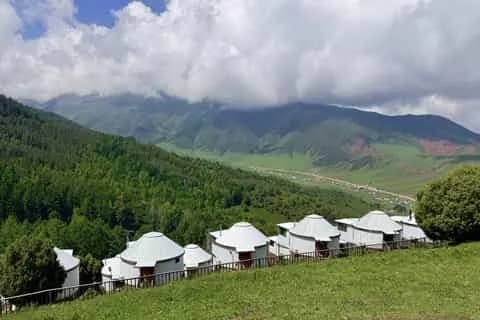
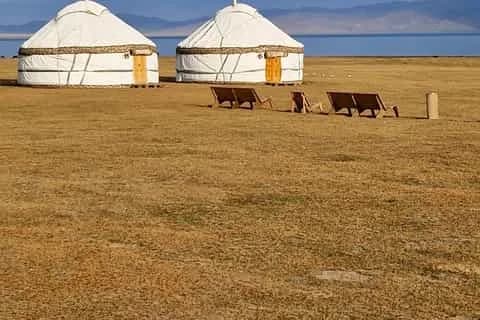
Accommodation in the Kok-Kiya valley means summer yurt camps — basic, warm-hearted and reliant on a dung stove that burns hard and then dies before dawn. Expect to pay roughly 1,500–2,500 som or more per person per night including meals (about $18–30). Wild camping is free across most of the valley if you are self-sufficient and have the permit. Either way, bring a proper sleeping bag, a hat and a warm layer; the cold at 3,500 metres is the thing people underestimate. If you want the same nomadic experience with far less logistics, the Song-Köl yurt stay is the gentler alternative.
Guided or independent?
You can, in principle, do Kel-Suu independently — but "independent" still means securing the paper permit well ahead and hiring a 4WD with a driver, because there is no public transport of any kind into the valley. For most travellers the sums and the lead time tip the balance toward going with an operator, whose fee bundles the permit, the vehicle, the driver's local knowledge of the fords, and the yurt night.
| Item | Som | USD (approx) |
|---|---|---|
| Border permit (per person) | 2,000–3,000 | $20–35 |
| 4WD return, up to 4 seats | 13,000–20,000+ | $150–230 |
| Yurt camp, per person/night with meals | 1,500–2,500+ | $18–30 |
| Horse to the lake (per person) | from 2,500 | from ~$28 |
Prices are indicative — the som trades at roughly 87–88 to the US dollar — so confirm current rates when you book.
Pairing it with Tash Rabat and the loop
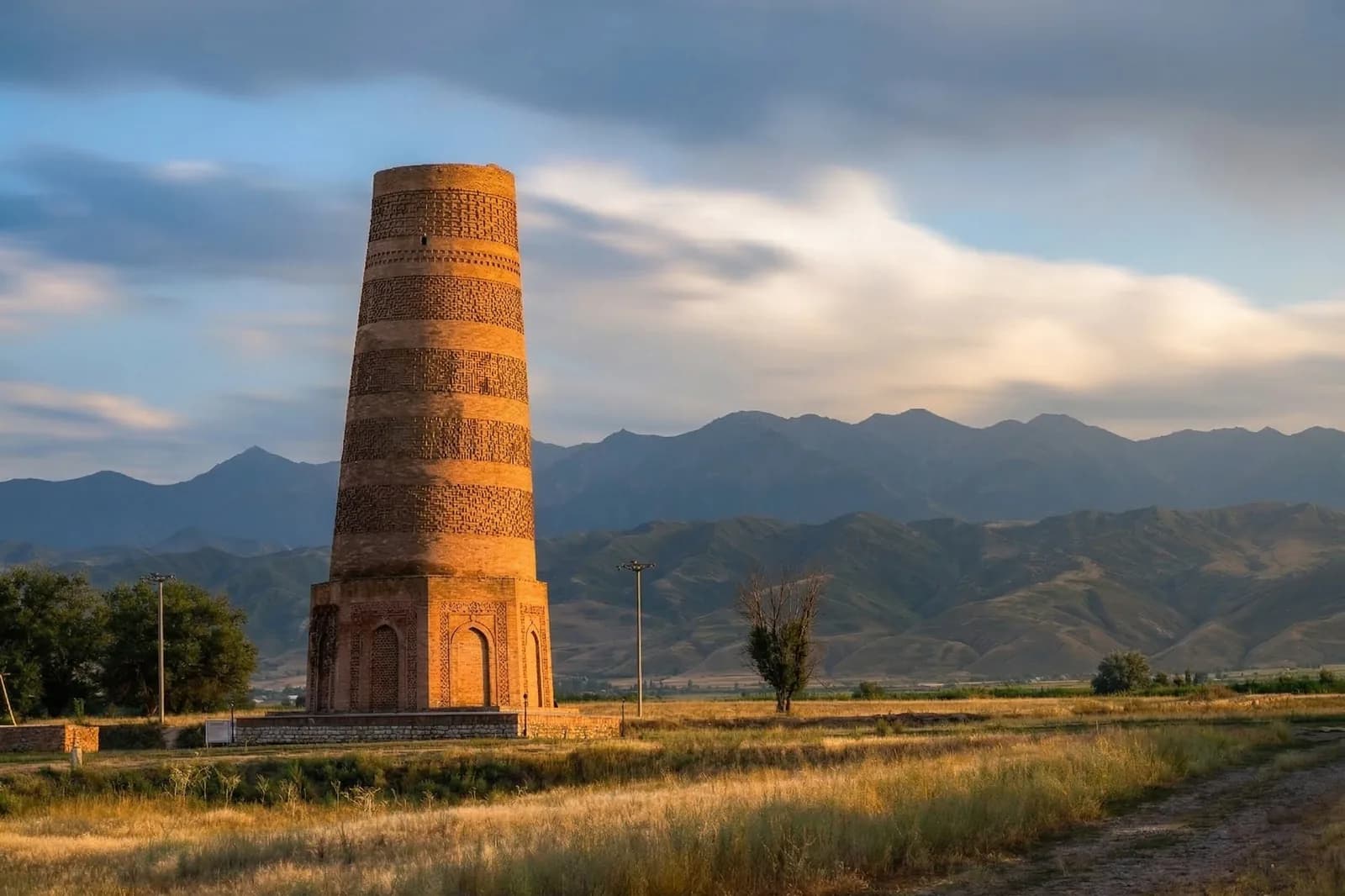
Kel-Suu rewards being folded into a longer Naryn leg rather than chased on its own. The stone caravanserai at Tash Rabat lies about two hours from Naryn on the At-Bashy road (roughly 113 km, 2–2.5 hours), and the two make a natural pair: the Silk Road ruin and the border lake, both organised from the same town. Many visitors slot both into the classic central circuit — see the 10-day Kyrgyzstan itinerary for how it fits alongside Song-Köl and Issyk-Köl.
A word on altitude
You climb from Naryn's 2,000 metres to sleep near 3,500 metres in a single day, which is exactly the ascent profile that produces acute mountain sickness. A headache and a poor night's sleep are common and usually pass; anything worse — persistent nausea, dizziness, breathlessness at rest — means you stop going higher and, if it worsens, descend. Read the altitude sickness guide before you go, drink more water than feels necessary, and do not plan Kel-Suu as your first night off the plane.
Ready to build the trip? Browse operator options on the lakes and nature tours page, or start from the Naryn destination hub to see what else the province opens up.
See the yurt camps for this and other areas on our yurt stays page, and the multi-day horse treks that reach remote lakes.
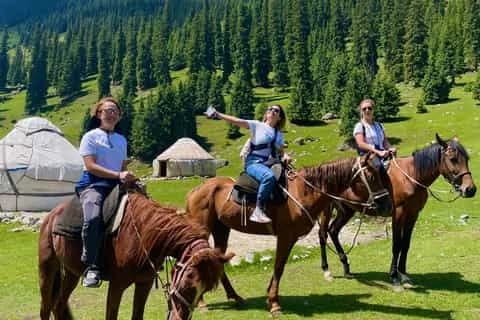
Book it: the Kel-Suu horseback expedition, with a stay at Visit Kel-Suu yurt camp.
Chat with a real person — free
Seif and the team reply on WhatsApp 24/7 — trip questions, custom plans and booking help.
Ask Seif on WhatsAppCommon questions
Do you need a permit to visit Kel-Suu?
Yes. Kel-Suu sits inside a restricted border zone, so a permit is mandatory and must be carried as a physical paper document — photocopies and phone screenshots are usually refused at the checkpoint. Arrange it through CBT Naryn or a Naryn/At-Bashy agency by sending passport scans and your dates. Processing takes about five to seven working days, so apply one to two weeks ahead, and up to a month in peak summer.
How do you get to Kel-Suu?
You drive by 4WD from Naryn or At-Bashy into the Kok-Kiya valley — under 100 km but five to eight hours one way on rough track with several river fords, so a capable jeep and experienced local driver are essential. Vehicles stop at the valley yurt camps, from where the lake is a further two to three hours on foot or by hired horse. There is no public transport into the valley.
When is the best time to visit Kel-Suu?
July and August. The realistic access window runs from late June or early July to early or mid-September, and July–August is when the yurt camps are reliably open and the track is passable. Even in midsummer, valley nights fall to around 0 to −5°C. Outside this window the route becomes impassable and the camps come down, so there is no point attempting it in spring, autumn or winter.
How many days do you need for Kel-Suu?
Two days minimum, and three is more comfortable. Because the drive from Naryn takes five to eight hours each way and the lake is a further two-to-three-hour walk from the yurt camps, a single day cannot cover it. The standard trip is one long driving day in, a night in the valley, the hike to the lake, and the drive back — spreading it over three days leaves room for weather and the boat trip into the canyon.
Can you drive all the way to the lake?
No, and this is the mistake most trip plans make. The 4WD track ends at the yurt camps in the Kok-Kiya valley; the lake itself is another two to three hours away on foot — roughly 8 to 12 kilometres each way — or on a hired horse from about 2,500 som. Plan for a full day's walking to reach the water and return, and start early so you are not descending in the dark.
Will the lake be full when I arrive?
Not necessarily. Kel-Suu is fed by snowmelt and is said to drain through underground channels in the rock, so its level swings dramatically between years and even within a single season — it drained almost completely in 2019, and some travellers arrive to find it far lower than the photographs. Treat the postcard image as a possibility, not a promise; the canyon and valley are worth the journey whatever the water is doing.
Can you visit Kel-Suu independently?
You can, but it is harder than it looks. Even independently you must secure the paper border permit well in advance and hire a 4WD with a driver, since no public transport reaches the valley. Most travellers go with a Naryn or At-Bashy operator, or CBT, whose fee bundles the permit, the vehicle, the driver's knowledge of the river fords, and the yurt night — which removes the main reasons independent trips fail here.
How high is Kel-Suu, and will I get altitude sickness?
Kel-Suu sits at about 3,500 metres, and you reach it in a day from Naryn at 2,000 metres — a fast ascent that commonly brings mild acute mountain sickness. A headache and a broken night's sleep are normal and usually pass; worsening nausea, dizziness or breathlessness at rest mean you stop ascending and, if symptoms grow, descend. Hydrate well, avoid alcohol, and do not schedule Kel-Suu for your first night at altitude.
Can you combine Kel-Suu with Tash Rabat?
Yes, and it is the natural pairing. Both are organised from Naryn, and the Tash Rabat caravanserai lies about two hours away on the At-Bashy road — roughly 113 kilometres. Many visitors do the Silk Road ruin and the border lake on the same Naryn leg, and both slot into the classic central circuit alongside Song-Köl and Issyk-Köl. Arrange the Kel-Suu permit before you arrive, as its lead time is the binding constraint.
Book it on This is Kyrgyzstan
Turn this guide into a trip


Kyrgyzstan's bestsellers
The experiences travelers book most, across the country
Keep reading
Uchitel Peak: Your First 4,000m Climb (2026)
Pik Uchitel (~4,400-4,600 m) in Ala-Archa is the classic first summit for fit hikers new to mountaineering: route, gear, season and acclimatisation.
By TiK Editors8 min read
Boz-Uchuk Lakes Trek from Jyrgalan (2026)
A moderate 2–3 day trek to a string of alpine lakes above Jyrgalan — quieter than Karakol's classics, with community yurts, horses and clear DMO rates.
By TiK Editors8 min read
Self-Guided Treks in Kyrgyzstan: Routes & How-To
Yes, you can trek Kyrgyzstan without a guide. The best self-guided routes, the ones to skip, and the maps, water and safety logistics that make it work.
By TiK Editors12 min read