 Image via GetYourGuide
Sary-Chelek: Kyrgyzstan's Remote Biosphere Lake
A deep, forest-ringed lake in Kyrgyzstan's remote south-west: what Sary-Chelek is, how to reach Arkyt, entry fees, the best season and where to stay.
Book it on This is Kyrgyzstan
Turn this guide into a trip
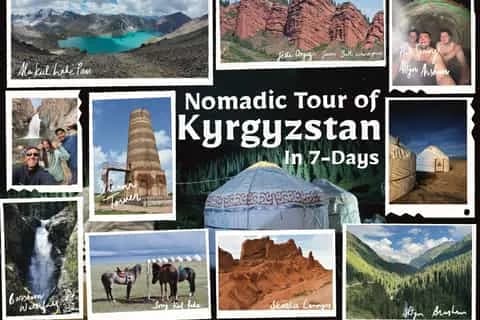
Sary-Chelek is a UNESCO biosphere reserve in Kyrgyzstan's remote south-west, wrapped around a deep, forest-ringed lake and a scatter of six smaller ones. It has been a protected nature reserve since 1959 and a UNESCO Man and the Biosphere reserve since 1978, the country's first and one of its oldest protected areas of any kind. It is also one of Kyrgyzstan's least-visited corners, mostly because reaching it takes a full day or more from anywhere you're likely to start. That effort is the whole point: you trade a long, slow drive for a lake most travellers never see.
What Sary-Chelek actually is
The reserve covers about 23,868 hectares in the Aksy District of Jalal-Abad Region. Its altitude climbs from around 1,200 m in the valleys to 4,247 m on the ridges, so inside one protected area you pass from warm walnut forest up to bare alpine rock. The strictly protected core zone runs to roughly 18,080 hectares, ringed by a buffer and a smaller transition zone where the village of Arkyt and its homestays sit. That zoning is the whole idea of a biosphere reserve: a wild, off-limits heart, with people living and hosting visitors around the edge.
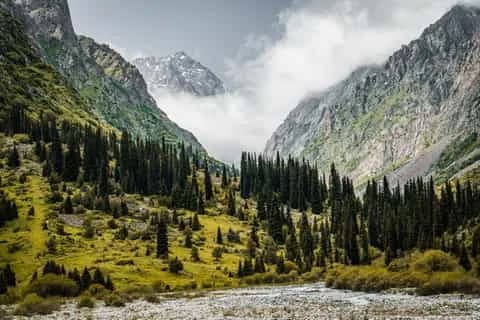
The centrepiece is Lake Sary-Chelek itself, long and deep and held behind an ancient landslide dam in steep, forested mountains. It looks nothing like the open, treeless high-altitude lakes most people associate with Kyrgyzstan, such as Song-Köl or Ala-Köl. Sary-Chelek reads more like an alpine or Balkan lake: dark green water below wooded slopes that drop straight to the shore, with almost no development in sight. Six smaller lakes, Kylaakol, Iyrikol, Bakalykol, Aramkol, Choychokkol and Chachakol, string through the hills above and around it, which is why you'll hear the whole place called "the seven lakes" locally.
The reason it is protected, and the reason it earned biosphere status, is the forest. This is the same relict walnut-fruit forest that blankets nearby Arslanbob, wild walnut alongside apple, pistachio, plum and maple. It is a rare and ancient forest type, and it supports a lot of wildlife: boar and deer moving through the trees, ibex on the high ground, and a long list of birds. Come in autumn and the walnut harvest is under way here just as it is at Arslanbob.
What you do at Sary-Chelek
This is a place for slow days, not a tick-list of sights. The main things to do:
- Walk the lakeshore and the viewpoints. Trails follow the water and climb to points where you can see the full length of the main lake with the peaks behind it. The higher smaller lakes make good half-day walks from Arkyt with a local guide.
- Take a boat, where it's allowed. In season, homestays or the rangers can sometimes arrange a small boat on the main lake. Access to a strict nature reserve is regulated and swimming may be restricted, so confirm what's permitted on the day rather than assuming.
- Birdwatch, and simply sit. The mix of forest and water makes this strong birding country, and the reserve's entire appeal is quiet. Bring binoculars and time.
- See the walnut harvest. From September into October families work the walnut-fruit forest and the valley smells of husk. It's the most atmospheric window of the year.
Don't come expecting facilities. There are no resorts, no cafés strung along the shore, and patchy-to-nonexistent phone signal. That emptiness is the deal, and the appeal.
How to get to Sary-Chelek
| Leg | How | Time | Rough cost |
|---|---|---|---|
| Bishkek → Jalal-Abad | Shared taxi (south bus station) or domestic flight | 8–10 h / ~1 h | |
| Jalal-Abad → Kerben or Tash-Kömür | Shared taxi / marshrutka | 2–3 h | Confirm on the day |
| Kerben/Tash-Kömür → Arkyt | Arranged 4WD or transfer | 1.5–2 h | Negotiate locally |
| Arkyt → the lake | Transport arranged inside the reserve | ~30–45 min | Reserve entry fee applies |
Reaching Sary-Chelek is genuinely the biggest planning problem, and it's why so few people go. There is no direct bus to the lake. The realistic route runs through Jalal-Abad, Kyrgyzstan's third city and the natural staging post for the whole south-west; the Jalal-Abad travel guide covers the transfers in detail. From there you head north-west along the Fergana rim to Kerben or the town of Tash-Kömür, then turn up into the hills to Arkyt, the reserve's gateway village, roughly 60 km from Tash-Kömür.
The last legs, up from Tash-Kömür or Kerben to Arkyt and then on to the lake, usually need arranged transport rather than a scheduled marshrutka, ideally a 4WD, sorted through your homestay or a local driver. Budget a day and a half to two days from Bishkek: a long shared-taxi run or a domestic flight to Jalal-Abad first, then the mountain transfers. If you're already in the south, flying into Osh (see the Osh travel guide) and working across can be saner than grinding the full length of the Bishkek–Osh road.
Entry, permits and fees
Sary-Chelek is a strict protected reserve rather than an open national park, so access comes with rules and a reserve entry fee collected at Arkyt. We couldn't pin the exact 2026 fee to an official published figure, so expect a modest charge in som for entry, with extra for a guide or for taking a vehicle inside the reserve, and confirm the current amount on arrival. Carry cash in small som notes; there are no card machines out here. Taking a local guide is worth it both for the walks and because rangers control where you can and can't go inside the core zone.
Best time to visit
| Season | What it's like |
|---|---|
| Late spring (May–Jun) | Green hills, full rivers, cool nights; roads opening up |
| Summer (Jul–Aug) | Warm and settled in the valleys; best trail access |
| Autumn (Sep–Oct) | Autumn colour and the walnut harvest, the best atmosphere |
| Winter (Nov–Apr) | Cold, snow on the passes, hard to reach; not recommended |
The sweet spot is late spring to autumn. May and early June bring green hills and full rivers; high summer is warm and settled in the valleys and gives the best trail access; September and October deliver autumn colour and the walnut harvest, the most atmospheric window of all. The reserve sits lower than Kyrgyzstan's classic alpine lakes, so its season is a shade more forgiving than Song-Köl's, but the mountain roads and the highest trails still close with the snow, and winter here is cold and awkward to reach. For the wider picture, see our guide to the best time to visit Kyrgyzstan.
Where to stay
You stay in Arkyt, the village at the reserve gate, in family homestays. This is community-based tourism in its most basic and most genuine form: a bed on the floor or a simple room, home cooking, and a family who can fix your onward transport and find you a guide. Rates are low; historically homestays here started from around 100–150 som per person, though that old figure is almost certainly light now, so treat a few hundred som per person plus extra for meals as more realistic and confirm when you book. Book nothing far ahead, because you arrange it on arrival or by phone. Our guide to community-based tourism in Kyrgyzstan explains how the homestay network works and how to reach it now that most local CBT websites are dead.
Combining it with Arslanbob and the southern loop
Most people don't visit Sary-Chelek on its own; they fold it into a south-western loop with Arslanbob, the giant walnut-forest village a few hours away, using Jalal-Abad or Osh as the hinge. The two pair naturally, sharing the same forest ecosystem, the same walnut harvest and the same Uzbek-inflected south, but Arslanbob is a lived-in village while Sary-Chelek is wild and empty. A sensible frame is Osh, then Arslanbob, then Jalal-Abad, then Sary-Chelek and back, giving yourself a slow day at each and plenty of buffer, because the roads are slow and the transfers eat time. If you only have room for one, choose Arslanbob for the village life and the easier logistics, and Sary-Chelek for the lake and the solitude.
Ready to build it into a route? Browse lakes and nature trips and pair the reserve with the rest of the south.
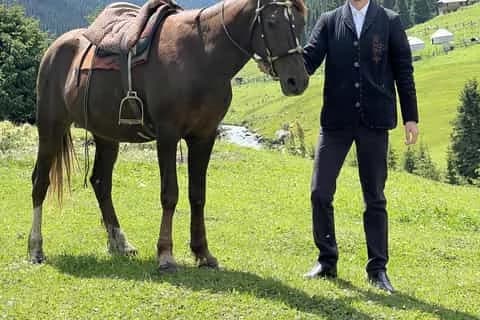
Ride it: Sary-Chelek on horseback.
Chat with a real person — free
Seif and the team reply on WhatsApp 24/7 — trip questions, custom plans and booking help.
Ask Seif on WhatsAppCommon questions
Where is Sary-Chelek?
Sary-Chelek is a UNESCO biosphere reserve in the Aksy District of Jalal-Abad Region, in Kyrgyzstan's remote south-west, about 60 km up into the hills from the town of Tash-Kömür. The gateway village is Arkyt. It sits within the same relict walnut-fruit forest belt as Arslanbob and is one of the country's oldest and least-visited protected areas.
How do you get to Sary-Chelek?
Via Jalal-Abad, then north-west to Kerben or Tash-Kömür, then a 4WD transfer up to Arkyt and the lake. There is no direct bus to the lake itself, so the last legs need arranged transport. Allow a day and a half to two days from Bishkek: a long shared taxi or a flight to Jalal-Abad first, then the mountain transfers.
Is there an entry fee for Sary-Chelek?
Yes. Sary-Chelek is a strict nature reserve, and a reserve entry fee is collected at Arkyt, with extra for a guide or for a vehicle inside. We couldn't confirm the exact 2026 figure from an official source, so expect a modest charge in som and confirm it on arrival. Bring cash in small notes, as there are no card machines out here.
When is the best time to visit Sary-Chelek?
Late spring to autumn. May and June are green and full of water, high summer is warm and gives the best trail access, and September and October bring autumn colour and the walnut harvest, the most atmospheric window. Winter is cold and hard to reach and best avoided. The reserve's lower elevation means a slightly longer season than the alpine lakes.
Can you swim or take a boat on the lake?
Sometimes, where it's permitted. Homestays or rangers can occasionally arrange a small boat on the main lake in season, but access to a strict reserve is regulated and swimming may be restricted to protect the water. Don't assume; ask at Arkyt what's allowed on the day, and take a local guide who knows the current rules.
Where do you stay at Sary-Chelek?
In family homestays in Arkyt, the village at the reserve gate. It's community-based tourism at its simplest: a floor bed or a basic room, home-cooked meals, and hosts who arrange guides and transport. Rates are low, with a few hundred som per person plus meals a fair expectation now, and you book on arrival or by phone rather than far ahead.
How does Sary-Chelek compare to Song-Köl or Ala-Köl?
It's completely different. Song-Köl and Ala-Köl are open, treeless, high-altitude lakes; Sary-Chelek is a deep, forest-ringed lake dammed by an ancient landslide, closer in feel to an alpine or Balkan lake. It's lower, greener and wilder-feeling, with no yurt-camp scene. The appeal here is forest, water and near-total quiet rather than big open pasture.
Can you combine Sary-Chelek with Arslanbob?
Yes, and most people do. They sit in the same walnut-forest belt a few hours apart, so a south-western loop through Osh, Arslanbob, Jalal-Abad and Sary-Chelek works well. Allow slow days and plenty of transfer buffer, as the roads are slow. If you can only do one, Arslanbob is easier to reach, while Sary-Chelek rewards the extra effort with solitude.
Is Sary-Chelek worth the effort?
Yes, if you value quiet and scenery over convenience. It's a long haul with basic facilities and no nightlife, but the payoff is one of Kyrgyzstan's most beautiful lakes almost to yourself, inside a rare ancient forest. If your trip is short or you need comfort and easy logistics, it may not justify the days it costs. Go for the remoteness, not despite it.
Book it on This is Kyrgyzstan
Turn this guide into a trip

Kyrgyzstan's bestsellers
The experiences travelers book most, across the country
Keep reading
Self-Guided Treks in Kyrgyzstan: Routes & How-To
Yes, you can trek Kyrgyzstan without a guide. The best self-guided routes, the ones to skip, and the maps, water and safety logistics that make it work.
By TiK Editors12 min read
Uchitel Peak: Your First 4,000m Climb (2026)
Pik Uchitel (~4,400-4,600 m) in Ala-Archa is the classic first summit for fit hikers new to mountaineering: route, gear, season and acclimatisation.
By TiK Editors8 min read
Tian Shan Traverse: Bikepacking Kyrgyzstan
The Tian Shan Traverse is a self-supported, mostly off-road bikepacking route of about 1,000 km across the high Kyrgyz mountains. Here's how to plan it.
By TiK Editors9 min read