 Image via GetYourGuide
The Best Lakes in Kyrgyzstan: 9 to Know (2026)
Kyrgyzstan's lakes run from the warm resort water of Issyk-Köl to high yurt camps at Song-Köl and hard alpine treks. Here are the nine best and how to reach each.
Book it on This is Kyrgyzstan
Turn this guide into a trip
Kyrgyzstan is roughly four percent water, and the lakes are the reason most people come. If you only remember three, remember these. Issyk-Köl is the giant lowland resort lake at 1,607 m: warm enough to swim, ringed by a paved road, no effort required. Song-Köl is the high summer pasture at 3,016 m, where you sleep in a yurt among grazing horses. Ala-Köl is the turquoise reward at the top of a hard trek above Karakol. Everything else here sits somewhere between those poles, drive-up or walk-in, resort or wilderness, permit-free or border-gated.
This roundup covers nine lakes worth planning a trip around, with altitudes, what each is genuinely good for, and how you actually get there. High-mountain lakes are a summer proposition: the reliable window is roughly mid-June to mid-September, and outside it the passes and yurt camps close. See our best time to visit Kyrgyzstan guide before you fix dates.
At a glance: nine lakes compared
| Lake | Region | Altitude | Best for | Getting there |
|---|---|---|---|---|
| Issyk-Köl | Issyk-Kul | 1,607 m | Swimming, beaches, easy touring | Paved ring road; drive-up |
| Song-Köl | Naryn | 3,016 m | Yurt stays, horses, dark skies | High-clearance car or 2–3 day horse trek |
| Ala-Köl | Terskey Ala-Too | ~3,530–3,560 m | Serious trekkers | 3–4 day trek from Karakol |
| Kel-Suu | Naryn | ~3,500 m | Remote canyon scenery | Permit + 4WD + 2–3 h walk |
| Kol-Ukok | Kochkor (Naryn) | ~3,000 m | A first alpine trek | 1–2 day hike or horse from Kochkor |
| Kol-Tor | Kegeti (Chüy) | ~2,700–2,800 m | Bishkek day hike | ~14 km return day trek |
| Sary-Chelek | Jalal-Abad | ~1,800 m | Forest, biosphere reserve | Long drive via Arkyt |
| Chatyr-Köl | Naryn | ~3,530 m | Birdlife, Torugart scenery | Permit + 4WD, border zone |
| Merzbacher | Inylchek (Issyk-Kul) | ~3,300 m | Expedition curiosity | Permit + multi-day glacier trek |
1. Issyk-Köl — the one you can swim in
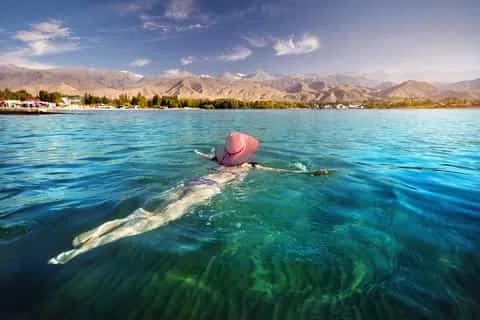
Issyk-Köl (Issyk-Kul) is the headline. It is the world's second-largest mountain lake by surface area after Titicaca, and, being far deeper at 668 m, larger by volume. The name means "warm lake": at 0.6% salinity and with an enormous thermal mass, the open water never freezes, even when the shallow bays ice over. Summer water runs 22–24°C from late June to early September, warm enough for a proper swim. A paved highway circles most of the shore, so you can base yourself on the developed north shore or the wilder south. It is the least demanding lake here and the natural first stop. Full detail in our Lake Issyk-Köl guide.
2. Song-Köl — the yurt-stay lake
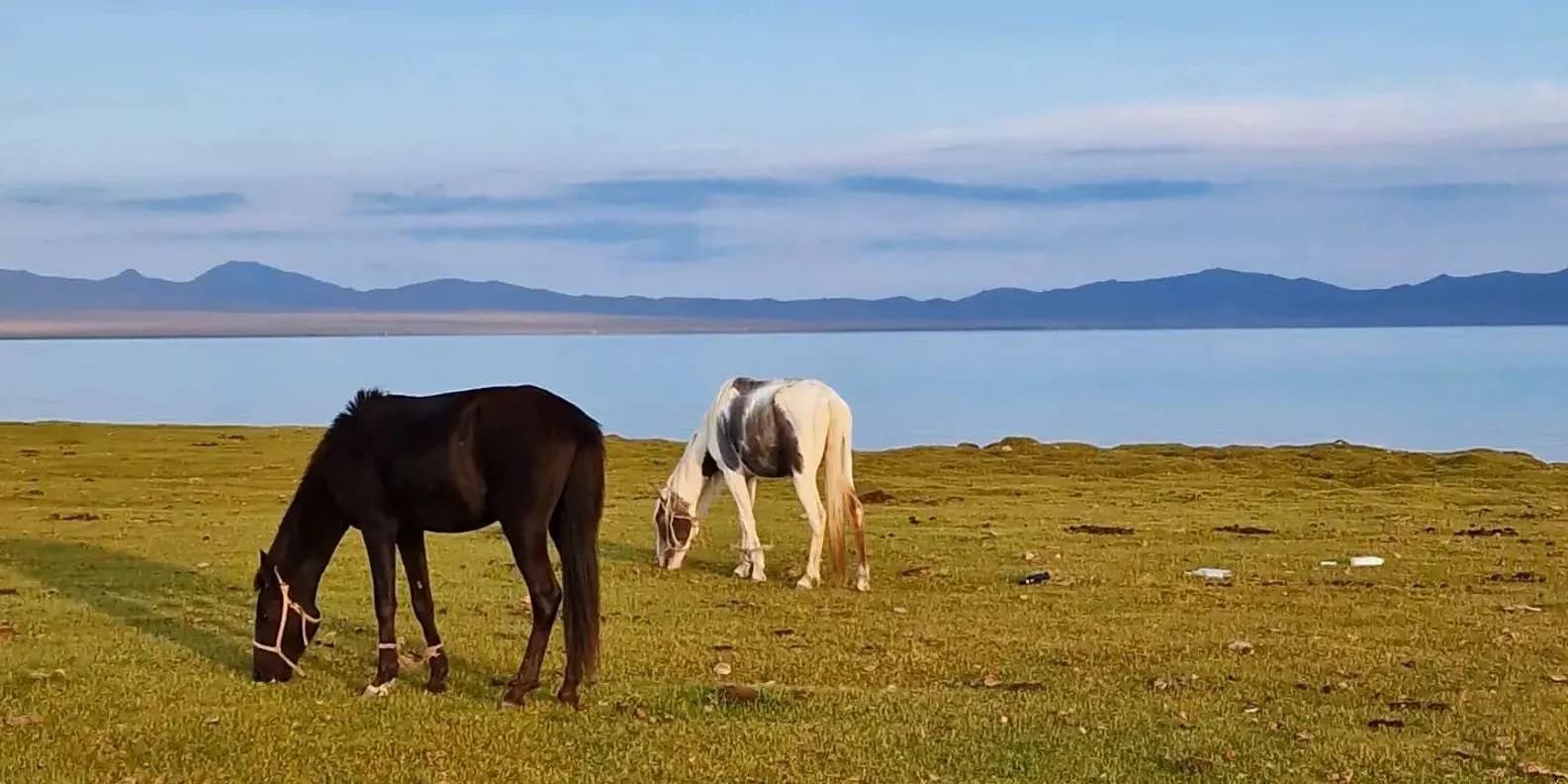
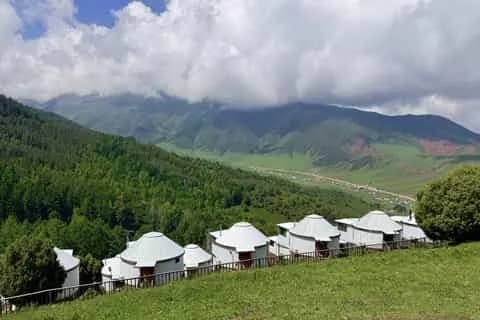
Song-Köl sits at 3,016 m on a treeless jailoo (summer pasture) in Naryn Region. It is huge but shallow, barely 13 m at its deepest, which is why the shoreline is wide grazing marsh full of horses rather than beach. Nobody lives here year-round; herding families bring their yurts up for roughly June to September and take them down again. This is Kyrgyzstan's most accessible high-altitude yurt experience, and the night sky is extraordinary. You do not need a 4WD, but you do need high clearance, or you walk or ride in on a 2–3 day horse trek from Kyzart. Nights are cold in any month. Our Song-Köl yurt stay guide covers camps and access.
3. Ala-Köl — the trekker's prize
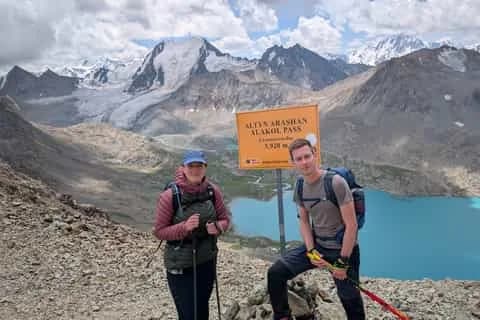
Ala-Köl (Ala-Kul) is the milky-turquoise lake most Kyrgyzstan trek photos come from, cradled in a cirque above Karakol at around 3,530–3,560 m. There is no road: you earn it on a 3–4 day trek that crosses the Ala-Kul pass at roughly 3,860–3,900 m and drops through loose scree to the Altyn-Arashan hot springs. It is genuinely hard, with over 1,100 m of climbing on the pass day and almost no acclimatisation built in, so it is not a beginner's walk despite its popularity. No permit is needed. The lake's colour shifts from pale blue under cloud to deep teal in sun. Plan it with our Ala-Köl trek guide and base yourself in Karakol.
4. Kel-Suu — the remote one behind a permit
Kel-Suu fills a narrow slot canyon at about 3,500 m in the Kok-Kiya valley, hard against the Chinese border. It is the most dramatic lake on this list and the hardest to reach. It lies inside a restricted zone, so you need a border permit carried as an original paper document; photocopies and phone screenshots get turned back. From Naryn it is under 100 km but 5–8 hours each way over rough track with river fords, and the lake itself is a further 2–3 hours on foot from the yurt camps. Its level swings dramatically, said to drain through underground channels, so it can look far lower than the postcards. Arrange the border permit through an agency in Naryn a week or two ahead. See the Kel-Suu lake guide.
5. Kol-Ukok — the gentle first trek
Kol-Ukok is an alpine lake above Kochkor, roughly 3,000 m, reached on a short overnight hike or horse ride of one to two days with a yurt camp at the water. It asks far less than Ala-Köl and needs no permit, which makes it a sensible first taste of high-mountain Kyrgyzstan, and it pairs neatly with a Song-Köl trip since both are booked out of Kochkor. Confirm current camp and horse arrangements locally on the day. Our Kol-Ukok lake trek guide has the route and timings.
6. Kol-Tor — the Bishkek day hike
Kol-Tor is a small, milky-turquoise lake in the Kegeti gorge in Chüy province, usually given as about 2,700–2,800 m. It is the easiest real mountain lake to reach from the capital: a day hike of roughly 14 km return with 700–900 m of ascent, steep and rooty in the forest before a moraine climb to the water. No overnight, no permit, no yurts required, though you will want an early start. It is the pick if you have a spare day in Bishkek and want a lake without committing to a multi-day trek. Details in the Kol-Tor lake guide.
7. Sary-Chelek — the forest lake
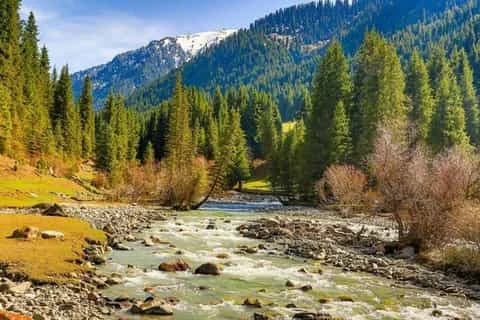
Sary-Chelek breaks the alpine pattern. It sits at around 1,800 m in a UNESCO biosphere reserve in the country's forested south-west, ringed by walnut and spruce rather than bare scree. The setting is lush and green in a way the high lakes never are. The catch is distance: about six hours from Osh and nine from Bishkek, largely on dirt beyond Arkyt, and camping is the only way to sleep close to the water. It works best as part of a southern loop taking in Arslanbob, not as a quick add-on. Snow-free from mid-May to late September. See the Sary-Chelek guide.
8. Chatyr-Köl — the birdwatcher's high steppe
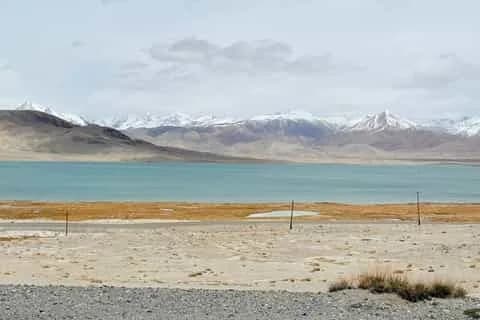
Chatyr-Köl is Kyrgyzstan's third-largest lake after Issyk-Köl and Song-Köl, a shallow, yellow-green sheet at 3,530 m near the Torugart pass. It is a Ramsar wetland and a protected reserve for waterfowl, including bar-headed geese, set in vast treeless steppe with snow peaks all round. Like Kel-Suu, it lies in the border zone, so the same permit regime applies. Most travellers see it in passing on the Torugart run or on a Tash Rabat itinerary rather than as a standalone destination. You will need a border permit and a capable vehicle.
9. Merzbacher — the vanishing lake
The strangest entry is a lake that empties itself. Merzbacher sits high on the Inylchek glacier in the eastern Tien Shan, dammed by ice, and roughly once a year the dam fails and the lake drains in a violent outburst flood before slowly refilling. Reaching it is an expedition, not a trip: it is deep in a restricted border zone near Khan Tengri, needs a permit, and involves days of glacier trekking or a helicopter with a mountaineering operator. This one is for serious climbers heading to Inylchek base camp, and it is included here because it is one of Central Asia's genuine natural oddities.
Permits, drive-ups and treks: the honest caveats
Three of these lakes sit in border zones and legally require a permit you must arrange in advance: Kel-Suu, Chatyr-Köl and Merzbacher. Turning up without the paper wastes days of driving. Our border permit guide explains how and where to apply.
The rest split by effort. Drive-up or day-trip: Issyk-Köl (paved ring road), Kol-Tor (a Bishkek day hike), and Song-Köl (a high-clearance car will do it, though a horse trek is better). Multi-day trek: Ala-Köl and Merzbacher demand real fitness and time; Kol-Ukok is the soft option. Everything above 3,000 m is a place to respect the altitude — read our notes on altitude sickness in Kyrgyzstan if the high lakes are new to you.
Which lake for a first trip?
For most first-timers the answer is Issyk-Köl for the easy water and Song-Köl for the yurt night, ideally both. They are the two that need the least logistics and deliver the two experiences people actually picture when they think of Kyrgyzstan. Add Ala-Köl only if you are a confident trekker, and save Kel-Suu, Chatyr-Köl and Merzbacher for a return trip once you know the country. Browse guided options on our lakes and nature tours page and match a lake to the time you have.
Chat with a real person — free
Seif and the team reply on WhatsApp 24/7 — trip questions, custom plans and booking help.
Ask Seif on WhatsAppCommon questions
What is the biggest lake in Kyrgyzstan?
Issyk-Köl, by a wide margin. At 6,236 km² it is the world's second-largest mountain lake by surface area after Lake Titicaca, and larger by volume because it is far deeper, reaching 668 m. Song-Köl is the second-largest lake in the country and Chatyr-Köl the third, but both are dwarfed by Issyk-Köl, which is 182 km long and up to 60 km wide.
What is the highest lake in Kyrgyzstan you can visit?
Of the well-known lakes, Ala-Köl (about 3,530–3,560 m), Kel-Suu (about 3,500 m) and Chatyr-Köl (3,530 m) are the highest that travellers reach, with Merzbacher higher still on the Inylchek glacier at around 3,300 m and up. Song-Köl, at 3,016 m, is the highest lake most people sleep beside. All of them are summer-only; expect freezing nights even in July.
Can you swim in Issyk-Köl?
Yes. Issyk-Köl never freezes and warms to roughly 22–24°C in July and August, so it is comfortably swimmable through the summer. The swimming season runs from late June to early September; June and late September are for the hardy. There are no jellyfish, sharks or tides. Note the sun at 1,607 m is fierce and reflects off the water, so burn times are short.
Which lakes in Kyrgyzstan need a permit?
Three on this list sit in restricted border zones and require a permit arranged in advance: Kel-Suu, Chatyr-Köl and Merzbacher. Kel-Suu's permit must be carried as an original paper document, not a photocopy or screenshot, and takes about a week to process through a Naryn agency. Issyk-Köl, Song-Köl, Ala-Köl, Kol-Ukok, Kol-Tor and Sary-Chelek need no permit.
Which lake is best for first-time visitors?
Issyk-Köl for the easy, swim-friendly water and Song-Köl for a yurt night are the two to prioritise on a first trip. Both need the least logistics and capture what most people come to Kyrgyzstan for. Issyk-Köl is drive-up on a paved road; Song-Köl needs a high-clearance vehicle or a short horse trek. Add the harder lakes on a return visit.
How deep is Issyk-Köl?
Issyk-Köl reaches a maximum depth of 668 m, with an average depth of about 278 m, making it one of the deepest lakes on Earth. That volume of water is a big part of why it never freezes: it simply cannot shed enough heat in a Kyrgyz winter, and the slight 0.6% salinity lowers the freezing point further. Shallow bays and river mouths can still ice over in a hard winter.
Does Kel-Suu really disappear?
Its level swings dramatically. Kel-Suu is fed by snowmelt and is said to drain through underground channels, so it can be far lower than photographs suggest, and in some years it empties almost entirely. Never assume it will look like the postcard. The variability, plus the long 4WD approach and the border permit, is why it is a lake for travellers with time and flexibility rather than a fixed schedule.
When is the best time to see Kyrgyzstan's lakes?
For the high-mountain lakes, roughly mid-June to mid-September, when the passes are snow-free and the yurt camps are up. July and August are the only two reliable months for anything above 3,000 m. Issyk-Köl's swimming season is late June to early September. Spring and autumn are the worst window for the high lakes: too much snow on the passes and no yurts.
Which lake is best for a yurt stay?
Song-Köl, without question. It is a summer jailoo ringed by herding families' yurt camps at 3,016 m, and staying two nights rather than one is the difference between a transit and a real experience. Kol-Ukok and Tash Rabat also offer valley yurt stays, and there is a lesser-known winter yurt camp at Song-Köl for skiing and ice fishing. Book beds and, crucially, your ride back before the driver leaves.
Book it on This is Kyrgyzstan
Turn this guide into a trip

Kyrgyzstan's bestsellers
The experiences travelers book most, across the country

Keep reading
Tian Shan Traverse: Bikepacking Kyrgyzstan
The Tian Shan Traverse is a self-supported, mostly off-road bikepacking route of about 1,000 km across the high Kyrgyz mountains. Here's how to plan it.
By TiK Editors9 min read
Uchitel Peak: Your First 4,000m Climb (2026)
Pik Uchitel (~4,400-4,600 m) in Ala-Archa is the classic first summit for fit hikers new to mountaineering: route, gear, season and acclimatisation.
By TiK Editors8 min read
Boz-Uchuk Lakes Trek from Jyrgalan (2026)
A moderate 2–3 day trek to a string of alpine lakes above Jyrgalan — quieter than Karakol's classics, with community yurts, horses and clear DMO rates.
By TiK Editors8 min read