 Image via GetYourGuide
Kol-Ukok Lake Trek: Easy 2-Day Hike from Kochkor
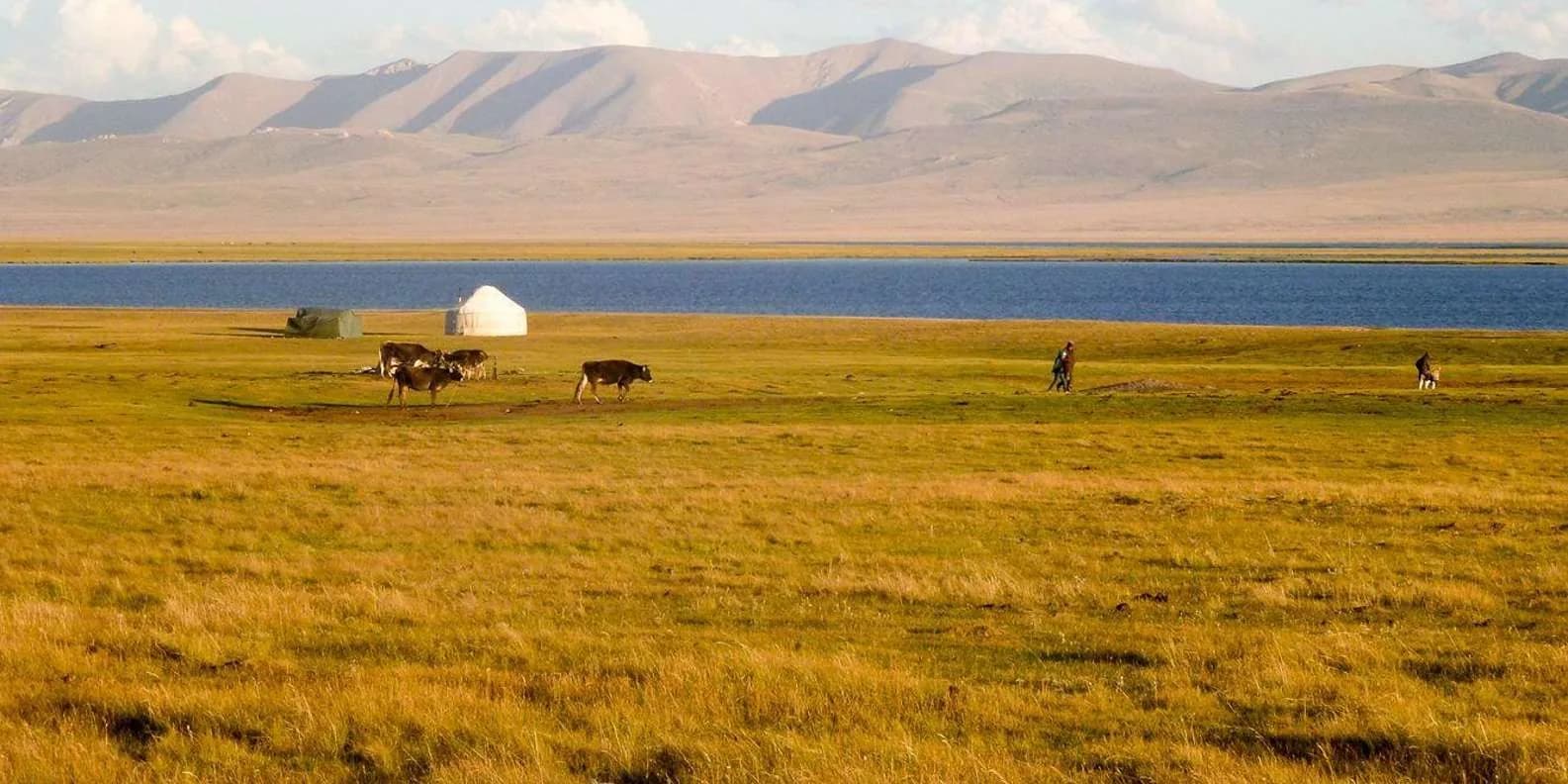
A gentle 1–2 day trek from Kochkor to a glacial lake at ~3,000 m with a yurt camp on the shore — one of the easiest real treks in Kyrgyzstan.
Book it on This is Kyrgyzstan
Naryn · Turn this guide into a trip
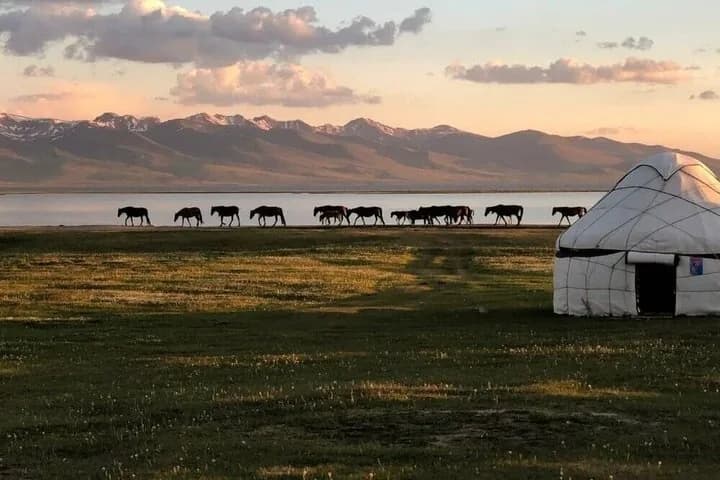
Kol-Ukok is a glacial lake at roughly 3,000 metres in the mountains south of Kochkor, and the trek up to it is one of the gentlest ways in Kyrgyzstan to reach a real alpine lake and sleep in a yurt on its shore. You drive part of the way in by jeep, then walk four to five hours up a green valley to the water, where a family runs a small yurt camp through the summer. It works as an overnight or a relaxed two-day trip. You can ride a horse the whole way up if you would rather not carry a pack, and a steeper day above the lake takes you to a second, higher lake called Köl-Tör. If you want a first multi-day hike that does not punish you, this is the one to pick.
At a glance
| Trip length | 1 night / 2 days is standard; doable as a long day trip |
| Walking | ~8–10 km each way to the lake, about 4–5 hours up |
| Ascent to the lake | roughly 600–900 m of climb |
| Max altitude | Kol-Ukok ~3,000 m; Köl-Tör above it ~3,400–3,500 m (sources differ) |
| Difficulty | Easy to moderate — a genuine beginner multi-day trek |
| Season | mid-June to mid-September |
| Base town | Kochkor (Naryn region) |
| How to reach | Jeep from Kochkor to the trailhead, then hike or ride up |
Treat every altitude and time here as a range, not a promise — published figures for Kol-Ukok vary and the drive-in changes with the state of the track. Confirm the day's plan with whoever you book through in Kochkor.
Why Kol-Ukok is a good first trek
Most of Kyrgyzstan's famous treks make you earn the view. The Ala-Kul pass throws 1,100 metres of climbing and a loose scree descent at you in a single day; the high lakes near Naryn need permits and hours of 4WD. Kol-Ukok asks for far less. The climb is spread over a manageable half-day, the top of the trek is the lakeshore rather than a windy pass, and there is a warm yurt and a hot dinner waiting when you arrive.
That combination is rare. You get the things people actually come to Kyrgyzstan for — a turquoise mountain lake, herders grazing horses on the slopes, a night under felt with a dung stove ticking in the middle of the yurt — without needing trekking experience or a big pack. It is also a good acclimatisation walk. A night at 3,000 metres before you tackle something higher is worth a lot, and Kol-Ukok is one of the easiest places to bank one.
The honest caveat: "easy" is relative to the rest of the country, not to a park stroll at home. You are still walking uphill for half a day at real altitude, and the weather turns fast. Come with decent boots and warm layers and you will be fine.
Getting to the trailhead
Everything starts in Kochkor, the small farming town that is the launch pad for most trips in this part of Naryn region. Kochkor sits about three to four hours south of Bishkek by shared taxi or marshrutka, most of the way along the Bishkek–Naryn road. Read the full Kochkor travel guide for how to get there and where to stay; in short, you can turn up without a booking in summer and arrange a trip the same day.
Kochkor is the practical booking hub. Several small outfits cluster in the centre — the local CBT office and Shepherd's Life among them — and they all sell the same short treks and yurt stays around town. This is grass-roots community-based tourism at its most functional: you book a jeep, a bed in a yurt, meals and, if you want them, horses and a guide, and most of the money stays with the families up the valley.
From Kochkor a jeep or shared 4WD takes you south to the mouth of the valley below the lake, near the summer pastures. The transfer is short in distance but slow — an hour or so on rough track, and it needs a high-clearance vehicle, not an ordinary car. Where exactly the jeep drops you depends on how far up the track is passable that week; in a good spell it can shave a chunk off the walk, and after rain it can leave you lower down. From the drop-off you walk the rest.
Book the jeep as a round trip with a pick-up time for the next day, or you can be left waiting a long time on the way out.
The route to the lake
From the trailhead the path climbs steadily up the valley beside a stream, through open pasture dotted with grazing horses and the odd shepherd's yurt. It is a clear, well-trodden track for most of the way, not a scramble. Expect four to five hours of walking to cover the eight to ten kilometres up to the lake, with somewhere between 600 and 900 metres of ascent depending on where the jeep leaves you.
The gradient is kind for the first half, then steepens as you approach the bowl that holds the lake. There is no single brutal section and no exposure, which is exactly what makes this a sensible first multi-day route. Take it slowly, drink often, and let the altitude do its work gradually.
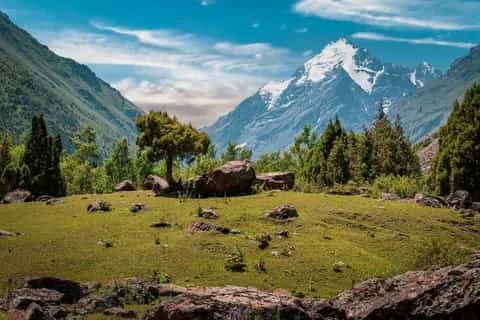
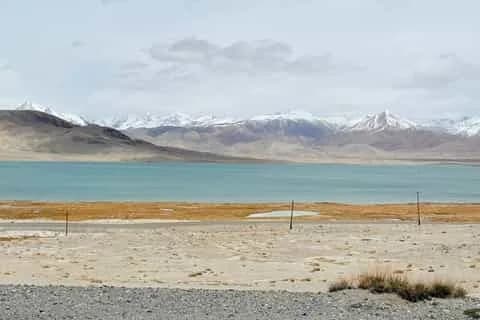
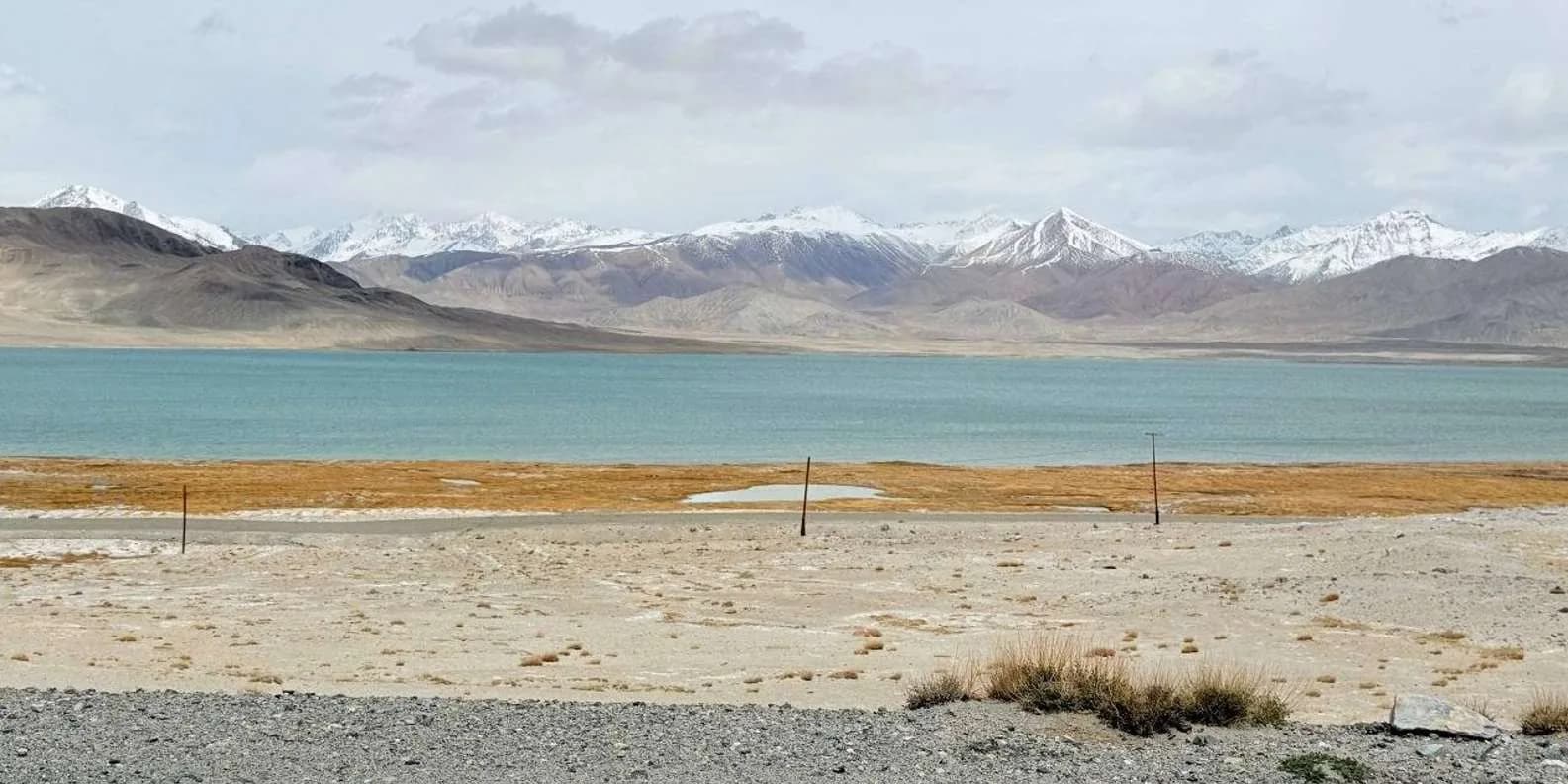
Kol-Ukok itself sits in a rocky cirque under snow-streaked peaks. The colour shifts with the light — pale and milky under cloud, a deeper turquoise in full sun — because, like most glacier-fed lakes here, it carries fine rock flour in suspension. Ice can linger on the water into early July in a heavy year. This is high, open ground, so it feels remote even though you are only a day from a town.
The yurt camp and the horse option
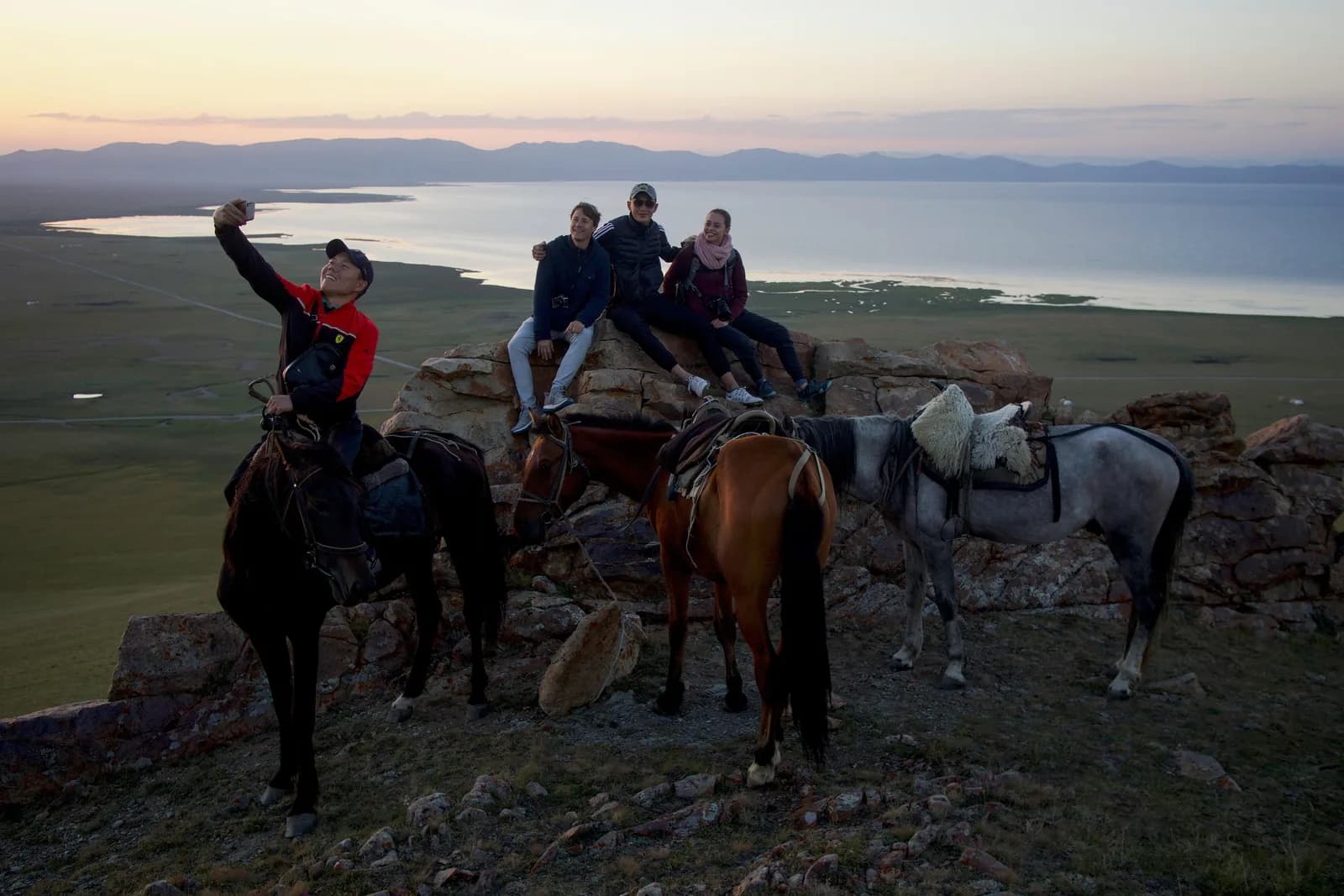
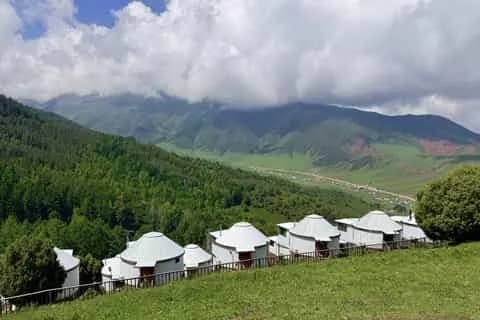
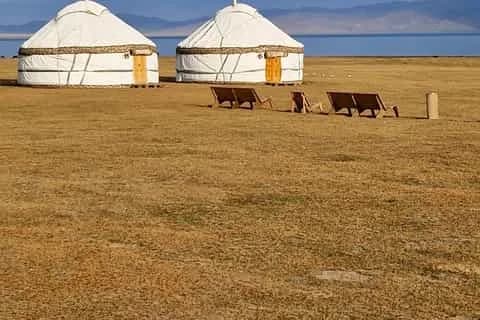
A seasonal yurt camp operates on the shore through the summer, run by a Kochkor family and booked through the same offices in town. It is simple: mattresses on the floor of a sleeping yurt around a central stove, a shared dining yurt, and home-cooked meals — soup, bread, tea, a rice or noodle dish. There is no electricity to speak of, no shower and no phone signal. The stove is lit and refuelled once, burns fiercely, then dies before dawn, so the yurt is cold by morning. Bring a hat and a warm layer to sleep in. For more on what a night under felt is actually like, see our guide to yurt stays in Kyrgyzstan.
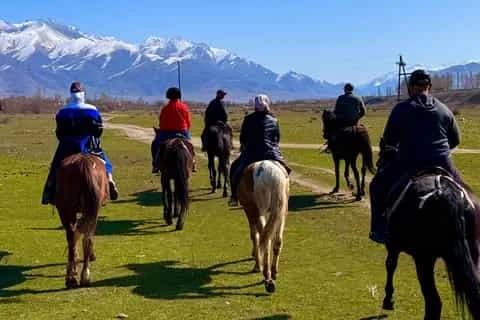
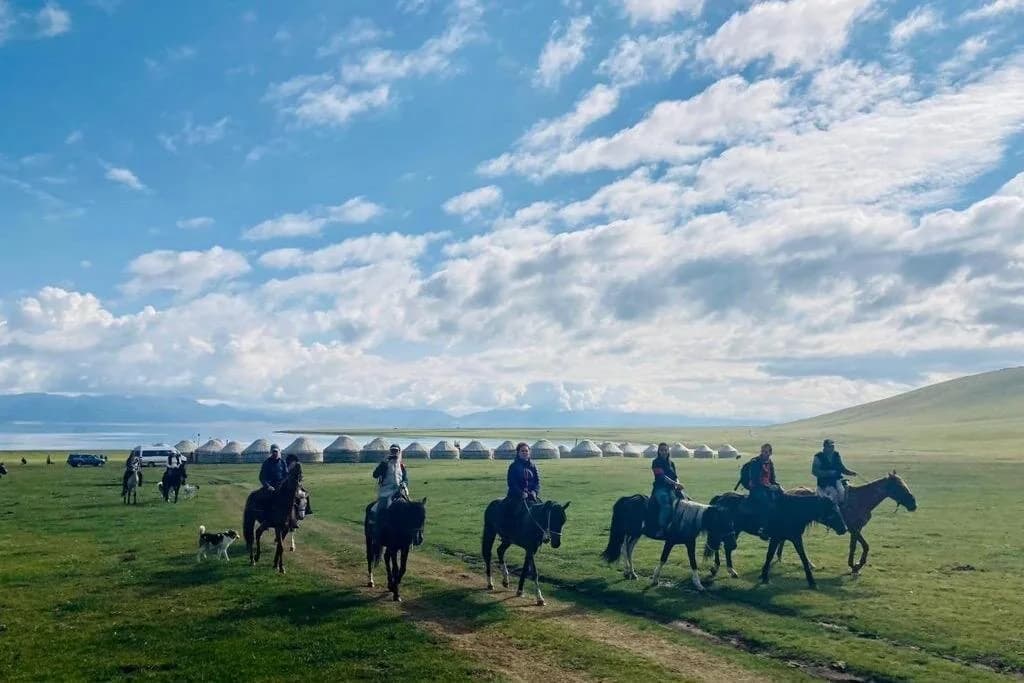
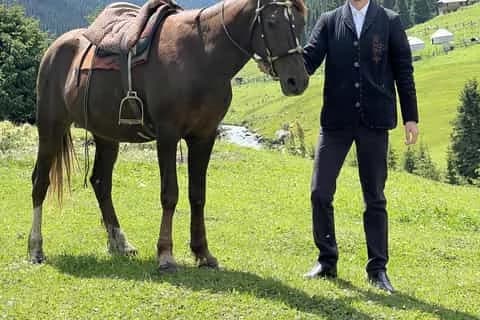
You do not have to walk. Horses are the local currency here, and hiring one to ride up is both easy and popular. A handler leads or accompanies you and your gear rides too, which turns the trek into a gentle half-day in the saddle rather than a slog with a pack. First-timers manage it every week — these are calm, sure-footed mountain horses used to carrying beginners over this exact ground. If you enjoy it, the region is the heartland of Kyrgyz horse travel; the classic longer ride is the Song-Köl horse trek from the same town. You can also hire a horse just to carry bags while you walk.
Going higher: Köl-Tör
If you have a second day, the reward is Köl-Tör, a smaller, higher lake in the mountains above Kol-Ukok. It is reached by a steeper climb of a couple of hours from the lower lake, gaining several hundred metres to somewhere around 3,400–3,500 metres — figures vary, so take that as approximate. The walk up is harder than the main trek and the ground rougher, but it is still non-technical, and the payoff is a wilder, more enclosed lake that very few day visitors ever see.
Do not confuse this Köl-Tör with the better-known Kol-Tor day-hike near Bishkek, in the Kegeti gorge. They are different lakes in different valleys; this one sits directly above Kol-Ukok and is done as an add-on from the yurt camp, ideally in the clear light of early morning before cloud builds.
When to go
The season is short. The valley is realistically walkable from mid-June to mid-September, with July and August the most reliable, when the yurt camp is fully up and running and the herders are on the pastures. June can still hold snow on the higher ground and ice on the lake; by late September the camp starts to come down and the nights turn hard. Outside that window there is no yurt, no cooked meal on the shore, and a real chance of snow on the approach.
Weather follows the Tien Shan pattern: clear mornings, cloud building from late morning, and a decent chance of an afternoon shower or thunderstorm higher up. Start early, especially if you are pushing on to Köl-Tör, and you will usually get the best of the day.
What it costs
Prices in this corner of Kyrgyzstan are quoted in som and shift year to year, so use the ranges below as a guide and confirm the exact figures in Kochkor. The rough rate of exchange is about 87–88 som to the US dollar. Cash only — there are no card machines and no ATM once you leave town, so draw what you need in Kochkor or Bishkek first.
| What | Rough cost (som) | Approx. USD |
|---|---|---|
| Yurt bed with dinner & breakfast | ~1,500–2,500 per person | ~$17–29 |
| Horse hire (ride or pack) | ~1,500–2,000 per day | ~$17–23 |
| Local guide | ~2,000–2,500 per day | ~$23–29 |
| Jeep transfer from Kochkor (return) | split per vehicle, agree up front | — |
| Meals beyond the yurt board | ~350–500 each | ~$4–6 |
Booking through the community outfits in Kochkor rather than a Bishkek agency keeps costs down and the money local. You do not need to reserve weeks ahead — walk-in is normal in summer — but if you want horses for a specific day it is worth a WhatsApp message the night before.
What to bring
Pack for cold even in July. Nights at 3,000 metres drop close to freezing, and wind is a bigger problem than the temperature on the dial. The essentials: broken-in waterproof boots, a warm insulating layer, a windproof and waterproof shell, a hat and gloves, and a sleeping-bag liner or your own bag if you feel the cold (the yurt provides blankets and floor mattresses, but they may not be enough). Add high-factor sun cream and sunglasses — UV at this altitude is fierce — a head torch, a refillable water bottle with a filter or purification tablets (every stream here is grazed by livestock), and enough small som notes for the whole trip. There are no shops past Kochkor, so buy any snacks in town.
If you want to fold Kol-Ukok into a bigger plan, it slots neatly alongside the other short adventures out of Kochkor and Naryn. Browse the region's routes on our trekking tours pages, or read the wider trekking in Kyrgyzstan guide to see where this fits among the country's classics.
Chat with a real person — free
Seif and the team reply on WhatsApp 24/7 — trip questions, custom plans and booking help.
Ask Seif on WhatsAppCommon questions
How hard is the Kol-Ukok trek?
It is easy to moderate by Kyrgyz standards — a good first multi-day hike. You walk roughly 8–10 km and climb 600–900 m to the lake over four to five hours, on a clear path with no scrambling or exposure. The main challenge is doing it at altitude, so go slowly and stay hydrated. Anyone reasonably fit can manage it, and you can ride a horse up instead of walking.
How high is Kol-Ukok lake?
Kol-Ukok sits at roughly 3,000 metres. Published figures vary a little, so treat that as approximate rather than exact. The higher second lake above it, Köl-Tör, is around 3,400–3,500 metres. Both are high enough that altitude matters: an overnight at the lower lake makes a sensible acclimatisation stop before anything higher.
How do I get to the trailhead?
Everything starts in Kochkor, three to four hours south of Bishkek by shared taxi or marshrutka. From Kochkor a jeep or 4WD takes you south to the mouth of the valley — about an hour on rough track needing a high-clearance vehicle. From the drop-off you walk up to the lake. Book the jeep as a return trip with a set pick-up time so you are not stranded on the way out.
Can I ride a horse up instead of walking?
Yes, and many people do. Hiring a horse to ride up is easy to arrange in Kochkor and turns the trek into a gentle half-day in the saddle. A handler comes with you and your gear is carried too. The horses are calm and used to beginners on this ground. You can also hire a horse just to carry your bags while you walk.
Where do you sleep at Kol-Ukok?
A seasonal yurt camp run by a Kochkor family operates on the lakeshore through summer, booked through the community offices in town. It is basic: floor mattresses around a central stove, a shared dining yurt, and home-cooked meals. There is no electricity, shower or phone signal. The stove dies before dawn, so bring a warm layer to sleep in even in July.
What is Köl-Tör and is it worth the extra day?
Köl-Tör is a smaller, higher lake in the mountains above Kol-Ukok, reached by a steeper two-hour-ish climb to around 3,400–3,500 m. It is harder than the main trek but still non-technical, and far quieter. If you have a spare day and clear weather, it is well worth the effort. Note it is a different lake from the Kol-Tor day-hike near Bishkek in the Kegeti gorge.
When is the best time to trek Kol-Ukok?
Mid-June to mid-September, with July and August the most reliable months, when the yurt camp is running and the herders are on the pastures. June can still hold snow and ice; by late September the camp comes down and nights turn very cold. Outside that window there is no yurt and a real chance of snow on the approach.
How much does the trek cost?
Budget roughly 1,500–2,500 som (about $17–29) for a yurt bed with meals, a similar amount per day for a horse, and more for a guide and the shared jeep transfer. Prices shift year to year, so confirm in Kochkor. Booking through the local community outfits keeps it cheap and local. Bring cash — there is no ATM or card payment once you leave town.
Do I need a guide or a permit?
No permit is required for Kol-Ukok — it is not in a border zone. A guide is optional: the main path is straightforward in clear weather, so confident walkers can go without one, though a guide or horse handler helps in cloud and adds local knowledge. Book through the community offices in Kochkor if you want a guide, horses or a jeep arranged together.
Book it on This is Kyrgyzstan
Turn this guide into a trip



Kyrgyzstan's bestsellers
The experiences travelers book most, across the country
Keep reading
Self-Guided Treks in Kyrgyzstan: Routes & How-To
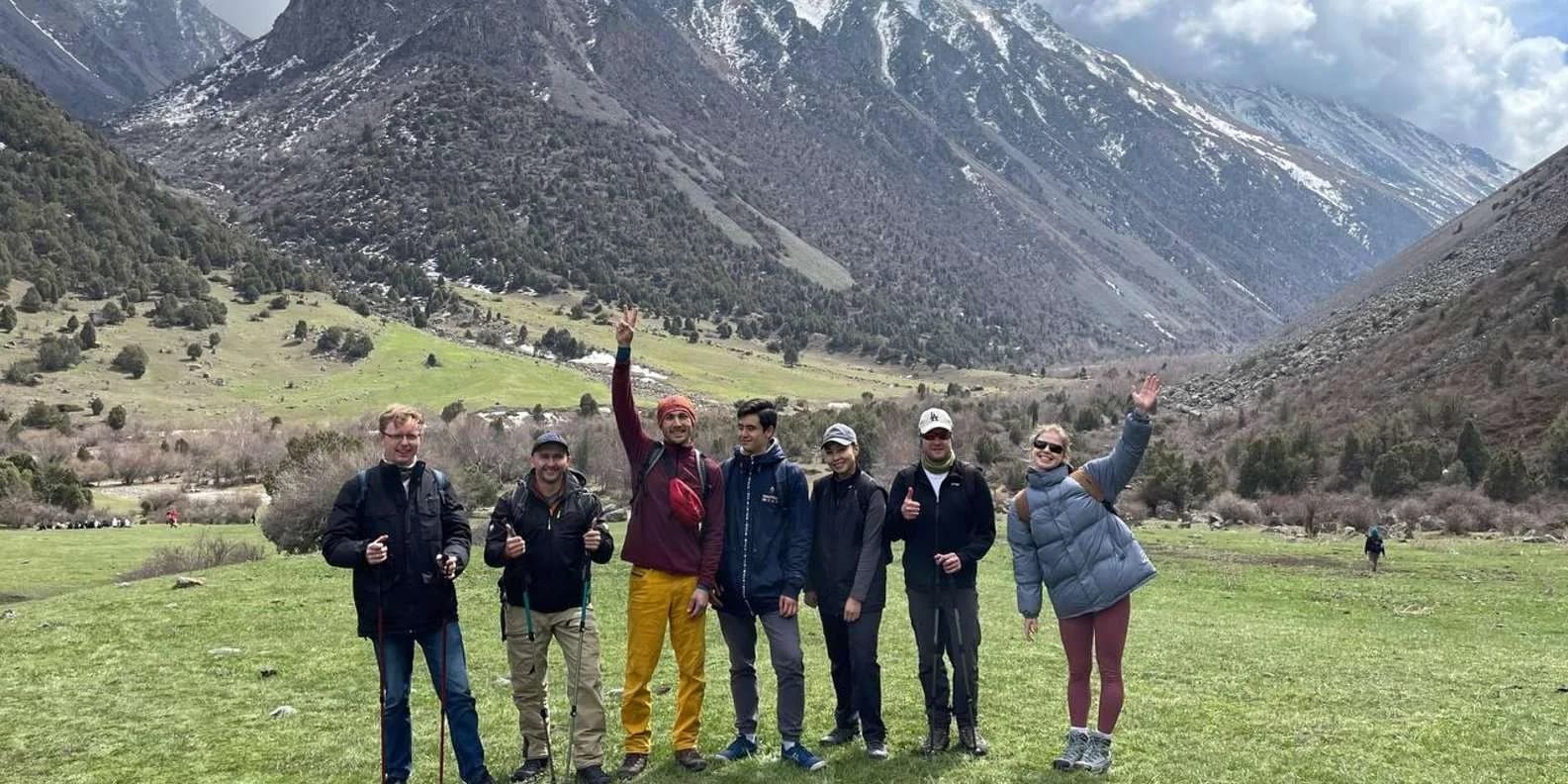
Yes, you can trek Kyrgyzstan without a guide. The best self-guided routes, the ones to skip, and the maps, water and safety logistics that make it work.
By TiK Editors12 min read
Uchitel Peak: Your First 4,000m Climb (2026)
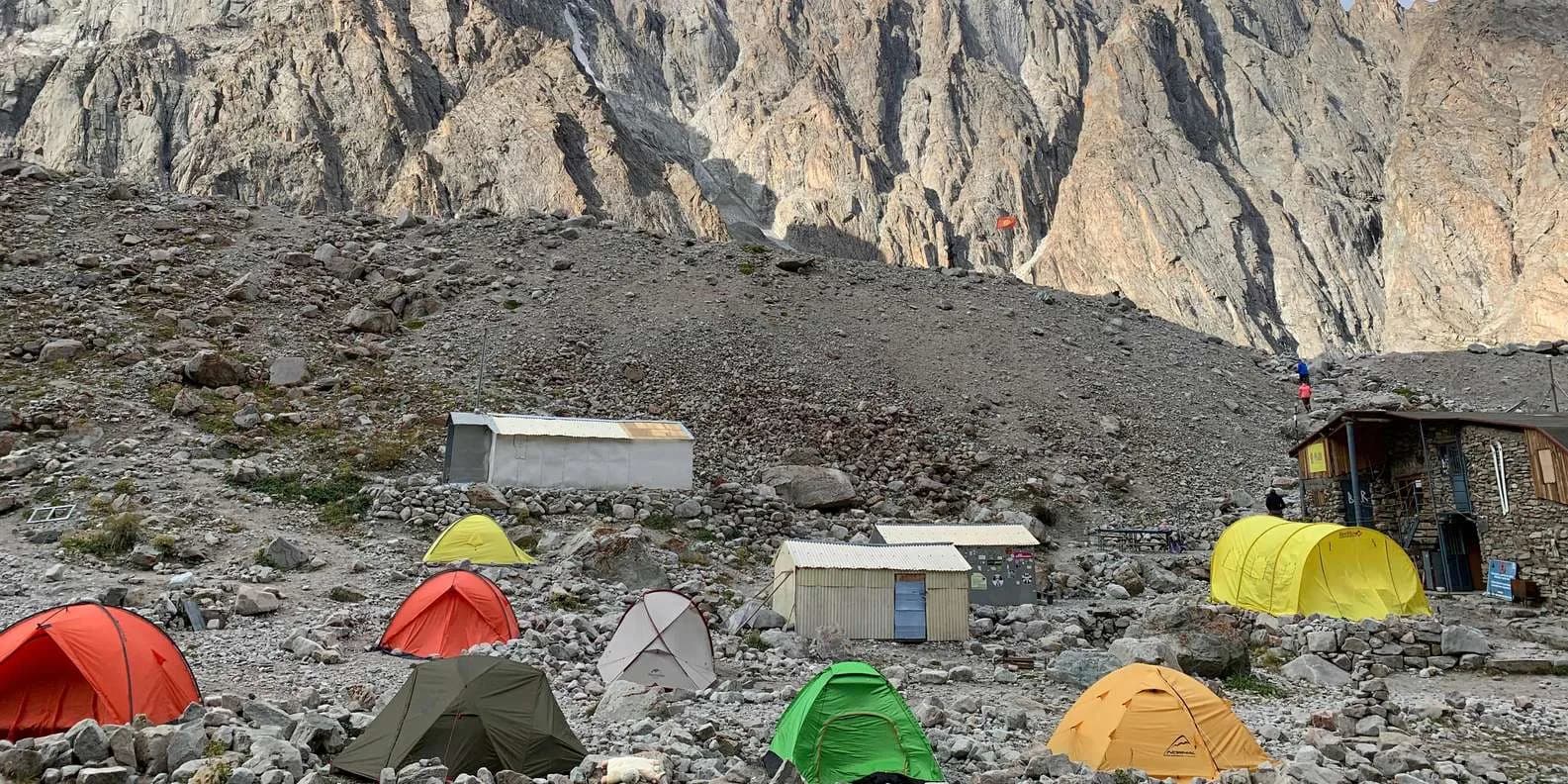
Pik Uchitel (~4,400-4,600 m) in Ala-Archa is the classic first summit for fit hikers new to mountaineering: route, gear, season and acclimatisation.
By TiK Editors8 min read
Tian Shan Traverse: Bikepacking Kyrgyzstan
The Tian Shan Traverse is a self-supported, mostly off-road bikepacking route of about 1,000 km across the high Kyrgyz mountains. Here's how to plan it.
By TiK Editors9 min read