 Image via GetYourGuide
Guided Tour vs Independent Travel in Kyrgyzstan
Kyrgyzstan is Central Asia's easiest country to travel independently, but a guide earns its place for remote treks and horses. Here's how to choose.
Book it on This is Kyrgyzstan
Turn this guide into a trip
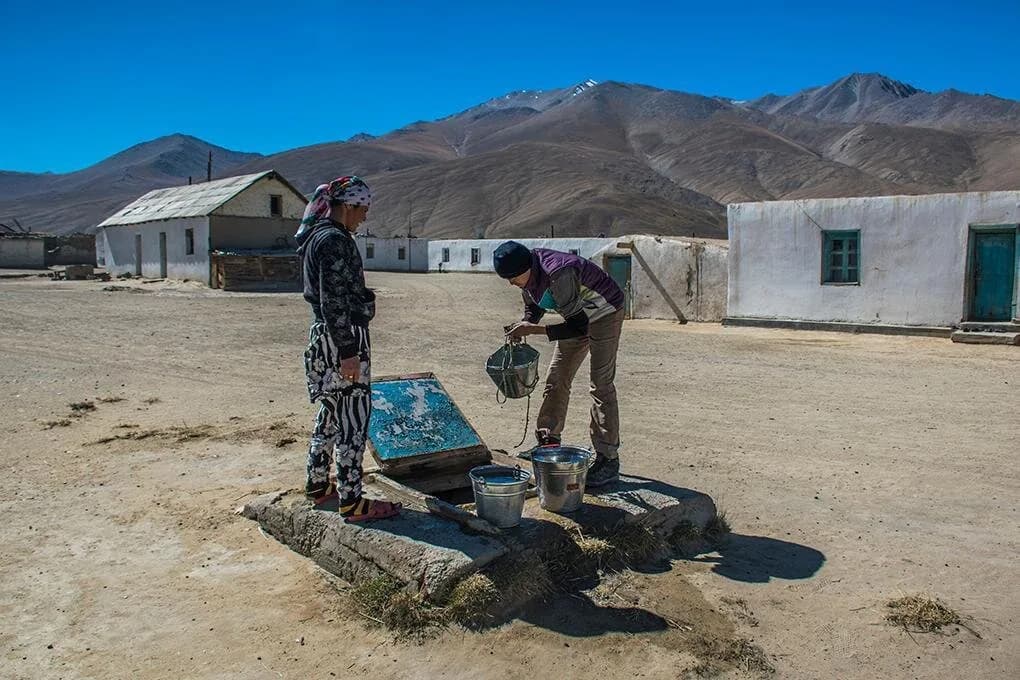
Kyrgyzstan is the easiest country in Central Asia to travel independently. It is visa-free for most Western nationalities (30 days within any rolling 60-day period as of 2026, not the 60 days older guidebooks still print), genuinely safe, cheap, and laced with shared taxis, marshrutkas and family homestays that need no advance booking. Most travellers here do it themselves, and most have no trouble. A guide or organised tour still earns its place, though, and for specific reasons: remote multi-day treks like Song-Köl and Ala-Köl, hiring horses, tight schedules, the Cyrillic-and-Russian language barrier, and the handful of corners that public transport simply does not reach. The honest answer for most people is a hybrid: independent in the towns and along the lake, guided for the one big trek.
How easy is independent travel here, really?
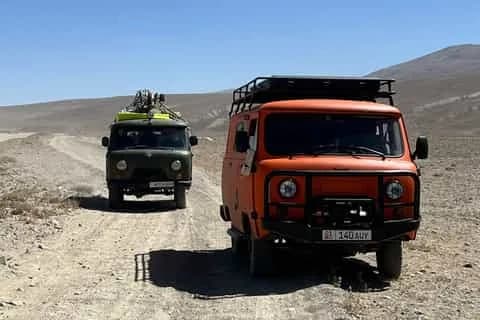
Easier than its reputation. The backbone is the marshrutka, a 12-to-20-seat minivan that runs a fixed route and leaves when it's full rather than to a timetable. Route numbers and destinations sit on the windscreen, almost always in Cyrillic only, so learning to read your destination in the Cyrillic alphabet is the single most useful hour of preparation you can do. Trunk routes are painless: Bishkek to Karakol (from around 500 som / about $6 by marshrutka, 6-7 hours) and Bishkek to Osh both run all day. Shared taxis cover the same routes for roughly double the fare and an hour saved, and the GoBus night coach to Karakol is the most comfortable budget option going.
Accommodation barely needs planning. Guesthouses and yurt stays run about $5-15 a night, walk-ins are the norm even in peak season, and there is almost always a bed. The one thing that does sell out in summer is car and motorbike rental, so pre-book that. For booking anything remotely, WhatsApp is the default channel, not a website. The Community Based Tourism network and its successor DMOs publish a phone number rather than a booking engine.
Apps smooth the cities. Yandex Go fixes taxi prices in Bishkek and Osh (and reportedly Karakol) and removes the airport-taxi overcharging that is Kyrgyzstan's most-reported minor rip-off. 2GIS, not Google Maps, is the map app locals actually use for stops and routes. Get a local SIM or eSIM at the airport before you do anything else; the apps need data. Our fuller breakdown of routes, fares and departure points is in the getting around Kyrgyzstan guide.
Where independent travel gets genuinely hard
The difficulty is never the cities. It's the mountains and the edges.
Remote trailheads have no public transport. No bus, marshrutka or shared taxi of any kind reaches Song-Köl, the postcard alpine lake at 3,016 m. The standard method is a shared jeep arranged in Kochkor (about 4 hours from Bishkek) or Naryn, sold as a seat in a filling vehicle. Tash Rabat, the stone caravanserai south of Naryn, is the same story: you get a shared taxi to At-Bashy and negotiate onward, or hire a car for roughly 3,000 som ($34) return. Reaching these places without your own wheels means either arranging a driver through CBT or committing to a multi-day horse trek in.
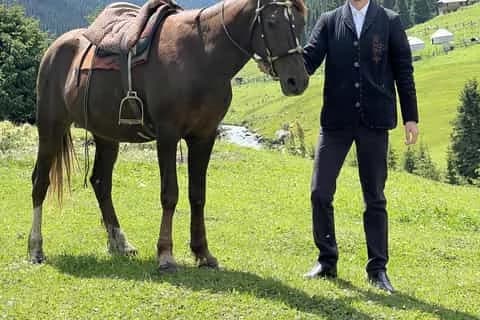
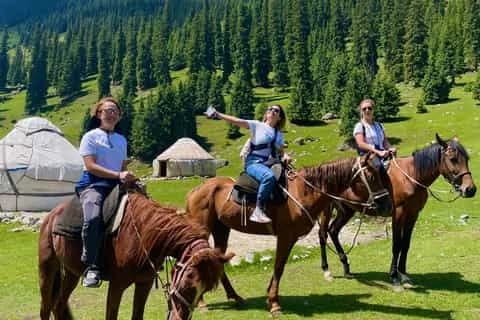
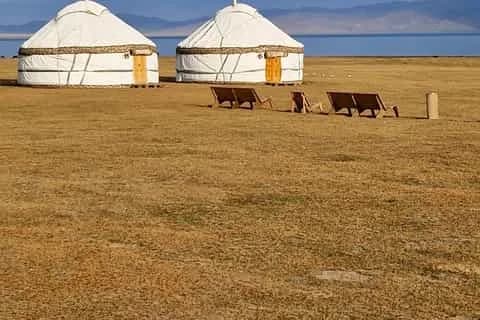
Song-Köl logistics reward local knowledge. There is no cash machine, shop or mobile reception at the lake. Yurt camps vary enormously: the cheapest give you a floor mattress around a dung stove that burns fiercely then dies cold before dawn; pricier camps offer actual beds, which is the single biggest comfort variable. If you want to arrive on horseback over the passes from Kyzart, you need horses, a guide who knows the route, and the confidence to sleep at altitude. That is exactly the kind of trip that is far simpler booked than assembled.
The language barrier is real off the tourist track. English is common in Bishkek and tourist Karakol and rare almost everywhere else. Basic Russian or Kyrgyz materially changes your experience of hitchhiking (normal and safe here, but drivers usually expect marshrutka-rate payment, so ask "bez akcha?" before boarding), of negotiating a driver, and of a homestay dinner. Cyrillic on every sign and windscreen compounds it.
Border permits and winter add friction. Kel-Suu, Chatyr-Köl, the Torugart pass, Inylchek and Lenin Peak all sit in restricted zones needing a paper border permit obtained days ahead through CBT or a licensed operator; Song-Köl, Tash Rabat, Ala-Köl and Altyn-Arashan do not. And high-mountain travel is roughly mid-June to mid-September. May and October are shoulder months where half an itinerary is shut, jailoo yurt camps have packed up, and passes close at short notice. Winter narrows the DIY options sharply.
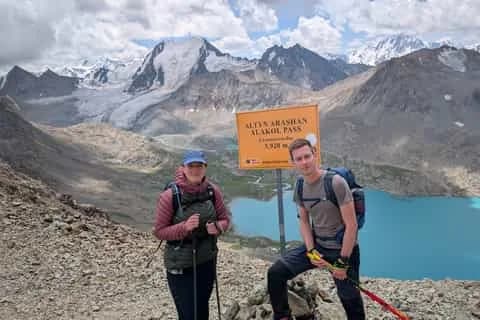
Altitude catches people out. Kyrgyzstan puts ordinary tourists above 3,000 m faster than almost any budget destination. The classic Bishkek-to-Song-Köl run takes a sea-level traveller from 800 m to sleeping at 3,016 m in a day, and the Ala-Köl trek crosses a 3,900 m pass on day two. A good operator builds in the acclimatisation nights a rushed independent schedule tends to skip.
What a guided trip actually buys you
Strip away the marketing and a guide or tour delivers five concrete things. Logistics and time: the jeep to Song-Köl, the permit for Kel-Suu, the yurt beds and the meals are all handled, which on a two-week trip can save you days of standing in bus stations. Horses: proper horse trekking needs animals, tack and a wrangler you cannot source yourself. Safety margin: mountain rescue is a limited, volunteer service with no routine helicopter evacuation, so a guide who reads the weather, the river crossings and your altitude symptoms is a genuine safety asset. Local access: a shepherd's welcome, the working jailoo, the Kyrgyz-only conversation. The off-the-map corners: Kel-Suu, the Alay, Saimaluu-Tash, the places where CBT isn't a nicety but the only practical transport.
What it does not buy you is safety from Kyrgyzstan's real hazard. The dominant risk here is road traffic, and a tour van on a bad mountain road is exposed to it just as a shared taxi is. Read our is Kyrgyzstan safe guide before you weigh this.
The hybrid most travellers actually use
The sweet spot, and what a large share of visitors end up doing, is to travel independently for the easy parts and buy help for the hard one. You handle Bishkek, the Issyk-Köl shore, Karakol and the transport between them yourself with marshrutkas and Yandex Go, then book a single guided element: a 2-to-3-day Song-Köl horse trek out of Kochkor, a driver for the Naryn-Tash Rabat-Kel-Suu loop that needs both a 4WD and a permit, or a supported crossing of the Ala-Köl pass. You keep the freedom and the low cost of DIY, and you outsource exactly the logistics that would otherwise eat your time or exceed your comfort. Kochkor and Karakol both have competing companies clustered in town centre offices that will arrange this on the spot in summer.
What it costs
Independent travel is dramatically cheaper, but the gap narrows the moment you need a jeep and a driver for a remote objective. Approximate 2026 figures, at roughly 87-88 som to the US dollar; confirm on the day.
| Item | Independent | Guided / booked |
|---|---|---|
| Bed for the night | Homestay or yurt $5-15 | Included in tour |
| Song-Köl yurt night | ~$15 incl. meals (self-arranged jeep on top) | Bundled with transport and horses |
| Getting to Song-Köl | Shared jeep seat from Kochkor | Included |
| Horse trek, all-in | Not practical to self-assemble | ~$100 per day (horse, guide, food, lodging) |
| Bishkek-Karakol | Marshrutka from 500 som (~$6) | Private transfer, far more |
| Bishkek-Osh | Shared taxi ~1,500-2,500 som, or 37-45 min flight ~$40-50 | Included |
| Multi-day guided tour (marketplace median) | - | Horse trekking ~$410; trekking ~$155; multi-day heavy |
A fortnight of pure independent travel can run on a genuinely small budget; add one guided trek and a driver-day or two and you are still well below the cost of a fully packaged trip. See the cost and budget guide for a full daily breakdown.
Decision table: guided or independent?
| Your situation | Lean |
|---|---|
| First time in Central Asia, sticking to Bishkek, Issyk-Köl and Karakol | Independent |
| You want to sleep at Song-Köl or ride horses over the passes | Guided (or hybrid) |
| Kel-Suu, Torugart, Inylchek or Lenin Peak on your list | Guided (permits + 4WD) |
| Tight schedule, under 10 days, want no wasted time | Guided or driver-hire |
| No Russian, no appetite for Cyrillic and haggling | Guided smooths it |
| Travelling in winter or the May/October shoulder | Guided; DIY options shrink |
| Confident trekker, flexible dates, tight budget | Independent + one booked trek |
| Solo and want built-in company and local contact | Hybrid via homestays and a group trek |
The verdict, by traveller type
Independent-minded budget travellers and experienced trekkers: do it yourself and book only the one trek that needs horses or a permit. Kyrgyzstan rewards you more than almost anywhere.
Short-trip and time-poor visitors: hire a driver or take a small-group tour. Ten days is not enough to fight bus stations and still see Song-Köl.
Non-Russian-speakers nervous about the logistics: the hybrid removes the friction without wrapping you in cotton wool. Stay in homestays, use apps in town, and let a guide handle the mountains.
Solo travellers: the homestay network makes going alone structurally easy since you're usually in someone's house, and a group trek solves both company and safety at altitude. Our solo travel guide goes deeper.
Whichever way you lean, decide trek by trek rather than for the whole trip. Browse what's actually on offer for the hard parts on the trekking and horse-trekking tours page, then keep the rest of your itinerary in your own hands. For the trekking specifics, the trekking in Kyrgyzstan guide is the place to start.
Chat with a real person — free
Seif and the team reply on WhatsApp 24/7 — trip questions, custom plans and booking help.
Ask Seif on WhatsAppCommon questions
Is Kyrgyzstan easy to travel independently?
Yes. Kyrgyzstan is the easiest country in Central Asia for independent travel. It is visa-free for most Western nationalities for 30 days within a rolling 60-day period, safe, and cheap, with marshrutkas and shared taxis on all trunk routes and family homestays that need no advance booking. The friction points are remote trailheads with no public transport, the Cyrillic and Russian language barrier, and winter.
Do I need a guide to visit Song-Köl?
Not strictly, but you need transport help. No public transport of any kind reaches Song-Köl (3,016 m); the standard method is a shared jeep arranged in Kochkor or Naryn, or a 2-to-3-day horse trek in. Most travellers book that jeep or trek through CBT or a local company. You can arrange it on the spot in Kochkor in summer, so it's more hybrid than fully guided.
How much does independent travel cost versus a guided tour?
Independent is far cheaper: homestays and yurt stays run $5-15 a night, a Song-Köl yurt night is about $15 including meals, and a Bishkek-Karakol marshrutka is from 500 som (~$6). Guided horse treks cost roughly $100 a day all-in, and multi-day marketplace tours have medians around $155 for trekking and $410 for horse trekking. A hybrid trip keeps most of the DIY saving.
What does a guided trip in Kyrgyzstan actually get you?
Five things: logistics and time saved on remote transport and permits; horses and a wrangler you can't source yourself; a safety margin at altitude and on river crossings, given that mountain rescue is limited and there's no routine helicopter evacuation; local access to shepherds and working jailoos; and the off-the-map corners like Kel-Suu and the Alay where a guide is the only practical option.
Can I get around Kyrgyzstan without speaking Russian?
In Bishkek and tourist Karakol, yes, English is common enough. Elsewhere it's rare, and every sign and marshrutka windscreen is in Cyrillic. You don't need fluent Russian, but learning to read Cyrillic and a few phrases transforms independent travel, hitchhiking and homestay dinners. If that prospect worries you, a guide or driver removes the barrier entirely.
Is it safe to travel independently in Kyrgyzstan?
Yes. Kyrgyzstan is one of the safer Central Asian countries for tourists, with no government advise-against-travel zones as of 2026. The real risks are road traffic (by a wide margin), mountain and altitude accidents, and petty overcharging, not crime. A guide doesn't reduce road risk, but experienced trek leaders do help with weather, altitude and river crossings in the mountains.
Do I need permits for trekking, and can I arrange them alone?
Only for restricted border zones: Kel-Suu, Chatyr-Köl, the Torugart pass, Inylchek and Lenin Peak all need a paper border permit obtained several days ahead through CBT or a licensed operator. Popular spots like Song-Köl, Tash Rabat, Ala-Köl and Altyn-Arashan need no permit. If your route needs one, booking through an operator who handles the paperwork is far simpler than doing it yourself.
When is a guided trip worth it over doing it yourself?
When you want horses, when your route needs a border permit and a 4WD (Kel-Suu, Torugart, Lenin Peak), when your schedule is under about 10 days, when you're travelling in winter or the May/October shoulder, or when you have no Russian and no appetite for Cyrillic and haggling. For everything else, independent travel is cheaper and more rewarding.
What is the hybrid approach most travellers use?
Independent for the easy parts, guided for the hard one. You handle Bishkek, the Issyk-Köl shore and Karakol yourself with marshrutkas and Yandex Go, then book a single guided element: a Song-Köl horse trek from Kochkor, a driver for the Naryn-Tash Rabat-Kel-Suu loop, or a supported Ala-Köl pass crossing. It keeps DIY's freedom and low cost while outsourcing the logistics that eat time.
Book it on This is Kyrgyzstan
Turn this guide into a trip
Kyrgyzstan's bestsellers
The experiences travelers book most, across the country
Keep reading
Self-Guided Treks in Kyrgyzstan: Routes & How-To
Yes, you can trek Kyrgyzstan without a guide. The best self-guided routes, the ones to skip, and the maps, water and safety logistics that make it work.
By TiK Editors12 min read
Uchitel Peak: Your First 4,000m Climb (2026)
Pik Uchitel (~4,400-4,600 m) in Ala-Archa is the classic first summit for fit hikers new to mountaineering: route, gear, season and acclimatisation.
By TiK Editors8 min read
Tian Shan Traverse: Bikepacking Kyrgyzstan
The Tian Shan Traverse is a self-supported, mostly off-road bikepacking route of about 1,000 km across the high Kyrgyz mountains. Here's how to plan it.
By TiK Editors9 min read