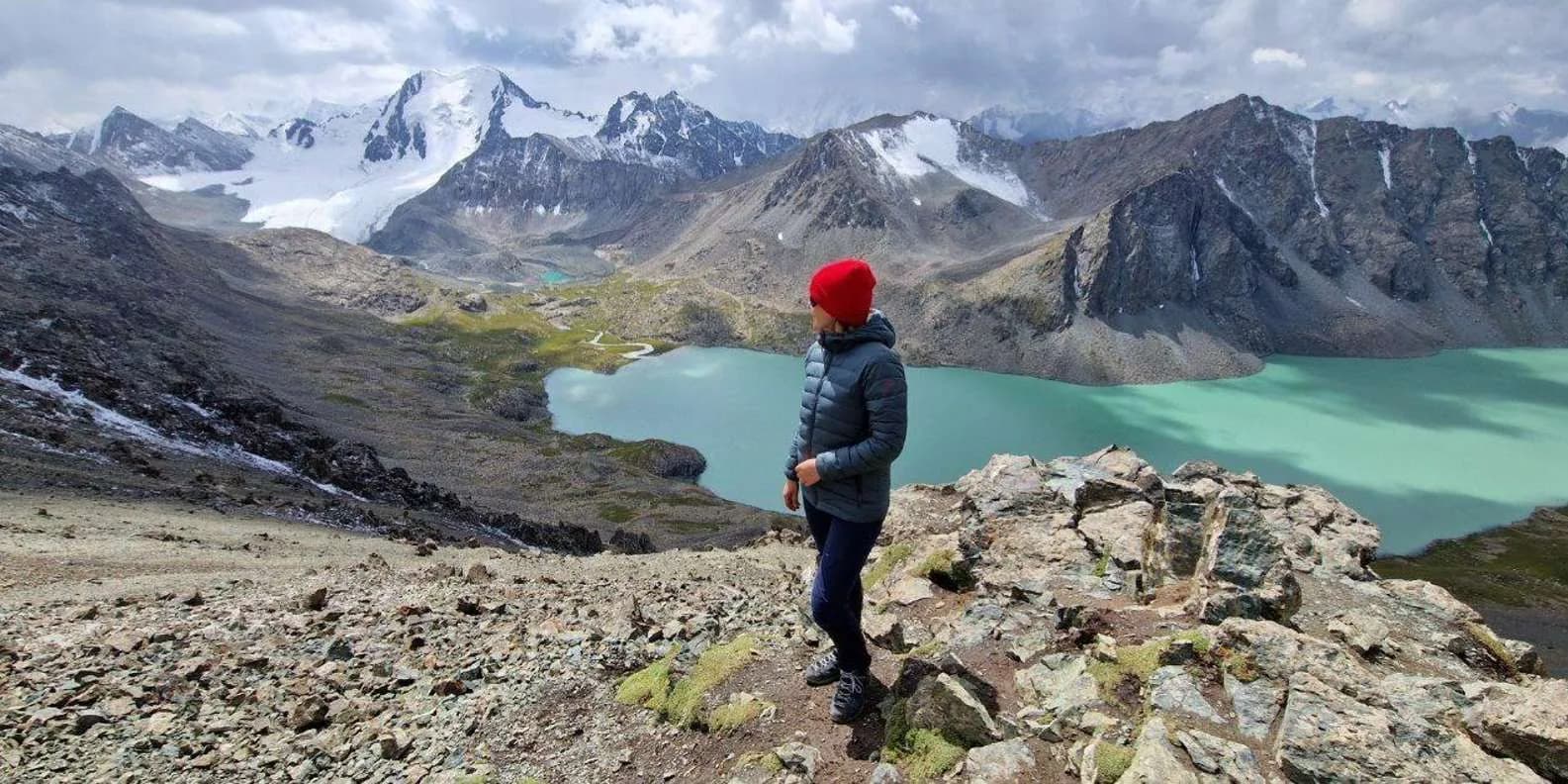
 Image via GetYourGuide
Cycling & Bikepacking in Kyrgyzstan (2026)
Empty gravel, 3,000 m passes and free wild camping make Kyrgyzstan a top emerging bikepacking country. Routes, season, bikes and hazards, honestly.
Book it on This is Kyrgyzstan
Turn this guide into a trip
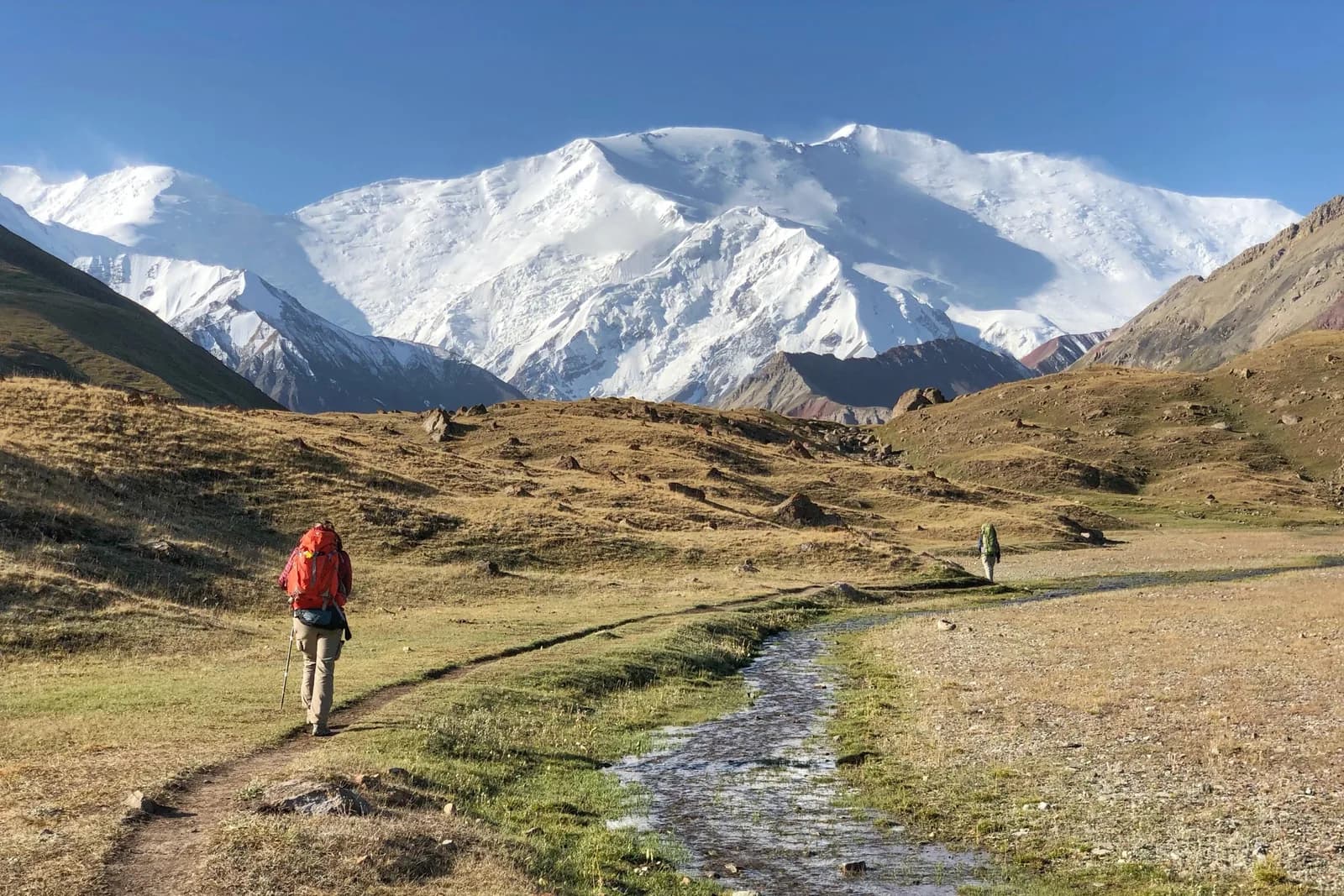
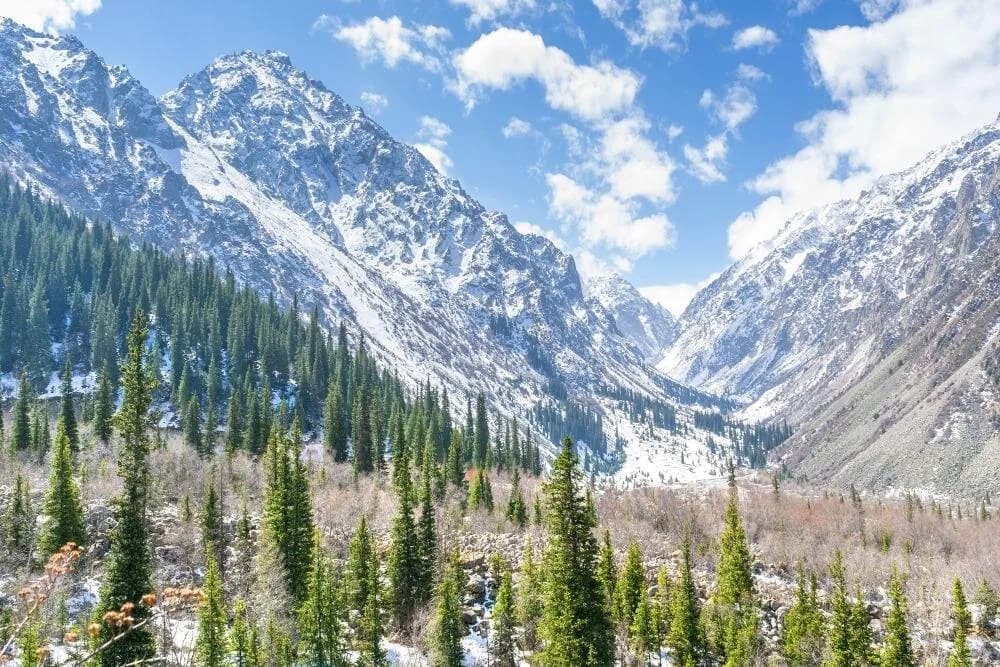
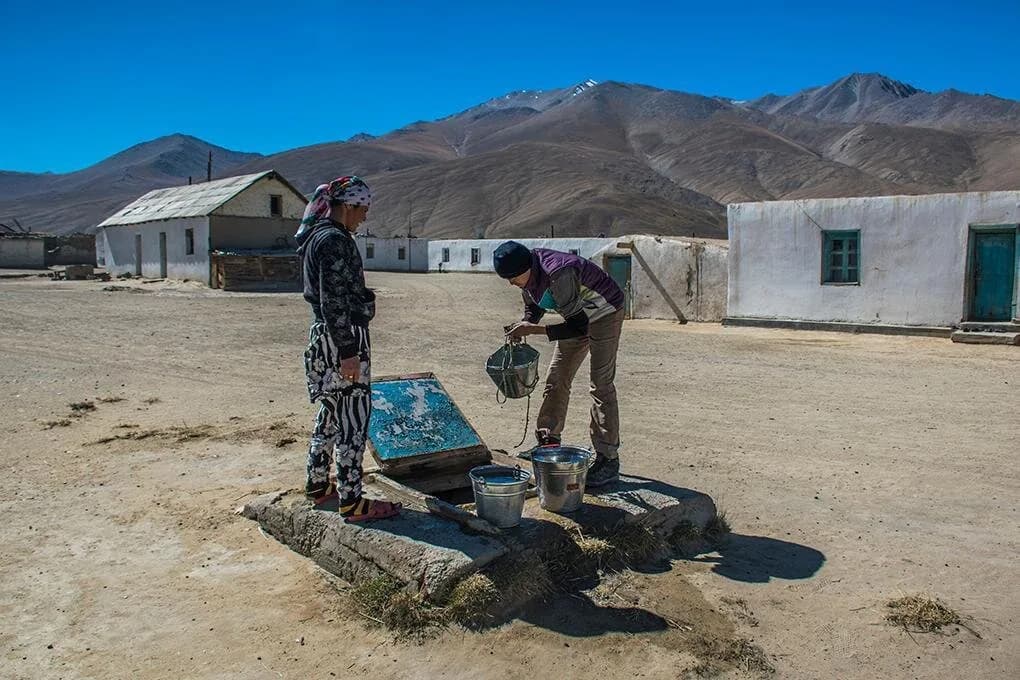
Kyrgyzstan is one of the best places in the world to ride a loaded bike, and still one of the least crowded. You get hundreds of kilometres of empty dirt and gravel, a handful of paved roads, high passes that stay snow-free only in mid-summer, and shepherd families who wave you into a yurt for tea. The riding season is roughly June to September, with July and August the only months you can count on for anything above 3,000 m. This is self-sufficient touring, not a marked trail network, so the reward scales with how prepared and how comfortable at altitude you are.
What makes it special is the ratio of wildness to hassle. Almost the entire country is mountain, only the roads between the main towns are sealed, and wild camping is free and normal. A jailoo (summer pasture) at 3,000 m might hold a dozen yurts and no fence for 30 km. The trade-offs are real too: the few tarmac roads carry fast, careless traffic, mountain weather turns in an hour, and you climb from an 800 m capital to a 3,000 m lake in a day. Plan around those and it is superb.
Why cyclists rate it
- Empty gravel. Beyond the trunk roads, traffic on the mountain tracks can be a handful of vehicles a day. The classic Song-Köl approaches, the Suusamyr basin and the Naryn backcountry are gravel highways with almost no cars.
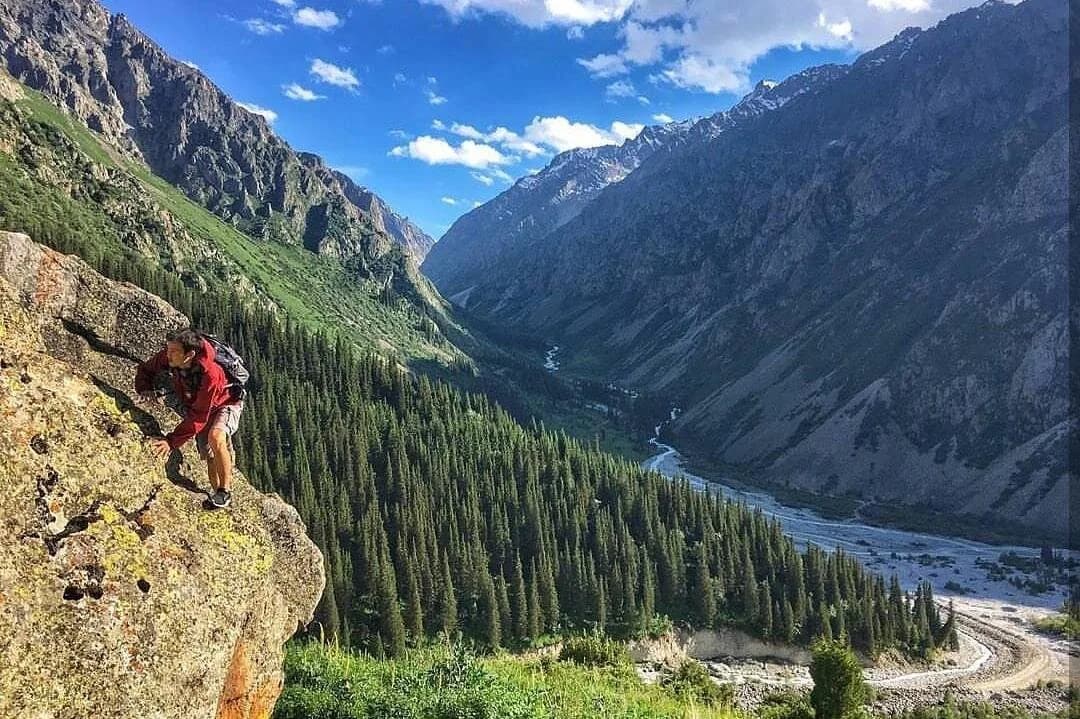
- Real high passes. Töö-Ashuu, Ala-Bel, Tosor (3,893 m), Kegeti (3,785 m) and the Pamir approach over Kyzyl-Art (4,180 m) give you the kind of altitude most tourers travel to the Andes for.
- Wild camping and jailoo hospitality. You can pitch almost anywhere, and shepherds routinely sell kymyz (fermented mare's milk), bread and a bed in a yurt for a small fee.
- Cost. Food, guesthouses and community transport are cheap. A Karakol valley park ticket is 250 som (about $3); the Bishkek–Osh road toll is 350 som.
For the wider picture of getting in, money and culture, start with our Kyrgyzstan travel guide.
The classic routes
These are the rides that define bikepacking here. Distances and days are honest planning figures, not race splits; add time for weather, resupply and the altitude.
| Route | Rough distance | Days | Difficulty | Surface | Best months |
|---|---|---|---|---|---|
| Song-Köl loop (Kochkor–Song-Köl–Naryn) | ~230–260 km | 3–5 | Moderate–hard | Gravel, two 3,000 m+ passes | Jul–Aug |
| Issyk-Köl circuit (full lake ring road) | ~450 km | 5–8 | Moderate | Paved north shore, quieter south | Jun–Sep |
| Bishkek–Osh over the mountains (M41) | ~600 km | 7–10 | Hard | Paved, two ~3,120–3,180 m passes | Jun–Sep |
| Kyrgyz Pamir Highway (Osh–Sary-Tash–Kyzyl-Art) | ~230 km one way | 3–5 | Hard | Sealed to the Tajik border | Jul–Sep |
| Tian Shan gravel traverses (Tosor, Kegeti, Naryn backcountry) | Variable | 3–7+ | Expedition | Rough 4WD track | Jul–Aug |
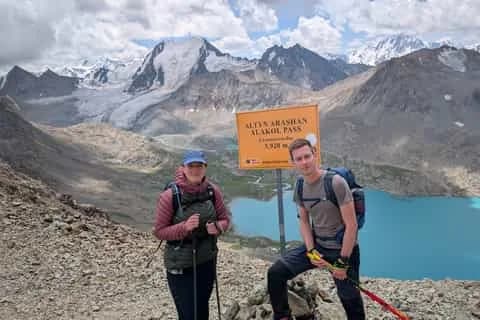
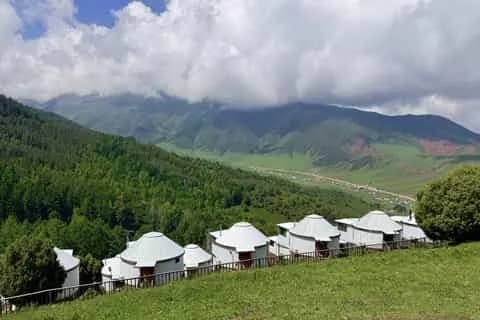
The Song-Köl loop is the one most people come for, and it is friendlier than the map suggests. All four access roads to the lake are decent gravel; you do not need a 4WD car to drive them, and they are fine for a loaded bike with sensible tyres. Start in Kochkor (about 1,800 m, four hours from Bishkek), climb over a 3,000 m-plus pass, spend a night or two in a yurt on the shore at 3,016 m, then drop to Naryn on the beautiful hairpin road. There is no phone signal at the lake and no shop, so carry food and water for the crossing. If you would rather sleep warm, read our Song-Köl yurt stay guide before you go.
The Issyk-Köl circuit rings the world's second-largest alpine lake (182 km long, surface at 1,607 m). The north shore is fully paved but busy, lined with resort towns and watched by heavy traffic police; the south shore is quiet, slow and far nicer to ride, with homestay villages like Tamga and Bokonbaevo and side-canyons at Skazka and Tosor. Most riders do the loop anticlockwise to leave the mellow south for last.
Bishkek–Osh is the epic tarmac traverse: around 600 km, two passes near 3,120 m and 3,180 m, and the long, unlit, unventilated Töö-Ashuu tunnel bored beneath a 3,586 m pass. It is a serious road ride because of traffic and that tunnel, not the gradients. The Kyrgyz Pamir Highway out of Osh through Sary-Tash toward the Kyzyl-Art border is the world-class one, sealed all the way to the frontier with the Trans-Alay wall and Peak Lenin (7,134 m) filling the horizon. Peak Lenin officially sits inside a border permit zone.
Road riding vs gravel bikepacking
Be clear which trip you want, because they barely overlap.
Sealed roads are the minority and the busy part. Kyrgyzstan has no motorways, drivers overtake on blind bends, livestock wanders the carriageway, and the pedestrian road-death share is high. On paved routes like the north shore or the M41 you are sharing space with trucks and shared taxis paid by the trip to go fast. That does not rule road touring out, but it means daytime riding, a mirror and a bright rear light, and avoiding the Töö-Ashuu tunnel on a bike where you can (arrange a lift through it).
Gravel and mountain bikepacking is where the country shines, and it is where the cars vanish. A gravel or hardtail rig with 2-inch-plus tyres, low gearing and bikepacking bags handles the Song-Köl passes, the Suusamyr plateau and the Naryn tracks comfortably. For a taste of curated day riding, a USAID-backed project mapped 15 signed loops totalling around 350 km across Jyrgalan, the Issyk-Köl south shore, Karakol, Naryn and Jumgal, many of them on Trailforks, bookable through the local DMOs. They make a soft first week while you acclimatise.
When to go
Cycling season runs June to September. The catch is altitude: a long winter can leave passes as low as 2,000 m under snow into June, and only July and August reliably open ground above 3,000 m. Jailoo yurt camps at Song-Köl track the grass and the weather with no fixed opening date, so June and September are a gamble at the high lakes. Spring and autumn are the worst of both worlds up high. If your plan hangs on a particular pass, our best time to visit Kyrgyzstan guide breaks the season down month by month.
Logistics: bikes, spares, water and resupply
Bikes. Bishkek has a small number of rental and touring outfits and is where any hire, servicing or bike box lives; Osh and Karakol have far less. Rental stock is limited and books out in summer, so if you want a specific bike, reserve ahead or bring your own. Outside the capital, bike shops are scarce and quality spares scarcer still.
Spares. Carry what you cannot buy: spare tyres or plenty of patches and boots, a chain, brake pads, derailleur hanger, spokes, tubes and a tubeless repair kit. Gravel here is sharp and the descents are long on the brakes.
Water. Tap water is not reliably safe, and clear mountain streams below a jailoo are contaminated by livestock, so giardia is a genuine risk. Filter or treat everything on multi-day sections and carry capacity for dry stretches. On the Song-Köl approaches, the Naryn backcountry and the Alay, top up in villages because sources thin out fast.
Resupply. Food and fuel are dense on the M41, around the oblast capitals and on the Issyk-Köl ring, and sparse everywhere else. Carry two or three days of food for Song-Köl, the Tian Shan traverses and the Alay. To skip the brutal Bishkek–Osh road entirely, a 45-minute flight runs around $40 and puts you straight at the Pamir approach; more on the trade-offs in getting around Kyrgyzstan.
Altitude, dogs and traffic
Altitude is the thing riders underestimate. You can go from Bishkek at 800 m to sleeping at Song-Köl at 3,016 m in a day, which is exactly the profile that brings on acute mountain sickness. Build in a night at Kochkor or Naryn first, gain sleeping height slowly, and descend if a headache worsens rather than pushing over the next pass. Fitness offers no protection. Read our altitude sickness in Kyrgyzstan guide and buy insurance that explicitly covers your maximum riding altitude and helicopter evacuation, because state mountain rescue is a limited volunteer service.
Shepherd dogs are the other constant. They are working livestock guardians, they will run at your bike, and the worst thing you can do is sprint. Slow down, dismount if you must, keep the bike between you and the dog, and wait for the shepherd. Kyrgyzstan is a rabies-risk country, so a pre-exposure course is worth it for a long trip, and any bite means washing the wound hard and getting to Bishkek for treatment.
Traffic is the statistical danger, not crime. The country is genuinely safe for travellers; the real hazards are bad drivers, unlit roads at dusk and that tunnel. Ride by day, be visible, and treat the paved trunk roads with respect.
Navigation and wild camping
There is no signage on the backcountry tracks, so navigate with GPS. Download offline maps (maps.me or Organic Maps and the locals' 2GIS), load GPX tracks, and carry a power bank because you will go days without a socket. A satellite messenger such as an inReach is the realistic way to call for help from Song-Köl, the Alay or a remote pass, where there is no mobile signal at all.
Wild camping is unrestricted and one of the joys here. Pitch away from yurts unless you are invited closer, ask before camping right beside a family's animals, and expect to be offered tea or a bed anyway. Rivers are glacier-fed, so a ford that is ankle-deep at breakfast can be thigh-deep by afternoon; cross early, unclip your bags, and scout a braided section rather than a single deep channel.
Who it suits
This is a trip for self-sufficient, adventurous cyclists who are comfortable fixing their own bike, camping high and cold, treating their water and pacing themselves at altitude. First-time tourers can absolutely start here on the Issyk-Köl loop or the Jyrgalan day rides; the remote traverses reward experience. Pack a proper kit list from our Kyrgyzstan packing list, and if you would rather ride with support or a guide who knows which passes are open, browse the lakes and nature trips to build a route around Song-Köl and Issyk-Köl.
Chat with a real person — free
Seif and the team reply on WhatsApp 24/7 — trip questions, custom plans and booking help.
Ask Seif on WhatsAppCommon questions
When is the best time to cycle in Kyrgyzstan?
June to September, with July and August the only months you can rely on for passes above 3,000 m. A long winter can leave high passes snowed over into June, and jailoo yurt camps at Song-Köl open and close with the weather rather than a fixed date. Lower routes like the Issyk-Köl ring road are rideable across the whole summer, but anything crossing a 3,000 m-plus pass should be planned for mid-summer.
Do you need a 4WD or a guide to reach Song-Köl by bike?
No. All four gravel approaches to Song-Köl are fine for a loaded bike, and cars reach the lake without a 4WD, though they want high clearance. You do not need a guide either, but you do need to be self-sufficient: there is no phone signal, no shop and no reliable water on the lake, so carry food, water treatment and warm kit, and expect a cold night at 3,016 m even in summer.
Can I hire a touring or gravel bike in Bishkek?
Bishkek has a small number of rental and bikepacking outfits and is the only place with real servicing and bike boxes; Osh and Karakol have very little. Rental stock is limited and sells out in the July–August peak, so reserve ahead or bring your own bike. Spares are scarce outside the capital, so carry tyres, a chain, pads, a hanger and a tubeless kit whatever you ride.
Is cycling in Kyrgyzstan dangerous?
The main risk is traffic, not crime. Kyrgyzstan is safe for travellers, but its paved roads carry fast, careless drivers, the pedestrian death rate is high, and the Töö-Ashuu tunnel is unlit and unventilated. Ride by day, be visible, and arrange a lift through the tunnel. Off the trunk roads, on gravel, traffic almost disappears and the hazards become weather, altitude and river crossings instead.
How bad is the altitude for cyclists?
Significant, because you gain height fast. Riding or driving from Bishkek at 800 m to a Song-Köl camp at 3,016 m in a day is the classic trigger for acute mountain sickness. Sleep a night at Kochkor or Naryn first, raise your sleeping altitude gradually, and descend if symptoms worsen. Fitness gives no protection. Carry insurance covering your maximum altitude and evacuation, since organised mountain rescue is limited.
What about water and resupply on remote routes?
Treat all water. Tap water is not reliably safe, and clear streams below a jailoo are contaminated by livestock, so filter or purify everything on multi-day sections. Food and fuel are easy to find on the M41, the Issyk-Köl ring and around oblast capitals, but thin out sharply on the Song-Köl approaches, the Naryn backcountry and the Alay. Carry two to three days of food for those.
Should I ride or skip the Bishkek–Osh road?
Ride it only if you want the challenge, and give it 7–10 days. It is about 600 km with two passes near 3,120 m and 3,180 m, heavy truck traffic, and the dark Töö-Ashuu tunnel. Many cyclists instead take the 45-minute Bishkek–Osh flight (around $40) to reach the far more rewarding Pamir Highway riding out of Osh with fresh legs. If you do ride it, break the journey at Suusamyr or Toktogul.
Do I need a permit to ride the Pamir Highway from Osh?
For the sealed stretch from Osh through Sary-Tash to the Kyzyl-Art border you generally do not need a special border permit, but Peak Lenin's base-camp area officially sits in a permit zone, and crossing into Tajikistan needs its own paperwork. Border rules in this region change quickly, so check current requirements before you set out and apply for any zone permit well ahead through a Naryn or Osh agency.
How do shepherd dogs affect cyclists, and what should I do?
Livestock-guarding dogs will chase your bike, especially near yurts and flocks. Never sprint away; it triggers the chase. Slow down or dismount, keep the bike between you and the dog, and wait for the shepherd, who usually calls it off. Kyrgyzstan carries rabies risk, so consider a pre-exposure course for a long trip, and after any bite wash the wound thoroughly and get to Bishkek for treatment promptly.
Book it on This is Kyrgyzstan
Turn this guide into a trip
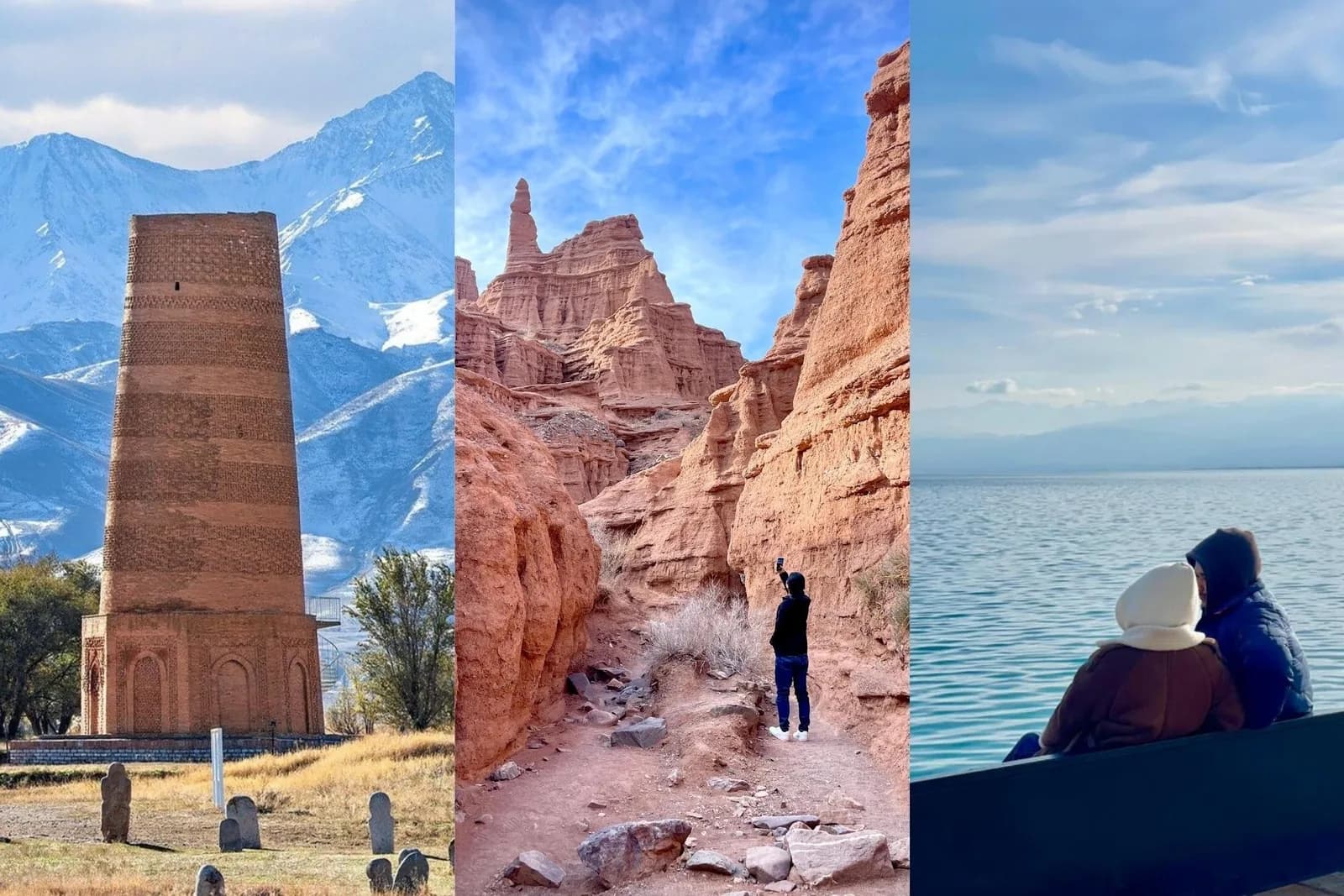
Kyrgyzstan's bestsellers
The experiences travelers book most, across the country
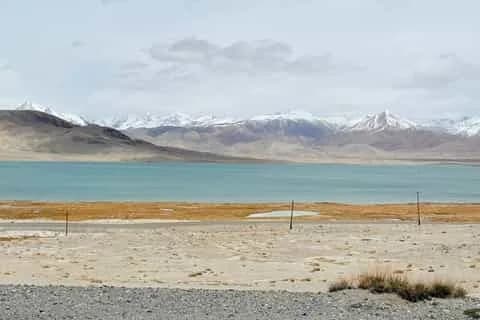
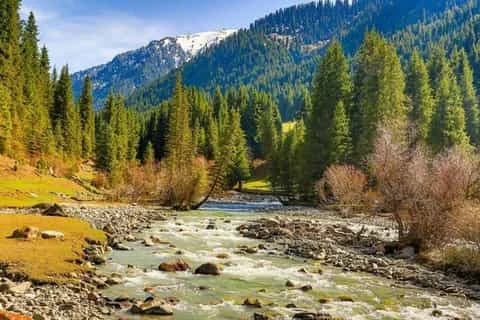
Keep reading
Self-Guided Treks in Kyrgyzstan: Routes & How-To
Yes, you can trek Kyrgyzstan without a guide. The best self-guided routes, the ones to skip, and the maps, water and safety logistics that make it work.
By TiK Editors12 min read
Uchitel Peak: Your First 4,000m Climb (2026)
Pik Uchitel (~4,400-4,600 m) in Ala-Archa is the classic first summit for fit hikers new to mountaineering: route, gear, season and acclimatisation.
By TiK Editors8 min read
Tian Shan Traverse: Bikepacking Kyrgyzstan
The Tian Shan Traverse is a self-supported, mostly off-road bikepacking route of about 1,000 km across the high Kyrgyz mountains. Here's how to plan it.
By TiK Editors9 min read