 Image via GetYourGuide
Family Travel in Kyrgyzstan: A Parent's Guide
Kyrgyzstan with kids is easier than it sounds: safe, cheap, and built around horses, yurts and lakes children love. Here is how to do it well.
Book it on This is Kyrgyzstan
Turn this guide into a trip
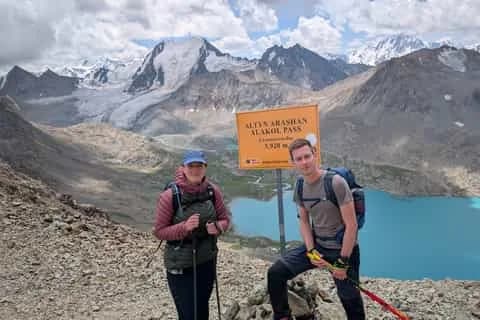
Kyrgyzstan is a genuinely good place to travel with children, and an underrated one. It is safe, it is cheap, and its nomad culture gives kids exactly the things they love: horses, yurts, golden eagles, huge lakes to swim in and space to run. Families are welcomed warmly here, and children open doors that adults travelling alone never get through. The real difficulties are logistical rather than dangerous: long mountain drives, thin high-altitude air at places like Song-Köl (3,016 m), basic facilities once you leave the towns, and patchy medical care outside Bishkek. Plan around those and it works beautifully.
This guide covers what makes it work, the honest challenges, the best activities and where to do them, a workable route and pace, which ages suit what, and the practical health, food and packing side. For the wider picture start with our Kyrgyzstan travel guide.
Why Kyrgyzstan works with kids
The first reason is safety. On the published evidence Kyrgyzstan is one of the safer countries in Central Asia for visitors, with no anti-travel advisory zones anywhere in the country as of 2026. Crime is not the concern; the honest risks are road traffic and mountain weather. That makes it far less stressful with children than the reputation of "Central Asia" suggests. If safety is your sticking point, read our fuller take on whether Kyrgyzstan is safe.
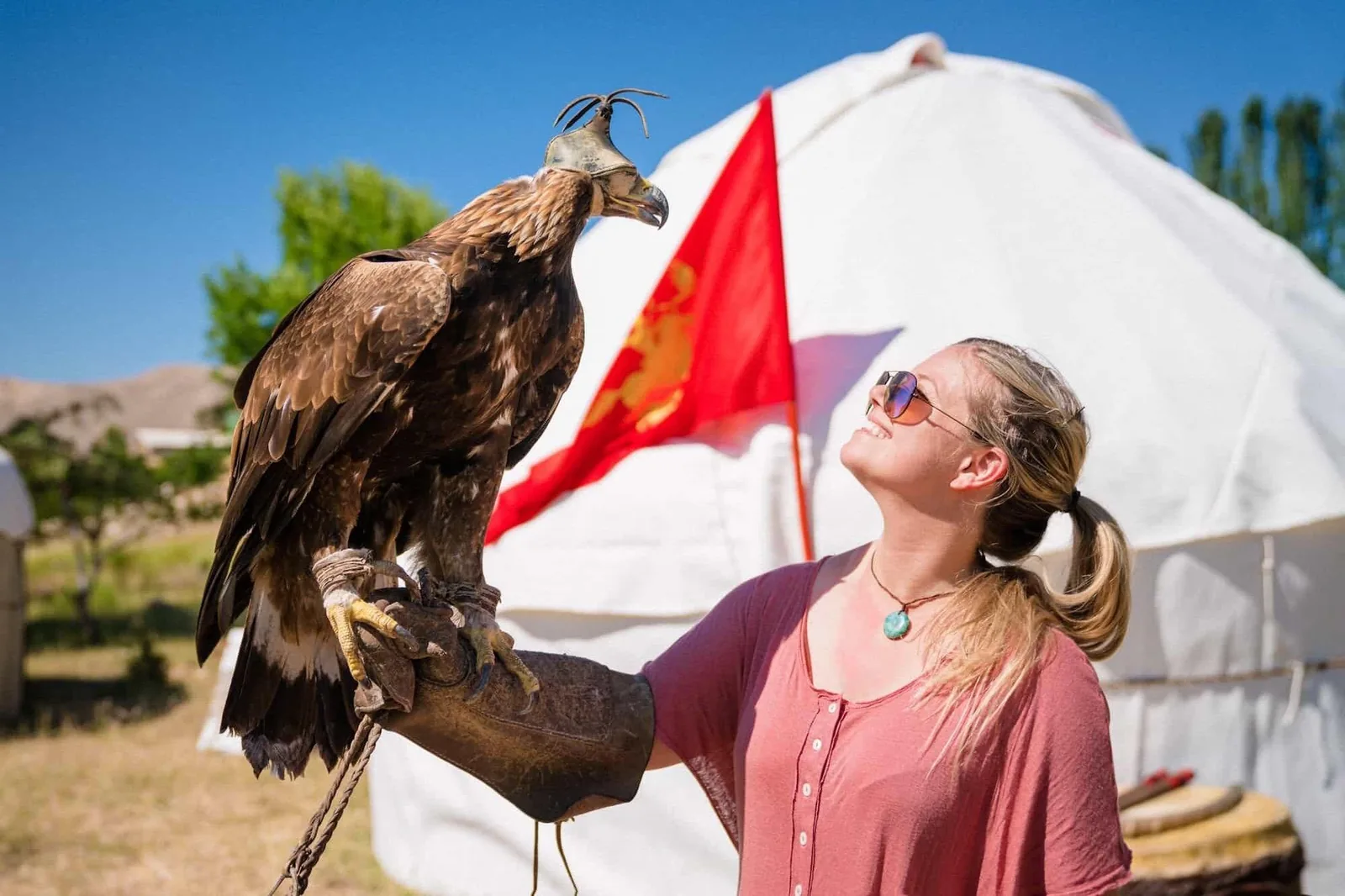
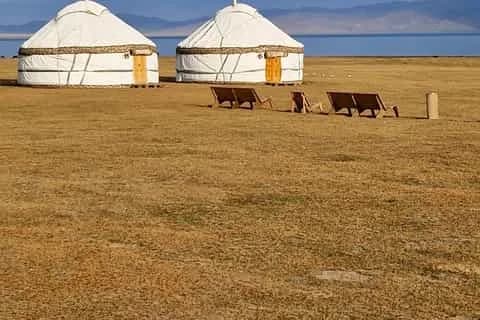
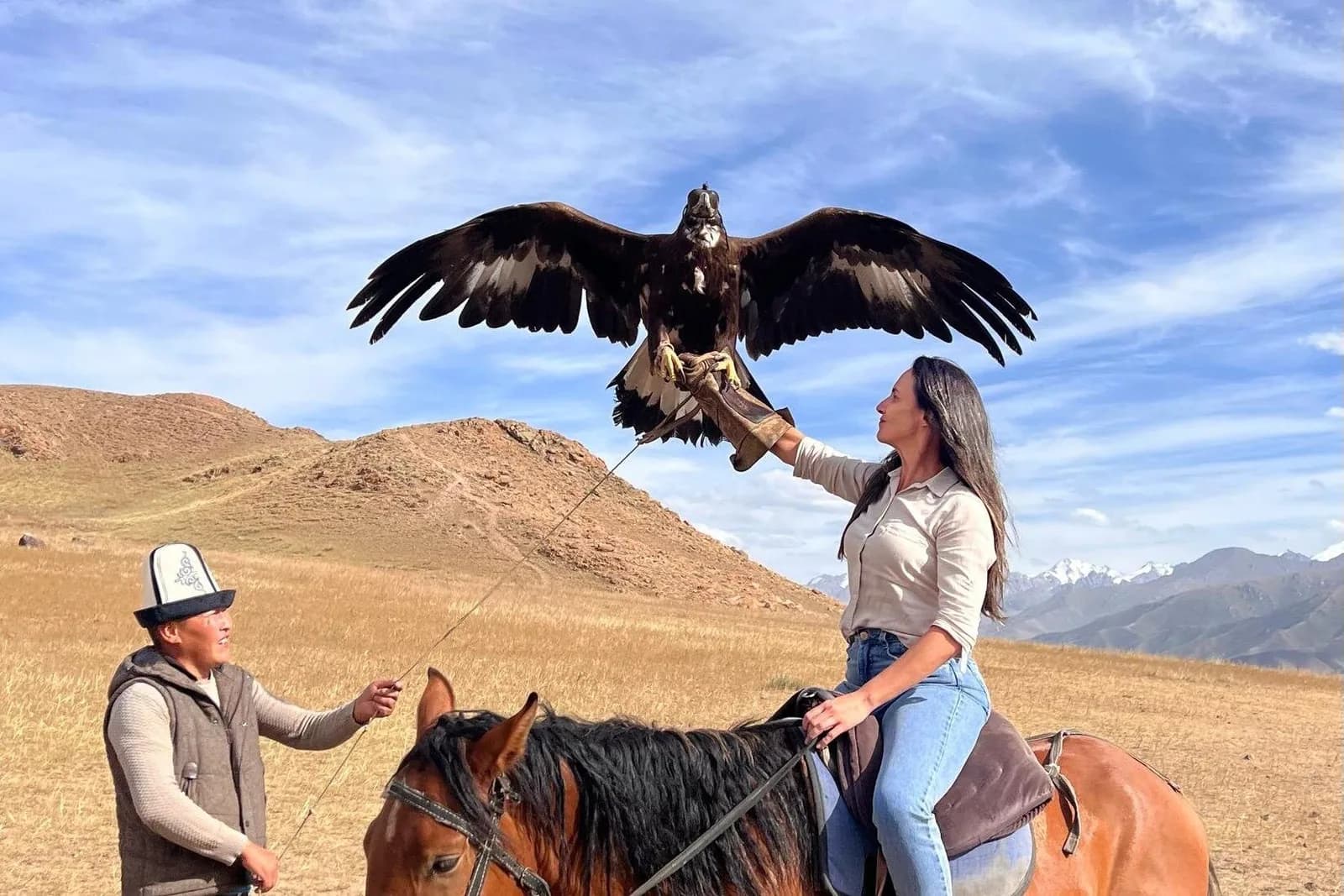
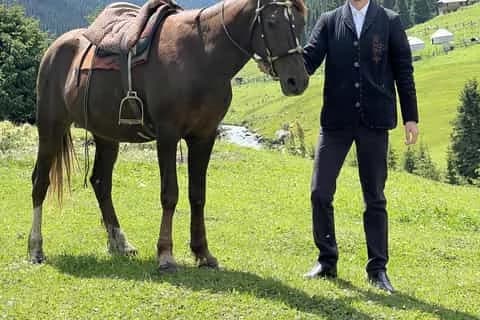
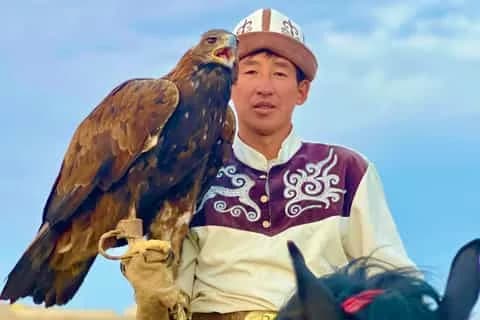
The second is culture that children instinctively get. A horse is the organising fact of Kyrgyz life, not a tourist prop, and kids from about eight ride routinely on a led horse. A night in a yurt (boz-üy) is a genuine adventure: sleeping on floor mattresses around a stove, the Milky Way overhead, horses grazing outside. Eagle hunters demonstrate their birds on the Issyk-Köl shore. None of this is staged for tourists in the way it can feel elsewhere.
The third is cost. A homestay is roughly $5–15 a night; a yurt camp with three meals runs $15 upward; a flight across the country is $35–40. Food is cheap, portions are large, and Kyrgyz families dote on children as a matter of course. Your money goes a long way, and much of it goes straight to the families hosting you.
The honest challenges
Long drives. Kyrgyzstan is mountainous and distances that look short take hours. Roads are winding, and road traffic is the single biggest real hazard in the country. Travel by day, never with a driver who is drunk or exhausted, and buy out the spare seats so children have room. For longer hops, take the 40-minute Bishkek–Osh flight over the 10–12 hour drive.
Altitude. This is the thing families most underestimate. The classic Bishkek-to-Song-Köl trip takes you from 800 m to sleeping at 3,016 m in about a day, which is exactly the profile that produces altitude sickness. Adults get a headache and a bad night; the problem with young children is that they cannot always tell you what is wrong. Build in an acclimatisation night at Kochkor (~1,800 m) or Naryn (~2,000 m) first, and think hard before taking under-fives to sleep above 3,000 m at all. Our altitude sickness guide explains the warning signs.
Basic facilities. Yurt camps and rural homestays mean pit latrines 30–50 m away, no showers at most jailoo camps, and a stove that dies overnight so the yurt is cold by 5 a.m. There is usually no mobile signal, no electricity beyond a couple of generator hours, and no shop. This is part of the charm and part of the challenge; decide honestly how much your children (and you) can absorb.
Medical care and food variety. Serious medical care effectively means Bishkek, where private clinics used by expats are reasonable; elsewhere facilities are basic and the correct response to anything serious is evacuation to the capital. Food leans heavily on meat, noodles, bread and dairy. Fussy eaters manage on plov, laghman, bread, eggs and fruit, but variety is limited and vegetarian options are repetitive.
Best family activities and where
| Activity | Where | Best ages | Notes |
|---|---|---|---|
| Lake swimming & beaches | Cholpon-Ata, Issyk-Köl north shore | All ages | Cold water, no lifeguards, strong winds — supervise closely |
| Easy valley walks | Ala-Archa, 40 min from Bishkek | 4+ | Riverside paths flat; waterfall hike better for 8+ |
| A yurt night | Chong-Kemin, Suusamyr (lower) or Song-Köl | 5+ (lower camps for under-5s) | Cold nights, floor beds, basic toilets |
| Gentle horse riding | Kyzart, Jyrgalan, Bokonbaevo | 8+ solo; younger led/doubled | Helmets rarely provided — bring your own |
| Eagle-hunting demo | Bokonbaevo, Issyk-Köl south shore | All ages | Short, visual, no walking required |
| Ruh Ordo cultural park | Cholpon-Ata | 5+ | Lakeside chapels, sculptures, easy stroll |
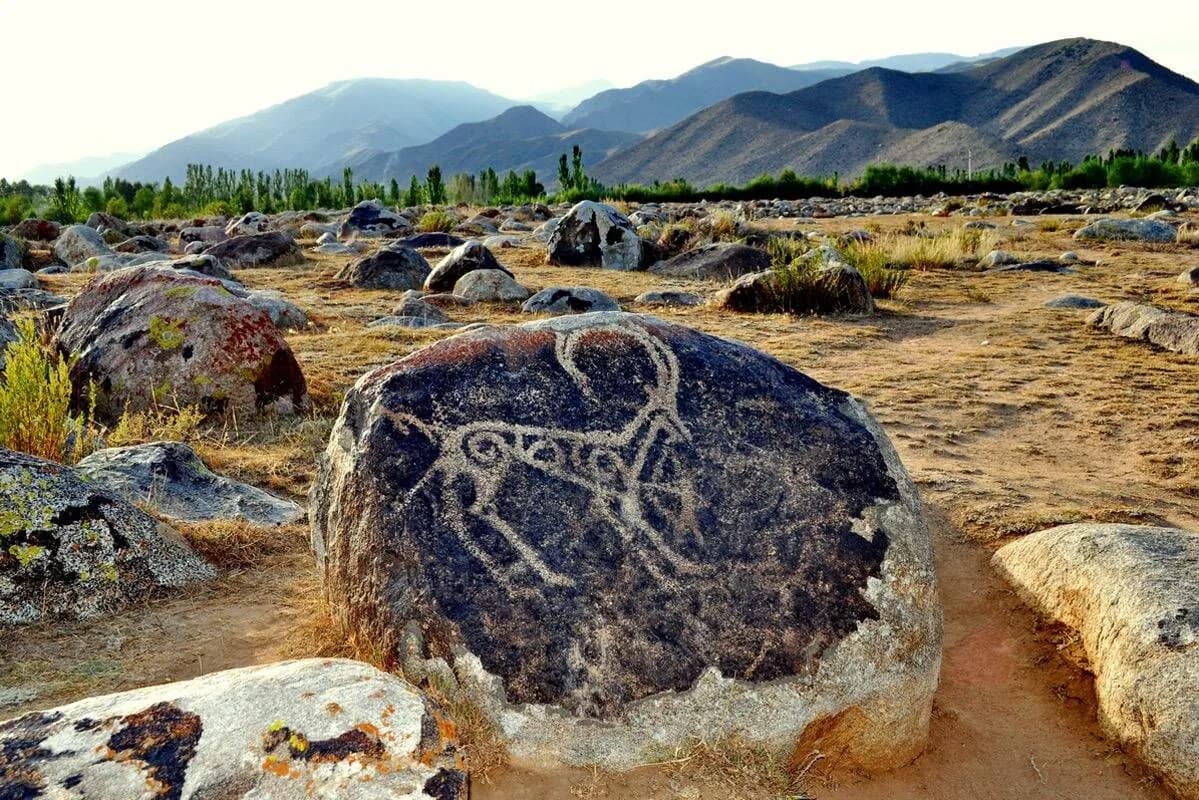
| Petroglyph field | Cholpon-Ata | 6+ | Kids enjoy spotting animal carvings among the boulders |
| Beginner skiing | Karakol ski base | 5+ | Winter only; gentle nursery slopes, day pass ~$15 |
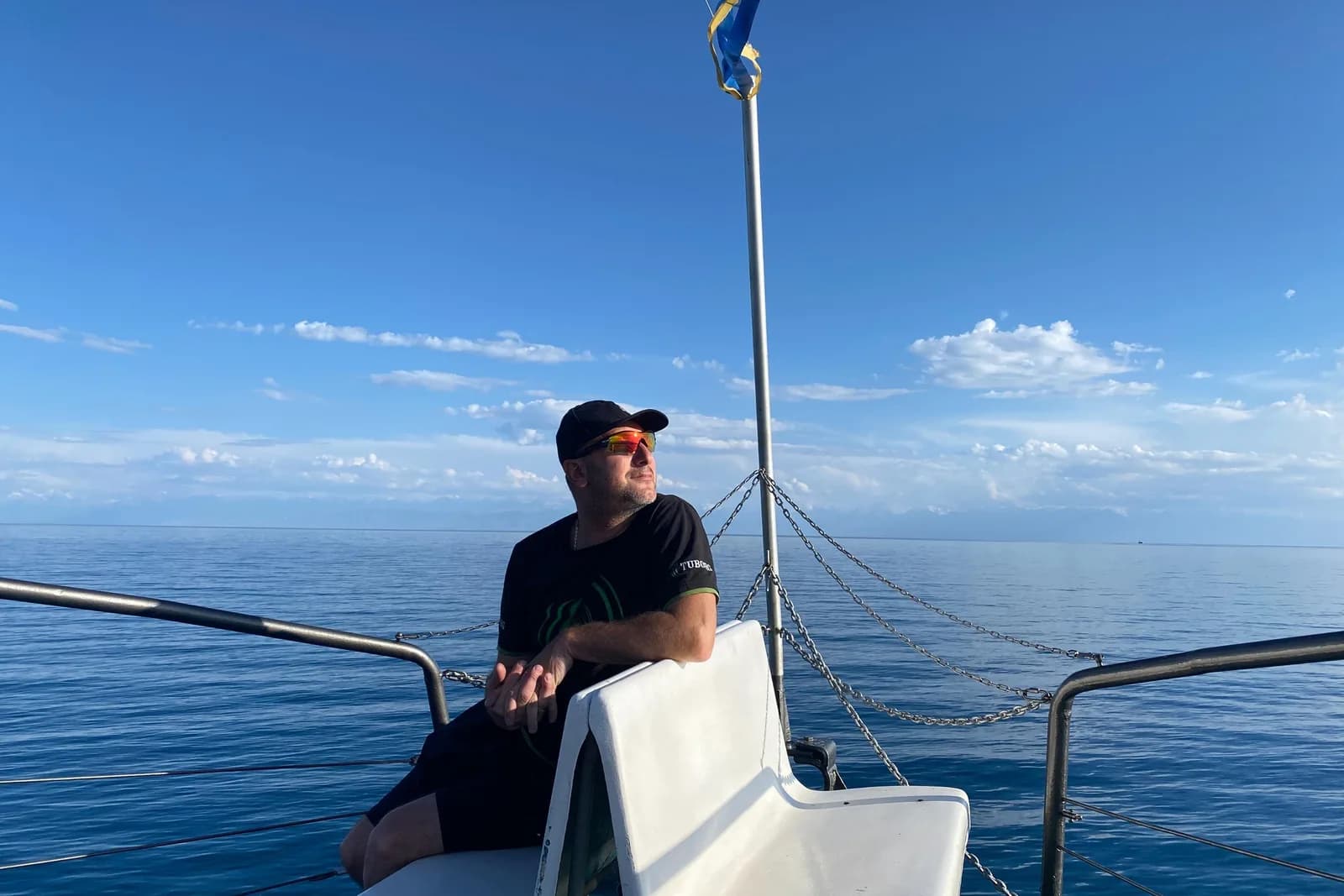
Issyk-Köl beaches. The lake is the natural centre of a family trip: at 1,607 m it is warm enough to swim in July and August, and Cholpon-Ata on the north shore has the resorts, beaches and easiest access. Two safety points matter. The water is cold below the surface, the offshore winds are strong, there are no lifeguards on most beaches, and drownings happen every summer. Keep young children within arm's reach. Our Lake Issyk-Köl guide covers the shore in detail.
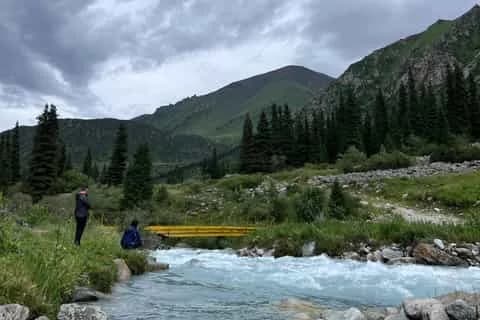
Ala-Archa. The easiest big-nature day out with kids is Ala-Archa national park, about 40 minutes from Bishkek. The lower valley has flat riverside walking suitable for small legs; the climb to the waterfall suits confident eight-year-olds and up.
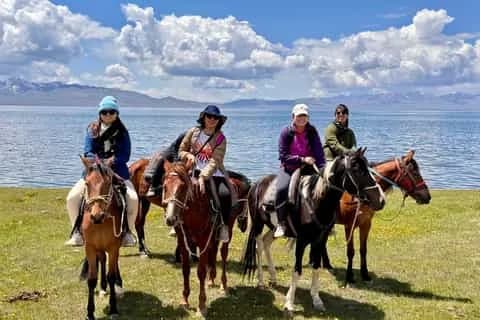
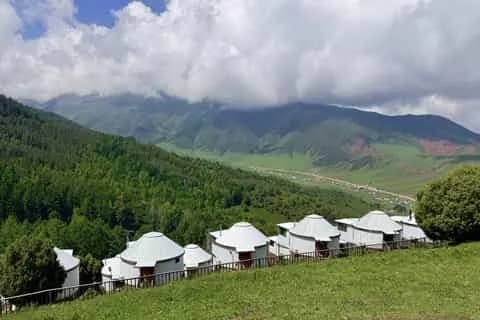
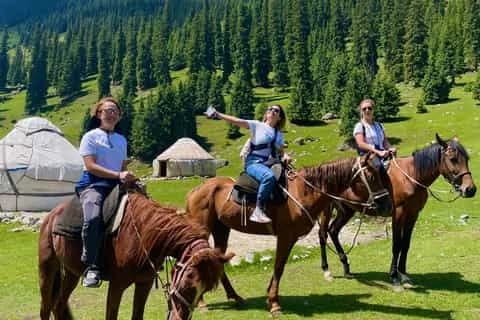
A yurt night and a horse ride. These are the memories children keep. For a first yurt night with young kids, a lower camp — Chong-Kemin (the easiest jailoo from Bishkek) or Suusamyr at 2,200–2,500 m — is gentler than Song-Köl and skips the altitude gamble. For riding, an hour on a led horse at Bokonbaevo or a short trip at Jyrgalan beats committing to a multi-day trek. If you want a proper saddle day, read our horse trekking guide first.
Eagles, culture and winter. Bokonbaevo on the south shore is the home of the eagle hunters, and a demonstration with a golden eagle is short, spectacular and needs no hiking — ideal for restless children. At Cholpon-Ata, Ruh Ordo is an easy lakeside cultural park, and the nearby petroglyph field turns into a treasure hunt for animal carvings. In winter, the Karakol ski base has gentle nursery slopes and cheap passes, making it a plausible family ski week.
A family-friendly route and pace
The cardinal rule is to slow down. Two nights minimum per base, no more than one big drive every other day, and an afternoon of nothing built into each stop. A relaxed 8–10 day loop from Bishkek works well:
| Days | Base | Doing what |
|---|---|---|
| 1–2 | Bishkek | Settle in, Ala-Archa day walk, Osh Bazaar, gentle acclimatising |
| 3–4 | Cholpon-Ata (Issyk-Köl) | Beach days, Ruh Ordo, petroglyphs, eagle demo at Bokonbaevo |
| 5–6 | Karakol | Sunday animal market, easy Jyrgalan valley walk or short ride |
| 7 | Kochkor / Chong-Kemin | Acclimatising night before higher ground |
| 8–9 | A lower jailoo or, for older kids, Song-Köl | Yurt night, horses, stars |
| 10 | Back to Bishkek | Long drive day, fly home |
Families with under-fives should treat Song-Köl as optional and swap in a lower yurt camp. Families with teenagers can add the Ala-Köl area or a longer ride. Either way, resist the urge to tick off the whole country in a fortnight.
Which ages suit what
Babies and toddlers (0–4). Doable but demanding: choose lake and city bases, keep below 2,500 m, and skip long jailoo drives. Bring your own car seat, as they are not standard in hired cars or taxis.
Young children (5–8). The sweet spot for the soft version of Kyrgyzstan — beaches, easy valley walks, a lower yurt night, led pony rides, eagle demos.
Older children (9–12). Can ride a led or quiet horse for a couple of hours, handle a Song-Köl overnight with acclimatisation, and manage the waterfall hikes.
Teenagers. Ready for a genuine short horse trek, longer day hikes and the altitude that comes with them, provided you build the ascent gradually.
Health, food and what to pack
Tap water is not reliably safe — boil, filter or buy bottled, and be strict about it with children, since giardia and traveller's diarrhoea are the routine complaints. Clear mountain streams below grazing pastures are not safe either. Unpasteurised dairy is everywhere (kymyz, fresh cream, cheese) and carries a small risk; let children try a sip of kymyz if they want to, but do not make it a staple.
Dogs are the other kids-specific concern. Free-roaming village and shepherd dogs are common, Kyrgyzstan is a rabies-risk country, and children are bitten more than adults. Teach them not to run from or approach dogs, and treat any bite or scratch seriously: wash for 15 minutes with soap and water and seek post-exposure treatment urgently. Discuss pre-exposure rabies vaccination with a travel clinic 4–6 weeks before you go, along with the routine schedule and hepatitis A.
The sun at altitude is fierce, so high-factor sunscreen, brimmed hats and good sunglasses are essential, not optional. Pack a proper first-aid kit — rehydration salts, child paracetamol, plasters and anti-diarrhoeal — because rural pharmacies are limited. Bring warm layers and hats even in July for yurt nights; the cold at 3,000 m after dark is the thing families most often get wrong. And buy travel insurance that explicitly covers your children for horse riding and your maximum altitude, plus medical evacuation.
Where to stay
For most of a family trip, guesthouses and homestays are the right choice: cheap, warm, family-run, and the surest way for your children to meet Kyrgyz children. No advance booking is needed even in peak season — there is always space — with the single exception of car and motorbike rental, which does sell out in summer. Booking, where you do it ahead, is usually by WhatsApp rather than a website.
For a softer landing, Cholpon-Ata and the Issyk-Köl north shore have actual resorts with pools and seated toilets, which are worth it for a first night or with very young children. For the yurt experience, a CBT- or DMO-coordinated camp — with a fixed price, some English and an actual reservation — is the best default for families over a truly authentic but unpredictable family jailoo. When you book, ask directly: how many yurts, is there a generator, is there a shower, and how far is the toilet.
Kyrgyzstan rewards families who go slowly, stay low with the little ones, and lean into the horses, lakes and yurts rather than racing between them. Start planning around the lake with our Issyk-Köl region hub, and build the rest of the trip out from there.
Chat with a real person — free
Seif and the team reply on WhatsApp 24/7 — trip questions, custom plans and booking help.
Ask Seif on WhatsAppCommon questions
Is Kyrgyzstan safe for families with children?
Yes. Kyrgyzstan is one of the safer countries in Central Asia for visitors, with no anti-travel advisory zones anywhere in the country as of 2026, and crime is not the main concern. The genuine risks with children are road traffic, mountain weather and altitude rather than personal safety. Travel by day, use app taxis like Yandex Go, and supervise closely near the lake and around free-roaming dogs.
What is the best age to take kids to Kyrgyzstan?
Five to twelve is the sweet spot. Children of five to eight enjoy the soft version — beaches, easy walks, led pony rides and eagle demos — while nine to twelve can manage a couple of hours on a horse and a Song-Köl overnight with proper acclimatisation. Babies and toddlers are doable if you stay below 2,500 m and avoid long drives. Teenagers can handle a real short horse trek.
Is altitude a problem for young children in Kyrgyzstan?
It can be. Song-Köl sits at 3,016 m and the standard trip climbs there from 800 m in a day, which is exactly what causes altitude sickness. The difficulty with young children is that they cannot always describe their symptoms. Add an acclimatisation night at Kochkor or Naryn first, and consider skipping the Song-Köl overnight with under-fives in favour of a lower yurt camp.
Can children go horse riding in Kyrgyzstan?
Yes, and it is a highlight. Children from about eight ride routinely on a led or quiet horse, and younger ones can ride doubled with an adult or a guide. Helmets are rarely provided, so bring your own if you want one. For small children, an hour's led ride at Bokonbaevo or Jyrgalan is far better than committing to a multi-day trek across high passes.
Where are the best family activities in Kyrgyzstan?
The Issyk-Köl shore is the natural base: swimming and beaches at Cholpon-Ata, the Ruh Ordo cultural park, a petroglyph field kids can explore, and eagle-hunting demonstrations at Bokonbaevo. Near Bishkek, Ala-Archa offers easy valley walks. A yurt night and a gentle horse ride are the memories children keep, and Karakol has beginner ski slopes in winter.
Is a yurt stay suitable for families?
Yes, and children love it, but know what you are getting: floor mattresses around a stove that dies overnight, pit toilets 30–50 m away, usually no shower, and cold nights even in July. Bring warm layers, hats and a power bank. For a first yurt night with young kids, choose a lower camp like Chong-Kemin or Suusamyr rather than Song-Köl at 3,016 m.
How much does a family trip to Kyrgyzstan cost?
It is one of the cheapest adventure destinations for families. Homestays run roughly $5–15 a night, yurt camps with three meals from about $15 per person, and the Bishkek–Osh flight is $35–40. Food is inexpensive and portions are generous. At around 87–88 som to the US dollar, day-to-day costs are low, and much of your money goes straight to host families.
What should we pack for kids in Kyrgyzstan?
Warm layers and hats for yurt nights even in summer, high-factor sunscreen and sunglasses for fierce altitude sun, and a full first-aid kit with rehydration salts and child paracetamol, since rural pharmacies are limited. Bring your own car seat, as they are not standard in hired cars, plus water purification and any medicines your children rely on. See our packing list for the full rundown.
Do we need to book accommodation in advance?
Usually no. Guesthouses, homestays and yurt camps almost always have space even in peak summer, and booking is typically done by WhatsApp rather than online. The one exception is car and motorbike rental, which does sell out in July and August and should be reserved ahead. For a softer first night with young children, the Cholpon-Ata resorts are worth pre-booking.
Book it on This is Kyrgyzstan
Turn this guide into a trip
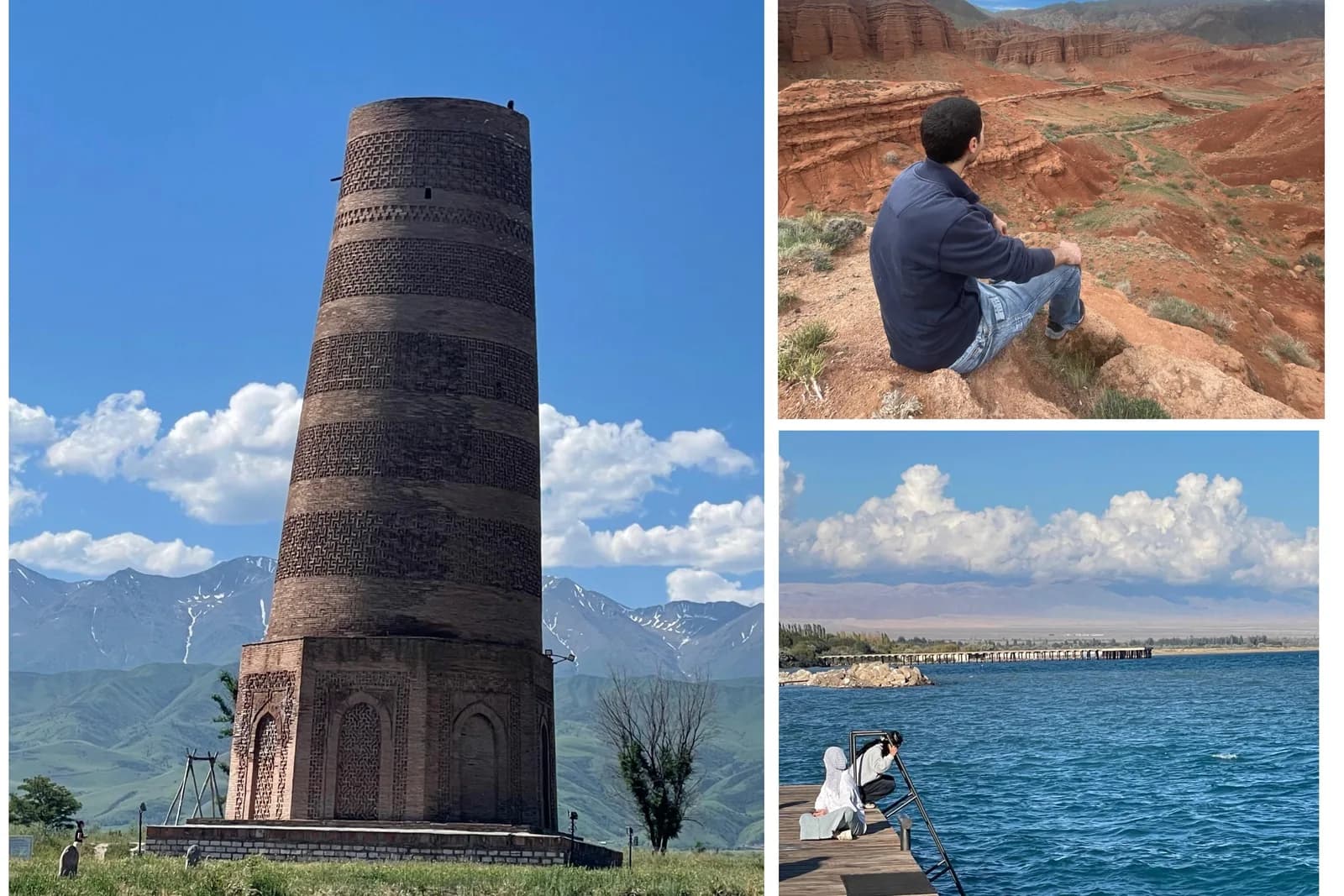
Kyrgyzstan's bestsellers
The experiences travelers book most, across the country
Keep reading
Self-Guided Treks in Kyrgyzstan: Routes & How-To
Yes, you can trek Kyrgyzstan without a guide. The best self-guided routes, the ones to skip, and the maps, water and safety logistics that make it work.
By TiK Editors12 min read
Uchitel Peak: Your First 4,000m Climb (2026)
Pik Uchitel (~4,400-4,600 m) in Ala-Archa is the classic first summit for fit hikers new to mountaineering: route, gear, season and acclimatisation.
By TiK Editors8 min read
Tian Shan Traverse: Bikepacking Kyrgyzstan
The Tian Shan Traverse is a self-supported, mostly off-road bikepacking route of about 1,000 km across the high Kyrgyz mountains. Here's how to plan it.
By TiK Editors9 min read