 Image via GetYourGuide
Money in Kyrgyzstan: Cash, Cards & ATMs (2026)
How money actually works in Kyrgyzstan: the som, where cards and ATMs work, exchanging cash, tipping, and how much to carry on a trek.
Book it on This is Kyrgyzstan
Turn this guide into a trip
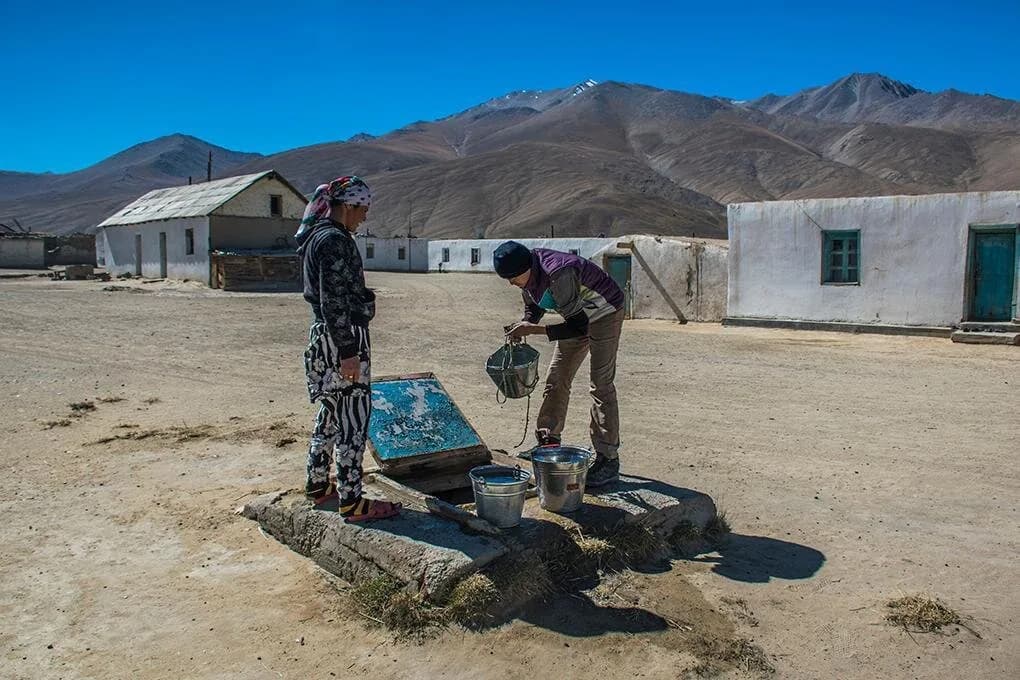
Kyrgyzstan runs on cash. The currency is the Kyrgyz som (KGS), and while cards and contactless work fine in Bishkek and Osh hotels, city supermarkets and mid-range restaurants, they fail the moment you leave the pavement: villages, homestays, bazaars, yurt camps and mountain treks are cash-only. The single most important habit here is to draw a fat cash float in a city before any trip into the mountains, because there are no ATMs at Song-Köl, Tash Rabat or on the passes. At roughly 87-88 som to the US dollar (about 102 to the euro), your money goes a long way; this guide covers how the system works, not how much a trip costs. For trip totals, see our cost and budget guide.
The Kyrgyz som at a glance
The som (ISO code KGS, written as a lowercase с or сом) is the national currency, technically divided into 100 tyiyn, though tyiyn have effectively vanished from circulation. As of late August 2026 the National Bank rate is about 87.45 som to US$1 and 102 som to €1; treat 87-88 to the dollar as your working figure and expect small daily movement. One useful anchor: 1,000 som is roughly US$11.40 or €9.80. You may see a 2026 guide or two quoting 95-plus som to the dollar, which is stale and around 9% off the official rate, so ignore it and check a live rate on the day.
Banknotes come in 20, 50, 100, 200, 500, 1,000 and 5,000 som; coins in 1, 3, 5 and 10 som. The 5,000 note is the awkward one, hard to break outside Bishkek supermarkets and banks, so whenever you exchange or withdraw, ask for a stack of 200s and 500s. Small vendors, marshrutka drivers and homestay hosts rarely have change for a large note. One more thing: the som is a fairly closed currency and near-worthless once you leave Central Asia, so spend or exchange your leftover notes before you fly home.
Cash versus card: the honest picture
Kyrgyzstan is quietly two economies at once. To locals it looks almost cashless, with QR codes and phone wallets everywhere; to a visitor it is overwhelmingly cash-only, because those wallets are closed to foreigners (more on that below). Cards work in a predictable set of places and fail everywhere else.
Where cards and contactless are reliable: Bishkek hotels and mid- to upper-range restaurants, supermarkets, chain cafes and larger shops, with acceptance growing in Osh and Karakol. Where you must assume cash only: bazaars (including Osh Bazaar in Bishkek and Jayma Bazaar in Osh), rural areas and villages, guesthouses and homestays, all Community-Based Tourism bookings, jailoo and yurt camps, Song-Köl, Tash Rabat, Sary-Tash, Arslanbob, Jyrgalan, Naryn's villages, marshrutkas, shared taxis, horse hire and national-park entrance kiosks.
A few card facts worth knowing. Visa is the most reliably accepted international scheme; Mastercard acceptance is patchier; American Express, Maestro, JCB and Discover are essentially not accepted anywhere. UnionPay works at some ATMs. The local card scheme is Elcart, a domestic-only system used for salaries, so a terminal that only reads Elcart will simply refuse your Visa. The practical rule: carry two cards from different banks, because single-network outages are common, and never rely on plastic outside the cities.
| Payment method | Where it works | Notes |
|---|---|---|
| Cash (som) | Everywhere, nationwide | The default; essential outside cities |
| Visa card | Bishkek/Osh/Karakol hotels, supermarkets, better restaurants | Most reliable international scheme; useless in villages |
| Mastercard | Same city venues, less consistently | Acceptance patchier than Visa; carry a Visa too |
| Contactless / tap | City POS terminals only | Works where cards work; not in bazaars or rural areas |
| Amex / Maestro / JCB | Almost nowhere | Do not rely on these at all |
| Local wallets (MBank, O!Dengi, Elsom) | Dominant among locals | Need a Kyrgyz SIM, bank account and ID; closed to tourists |
| US dollars / euros cash | Exchange booths, some big-ticket deals | Bring clean, large, post-2009 notes to change into som |
ATMs: plentiful in cities, absent in the mountains
ATM coverage is dense in Bishkek, Osh and Karakol, and generally reliable in Cholpon-Ata (in season), Naryn, Jalal-Abad, Talas and Tokmok, with limited machines in Kochkor. Beyond that, assume nothing: there are effectively no ATMs at Song-Köl, Tash Rabat, Sary-Tash, Jyrgalan, Altyn-Arashan, Kel-Suu or on the jailoo, and Arslanbob's are unreliable. This is why the cardinal rule of money here is to withdraw your mountain cash in the last city you pass through.
For foreign cards, banks named as the friendlier options include Demir Bank, KICB, Optima and RSK, with Demir and KICB taking both Visa and Mastercard. Sources genuinely disagree on fees: one specialist rates Kompanion, Eldik and Optima as cheaper for foreign cards and flags MBank and Demir as expensive, which contradicts other recommendations, so the sane move is to test a small withdrawal first and see what you are charged. Withdrawal limits also vary by machine and reporting, somewhere between 20,000 and 50,000 som per transaction; plan on getting roughly 20,000-25,000 som at a time and expect to make several pulls to build a real float.
On fees: some machines are free, others charge 150-800 som per withdrawal (most commonly around 500 som, about US$5.70), and your home bank may add its own fee on top. Two habits save you money and grief. First, when the ATM offers to convert to your home currency, always decline conversion and let your own bank do the exchange, because dynamic currency conversion bakes in a hidden markup. Second, use machines inside bank branches or hotel lobbies rather than isolated street ATMs at night. A handful of machines even dispense US dollars if you need to top up hard currency.
Exchanging cash
Bring some clean hard currency as a backstop. US dollars and euros in large, unmarked, crisp denominations exchange most easily; torn notes and US bills printed before 2009 are frequently refused outright, so pick through your cash before you travel. Licensed street exchange offices, marked обмен валют (obmen valyut), give better rates than banks, and both beat the counters at Manas airport, where you should change only enough to reach town. Near the Kazakh and Russian borders you can also move tenge and roubles, but for the rest of the country dollars or euros are cleaner.
Mobile payments and why they won't help you
Domestic phone payments have leapfrogged cards for Kyrgyz people. MBank (Bakai Bank's app) is the dominant consumer wallet, alongside O!Dengi, Elsom and Balance.kg, and in small shops and taxis a QR transfer is now more normal than a card tap. The catch for visitors is fundamental: these apps are built around a Kyrgyz mobile number, a local bank account and usually a Kyrgyz ID, so a short-stay tourist realistically cannot open or use them. Expect a driver or guesthouse owner to say "just transfer me" and be genuinely surprised you can't. The answer is always the same: carry cash. PayPal exists in the country but is not a point-of-sale option.
Tipping and bargaining
Tipping is not a Kyrgyz cultural expectation. It is a recent, urban, tourist-driven habit, and nobody outside a city restaurant is waiting for it. Many Bishkek and tourist-facing restaurants already add a 10-15% service charge, so check the bill before adding more. Where service isn't included, around 10% in a good restaurant and rounding up in a simple cafe is plenty. For a multi-day trek, tipping your guide and driver roughly 10% of the trip cost is normal and appreciated; 50-100 som is a fair thank-you for a day guide. Homestay and yurt hosts don't expect tips at all; a small gift, or simply paying for extra tea and kymyz, lands better than cash.
Bargaining has its place and its limits. Haggle at bazaars for souvenirs, felt goods, kalpaks and carpets, and always agree a street-taxi fare before you get in. Don't haggle over food in shops and cafes, marshrutka or shared-taxi seat fares (these are fixed and known), CBT and guesthouse rates, park entrance fees, or app-based taxi fares. Keep the tone friendly and low-key: hard haggling reads as rude, and you're realistically knocking 10-25% off an opening souvenir price, not halving it.
Scams, counterfeits and staying sensible
Kyrgyzstan is not a scam-heavy place, and violent crime against travellers is rare. The money pitfalls are mundane. Avoid any taxi driver who quotes a fare in US dollars, because the informal conversion rate they apply is punitive; agree som up front or use the Yandex Go or Namba Taxi apps. Decline dynamic currency conversion at ATMs and card terminals. Check notes you're handed in change for tears, since you'll struggle to spend a damaged note yourself. And use ATMs inside branches rather than lonely street machines, especially after dark. That is genuinely the extent of it.
How much cash to carry on a trek
For a multi-day trip into cash-only country, load up before you leave the last town with an ATM. A reasonable float for a multi-day rural excursion is 50,000-70,000 som (roughly US$570-800), covering yurt stays, meals, horse hire, park fees, drivers and a buffer for the extra tea, the eagle-hunting demo or the second night you decide to add. Split your cash between two places on your body and your bag, keep small notes handy for marshrutkas and kiosks, and treat your phone as a camera once you pass Kochkor or Karakol, because signal and payments both run out together. For how the transport side works, see getting around Kyrgyzstan; for the wider picture, the Kyrgyzstan travel guide and the visa and entry guide are the places to start planning.
Ready to plan the trip itself? Browse lakes and nature tours and build the mountain leg you'll be carrying all that cash for.
Chat with a real person — free
Seif and the team reply on WhatsApp 24/7 — trip questions, custom plans and booking help.
Ask Seif on WhatsAppCommon questions
What currency is used in Kyrgyzstan?
Kyrgyzstan uses the Kyrgyz som (ISO code KGS), written as с or сом. As of late August 2026 the rate is roughly 87-88 som to US$1 and about 102 som to €1, so 1,000 som is around US$11.40. Notes run from 20 to 5,000 som; the 5,000 note is hard to break outside Bishkek, so carry 200s and 500s. The som is near-worthless once you leave Central Asia, so spend it before flying home.
Can I use credit cards in Kyrgyzstan?
Only in the cities. Cards and contactless work in Bishkek and Osh hotels, supermarkets, chain cafes and mid- to upper-range restaurants, and increasingly in Karakol. Visa is the most reliable scheme, Mastercard is patchier, and Amex, Maestro and JCB are barely accepted. Everywhere else, including bazaars, homestays, yurt camps, marshrutkas and park gates, is strictly cash. Carry two cards from different banks and never rely on plastic outside the cities.
Are there ATMs in Kyrgyzstan?
Yes, densely in Bishkek, Osh and Karakol, and reliably in Cholpon-Ata (in season), Naryn, Jalal-Abad, Talas and Tokmok. There are effectively none at Song-Köl, Tash Rabat, Sary-Tash, Altyn-Arashan, Jyrgalan or on the jailoo. Demir, KICB, Optima and RSK are the more foreign-friendly banks. Withdraw your mountain cash in the last city you pass through, because you will not find a machine once you climb into the passes.
Should I bring US dollars or euros to Kyrgyzstan?
Bring some as a backstop. Clean, large, unmarked US dollar or euro notes exchange most easily at licensed street booths (обмен валют), which give better rates than banks or the airport. Torn notes and US bills printed before 2009 are often refused, so sort your cash before travelling. Near the Kazakh and Russian borders you can also exchange tenge and roubles, but dollars and euros work best countrywide.
How much cash should I carry for a multi-day trek?
Budget around 50,000-70,000 som (roughly US$570-800) for a multi-day rural trip and draw it before leaving the last town with an ATM. That covers yurt stays, meals, horse hire, park fees, your driver and a buffer for extras. There are no ATMs at Song-Köl or on the passes, cards are useless there, and mobile wallets are closed to tourists, so cash is your only option once you're in the mountains.
Do locals use mobile payments, and can tourists?
Locals use them constantly. MBank, O!Dengi, Elsom and Balance.kg dominate everyday payments, and QR transfers are common in small shops and taxis. But these apps require a Kyrgyz mobile number, a local bank account and usually a Kyrgyz ID, so a short-stay visitor cannot realistically use them. A host may ask you to "just transfer" and be surprised you can't. The answer is always cash.
Is tipping expected in Kyrgyzstan?
No, tipping is not a Kyrgyz cultural expectation, though it's a growing urban habit. Many Bishkek restaurants add a 10-15% service charge, so check the bill first. Where it isn't included, about 10% in a good restaurant or rounding up in a cafe is fine. Tip a trek guide and driver roughly 10% of the trip; homestay and yurt hosts don't expect tips, and a small gift lands better than cash.
Should I haggle in Kyrgyzstan?
In the right places. Bargain at bazaars for souvenirs, felt goods, kalpaks and carpets, and always agree a street-taxi fare before getting in. Don't haggle over shop and cafe food, marshrutka or shared-taxi seat fares, CBT and guesthouse rates, park fees, or app-based taxis, which are all fixed. Keep it friendly; hard haggling reads as rude, and you'll knock maybe 10-25% off an opening souvenir price, not half.
What money scams should I watch for?
Very few, as Kyrgyzstan is low-crime. Avoid taxi drivers who quote fares in US dollars, since their conversion rate is punitive; agree som first or use Yandex Go or Namba Taxi. Decline dynamic currency conversion at ATMs and card machines so your own bank sets the rate. Check notes in your change for tears, as damaged notes are hard to spend, and use ATMs inside bank branches rather than isolated street machines at night.
Book it on This is Kyrgyzstan
Turn this guide into a trip
Kyrgyzstan's bestsellers
The experiences travelers book most, across the country

Keep reading
Tian Shan Traverse: Bikepacking Kyrgyzstan
The Tian Shan Traverse is a self-supported, mostly off-road bikepacking route of about 1,000 km across the high Kyrgyz mountains. Here's how to plan it.
By TiK Editors9 min read
Boz-Uchuk Lakes Trek from Jyrgalan (2026)
A moderate 2–3 day trek to a string of alpine lakes above Jyrgalan — quieter than Karakol's classics, with community yurts, horses and clear DMO rates.
By TiK Editors8 min read
Self-Guided Treks in Kyrgyzstan: Routes & How-To
Yes, you can trek Kyrgyzstan without a guide. The best self-guided routes, the ones to skip, and the maps, water and safety logistics that make it work.
By TiK Editors12 min read