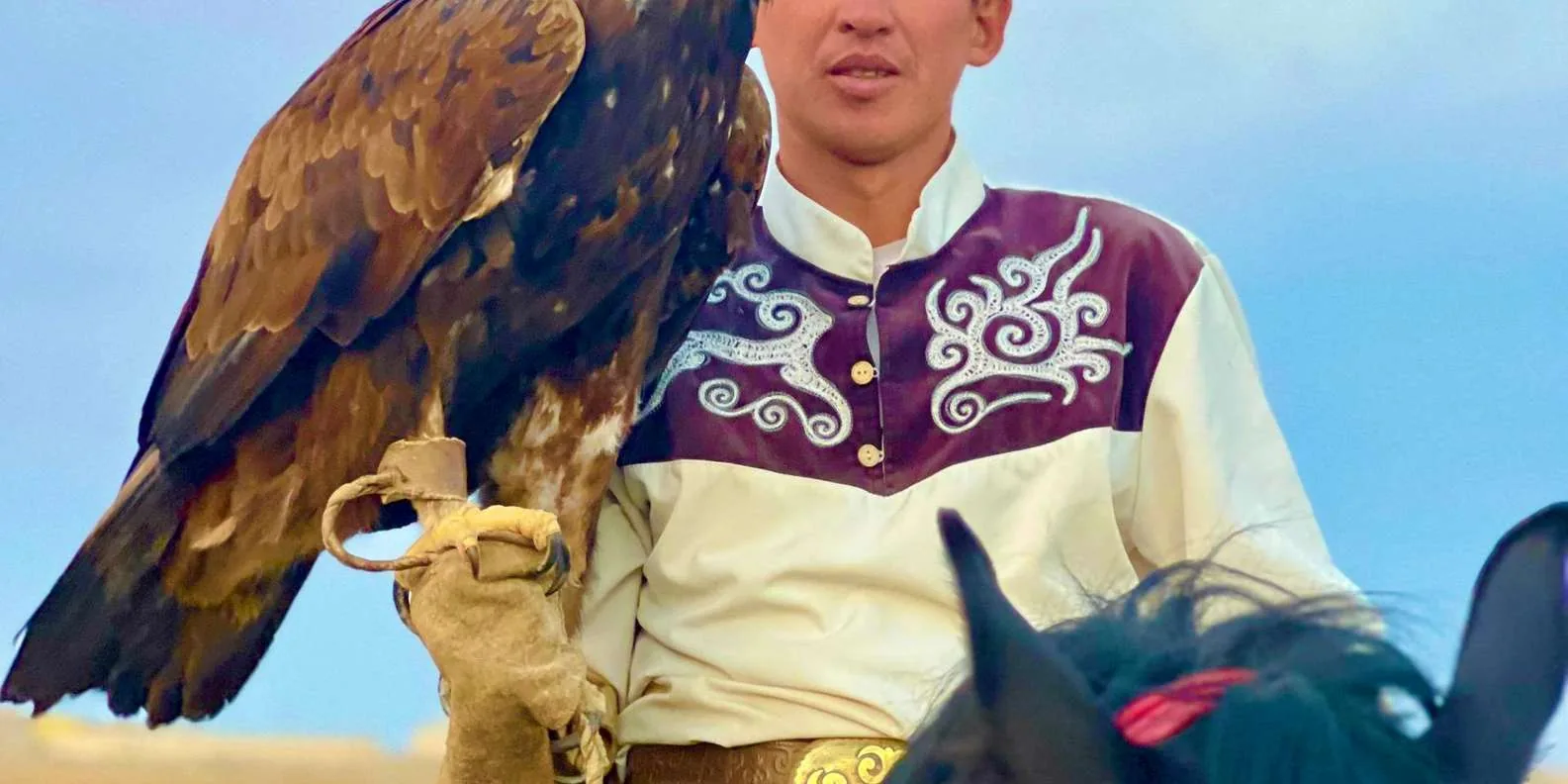
 Image via GetYourGuide
Eagle Hunting in Kyrgyzstan: How to See It
Kyrgyzstan's eagle hunters keep a centuries-old nomad skill alive. Where to see berkutchi on Issyk-Köl's south shore, what it costs, and how to do it right.
Book it on This is Kyrgyzstan
Turn this guide into a trip
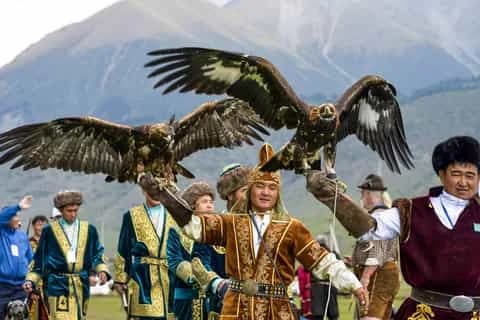


Kyrgyzstan is one of the last places on earth where you can watch a hunter send a trained golden eagle off the fist and call it back down a mountainside. The living tradition is called salbuurun, and the eagle hunter is a berkutchi. The reliable place to see it is around Bokonbayevo, on the quiet south shore of Lake Issyk-Köl, where several hunting families give demonstrations year-round for roughly 1,750–3,500 som ($20–40) a head. One honest caveat up front: real hunting happens in deep winter, so almost everything a summer visitor sees is a demonstration rather than a kill. That is fine, and it is real skill, as long as you know what you are looking at.
What eagle hunting actually is
The bird is the berkut, the golden eagle (Aquila chrysaetos). Hunters fly females, which are larger and more powerful; a working bird weighs around 5–7 kg and sits on a padded glove with a leather hood over its eyes until it is time to fly. The skill is old — the same steppe cultures that carved hunting scenes into the boulders above Cholpon-Ata were flying raptors thousands of years ago — and it survived collectivisation to become a point of national pride.
Eagle hunting is really one branch of a wider nomadic hunting craft, salbuurun, which also includes the taigan (the native Kyrgyz sighthound, a lean, feathered-tail mountain hound bred for high altitude), falcons, and dalba — lure-calling, where the hunter swings a lure and calls the bird down from a hillside. A festival or a Nomad Games arena will show all of these together; a village demonstration usually focuses on the eagle.
UNESCO context helps place it: falconry has been inscribed as "a living human heritage" since 2010, and Kyrgyzstan joined that multinational listing in 2021. So this is recognised heritage, not a roadside gimmick — though, as below, some roadside operators do turn it into one.
Where to see it
Bokonbayevo (Ton district, south shore of Issyk-Köl, about 1,650 m) is the hub. It is a working town of roughly 5,000 people with the Terskey Ala-Too rising behind it, and several resident berkutchi families give demonstrations to visitors. Book through the local Community Based Tourism (CBT) office or your guesthouse so the fee actually reaches the hunter rather than a middleman. Nearby Kyzyl-Tuu, the yurt-making village, often bundles an eagle demonstration with a yurt-building visit. Individual hunters also work out of Jeti-Ögüz and the Barskoon valley further east, usually combined with a gorge day trip, and Karakol operators can arrange demonstrations alongside trekking or winter activities.
| Where | When | What you see |
|---|---|---|
| Bokonbayevo (south shore) | Year-round; festival in August | Family berkutchi lure demonstrations, ~$20–40 pp |
| Kyzyl-Tuu village | Year-round, by arrangement | Yurt-making visit bundled with an eagle demo |
| Jeti-Ögüz / Barskoon | Year-round, by arrangement | Individual hunters, paired with a gorge day trip |
| Kyrchyn ethno-village | Nomad Games week (31 Aug–6 Sep 2026) | Full salbuurun: eagles, taigan hounds, falcons |
| On a real hunt | Winter (Nov–Feb) | The genuine article, pre-arranged, ~$50–80/day |
The south shore is the right base for this. It is drier, quieter and more culturally interesting than the resort-lined north coast; our Lake Issyk-Köl guide covers how the two shores differ, and the Cholpon-Ata guide handles the busier northern side if you are combining a beach stay with a hunting visit.
Festivals and the World Nomad Games
If you can time it, a festival concentrates dozens of hunters, hounds and horseback archers into one weekend. The main one on the south shore is usually called the Salbuurun or Birds of Prey festival, held around August near Bokonbayevo — in 2026 the ticketed festival day ran at roughly 2,600 som (about $30) including lunch. Exact dates and the host village shift year to year, and there are competing events under similar names, so confirm the date with CBT Bokonbayevo before you build a trip around it. Accommodation fills fast when it is on.
The bigger stage is the 6th World Nomad Games, 31 August–6 September 2026, which return to Kyrgyzstan after editions in Turkey and Kazakhstan. The eagle-hunting, falconry and hunting-with-dogs demonstrations happen at the Kyrchyn ethno-village, a temporary city of several hundred yurts inland from the north shore, while the horse sports run down at Cholpon-Ata. It is crowded and, in Games week, tangled up with an SCO summit and heavy security, but it is the single best concentration of salbuurun you will find. See the World Nomad Games guide for tickets, venues and how to get to Kyrchyn.
How a demonstration works — and what it costs
A typical session runs like this: the hunter carries the hooded eagle up a hillside on horseback or on foot, unhoods it, and lets it fly. Down in the valley an assistant drags a fox skin or swings a lure across the grass; the eagle drops, fast and low, strikes the lure, and is called back to the glove for a piece of meat. You get to hold nothing, but you stand close, the light on the south shore is superb, and a good hunter will talk you through the bird, the hood and the training.
Expect to pay around 1,750–3,500 som ($20–40) per person, depending on group size, how long the session runs and whether photography is included. Bring cash in small som notes; card payment in a village is not a given. Confirm the price when you book rather than on the hillside. For photographs, a 200–400 mm lens and a shutter of 1/1000 s or faster will freeze the wings; ask before you film, because some families limit video to avoid stressing the bird.
Real hunting versus the tourist show
Be clear-eyed about this and you will enjoy it more. Real hunting is a winter activity, roughly November to February, when there is snow to track on and the quarry — fox and hare, historically even wolf, corsac fox and marmot — is in prime coat. What a summer visitor sees is a demonstration: the bird flies to a lure or a dragged skin, nothing is killed, and it is not a hunt. That is not a con. The bird, the skill and the family lineage are all genuine, and the fee is a real income stream that keeps the practice alive between winters.
Joining a working hunt is possible but has to be arranged well in advance, only happens in winter, costs roughly 4,400–7,000 som ($50–80) a day, and means long cold hours on a hillside — often with no kill at all. Do it for the experience of the hunt, not the guarantee of a catch.
Watch for red flags that mark an exploitative set-up rather than a hunting family: a bird tethered and posed for photos all day at a lakeside beach or a roadside pull-in; several eagles and no obvious hunter; hoods left off for long stretches for the cameras; tourists handling the bird. A fair test is to ask two questions — does this eagle actually hunt in winter, and will the family release it back to the wild? A real berkutchi answers both without hesitation. Choose family-run experiences booked through CBT or a guesthouse over anything you are flagged down for on the road.
The eagle's life and the hunter's bond
Birds are traditionally taken as chicks or trapped young and trained over months — hood work, feeding by hand, and slow trust-building until the eagle will fly free and return. The partnership then lasts years. What sets the tradition apart from pure falconry-for-sport is the ending: a berkutchi is expected to release the bird back to the wild once its prime passes, commonly after somewhere in the region of a decade, so it can breed. Different families keep to different customs and no single figure is fixed, but the principle — that the eagle is a partner on loan from the mountains, not a possession — is consistent, and it is the heart of why the tradition is defensible.
Spare a thought for the taigan too. The native sighthound that works alongside the eagle in salbuurun is a distinct high-altitude breed and a genuine conservation concern, with only a small population left. A festival is one of the few places you will still see one worked.
Best season and how to book
For a demonstration, any time of year works, and the demonstrations run all year at Bokonbayevo. For festivals, aim for August. For a real hunt, you need winter — November to February — and a booking made weeks ahead. Note that late August and early September stack up: the tail of the Issyk-Köl summer season, the south-shore festivals and, in 2026, the World Nomad Games all fall together, so book accommodation early.
To arrange a village demonstration, contact CBT Bokonbayevo or your guesthouse one to two days ahead; from Karakol it is about 1.5–2 hours by marshrutka, or a private taxi for roughly 2,200–3,500 som ($25–40). New to the country's rhythms and logistics? Start with the Kyrgyzstan travel guide, and if you want to build the eagle demo into a wider south-shore loop of gorges and yurt camps, browse the culture experiences at our Issyk-Köl hub.
Chat with a real person — free
Seif and the team reply on WhatsApp 24/7 — trip questions, custom plans and booking help.
Ask Seif on WhatsAppCommon questions
Where is the best place to see eagle hunting in Kyrgyzstan?
Bokonbayevo, on the south shore of Lake Issyk-Köl, is the reliable hub. Several resident berkutchi (eagle-hunter) families give demonstrations year-round, usually for about $20–40 per person. Book through the local CBT office or your guesthouse. Individual hunters also work out of Kyzyl-Tuu, Jeti-Ögüz and Barskoon, and at the World Nomad Games the demonstrations run at the Kyrchyn ethno-village.
Is Kyrgyz eagle hunting real or just a show for tourists?
Both, and it helps to know the difference. Real hunting is a winter activity, roughly November to February, when there is snow and prime quarry. What summer visitors see is a demonstration: the eagle flies to a swung lure or a dragged fox skin, nothing is killed. The bird, the skill and the family tradition are genuine, and the fee keeps the practice alive between winters.
How much does an eagle-hunting demonstration cost?
Expect roughly 1,750–3,500 som ($20–40) per person for a demonstration, depending on group size, session length and photo permissions. Joining an actual winter hunt is more, around 4,400–7,000 som ($50–80) a day, and must be arranged in advance. Bring cash in small som notes and confirm the price when you book rather than on the day.
What is salbuurun?
Salbuurun is the broader Kyrgyz tradition of nomadic hunting that eagle hunting belongs to. It combines hunting with a trained golden eagle (burkut saluu), coursing with the native taigan sighthound, falconry, and dalba — lure-calling, where the hunter swings a lure to call the bird down from a hillside. Mounted archery is often part of it too. Festivals and the World Nomad Games show all of these together.
When is the best time to see eagle hunting?
For a demonstration, any time works, as Bokonbayevo runs them year-round. For a festival, aim for August, when the south-shore Salbuurun or Birds of Prey festival is usually held near Bokonbayevo. For real hunting, you need winter, roughly November to February. In 2026 the World Nomad Games (31 August–6 September) add a major eagle-hunting showcase at Kyrchyn.
How do I book an eagle-hunting experience?
Contact CBT Bokonbayevo or your guesthouse one to two days ahead, so the fee reaches the hunting family directly rather than a middleman. From Karakol, Bokonbayevo is about 1.5–2 hours by marshrutka or roughly $25–40 by private taxi. Carry cash in small som notes. For festivals, book well ahead — accommodation on the south shore fills quickly.
How should I tell an ethical eagle-hunting experience from an exploitative one?
Avoid a bird tethered and posed for photos all day at a beach or roadside, several eagles with no obvious hunter, hoods left off for long photo sessions, or tourists handling the bird. Ask whether the eagle actually hunts in winter and whether the family releases it back to the wild — a real berkutchi answers both easily. Choose family-run demonstrations booked through CBT or a guesthouse, and ask before filming.
What happens to the eagle after its hunting years?
Traditionally the berkutchi releases the bird back to the wild once its prime passes — commonly cited as after around a decade — so it can breed. Customs vary by family and no single figure is fixed, but the principle is consistent: the eagle is treated as a partner borrowed from the mountains, not a lifelong possession. Hunters fly females, which are larger and more powerful, weighing about 5–7 kg.
Is eagle hunting recognised as cultural heritage?
Yes. Falconry has been on UNESCO's list of intangible cultural heritage as 'a living human heritage' since 2010, and Kyrgyzstan joined that multinational listing in 2021. Eagle hunting also features prominently at the World Nomad Games, which Kyrgyzstan founded and hosts in 2026. This is recognised heritage kept alive by real families, not a staged invention for tourism.
Book it on This is Kyrgyzstan
Turn this guide into a trip



Kyrgyzstan's bestsellers
The experiences travelers book most, across the country
Keep reading
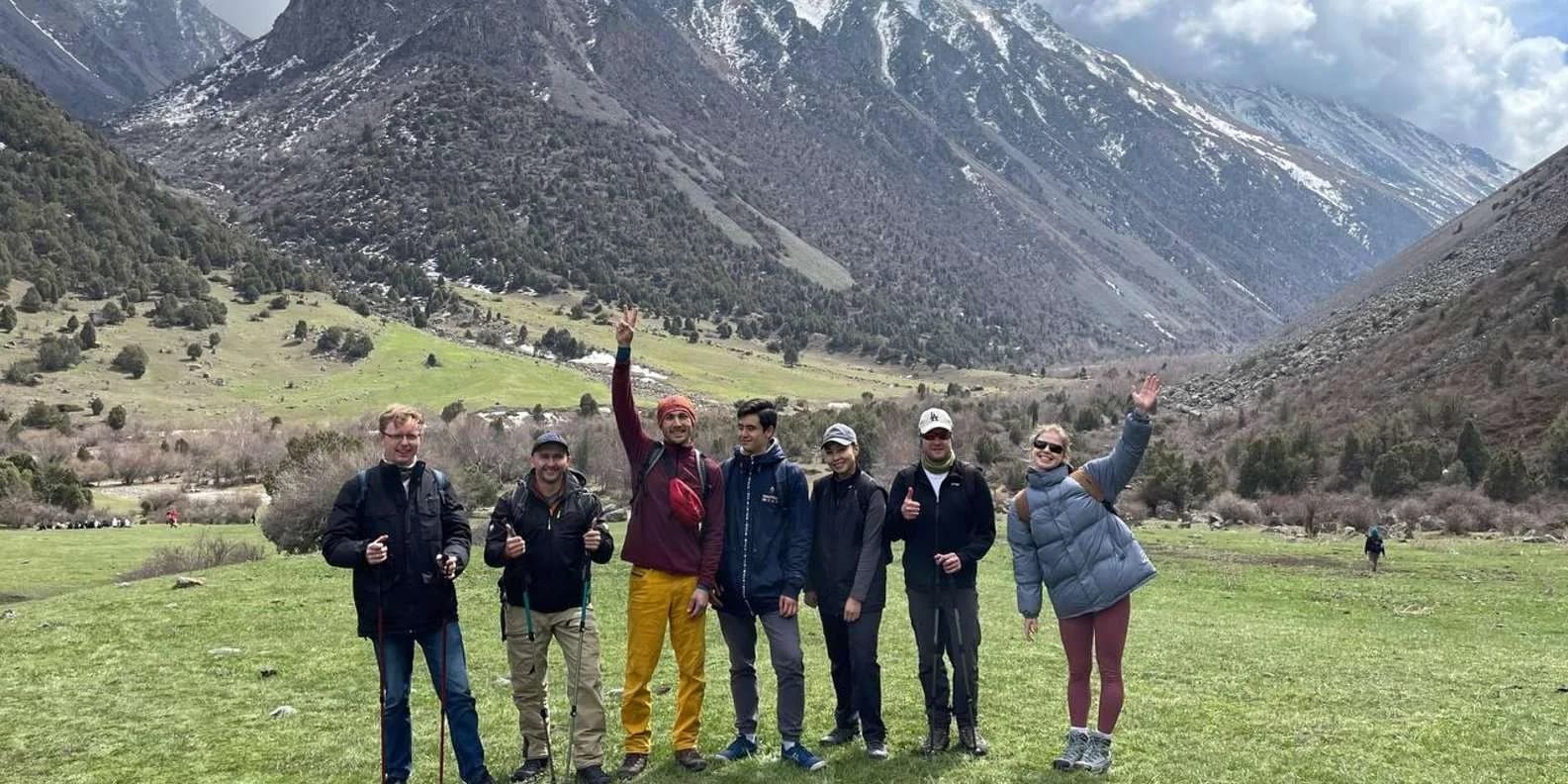
Self-Guided Treks in Kyrgyzstan: Routes & How-To
Yes, you can trek Kyrgyzstan without a guide. The best self-guided routes, the ones to skip, and the maps, water and safety logistics that make it work.
By TiK Editors12 min read
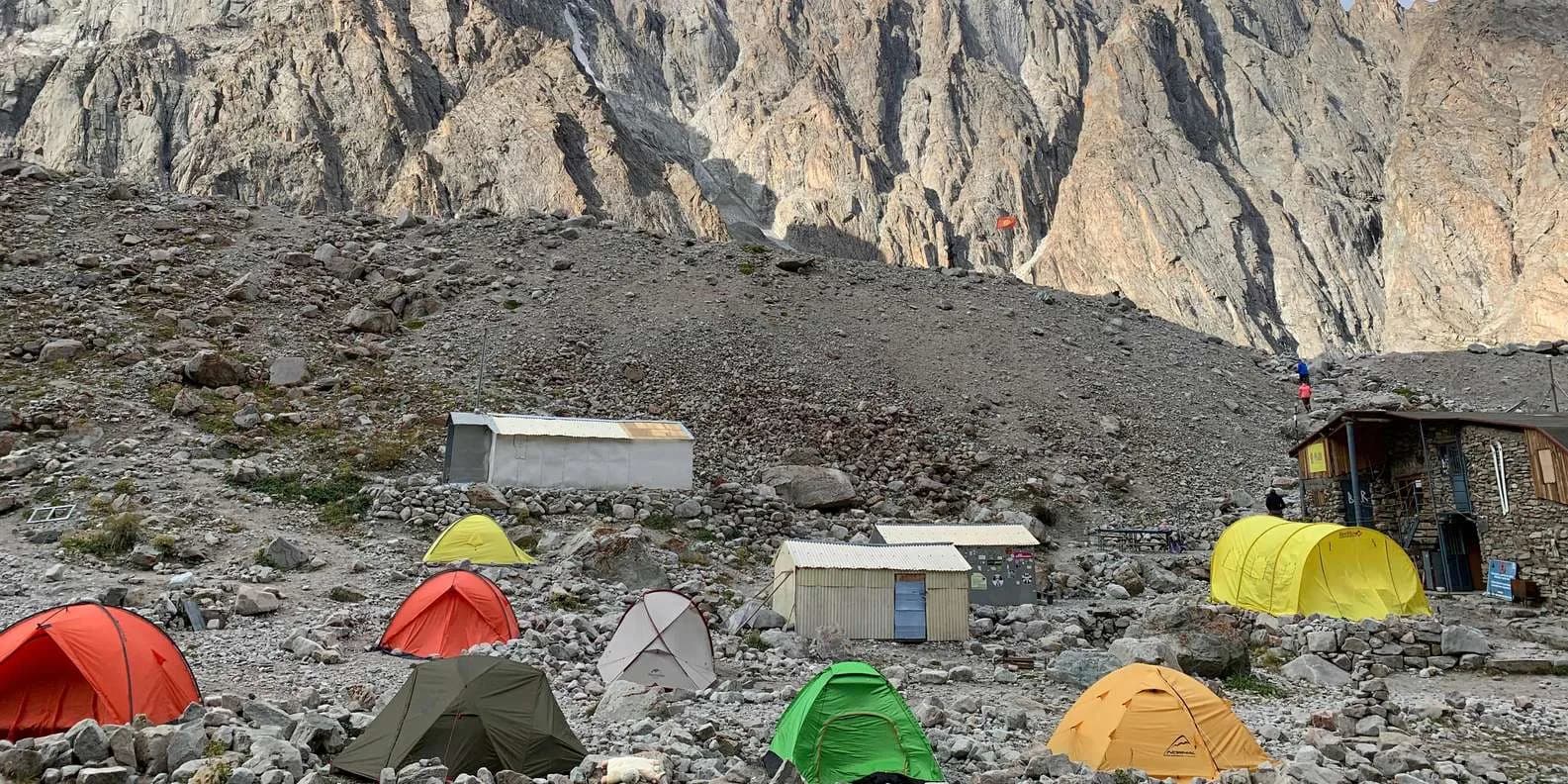
Uchitel Peak: Your First 4,000m Climb (2026)
Pik Uchitel (~4,400-4,600 m) in Ala-Archa is the classic first summit for fit hikers new to mountaineering: route, gear, season and acclimatisation.
By TiK Editors8 min read
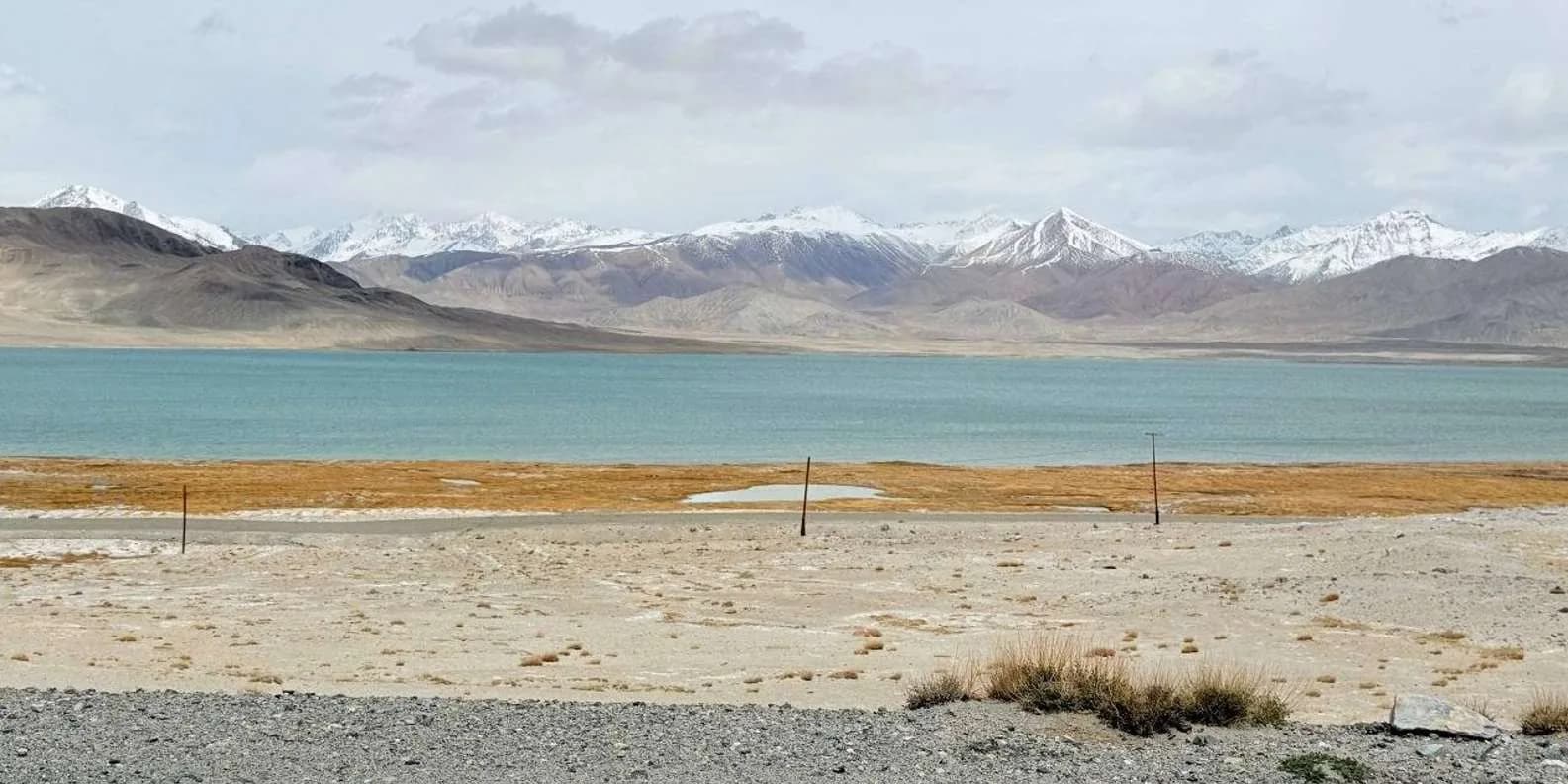
Tian Shan Traverse: Bikepacking Kyrgyzstan
The Tian Shan Traverse is a self-supported, mostly off-road bikepacking route of about 1,000 km across the high Kyrgyz mountains. Here's how to plan it.
By TiK Editors9 min read