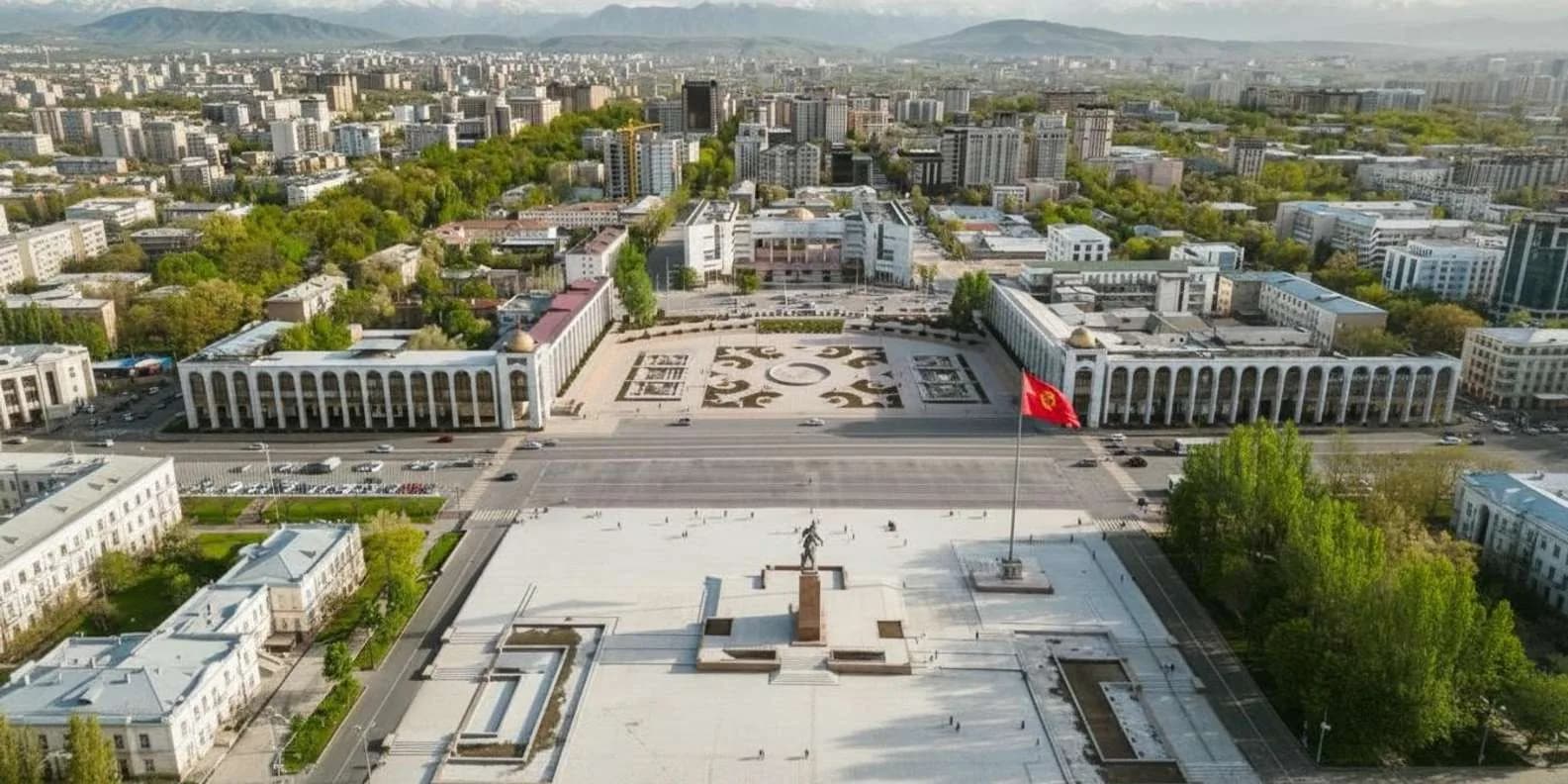
 Image via GetYourGuide
Almaty to Bishkek: Border Crossing Guide (2026)
How to travel overland from Almaty to Bishkek in 2026: shared taxi, marshrutka, bus or private car, and the Korday border crossing step by step.
Book it on This is Kyrgyzstan
Turn this guide into a trip
Most people who visit Kyrgyzstan arrive by crossing overland from Almaty, and the trip is easier than it looks. Almaty has far more international flights than Bishkek, so flying into Kazakhstan and finishing the last leg by road is the standard move. Count on roughly 230 to 240 km and four to five hours door to door, via the Ak-Jol / Korday border post on the Chu river. You clear both sets of controls on foot; the crossing itself is usually 30 to 60 minutes, longer at weekends and on public holidays.
This guide covers how to get there, what the border is actually like, and how to do the whole thing in reverse. It is about the crossing, not who qualifies for visa-free entry, so check your own nationality against our Kyrgyzstan visa and entry guide before you set off.
Your options at a glance
Four ways make the trip. Shared taxi is fastest and most flexible; the big bus is cheapest and least comfortable; a private transfer is the easy, door-to-door choice if you are tired or travelling as a group. Fares below are broad 2026 ranges in Kazakh tenge (KZT), Kyrgyz som (KGS) and US dollars — they drift with fuel and season, so treat them as orders of magnitude and confirm on the day.
| Option | Rough price (per seat) | Time | Comfort |
|---|---|---|---|
| Shared taxi (Sayran) | 5,000–9,000 KZT · ~900–1,600 KGS · ~$10–17 | 3.5–4.5 h | 4 per car, quick, negotiate first |
| Marshrutka / minibus | 3,000–4,500 KZT · ~550–800 KGS · ~$6–9 | 4.5–6 h | Cramped, luggage on laps |
| Scheduled coach | 3,000–5,000 KZT · ~550–900 KGS · ~$6–10 | 5–6 h | Roomier seats, slower, fewer daily runs |
| Private transfer (whole car) | — | 4–5 h | ~$60–130 total; door to door |
Prices for the shared taxi are usually quoted per seat; always confirm whether you are paying for a seat or the whole car before you get in, because that single ambiguity is where most fare arguments start. You can buy out the empty seats to leave sooner.
The route
From Almaty the road runs west across the steppe to the border town of Korday, about 200 km, then it is a further 25 km or so on the Kyrgyz side into Bishkek. Almaty's Sayran bus station, on the western edge of the city, is the departure hub for shared taxis, marshrutkas and coaches heading this way. Turn up in the morning for the quickest departure; intercity shared vehicles leave when full, not to a timetable, so an early start beats a mid-afternoon wait.
The drive is flat and unremarkable, no mountain passes and no dramatic scenery, just farmland and the occasional police check. The interesting part is the border.
A word on driving your own or a hired car across: it is possible but fiddly. Cross-border use usually needs the rental firm's written permission arranged in advance, and Kyrgyzstan charges foreign vehicles an eco tax on entry from most countries (though not from Kazakhstan, which shares a customs union). Unless you have a specific reason to bring a car, public transport or a booked transfer is far less hassle for this leg.
Crossing at Korday, step by step
The post is called Korday on the Kazakh side and Ak-Jol on the Kyrgyz side. It is the main Bishkek–Almaty crossing, open to foreigners 24 hours, and it was rebuilt between 2020 and 2022, so the halls are modern. Here is how it works on foot:
- Get dropped at the border. Most shared taxis and marshrutkas do not drive you across — they take you to the Kazakh side, and you walk. Some through-coaches carry you the whole way but you still disembark to clear both controls in person.
- Kazakh exit control. Queue, hand over your passport, get your Kazakhstan exit stamp. Have your passport out and any customs form ready.
- Walk the neutral zone. A few hundred metres on foot between the two countries, crossing the Chu river. Wheel your bag; there are no porters worth using.
- Kyrgyz entry control. Passport check and, for the ~55 visa-free nationalities, a free entry stamp. No fee, no form for most tourists.
- Pick up onward transport. On the Kyrgyz side, shared taxis and marshrutkas wait to run the last 25 km into Bishkek — roughly 300–500 KGS in a shared car, or order a Yandex Go once you have a local SIM and data.
If you booked a private transfer, the same steps apply but your driver waits for you on the far side, which removes the scramble for onward transport. For getting from the bus stands into the city and around once you arrive, see our guide to getting around Kyrgyzstan.
Queues, timing and what to have ready
Korday is one of the busiest land borders in Central Asia, funnelling labour traffic, traders and tourists. On a quiet weekday morning you can be through in half an hour. On a Friday evening, a Sunday, or either country's public holidays it can stretch to two or three hours, sometimes more, and the foot queues get crushy. If your schedule is flexible, cross mid-week and mid-morning.
Have these ready before you reach the window:
- Passport valid at least six months beyond arrival. No visa is needed for the visa-free group, but that is entry eligibility, not something the border sells you.
- The 30-in-60 rule. Kyrgyzstan's visa-free stay was cut at the start of 2026 to 30 days within any rolling 60-day period for Western passports — not the 60 days older guidebooks still quote. A hop back to Kazakhstan no longer resets the clock, so plan your days.
- Small notes in both currencies. Drivers rarely change large bills.
- A charged phone with offline maps. 2GIS is the map app locals use.
Changing money
Exchange booths sit on both sides of the border and at Sayran, but their rates are mediocre — change only what you need to pay for the onward taxi and a meal, then get a better rate at a licensed exchange in Bishkek, where kiosks are dense and competitive. Kazakh tenge is not useful once you are in Kyrgyzstan, so spend or swap it before you go too far. ATMs are easy to find in both capitals; carry a modest cushion of cash because rural Kyrgyzstan runs on som notes and card acceptance thins out fast outside the cities.
The reverse trip: Bishkek to Almaty
Going the other way is the mirror image. Shared taxis and marshrutkas to Almaty gather at Bishkek's main long-distance bus station and at the shared-taxi stands near Osh Bazaar (the big market in western Bishkek, confusingly named after the southern city). Ask for "Almaty" and confirm the current departure point locally, as Bishkek's stands have shuffled in recent years. You clear Ak-Jol then Korday on foot in the same way, then ride the 200 km into Almaty. Build in buffer time: never pin a same-day international flight out of Almaty to a morning border run, because a bad queue can eat two hours you did not budget for.
The Central Asia loop connector
This crossing is the hinge of almost every Central Asia itinerary. Travellers fly into Almaty — the region's busiest air hub — cross to Bishkek, loop through Issyk-Köl, Song-Köl and Karakol, then either return the way they came or carry on south. Bishkek now has its own growing list of flights through Manas airport (whose code changed from FRU to BSZ in August 2025), but Almaty still wins on connections and price for long-haul arrivals. If you are weighing the two countries as a whole, our Kyrgyzstan vs Kazakhstan comparison lays out what each does best, and the Bishkek city guide covers where to land once you are across.
Most people give Bishkek a night to catch their breath, then head for the mountains. A tight week works well from here — our 7-day Kyrgyzstan itinerary starts in the capital and runs the classic northern loop. When you are ready to build the trip, browse what is on offer around the capital at our Bishkek hub.
Chat with a real person — free
Seif and the team reply on WhatsApp 24/7 — trip questions, custom plans and booking help.
Ask Seif on WhatsAppCommon questions
How long does it take to get from Almaty to Bishkek?
Plan on four to five hours door to door for roughly 230 to 240 km. A shared taxi is quickest at around three and a half to four and a half hours; marshrutkas and coaches take longer with more stops. The border crossing itself adds 30 to 60 minutes on a normal weekday, but can stretch to two or three hours at weekends and on public holidays.
Do I need a visa to cross from Kazakhstan to Kyrgyzstan?
Most Western travellers do not: citizens of around 55 countries, including the UK, US, EU, Canada and Australia, enter Kyrgyzstan visa-free. Since the start of 2026 that stay is 30 days within any rolling 60-day period, not the 60 days older guides quote. Kazakhstan is also visa-free for the same group, so the hop is administratively simple. Always confirm your own nationality before travelling.
What is the cheapest way from Almaty to Bishkek?
The scheduled coach or a marshrutka from Almaty's Sayran bus station is cheapest, roughly 3,000 to 5,000 tenge (about 6 to 10 US dollars) per seat. They are slower and more cramped than a shared taxi, and luggage rides on your lap, but they are reliable. Turn up in the morning for the best chance of a prompt departure, as intercity vehicles leave when full.
Where do shared taxis to Bishkek leave from in Almaty?
Sayran bus station, on the western edge of Almaty, is the main hub for shared taxis, marshrutkas and coaches to Bishkek. Vehicles gather and leave when full rather than on a fixed timetable, so a morning arrival means a quicker departure. Agree the fare and confirm whether it is per seat or for the whole car before you get in.
Do I have to change vehicles at the border?
Usually yes. Most shared taxis and marshrutkas drop you at the Kazakh side, you walk through both sets of controls on foot, then pick up onward transport on the Kyrgyz side for the last 25 km into Bishkek. Some through-coaches carry you the whole way, but you still get out to clear passport control in person. A private transfer is the only way to keep the same car throughout.
How bad are the queues at the Korday border?
It depends entirely on timing. Korday is one of Central Asia's busiest land crossings, and on a quiet weekday morning you can be through in about half an hour. Friday evenings, weekends and public holidays in either country can push the foot queues to two or three hours. Cross mid-week and mid-morning if your schedule allows, and never plan a same-day onward flight around it.
Where should I change money for the crossing?
Change just enough tenge or som at the border to cover your onward taxi and a meal, because rates at the booths and at Sayran are poor. Get a better rate at a licensed exchange in Bishkek, where kiosks are plentiful. Kazakh tenge is not useful inside Kyrgyzstan, so spend or swap it early, and carry small som notes since rural Kyrgyzstan is a cash economy.
Is it better to fly or cross overland to Bishkek?
Overland from Almaty is usually the better value and often the only sensible option, because Almaty has far more international flights than Bishkek and long-haul fares into it are cheaper. Bishkek's Manas airport (code changed from FRU to BSZ in 2025) has a growing schedule, but connections still lag Almaty. If you can get a good direct fare to Bishkek, take it; otherwise fly to Almaty and cross by road.
How do I do the trip in reverse, from Bishkek to Almaty?
It works the same way in mirror image. Shared taxis and marshrutkas to Almaty gather at Bishkek's main bus station and the shared-taxi stands near Osh Bazaar; ask for Almaty and confirm the current stand locally. You clear Ak-Jol then Korday on foot, then ride into Almaty. Leave generous buffer time and do not schedule a same-day flight out of Almaty against a morning border run.
Book it on This is Kyrgyzstan
Turn this guide into a trip
Kyrgyzstan's bestsellers
The experiences travelers book most, across the country

Keep reading
Boz-Uchuk Lakes Trek from Jyrgalan (2026)
A moderate 2–3 day trek to a string of alpine lakes above Jyrgalan — quieter than Karakol's classics, with community yurts, horses and clear DMO rates.
By TiK Editors8 min read
Tian Shan Traverse: Bikepacking Kyrgyzstan
The Tian Shan Traverse is a self-supported, mostly off-road bikepacking route of about 1,000 km across the high Kyrgyz mountains. Here's how to plan it.
By TiK Editors9 min read
Self-Guided Treks in Kyrgyzstan: Routes & How-To
Yes, you can trek Kyrgyzstan without a guide. The best self-guided routes, the ones to skip, and the maps, water and safety logistics that make it work.
By TiK Editors12 min read