 Image via GetYourGuide
How Much a Kyrgyzstan Tour Costs (2026)
The median organised tour runs about $245pp, but a city walk starts near $25 and a Song-Köl expedition passes $500. Here's what drives the price.
Book it on This is Kyrgyzstan
Turn this guide into a trip

Quick answer: A guided multi-day Kyrgyzstan tour typically costs about $80–150 per person per day in a small group — a driver-guide, transport, yurt or guesthouse nights and most meals included. A private 7-day trip works out around $1,000–1,400 per person in a group of four (more solo, less in a bigger group), and a day tour from Bishkek runs roughly $30–60. Confirm current rates when you enquire.
The median organised tour in Kyrgyzstan costs about $245 per person, but that number is almost useless on its own. A guided city walk in Bishkek starts near $25; a three-day horse trek to Song-Köl with a guide, horses, yurt nights and all meals runs from $500 upward. Almost the entire spread comes from logistics rather than markup, so the real question is what kind of tour you want, for how long, and how remote it goes.
This guide is about the price of organised tours and day trips — the packaged experiences you book through an operator or platform. If you're planning to travel independently and want the cost of marshrutkas, guesthouses and your own park fees instead, read the companion Kyrgyzstan cost and budget guide; the two answer different questions and the split matters for your wallet.
What a Kyrgyzstan tour actually costs
We track live prices for 511 tours and activities across Kyrgyzstan — from community-based operators and the main booking platforms. The honest headline: the median tour costs about $245 per person, but that single figure hides two very different worlds.
Half-day and full-day activities — a city walk, a day at a gorge, a lake excursion — cluster between $40 and $220. Multi-day expeditions — a Song-Köl horse trek, a Tian Shan trekking circuit, a Silk Road overland trip — run from $400 into the low thousands, because the price bundles guides, horses, yurt-camp nights, meals and transport across several days.
So the useful question is not "how much is a tour" but "how much for this kind of tour". Here's what the catalogue actually shows.
Price by type of experience
Typical per-person price, shown as the middle-of-the-market range (25th–75th percentile) and the median:
| Experience type | Typical range | Median | What you're paying for |
|---|---|---|---|
| Food & local life | $35–70 | $40 | A tasting walk or market visit, a few hours |
| City tours | $50–97 | $65 | Half-day guided walk in Bishkek or Osh |
| Culture & history | $59–226 | $100 | Museums, Burana Tower, Silk Road sites |
| Trekking & hiking (day) | $70–730 | $155 | Day hikes; the top end is guided multi-day |
| Lakes & nature | $108–700 | $220 | Issyk-Köl and gorge day trips, incl. transport |
| Horse trekking | $200–1,020 | $410 | Guided rides; multi-day jailoo expeditions |
| Multi-day tours & expeditions | $104–2,320 | $1,160 | All-inclusive treks and overland circuits |
Reading it: the cheapest way into Kyrgyzstan is on foot in Bishkek — walking tours start at $25, and several of the highest-rated experiences in the entire country (4.9+ stars) are city walks under $50. Prices climb with logistics: the moment horses, remote yurt camps, or multiple days enter the picture, you're paying for a small expedition rather than a ticket.
Price by region
The median tour price looks very different depending on where it's based:
| Region | Median tour | Why |
|---|---|---|
| Bishkek | $160 | The base for day trips — cheapest and widest choice |
| Karakol | $167 | Gateway to Jeti-Ögüz and Ala-Köl day hikes |
| Naryn | $550 | Springboard for Song-Köl — mostly multi-day |
| Issyk-Kul | $646 | Lake region; predominantly multi-day tours |
| Osh | $900 | Pamir Highway and southern overland expeditions |
Bishkek is where the affordable day-activities live, because it's the springboard for Ala-Archa, Burana, Chunkurchak and Issyk-Köl day trips. Naryn, Issyk-Kul and Osh read as "expensive" only because the tours based there are overwhelmingly multi-day treks and overland journeys — not because the same activity costs more.
What actually drives the price
Four levers move a tour quote far more than the operator's brand does.
Private versus group departures. This is the single biggest lever, and it's easy to miss. A private trip pays for the whole guide and vehicle out of your own pocket; a scheduled group departure splits those fixed costs across everyone aboard. One Bishkek trekking operator's own price sheet for a five-day Ala-Köl trek shows exactly how steep the curve is — the same trip, the same crew, priced by how many people share it:
| Group size | Price per person (indicative) |
|---|---|
| Solo (1) | ~$2,110 |
| 2 people | ~$1,270 |
| 4 people | ~$920 |
| 6 people | ~$780 |
| 8 people | ~$740 |
| 10 people | ~$700 |
(Fantastic Asia / trekking.kg published rates, quoted here as historical and indicative — treat the shape of the curve, not the exact dollars, as the takeaway.) Going from solo to a party of four cuts the per-person price by more than half; the last few seats barely move it. If you're two travellers, joining a fixed group departure or teaming up with others is the closest thing to free money in trip planning.
Trip length and remoteness. Every extra day adds a guide day, a driver day, meals and usually a bed, so multi-day prices scale roughly with the number of nights. Remoteness compounds it: reaching Song-Köl or Kel-Suu needs a high-clearance 4x4 that a sedan simply can't do (a Kochkor–Song-Köl vehicle transfer alone runs 5,000–7,000 som, about $60–80, split between passengers), and the deeper the route, the more the logistics cost.
Season. Peak July–August pricing softens in June and September, when the passes are still open but demand is lower. The high-mountain window is roughly mid-June to mid-September; outside it, half the classic itineraries are physically shut, so a "cheap" May or October quote often means a stripped-down trip.
Per-day component rates. When you strip a package back to parts, the building blocks are modest by international standards: horse hire runs about $25–35 a day for the animal, with a horseman usually a similar amount on top; a mountain guide is anywhere from $50 to $110 a day depending on certification; and a yurt night with all meals is $15–25 at a budget camp, $35–50 mid-range, and $90–150 at a polished tourist camp. A guided three-day Song-Köl horse trek starts from about $500 per person; a guided group Ala-Köl trek is roughly $150–250, versus $50–80 if you carry your own tent and food. Those numbers explain the packages — they're the ingredients marked up only lightly.
What's included, and what isn't
Inclusions vary, and the gap between two similarly-priced tours is usually here rather than in the headline number. A well-built multi-day package typically covers full-board meals on trek, camping or yurt accommodation, national and state park fees, guide, cook and porter services, and all in-country transport. What it usually does not cover:
- International flights and travel insurance (with medevac — essential in the mountains)
- Single-room or single-tent supplements
- Tips for guides, porters and drivers
- Personal kit: sleeping bag where not provided, boots, clothing
- Meals off the trek, drinks and personal spending
- Your e-visa or entry fee, where your nationality needs one
Read the fine print on park fees and equipment specifically. A cheaper tour that makes you rent a sleeping bag, pay gate fees in cash and cover your own lunches in town can land dearer than the "pricier" all-in option next to it.
Deposits, payment and cancellation
Most Kyrgyz operators take a deposit to hold your dates (commonly around 20–30% of the total) and the balance on arrival. And here's the local wrinkle that catches people out: the balance is very often cash. Cards work in Bishkek hotels and better restaurants, but CBT bookings, homestays, yurt camps and rural guides are effectively cash-only, so draw a healthy som or dollar float in Bishkek, Osh or Karakol before any mountain leg — there are no ATMs at Song-Köl, Tash Rabat or Altyn-Arashan. Cancellation terms are set per operator and are not standardised, so confirm the refund schedule in writing before you pay, and check whether weather cancellations (a snowed-in pass, a washed-out road) are refundable or only reschedulable.
Tipping
Tipping isn't a Kyrgyz cultural expectation — it's a recent, tourist-driven habit — but on a guided tour it's now normal. Budget roughly 10% across a multi-day trip to split among the guide, cook and drivers, and 50–100 som as a small thank-you for a half-day city guide. In restaurants, check the bill first: many tourist-facing places in Bishkek already add a 10–15% service charge. Homestay and yurt hosts don't expect a tip at all; paying for extra tea and kymyz, or bringing a small gift, lands better than cash.
The four budget bands
Of the 511 tours we track, here's roughly where they fall:
- Under $50 (about 6% of tours). City walking tours, free/tip-based tours, short cultural visits. The best value on the whole platform — and some of the best-rated.
- $50–150 (about 31%). The sweet spot: full-day gorge, lake and culture day trips from Bishkek, usually with hotel pickup included.
- $150–400 (about 23%). Long private day trips, entry-level overnight treks, private guiding, small-group departures.
- $400+ (about 40%). Multi-day treks, multi-day horse expeditions, Song-Köl yurt stays, Silk Road and Pamir circuits — all-inclusive of guides, food and camps.
Tour price versus doing it yourself
Kyrgyzstan is one of the easier countries to travel independently, and the DIY route is genuinely cheaper on paper: a self-supported Ala-Köl trek can cost $50–80 all in, against $150–350 booked. The catch is friction. Independent travel means arranging marshrutkas and shared taxis, negotiating horse hire at the trailhead, carrying enough cash for a week off-grid, and reading pass conditions yourself. A tour buys that away and adds a guide who knows the weather. If you have time and some Russian, DIY wins on cost; if you have two weeks and want the mountains without the logistics, a tour earns its premium. Our full DIY cost and budget guide has the per-item som prices to price your own trip.
How to keep costs down
- Base yourself in Bishkek and do day trips. Widest choice at the lowest prices, and most of the country's famous day hikes are reachable in a day.
- Join a scheduled group departure. As the price ladder above shows, private tours carry a large premium; shared departures split the fixed cost of a guide and vehicle across the group.
- Travel in shoulder season (June, September). Peak July–August pricing softens either side of the high season, while the passes are still open.
- Book through community-based tourism (CBT). Kyrgyzstan's CBT network and local DMOs put guides, homestays and horses within reach at close to local rates — well below the marketplace median.
- Start with a walking tour. The cheapest experiences we track and among the highest rated — a near-free way to get your bearings on day one.
Are they worth it?
Value in Kyrgyzstan is unusually high because so much of the cost is real logistics rather than markup: a $600 three-day Song-Köl trek is feeding you, mounting you on a horse, and putting you in a yurt on a high pasture for two nights. Day activities, meanwhile, are some of the best-rated on the platform at $25–150. Whichever band you land in, ratings across the catalogue average 4.6 out of 5, so price mostly buys duration and remoteness — not quality.
To see what fits your budget, browse the best tours in Kyrgyzstan for the standout day trips, or the multi-day tours guide if you're after a full trekking or horse-riding expedition. Ready to price real dates? Start with the Bishkek day-trip and tour hub.
Methodology: prices are per-person starting rates aggregated from 511 live tour listings by Kyrgyz operators and booking platforms, converted to US dollars (≈87–88 som = $1, Aug 2026). Ranges are the 25th–75th percentile of each segment; "median" is the middle price. Per-day component rates and the group-size ladder are indicative operator figures — confirm on the day.
Chat with a real person — free
Seif and the team reply on WhatsApp 24/7 — trip questions, custom plans and booking help.
Ask Seif on WhatsAppCommon questions
How much does a tour in Kyrgyzstan cost?
The median organised tour is about $245 per person, but the spread is huge. Half-day and full-day activities cluster between $40 and $220, while multi-day expeditions — horse treks, Song-Köl yurt trips, Pamir overland circuits — run from around $400 into the low thousands. City walking tours start as low as $25. The number you pay depends far more on trip length, group size and remoteness than on the operator.
Why are private tours so much more expensive than group tours?
A private tour pays for the entire guide and vehicle out of one party's pocket, while a group departure splits those fixed costs across everyone aboard. One operator's five-day Ala-Köl trek runs roughly $2,110 per person solo but about $920 at four people and $700 at ten — the same trip, the same crew. Joining a scheduled group departure, or pairing up with other travellers, is the biggest single saving available.
What's included in a Kyrgyzstan tour price?
A well-built multi-day package usually covers full-board meals on trek, camping or yurt accommodation, national and state park fees, guide, cook and porter services, and all in-country transport. It typically excludes international flights, travel insurance, single-room supplements, tips, personal kit like a sleeping bag or boots, drinks and off-trek meals, and any e-visa fee. Always read the inclusions line by line before comparing two quotes.
Do I tip on a Kyrgyzstan tour, and how much?
Tipping isn't a Kyrgyz cultural expectation, but on guided tours it's now normal. Budget roughly 10% of the trip total across a multi-day tour, split among the guide, cook and drivers, and 50–100 som for a half-day city guide. Check restaurant bills first — many Bishkek places already add a 10–15% service charge. Homestay and yurt hosts don't expect a tip; extra tea, kymyz or a small gift is better received.
Can I pay for tours by card in Kyrgyzstan?
Partly. Cards work at Bishkek hotels, better restaurants and larger agencies, but CBT bookings, homestays, yurt camps and rural guides are effectively cash-only. Most operators take a card or bank deposit to hold dates and then expect the balance in cash on arrival. Draw a solid som or clean-USD float in Bishkek, Osh or Karakol before any mountain leg — there are no ATMs at Song-Köl, Tash Rabat or Altyn-Arashan.
Is it cheaper to travel Kyrgyzstan independently than on a tour?
Yes, on paper. A self-supported Ala-Köl trek can cost $50–80 all in, versus $150–350 booked, and independent travel by marshrutka and guesthouse is very affordable. What you trade is friction: arranging transport, negotiating horse hire, carrying a week's cash off-grid and reading pass conditions yourself. A tour buys that away and adds a guide who knows the weather. See our cost and budget guide for the per-item prices to compare.
What day-rates make up a Kyrgyzstan trek price?
The building blocks are modest. Horse hire runs about $25–35 a day for the animal, with a horseman usually a similar amount on top. A mountain guide is $50–110 a day depending on certification. A yurt night with all meals is $15–25 at a budget camp, $35–50 mid-range and $90–150 at a polished tourist camp. Add park fees of roughly 50–250 som per person and transport, and you have the package price.
When is the cheapest time to book a Kyrgyzstan tour?
June and September are the value months. Peak pricing lands in July–August, when demand for high-mountain trips is highest and all the passes are open. Shoulder-season June and September still have the passes open but softer prices and fewer crowds. Avoid trying to save money in May or October: half the classic itineraries — Song-Köl, Kel-Suu, Ala-Kul — are physically shut, so a cheap quote often means a cut-down trip.
How much deposit do Kyrgyz tour operators require?
Most take a deposit to hold your dates — commonly around 20–30% of the total — with the balance due on arrival, often in cash. Cancellation terms aren't standardised across operators, so confirm the refund schedule in writing before you pay, and specifically ask what happens if weather closes a pass or washes out a road: some operators refund, others only reschedule. Get the terms clear before any money changes hands.
Book it on This is Kyrgyzstan
Turn this guide into a trip
Kyrgyzstan's bestsellers
The experiences travelers book most, across the country
Keep reading
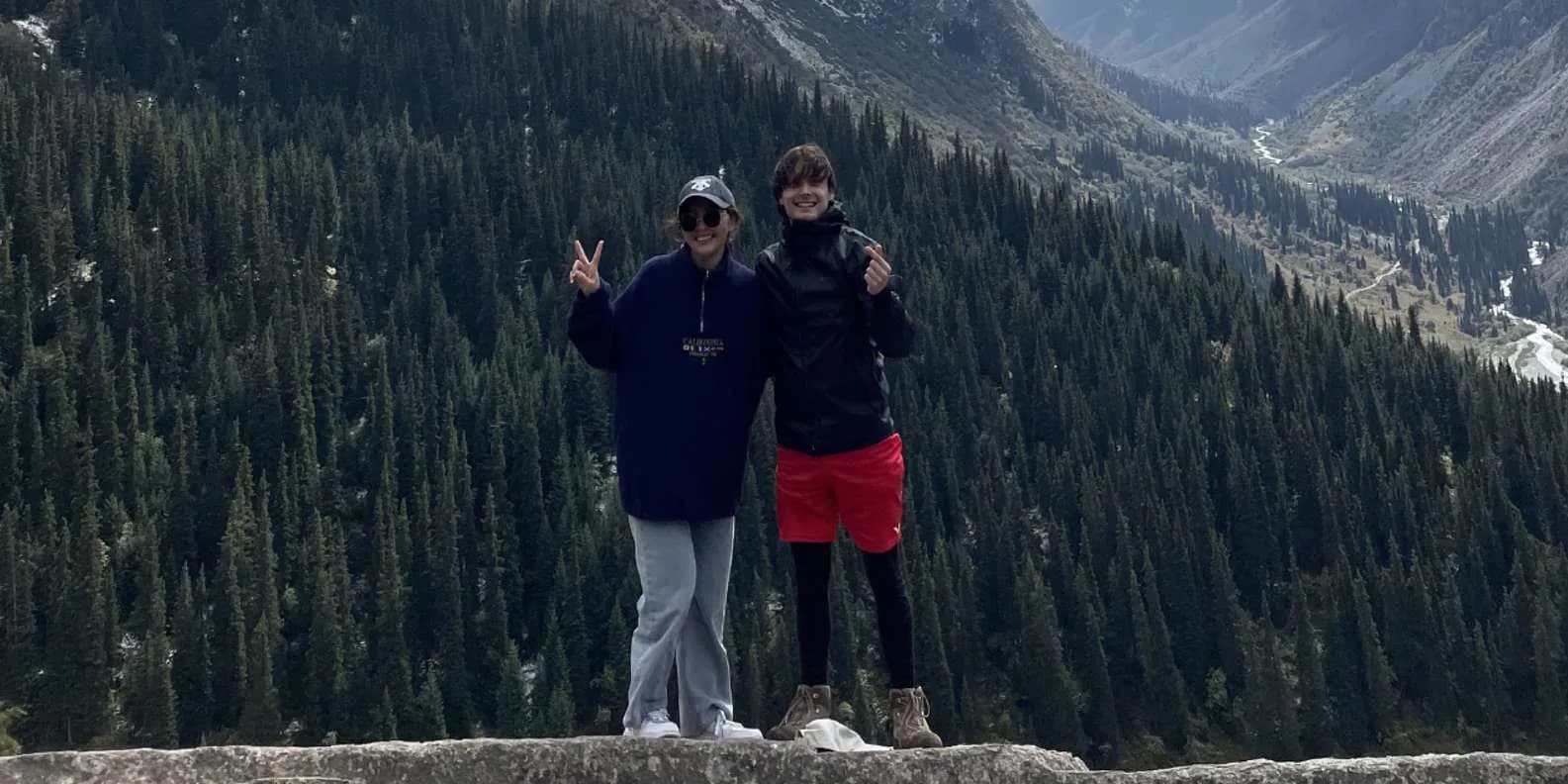
The Best Day Trips from Bishkek
Bishkek is the best base in Central Asia for day trips — gorges, canyons and Lake Issyk-Köl are all a day away. Here are the best-rated ones, with real prices.
By TiK Editors8 min read
Multi-Day Tours & Treks in Kyrgyzstan: What to Expect
The real Kyrgyzstan is a multi-day country. A guide to its multi-day tours and treks — the routes, the regions, and what the all-inclusive price actually buys.
By TiK Editors9 min read
The Best Tours in Kyrgyzstan (Ranked by Real Traveller Ratings)
The highest-rated tours in Kyrgyzstan, ranked by real traveller ratings and review volume across 511 listings — not marketing, just the numbers.
By TiK Editors8 min read